
拍品信息
拍品名称
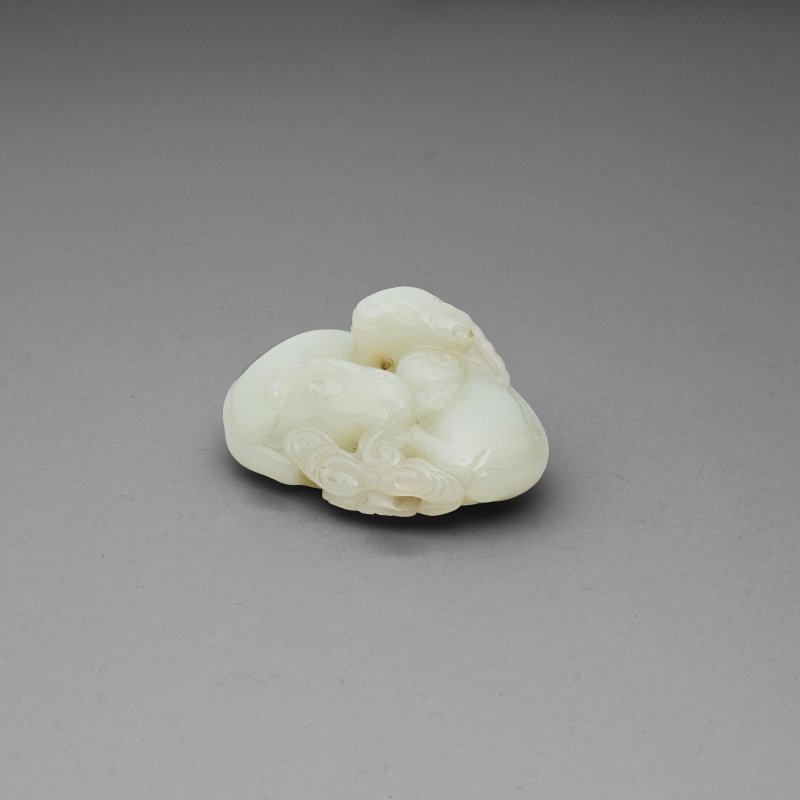
十八/十九世紀 白玉雕雙羊把件 | A WHITE JADE CARVING OF TWO RAMS
年代
18th/19th century
起拍价
GBP 1,000
估值区间
GBP 1000 - 1500
尺寸
未知
品相
未知
更多信息
18th/19th century
The bearded rams deftly carved lying recumbent against one another with hoofed legs tucked under their bodies, their heads below curved horns turned inwards toward a taiji symbol carried by swirling clouds, the stone of a milky white tone. 6.6cm (2 5/8in) long.
Footnotes
十八/十九世紀 白玉雕雙羊把件
Provenance: Sir George Mowlem Burt KBE (1884–1964), Surrey, and thence by descent
來源:大英帝國爵級司令勛章獲得者George Mowlem Burt爵士(1884-1964),英國薩裏,并由後人保存迄今
Born in Westminster on 10 January 1884, Sir George Mowlem Burt KBE joined the family firm, John Mowlem & Co., in 1902, following in the footsteps of his father and uncle. He subsequently became supervising director of the company and was involved in a number of major engineering and building projects. He was a prominent figure in the development of the civil engineering industry, serving as a founding member of the Federation of Civil Engineering Contractors and on various Government committees and missions. He was also Master of the Worshipful Company of Paviors. Outside his professional life, Burt was a distinguished fencer, winning the British épée championship in 1922 and representing Great Britain in épée at the 1920 Olympic Games. He was knighted in 1942 and died at Blindley Heath, Surrey, on 1 September 1964. An enthusiastic collector of art, his collection included paintings, ivory, netsuke and jade.
During the Qing dynasty, the sheep or ram ( 羊) became associated through a homophonic pun with (陽), the positive and masculine principle in Chinese cosmology. The present lot makes the connection explicit by depicting the symbol between the two animals.
See a white jade carving of three rams also featuring a symbol, 18th century, which was sold at Bonhams London, 16 May 2019, lot 126.
The bearded rams deftly carved lying recumbent against one another with hoofed legs tucked under their bodies, their heads below curved horns turned inwards toward a taiji symbol carried by swirling clouds, the stone of a milky white tone. 6.6cm (2 5/8in) long.
Footnotes
十八/十九世紀 白玉雕雙羊把件
Provenance: Sir George Mowlem Burt KBE (1884–1964), Surrey, and thence by descent
來源:大英帝國爵級司令勛章獲得者George Mowlem Burt爵士(1884-1964),英國薩裏,并由後人保存迄今
Born in Westminster on 10 January 1884, Sir George Mowlem Burt KBE joined the family firm, John Mowlem & Co., in 1902, following in the footsteps of his father and uncle. He subsequently became supervising director of the company and was involved in a number of major engineering and building projects. He was a prominent figure in the development of the civil engineering industry, serving as a founding member of the Federation of Civil Engineering Contractors and on various Government committees and missions. He was also Master of the Worshipful Company of Paviors. Outside his professional life, Burt was a distinguished fencer, winning the British épée championship in 1922 and representing Great Britain in épée at the 1920 Olympic Games. He was knighted in 1942 and died at Blindley Heath, Surrey, on 1 September 1964. An enthusiastic collector of art, his collection included paintings, ivory, netsuke and jade.
During the Qing dynasty, the sheep or ram ( 羊) became associated through a homophonic pun with (陽), the positive and masculine principle in Chinese cosmology. The present lot makes the connection explicit by depicting the symbol between the two animals.
See a white jade carving of three rams also featuring a symbol, 18th century, which was sold at Bonhams London, 16 May 2019, lot 126.
常见问题
这件十八/十九世紀 白玉雕雙羊把件 | A WHITE JADE CARVING OF TWO RAMS的成交价是多少?
落槌价为 预展中。 成交价为 预展中。


