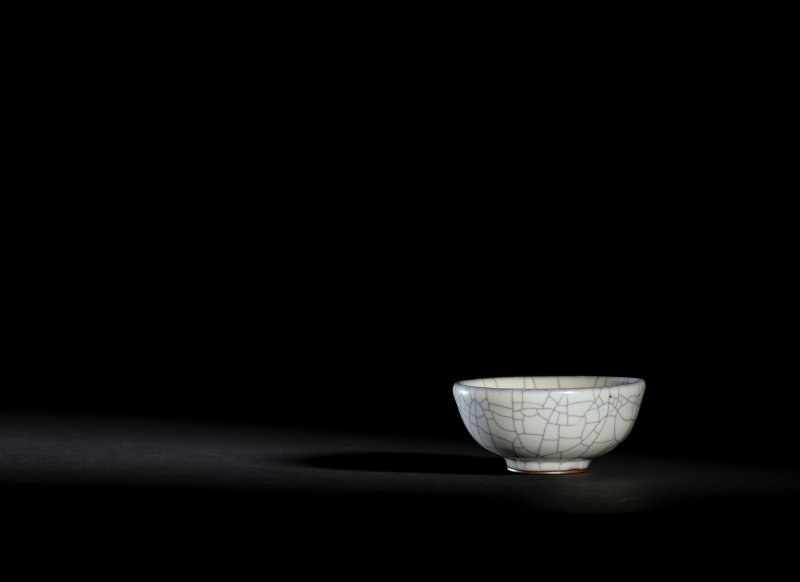

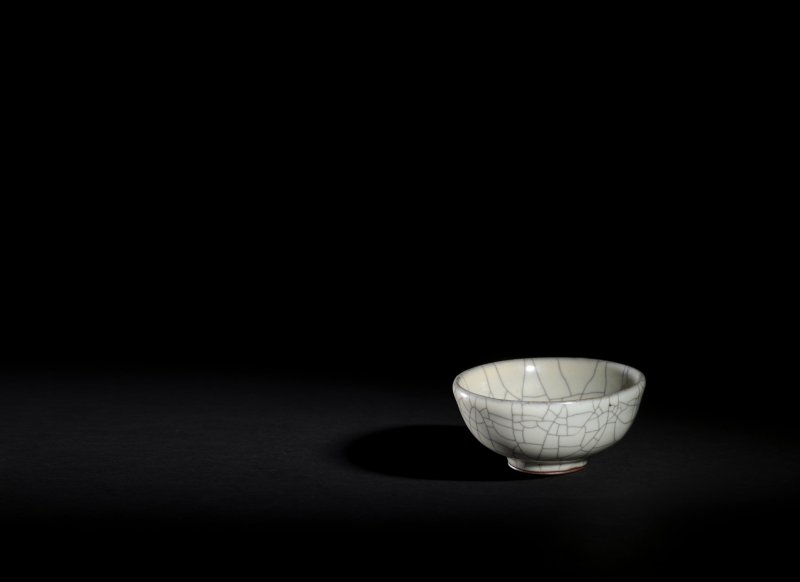
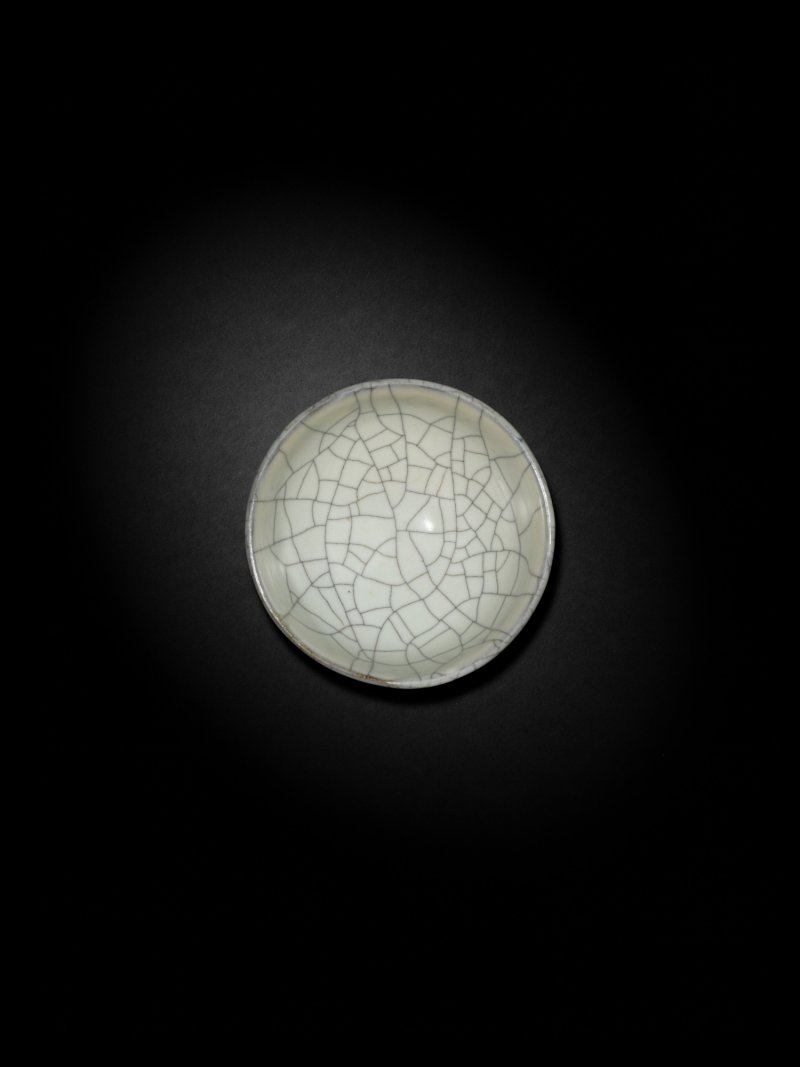
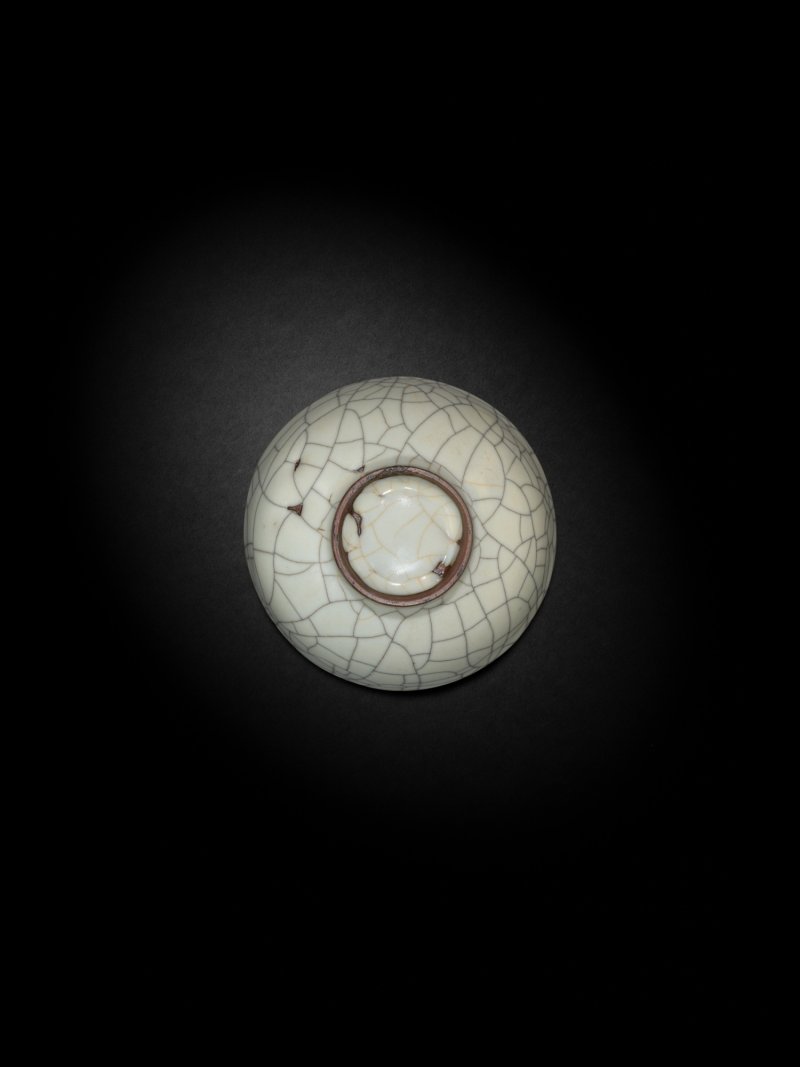
Lot 8009 The Edward T. Chow Guan cup, Southern Song dynasty | 南宋 官窰小盃
落槌价
预展中
成交价
预展中
| 拍卖公司 | 苏富比 |
|---|---|
| 拍卖时间 | 2026年10月30日 |
拍品信息
拍品名称
The Edward T. Chow Guan cup, Southern Song dynasty | 南宋 官窰小盃
起拍价
HKD 15,000,000
估值区间
15,000,000 - 30,000,000 HKD
尺寸
未知
品相
In very good overall condition, with only a minuscule, shallow retouched flake (approx. 0.4 cm) to the inner mouth rim, and another small shallow flake (approx. 0.8 cm) to the footring. A charming small cup with the most attractive, thick and unctuous tactile glaze.
整體品相良好。內口沿及圈足分別見一微小剝痕(分別為約0.4公分及0.8公分),均經潤飾。
If a condition report is provided to assist you with assessing the condition of the lot, it is for guidance purposes only. Such condition report may not refer to all faults, restoration, alterations, or adaptations because Sotheby's is not a professional conservator or restorer but rather a condition report is a statement of subjective, qualified opinion genuinely held by Sotheby's. For these reasons, any such condition report is not an alternative to taking your own professional advice regarding the condition of the lot. Prospective buyers should also refer to the Guide for Buyers at Auction which includes important notices concerning the type of property in this sale.
更多信息
wood stand
7.6 cm
来源:Collection of Edward T. Chow (1910–1980).
Sotheby’s London, 16th December 1980, lot 294.
Sotheby’s Hong Kong, 7th October 2015, lot 3601.
著录:Cécile and Michel Beurdeley, La Ceramique Chinoise, Fribourg, 1974, col. pl. 41 left.
图录
说明:來源
仇焱之(1910–1980年)收藏
倫敦蘇富比1980年12月16日,編號294
香港蘇富比2015年10月7日,編號3601
出版
Cécile 及 Michel Beurdeley,《La Ceramique Chinoise》,弗萊堡,1974年,彩圖41左
Guan yao, the fabled ‘official ware’ specially created for the imperial court of the Southern Song (1127-1279) in Hangzhou, Zhejiang of south China, is perhaps the most desirable and certainly one of the rarest types of Chinese ceramics. Its serenity and seeming simplicity could only be achieved through utmost sophistication. Guan wares were made in very small numbers, and the present cup is an extremely rare example. With its exquisite, unctuous and tactile glaze, attractive crackles, minimalist form and intimate size, the cup is particularly appealing to the eyes and invites being held.
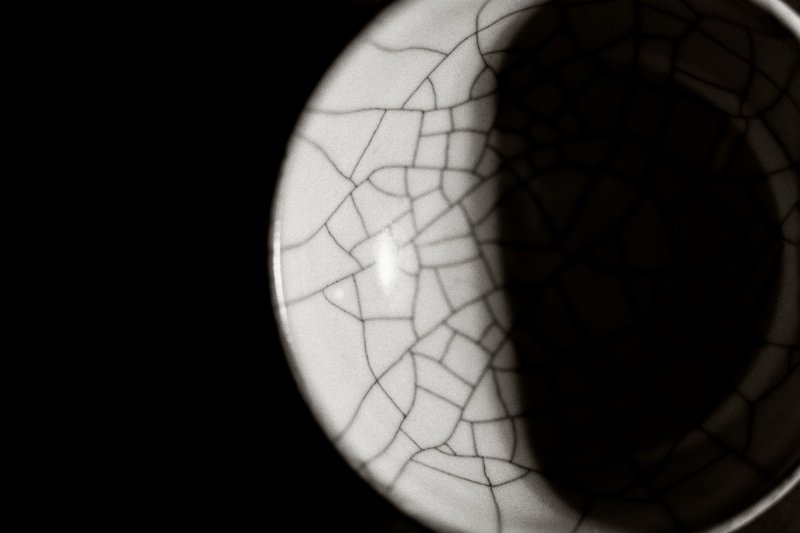
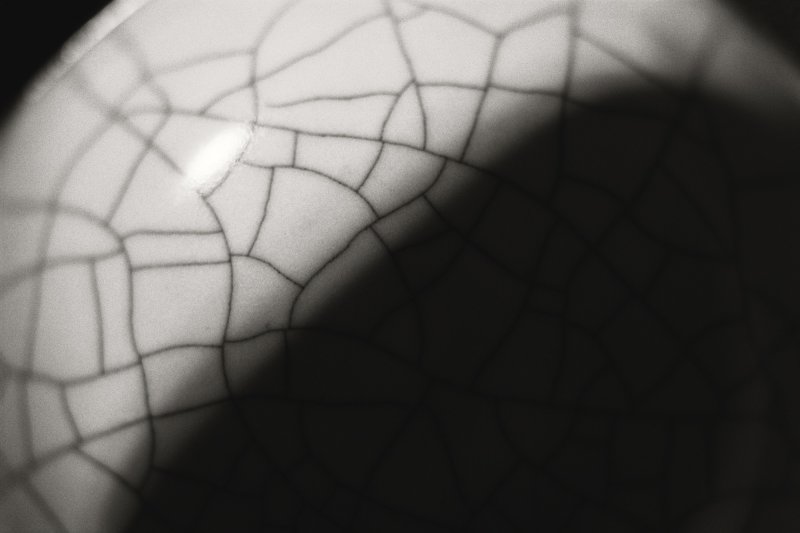
Guan ware is mentioned and lauded already in contemporary texts of the Southern Song period. It showcases Chinese potters at the height of their ingenuity, technical know-how and aesthetic vision. Like great artists and artisans anywhere, they captured – perhaps inadvertently – the zeitgeist of the period in their creations. The works of art they conceived embodied the leitmotifs of China’s highly educated scholar-officials, the non-aristocratic ruling elite of the Song (960-1279). The unctuous glaze of the present cup with its smooth pleasing texture, milky-green tint and subtle gloss was achieved through gradual application of multiple layers and presumably successive firings. The thick coating thus formed softly envelopes the elementary form to create an object that is pleasing to touch. The distinct web of veins of the large-scale crackle was caused by different degrees of shrinkage between the glaze and body material, evoked through a well-controlled cooling process after the last firing and subsequent staining. They act like a design formed by nature, giving the whole piece an aspect as if carved out of a pebble of jade. The dark blackish body visible at the foot adds depth to the glaze and gravitas to the whole object, as it subtly accentuates the shape. In the Qing dynasty (1644-1911), when guan ware was much copied by the imperial kilns of Jingdezhen in Jiangxi province, this dark stoneware body was generally imitated by coating Jingdezhen’s white porcelain with a blackish-brown slip before glazing.
Guan ware cups are exceedingly rare. A similar cup in the Museum of Oriental Ceramics, Osaka, is illustrated in Masterpieces of Chinese and Korean Ceramics in the Ataka Collection, Tokyo, 1980, pl. 85; one from the Milliken collection is illustrated in Henry J. Kleinhenz, 'Porcelains for imperial use: The Sung dynasty', Cleveland Museum of Art Bulletin, April 1978, pp. 135-150, fig. 15; and another one was sold in our London rooms, 2nd March 1971, lot 125.
For a cup of similar form, but with a lobed rim, recovered from the Southern Song imperial kiln site at Laohudong, Hangzhou, see Hangzhou Municipal Institute of Cultural Relics and Archaeology, Hangzhou Laohudong yaozhi ciqi jingxuan [Selection of Ceramics from the Kilnsite at Laohudong, Hangzhou], Beijing, 2002, pl. 124. For a bowl of the same form but larger size, from another imperial kiln site at Jiaotanxia, Hangzhou, see Institute of Archaeology, Chinese Academy of Social Sciences et al, eds., Nan Song guan yao [The guan kiln of the Southern Song dynasty], Beijing, 1996, pl. 9-3, and p. 20, line drawing 17-6. A related bowl of foliate form, from the collections of Sir Alfred Chester Beatty (1875-1968) and Raymond F.A. Riesco, was sold in our London rooms, 23rd October 1953, lot 5, and is illustrated in London Borough Croydon, Riesco Collection of Chinese Ceramics Handlist, Croydon, 1987, p. 6, no. 41.
The cup offered here formerly belonged to Edward T. Chow, one of the most influential figures of the 20th century in the field of Chinese art. The Edward T. Chow Collection that was sold in three parts in 1980–81 in these rooms and in our London rooms and included Ming and Qing Porcelain and Works of Art as well as Early Chinese Ceramics and Ancient Bronzes, is acclaimed as one of the most important collections of Chinese ceramics ever sold at auction.
南宋官窰,成於南方浙江杭州,乃為供御而製,享負盛名,可謂上品重器,寥若晨星。其簡潔端莊,唯覃奧淵涵可達。宋之官窰,昔時成品已少,如今傳世更罕。此一小盃,可謂舉世稀珍。小器簡約悅目,其釉凝脂溫潤、鐵絲開片,邀人抱於掌內,撫弄摩挲。
官窰之瓷,自燒成起,已見時人撰文讚之,證故時匠人神技巧思,盡諳美瓷韻,窰火斑斕處,看盡一代思潮,出窰成品時,溢散趙宋文士雅調。觀此盃釉色略偏粉青,昔日匠人定是緩緩疊施釉層,甚或重覆窰燒,始達如此柔光婉約之效。裹之厚釉,銳角歛藏,婉柔之處,讓人愛不釋手。遙想當時燒成出窰以後,冷卻工夫掌握得宜,繼而潤其色,方得如此鐵線開片,疏朗自然,彷彿瓊玉整塊琢成。胎土黝色,唯足可見。黑褐,悄使色增層次、形添沉穩。宋官之品,清代景德鎮多有仿之,唯胎色潔白,入窰前髹汁黑褐,鐵色可得。
如此官窰盃,猶如鳳毛鱗角,一器難求。大阪東洋陶磁美術館藏一相類官窰盃,收錄於《安宅コレクション東洋陶磁名品図錄》,東京,1980年,圖版85。Milliken 收藏且有一例,刊於 Henry J. Kleinhenz,〈Porcelains for imperial use: The Sung dynasty〉,《Bulletin of the Cleveland Museum of Art》,1978年4月,頁135-150,圖15。還有一盃,售於倫敦蘇富比1971年3月2日,編號125,可作比較。
杭州南宋官窰老虎洞遺址發掘出一花口盃,與此相類,見杭州市文物考古所,《杭州老虎洞遺址瓷器精選》,北京, 2002年,圖版124。杭州郊壇下官窰遺址出土一相類盌,尺寸略大於此,見中國社會科學院考古研究所等編,《南宋官窰》 ,1996年,圖版9-3及頁20,線描圖17-6。另有一花式盌,原先後屬 Alfred Chester Beatty 爵士(1875-1968)及 Raymond F.A. Riesco 雅藏,後售於倫敦蘇富比1953年10月23日,編號5,圖見 London Borough Croydon,《Riesco Collection of Chinese Ceramics Handlist》,Croydon,1987年,頁6,編號41。
此盃原屬仇焱之雅藏。在二十世紀中國藝術的範疇中,仇氏乃叱咤風雲人物之一,其藏涵蓋明清瓷器及工藝品、高古陶瓷、青銅器等,1980–81年香港及倫敦蘇富比三場仇氏珍藏專拍,可謂至今最重要的中國藝術專場拍賣之一。
常见问题
这件The Edward T. Chow Guan cup, Southern Song dynasty | 南宋 官窰小盃的成交价是多少?
落槌价为 预展中。 成交价为 预展中。
拍品的品相状况如何?
In very good overall condition, with only a minuscule, shallow retouched flake (approx. 0.4 cm) to the inner mouth rim, and another small shallow flake (approx. 0.8 cm) to the footring. A charming small cup with the most attractive, thick and unctuous tactile glaze.
整體品相良好。內口沿及圈足分別見一微小剝痕(分別為約0.4公分及0.8公分),均經潤飾。
If a condition report is provided to assist you with assessing the condition of the lot, it is for guidance purposes only. Such condition report may not refer to all faults, restoration, alterations, or adaptations because Sotheby's is not a professional conservator or restorer but rather a condition report is a statement of subjective, qualified opinion genuinely held by Sotheby's. For these reasons, any such condition report is not an alternative to taking your own professional advice regarding the condition of the lot. Prospective buyers should also refer to the Guide for Buyers at Auction which includes important notices concerning the type of property in this sale.
整體品相良好。內口沿及圈足分別見一微小剝痕(分別為約0.4公分及0.8公分),均經潤飾。
If a condition report is provided to assist you with assessing the condition of the lot, it is for guidance purposes only. Such condition report may not refer to all faults, restoration, alterations, or adaptations because Sotheby's is not a professional conservator or restorer but rather a condition report is a statement of subjective, qualified opinion genuinely held by Sotheby's. For these reasons, any such condition report is not an alternative to taking your own professional advice regarding the condition of the lot. Prospective buyers should also refer to the Guide for Buyers at Auction which includes important notices concerning the type of property in this sale.
这件拍品的流传来源是什么?
Collection of Edward T. Chow (1910–1980).
Sotheby’s London, 16th December 1980, lot 294.
Sotheby’s Hong Kong, 7th October 2015, lot 3601.
Sotheby’s London, 16th December 1980, lot 294.
Sotheby’s Hong Kong, 7th October 2015, lot 3601.
这件拍品被哪些著录书籍记载?
Cécile and Michel Beurdeley, La Ceramique Chinoise, Fribourg, 1974, col. pl. 41 left.
图录
图录