
Lot 7 清順治 青花八仙祝壽圖盤 | A LARGE BLUE AND WHITE 'SHOULAO AND THE EIGHT DAOIST IMMORTALS' DISH
落槌价
预展中
成交价
预展中
| 拍卖公司 | 邦瀚斯 |
|---|---|
| 拍卖时间 | 2026年11月05日 |
拍品信息
拍品名称
清順治 青花八仙祝壽圖盤 | A LARGE BLUE AND WHITE 'SHOULAO AND THE EIGHT DAOIST IMMORTALS' DISH
年代
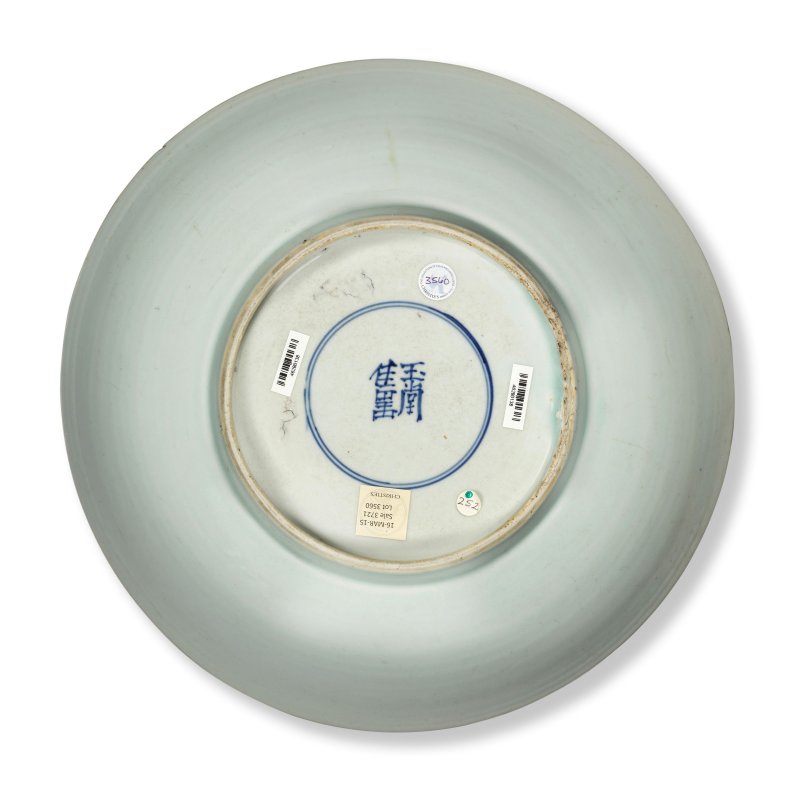
Yutang Jiaqi four-character mark, Shunzhi
起拍价
GBP 25,000
估值区间
GBP 25000 - 35000
尺寸
未知
品相
未知
更多信息
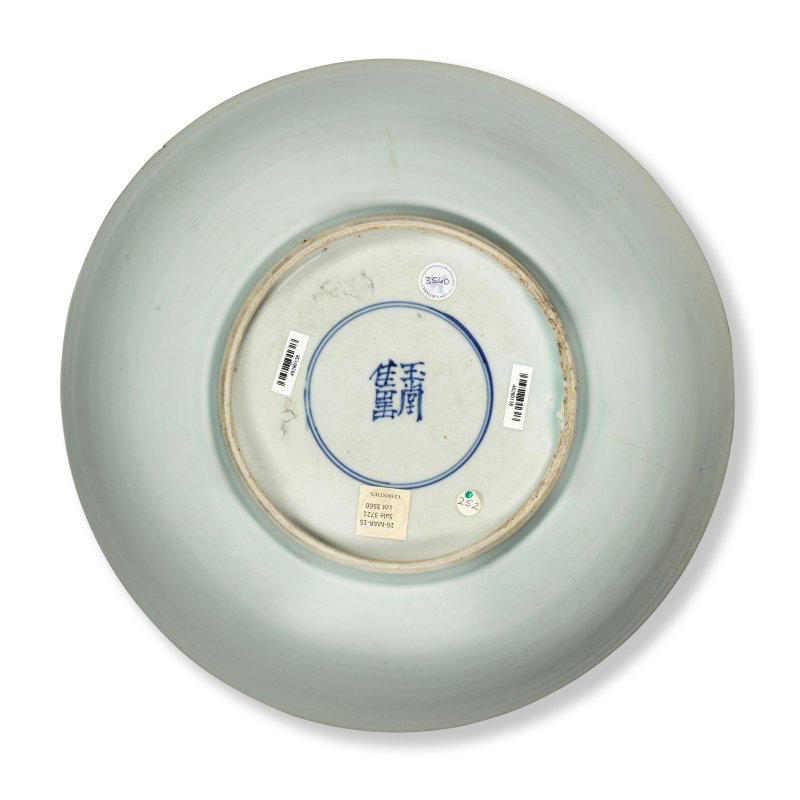
Yutang Jiaqi four-character mark, Shunzhi
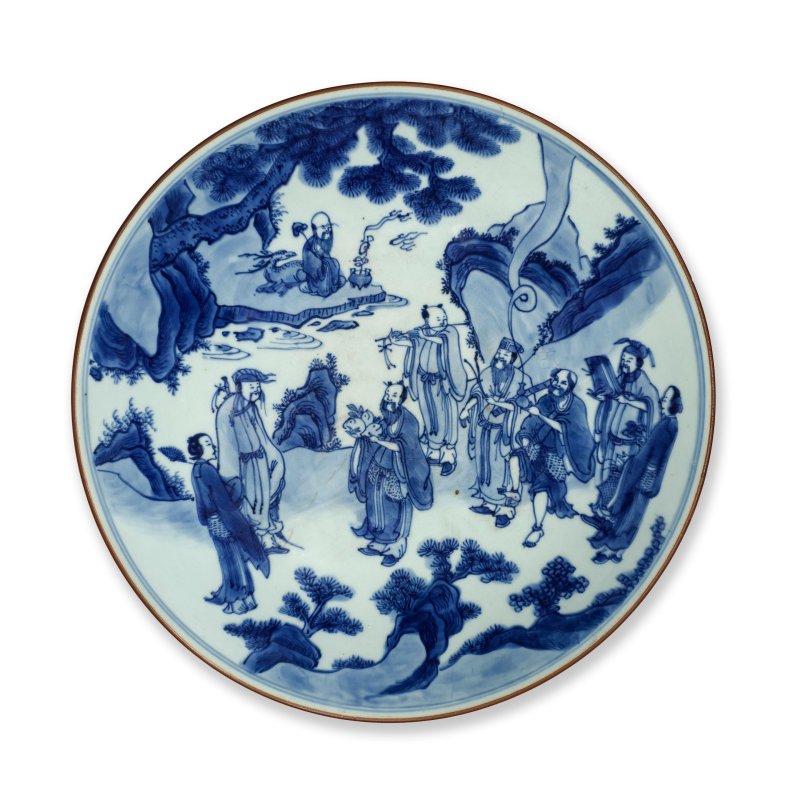
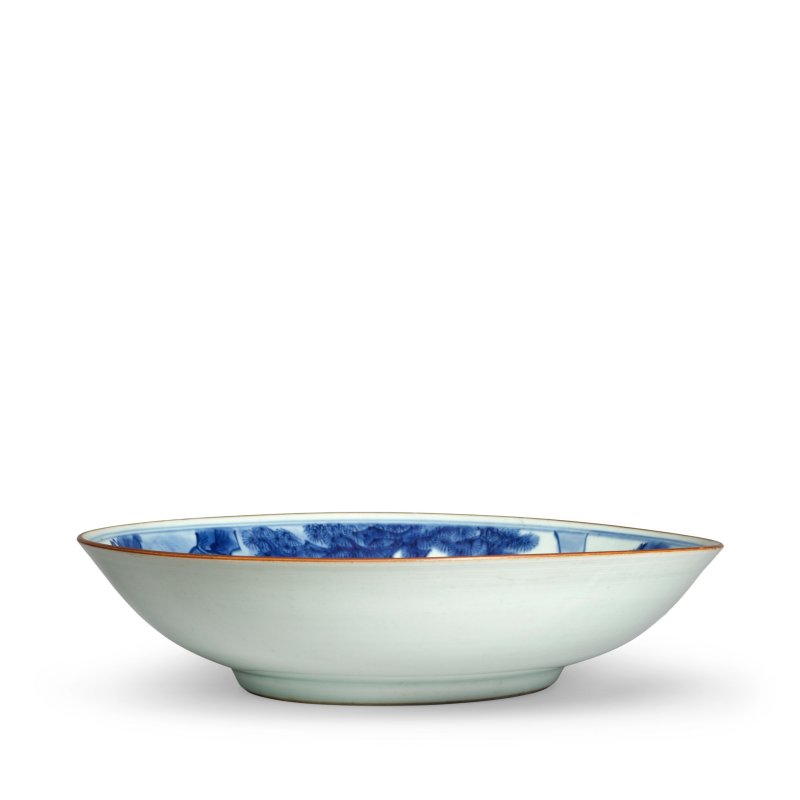
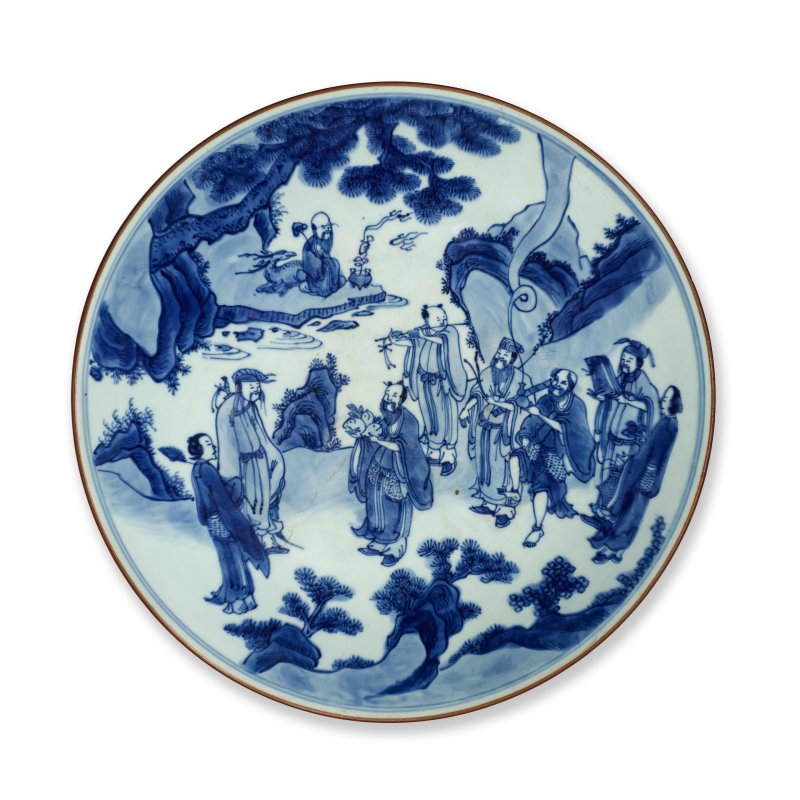
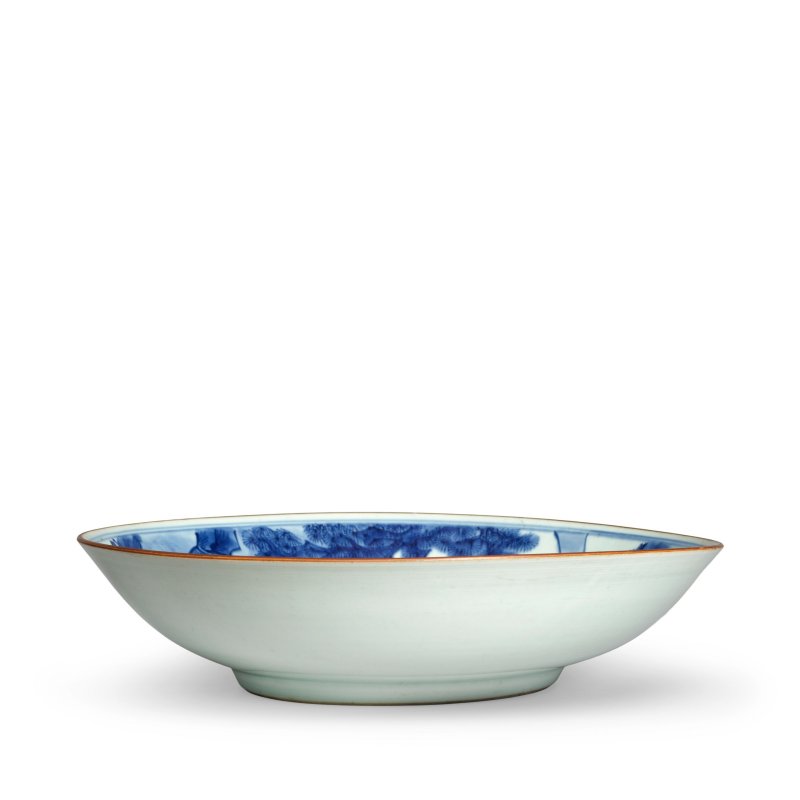
With deeply rounded sides rising from a short inward-tapering foot to a brown-painted rim, the interior painted with a scene depicting the Eight Daoist Immortals bearing their various attributes and paying homage to Shoulao across a stream, Li Tieguai standing amongst them with curling vapours issuing from his magical double-gourd vessel, the smoke rising to form a shou (longevity) character above an incense burner before Shoulao, who is accompanied by a deer, all set within a landscape of rocks and pine trees. 36cm (14 1/8in) diam.
Footnotes
清順治 青花八仙祝壽圖盤
青花「玉堂佳器」楷書款
Provenance:
Sotheby's London, 19 November 1985, lot 4
S. Marchant & Son, London, 1985
Julia and John Curtis, New York
Christie's New York, An Era of Inspiration: 17th-Century Chinese Porcelains from the Collection of Julia and John Curtis, 16 March 2015, lot 3560
倫敦蘇富比,1985年11月19日,拍品編號4
倫敦古董商馬錢特,1985年
朱麗雅及約翰‧柯蒂斯伉儷,紐約
紐約佳士得,"奔放奇逸:朱麗雅及約翰‧柯蒂斯珍藏十七世紀中國瓷器",2015年3月16日,拍品編號3560
The present dish depicts the Eight Immortals paying homage to Shoulao, the God of Longevity, a highly auspicious Daoist subject expressing wishes for longevity, prosperity and protection. Shoulao, one of the principal deities of the Daoist pantheon, is traditionally shown accompanied by a deer, whose name forms a visual rebus for official prosperity () and whose association with longevity further reinforces the auspicious meaning of the composition. The Eight Immortals, each representing different paths of spiritual cultivation and transcendence, are shown in collective veneration before Shoulao, emphasising his supreme authority over longevity and immortality. Such imagery would have carried particular significance during the political uncertainty of the seventeenth century, when porcelains decorated with auspicious themes reflected hopes for enduring prosperity and well-being.
The present dish belongs to an early group of large saucer-dishes that retain stylistic characteristics inherited from High Transitional porcelain, including finely articulated figural drawing, carefully delineated facial features and garments, and the use of the so-called 'fish-roe' texture in the rendering of foliage. Comparable dishes from the later Shunzhi period demonstrate a gradual development towards a more fluid and painterly style. These include an example from the Caromy Hoare collection, illustrated by M.Butler, S.Little and J.Curtis, , Seattle and London, 2002, p.225, no.76, and a dish from the Butler Collection, illustrated by T.Canepa and K.Butler, , London, 2021, p.280.
In these later examples, the treatment of the figures becomes increasingly abbreviated and expressive, while cloud scrolls develop into more formalised swirling and spiralling motifs. Landscape details likewise evolve: grasses are rendered through repeated U-shaped strokes arranged in overlapping rows, while rock formations are constructed through dense, parallel curving lines following the contours of the forms, replacing the dotted texturing characteristic of High Transitional porcelain. In both the Butler and Hoare collection examples, the outlines of the rocks are further reinforced with darker washes, a feature frequently associated with Shunzhi period porcelain painting.
A closely related blue and white dish depicting the Eight Immortals paying homage to Shoulao, Yutang Jiaqi mark, Shunzhi, is in the Palace Museum, Beijing, illustrated in , Beijing, 2005, pp.38–39.
With deeply rounded sides rising from a short inward-tapering foot to a brown-painted rim, the interior painted with a scene depicting the Eight Daoist Immortals bearing their various attributes and paying homage to Shoulao across a stream, Li Tieguai standing amongst them with curling vapours issuing from his magical double-gourd vessel, the smoke rising to form a shou (longevity) character above an incense burner before Shoulao, who is accompanied by a deer, all set within a landscape of rocks and pine trees. 36cm (14 1/8in) diam.
Footnotes
清順治 青花八仙祝壽圖盤
青花「玉堂佳器」楷書款
Provenance:
Sotheby's London, 19 November 1985, lot 4
S. Marchant & Son, London, 1985
Julia and John Curtis, New York
Christie's New York, An Era of Inspiration: 17th-Century Chinese Porcelains from the Collection of Julia and John Curtis, 16 March 2015, lot 3560
倫敦蘇富比,1985年11月19日,拍品編號4
倫敦古董商馬錢特,1985年
朱麗雅及約翰‧柯蒂斯伉儷,紐約
紐約佳士得,"奔放奇逸:朱麗雅及約翰‧柯蒂斯珍藏十七世紀中國瓷器",2015年3月16日,拍品編號3560
The present dish depicts the Eight Immortals paying homage to Shoulao, the God of Longevity, a highly auspicious Daoist subject expressing wishes for longevity, prosperity and protection. Shoulao, one of the principal deities of the Daoist pantheon, is traditionally shown accompanied by a deer, whose name forms a visual rebus for official prosperity () and whose association with longevity further reinforces the auspicious meaning of the composition. The Eight Immortals, each representing different paths of spiritual cultivation and transcendence, are shown in collective veneration before Shoulao, emphasising his supreme authority over longevity and immortality. Such imagery would have carried particular significance during the political uncertainty of the seventeenth century, when porcelains decorated with auspicious themes reflected hopes for enduring prosperity and well-being.
The present dish belongs to an early group of large saucer-dishes that retain stylistic characteristics inherited from High Transitional porcelain, including finely articulated figural drawing, carefully delineated facial features and garments, and the use of the so-called 'fish-roe' texture in the rendering of foliage. Comparable dishes from the later Shunzhi period demonstrate a gradual development towards a more fluid and painterly style. These include an example from the Caromy Hoare collection, illustrated by M.Butler, S.Little and J.Curtis, , Seattle and London, 2002, p.225, no.76, and a dish from the Butler Collection, illustrated by T.Canepa and K.Butler, , London, 2021, p.280.
In these later examples, the treatment of the figures becomes increasingly abbreviated and expressive, while cloud scrolls develop into more formalised swirling and spiralling motifs. Landscape details likewise evolve: grasses are rendered through repeated U-shaped strokes arranged in overlapping rows, while rock formations are constructed through dense, parallel curving lines following the contours of the forms, replacing the dotted texturing characteristic of High Transitional porcelain. In both the Butler and Hoare collection examples, the outlines of the rocks are further reinforced with darker washes, a feature frequently associated with Shunzhi period porcelain painting.
A closely related blue and white dish depicting the Eight Immortals paying homage to Shoulao, Yutang Jiaqi mark, Shunzhi, is in the Palace Museum, Beijing, illustrated in , Beijing, 2005, pp.38–39.
常见问题
这件清順治 青花八仙祝壽圖盤 | A LARGE BLUE AND WHITE 'SHOULAO AND THE EIGHT DAOIST IMMORTALS' DISH的成交价是多少?
落槌价为 预展中。 成交价为 预展中。