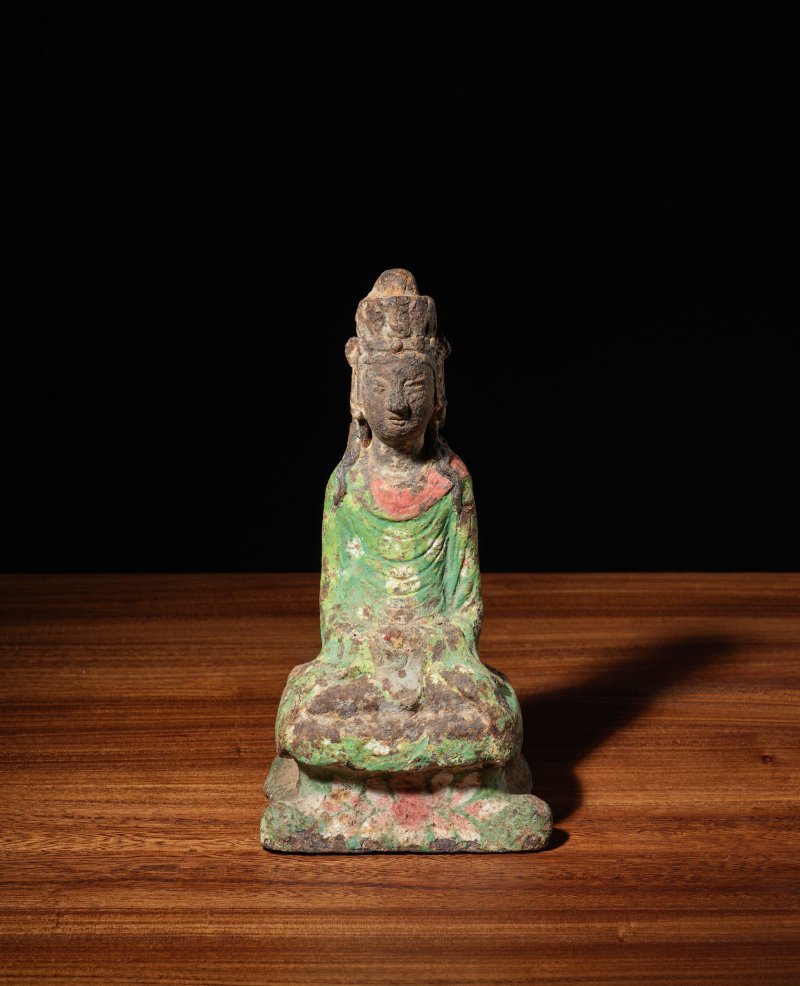

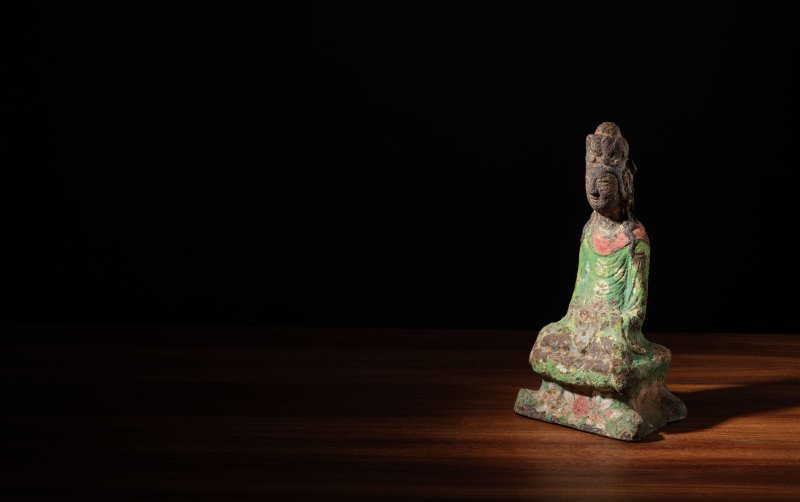
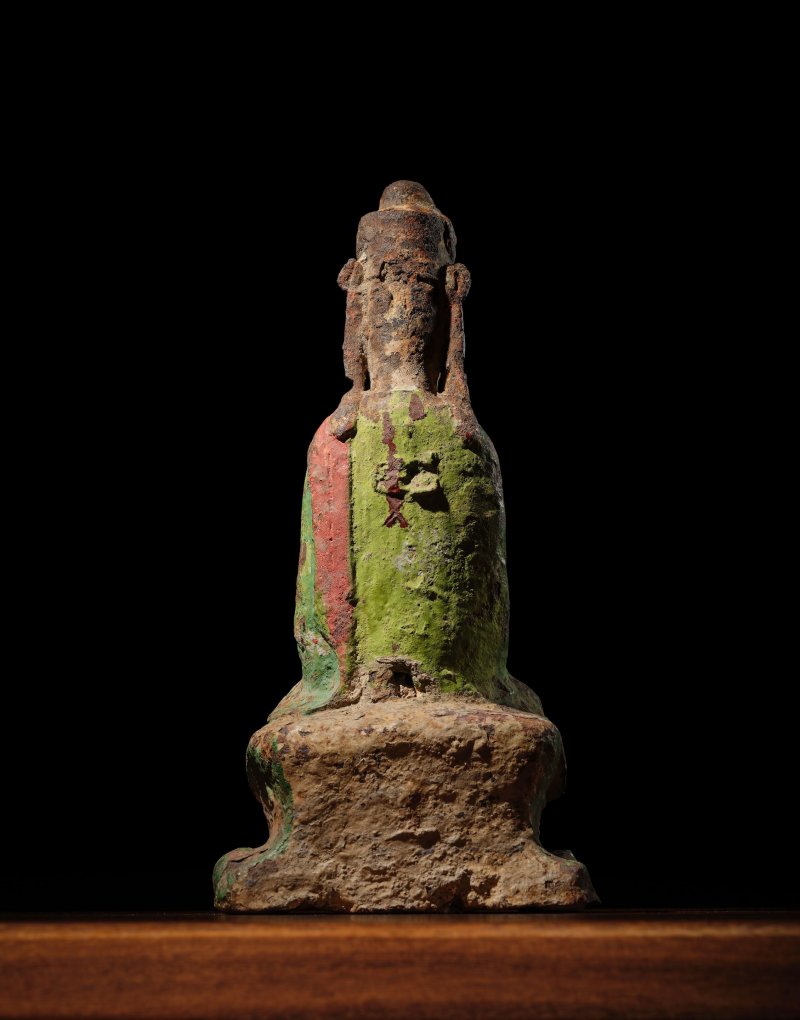
Lot 106 十一至十三世紀 或為西夏 鐵加彩菩薩坐像 | A RARE POLYCHROME-DECORATED IRON FIGURE OF A SEATED BODHISATTVA
落槌价
预展中
成交价
预展中
| 拍卖公司 | 邦瀚斯 |
|---|---|
| 拍卖时间 | 2026年10月28日 |
拍品信息
拍品名称
十一至十三世紀 或為西夏 鐵加彩菩薩坐像 | A RARE POLYCHROME-DECORATED IRON FIGURE OF A SEATED BODHISATTVA
年代
11th-13th century, Probably Xixia
起拍价
HKD 300,000
估值区间
HKD 300000 - 500000
尺寸
未知
品相
未知
更多信息
11th-13th century, Probably Xixia
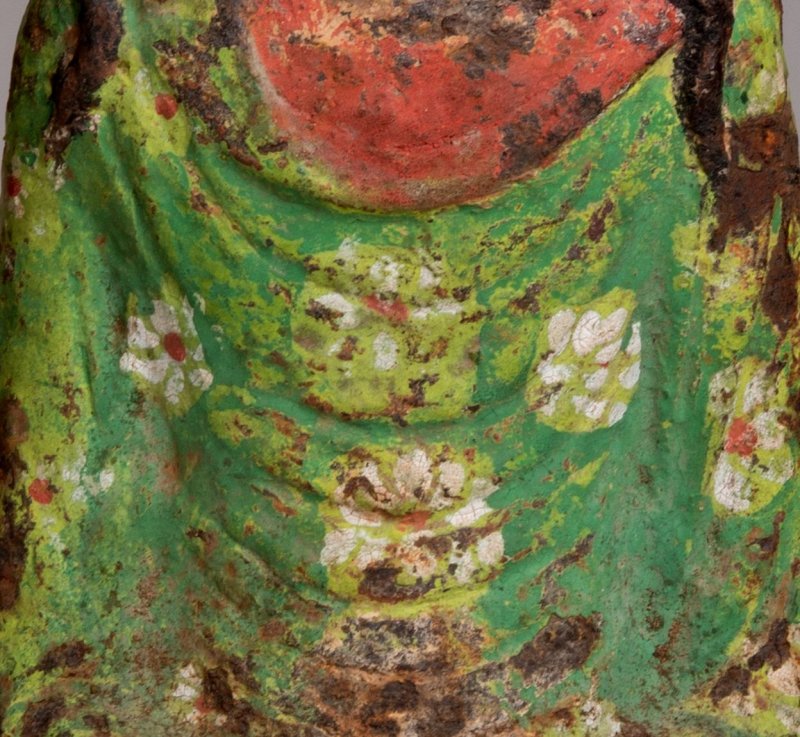
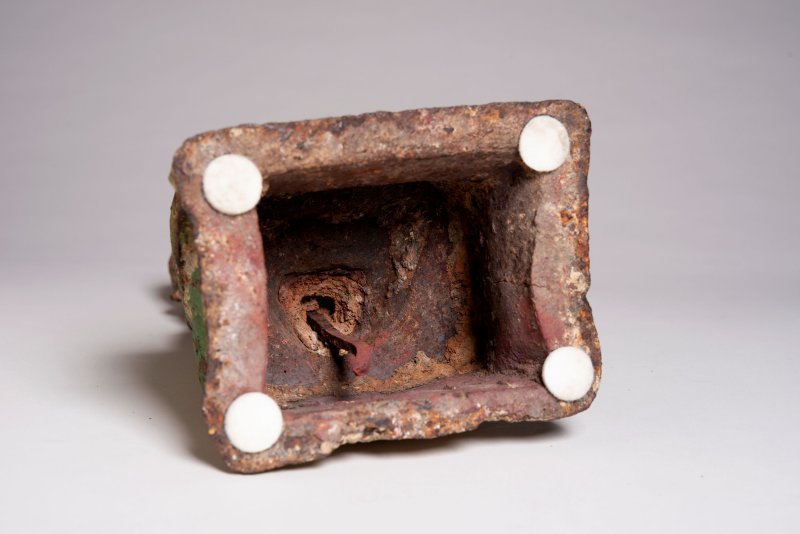
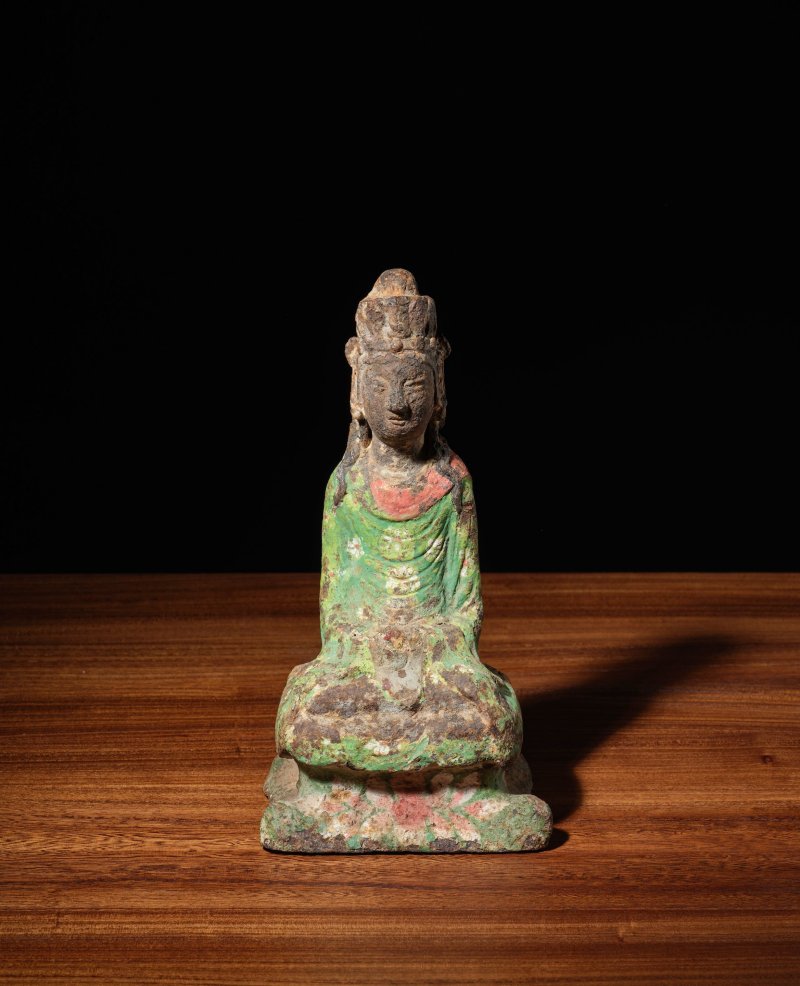
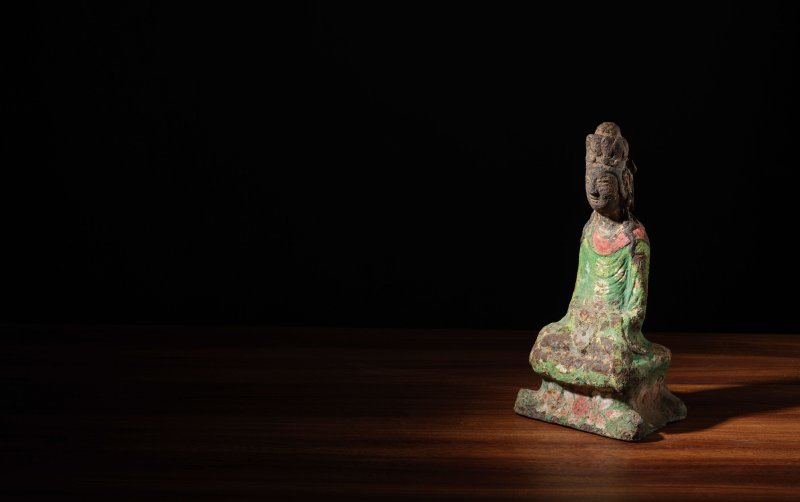
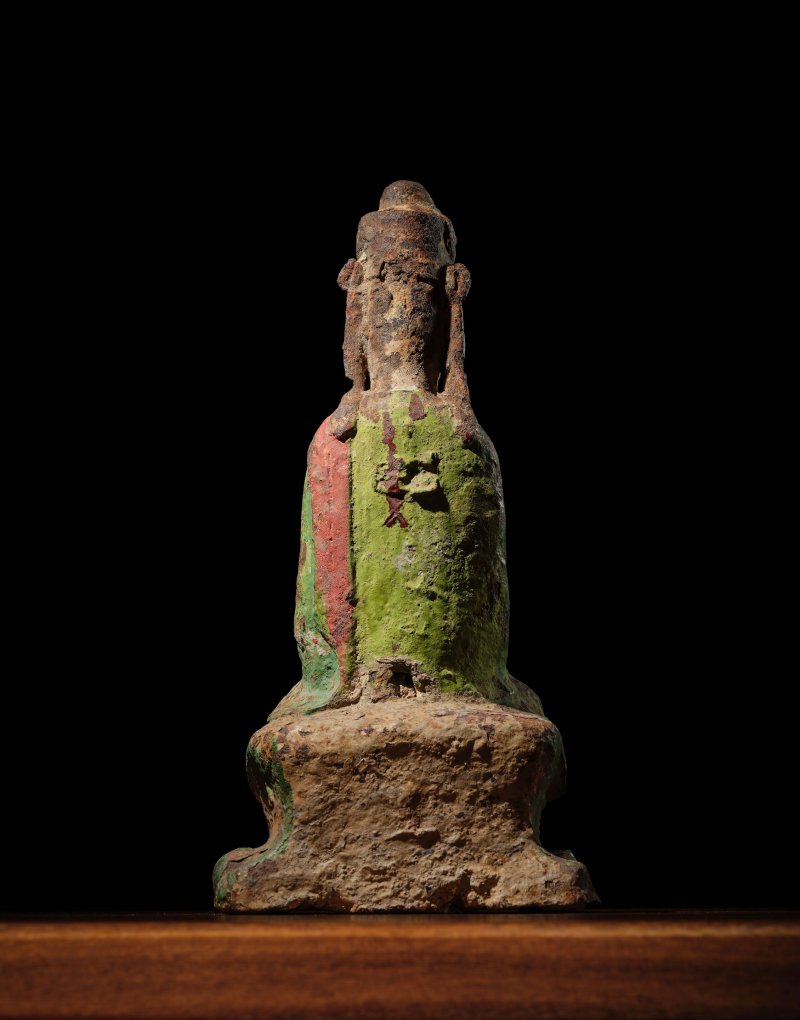
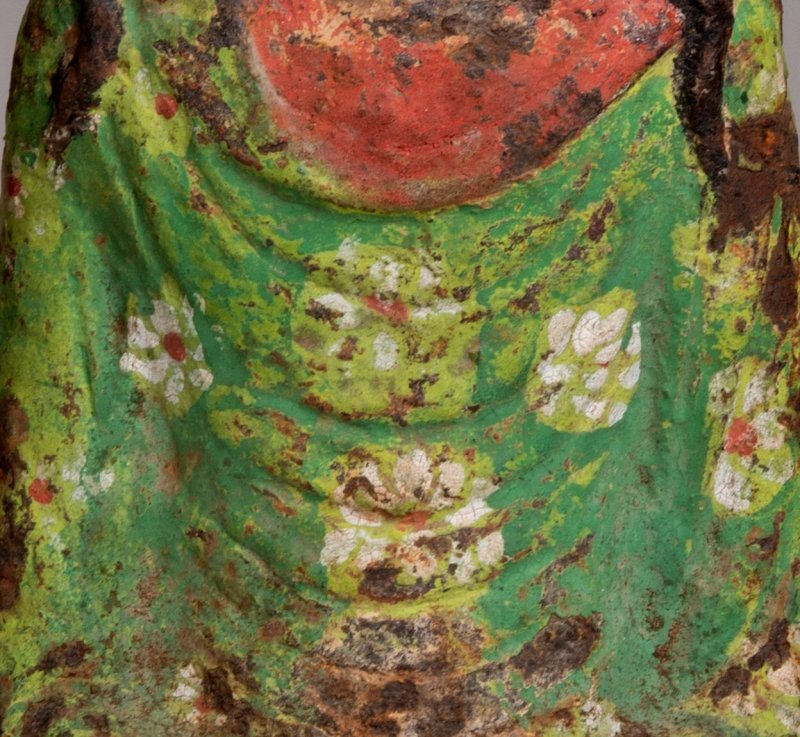
The deity cast with a broad, dignified face rendered with downcast eyes set below arched brows, the head surmounted by a tall, structured crown framing thick hair tresses that cascade over each shoulder, the upright torso clad in monastic robes with hands resting gently in the lap in dhyanamudra, the heavy drapery falling in neat folds over the legs to drape over the front of a square lotus pedestal, the robes vividly decorated with scattered white floral medallions against a rich malachite green ground, the lotus base picked out in red and green tones, all retaining extensive remnants of historic polychromy.
Fitted box. 31.7cm (12 1/2in) high (2).
Footnotes
十一至十三世紀 或為西夏 鐵加彩菩薩坐像
Provenance:
Acquired in 1995
Exhibited, Published and Illustrated:
The Taiwan Antique Dealers' Association, Chang Foundation, Taipei, 2002, p.121
1995年購藏
《聚英雅集》,鴻禧美術館,台北,2002年,頁121
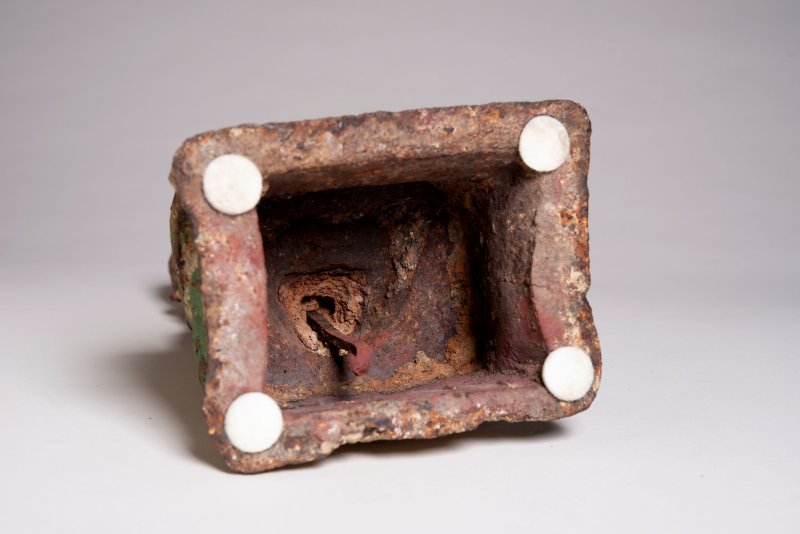
Cast iron figures of this period are exceptionally rare survivals, as the medium was far more susceptible to oxidation and corrosion over time than bronze or wood. The use of cast iron is particularly significant, as the Western Xia Kingdom (1038–1227) was renowned for its sophisticated metallurgy and state-controlled iron works, producing high-quality devotional imagery as well as arms and armour.
This sculpture depicts a crowned Bodhisattva clad in monastic robes over with long tresses cascading over the shoulders and seated upon a rigid square lotus pedestal. The outer robes are decorated with delicate scattered floral medallions () picked out against a prominent malachite-green field. This distinct palette directly invokes 'Western Xia Green', the signature mineral pigment celebrated in Tangut wall paintings across Gansu province. A closely related palette is observed in a mural at No. 1 Cave at Wugemiao grotto, depicting a Thousand-Armed Avalokiteśvara painted in similar tones to the present figure (published in Guo Zirui, 'The Inheritance and Innovation of Visual Culture of Esoteric Buddhism in the Tang and Song Dynasties: A Research on the Image of Eleven-headed and Thousand-armed Avalokiteśvara at Wugemiao Cave 1', , Vol. 2, 2025, p. 4–14, fig. 1). A further comparison can be drawn to a 13th-century thangka from Khara-Khoto (the northern stronghold of the Western Xia state) depicting Ṣadakṣarī Avalokiteśvara, preserved at The State Russian Museum, Saint Petersburg, included in the exhibition , Taipei, 1996, cat. no. 133). Furthermore, closely related colour schemes dominated by vibrant red and green tones are characteristic of Jin dynasty ceramics, such as a painted Cizhou bowl decorated with a prominent peony, preserved at The Metropolitan Museum of Art, New York (acc. no. 26.292.64). The combination of specialised Tangut iron manufacture, rare iconographic attire, and characteristic regional colouration suggests an attribution to a Western Xia origin an ddate for this rare figure
中古時期的鐵造像極為罕見,蓋因鐵質於歲月侵蝕下,相較於青銅或木雕更易氧化腐蝕,存世殊為不易。鐵材之運用尤具重要意義,西夏王國(1038–1227年)以精湛之冶煉技術及官營鐵務聞名,不僅製作兵器甲冑,亦造就諸多造像精品。
本尊造像塑造菩薩頭戴寶冠,身披袈裟,長髮流蘇散落雙肩,結跏趺坐於方 正之蓮座上。衣褶間飾以細緻之團花紋,襯以濃艷之綠地。此種獨特配色直指 「西夏綠」— 即甘肅地區西夏壁畫中所推崇之標誌性礦物顏料,正如甘肅 五個廟石窟第1窟壁畫中描繪之千手觀音像,其用色與本品如出一轍,參見郭子睿〈唐宋密教視覺文化的傳承與新變——五個廟石窟第1窟千手千眼觀 音像研究〉,《西夏研究》,2025年第2期,頁4-14,圖1;另可參考黑水城(西夏都城)出土、繪有觀音之十三世紀唐卡,現藏於聖彼得堡國立俄羅斯博物館,曾參展於《絲路上消失的王國:西夏黑水城的佛教藝術》,台北,1996年,編號 133。甘肅省瓜州榆林窟第002窟,西夏時期壁畫以及西夏博物館之西夏王陵復原模型,皆標誌著「西夏綠」為夏代的強烈風格甚至是皇家王陵 用色。此外,以濃艷紅綠兩色為主調之相似配色,亦常見於金代陶瓷,如紐約大都會藝術博物館藏一件繪有折枝牡丹紋之金代磁州窯紅綠彩碗(館藏編 號:26.292.64)。本尊造像融匯西夏特有之鑄鐵工藝、罕見之服飾造型,以及具顯著地域特色之色彩風格,或為西夏時期之傑作。
The deity cast with a broad, dignified face rendered with downcast eyes set below arched brows, the head surmounted by a tall, structured crown framing thick hair tresses that cascade over each shoulder, the upright torso clad in monastic robes with hands resting gently in the lap in dhyanamudra, the heavy drapery falling in neat folds over the legs to drape over the front of a square lotus pedestal, the robes vividly decorated with scattered white floral medallions against a rich malachite green ground, the lotus base picked out in red and green tones, all retaining extensive remnants of historic polychromy.
Fitted box. 31.7cm (12 1/2in) high (2).
Footnotes
十一至十三世紀 或為西夏 鐵加彩菩薩坐像
Provenance:
Acquired in 1995
Exhibited, Published and Illustrated:
The Taiwan Antique Dealers' Association, Chang Foundation, Taipei, 2002, p.121
1995年購藏
《聚英雅集》,鴻禧美術館,台北,2002年,頁121
Cast iron figures of this period are exceptionally rare survivals, as the medium was far more susceptible to oxidation and corrosion over time than bronze or wood. The use of cast iron is particularly significant, as the Western Xia Kingdom (1038–1227) was renowned for its sophisticated metallurgy and state-controlled iron works, producing high-quality devotional imagery as well as arms and armour.
This sculpture depicts a crowned Bodhisattva clad in monastic robes over with long tresses cascading over the shoulders and seated upon a rigid square lotus pedestal. The outer robes are decorated with delicate scattered floral medallions () picked out against a prominent malachite-green field. This distinct palette directly invokes 'Western Xia Green', the signature mineral pigment celebrated in Tangut wall paintings across Gansu province. A closely related palette is observed in a mural at No. 1 Cave at Wugemiao grotto, depicting a Thousand-Armed Avalokiteśvara painted in similar tones to the present figure (published in Guo Zirui, 'The Inheritance and Innovation of Visual Culture of Esoteric Buddhism in the Tang and Song Dynasties: A Research on the Image of Eleven-headed and Thousand-armed Avalokiteśvara at Wugemiao Cave 1', , Vol. 2, 2025, p. 4–14, fig. 1). A further comparison can be drawn to a 13th-century thangka from Khara-Khoto (the northern stronghold of the Western Xia state) depicting Ṣadakṣarī Avalokiteśvara, preserved at The State Russian Museum, Saint Petersburg, included in the exhibition , Taipei, 1996, cat. no. 133). Furthermore, closely related colour schemes dominated by vibrant red and green tones are characteristic of Jin dynasty ceramics, such as a painted Cizhou bowl decorated with a prominent peony, preserved at The Metropolitan Museum of Art, New York (acc. no. 26.292.64). The combination of specialised Tangut iron manufacture, rare iconographic attire, and characteristic regional colouration suggests an attribution to a Western Xia origin an ddate for this rare figure
中古時期的鐵造像極為罕見,蓋因鐵質於歲月侵蝕下,相較於青銅或木雕更易氧化腐蝕,存世殊為不易。鐵材之運用尤具重要意義,西夏王國(1038–1227年)以精湛之冶煉技術及官營鐵務聞名,不僅製作兵器甲冑,亦造就諸多造像精品。
本尊造像塑造菩薩頭戴寶冠,身披袈裟,長髮流蘇散落雙肩,結跏趺坐於方 正之蓮座上。衣褶間飾以細緻之團花紋,襯以濃艷之綠地。此種獨特配色直指 「西夏綠」— 即甘肅地區西夏壁畫中所推崇之標誌性礦物顏料,正如甘肅 五個廟石窟第1窟壁畫中描繪之千手觀音像,其用色與本品如出一轍,參見郭子睿〈唐宋密教視覺文化的傳承與新變——五個廟石窟第1窟千手千眼觀 音像研究〉,《西夏研究》,2025年第2期,頁4-14,圖1;另可參考黑水城(西夏都城)出土、繪有觀音之十三世紀唐卡,現藏於聖彼得堡國立俄羅斯博物館,曾參展於《絲路上消失的王國:西夏黑水城的佛教藝術》,台北,1996年,編號 133。甘肅省瓜州榆林窟第002窟,西夏時期壁畫以及西夏博物館之西夏王陵復原模型,皆標誌著「西夏綠」為夏代的強烈風格甚至是皇家王陵 用色。此外,以濃艷紅綠兩色為主調之相似配色,亦常見於金代陶瓷,如紐約大都會藝術博物館藏一件繪有折枝牡丹紋之金代磁州窯紅綠彩碗(館藏編 號:26.292.64)。本尊造像融匯西夏特有之鑄鐵工藝、罕見之服飾造型,以及具顯著地域特色之色彩風格,或為西夏時期之傑作。
常见问题
这件十一至十三世紀 或為西夏 鐵加彩菩薩坐像 | A RARE POLYCHROME-DECORATED IRON FIGURE OF A SEATED BODHISATTVA的成交价是多少?
落槌价为 预展中。 成交价为 预展中。