
拍品信息
拍品名称
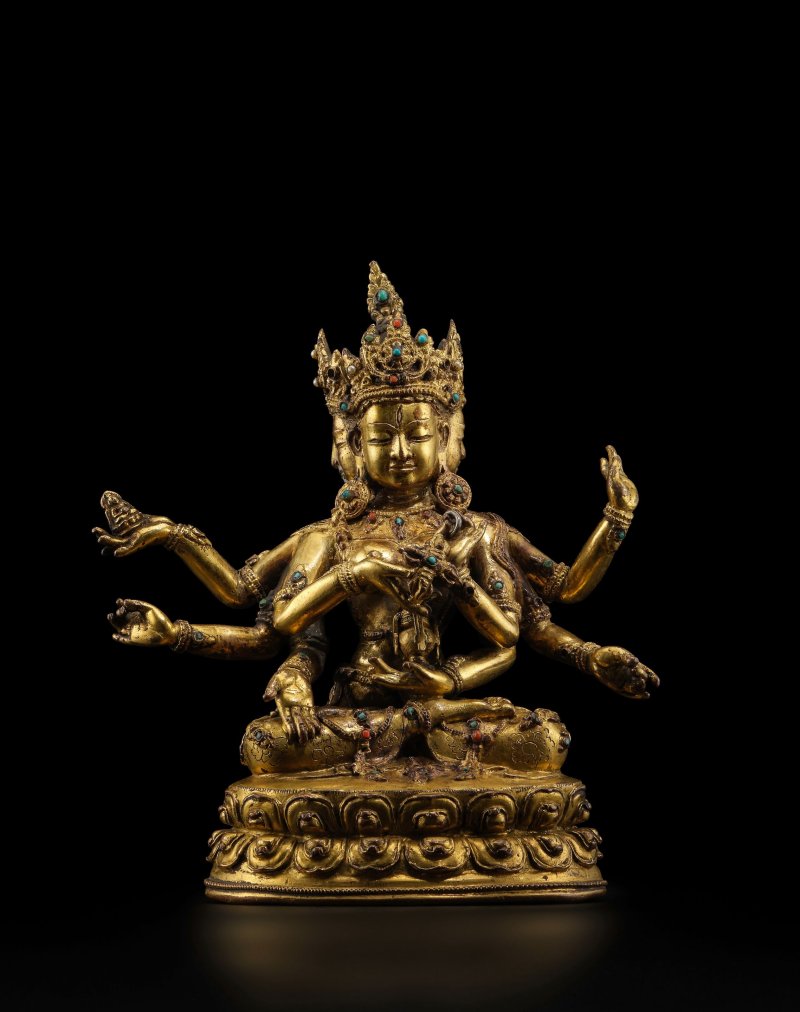
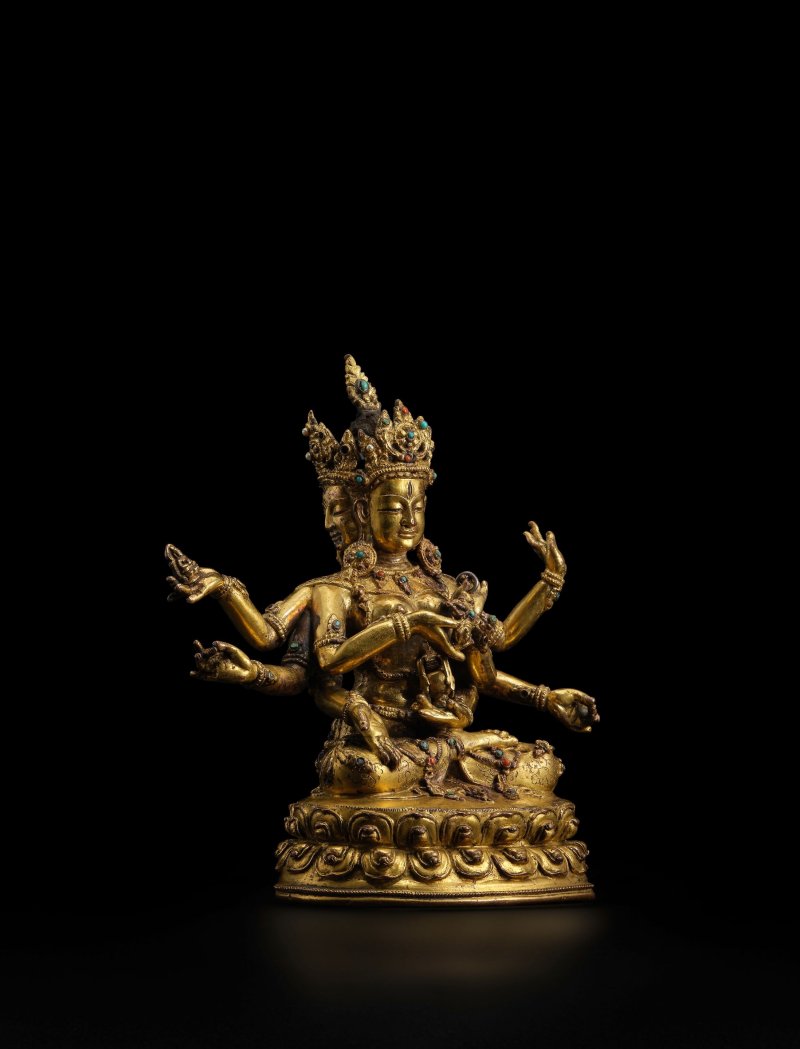
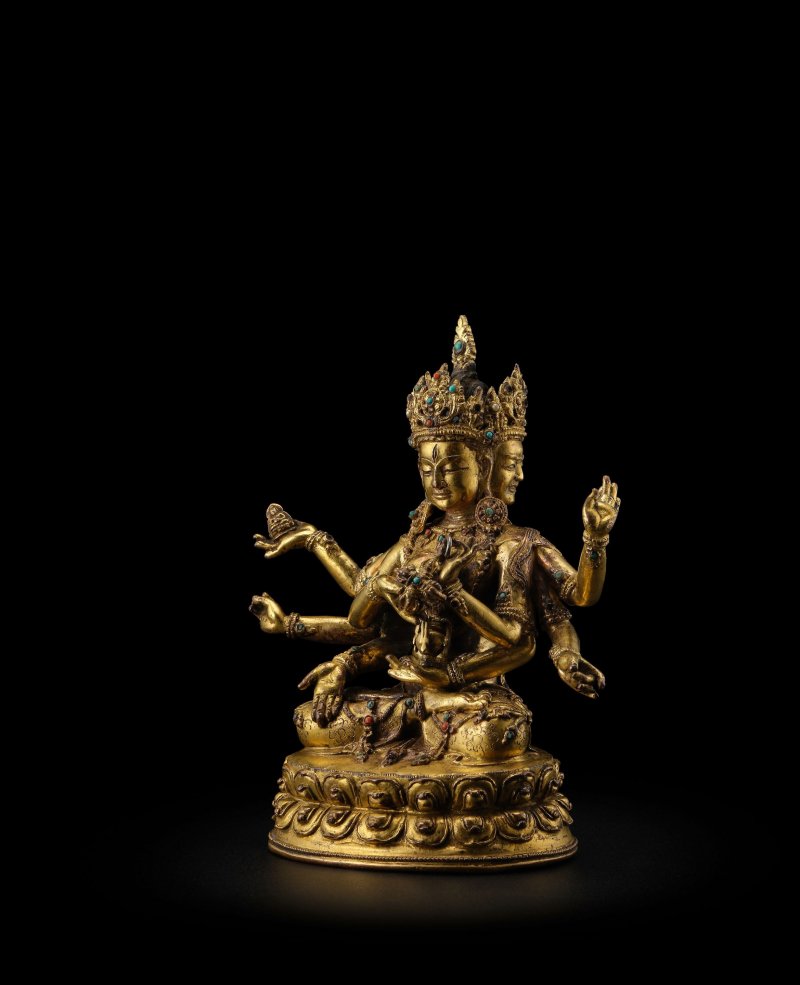
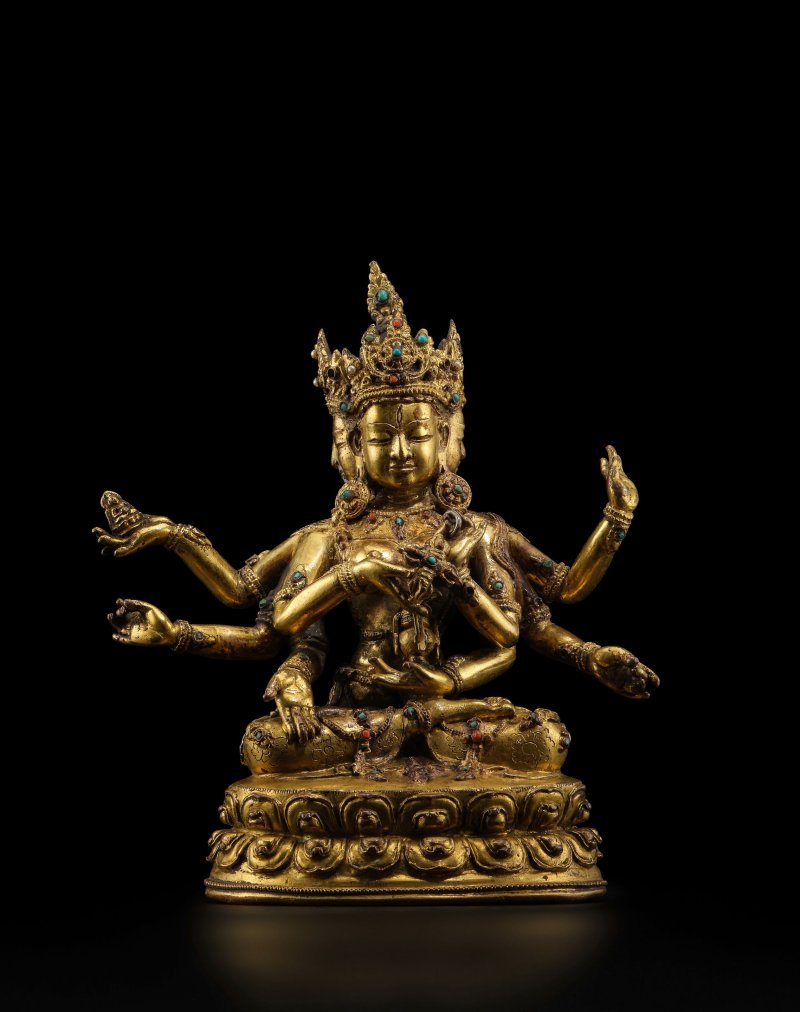
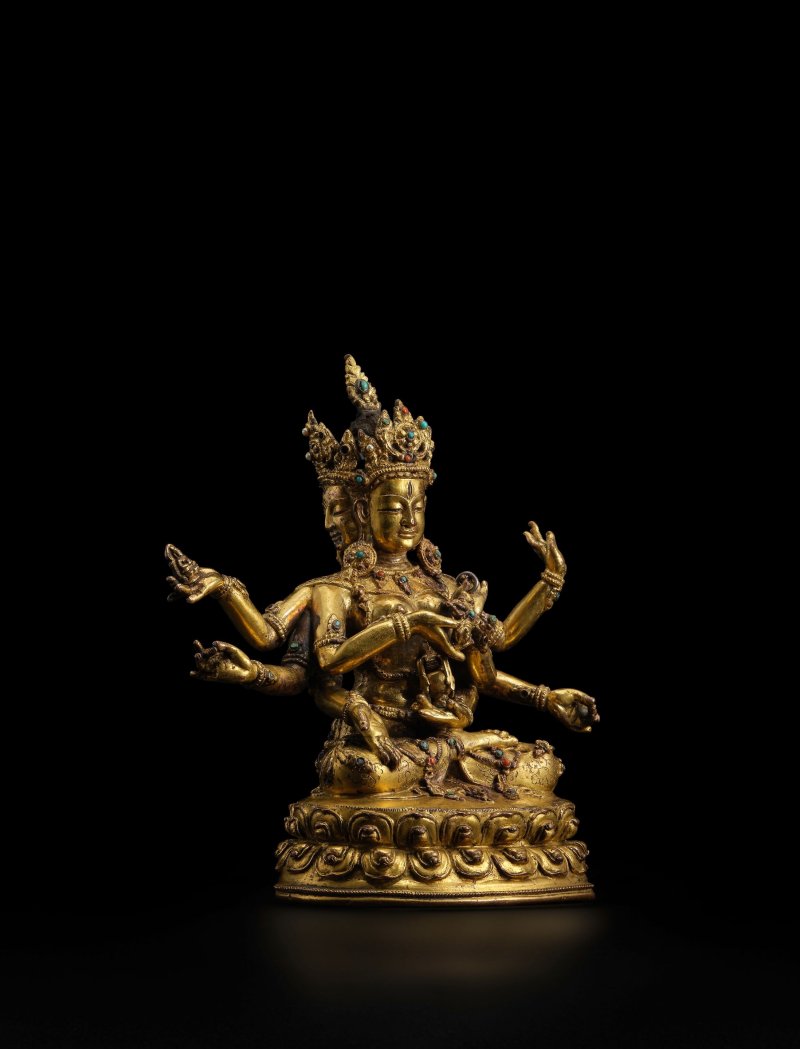
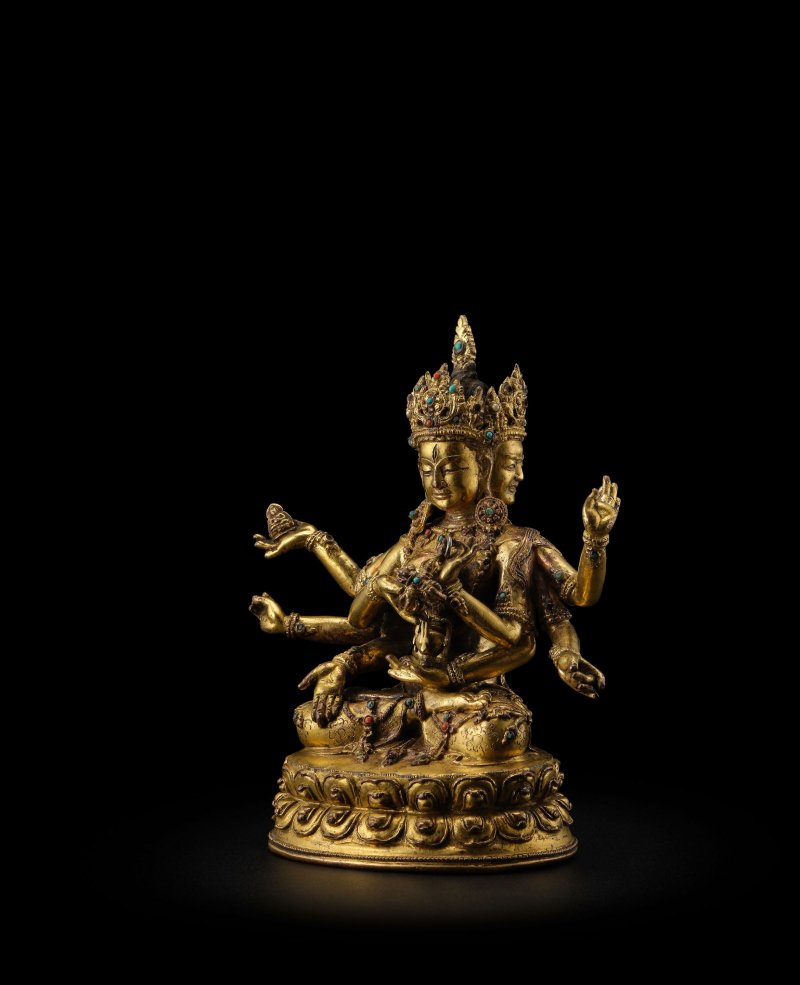
西藏 十五世紀 銅鎏金尊勝佛母像 | A GILT COPPER ALLOY FIGURE OF USHNISHAVIJAYA
年代
TIBET, 15TH CENTURY
起拍价
HKD 400,000
估值区间
HKD 400000 - 600000
尺寸
未知
品相
未知
更多信息
TIBET, 15TH CENTURY
Himalayan Art Resources item no. 207016
16.8 cm (6 5/8 in.) high
Footnotes
西藏 十五世紀 銅鎏金尊勝佛母像
Provenance
Jules Speelman Collection, London
Ushnishavijaya, literally the "Victorious One of the Ushnisha," is a Buddhist deity associated with longevity, the accumulation of merit and favorable rebirth. She is readily identified by her three faces and eight arms, as well as by the distinctive attributes she carries. The small, seated Buddha held in her upper right hand refers to her close association with the Buddha and his enlightened wisdom, while the four-pronged vajra held between her two principal hands symbolizes indestructible spiritual power. Her lowest pair of hands display the gesture of beneficence and hold a covered vase, associated with the bestowal of longevity.
The cult of Ushnishavijaya became particularly important in Tibetan and Nepalese Buddhist practice, where she forms part of a group of deities associated with longevity. Her name refers to the , the cranial protuberance that marks a Buddha, and she is understood as its personification. Devotional practices dedicated to her were believed to prolong life, avert untimely death and secure favorable rebirth. Such practices were closely associated with the accumulation of merit and the purification of negative karma.
The present sculpture exemplifies the refined aesthetic of 15th-century Tibetan Buddhist sculpture, particularly in its elaborate jewelry, expressive modelling of the three faces, and carefully articulated attributes. Central Tibetan bronzes of this period are characterised by lavish gilding, slender figural proportions, and turquoise-set jewelry. The treatment of the five-pointed headdress, curls of hair at the forehead, and facial type recalls a gilt-bronze Avalokiteshvara Sahasrabhuja Ekadasamukha sold at Bonhams, New York, 19 March 2018, lot 3033. Compare also the treatment of the faces, headdress, and jewelry with an Ushnishavijaya sold at Christie's, New York, 20 March 2019, lot 116.
Himalayan Art Resources item no. 207016
16.8 cm (6 5/8 in.) high
Footnotes
西藏 十五世紀 銅鎏金尊勝佛母像
Provenance
Jules Speelman Collection, London
Ushnishavijaya, literally the "Victorious One of the Ushnisha," is a Buddhist deity associated with longevity, the accumulation of merit and favorable rebirth. She is readily identified by her three faces and eight arms, as well as by the distinctive attributes she carries. The small, seated Buddha held in her upper right hand refers to her close association with the Buddha and his enlightened wisdom, while the four-pronged vajra held between her two principal hands symbolizes indestructible spiritual power. Her lowest pair of hands display the gesture of beneficence and hold a covered vase, associated with the bestowal of longevity.
The cult of Ushnishavijaya became particularly important in Tibetan and Nepalese Buddhist practice, where she forms part of a group of deities associated with longevity. Her name refers to the , the cranial protuberance that marks a Buddha, and she is understood as its personification. Devotional practices dedicated to her were believed to prolong life, avert untimely death and secure favorable rebirth. Such practices were closely associated with the accumulation of merit and the purification of negative karma.
The present sculpture exemplifies the refined aesthetic of 15th-century Tibetan Buddhist sculpture, particularly in its elaborate jewelry, expressive modelling of the three faces, and carefully articulated attributes. Central Tibetan bronzes of this period are characterised by lavish gilding, slender figural proportions, and turquoise-set jewelry. The treatment of the five-pointed headdress, curls of hair at the forehead, and facial type recalls a gilt-bronze Avalokiteshvara Sahasrabhuja Ekadasamukha sold at Bonhams, New York, 19 March 2018, lot 3033. Compare also the treatment of the faces, headdress, and jewelry with an Ushnishavijaya sold at Christie's, New York, 20 March 2019, lot 116.
常见问题
这件西藏 十五世紀 銅鎏金尊勝佛母像 | A GILT COPPER ALLOY FIGURE OF USHNISHAVIJAYA的成交价是多少?
落槌价为 预展中。 成交价为 预展中。