
拍品信息
拍品名称
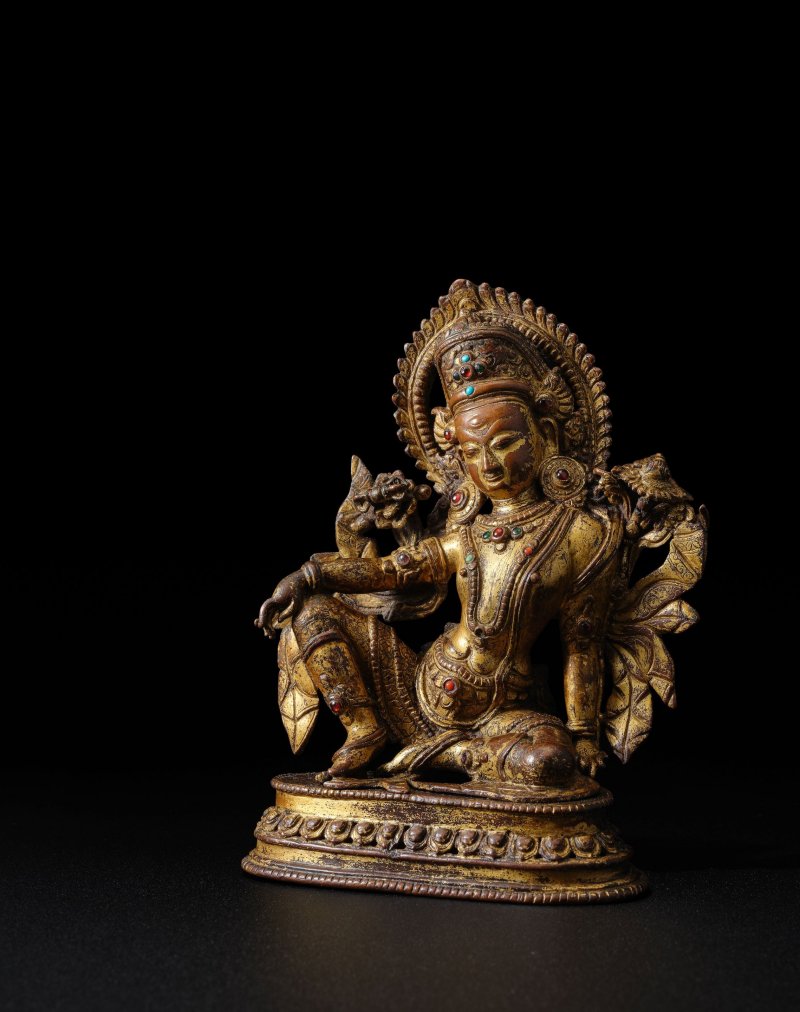
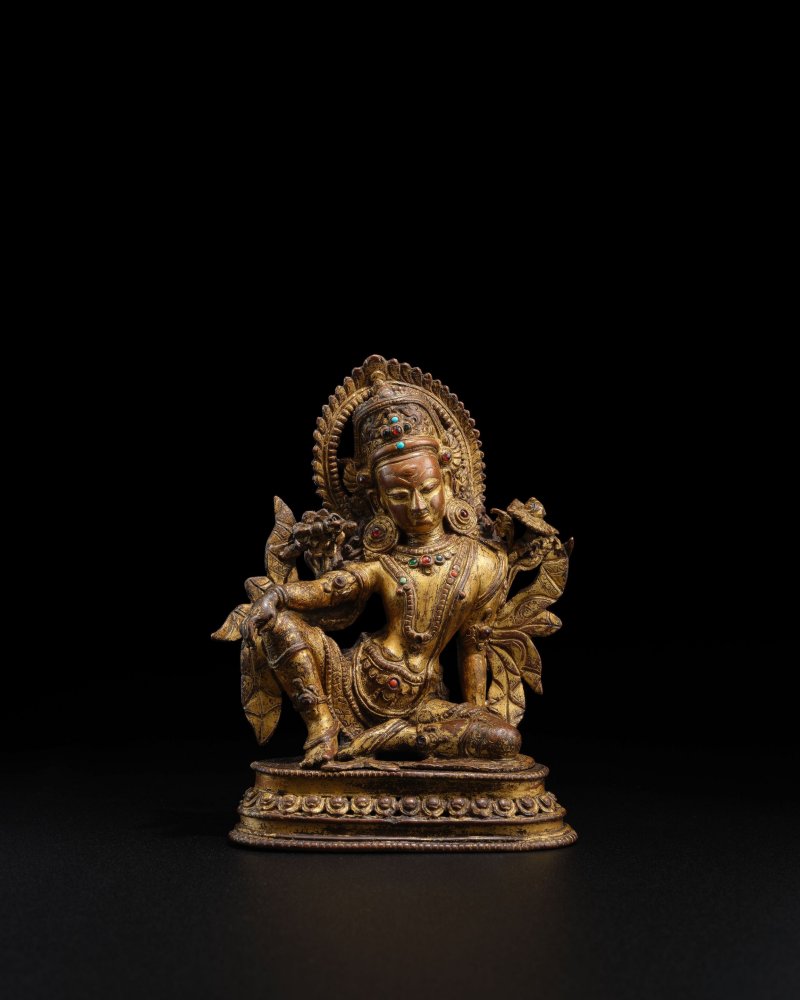
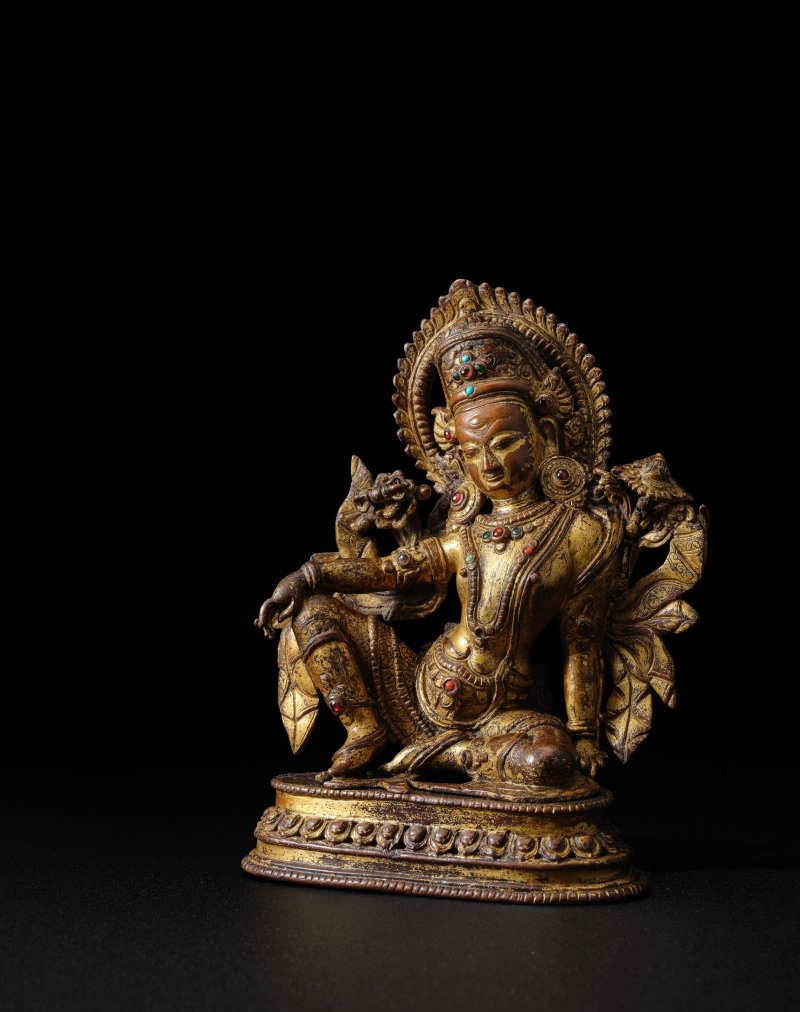
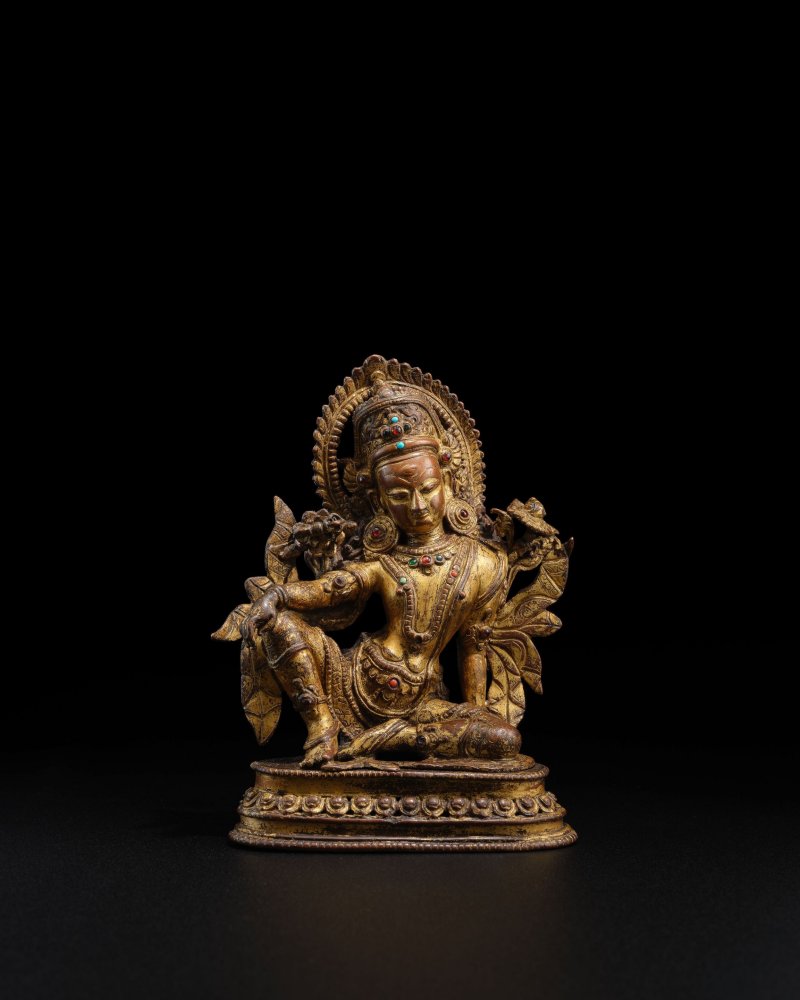
尼泊爾 十六世紀 銅鎏金因陀羅像 | A GILT COPPER ALLOY FIGURE OF INDRA
年代
NEPAL, 16TH CENTURY
起拍价
HKD 150,000
估值区间
HKD 150000 - 200000
尺寸
未知
品相
未知
更多信息
NEPAL, 16TH CENTURY
Himalayan Art Resources item no. 8883
15.3 cm (6 in.) high
Footnotes
尼泊爾 十六世紀 銅鎏金因陀羅像
Published
Ulrich von Schroeder, Indo-Tibetan Bronzes, Hong Kong, 1981, p. 386, no. 105C.
Provenance
Collection NL, by 1981
Private Collection, Singapore, 2010s
John and Karina Stewart Collection
Indra, the Vedic king of the gods, is famed for slaying the serpent Vritra and releasing the life-giving waters imprisoned by the demon. With the rise of Buddhism, Indra was incorporated into the Buddhist pantheon as Shakra, a protector of the dharma and ruler of Trayastrimsa Heaven.
He is seated in the posture of royal ease (), his right arm resting lightly upon his knee in a relaxed yet dignified manner. From each side, a lotus stalk rises gracefully to bloom at shoulder height. The flower to his right supports a vajra. The face is sensitively modeled, its features composed in an expression of serene tranquility, with a delicately incised third eye, downcast gaze, and a faint smile.
A foliate-patterned drapes the lower body, while the torso and limbs are adorned with beaded necklaces, armlets, and a crown, each meticulously inlaid with semi-precious stones. A flaming halo, rising from behind the head, frames the face with luminous intensity. See a related earlier gilded example, inscribed with a date of 1463, in the collection of the Rubin Museum of Art, New York (C2005.16.15).
Himalayan Art Resources item no. 8883
15.3 cm (6 in.) high
Footnotes
尼泊爾 十六世紀 銅鎏金因陀羅像
Published
Ulrich von Schroeder, Indo-Tibetan Bronzes, Hong Kong, 1981, p. 386, no. 105C.
Provenance
Collection NL, by 1981
Private Collection, Singapore, 2010s
John and Karina Stewart Collection
Indra, the Vedic king of the gods, is famed for slaying the serpent Vritra and releasing the life-giving waters imprisoned by the demon. With the rise of Buddhism, Indra was incorporated into the Buddhist pantheon as Shakra, a protector of the dharma and ruler of Trayastrimsa Heaven.
He is seated in the posture of royal ease (), his right arm resting lightly upon his knee in a relaxed yet dignified manner. From each side, a lotus stalk rises gracefully to bloom at shoulder height. The flower to his right supports a vajra. The face is sensitively modeled, its features composed in an expression of serene tranquility, with a delicately incised third eye, downcast gaze, and a faint smile.
A foliate-patterned drapes the lower body, while the torso and limbs are adorned with beaded necklaces, armlets, and a crown, each meticulously inlaid with semi-precious stones. A flaming halo, rising from behind the head, frames the face with luminous intensity. See a related earlier gilded example, inscribed with a date of 1463, in the collection of the Rubin Museum of Art, New York (C2005.16.15).
常见问题
这件尼泊爾 十六世紀 銅鎏金因陀羅像 | A GILT COPPER ALLOY FIGURE OF INDRA的成交价是多少?
落槌价为 预展中。 成交价为 预展中。