
拍品信息
拍品名称
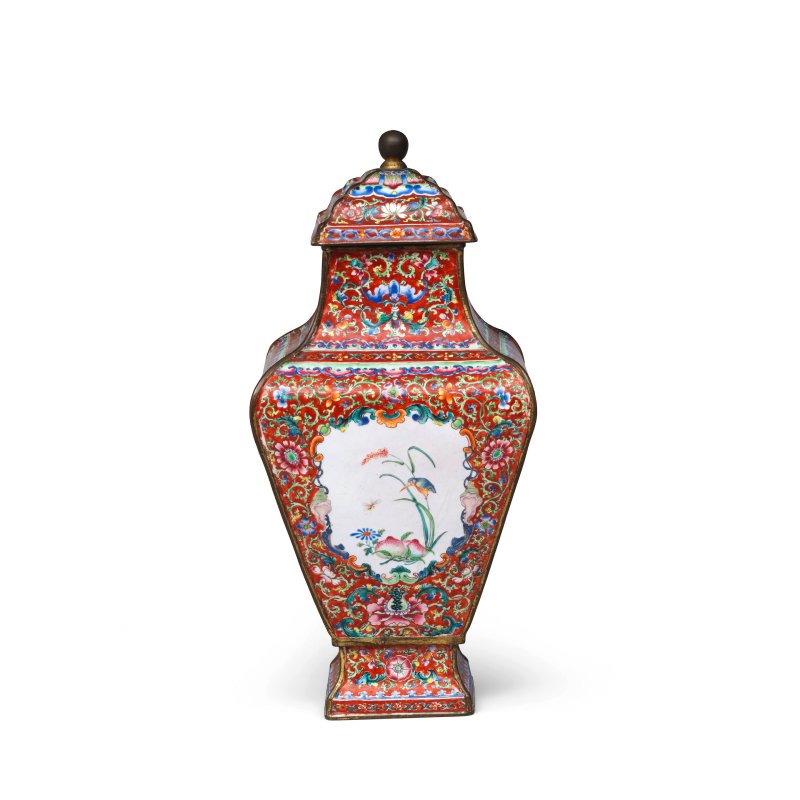
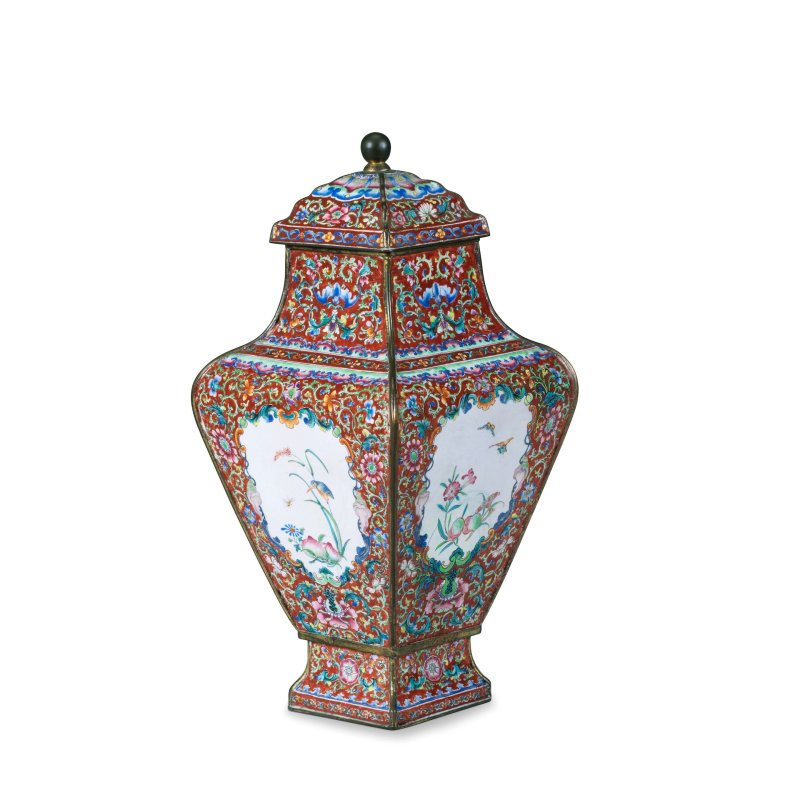
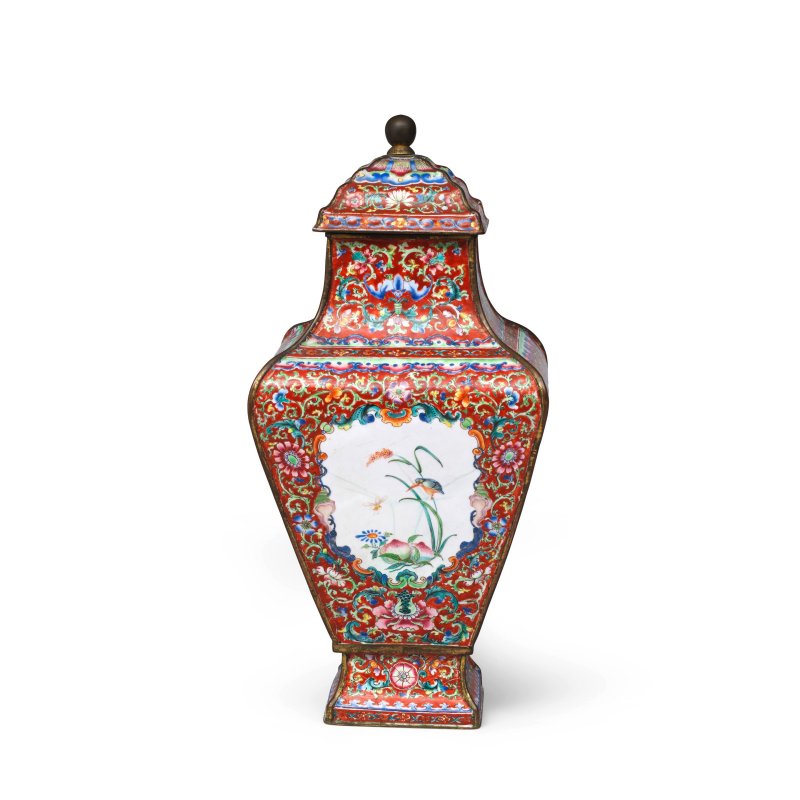
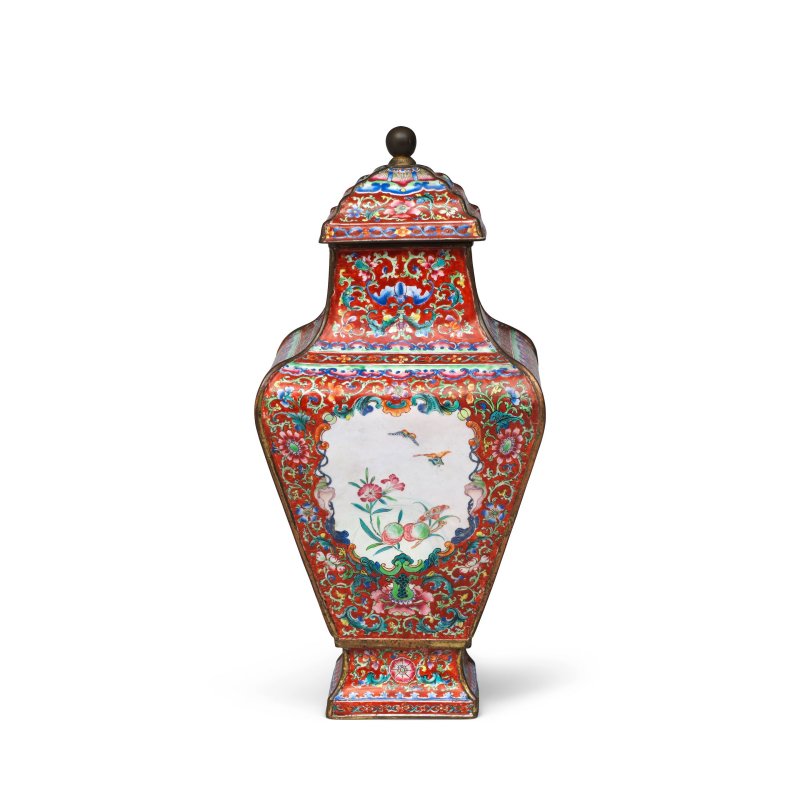
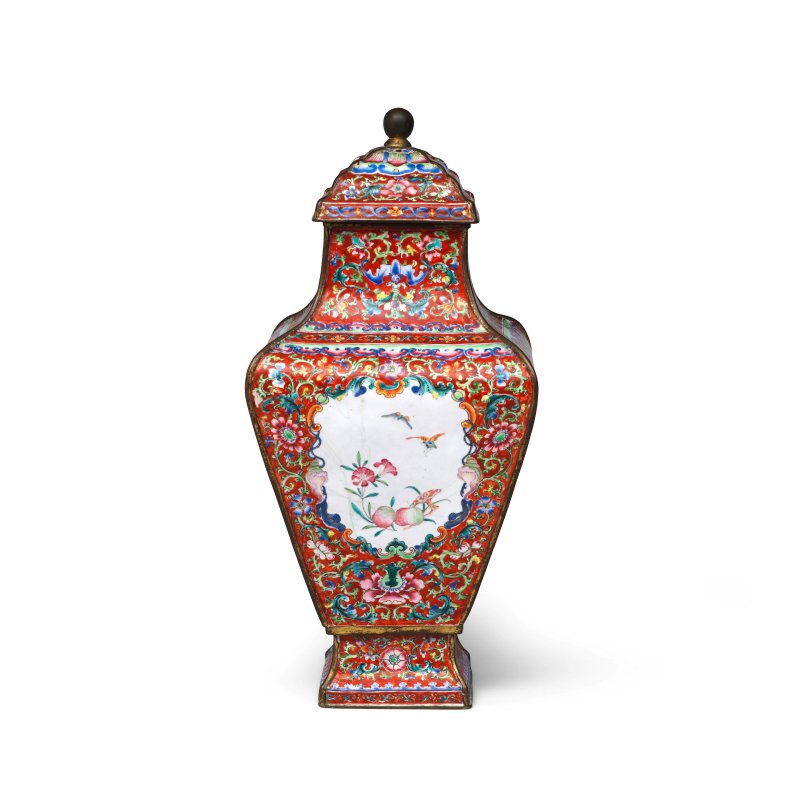
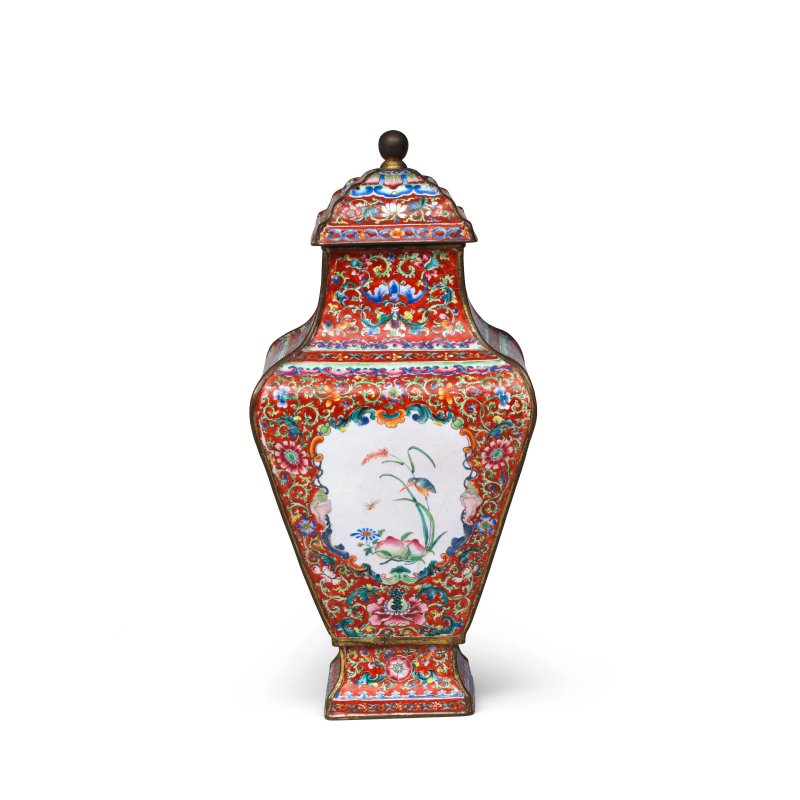
清乾隆 銅胎畫琺琅花卉紋四方蓋罐 | A RARE IMPERIAL-TRIBUTE RUBY-GROUND PAINTED ENAMEL VASE AND COVER, HU
年代
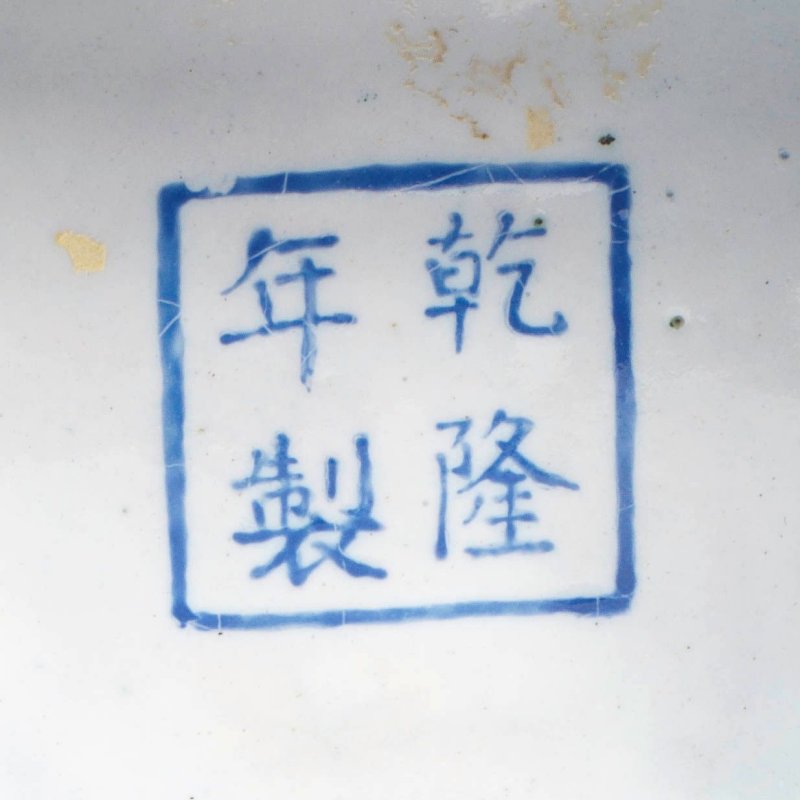
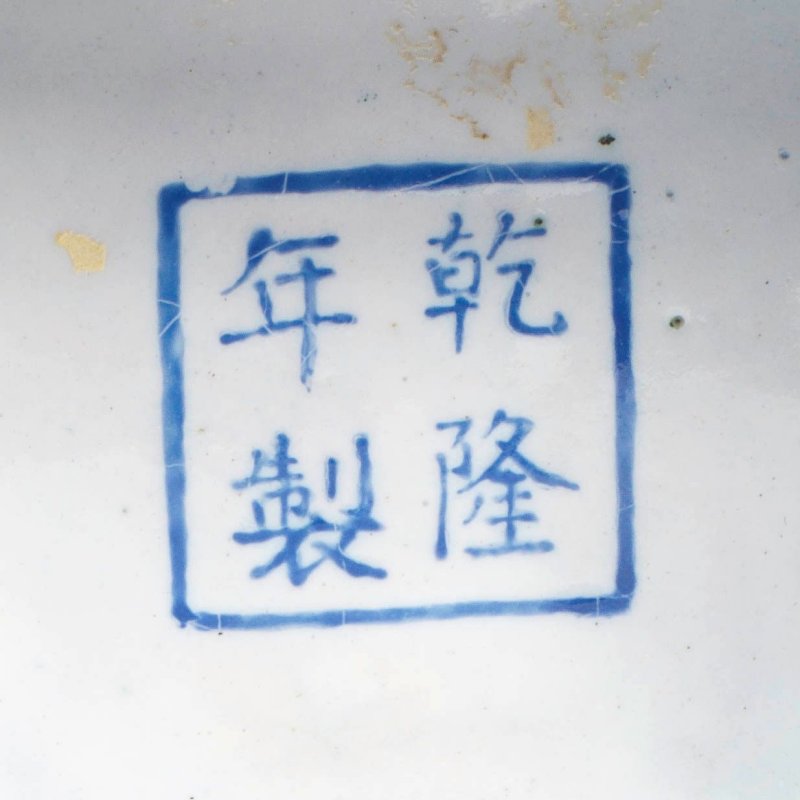
Qianlong four-character mark and of the period
起拍价
GBP 30,000
估值区间
GBP 30000 - 50000
尺寸
未知
品相
未知
更多信息
Qianlong four-character mark and of the period
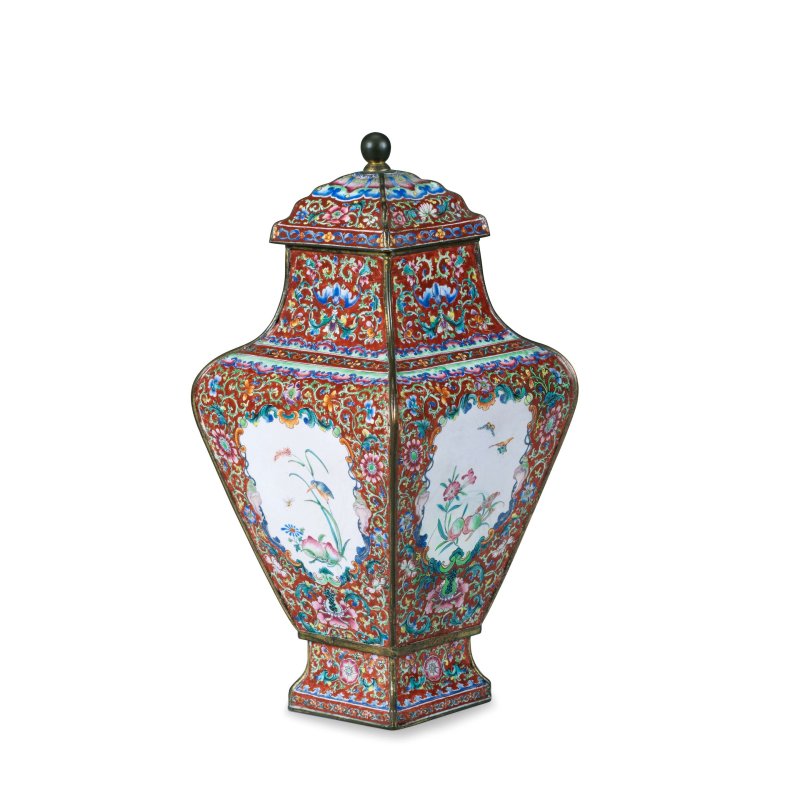
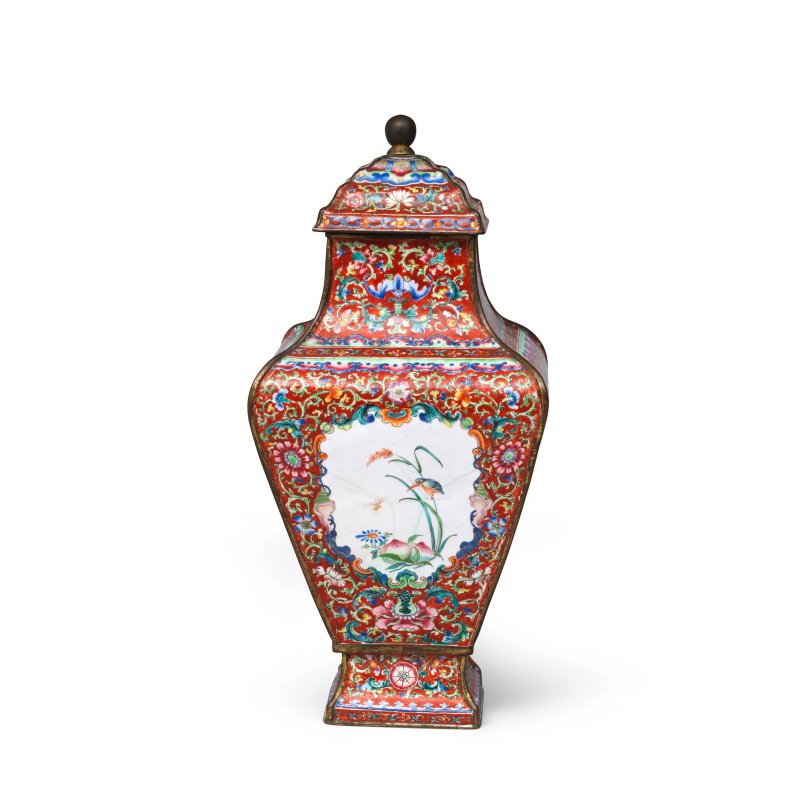
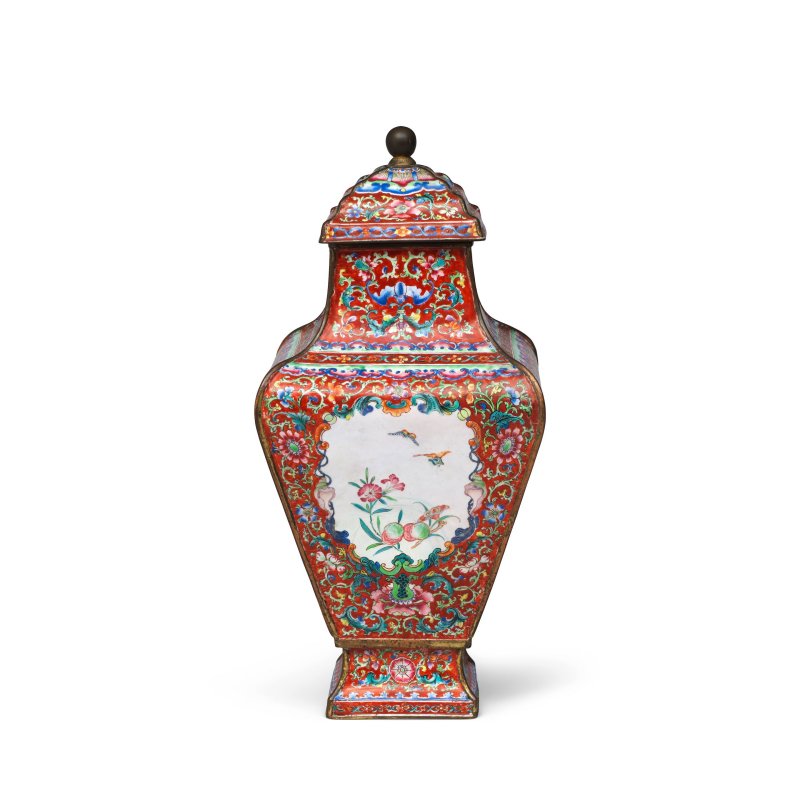
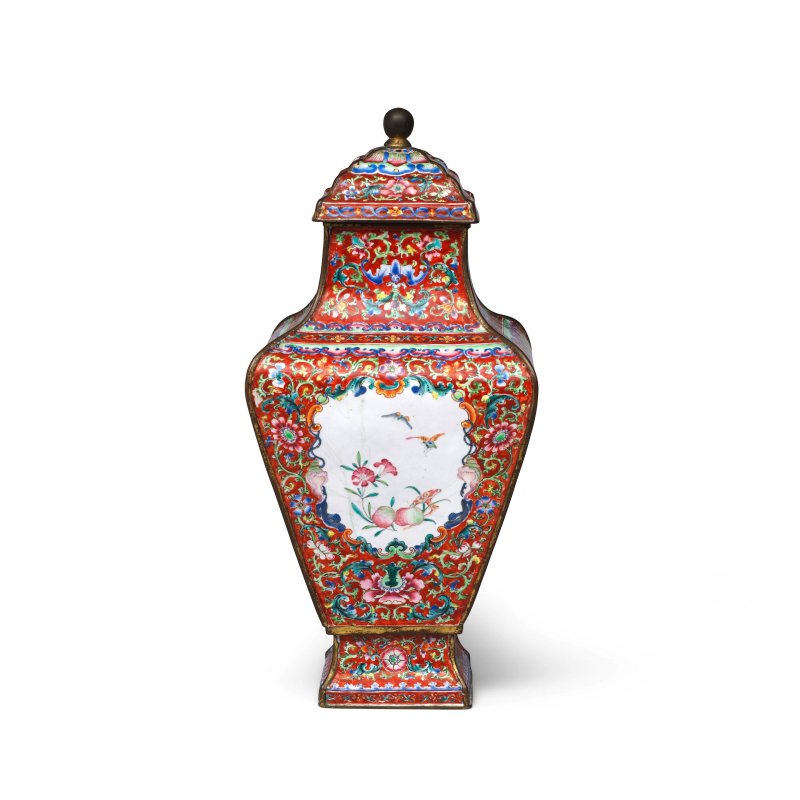
Elegantly proportioned of square section, tapering to the hollow splayed base, delicately painted on each side with elaborately bordered rococo panels with a kingfisher perched on a floral spray above a cluster of peaches, and butterflies hovering above sprays of convolvulus, lingzhi and prunus, all reserved against a ruby-red ground enriched with a foliate scroll, the domed cover with a bead knop. 23.5cm (9 1/4in) high. (2).
Footnotes
清乾隆 銅胎畫琺琅花卉紋四方蓋罐
「乾隆年製」楷書款
Provenance: a British private collection, acquired in Hong Kong circa 1981
來源:英國私人收藏,約1981年獲得于香港
Painted enamel wares on copper were first produced in Guangzhou (Canton) during the late seventeenth and early eighteenth centuries, drawing upon both European enamelling techniques introduced by Jesuit missionaries and established Chinese decorative traditions. By the reign of the Qianlong Emperor (1736–1795), the Guangzhou workshops had become important suppliers of finely enamelled vessels destined as tribute for the Imperial Court in Beijing, where they were highly prized alongside enamels produced within the Palace Workshops. Rich ruby-pink grounds, inspired in part by European Rococo taste and made possible through advances in enamel technology, became particularly fashionable during the 18th century. This vase and cover exemplifies the technical refinement and vibrant palette that characterised these prestigious Imperial-tribute wares.
See a painted enamel cup and cover, with similar ruby-ground and floral scrolls, mid-Qing dynasty, in the Qing Court Collection, illustrated in the , Beijing, 2011, p.271, no.212.
Compare with a near identical ruby-ground enamel vase and cover, Qianlong four-character mark and of the period, which was sold at Sotheby's New York, 19 March 2013, lot 356.
Elegantly proportioned of square section, tapering to the hollow splayed base, delicately painted on each side with elaborately bordered rococo panels with a kingfisher perched on a floral spray above a cluster of peaches, and butterflies hovering above sprays of convolvulus, lingzhi and prunus, all reserved against a ruby-red ground enriched with a foliate scroll, the domed cover with a bead knop. 23.5cm (9 1/4in) high. (2).
Footnotes
清乾隆 銅胎畫琺琅花卉紋四方蓋罐
「乾隆年製」楷書款
Provenance: a British private collection, acquired in Hong Kong circa 1981
來源:英國私人收藏,約1981年獲得于香港
Painted enamel wares on copper were first produced in Guangzhou (Canton) during the late seventeenth and early eighteenth centuries, drawing upon both European enamelling techniques introduced by Jesuit missionaries and established Chinese decorative traditions. By the reign of the Qianlong Emperor (1736–1795), the Guangzhou workshops had become important suppliers of finely enamelled vessels destined as tribute for the Imperial Court in Beijing, where they were highly prized alongside enamels produced within the Palace Workshops. Rich ruby-pink grounds, inspired in part by European Rococo taste and made possible through advances in enamel technology, became particularly fashionable during the 18th century. This vase and cover exemplifies the technical refinement and vibrant palette that characterised these prestigious Imperial-tribute wares.
See a painted enamel cup and cover, with similar ruby-ground and floral scrolls, mid-Qing dynasty, in the Qing Court Collection, illustrated in the , Beijing, 2011, p.271, no.212.
Compare with a near identical ruby-ground enamel vase and cover, Qianlong four-character mark and of the period, which was sold at Sotheby's New York, 19 March 2013, lot 356.
常见问题
这件清乾隆 銅胎畫琺琅花卉紋四方蓋罐 | A RARE IMPERIAL-TRIBUTE RUBY-GROUND PAINTED ENAMEL VASE AND COVER, HU的成交价是多少?
落槌价为 预展中。 成交价为 预展中。


