
拍品信息
拍品名称
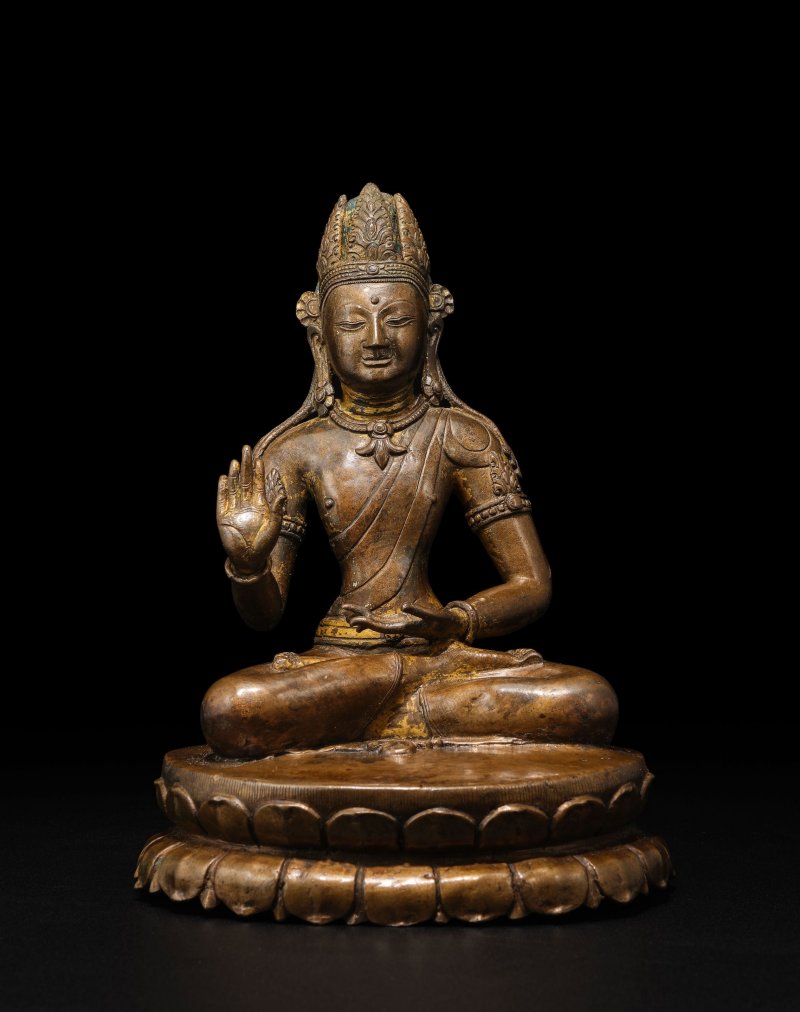
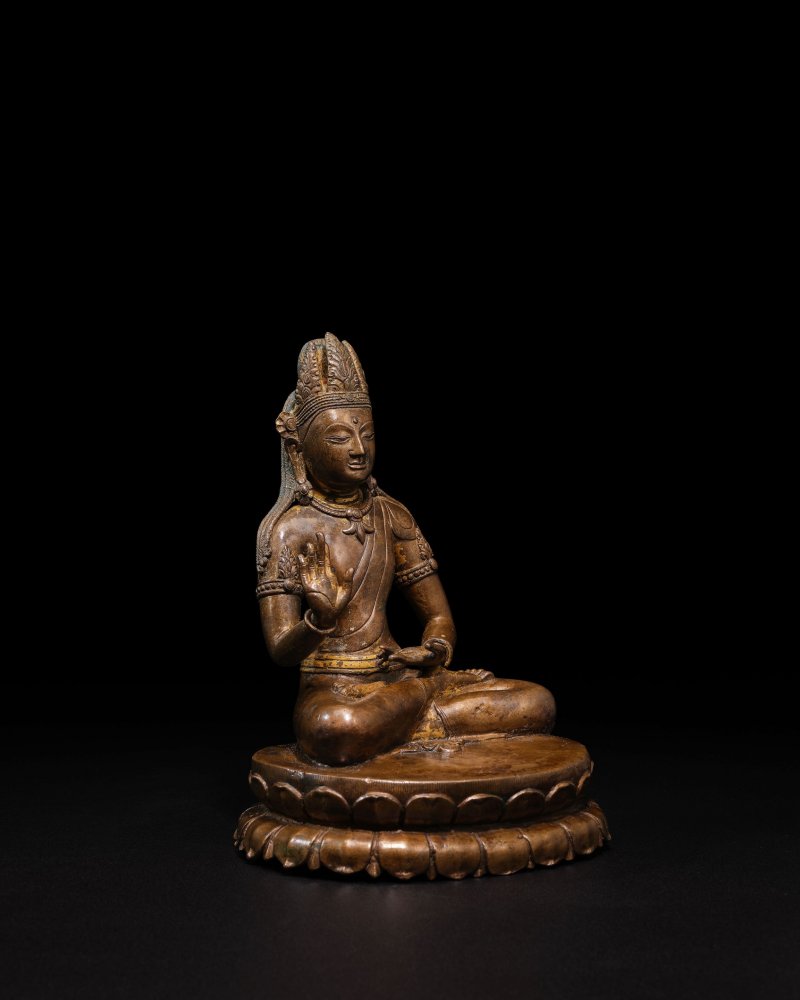
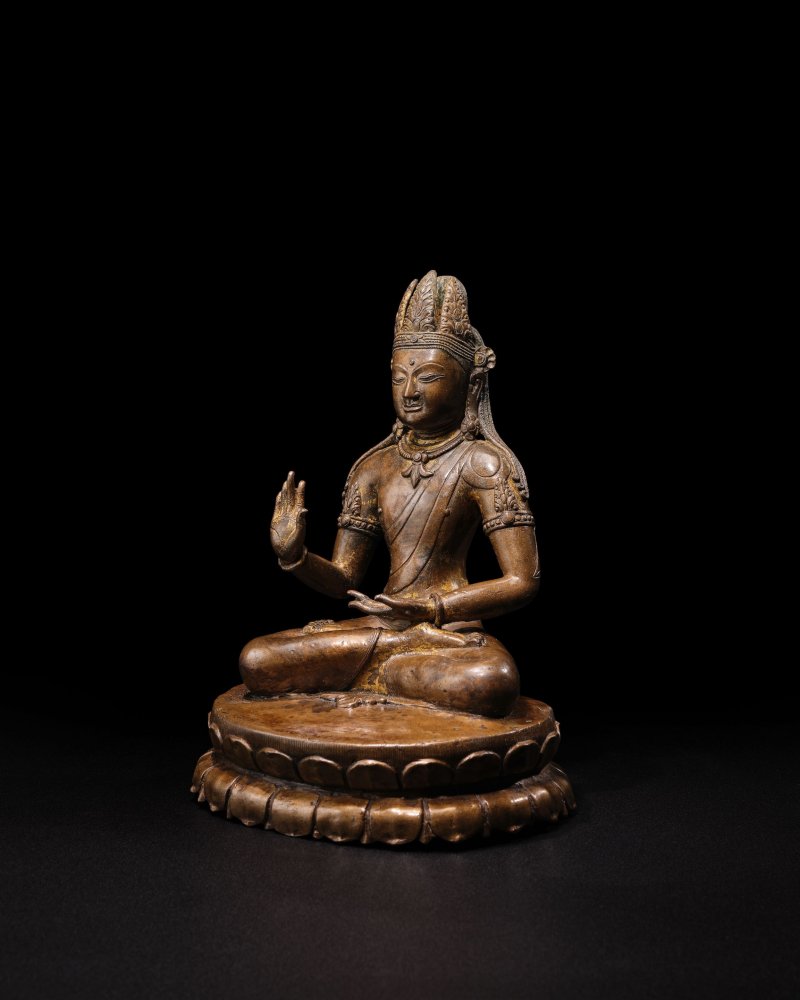
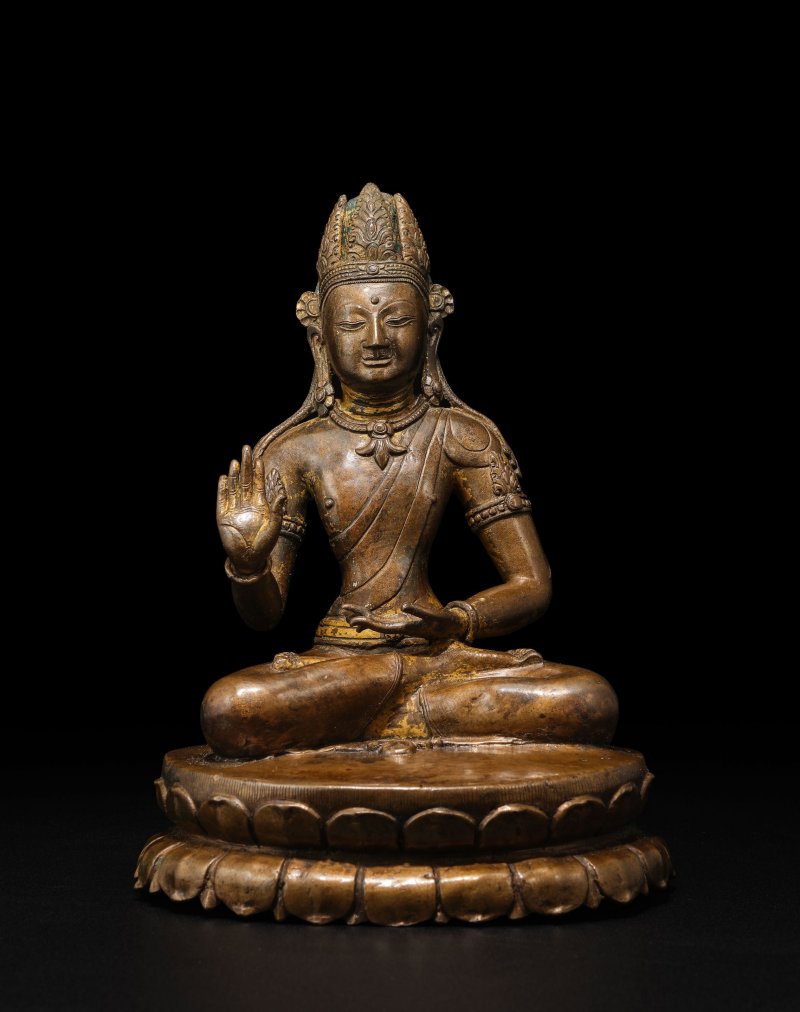
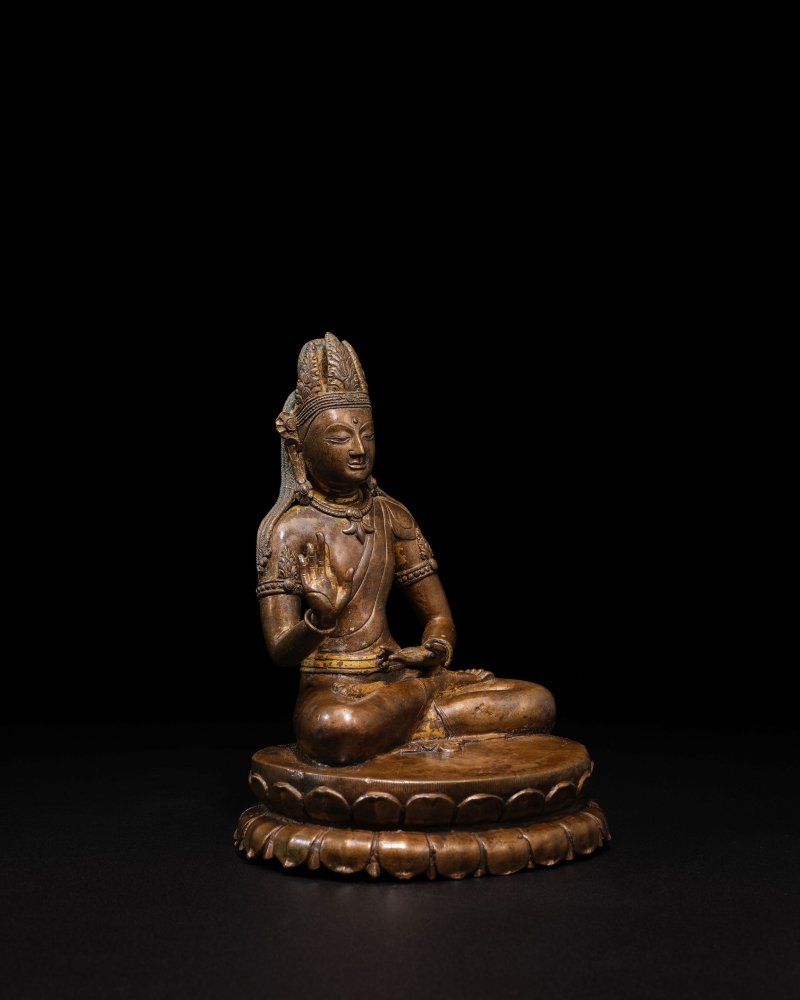
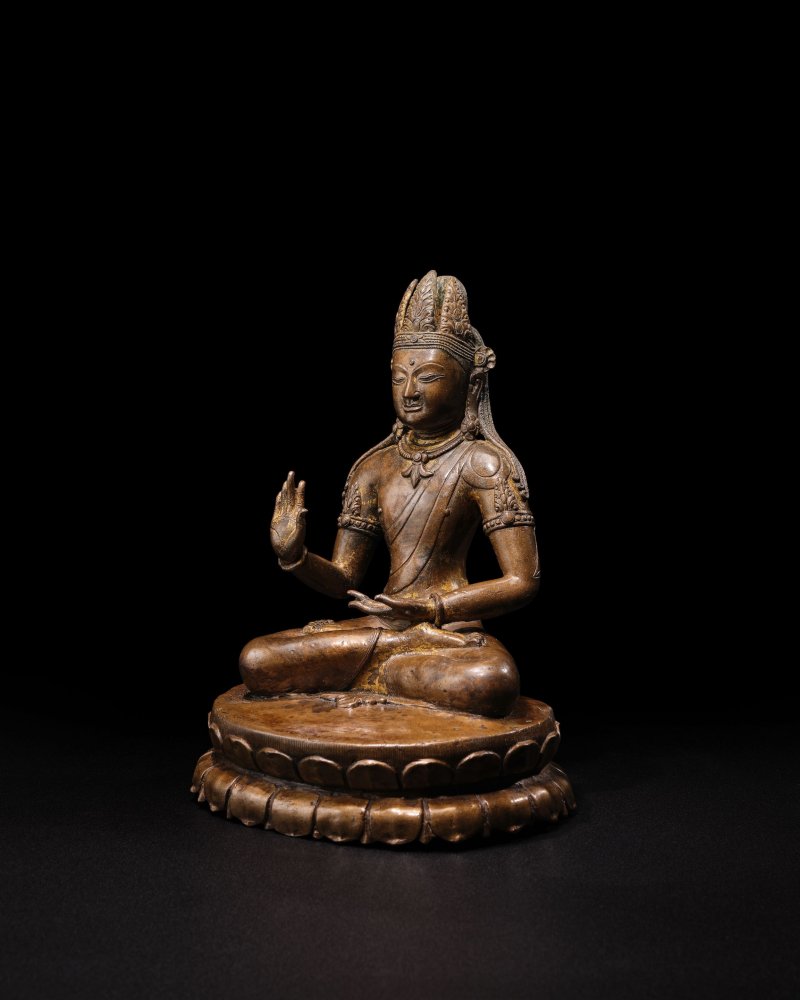
西藏 約十一世紀 文殊菩薩銅像 | A COPPER ALLOY FIGURE OF MANJUSHRI
年代
TIBET, CIRCA 11TH CENTURY
起拍价
HKD 600,000
估值区间
HKD 600000 - 800000
尺寸
未知
品相
未知
更多信息
TIBET, CIRCA 11TH CENTURY
With traces of gilding.
Himalayan Art Resources item no. 8881
24 cm (9 1/2 in.) high
Footnotes
西藏 約十一世紀 文殊菩薩銅像
Provenance
Private Collection, Singapore, 2014
John and Karina Stewart Collection
Manjushri, the Bodhisattva of Great Wisdom, is one of the Four Great Bodhisattvas of East Asian Mahayana Buddhism, together with Avalokiteshvara Ksitigarbha, and Samantabhadra. He is among the earliest attested and most influential bodhisattvas in the Mahayana tradition, appearing prominently in numerous foundational scriptures. As the personification of perfected insight (prajna), he serves as a principal embodiment of enlightened knowledge.
Seated in the diamond posture (vajraparyankasana) atop a double-lotus base, the bodhisattva presents an upright, powerful torso with broad shoulders. His right hand is raised in the gesture of reassurance (), offering refuge to devotees, while his left hand rests gracefully on his lap. Adorned across his chest is a distinctive necklace featuring pendant tiger claws—an iconographic marker of Manjushri. A sash drapes diagonally across his torso, complemented by refined armlets, bracelets, and a tall, three-pointed foliate crown that frames his serene countenance, which conveys an indefatigable devotion to the Dharma.
This figure belongs to a rare corpus of early bronzes that sheds light on the transmission of Buddhist artistic traditions into Tibet during the formative centuries of its Buddhist culture, particularly the profound influence of Nepalese models. Its facial features, tall crown, and restrained yet elegant ornamentation derive from late Licchavi-period aesthetic conventions, reflecting the enduring prestige of Nepalese artistry in the Himalayan world. Notable examples of this important group include a Manjushri in the Nyingjei Lam Collection (Weldon & Singer, , 1999, pp. 88-89, pl. 11), a seated Vajrapani in the Pritzker Collection (Dunhuang Academy, , 2019, pp. 320-23), and a seated bodhisattva in the Tibet Museum, Lhasa (ibid., p. 324). These works share close stylistic and iconographic affinities with imagery preserved at Dunhuang from the period of Tibetan occupation in the 8th and 9th centuries. Although likely produced somewhat later than these foundational 9th- and 10th-century examples, the present sculpture demonstrates the continued vitality of this artistic tradition and stands as an important testament to the cultural and artistic exchanges that shaped early trans-Himalayan sculpture.
With traces of gilding.
Himalayan Art Resources item no. 8881
24 cm (9 1/2 in.) high
Footnotes
西藏 約十一世紀 文殊菩薩銅像
Provenance
Private Collection, Singapore, 2014
John and Karina Stewart Collection
Manjushri, the Bodhisattva of Great Wisdom, is one of the Four Great Bodhisattvas of East Asian Mahayana Buddhism, together with Avalokiteshvara Ksitigarbha, and Samantabhadra. He is among the earliest attested and most influential bodhisattvas in the Mahayana tradition, appearing prominently in numerous foundational scriptures. As the personification of perfected insight (prajna), he serves as a principal embodiment of enlightened knowledge.
Seated in the diamond posture (vajraparyankasana) atop a double-lotus base, the bodhisattva presents an upright, powerful torso with broad shoulders. His right hand is raised in the gesture of reassurance (), offering refuge to devotees, while his left hand rests gracefully on his lap. Adorned across his chest is a distinctive necklace featuring pendant tiger claws—an iconographic marker of Manjushri. A sash drapes diagonally across his torso, complemented by refined armlets, bracelets, and a tall, three-pointed foliate crown that frames his serene countenance, which conveys an indefatigable devotion to the Dharma.
This figure belongs to a rare corpus of early bronzes that sheds light on the transmission of Buddhist artistic traditions into Tibet during the formative centuries of its Buddhist culture, particularly the profound influence of Nepalese models. Its facial features, tall crown, and restrained yet elegant ornamentation derive from late Licchavi-period aesthetic conventions, reflecting the enduring prestige of Nepalese artistry in the Himalayan world. Notable examples of this important group include a Manjushri in the Nyingjei Lam Collection (Weldon & Singer, , 1999, pp. 88-89, pl. 11), a seated Vajrapani in the Pritzker Collection (Dunhuang Academy, , 2019, pp. 320-23), and a seated bodhisattva in the Tibet Museum, Lhasa (ibid., p. 324). These works share close stylistic and iconographic affinities with imagery preserved at Dunhuang from the period of Tibetan occupation in the 8th and 9th centuries. Although likely produced somewhat later than these foundational 9th- and 10th-century examples, the present sculpture demonstrates the continued vitality of this artistic tradition and stands as an important testament to the cultural and artistic exchanges that shaped early trans-Himalayan sculpture.
常见问题
这件西藏 約十一世紀 文殊菩薩銅像 | A COPPER ALLOY FIGURE OF MANJUSHRI的成交价是多少?
落槌价为 预展中。 成交价为 预展中。