
拍品信息
拍品名称
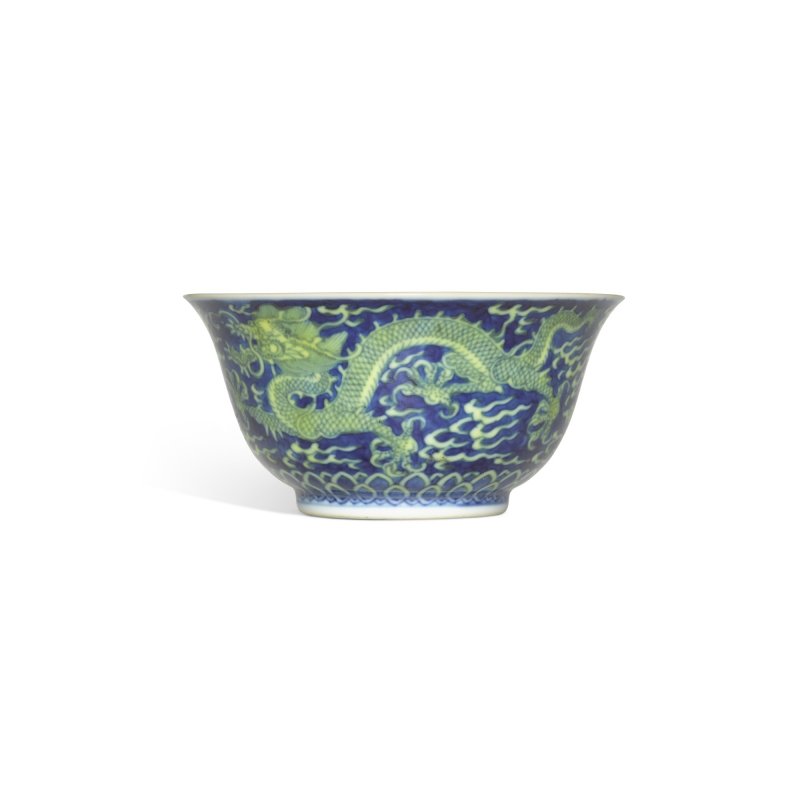
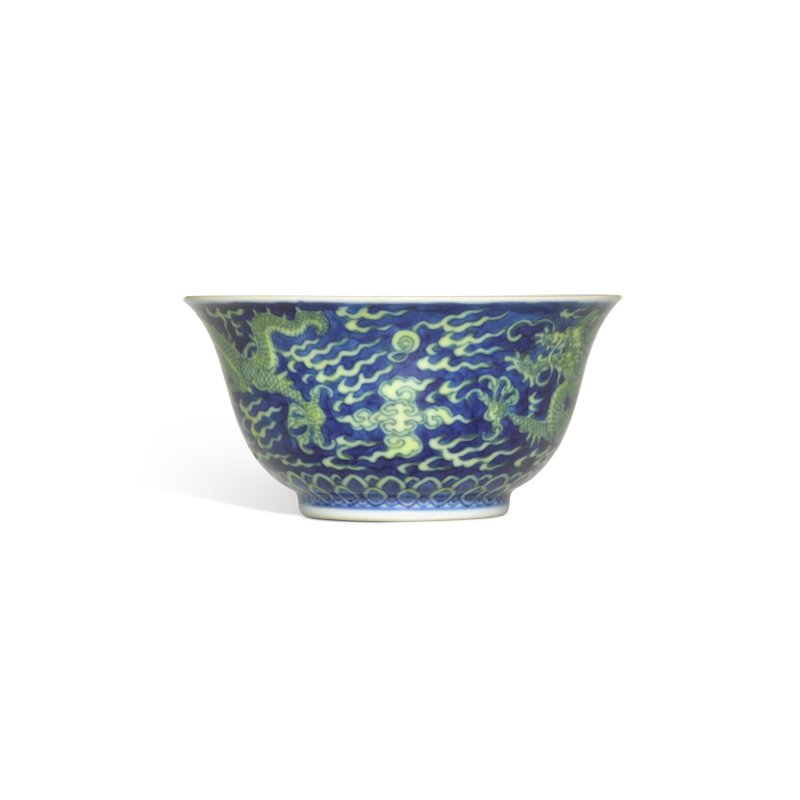
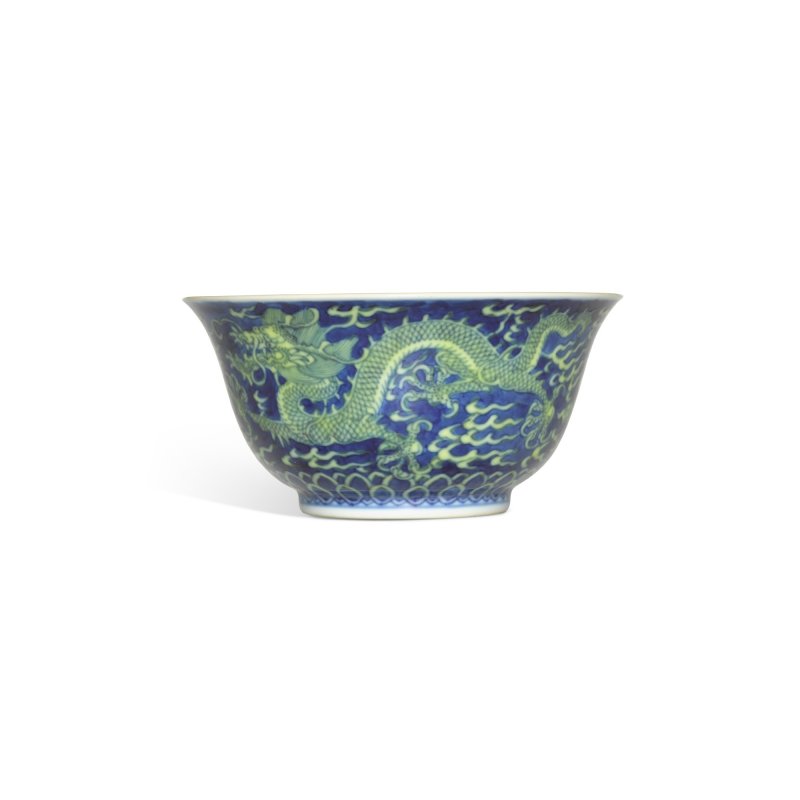
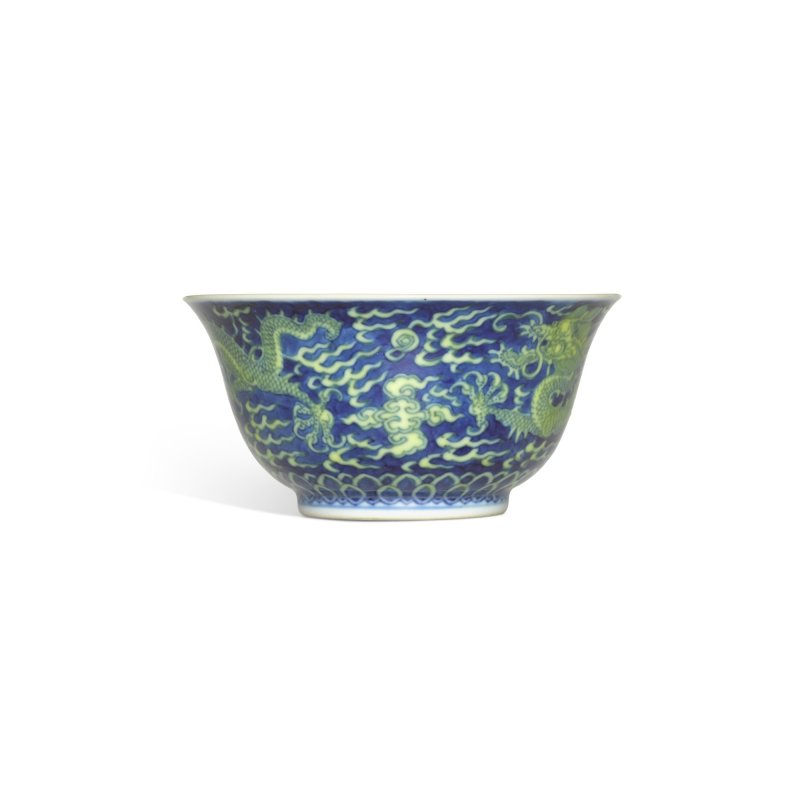
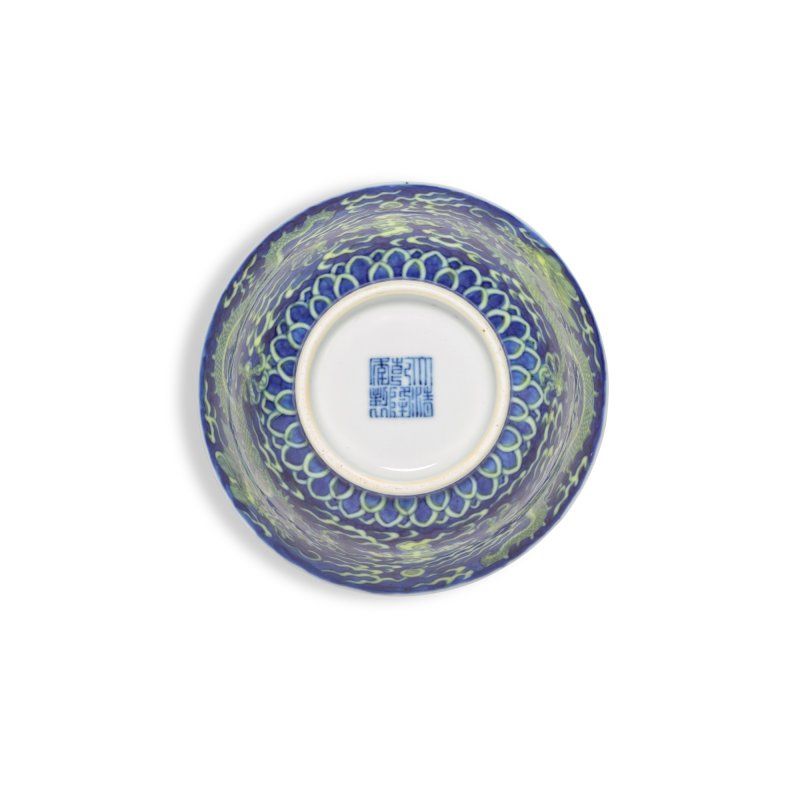
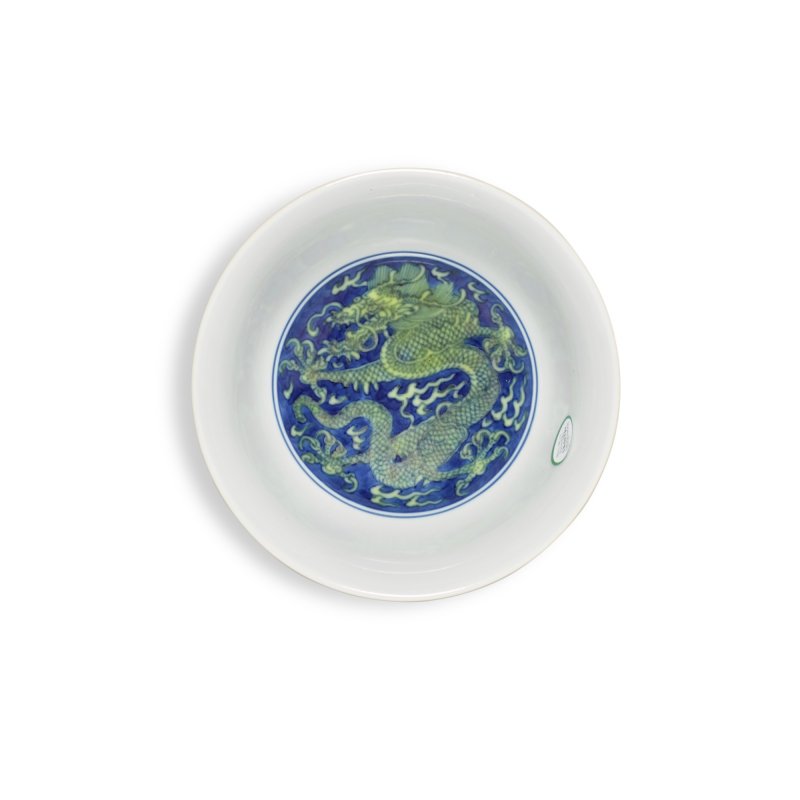
清乾隆 藍地黃彩雲龍戲珠紋盌 《大清乾隆年製》款
起拍价
USD 40,000
估值区间
40,000 - 60,000 USD
尺寸
未知
品相
In overall good condition with minor expected wear and firing imperfections, including one burst bubble under the rim.
整體品相良好,見細微磨痕、窰燒微瑕,屬正常,包括口沿下方見一破泡。
整體品相良好,見細微磨痕、窰燒微瑕,屬正常,包括口沿下方見一破泡。
更多信息
the base with a six-character seal mark in underglaze blue
Diameter 4 in., 10.1 cm
来源:馬錢特,倫敦,1965年
Anthony Evans (1954-2008) 收藏,編號425
展览:《Imperial Chinese Porcelain, Ceramics & Works of Art》,馬錢特,倫敦,2013年,編號33
著录:Stuart Marchant,《Marchant - One Hundred Years》,卷II: 2001 - 2025,倫敦,2025年,頁292(無圖)
图录
说明:Within the Qing Court, the use of porcelain was governed by a strict hierarchical system in which forms, motifs and colors reflected the rank of the intended recipient. According to the Guochao Gongshi (國朝宮史; Compilation of Qing Court History), vol. 17, compiled in 1742, bowls decorated with yellow dragons reserved against a blue ground, such as the present example, formed part of the official allotment for imperial consorts of the fourth rank (pin, 嬪), who were entitled to receive four such bowls. The striking combination of imperial yellow dragons and deep cobalt-blue ground therefore served not only as an auspicious decorative scheme but also as a visible expression of court status and protocol.
Compare a closely related blue and white and yellow-enameled 'dragon' bowl, also Qianlong seal mark and period, preserved in the Qing Court Collection, Palace Museum, Beijing (accession no. 故00159782-6/33). The pair to this bowl was sold in our Hong Kong rooms, 11th July 2020, lot 3105. A similar bowl was included in the exhibition Qing Mark and Period Monochromes and Enamelled Wares, Marchant, London, 1981, cat. no. 21. Also compare a slightly larger example, first sold at Christie's Hong Kong, 25th October 1993, lot 820, and again in the same rooms, 28th November 2012, lot 2140.
Diameter 4 in., 10.1 cm
来源:馬錢特,倫敦,1965年
Anthony Evans (1954-2008) 收藏,編號425
展览:《Imperial Chinese Porcelain, Ceramics & Works of Art》,馬錢特,倫敦,2013年,編號33
著录:Stuart Marchant,《Marchant - One Hundred Years》,卷II: 2001 - 2025,倫敦,2025年,頁292(無圖)
图录
说明:Within the Qing Court, the use of porcelain was governed by a strict hierarchical system in which forms, motifs and colors reflected the rank of the intended recipient. According to the Guochao Gongshi (國朝宮史; Compilation of Qing Court History), vol. 17, compiled in 1742, bowls decorated with yellow dragons reserved against a blue ground, such as the present example, formed part of the official allotment for imperial consorts of the fourth rank (pin, 嬪), who were entitled to receive four such bowls. The striking combination of imperial yellow dragons and deep cobalt-blue ground therefore served not only as an auspicious decorative scheme but also as a visible expression of court status and protocol.
Compare a closely related blue and white and yellow-enameled 'dragon' bowl, also Qianlong seal mark and period, preserved in the Qing Court Collection, Palace Museum, Beijing (accession no. 故00159782-6/33). The pair to this bowl was sold in our Hong Kong rooms, 11th July 2020, lot 3105. A similar bowl was included in the exhibition Qing Mark and Period Monochromes and Enamelled Wares, Marchant, London, 1981, cat. no. 21. Also compare a slightly larger example, first sold at Christie's Hong Kong, 25th October 1993, lot 820, and again in the same rooms, 28th November 2012, lot 2140.
常见问题
拍品的品相状况如何?
In overall good condition with minor expected wear and firing imperfections, including one burst bubble under the rim.
整體品相良好,見細微磨痕、窰燒微瑕,屬正常,包括口沿下方見一破泡。
整體品相良好,見細微磨痕、窰燒微瑕,屬正常,包括口沿下方見一破泡。
这件拍品的流传来源是什么?
馬錢特,倫敦,1965年
Anthony Evans (1954-2008) 收藏,編號425
Anthony Evans (1954-2008) 收藏,編號425
这件拍品曾在哪些展览中展出过?
《Imperial Chinese Porcelain, Ceramics & Works of Art》,馬錢特,倫敦,2013年,編號33
这件拍品被哪些著录书籍记载?
Stuart Marchant,《Marchant - One Hundred Years》,卷II: 2001 - 2025,倫敦,2025年,頁292(無圖)
图录
图录