
拍品信息
拍品名称
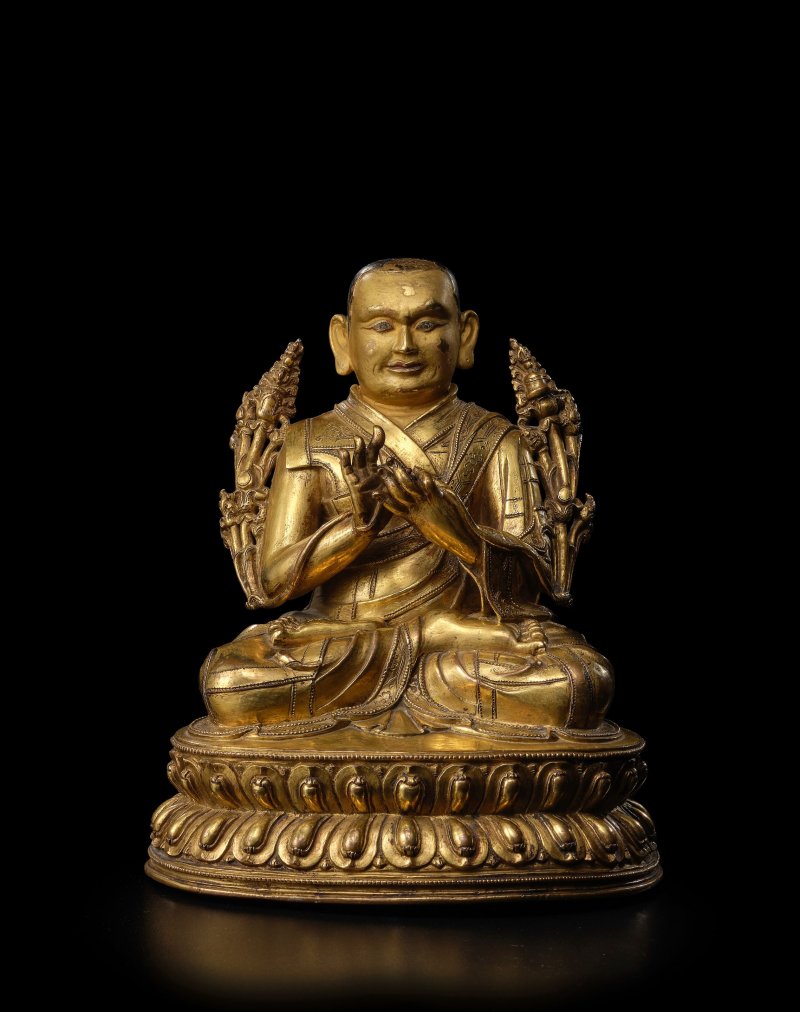
西藏 十五世紀 銅鎏金喇嘛像 或為布敦仁欽珠 | A GILT COPPER ALLOY FIGURE OF A LAMA, POSSIBLY BUTON RINCHEN DRUB
年代
TIBET, 15TH CENTURY
起拍价
HKD 400,000
估值区间
HKD 400000 - 600000
尺寸
未知
品相
未知
更多信息
TIBET, 15TH CENTURY
Himalayan Art Resources item no. 1467
17.6 cm (6 7/8 in.) high
Footnotes
西藏 十五世紀 銅鎏金喇嘛像 或為布敦仁欽珠
Provenance
Jonas Olof Lundqvist (1902-1979) acquired in the early 1960s
Uppsala Auction, 6-9 December 2022, lot 1108
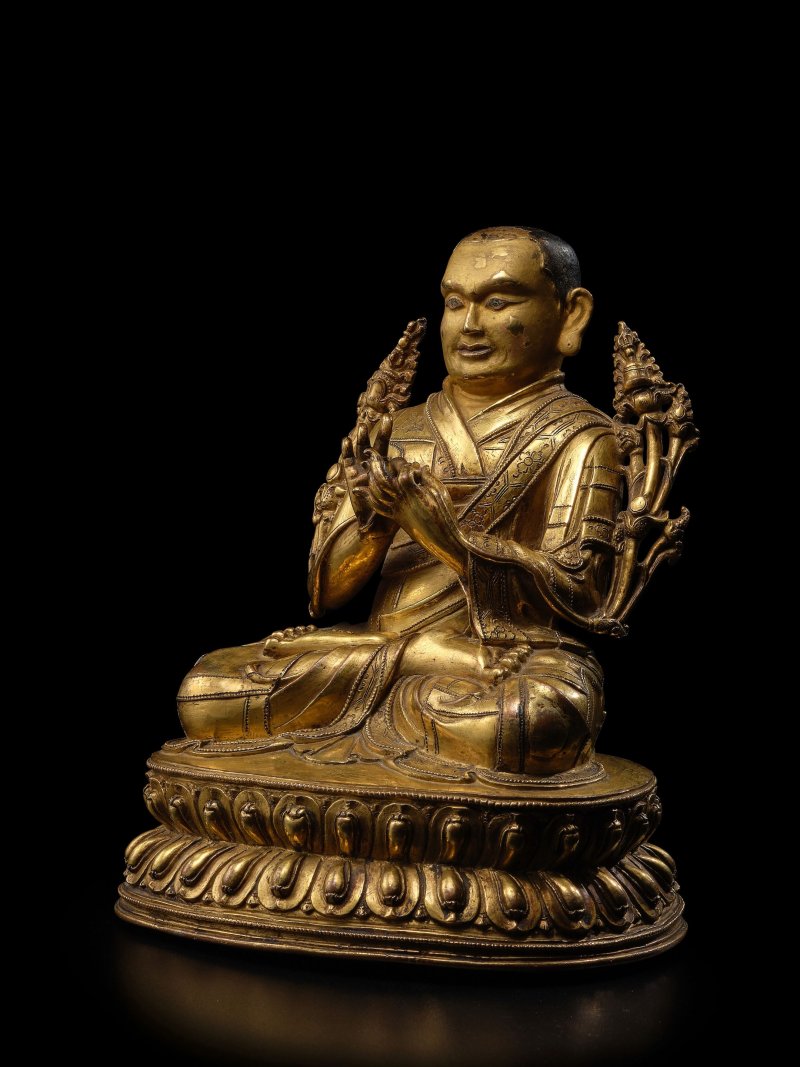
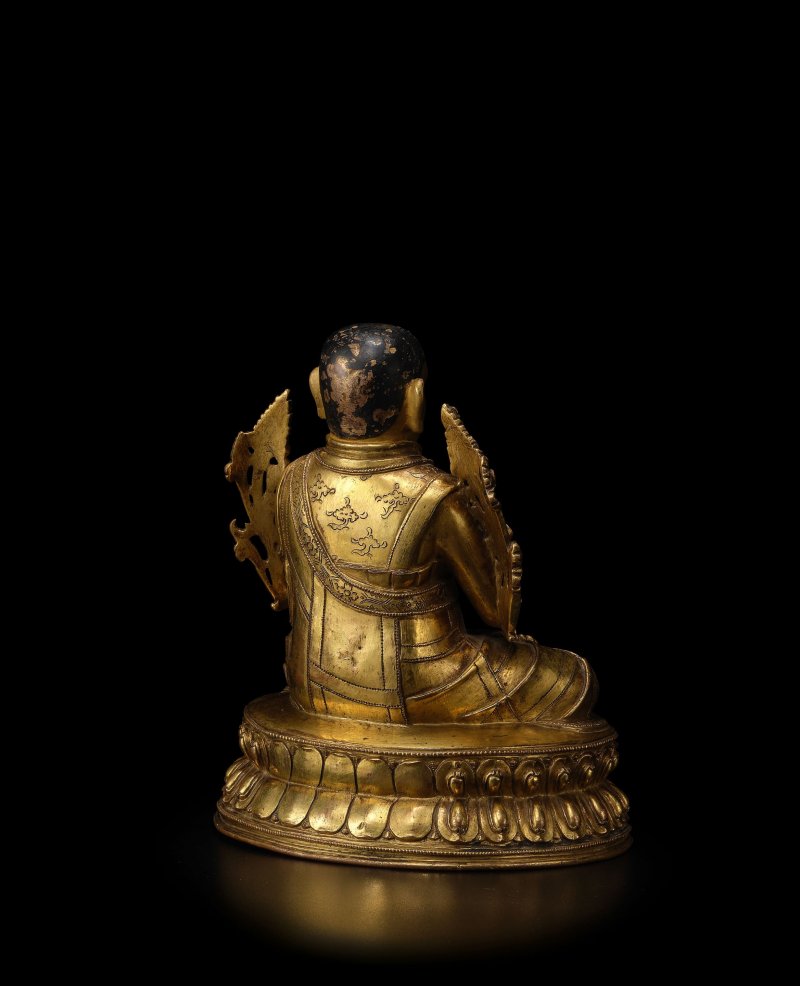
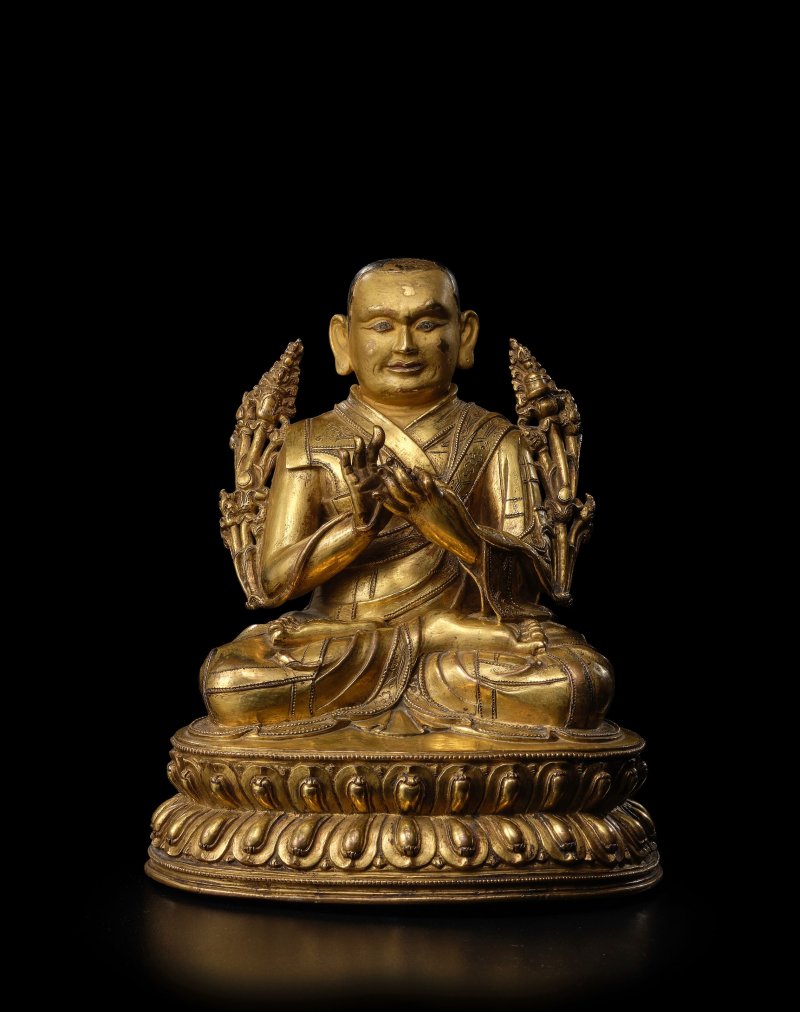
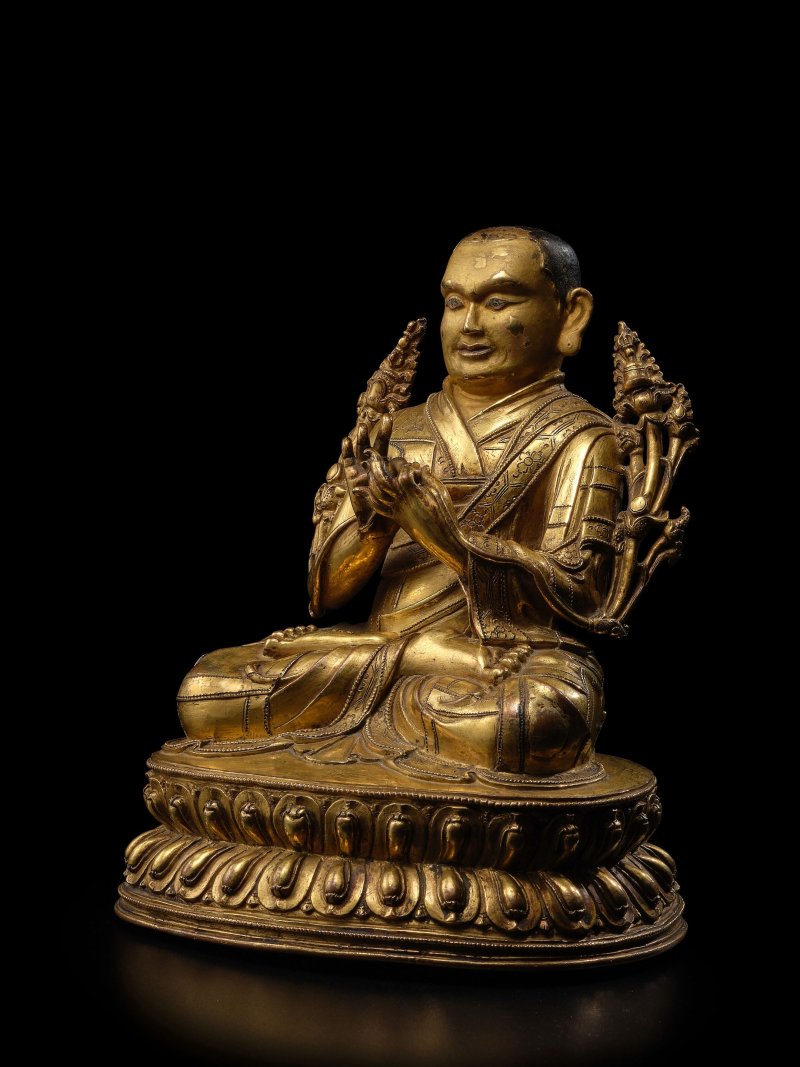
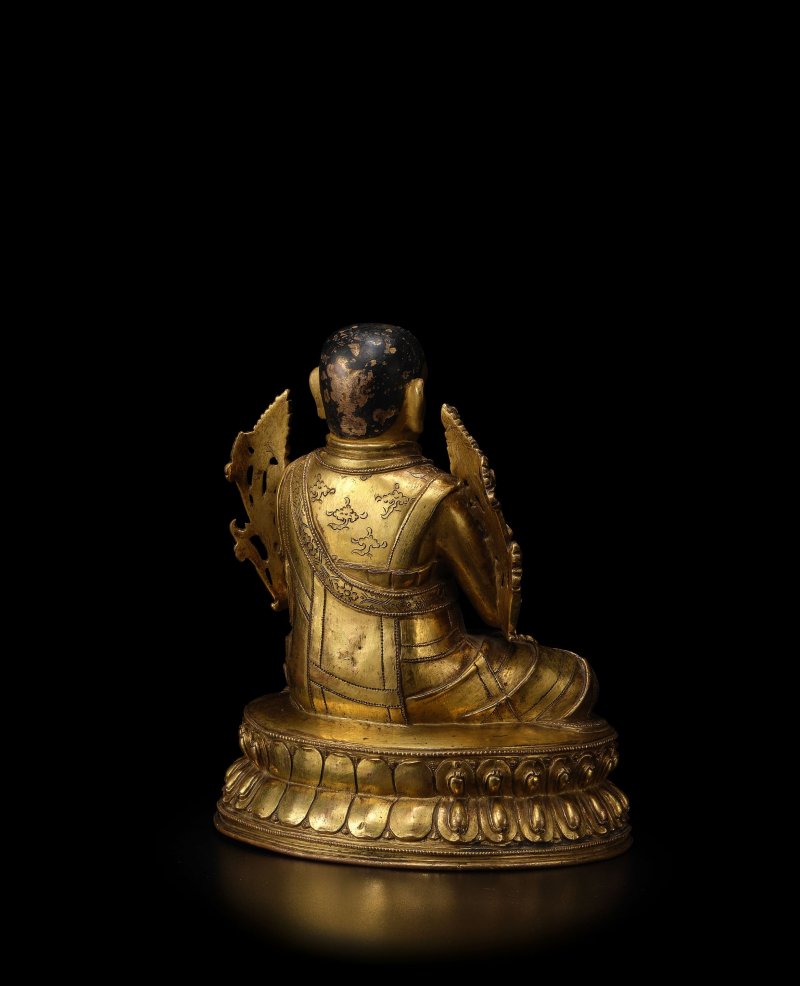
Cast with substantial depth and volume, this gilt bronze lama sits cross-legged in meditation atop a double lotus throne (dhyanasana). His transcendent status is further marked by a small lotus flower imprinted onto the sole of his left foot, while his hands form a gesture referencing the Buddha turning the Wheel of the Dharma (dharmachakrapavartana mudra). The vajra and bell blossoming beneath the jeweled flowers by his shoulders are attributes associated with Vajradhara, the Primordial Buddha who is regarded as the ancient progenitor of all Vajrayana teachings. Adorning the lama is a monastic robe of a patchwork worn over a brocaded vest with cloud motifs resembling the Chinese fabrics sent as diplomatic gifts to Tibet during the late Yuan and early Ming dynasties.
Portrayed with a prominent brow ridge and a balding hairline, this individually rendered lama likely depicts Buton Rinchen Drub (1290-1364), the 11th abbot of Shalu monastery. No other sculptural likenesses of the Buton Rinchen Drub have been recorded, but his uniquely squarish face, together with his vajra and attributes, are found in a thangka representing this very same teacher (HAR 99063). A sculpture identified as Rinchen Khyenrab Chogdrub Palzangpo, also from Shalu monastery (1602-81), is held in the National Asian Art Museum, Washington, D.C. and shares many of the same features with the following work, with the exception of the hairline and the scrollwork of the flowers (S2017.35; HAR 32825). Comparisons can also be drawn to an un-gilded and inscribed portrait of Phagspa Gyaltsen that shares the same treatment of the robes and attributes in a private Swiss Collection, published in Debreczeny (ed.), , 2019, p. 110, fig. 5.3. This resemblance is likely intentional because Rinchen Drub continued to seek out masters from the Sakya tradition including Phagspa, the imperial preceptor to the Mongol emperors of the Yuan dynasty (1271-1368).
Born in the province of Tsang in 1290, Buton Rinchen Drub received early teachings from both his mother and father, prominent masters in the Nyingma tradition. At the age of 31, Buton Rinchen Drub was appointed as abbot of Shalu monastery in 1320 by Kuzhang Dragpa Gyaltsen, a member of the area's ruling family. Dragpa Gyaltsen had been rebuilding the temple, which was founded in 1027 by Chetsun Sherab Jungne. With the backing of Dragpa Gyaltsen and his family, Rinchen Drub greatly expanded Shalu, constructing new stupas and temples. Due to this reconstruction, later enumerations of the abbots of Shalu count Buton as the first abbot, whose teachings stemming from the Sakya tradition are alternately known as the Bulug lineage.
Himalayan Art Resources item no. 1467
17.6 cm (6 7/8 in.) high
Footnotes
西藏 十五世紀 銅鎏金喇嘛像 或為布敦仁欽珠
Provenance
Jonas Olof Lundqvist (1902-1979) acquired in the early 1960s
Uppsala Auction, 6-9 December 2022, lot 1108
Cast with substantial depth and volume, this gilt bronze lama sits cross-legged in meditation atop a double lotus throne (dhyanasana). His transcendent status is further marked by a small lotus flower imprinted onto the sole of his left foot, while his hands form a gesture referencing the Buddha turning the Wheel of the Dharma (dharmachakrapavartana mudra). The vajra and bell blossoming beneath the jeweled flowers by his shoulders are attributes associated with Vajradhara, the Primordial Buddha who is regarded as the ancient progenitor of all Vajrayana teachings. Adorning the lama is a monastic robe of a patchwork worn over a brocaded vest with cloud motifs resembling the Chinese fabrics sent as diplomatic gifts to Tibet during the late Yuan and early Ming dynasties.
Portrayed with a prominent brow ridge and a balding hairline, this individually rendered lama likely depicts Buton Rinchen Drub (1290-1364), the 11th abbot of Shalu monastery. No other sculptural likenesses of the Buton Rinchen Drub have been recorded, but his uniquely squarish face, together with his vajra and attributes, are found in a thangka representing this very same teacher (HAR 99063). A sculpture identified as Rinchen Khyenrab Chogdrub Palzangpo, also from Shalu monastery (1602-81), is held in the National Asian Art Museum, Washington, D.C. and shares many of the same features with the following work, with the exception of the hairline and the scrollwork of the flowers (S2017.35; HAR 32825). Comparisons can also be drawn to an un-gilded and inscribed portrait of Phagspa Gyaltsen that shares the same treatment of the robes and attributes in a private Swiss Collection, published in Debreczeny (ed.), , 2019, p. 110, fig. 5.3. This resemblance is likely intentional because Rinchen Drub continued to seek out masters from the Sakya tradition including Phagspa, the imperial preceptor to the Mongol emperors of the Yuan dynasty (1271-1368).
Born in the province of Tsang in 1290, Buton Rinchen Drub received early teachings from both his mother and father, prominent masters in the Nyingma tradition. At the age of 31, Buton Rinchen Drub was appointed as abbot of Shalu monastery in 1320 by Kuzhang Dragpa Gyaltsen, a member of the area's ruling family. Dragpa Gyaltsen had been rebuilding the temple, which was founded in 1027 by Chetsun Sherab Jungne. With the backing of Dragpa Gyaltsen and his family, Rinchen Drub greatly expanded Shalu, constructing new stupas and temples. Due to this reconstruction, later enumerations of the abbots of Shalu count Buton as the first abbot, whose teachings stemming from the Sakya tradition are alternately known as the Bulug lineage.
常见问题
这件西藏 十五世紀 銅鎏金喇嘛像 或為布敦仁欽珠 | A GILT COPPER ALLOY FIGURE OF A LAMA, POSSIBLY BUTON RINCHEN DRUB的成交价是多少?
落槌价为 预展中。 成交价为 预展中。