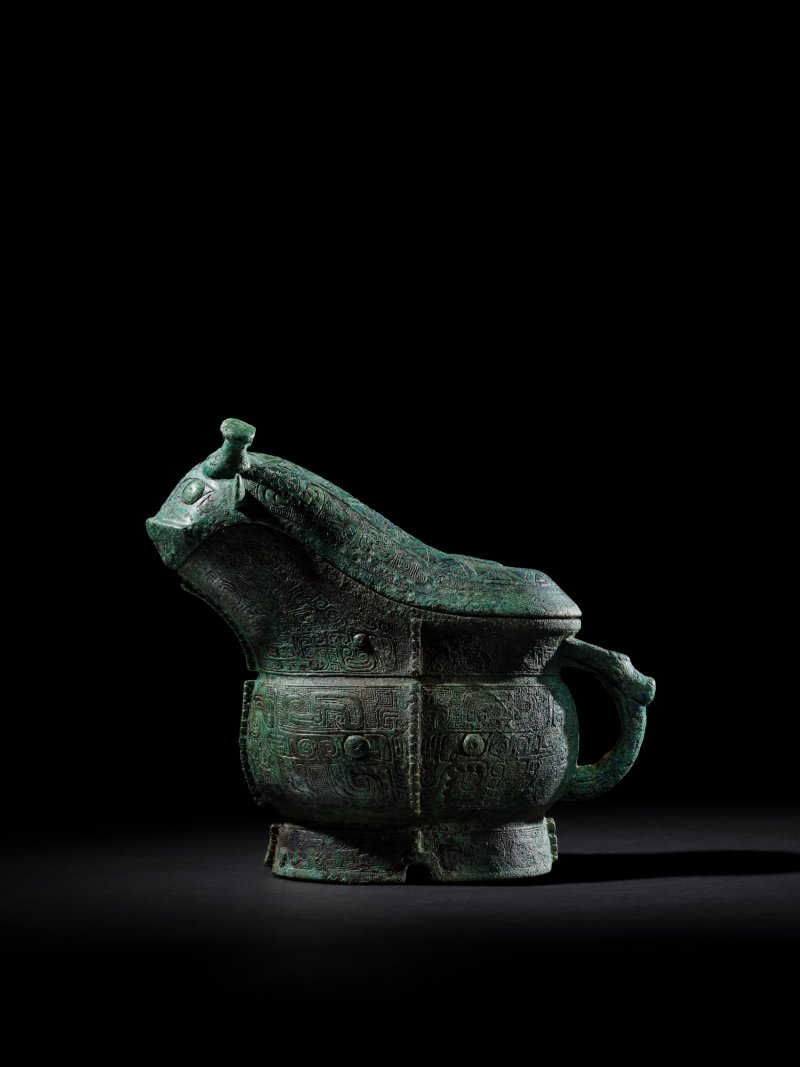

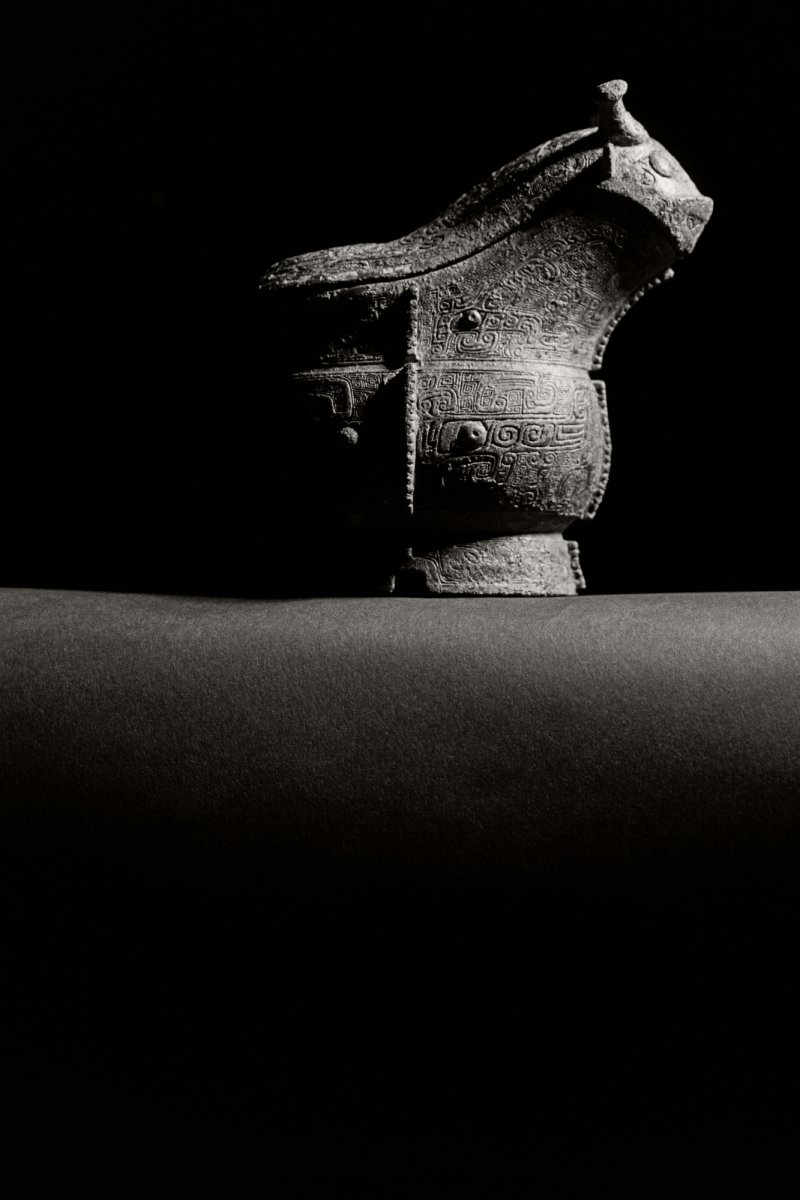
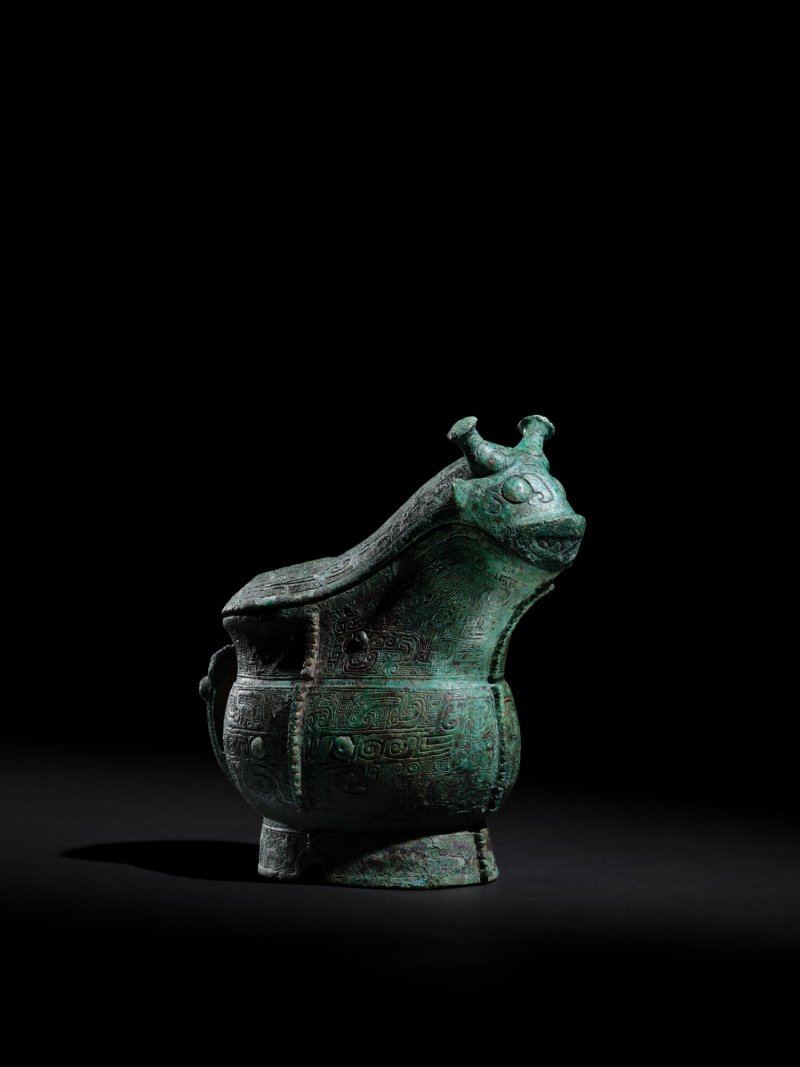
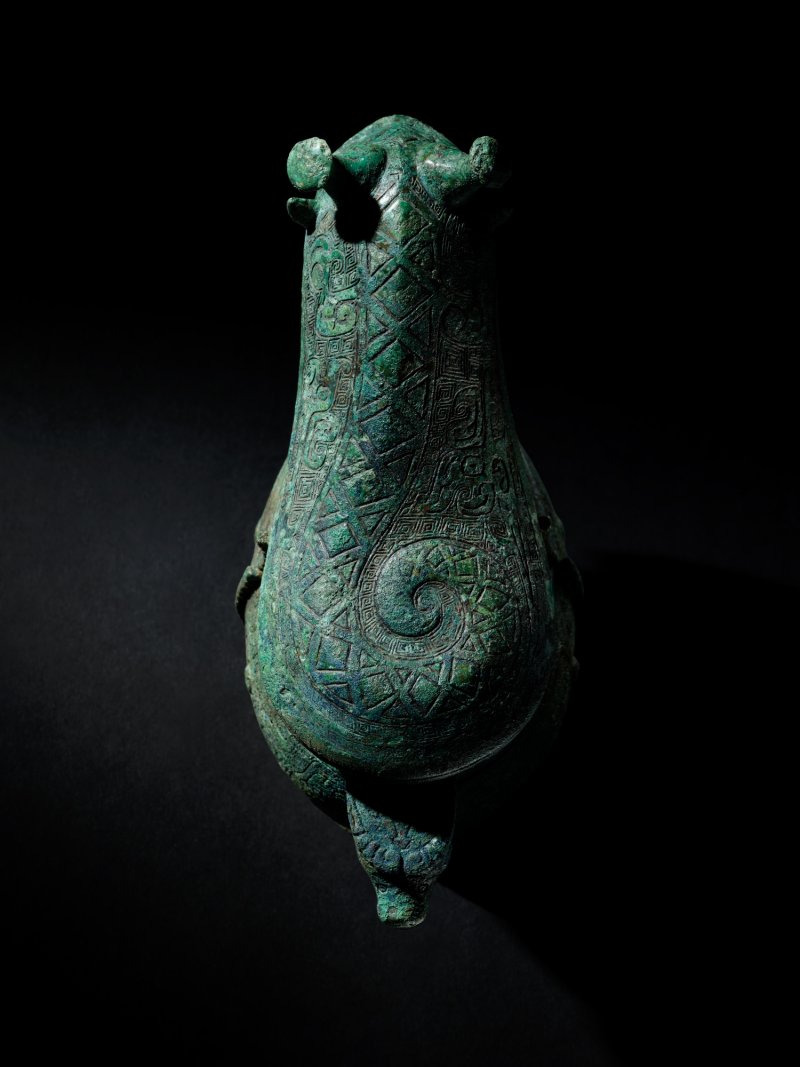
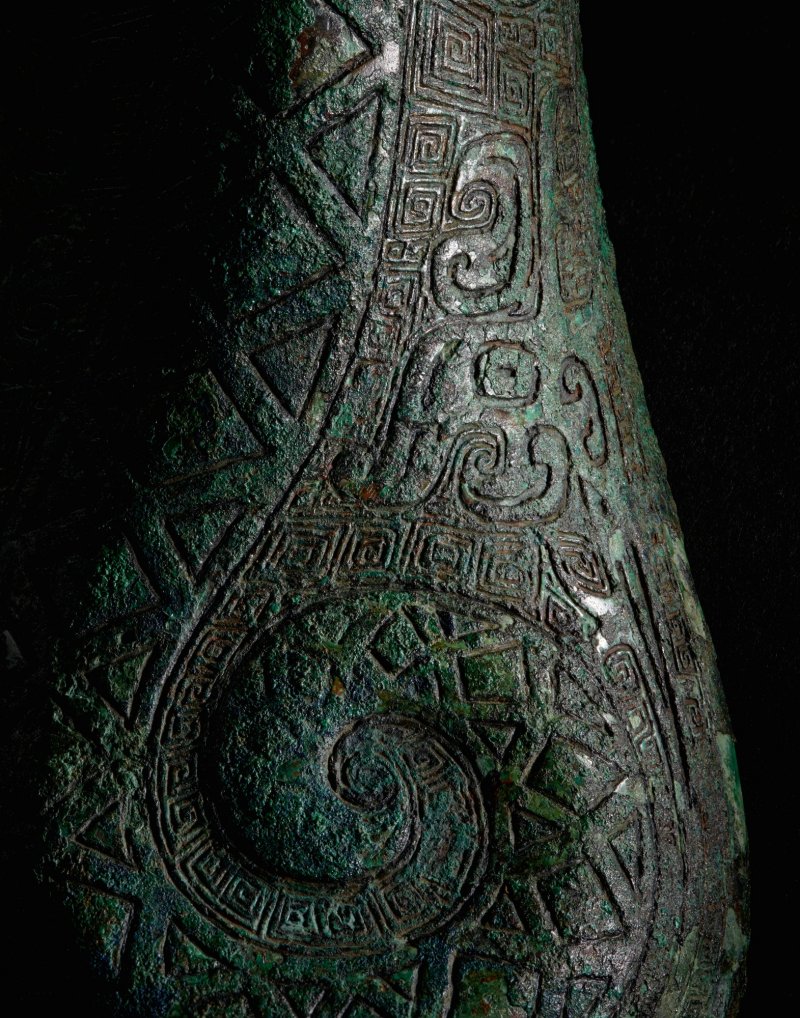
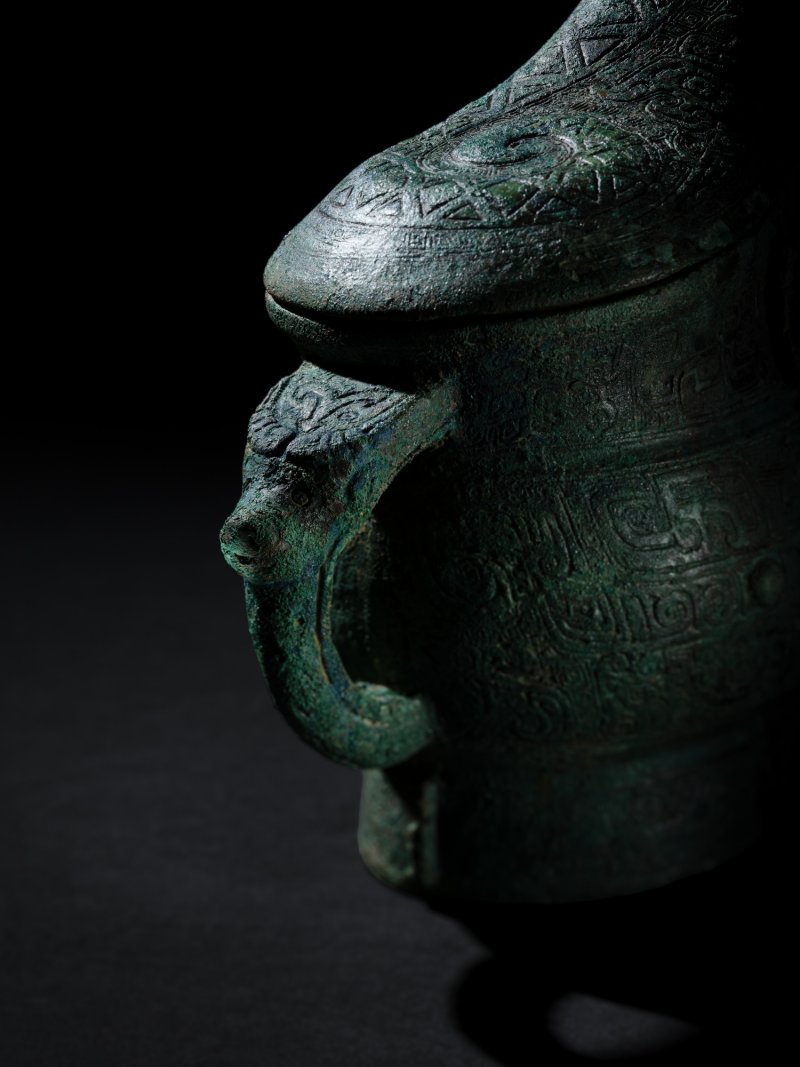
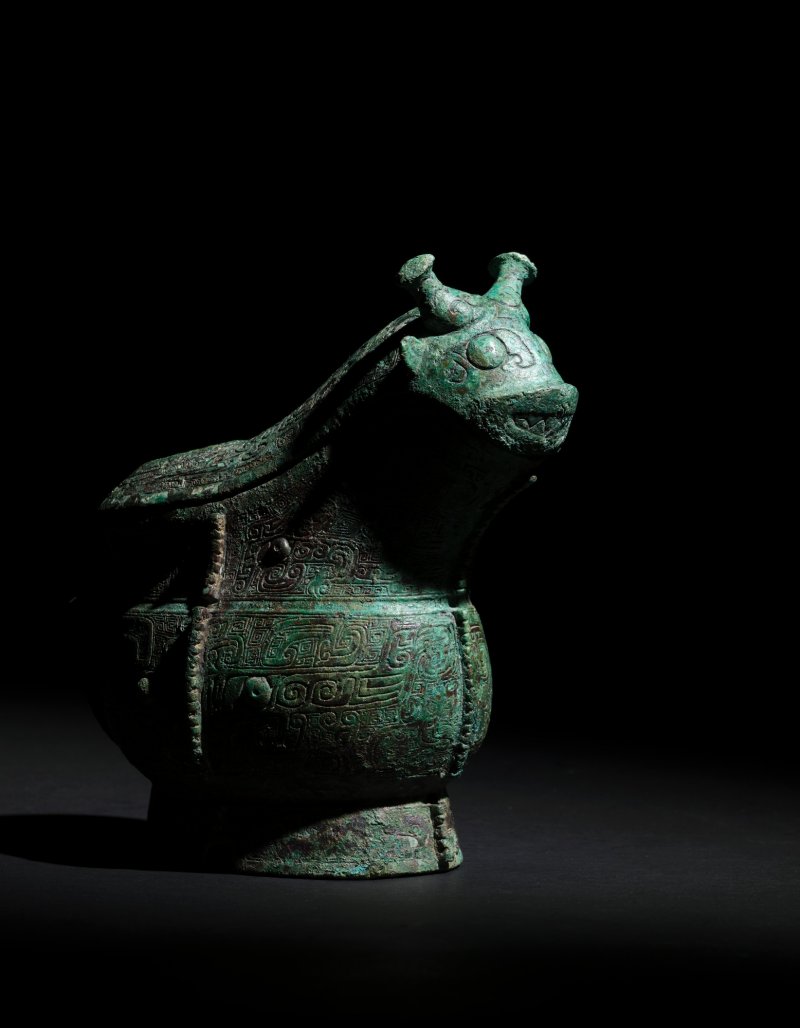
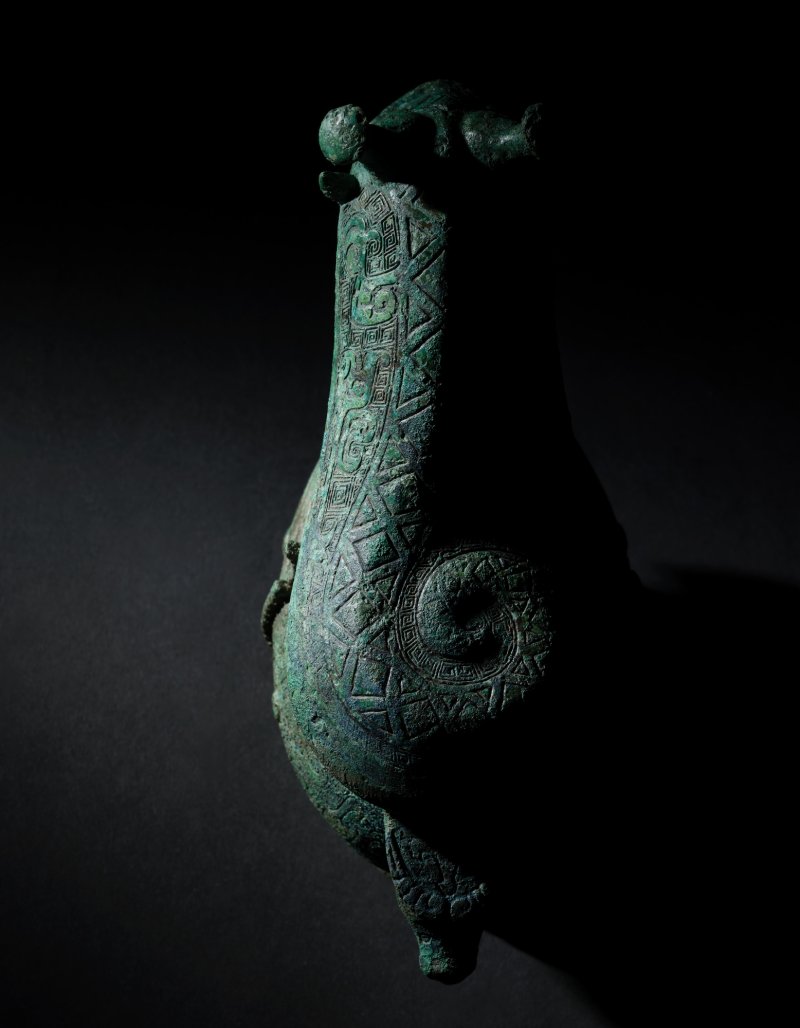
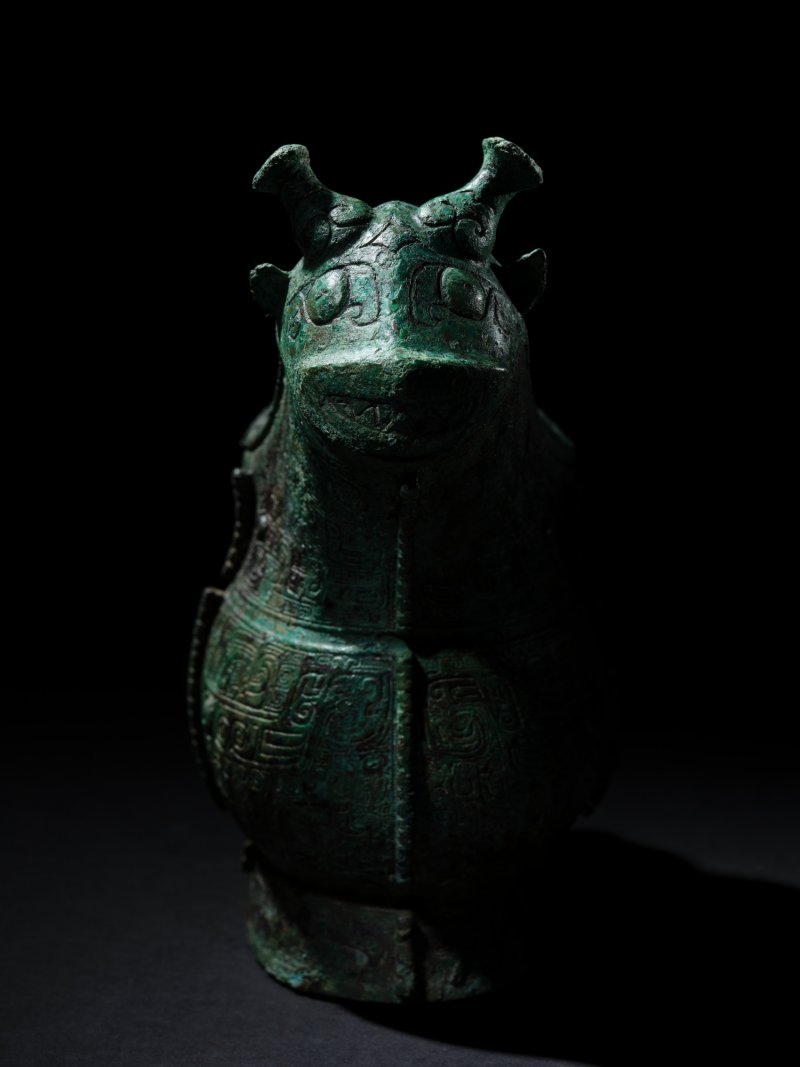
Lot 8061 An exceptionally rare and important archaic bronze royal ritual wine vessel and cover, gong, Late Shang dynasty | 商末 青銅獸形觥
落槌价
预展中
成交价
预展中
| 拍卖公司 | 苏富比 |
|---|---|
| 拍卖时间 | 2026年10月30日 |
拍品信息
拍品名称
An exceptionally rare and important archaic bronze royal ritual wine vessel and cover, gong, Late Shang dynasty | 商末 青銅獸形觥
起拍价
HKD 6,000,000
估值区间
6,000,000 - 12,000,000 HKD
尺寸
未知
品相
The vessel and cover are in general good condition, exceptionally well-preserved for a bronze of this considerable age. The bronze features a highly attractive, richly mottled green patina, accompanied by typical malachite and cuprite encrustations that are entirely consistent with its antiquity. X-ray available upon reqeust.
整體品相良好,器表呈現典型松石綠鏽與赤銅礦紅鏽,與其高古年代相符。X光片可供索取。
If a condition report is provided to assist you with assessing the condition of the lot, it is for guidance purposes only. Such condition report may not refer to all faults, restoration, alterations, or adaptations because Sotheby's is not a professional conservator or restorer but rather a condition report is a statement of subjective, qualified opinion genuinely held by Sotheby's. For these reasons, any such condition report is not an alternative to taking your own professional advice regarding the condition of the lot. Prospective buyers should also refer to the Guide for Buyers at Auction which includes important notices concerning the type of property in this sale.
更多信息
l. 19.5 cm
来源:Collection of Wang Jui Chin (1954-1998), prior to 1997
A French private collection, 1997
On loan to Gisele Croes, Brussels until 2017
An important Asian private collection
展览:Treasures from the Chinese Past, Gisele Croes and Gagosian, New York, March 13- 17, 2017.
图录
说明:來源
王瑞欽(1954-1998)收藏,1997年以前
法國私人收藏,1997年
借展于吉賽爾·克羅斯(Gisele Croes),布魯塞爾,至2017年
重要亞洲私人收藏
展覽
《Treasures from the Chinese Past》,吉賽爾·克羅斯與高古軒(Gagosian),紐約,2017年3月13至17日
A Sculptural Masterpiece: An Exceptionally Rare Shang Dynasty Gong
Gong (previously often pronounced guang) is perhaps one of the most enigmatic and imaginative creations conceived by the late Shang dynasty artisans at the pinnacle of China’s Bronze Age. Among the most sculptural of all Shang ritual bronze forms, the gong transformed a utilitarian vessel into a masterpiece of artistic invention.
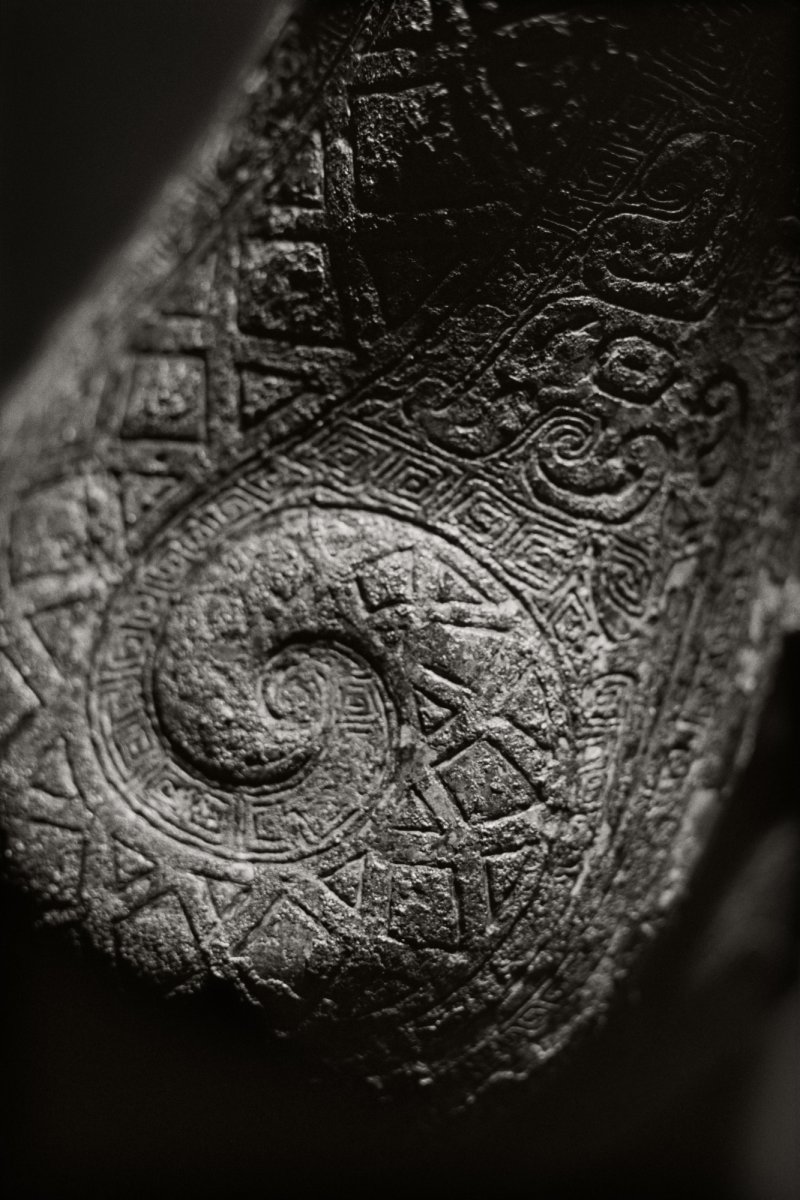
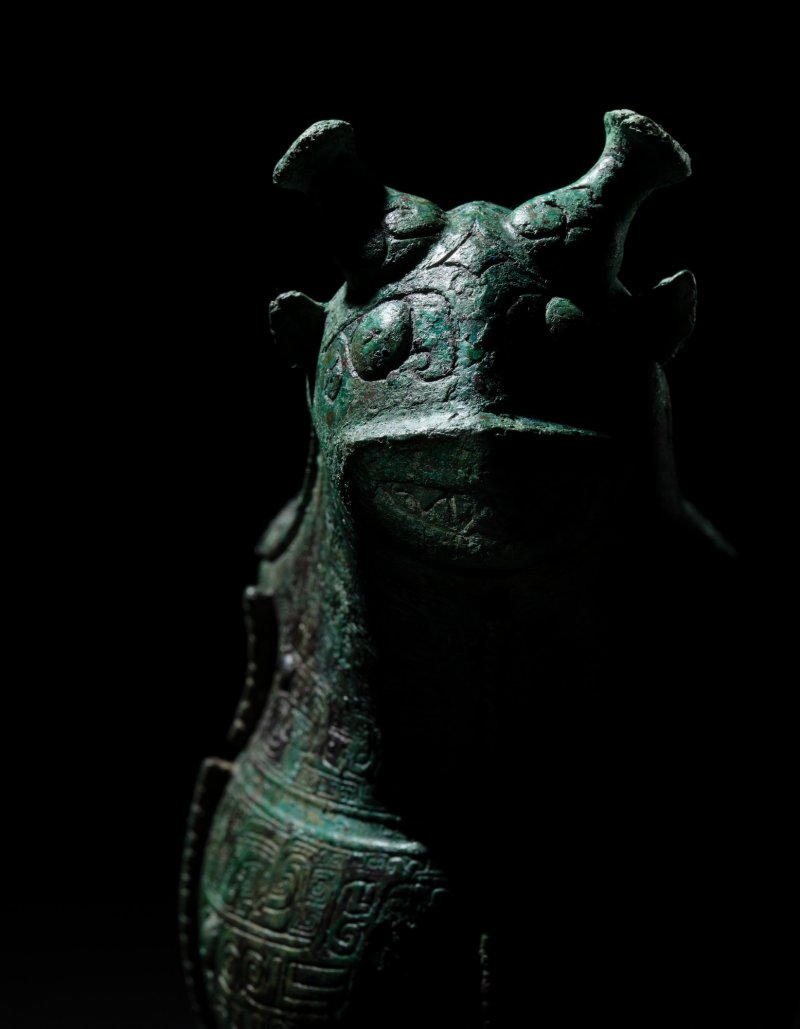
The present example is particularly remarkable for its imposing silhouette and dynamic design. Rising from a tall foot, the powerful ovoid body supports a strikingly elongated cover cast in the form of a dragon with a sinuously coiled serpentine body, terminating at the rear in a loop handle surmounted by a bovine head. Its surface is decorated with richly cast beast masks and other fantastic dragon-like creatures emerging from a dense ground of leiwen. The bold modelling, harmonious proportions, and extraordinary complexity of the decoration transform the present gong beyond a functional ritual vessel into one of the most visually mesmerizing ancient bronze sculptural artwork produced during the final centuries of the Shang dynasty (c. 1600-c. 1046 BC).
The present vessel type, generally believed to have served as a receptacle for heated wine during ancestral ceremonies, is sometimes found together with a ladle, suggesting it may not have been intended to function as a pouring vessel. Although its form clearly implies pouring, the use of a ladle is entirely plausible, given the considerable weight of these bronzes even when empty. The Shou Gong Gong 守宮觥in the Fitzwilliam Museum, Cambridge, United Kingdom, illustrated in Institute of Archaeology, Chinese Academy of Social Sciences, Beijing, is published in Zhongguo qingtongqi quanji [Complete collection of Chinese bronzes], vol. 5, Beijing, 1996, pl. 106 (fig. 1), further solidify this theory. This unique gong is designed with an aperture at the rear that allows a section of the preserved ladle’s handle to project beyond the vessel. Moreover, the interior of the bronze is ingeniously fitted with a divider, enabling two different types of wine to be stored in the same vessel.
Vessels of this form were produced for only a short period. They first appeared in the late Shang and had already become scarce by the Western Zhou period (c. 1046-771 BC). They gradually gave way to another bronze vessel type, the yi (see Chen Peifen ed., Zhongguo qingtongqi cidian / Dictionary of Chinese archaic bronzes, vol. 1, Shanghai, 2013, p. 43). The disappearance of gong is generally thought to have resulted from the Zhou rulers’ efforts to reduce the consumption of wine, since that habit was believed to have contributed to the fall of their predecessors, the Shang.
Unlike many other archaic bronze vessel types, whose forms can be traced to ceramic antecedents, the gong appears to have been developed independently by Shang bronze designers, without any obvious ceramic prototype. Its complex asymmetrical form, incorporating a single handle and a curved, fitted cover, was clearly far more challenging both to design and to cast than the regular circular or square vessels, whose molds could readily be divided into symmetrical sections. The technical difficulties inherent in its production may help explain why the form was never widely adopted and why surviving examples are considerably rarer today than most other Shang ritual bronze vessel types.
Compare a related vessel similarly cast with low-relief decoration and a cover adorned with a dragon head joined by a curling snake-like body, formerly in the collection of Alfred F. Pillsbury (1872-1950), now preserved in the Minneapolis Institute of Arts, Minneapolis, illustrated in Bernhard Karlgren, A Catalogue of Chinese Bronzes in the Alfred F. Pillsbury Collection, Minneapolis, 1952, pl. 46 (fig. 2); and another from the Meiyintang Collection, published in Wu Zhenfeng, Shangzhou qingtongqi mingwen ji tuxiang jicheng [Compendium of inscriptions and images of bronzes from Shang and Zhou dynasties], vol. 24, Shanghai, 2012, no. 13622.
Among all bronze forms that have appeared at auction, the gong is undoubtedly one of the rarest, and examples preserving both the vessel and its cover are even scarcer. Compare a late Shang dynasty bronze gong and cover with a comparable low-relief decorative scheme, formerly in the collection of Bella and P.P. Chiu, included in the exhibition Animals and Animal Designs in Chinese Art, Eskenazi Ltd, New York, 1998, cat. no. 2, sold in these rooms, 8th April 2023, lot 3604; and another of a different design, formerly in the collection of Captain S. N. Ferris Luboshez, USN (Ret'd) (1896–1984), sold first in our New York rooms, 18th November 1982, lot 12, and subsequently at Christie’s New York, 18th March 2021, lot 505, from the collection of Daniel Shapiro.
常见问题
这件An exceptionally rare and important archaic bronze royal ritual wine vessel and cover, gong, Late Shang dynasty | 商末 青銅獸形觥的成交价是多少?
落槌价为 预展中。 成交价为 预展中。
拍品的品相状况如何?
The vessel and cover are in general good condition, exceptionally well-preserved for a bronze of this considerable age. The bronze features a highly attractive, richly mottled green patina, accompanied by typical malachite and cuprite encrustations that are entirely consistent with its antiquity. X-ray available upon reqeust.
整體品相良好,器表呈現典型松石綠鏽與赤銅礦紅鏽,與其高古年代相符。X光片可供索取。
If a condition report is provided to assist you with assessing the condition of the lot, it is for guidance purposes only. Such condition report may not refer to all faults, restoration, alterations, or adaptations because Sotheby's is not a professional conservator or restorer but rather a condition report is a statement of subjective, qualified opinion genuinely held by Sotheby's. For these reasons, any such condition report is not an alternative to taking your own professional advice regarding the condition of the lot. Prospective buyers should also refer to the Guide for Buyers at Auction which includes important notices concerning the type of property in this sale.
整體品相良好,器表呈現典型松石綠鏽與赤銅礦紅鏽,與其高古年代相符。X光片可供索取。
If a condition report is provided to assist you with assessing the condition of the lot, it is for guidance purposes only. Such condition report may not refer to all faults, restoration, alterations, or adaptations because Sotheby's is not a professional conservator or restorer but rather a condition report is a statement of subjective, qualified opinion genuinely held by Sotheby's. For these reasons, any such condition report is not an alternative to taking your own professional advice regarding the condition of the lot. Prospective buyers should also refer to the Guide for Buyers at Auction which includes important notices concerning the type of property in this sale.
这件拍品的流传来源是什么?
Collection of Wang Jui Chin (1954-1998), prior to 1997
A French private collection, 1997
On loan to Gisele Croes, Brussels until 2017
An important Asian private collection
A French private collection, 1997
On loan to Gisele Croes, Brussels until 2017
An important Asian private collection
这件拍品曾在哪些展览中展出过?
Treasures from the Chinese Past, Gisele Croes and Gagosian, New York, March 13- 17, 2017.
图录
图录