
拍品信息
拍品名称
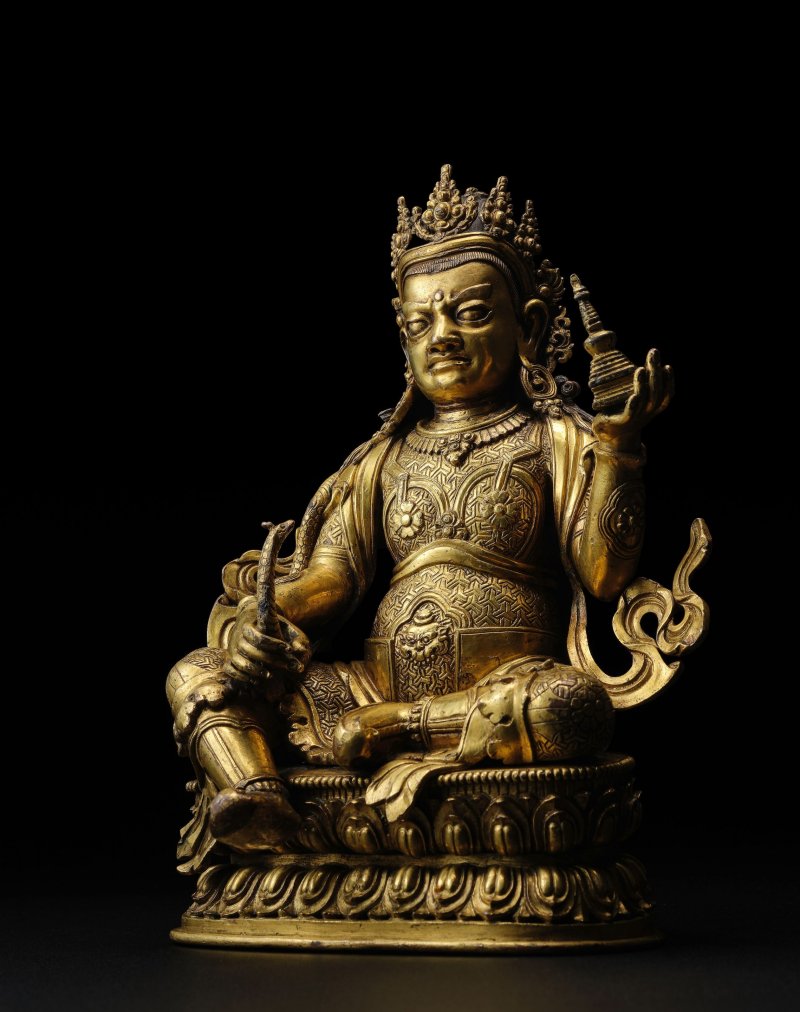
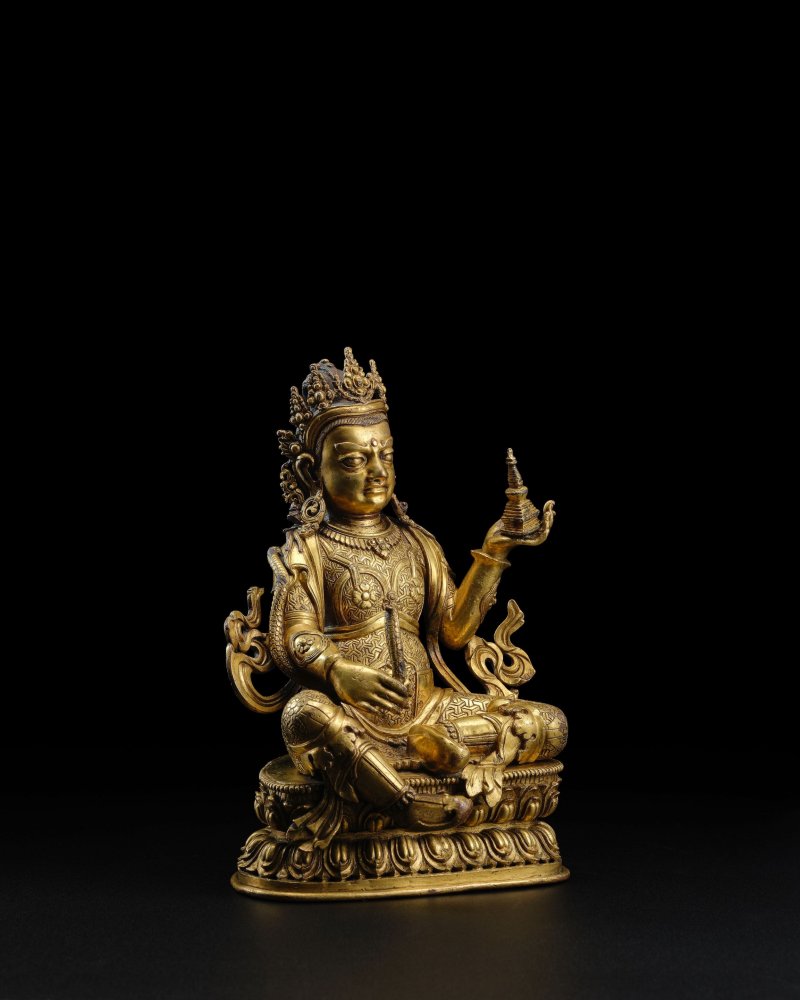
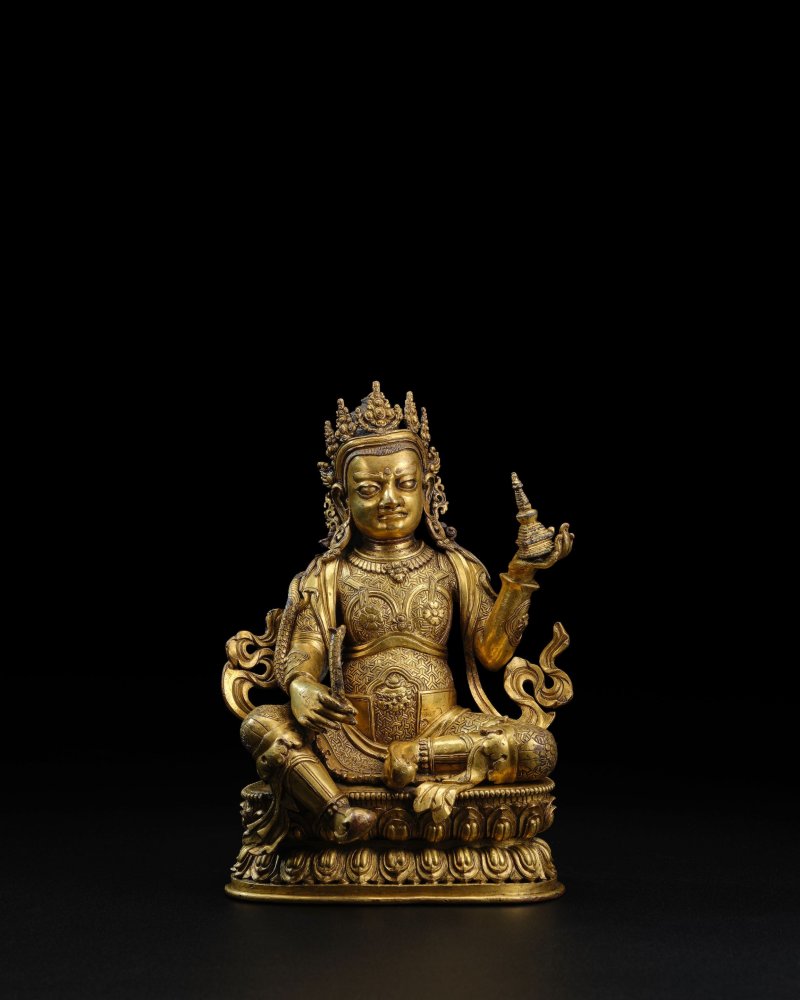
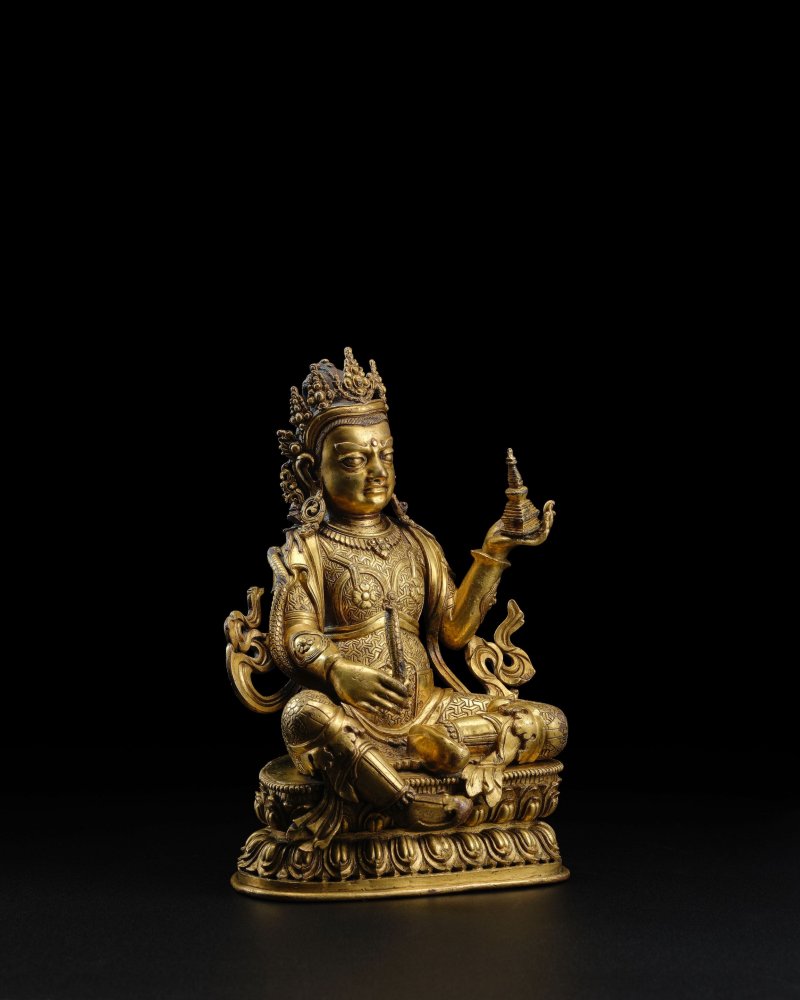
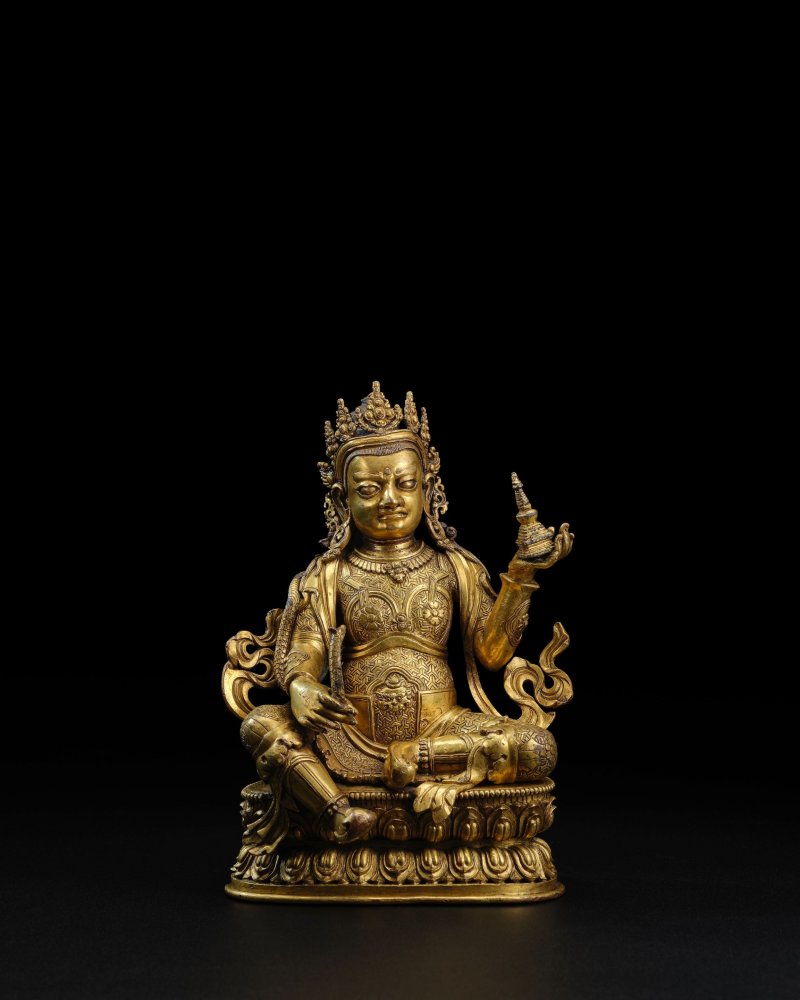
西藏 十六世紀 銅鎏金西方廣目天王像 | A GILT COPPER ALLOY FIGURE OF VIRUPAKSHA
年代
TIBET, 16TH CENTURY
起拍价
HKD 800,000
估值区间
HKD 800000 - 1200000
尺寸
未知
品相
未知
更多信息
TIBET, 16TH CENTURY
Himalayan Art Resources item no. 8896
25 cm (9 7/8 in.) high
Footnotes
西藏 十六世紀 銅鎏金西方廣目天王像
Provenance
Acquired from Yan Wing Company, Hong Kong, 1990s
Virupaksha, the Buddhist Guardian of the West, holds a bird-headed serpent in his right hand and Stupa raised in his left. As one of the four Dharma-protecting Heavenly Kings, Virupaksha guards the west with his pure eye of clear discernment. With serpents, dragons, and similar creatures as his symbolic attributes, he subdues heretical teachings and shields all sentient beings from evil and malevolent forces.
The seated posture of a Heavenly King is relatively rare in sculptural tradition. Heavenly Kings are typically depicted as standing warriors. Virupaksha is seated in lalitasana upon a double lotus base, with his left leg extended downwards. His torso is upright and poised with broad shoulders, and his physique conveys the solemn presence of a Dharma-protecting deity.
This image belongs to a period of active artistic production in Tibet. The 16th century saw the expansion of monastic patronage, with numerous monasteries founded across various schools and a corresponding increase in demand for Buddhist sculpture. Within this context, the Newari artistic tradition, long present in Tibet through itinerant craftsmen and circulating models, continued to exert a strong influence, shaping the stylistic language of Tibetan metalwork.
The physiognomy of the figure draws upon this very tradition. The face is full and rounded, with a broad, level forehead adorned with a finely rendered , a mark of spiritual insight and divine perception. The resonates with Virupaksha's role as the "Broad-Eyed" Heavenly King, whose far-reaching vision discerns all realms and beings. Highly arched brows frame distinctly contoured almond‑shaped eyes, their outer corners turning slightly upward. The nose is straight and well‑defined, the lips crisply delineated, and the chin full and rounded, all rendered with a striking sense of volume and plasticity. The facial expression bears the characteristic mildly wrathful countenance, adding a dynamic tension to the figure's otherwise serene visage.
The jewellery ornaments adorning the figure are all rooted in the Newari aesthetic tradition: the five-leaf crown, the foliate earrings, and the jewelled necklaces. The crown's layered foliate design and the bold spiralling ear ornaments are unmistakable hallmarks of the Newari sculptural idiom, embodying its distinctive decorative vocabulary. A closely comparable crown and pair of large circular earrings can be seen on a circa 15th-century Nepalese figure sold at Bonhams, New York, 14 March 2016, lot 1.
See a comparable figure of Vaishravana exhibited at the Capital Museum, Beijing, in 2013 (Yixi, ed., , 2013, pp. 164–65). The Central Plains–style armour and openwork lotus base are discussed in detail in the catalogue entry for the companion figure of Virudhaka (lot 1031), with which the present work was probably originally conceived as a matched pair.
Himalayan Art Resources item no. 8896
25 cm (9 7/8 in.) high
Footnotes
西藏 十六世紀 銅鎏金西方廣目天王像
Provenance
Acquired from Yan Wing Company, Hong Kong, 1990s
Virupaksha, the Buddhist Guardian of the West, holds a bird-headed serpent in his right hand and Stupa raised in his left. As one of the four Dharma-protecting Heavenly Kings, Virupaksha guards the west with his pure eye of clear discernment. With serpents, dragons, and similar creatures as his symbolic attributes, he subdues heretical teachings and shields all sentient beings from evil and malevolent forces.
The seated posture of a Heavenly King is relatively rare in sculptural tradition. Heavenly Kings are typically depicted as standing warriors. Virupaksha is seated in lalitasana upon a double lotus base, with his left leg extended downwards. His torso is upright and poised with broad shoulders, and his physique conveys the solemn presence of a Dharma-protecting deity.
This image belongs to a period of active artistic production in Tibet. The 16th century saw the expansion of monastic patronage, with numerous monasteries founded across various schools and a corresponding increase in demand for Buddhist sculpture. Within this context, the Newari artistic tradition, long present in Tibet through itinerant craftsmen and circulating models, continued to exert a strong influence, shaping the stylistic language of Tibetan metalwork.
The physiognomy of the figure draws upon this very tradition. The face is full and rounded, with a broad, level forehead adorned with a finely rendered , a mark of spiritual insight and divine perception. The resonates with Virupaksha's role as the "Broad-Eyed" Heavenly King, whose far-reaching vision discerns all realms and beings. Highly arched brows frame distinctly contoured almond‑shaped eyes, their outer corners turning slightly upward. The nose is straight and well‑defined, the lips crisply delineated, and the chin full and rounded, all rendered with a striking sense of volume and plasticity. The facial expression bears the characteristic mildly wrathful countenance, adding a dynamic tension to the figure's otherwise serene visage.
The jewellery ornaments adorning the figure are all rooted in the Newari aesthetic tradition: the five-leaf crown, the foliate earrings, and the jewelled necklaces. The crown's layered foliate design and the bold spiralling ear ornaments are unmistakable hallmarks of the Newari sculptural idiom, embodying its distinctive decorative vocabulary. A closely comparable crown and pair of large circular earrings can be seen on a circa 15th-century Nepalese figure sold at Bonhams, New York, 14 March 2016, lot 1.
See a comparable figure of Vaishravana exhibited at the Capital Museum, Beijing, in 2013 (Yixi, ed., , 2013, pp. 164–65). The Central Plains–style armour and openwork lotus base are discussed in detail in the catalogue entry for the companion figure of Virudhaka (lot 1031), with which the present work was probably originally conceived as a matched pair.
常见问题
这件西藏 十六世紀 銅鎏金西方廣目天王像 | A GILT COPPER ALLOY FIGURE OF VIRUPAKSHA的成交价是多少?
落槌价为 预展中。 成交价为 预展中。