
拍品信息
拍品名称
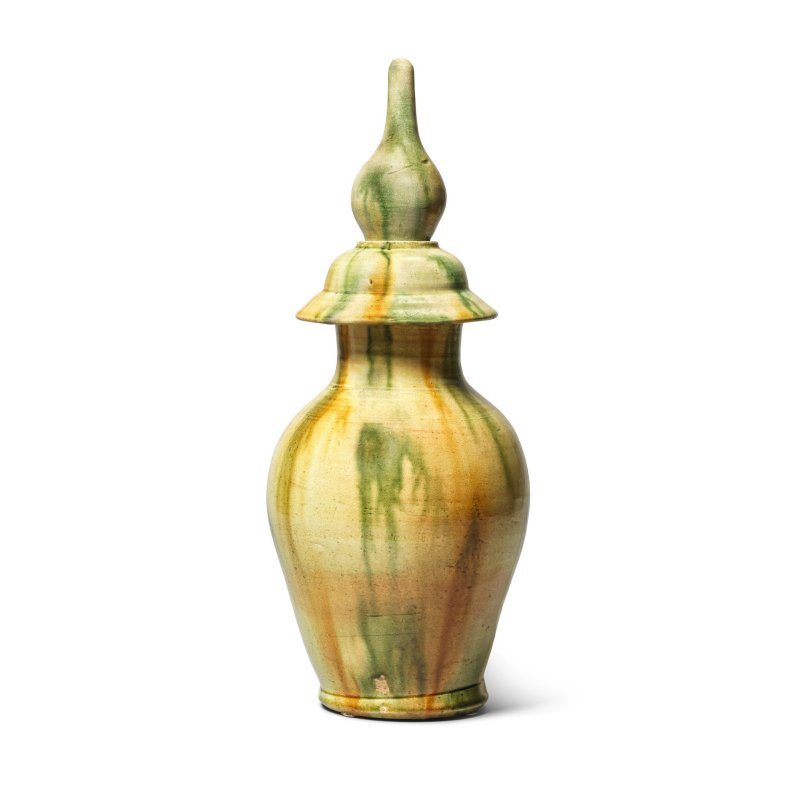
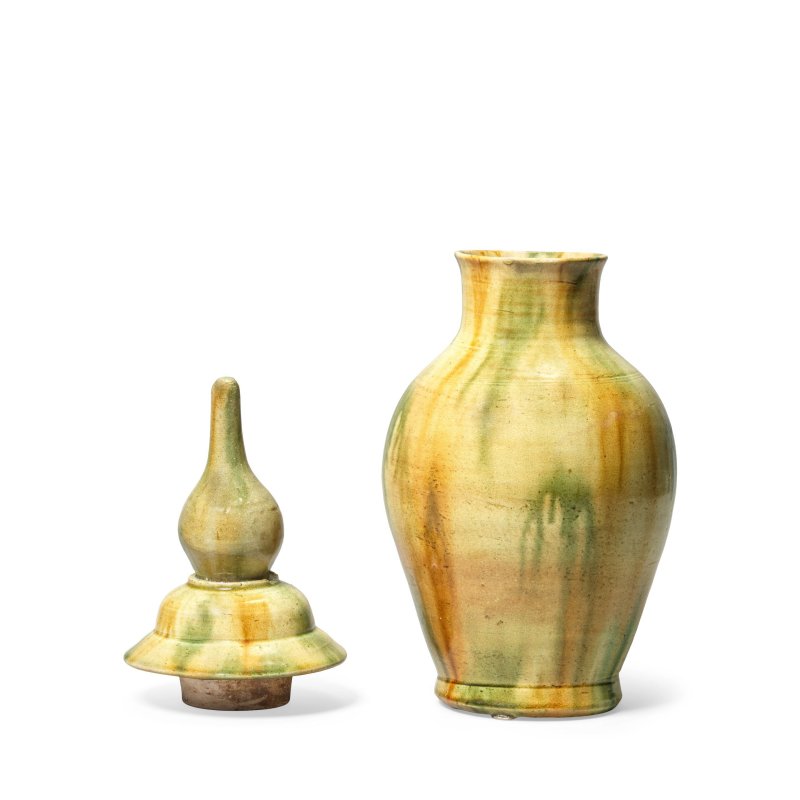
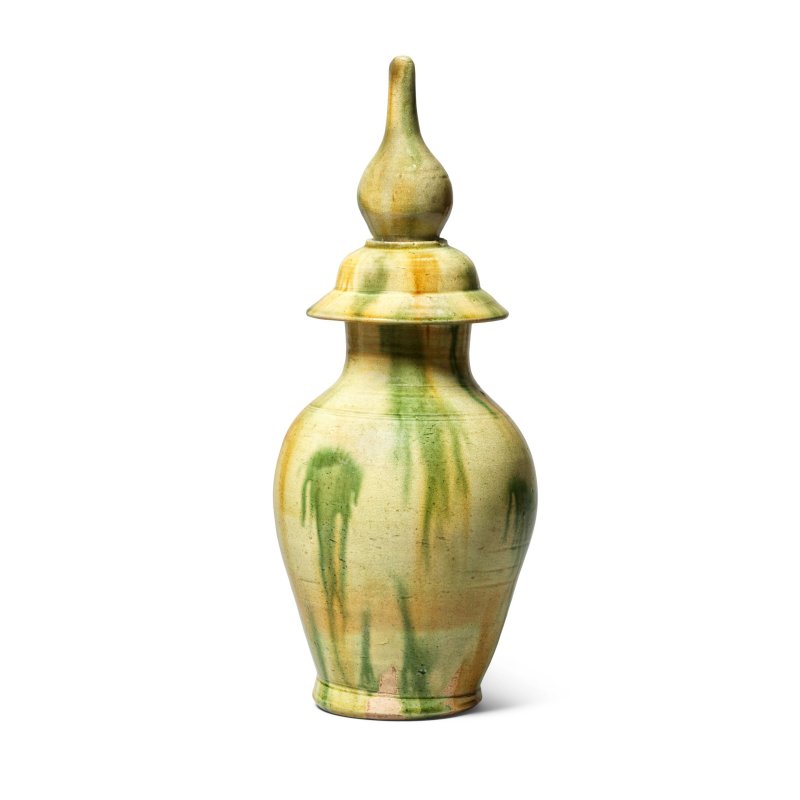
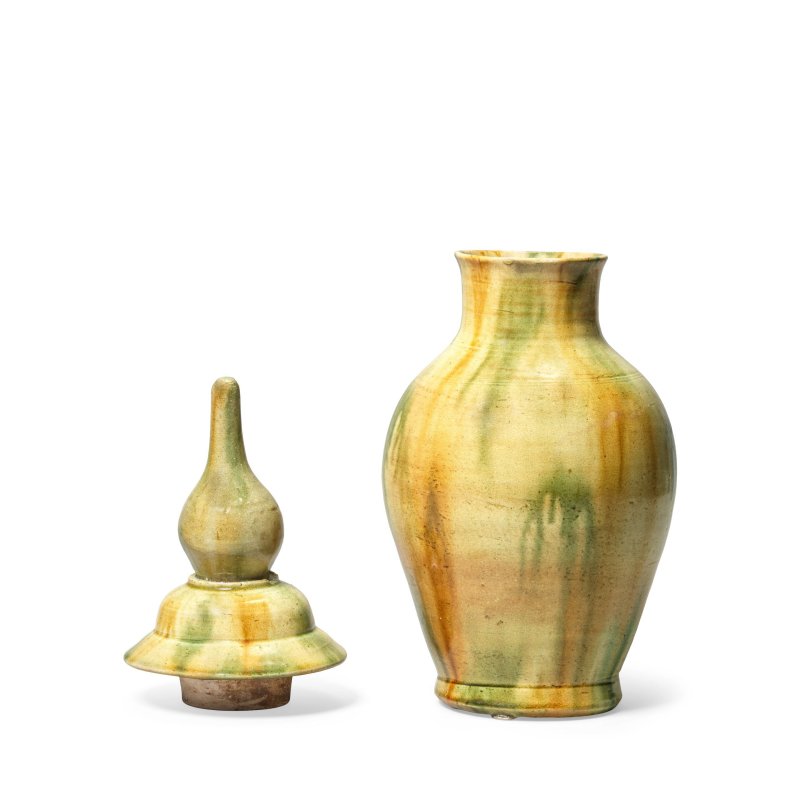
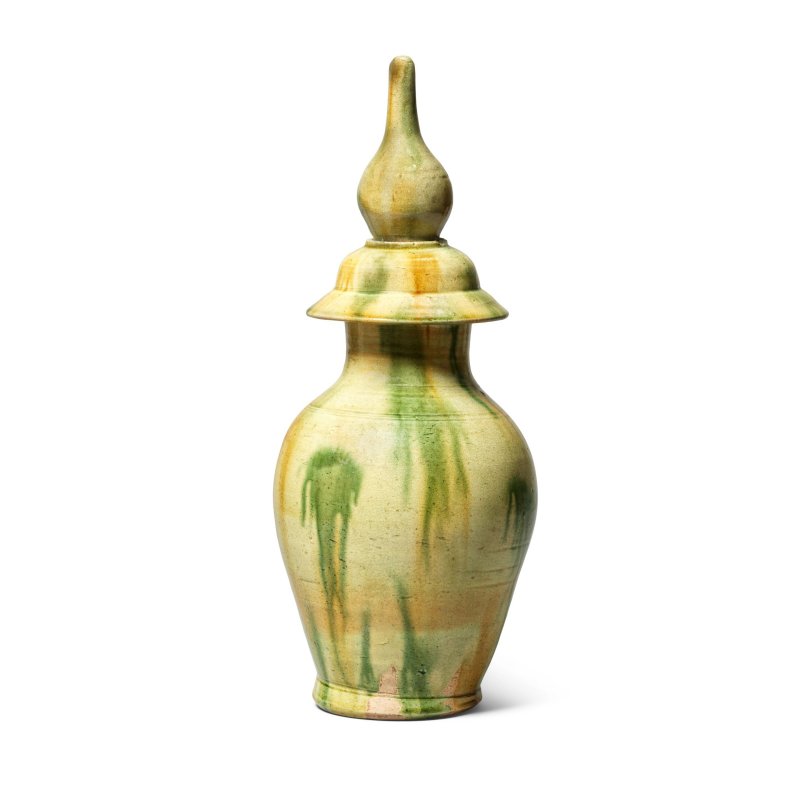
唐 三彩塔式蓋罐 | A SANCAI GLAZED STUPA-SHAPED JAR AND COVER
年代
Tang Dynasty
起拍价
GBP 12,000
估值区间
GBP 12000 - 15000
尺寸
未知
品相
未知
更多信息
Tang Dynasty
The vase elegantly potted with a baluster body rising to a waisted neck and terminating in a slightly everted mouth rim, covered overall with a cream glaze accented by vertical streaks of green and amber, with a cover in the shape of a stupa.
With the cover, 42.2cm (16 5/8in) high. (2).
Footnotes
唐 三彩塔式蓋罐
Published, Illustrated and Exhibited: Mayuyama & Co. Ltd., An Exhibition of Arts of the Tang Dynasty, Tokyo, October 2017, no. 93, pp.132-133, pl.93.
展覽著錄:繭山龍泉堂,《An Exhibition of Arts of the Tang Dynasty》,東京,2017年10月,拍品編號93,第132-133頁,插圖93
The result of Oxford Authentication Ltd. thermoluminescence test no.C122k11 dated 7 July 2008, is consistent with the dating of this lot
本拍品經牛津熱釋光檢測編號C122k11(2008年7月7日),結果與其斷代相符。
The stupa-form jar is a distinctive type of funerary object that emerged during the Tang dynasty and is characterised by Buddhist features. The form represents a fusion of traditional Chinese funerary practices and Buddhist culture. The stupa-like form derives from the Indian stupa and reflects the localisation and transformation of the stupa form in China.
See a glazed jar and cover of similar shape, Tang dynasty, excavated in 1977 at a Tang tomb in Jingxing County, Hebei Province, illustrated in (中國出土瓷器全集), vol.3, Beijing, 2008, p.45.
The vase elegantly potted with a baluster body rising to a waisted neck and terminating in a slightly everted mouth rim, covered overall with a cream glaze accented by vertical streaks of green and amber, with a cover in the shape of a stupa.
With the cover, 42.2cm (16 5/8in) high. (2).
Footnotes
唐 三彩塔式蓋罐
Published, Illustrated and Exhibited: Mayuyama & Co. Ltd., An Exhibition of Arts of the Tang Dynasty, Tokyo, October 2017, no. 93, pp.132-133, pl.93.
展覽著錄:繭山龍泉堂,《An Exhibition of Arts of the Tang Dynasty》,東京,2017年10月,拍品編號93,第132-133頁,插圖93
The result of Oxford Authentication Ltd. thermoluminescence test no.C122k11 dated 7 July 2008, is consistent with the dating of this lot
本拍品經牛津熱釋光檢測編號C122k11(2008年7月7日),結果與其斷代相符。
The stupa-form jar is a distinctive type of funerary object that emerged during the Tang dynasty and is characterised by Buddhist features. The form represents a fusion of traditional Chinese funerary practices and Buddhist culture. The stupa-like form derives from the Indian stupa and reflects the localisation and transformation of the stupa form in China.
See a glazed jar and cover of similar shape, Tang dynasty, excavated in 1977 at a Tang tomb in Jingxing County, Hebei Province, illustrated in (中國出土瓷器全集), vol.3, Beijing, 2008, p.45.
常见问题
这件唐 三彩塔式蓋罐 | A SANCAI GLAZED STUPA-SHAPED JAR AND COVER的成交价是多少?
落槌价为 预展中。 成交价为 预展中。


