Lot 235 Utagawa Kuniyoshi (1797-1861)
落槌价
预展中
成交价
预展中
| 拍卖公司 | Roseberys |
|---|---|
| 拍卖时间 | 2026年11月03日 |
拍品信息
拍品名称
Utagawa Kuniyoshi (1797-1861)
年代
Edo period, circa 1851
起拍价
GBP 700
估值区间
Estimate: £1,000 - £1,500
尺寸
76.9cm x 37.7cm (each sheet approx. 36.4cm x 25.2cm)
品相
未知
更多信息
Part I from the Private Collection of Sir V.S. Naipaul (1932 – 2018) Lots 226-236
Utagawa Kuniyoshi (1797-1861)
Edo period, circa 1851
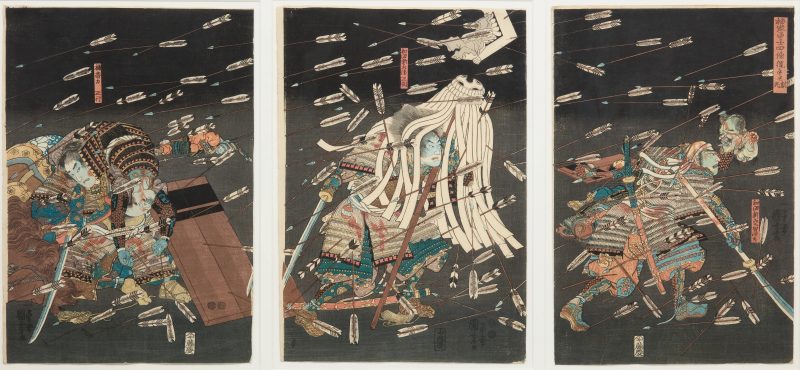
Japanese woodblock print, 'The last stand of the Kusunoki Heroes at Shijo-Nawate' (Nanke yushi Shijo-Nawate nite uchijini), signed Ichiyusai Kuniyoshi ga, artist's seal yoshikri, published by Fujiokaya Keijiro, vertical oban triptych, 76.9cm x 37.7cm (each sheet approx. 36.4cm x 25.2cm), framed and glazed.
Provenance: Sotheby's, New York, 18 September 1998, Lot 389.
Private Collection of Sir V.S. Naipaul (1932 – 2018)
In his triptych Brave Warriors of the Kusunoki Clan at Shijonawate (formally, At Shijō-nawate, the Heroes of the Kusunoki Clan Take on a Gigantic Enemy Force and in a Mighty Battle Display Their Incomparable Renown), first designed c. 1851 and later reworked by Kuniyoshi in a rare hexaptych format in 1857, the artist depicts the Battle of Shijonawate. This was fought in 1348 in Kawachi province, during the Nanboku-chō period, between the Southern Court army under Kusunoki Masatsura and the Northern Court forces of Ashikaga Takauji. Vastly outnumbered (traditionally some 3,000 men against 60,000), the Kusunoki were comprehensively defeated, choosing a warrior's death over surrender.
The warriors (from right: Wada Shinbochi Kenshu, Wada Shinbei Masatomo and Kusunoki Masatsura) press forward through a dense hail of arrows, using grim makeshift shields: Kenshu holds up two severed enemy heads, Masatomo crouches beneath a shredded banner, and Masatsura shelters behind a fallen horse, holding up a dead soldier. Badly wounded and bleeding, they have blue faces, a sign that death is near. The design influenced later artists including Ogata Gekkō and Tsukioka Yoshitoshi, and impressions are held in the British Museum and the Museum of Fine Arts, Boston. See T. Clark, Kuniyoshi: From The Arthur R. Miller Collection (Royal Academy of Arts, 2009), cat. 32, pp. 92-3.
以下内容由AI翻译:
【名称】
江户时期1851年左右 歌川国芳 木版画《楠氏英雄在四条河原的最后一战》(三联画)
【年代】
江户时期,约1851年
【描述】
第一部分来自V.S.奈保尔爵士(1932-2018)的私人收藏,拍品编号226-236
歌川国芳(1797-1861)
江户时期,约1851年
日本木版画,《楠氏英雄在四条河原的最后一战》(Nanke yushi Shijo-Nawate nite uchijini),署名一勇斎国芳画,艺术家印章为吉切,由藤冈屋敬次郎出版,竖式大版三联画,76.9cm x 37.7cm(每张纸约为36.4cm x 25.2cm),装框并加玻璃。
来源:苏富比,纽约,1998年9月18日,拍品编号389。
在他的三联画《楠氏勇士在四条河原的英勇战斗》(正式名称为《在四条河原,楠氏英雄对抗庞大的敌军,在激烈的战斗中展示了他们无与伦比的声望》)中,首次设计于约1851年,并于1857年由国芳以罕见的六联画形式重新创作,艺术家描绘了四条河原之战。这场战斗发生在1348年的河内省,南北朝时期,南朝军队在楠木正行的领导下与北朝足利尊氏的军队作战。楠木军队人数远远少于对方(传统上是3,000人对60,000人),最终被彻底击败,选择武士的死亡而不是投降。
武士们(从右到左:和田真平知贤秀、和田真平知正友和楠木正行)在密集的箭雨中前进,使用临时制作的盾牌:贤秀举着两个被砍下的敌人头颅,正友躲在破烂的旗帜下,正行则躲在一匹倒下的马后面,举起一名死去的士兵。他们伤势严重,流血不止,脸色发蓝,这是即将死亡的迹象。这一设计影响了后来的艺术家,包括小方月光和月冈芳年,印象作品收藏于大英博物馆和波士顿美术馆。参见T. Clark, Kuniyoshi: From The Arthur R. Miller Collection (皇家艺术学院, 2009), cat. 32, pp. 92-3。
常见问题
这件Utagawa Kuniyoshi (1797-1861)的成交价是多少?
落槌价为 预展中。 成交价为 预展中。
拍品的尺寸是多少?
76.9cm x 37.7cm (each sheet approx. 36.4cm x 25.2cm)
这件拍品的流传来源是什么?
苏富比,纽约,1998年9月18日,拍品编号389。
在他的三联画《楠氏勇士在四条河原的英勇战斗》(正式名称为《在四条河原,楠氏英雄对抗庞大的敌军,在激烈的战斗中展示了他们无与伦比的声望》)中,首次设计于约1851年,并于1857年由国芳以罕见的六联画形式重新创作,艺术家描绘了四条河原之战。这场战斗发生在1348年的河内省,南北朝时期,南朝军队在楠木正行的领导下与北朝足利尊氏的军队作战。楠木军队人数远远少于对方(传统上是3,000人对60,000人),最终被彻底击败,选择武士的死亡而不是投降。
武士们(从右到左:和田真平知贤秀、和田真平知正友和楠木正行)在密集的箭雨中前进,使用临时制作的盾牌:贤秀举着两个被砍下的敌人头颅,正友躲在破烂的旗帜下,正行则躲在一匹倒下的马后面,举起一名死去的士兵。他们伤势严重,流血不止,脸色发蓝,这是即将死亡的迹象。这一设计影响了后来的艺术家,包括小方月光和月冈芳年,印象作品收藏于大英博物馆和波士顿美术馆。参见T. Clark, Kuniyoshi: From The Arthur R. Miller Collection (皇家艺术学院, 2009), cat. 32, pp. 92-3。