
拍品信息
拍品名称
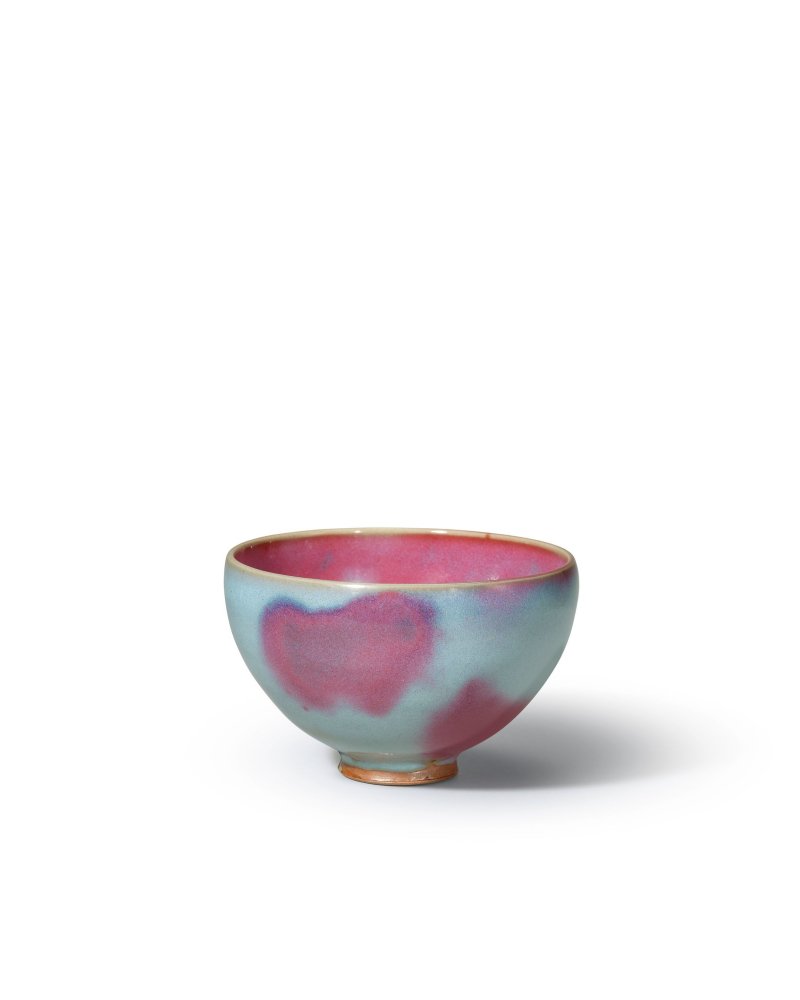
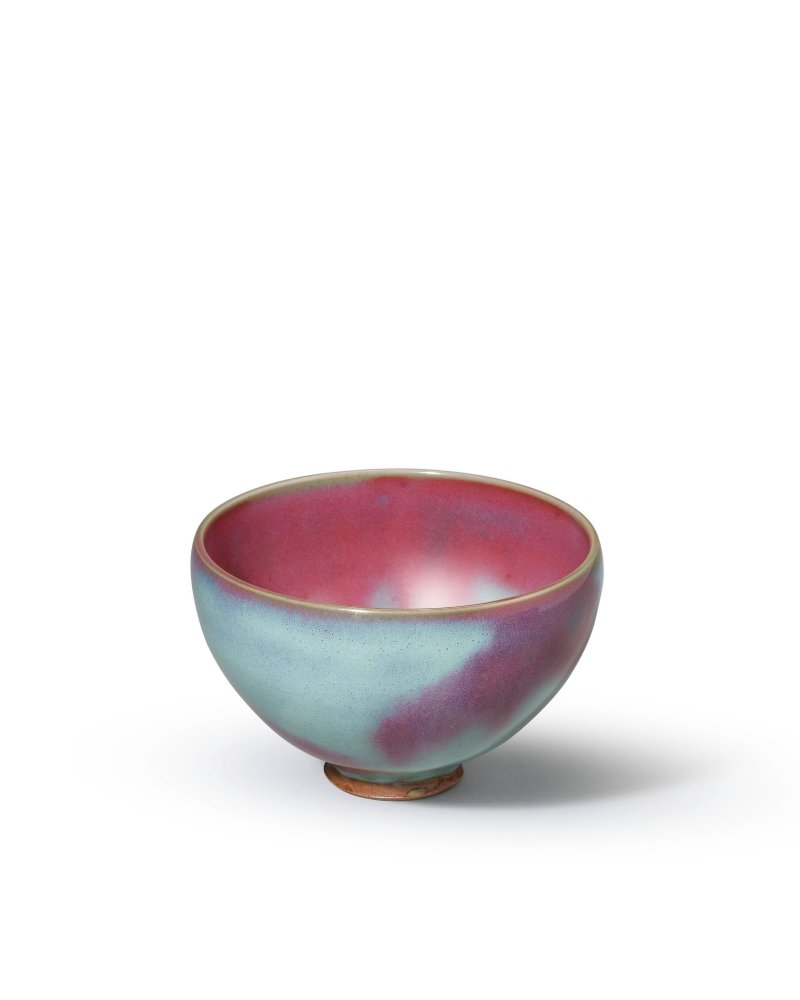
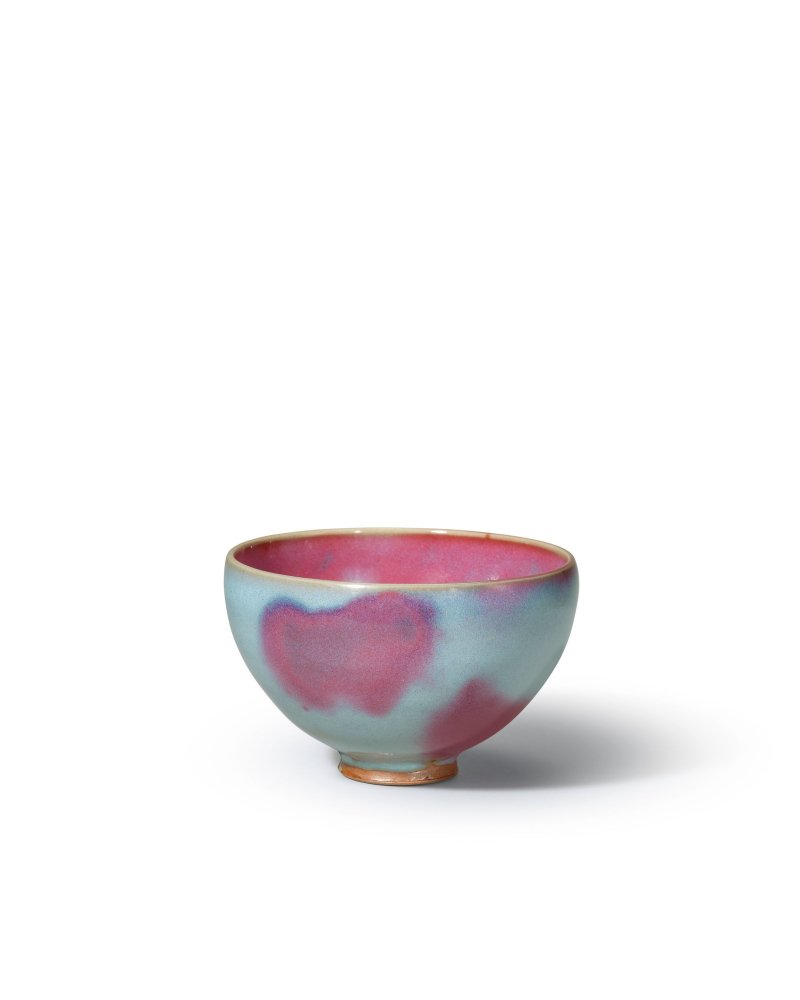
北宋/金 鈞窯天藍釉紫斑碗 | AN EXCEPTIONALLY RARE JUN PURPLE-SPLASHED BOWL
年代
Northern Song/Jin Dynasty
起拍价
HKD 2,800,000
估值区间
HKD 2800000 - 3600000
尺寸
未知
品相
未知
更多信息
Northern Song/Jin Dynasty
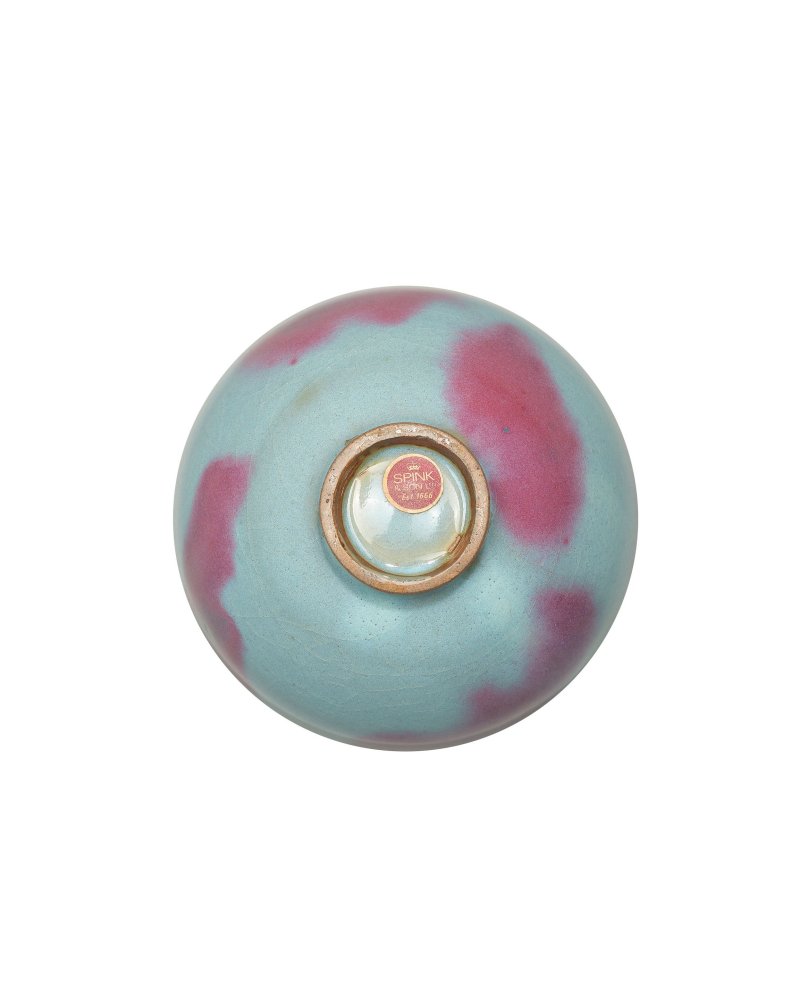
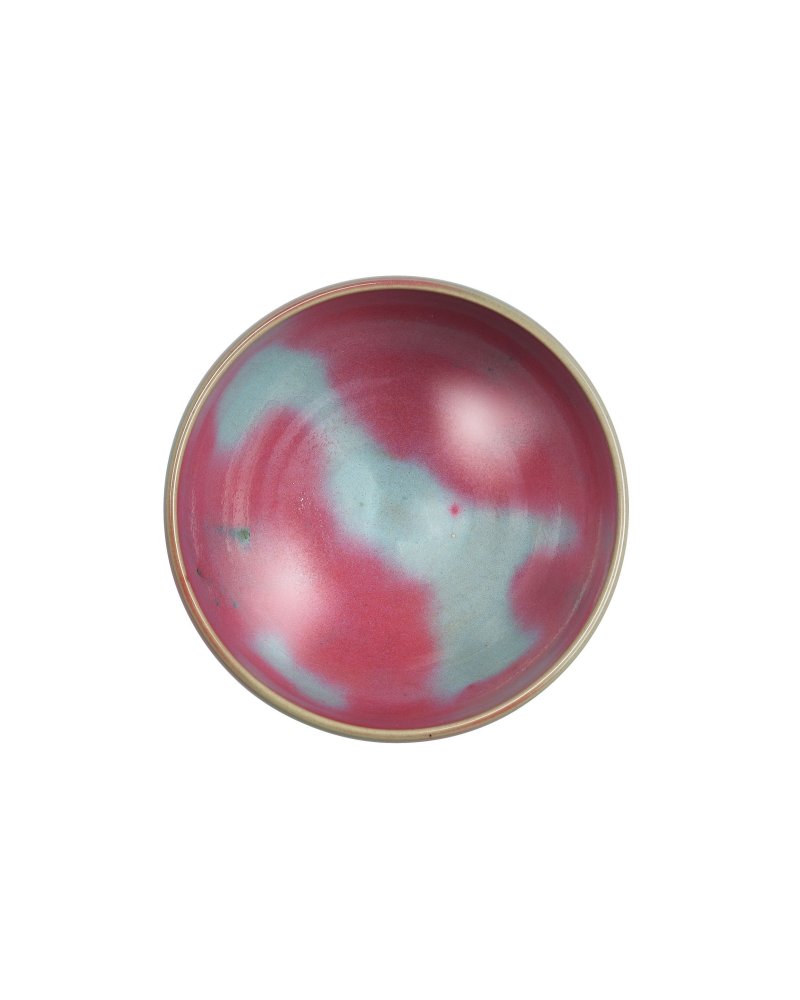
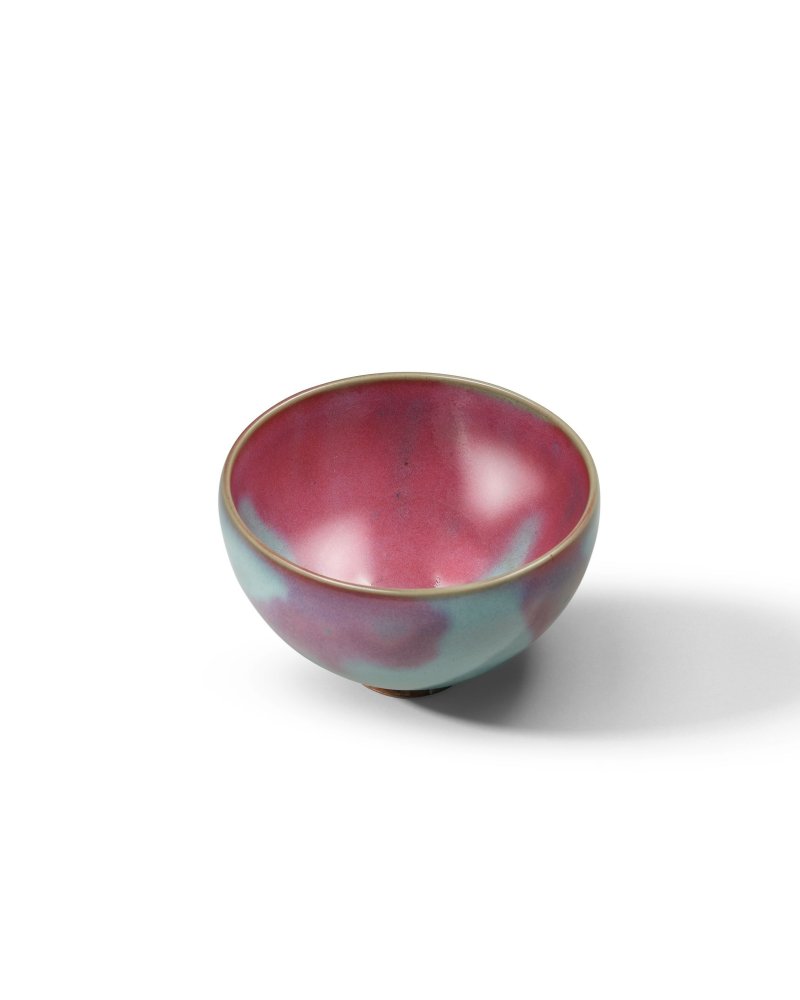
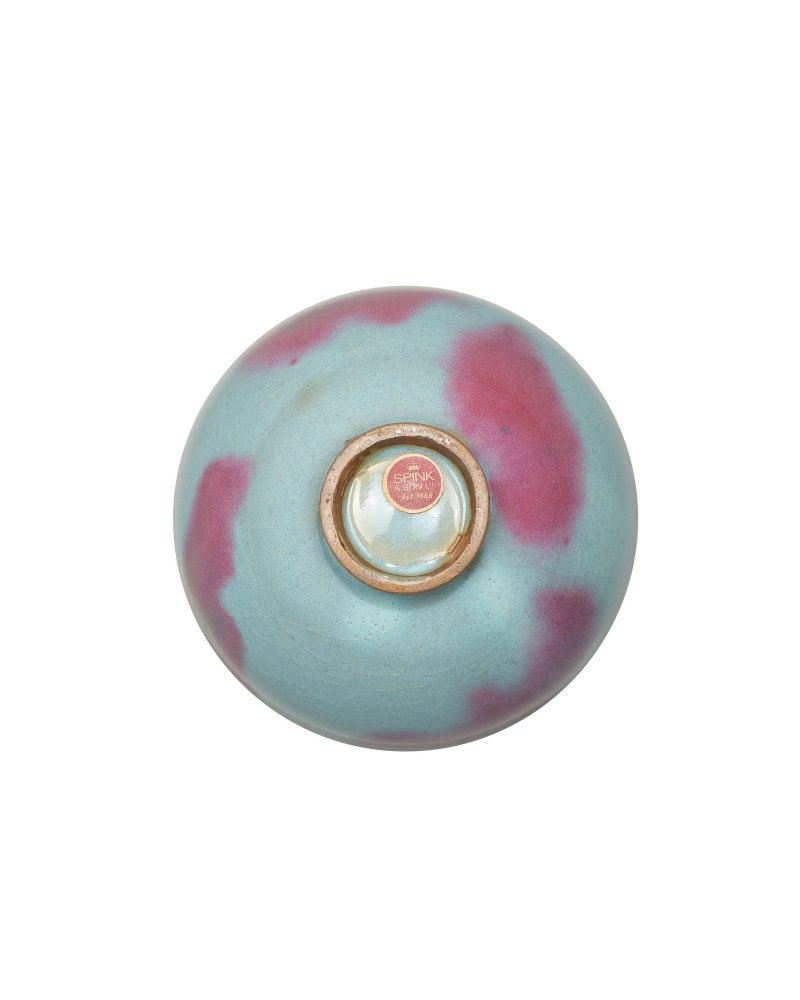
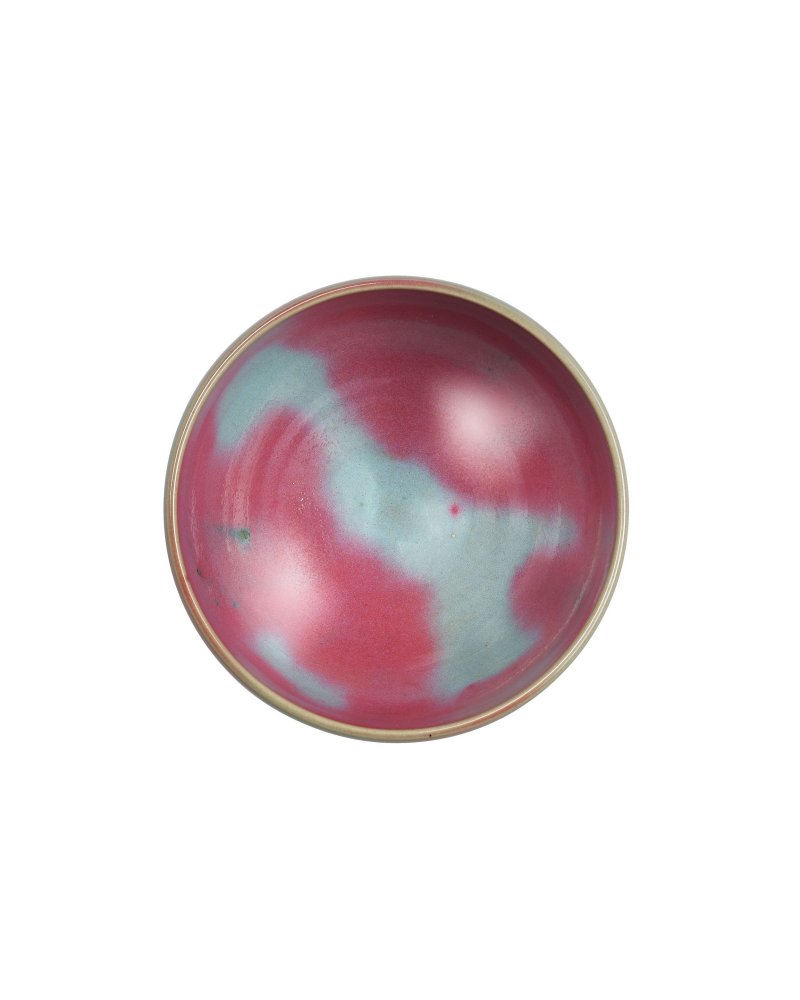
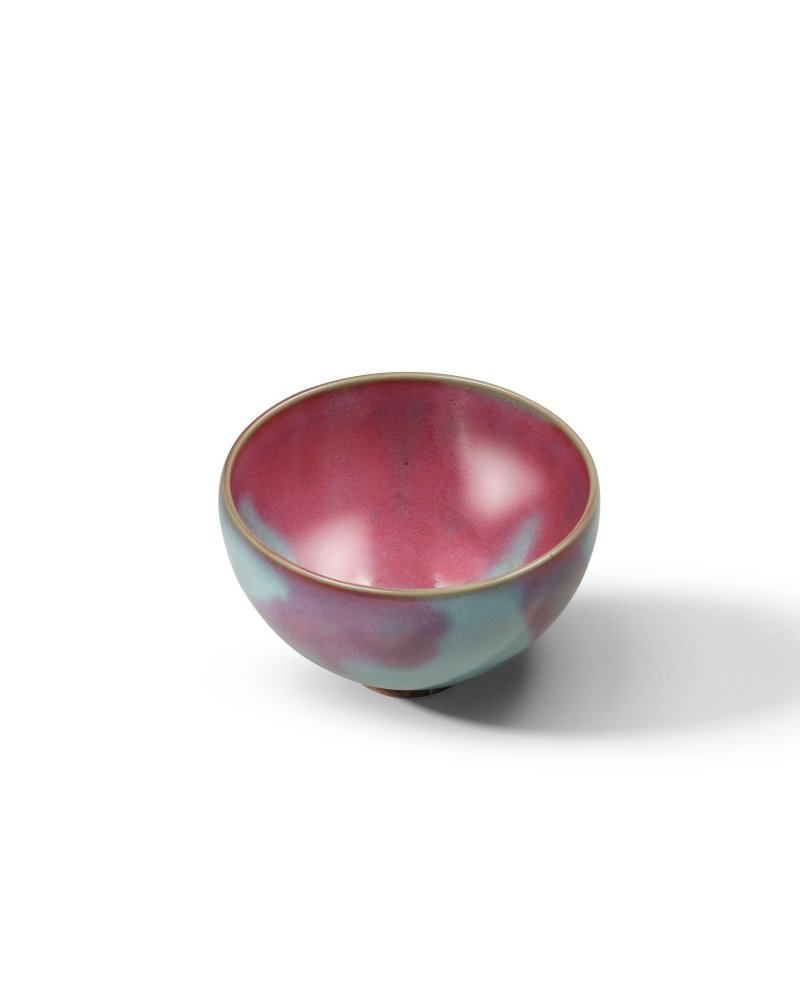
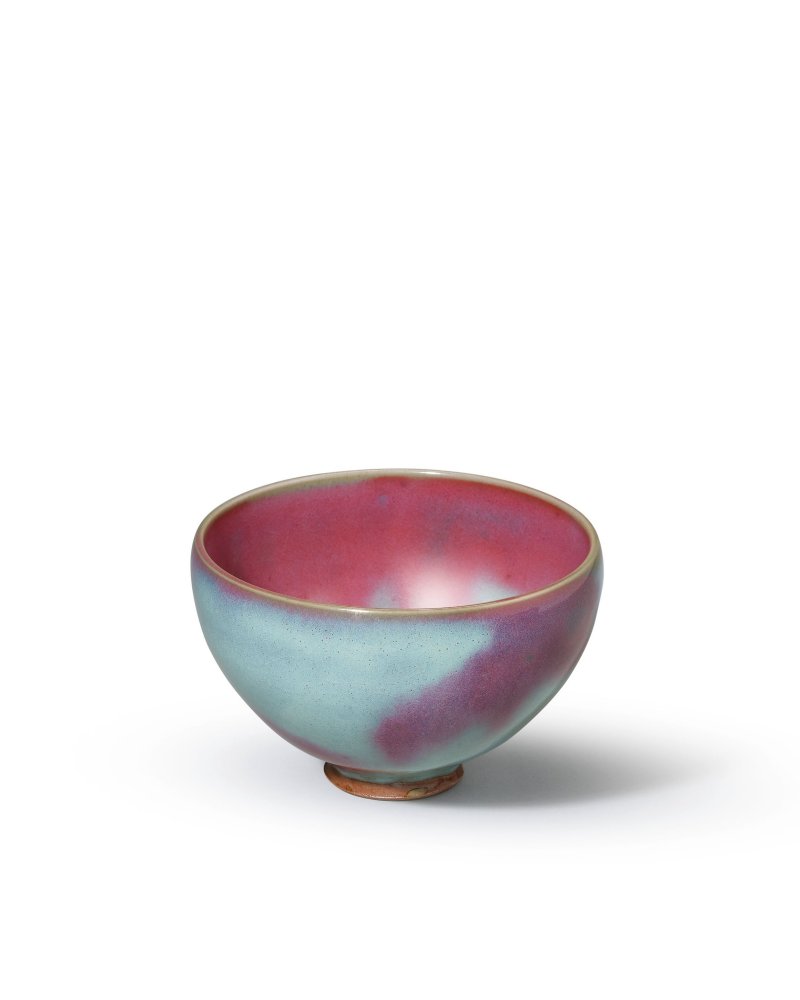
Superbly potted with rounded sides gracefully rising from a short, slightly flaring foot, to a gently incurved mouth, enveloped overall in an azure glaze, painterly accentuated with generous raspberry-red splashes, with the edges melting into lavender-toned halos, occasionally interspersed with mushroom-toned patches, the unctuous glaze slightly pooling above the brown, neatly pared footring, the countersunk base similarly glazed, fitted box.
12.5cm (5in) diam.
Footnotes
北宋/金 鈞窯天藍釉紫斑碗
Provenance:
Spink & Son Ltd., London (label)
Robert Hatfield Ellsworth (1929-2014), New York
Published and Illustrated:
R.Kerr, Dazzling Official Jun Wares: From Museums and Collections Around the World, Hong Kong, 2021, p.34, no.14
R.Kerr, 'Collectors World: Dazzling Official Jun Wares: From Museums and Collections Around the World', , Winter 2021, pp.134-139, fig.3
Spink & Son Ltd,倫敦(標籤)
安思遠(1929-2014),紐約
柯玫瑰,《鈞窯:耀眼的官窯屬性》,香港,2021年,頁34,編號14
柯玫瑰,〈Collectors World: Dazzling Official Jun Wares: From Museums and Collections Around the World〉,《Arts of Asia》,2021年冬,頁134至139,圖3
Elegantly potted with attractive proportions and extraordinary raspberry-red splashes, this bubble bowl is among the most outstanding examples of its type. Smaller Jun bubble bowls (with diameters less than 10cm) are not uncommon, but it is rare to find a bowl of such a generous size in which both the interior and exterior are splashed in such a vivid colour. The contrast with the brilliant sky-blue marks this out as one of the rarest preserved examples of Jun ware.
A few large, comparable splashed bowls are preserved in public and private collections: one larger bowl of this elegant, rounded form, similarly adorned with crimson splashes, from the Qing Court Collection and preserved in the Palace Museum, Taipei (acc.no.guci017884), attributed by the museum to the 13th century; another in the Palace Museum, Beijing (acc.no.xin00082245), illustrated in , Beijing, 2013, pp.114-117, no.37; a third bowl from the Eumorfopoulos collection, illustrated in R.L.Hobson, , London, 1925-1928, vol.2, pl.B78, later sold at Sotheby's London, 29 May 1940, lot 185; and a fourth example, formerly in the collections of William Cleverly Alexander, Sir and Mrs. Rex Benson, Raymond F.A. Riesco and the London Borough of Croydon, last sold at Sotheby's Hong Kong, 29 April 2022, lot 3605. Compare also rounded bowls with the exteriors fully glazed in purple, but the interior wells left blue: one in the Uragami collection (acc.no.T00246-00), illustrated in , Tokyo, 1996, p.107, no.90; and another Northern Song/Jin Dynasty example, sold at Bonhams Hong Kong, 27 May 2012, lot 254.
Similar to many early high-fired glazes, the composition of Jun glaze includes iron oxide as a colourant. However, studies indicate that the distinctive opalescent sky-blue hue of Jun ware is primarily due to a light-scattering optical phenomenon. The elevated levels of silica – predominantly found in glass – compared to alumina in Jun glazes appear to facilitate the formation of tiny glass micro-globules during the firing process. These droplets, which are smaller than the wavelength of blue light, remain suspended in the thicker glaze once it cools. As light passes through, it reflects blue light, resulting in the characteristic sky-blue colouration associated with the classical Jun wares.
The purple splashes seen in Jun wares are attributed to copper. Copper pigments in a water-based solution were applied to the dried but unfired glaze. After firing, the blend of copper red and blue creates areas of purple or crimson. While artisans can influence the quantity and location of the splashes, they cannot completely control the outcome. As a result, each purple-splashed Jun piece is, to some extent, a product of chance, making it a unique piece of art.
此碗器形渾圓雅致,下承小足,弧壁微歛,合掌捧之,悅目賞心。鈞窯泡泡碗雖非罕稀,但尺寸一般相對較小,徑十厘米以上者稀,且內外兼施大片紫斑者更如晨星寥寥。巧匠以天藍為地,銅釉代墨,大筆揮毫,艷紫嫣紅,猶如長空晚霞,他例難出其右。
公私收藏中有數例鈞窯裏外灑紫斑之碗可資參考。台北故宮博物院清宮舊藏有一較大之盌(故瓷017884),器形與此近,紫斑泛紅,院方定代十三世紀。北京故宮博物館也有一例(新00082245),收入《鈞窯雅集:故宮博物院珍藏及出土鈞窯瓷器薈萃》,北京,2013年,頁114至117,編號37。尤莫弗普勒斯舊藏一例,圖見 R.L.Hobson,《The George Eumorfopoulos Collection of Chinese, Corean and Persian Pottery and Porcelain》,倫敦,1925-1928年,卷2,圖版B78,後在倫敦蘇富比易手,1940年5月29日,拍品編號185。尚可參考亞歷山大舊藏碗,先後由 William Cleverly Alexander、Rex Benson 爵士伉儷、Raymond F.A. Riesco 及倫敦克羅伊登自治市遞藏,最近一次現身拍場乃在香港蘇富比,2022年4月29日,拍品編號3605。另可參考兩例,僅碗外施紫釉,器心天藍:山口縣立萩美術館.浦上紀念館藏例(T00246-00),收入《蒐集家浦上敏明之眼 – 館藏名品展:中國.朝鮮陶瓷篇》,日本,1996年,頁107,圖版90;以及另一北宋/金朝碗,售於香港邦瀚斯, 2012年5月27日,拍品編號254。
鈞釉與多種早期高溫釉相似,其成分中含有氧化鐵作為著色劑。然而,研究指出鈞窯獨特的乳濁天藍色,主要源於一種光散射的光學現象。鈞釉中二氧化矽含量高於氧化鋁,促使燒製過程中形成微小的玻璃微粒。這些顆粒尺寸小於藍光波長,冷卻後懸浮於厚釉之中,光線穿透時散射藍光,遂呈現出鈞窯器典型的天藍色澤。
器面所見紫斑則源自銅的作用。工匠將含銅的水溶性色料塗於已乾但未燒的釉面上,經燒成後,銅紅與藍釉交融,形成紫或深紅色斑塊。雖然工匠可略為掌控斑點的數量與位置,但最終效果仍帶有偶然性,每件紫斑鈞器皆具獨特風貌,堪稱偶然與技藝交織的藝術結晶。
Superbly potted with rounded sides gracefully rising from a short, slightly flaring foot, to a gently incurved mouth, enveloped overall in an azure glaze, painterly accentuated with generous raspberry-red splashes, with the edges melting into lavender-toned halos, occasionally interspersed with mushroom-toned patches, the unctuous glaze slightly pooling above the brown, neatly pared footring, the countersunk base similarly glazed, fitted box.
12.5cm (5in) diam.
Footnotes
北宋/金 鈞窯天藍釉紫斑碗
Provenance:
Spink & Son Ltd., London (label)
Robert Hatfield Ellsworth (1929-2014), New York
Published and Illustrated:
R.Kerr, Dazzling Official Jun Wares: From Museums and Collections Around the World, Hong Kong, 2021, p.34, no.14
R.Kerr, 'Collectors World: Dazzling Official Jun Wares: From Museums and Collections Around the World', , Winter 2021, pp.134-139, fig.3
Spink & Son Ltd,倫敦(標籤)
安思遠(1929-2014),紐約
柯玫瑰,《鈞窯:耀眼的官窯屬性》,香港,2021年,頁34,編號14
柯玫瑰,〈Collectors World: Dazzling Official Jun Wares: From Museums and Collections Around the World〉,《Arts of Asia》,2021年冬,頁134至139,圖3
Elegantly potted with attractive proportions and extraordinary raspberry-red splashes, this bubble bowl is among the most outstanding examples of its type. Smaller Jun bubble bowls (with diameters less than 10cm) are not uncommon, but it is rare to find a bowl of such a generous size in which both the interior and exterior are splashed in such a vivid colour. The contrast with the brilliant sky-blue marks this out as one of the rarest preserved examples of Jun ware.
A few large, comparable splashed bowls are preserved in public and private collections: one larger bowl of this elegant, rounded form, similarly adorned with crimson splashes, from the Qing Court Collection and preserved in the Palace Museum, Taipei (acc.no.guci017884), attributed by the museum to the 13th century; another in the Palace Museum, Beijing (acc.no.xin00082245), illustrated in , Beijing, 2013, pp.114-117, no.37; a third bowl from the Eumorfopoulos collection, illustrated in R.L.Hobson, , London, 1925-1928, vol.2, pl.B78, later sold at Sotheby's London, 29 May 1940, lot 185; and a fourth example, formerly in the collections of William Cleverly Alexander, Sir and Mrs. Rex Benson, Raymond F.A. Riesco and the London Borough of Croydon, last sold at Sotheby's Hong Kong, 29 April 2022, lot 3605. Compare also rounded bowls with the exteriors fully glazed in purple, but the interior wells left blue: one in the Uragami collection (acc.no.T00246-00), illustrated in , Tokyo, 1996, p.107, no.90; and another Northern Song/Jin Dynasty example, sold at Bonhams Hong Kong, 27 May 2012, lot 254.
Similar to many early high-fired glazes, the composition of Jun glaze includes iron oxide as a colourant. However, studies indicate that the distinctive opalescent sky-blue hue of Jun ware is primarily due to a light-scattering optical phenomenon. The elevated levels of silica – predominantly found in glass – compared to alumina in Jun glazes appear to facilitate the formation of tiny glass micro-globules during the firing process. These droplets, which are smaller than the wavelength of blue light, remain suspended in the thicker glaze once it cools. As light passes through, it reflects blue light, resulting in the characteristic sky-blue colouration associated with the classical Jun wares.
The purple splashes seen in Jun wares are attributed to copper. Copper pigments in a water-based solution were applied to the dried but unfired glaze. After firing, the blend of copper red and blue creates areas of purple or crimson. While artisans can influence the quantity and location of the splashes, they cannot completely control the outcome. As a result, each purple-splashed Jun piece is, to some extent, a product of chance, making it a unique piece of art.
此碗器形渾圓雅致,下承小足,弧壁微歛,合掌捧之,悅目賞心。鈞窯泡泡碗雖非罕稀,但尺寸一般相對較小,徑十厘米以上者稀,且內外兼施大片紫斑者更如晨星寥寥。巧匠以天藍為地,銅釉代墨,大筆揮毫,艷紫嫣紅,猶如長空晚霞,他例難出其右。
公私收藏中有數例鈞窯裏外灑紫斑之碗可資參考。台北故宮博物院清宮舊藏有一較大之盌(故瓷017884),器形與此近,紫斑泛紅,院方定代十三世紀。北京故宮博物館也有一例(新00082245),收入《鈞窯雅集:故宮博物院珍藏及出土鈞窯瓷器薈萃》,北京,2013年,頁114至117,編號37。尤莫弗普勒斯舊藏一例,圖見 R.L.Hobson,《The George Eumorfopoulos Collection of Chinese, Corean and Persian Pottery and Porcelain》,倫敦,1925-1928年,卷2,圖版B78,後在倫敦蘇富比易手,1940年5月29日,拍品編號185。尚可參考亞歷山大舊藏碗,先後由 William Cleverly Alexander、Rex Benson 爵士伉儷、Raymond F.A. Riesco 及倫敦克羅伊登自治市遞藏,最近一次現身拍場乃在香港蘇富比,2022年4月29日,拍品編號3605。另可參考兩例,僅碗外施紫釉,器心天藍:山口縣立萩美術館.浦上紀念館藏例(T00246-00),收入《蒐集家浦上敏明之眼 – 館藏名品展:中國.朝鮮陶瓷篇》,日本,1996年,頁107,圖版90;以及另一北宋/金朝碗,售於香港邦瀚斯, 2012年5月27日,拍品編號254。
鈞釉與多種早期高溫釉相似,其成分中含有氧化鐵作為著色劑。然而,研究指出鈞窯獨特的乳濁天藍色,主要源於一種光散射的光學現象。鈞釉中二氧化矽含量高於氧化鋁,促使燒製過程中形成微小的玻璃微粒。這些顆粒尺寸小於藍光波長,冷卻後懸浮於厚釉之中,光線穿透時散射藍光,遂呈現出鈞窯器典型的天藍色澤。
器面所見紫斑則源自銅的作用。工匠將含銅的水溶性色料塗於已乾但未燒的釉面上,經燒成後,銅紅與藍釉交融,形成紫或深紅色斑塊。雖然工匠可略為掌控斑點的數量與位置,但最終效果仍帶有偶然性,每件紫斑鈞器皆具獨特風貌,堪稱偶然與技藝交織的藝術結晶。
常见问题
这件北宋/金 鈞窯天藍釉紫斑碗 | AN EXCEPTIONALLY RARE JUN PURPLE-SPLASHED BOWL的成交价是多少?
落槌价为 预展中。 成交价为 预展中。