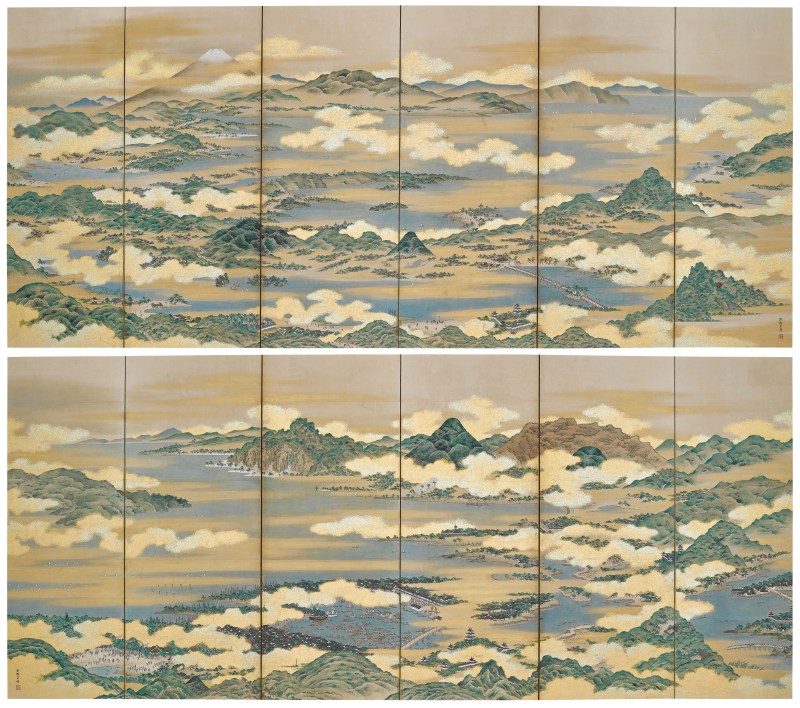

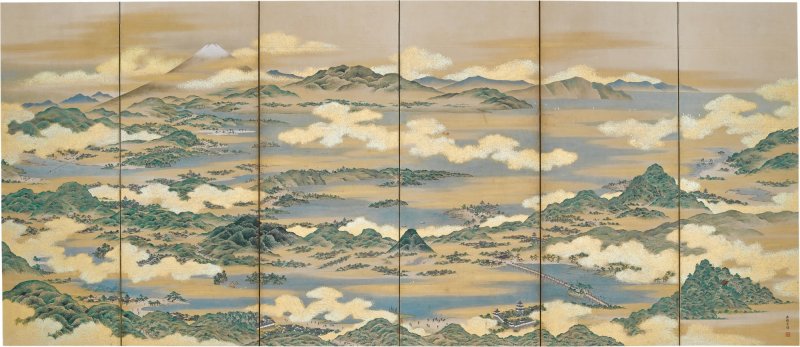
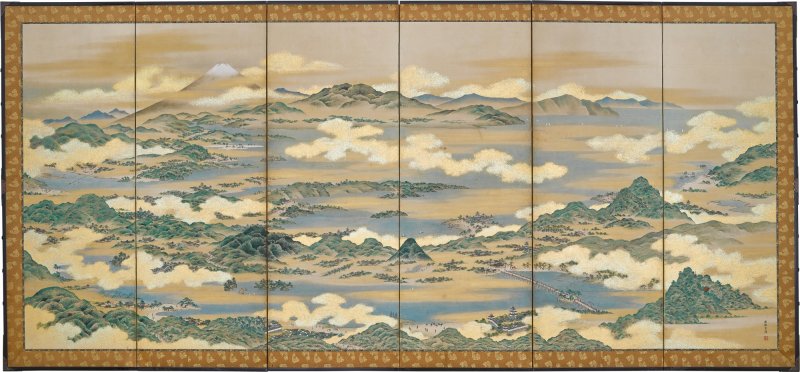
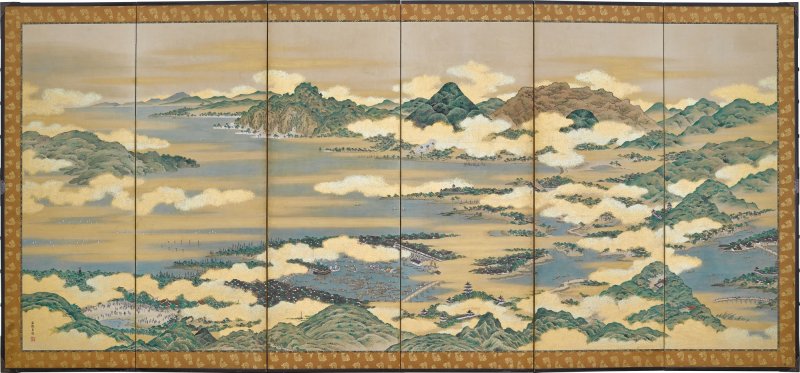
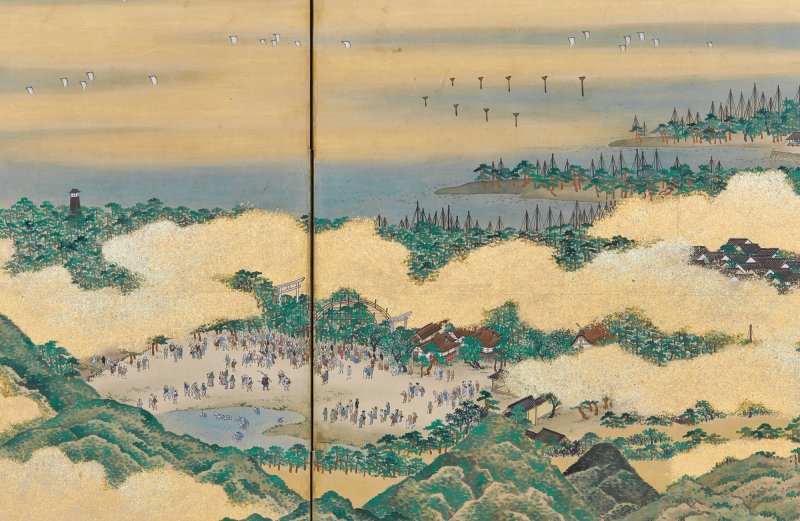
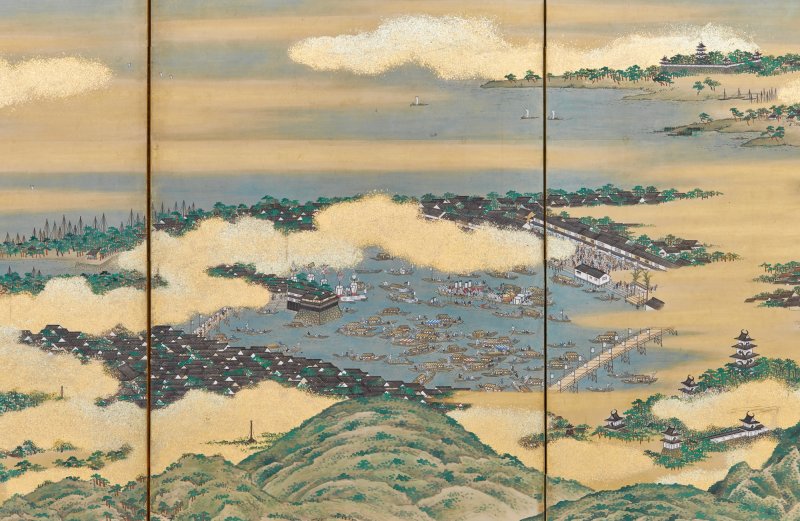
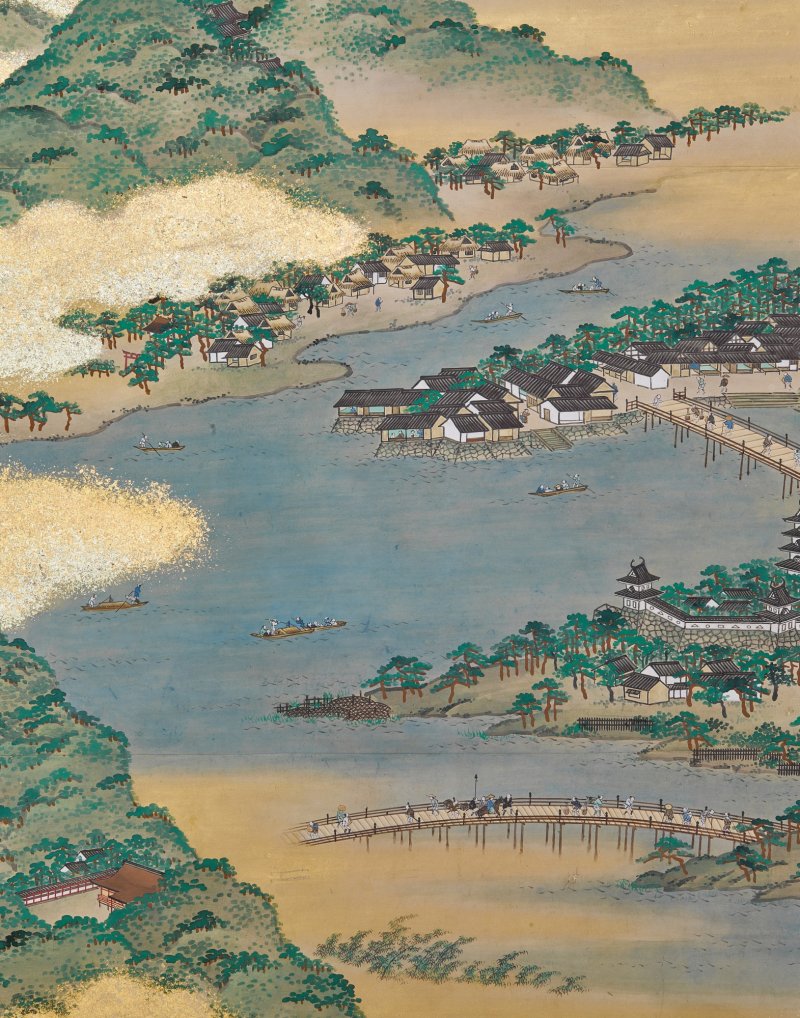
Lot 2040 Sakuma Soen (d. 1828), Bird’s-Eye View of Famous Places (Meisho chokan-zu), Edo period, 18th century | 佐久間草偃 名所鳥瞰図屏風 江戸時代中期 18世紀末期
落槌价
****
成交价
****
拍品信息
拍品名称
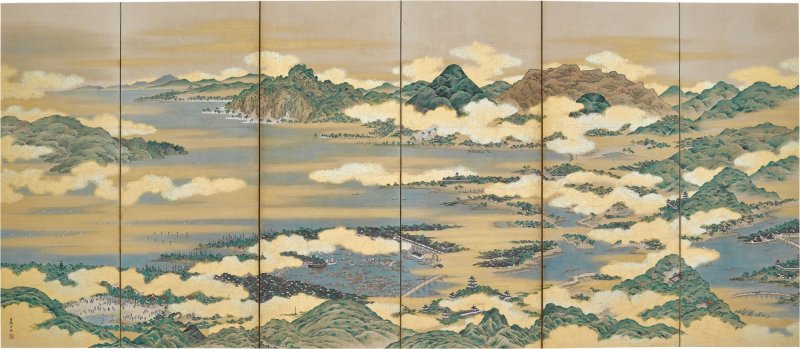
Sakuma Soen (d. 1828), Bird’s-Eye View of Famous Places (Meisho chokan-zu), Edo period, 18th century | 佐久間草偃 名所鳥瞰図屏風 江戸時代中期 18世紀末期
起拍价
HKD 200,000
估值区间
200,000 - 300,000 HKD
尺寸
未知
品相
Overall, these impressive screens are in good condition. Most Japanese screens have some restoration by the nature of their use being opened and closed repeatedly. There is some wear around the hinges consistent with age and use, minor toning, some small areas of minor paper losses and with associated repairs, some slight marks, very minor soiling in places, the black lacquer mounts with some old wear, some slight old wear to the later paper backing.
If a condition report is provided to assist you with assessing the condition of the lot, it is for guidance purposes only. Such condition report may not refer to all faults, restoration, alterations, or adaptations because Sotheby's is not a professional conservator or restorer but rather a condition report is a statement of subjective, qualified opinion genuinely held by Sotheby's. For these reasons, any such condition report is not an alternative to taking your own professional advice regarding the condition of the lot. Prospective buyers should also refer to the Guide for Buyers at Auction which includes important notices concerning the type of property in this sale.
If a condition report is provided to assist you with assessing the condition of the lot, it is for guidance purposes only. Such condition report may not refer to all faults, restoration, alterations, or adaptations because Sotheby's is not a professional conservator or restorer but rather a condition report is a statement of subjective, qualified opinion genuinely held by Sotheby's. For these reasons, any such condition report is not an alternative to taking your own professional advice regarding the condition of the lot. Prospective buyers should also refer to the Guide for Buyers at Auction which includes important notices concerning the type of property in this sale.
更多信息
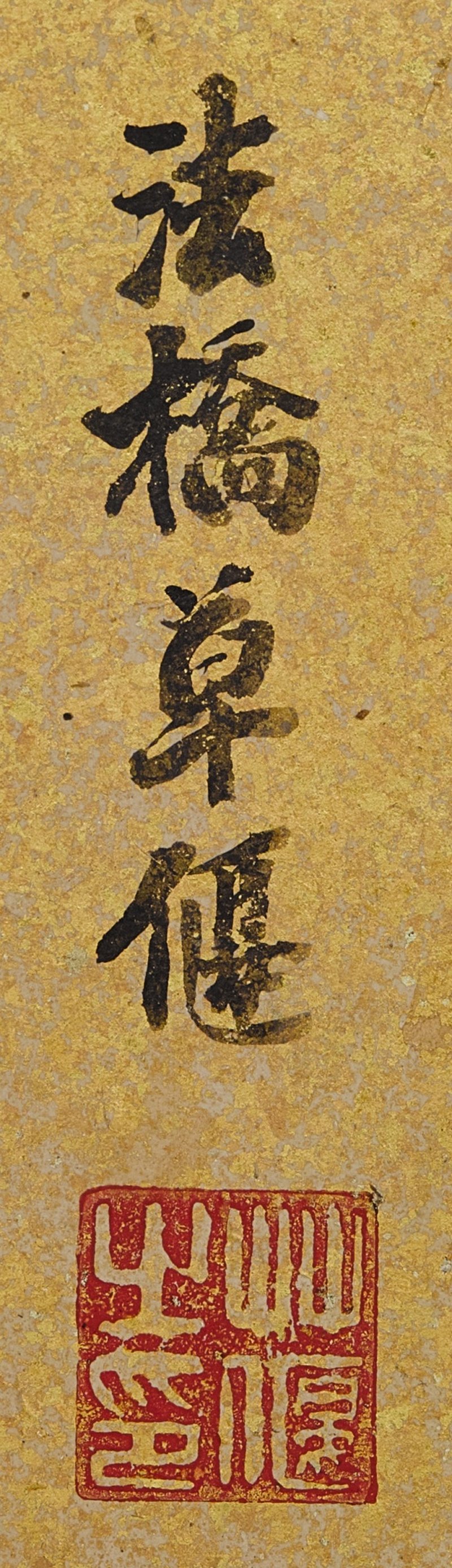
pair of six-panel folding screens: ink, colour and gold on paper, signed Hokkyo Soen (Soen of the Dharma Bridge), sealed Soen no in (Seal of Soen), silk brocade border, black lacquer mounts, copper fittings
approx. 175 x 381 cm. (when unfolded)
approx. 175 x 63.5 cm. (when folded)
展览:Bi no suta-tachi Korin Jakuchu Hokusai joyo nado meihin zoroi [5th Anniversary Exhibition. All-Stars of the Okada Collection: Masterworks of Korin, Jakuchu, Hokusai and the Ru Ware Kilns], Okada Museum of Art, Hakone, 2018-19, exh. no. 376 (unillustrated)
著录:Masato Matsushima, ‘Bird’s-Eye View of Famous Places by Sakuma Soen’ in Kokka [Flower of the Nation], vol. 1236, Tokyo, 1998, pp. 22-24.
Hiroyuki Kano ed., Jidai byobu shuei [Masterpieces of Japanese Screen Painting Through the Ages], Tokyo, 2003, pl. 30.
Kobayashi Tadashi ed., Masterpieces of the Okada Museum of Art, vol.2, Tokyo, 2018, no. 68.
图录
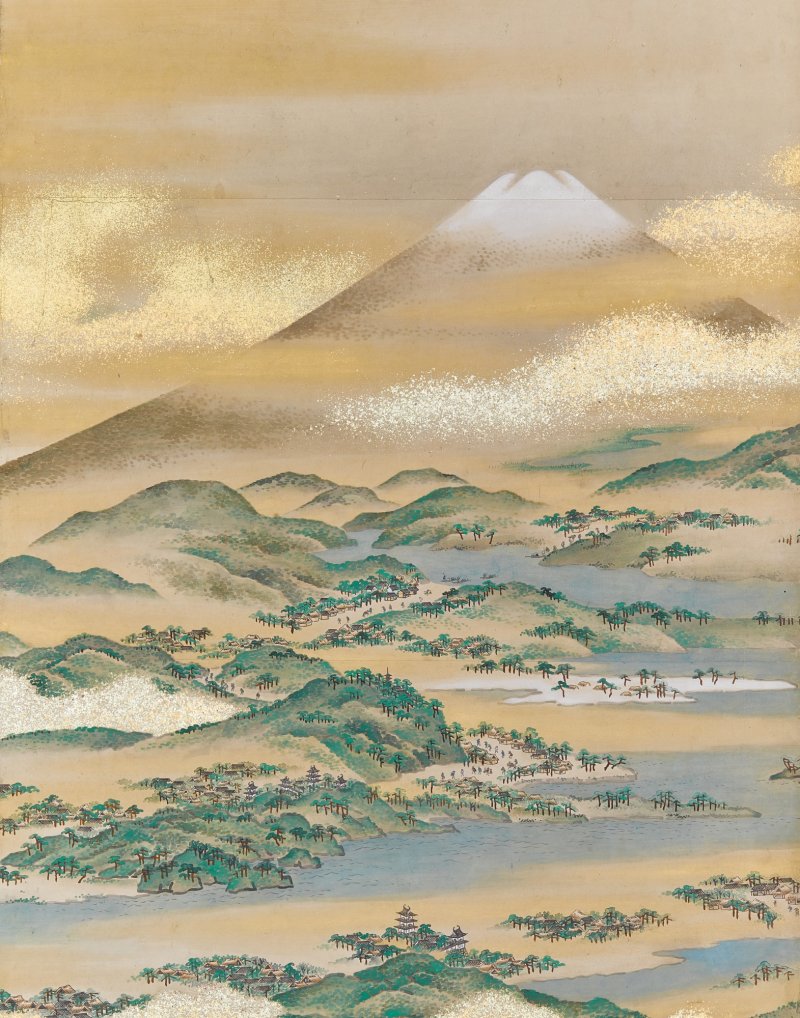
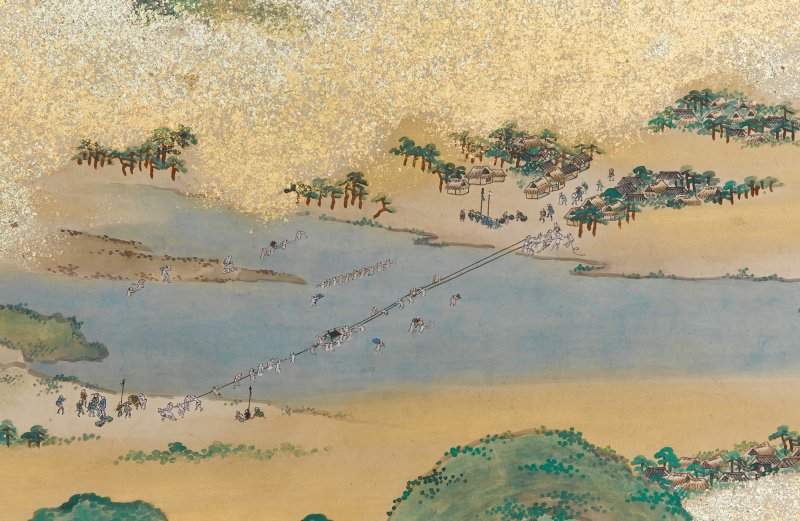
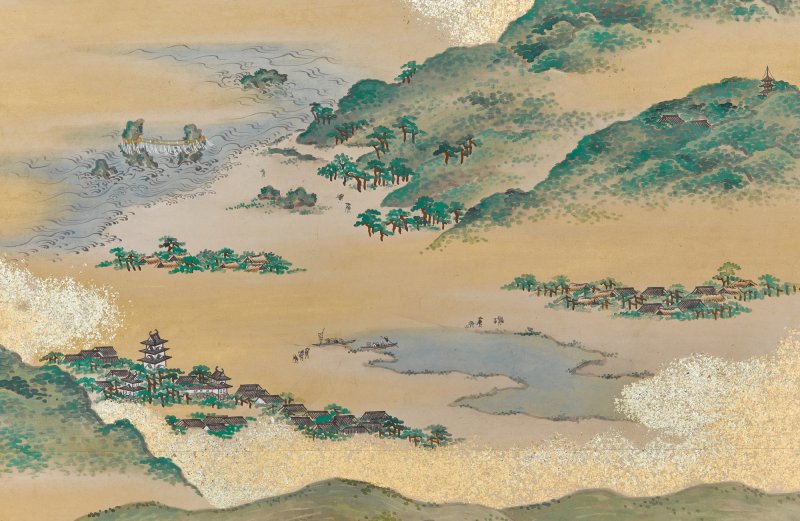
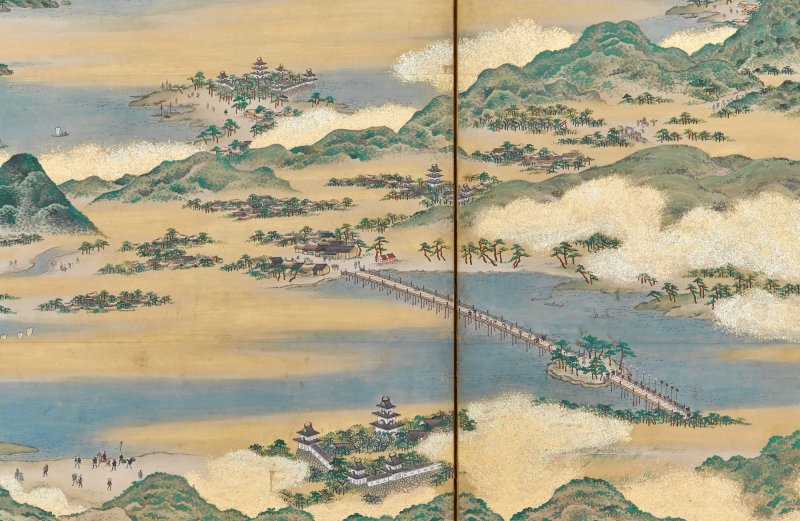
说明:A bird's-eye view over a sweeping stretch of terrain. The right screen surveys the region from Lake Biwa to the foot of Mount Fuji: the lower half shows the celebrated sites of Omi – Ishiyama-dera, the bridge at Seta, and the pine of Karasaki – before the eye travels on toward Futamigaura in Ise, famed for its ‘wedded rocks’ (meoto iwa). The left screen, by contrast, surveys the whole of the Osaka region, from Osaka Castle to Akashi Castle, and is distinguished from the right screen by its focus on seasonal and festive activities such as the Tenjin Festival river procession of portable shrines (mikoshi), and the rice-planting ceremony (o-taue) at the Sumiyoshi Taisha.
Soen was a Kyoto painter, trained first in the Yamato-e tradition under Tosa Mitsusada (1738–1806) before later studying under Matsumura Goshun (1752–1811), founder of the Shijo school. Though well regarded in his lifetime, few of Sōen's works survive today.
展覽
《美のスターたち-光琳・若冲・北斎・汝窯など名品ぞろい-》,岡田美術館,箱根,2018-19年,展覽編號376(沒載圖)
出版
松島雅人,《佐久間草偃筆 名所鳥瞰図屏風》,《國華》,卷1236,東京,1998年,頁22-24
狩野博幸,《時代屏風聚英》,東京,2003年,圖版30
小林忠編,《岡田美術館名品撰》,卷2,東京,2018年,編號68
本幅以鳥瞰視角,展現廣闊無垠的壯麗山川。右屏俯瞰自琵琶湖至富士山麓一帶之景致:下半部描繪近江名勝,如石山寺、瀨田唐橋及唐崎之松;視線隨之延伸至伊勢二見浦,該處以「夫婦岩」聞名遐邇。左屏則縱覽從大阪城至明石城之大阪全境,與右屏不同之處在於其側重描繪季節與節慶活動,如天神祭之神轎(御輿)水上渡御,以及住吉大社之御田植神事。
佐久間草偃乃京都畫師,早年師從土佐光貞(1738–1806年)習大和繪,後投四條派創始人松村吳春(1752–1811年)門下。草偃在世時雖備受推崇,然其傳世之作寥寥無幾。
approx. 175 x 381 cm. (when unfolded)
approx. 175 x 63.5 cm. (when folded)
展览:Bi no suta-tachi Korin Jakuchu Hokusai joyo nado meihin zoroi [5th Anniversary Exhibition. All-Stars of the Okada Collection: Masterworks of Korin, Jakuchu, Hokusai and the Ru Ware Kilns], Okada Museum of Art, Hakone, 2018-19, exh. no. 376 (unillustrated)
著录:Masato Matsushima, ‘Bird’s-Eye View of Famous Places by Sakuma Soen’ in Kokka [Flower of the Nation], vol. 1236, Tokyo, 1998, pp. 22-24.
Hiroyuki Kano ed., Jidai byobu shuei [Masterpieces of Japanese Screen Painting Through the Ages], Tokyo, 2003, pl. 30.
Kobayashi Tadashi ed., Masterpieces of the Okada Museum of Art, vol.2, Tokyo, 2018, no. 68.
图录
说明:A bird's-eye view over a sweeping stretch of terrain. The right screen surveys the region from Lake Biwa to the foot of Mount Fuji: the lower half shows the celebrated sites of Omi – Ishiyama-dera, the bridge at Seta, and the pine of Karasaki – before the eye travels on toward Futamigaura in Ise, famed for its ‘wedded rocks’ (meoto iwa). The left screen, by contrast, surveys the whole of the Osaka region, from Osaka Castle to Akashi Castle, and is distinguished from the right screen by its focus on seasonal and festive activities such as the Tenjin Festival river procession of portable shrines (mikoshi), and the rice-planting ceremony (o-taue) at the Sumiyoshi Taisha.
Soen was a Kyoto painter, trained first in the Yamato-e tradition under Tosa Mitsusada (1738–1806) before later studying under Matsumura Goshun (1752–1811), founder of the Shijo school. Though well regarded in his lifetime, few of Sōen's works survive today.
展覽
《美のスターたち-光琳・若冲・北斎・汝窯など名品ぞろい-》,岡田美術館,箱根,2018-19年,展覽編號376(沒載圖)
出版
松島雅人,《佐久間草偃筆 名所鳥瞰図屏風》,《國華》,卷1236,東京,1998年,頁22-24
狩野博幸,《時代屏風聚英》,東京,2003年,圖版30
小林忠編,《岡田美術館名品撰》,卷2,東京,2018年,編號68
本幅以鳥瞰視角,展現廣闊無垠的壯麗山川。右屏俯瞰自琵琶湖至富士山麓一帶之景致:下半部描繪近江名勝,如石山寺、瀨田唐橋及唐崎之松;視線隨之延伸至伊勢二見浦,該處以「夫婦岩」聞名遐邇。左屏則縱覽從大阪城至明石城之大阪全境,與右屏不同之處在於其側重描繪季節與節慶活動,如天神祭之神轎(御輿)水上渡御,以及住吉大社之御田植神事。
佐久間草偃乃京都畫師,早年師從土佐光貞(1738–1806年)習大和繪,後投四條派創始人松村吳春(1752–1811年)門下。草偃在世時雖備受推崇,然其傳世之作寥寥無幾。
常见问题
拍品的品相状况如何?
Overall, these impressive screens are in good condition. Most Japanese screens have some restoration by the nature of their use being opened and closed repeatedly. There is some wear around the hinges consistent with age and use, minor toning, some small areas of minor paper losses and with associated repairs, some slight marks, very minor soiling in places, the black lacquer mounts with some old wear, some slight old wear to the later paper backing.
If a condition report is provided to assist you with assessing the condition of the lot, it is for guidance purposes only. Such condition report may not refer to all faults, restoration, alterations, or adaptations because Sotheby's is not a professional conservator or restorer but rather a condition report is a statement of subjective, qualified opinion genuinely held by Sotheby's. For these reasons, any such condition report is not an alternative to taking your own professional advice regarding the condition of the lot. Prospective buyers should also refer to the Guide for Buyers at Auction which includes important notices concerning the type of property in this sale.
If a condition report is provided to assist you with assessing the condition of the lot, it is for guidance purposes only. Such condition report may not refer to all faults, restoration, alterations, or adaptations because Sotheby's is not a professional conservator or restorer but rather a condition report is a statement of subjective, qualified opinion genuinely held by Sotheby's. For these reasons, any such condition report is not an alternative to taking your own professional advice regarding the condition of the lot. Prospective buyers should also refer to the Guide for Buyers at Auction which includes important notices concerning the type of property in this sale.
这件拍品曾在哪些展览中展出过?
Bi no suta-tachi Korin Jakuchu Hokusai joyo nado meihin zoroi [5th Anniversary Exhibition. All-Stars of the Okada Collection: Masterworks of Korin, Jakuchu, Hokusai and the Ru Ware Kilns], Okada Museum of Art, Hakone, 2018-19, exh. no. 376 (unillustrated)
这件拍品被哪些著录书籍记载?
Masato Matsushima, ‘Bird’s-Eye View of Famous Places by Sakuma Soen’ in Kokka [Flower of the Nation], vol. 1236, Tokyo, 1998, pp. 22-24.
Hiroyuki Kano ed., Jidai byobu shuei [Masterpieces of Japanese Screen Painting Through the Ages], Tokyo, 2003, pl. 30.
Kobayashi Tadashi ed., Masterpieces of the Okada Museum of Art, vol.2, Tokyo, 2018, no. 68.
图录
Hiroyuki Kano ed., Jidai byobu shuei [Masterpieces of Japanese Screen Painting Through the Ages], Tokyo, 2003, pl. 30.
Kobayashi Tadashi ed., Masterpieces of the Okada Museum of Art, vol.2, Tokyo, 2018, no. 68.
图录