
拍品信息
拍品名称
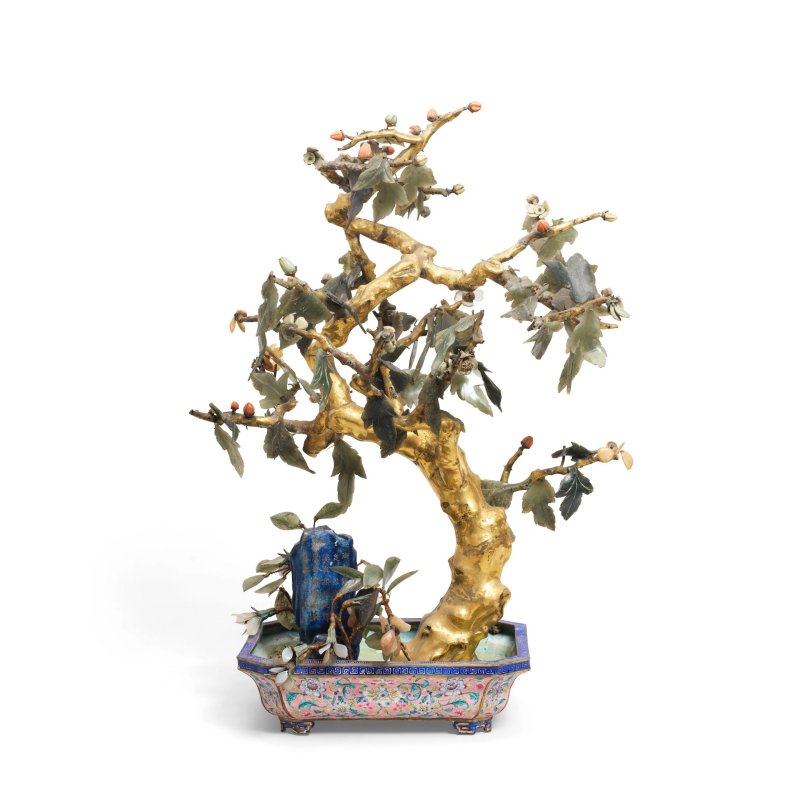
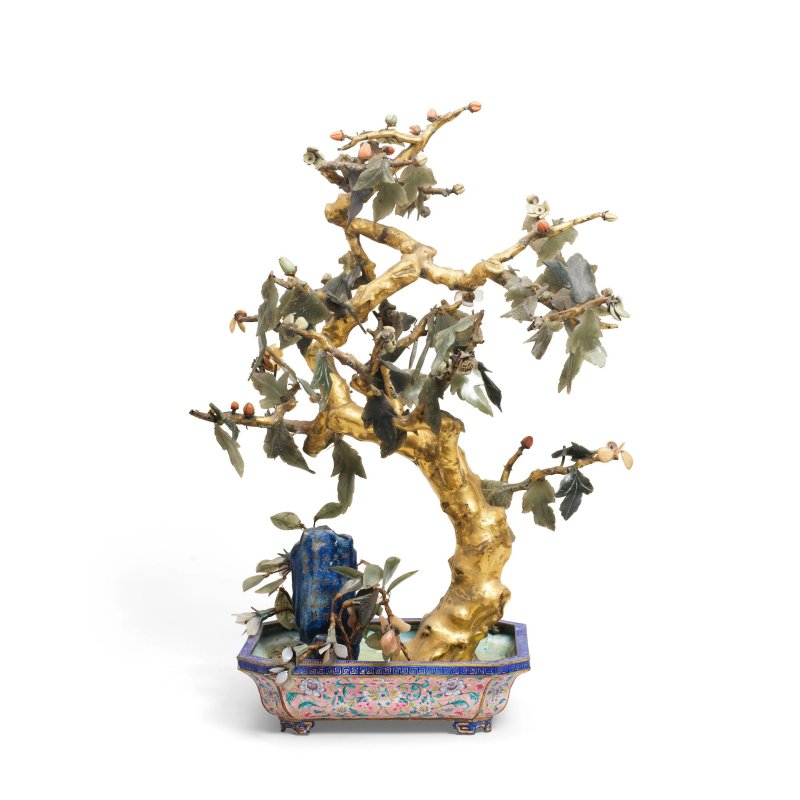
清乾隆 銅胎畫琺琅八方盆及御題詩青金石山子盆景 | A MAGNIFICENT PAINTED ENAMEL JARDINIÈRE WITH A HARDSTONE AND GLASS EMBELLISHED TREE AND IMPERIALLY-INSCRIBED LAPIS LAZULI BOULDER
年代
Qianlong
起拍价
GBP 4,000
估值区间
GBP 4000 - 6000
尺寸
未知
品相
未知
更多信息
Qianlong
The painted enamel jardinière of rectangular shape with canted corners, supported on four bracket feet, the sides decorated with lotus blooms issuing from leafy scrolls reserved on a pink ground, the base painted in bright lemon-yellow, the tree naturalistically modelled as a gnarled, twisting gilt branch, and set with green jade leaves and blossoms of various hardstones and glasses, standing alongside a lapis lazuli mountain inscribed with an Imperial poem. 45.5cm (17 7/8in) high.
Footnotes
清乾隆 銅胎畫琺琅八方盆及御題詩青金石山子盆景
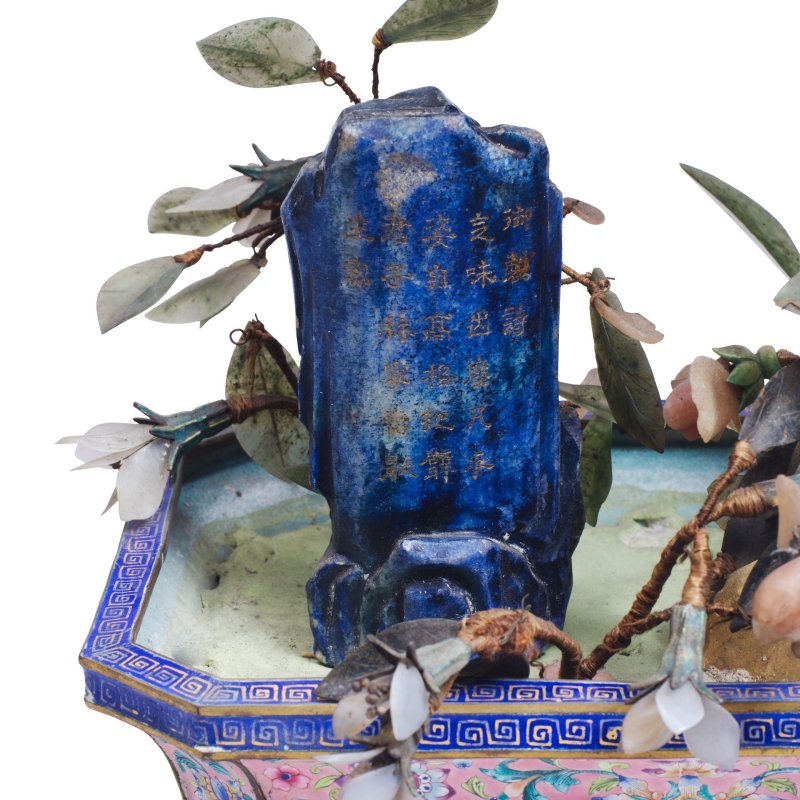
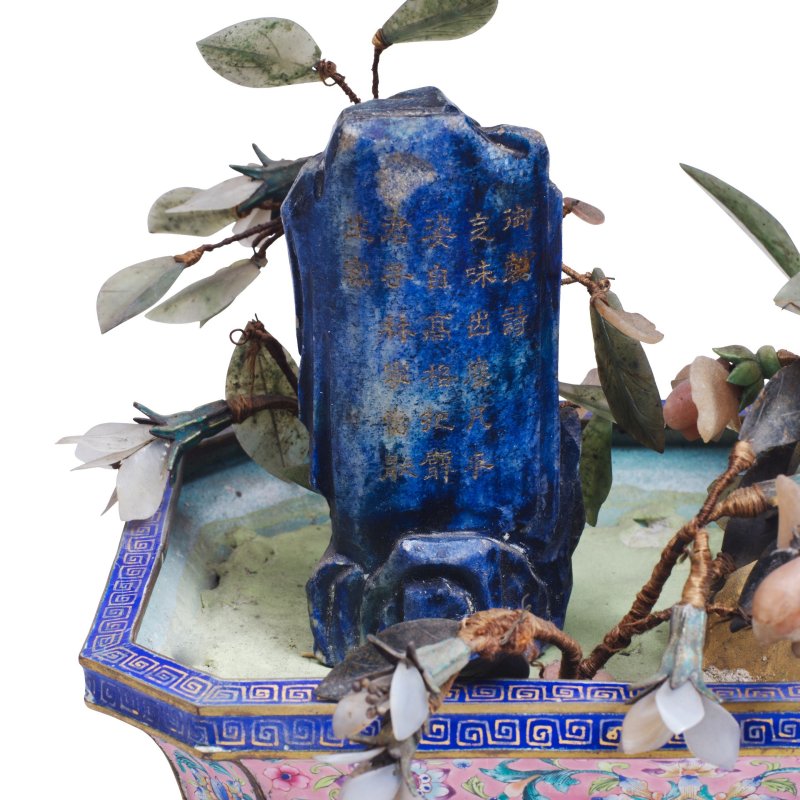
款識:御製詩 氣味出塵凡,丰姿自高格。把臂君子林,寧當厭生客。
Jeremy Mason is a noted bibliophile and retired dealer in Chinese and Japanese art who started his career at Christie's in the late 1960s, particularly known for his collection of Oscar Wilde books and ephemera, sold at Bonhams London in February 2026.
The inscription on the lapis lazuli boulder may be translated as:
The inscription is taken from a poem by the Qianlong Emperor entitled ('Amusingly composing verses for a painting of the Four Friends'), specifically the verse on the orchid, and is recorded in (), 2, composed in the twenty-fifth year of the Qianlong reign (1760). The four poems celebrate the pine, bamboo, plum and orchid, collectively known as the 'Four Friends'. In the present verse, the orchid is personified as a cultivated gentleman, its fragrance and elegant bearing symbolising moral refinement, purity and lofty character.
In the Qing Court, potted miniature landscapes and floral displays formed an important part of interior decoration and were frequently fashioned from prized materials, contributing to the sumptuous environment of the Imperial palaces. Particularly in northern China, where the seasons were clearly differentiated, such permanent representations of flowers, plants and landscapes provided an enduring alternative to living specimens.
The potted miniature landscapes preserved in the Qing Court Collection were produced by the Imperial Workshops, as well as being presented as tribute from the provinces or offered by nobles and high-ranking officials. Their varied materials and techniques consequently reflect different regional traditions. The present lot is most likely to have been produced in Guangzhou, where painted enamel was particularly favoured for jardinières used in miniature landscapes. The gilded treatment of the trunks and branches, as seen on the present lot, is also characteristic of such Guangzhou-made arrangements.
See a related painted enamel jardinière with a magnolia tree and lapis lazuli boulders, Qing dynasty, in the Qing Court Collection, Palace Museum, Beijing (acc.no.故00126216).
See a related hardstone tree in a gilt-metal and jade-inlaid jardinière, Qianlong/Jiaqing, which was sold at Sotheby's New York, 20 March 2012, lot 71.
The painted enamel jardinière of rectangular shape with canted corners, supported on four bracket feet, the sides decorated with lotus blooms issuing from leafy scrolls reserved on a pink ground, the base painted in bright lemon-yellow, the tree naturalistically modelled as a gnarled, twisting gilt branch, and set with green jade leaves and blossoms of various hardstones and glasses, standing alongside a lapis lazuli mountain inscribed with an Imperial poem. 45.5cm (17 7/8in) high.
Footnotes
清乾隆 銅胎畫琺琅八方盆及御題詩青金石山子盆景
款識:御製詩 氣味出塵凡,丰姿自高格。把臂君子林,寧當厭生客。
Jeremy Mason is a noted bibliophile and retired dealer in Chinese and Japanese art who started his career at Christie's in the late 1960s, particularly known for his collection of Oscar Wilde books and ephemera, sold at Bonhams London in February 2026.
The inscription on the lapis lazuli boulder may be translated as:
The inscription is taken from a poem by the Qianlong Emperor entitled ('Amusingly composing verses for a painting of the Four Friends'), specifically the verse on the orchid, and is recorded in (), 2, composed in the twenty-fifth year of the Qianlong reign (1760). The four poems celebrate the pine, bamboo, plum and orchid, collectively known as the 'Four Friends'. In the present verse, the orchid is personified as a cultivated gentleman, its fragrance and elegant bearing symbolising moral refinement, purity and lofty character.
In the Qing Court, potted miniature landscapes and floral displays formed an important part of interior decoration and were frequently fashioned from prized materials, contributing to the sumptuous environment of the Imperial palaces. Particularly in northern China, where the seasons were clearly differentiated, such permanent representations of flowers, plants and landscapes provided an enduring alternative to living specimens.
The potted miniature landscapes preserved in the Qing Court Collection were produced by the Imperial Workshops, as well as being presented as tribute from the provinces or offered by nobles and high-ranking officials. Their varied materials and techniques consequently reflect different regional traditions. The present lot is most likely to have been produced in Guangzhou, where painted enamel was particularly favoured for jardinières used in miniature landscapes. The gilded treatment of the trunks and branches, as seen on the present lot, is also characteristic of such Guangzhou-made arrangements.
See a related painted enamel jardinière with a magnolia tree and lapis lazuli boulders, Qing dynasty, in the Qing Court Collection, Palace Museum, Beijing (acc.no.故00126216).
See a related hardstone tree in a gilt-metal and jade-inlaid jardinière, Qianlong/Jiaqing, which was sold at Sotheby's New York, 20 March 2012, lot 71.
常见问题
这件清乾隆 銅胎畫琺琅八方盆及御題詩青金石山子盆景 | A MAGNIFICENT PAINTED ENAMEL JARDINIÈRE WITH A HARDSTONE AND GLASS EMBELLISHED TREE AND IMPERIALLY-INSCRIBED LAPIS LAZULI BOULDER的成交价是多少?
落槌价为 预展中。 成交价为 预展中。


