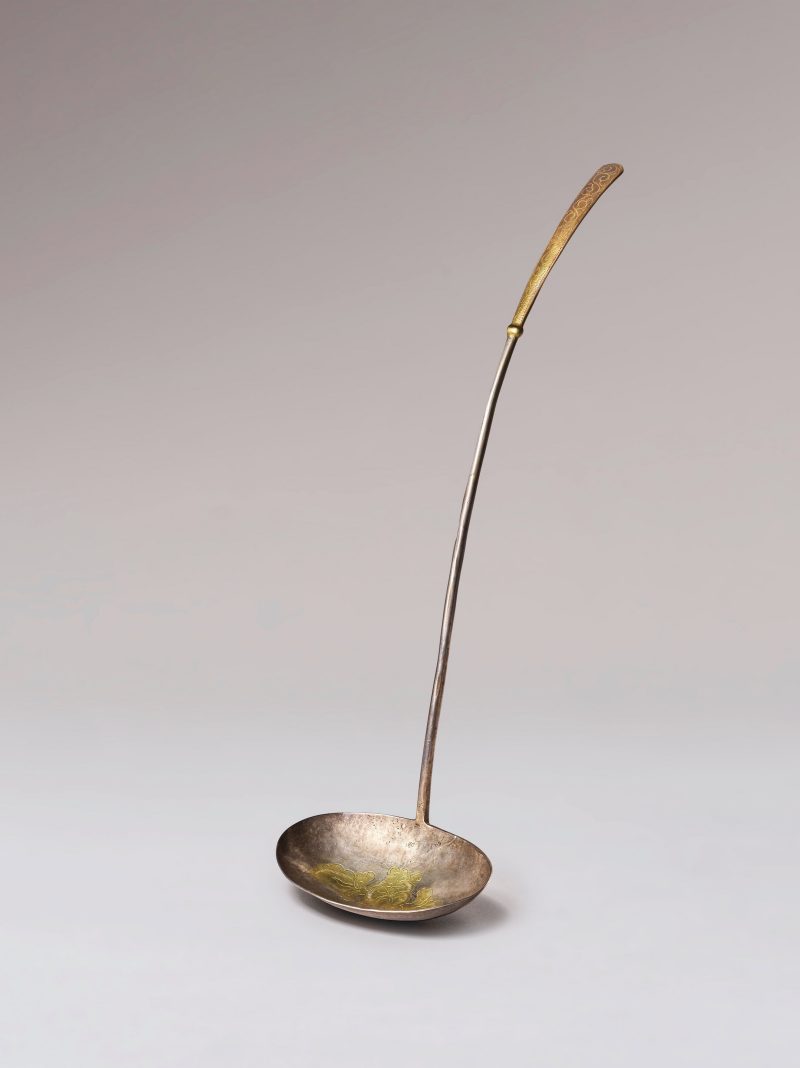
Lot 53 遼代 銀局部鎏金鏨刻花卉紋勺 | RARE GRANDE LOUCHE EN ARGENT PARTIELLEMENT DORÉ
落槌价
预展中
成交价
预展中
| 拍卖公司 | 邦瀚斯 |
|---|---|
| 拍卖时间 | 2026年12月10日 |
拍品信息
拍品名称
遼代 銀局部鎏金鏨刻花卉紋勺 | RARE GRANDE LOUCHE EN ARGENT PARTIELLEMENT DORÉ
年代
遼代
起拍价
未知
估值区间
EUR 6,000–8,000
尺寸
28 cm (11 in.) long
品相
未知
更多信息
RARE GRANDE LOUCHE EN ARGENT PARTIELLEMENT DORÉ
Dynastie Liao (907-1125)
A RARE LARGE PARCEL-GILT SILVER LADLE
Liao Dynasty
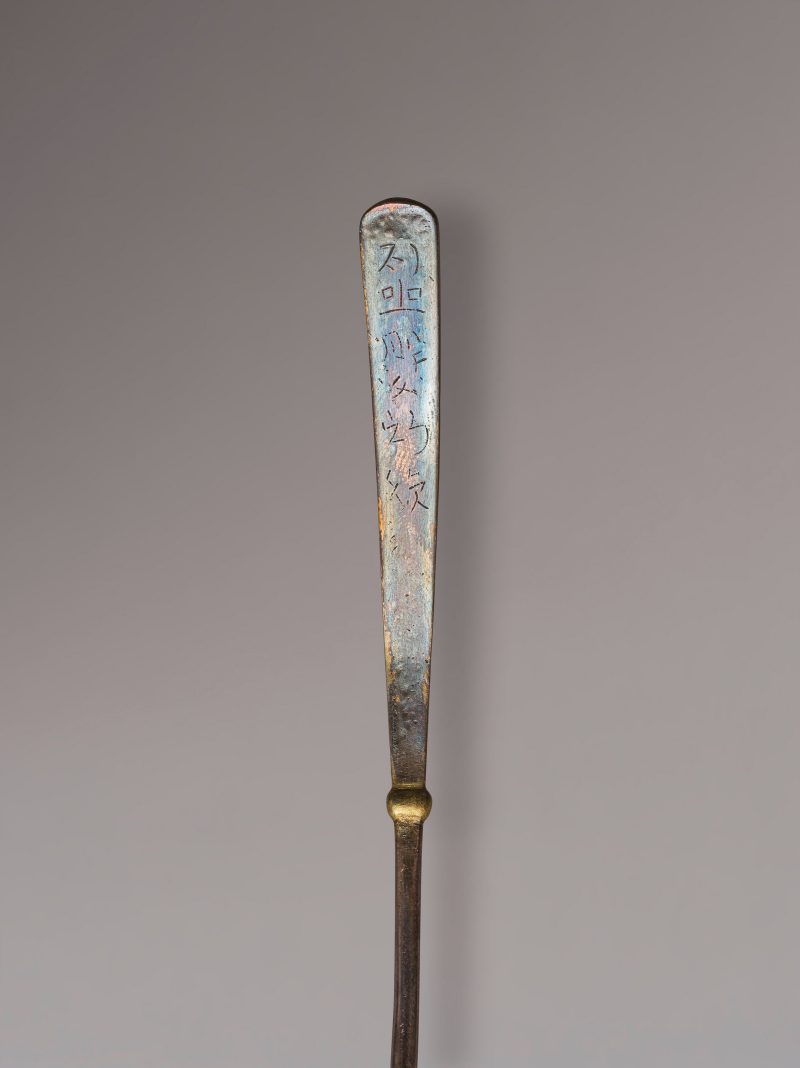
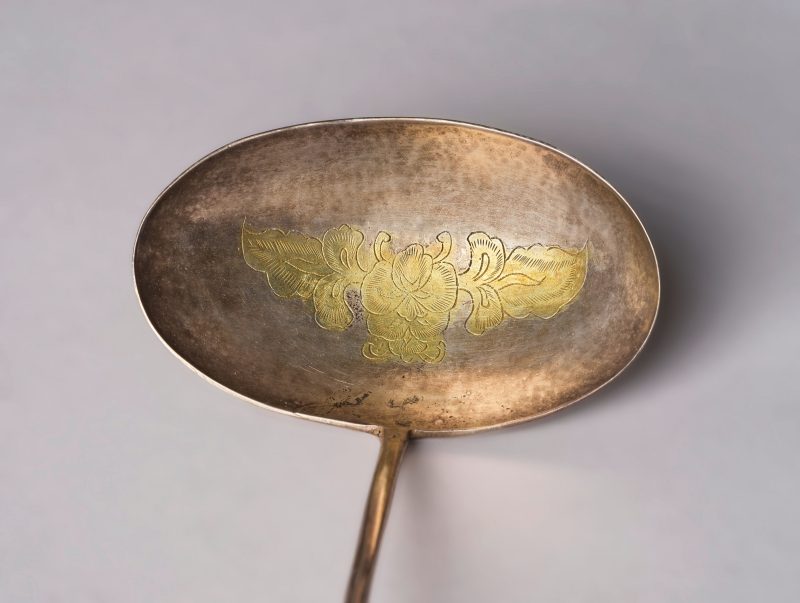
Made from thin silver sheet, with a shallow bowl of oval shape attached to a long, elegantly curved slender handle of circular section terminating in a flattened end, the bowl finely engraved and gilt with a single bloom flanked by clusters of leaves on each side, the flattened end of the handle chased and gilt with a classic scroll, the reverse incised with a Khitan inscription.
28 cm (11 in.) long
遼代 銀局部鎏金鏨刻花卉紋勺
Provenance:
Gisèle Croës Arts d'Extrême Orient, Brussels, 2011
Published, Exhibited and Illustrated:
Gisèle Croës Arts d'Extrême Orient at Gagosian Gallery, New York, Matter and Memory II, New York, 14 - 22 March 2014, p.122
來源:
Gisèle Croës Arts d'Extrême Orient,布魯塞爾,2011年
展覽著錄:
Gisèle Croës Arts d'Extrême Orient在高古軒畫廊,紐約,《Matter and Memory II》,紐約,2014年3月14-22日,第122頁
This ladle is larger than other examples, which are often more elaborately shaped and decorated. Spoons and ladles were used alongside mortars and braziers in the preparation of tea. During the Tang dynasty, compressed tea cakes were ground into powder, spooned into cups, infused with hot water and whisked. Silver tea utensils were prized among the aristocracy, as surviving examples demonstrate. Among the silver utensils discovered in the relic deposit at Famen Temple, Shaanxi province, dated to the late Tang dynasty, were a silver mortar for grinding tea cakes and a parcel-gilt silver ladle of comparable size and similarly restrained form, illustrated by Han Wei and Christian Deydier, Ancient Chinese Gold, Paris, 2001, pp. 298–299, no. 631. Another large Tang gilt-silver spoon, excavated at Beiyin village, Yaoxian, Shaanxi province, is published by Shen Qinyan (ed.), Selected Treasures of Shaanxi History Museum, Xi'an, 2003, p. 78, no. 66.
A Song dynasty embassy report records a Liao banquet held in 1009 near the southern capital (present-day Beijing), describing camel gruel served with a ladle. Submitted by the official Lu Zhen following a diplomatic mission, the report suggests that ladles were used to serve dishes rather than as personal eating utensils. Khitan diners generally ate solid foods with their hands, although special arrangements were made for the Song envoys, who would have used chopsticks. A similar ladle appears in 'Attendants Bearing Offerings', held in a bowl by the second lady, while a late Liao tomb painting excavated in 1990 depicts two Khitan men holding ladles over a large bowl in preparation for a feast; see The Eternal Feast: Banqueting in Chinese Art from the 10th to the 14th Century, New Haven and London, 2019, pp. 106-107.
以下内容由AI翻译:
【描述】
由薄银片制成,浅碗呈椭圆形,连接一根长而优雅弯曲的圆截面细柄,末端扁平。碗上精细錾刻并鎏金一朵花,两侧簇拥着叶子,柄的扁平末端錾刻并鎏金经典卷草纹,背面刻有契丹文铭文。
此勺比其他例子更大,通常其他例子形状和装饰更为复杂。勺子和大勺与研钵和火盆一起用于茶的准备。在唐代,压缩茶饼被磨成粉末,用勺子舀入杯中,注入热水并搅拌。银制茶具在贵族中备受推崇,现存的例子证明了这一点。在陕西省法门寺遗址发现的晚唐时期的银器中,包括一个用于研磨茶饼的银研钵和一个部分鎏金的银大勺,其大小和形式与此件相似,见韩伟和Christian Deydier,《中国古代金器》,巴黎,2001年,第298-299页,编号631。另一件大型唐代鎏金银勺,在陕西耀县 Beiyin 村出土,见沈钦燕(编),《陕西历史博物馆精选藏品》,西安,2003年,第78页,编号66。
宋代使节报告记录了1009年在南都(今北京)附近举行的一次辽国宴会,描述了用大勺盛驼肉粥。该报告由官员 Lu Zhen 出使归来后呈交,表明大勺用于盛菜而不是个人餐具。契丹人通常用手吃固体食物,但为宋朝使节做了特殊安排,他们使用筷子。《Attendants Bearing Offerings》中,第二位女子在碗中持有一件相似的勺。1990年发掘的一座晚期辽墓壁画则描绘两名契丹男子正为宴会准备,在一只大碗上方持勺;见《永恒的盛宴:十至十四世纪中国艺术中的宴饮》,纽黑文和伦敦,2019年,第106-107页。
常见问题
这件遼代 銀局部鎏金鏨刻花卉紋勺 | RARE GRANDE LOUCHE EN ARGENT PARTIELLEMENT DORÉ的成交价是多少?
落槌价为 预展中。 成交价为 预展中。
拍品的尺寸是多少?
28 cm (11 in.) long