
拍品信息
拍品名称
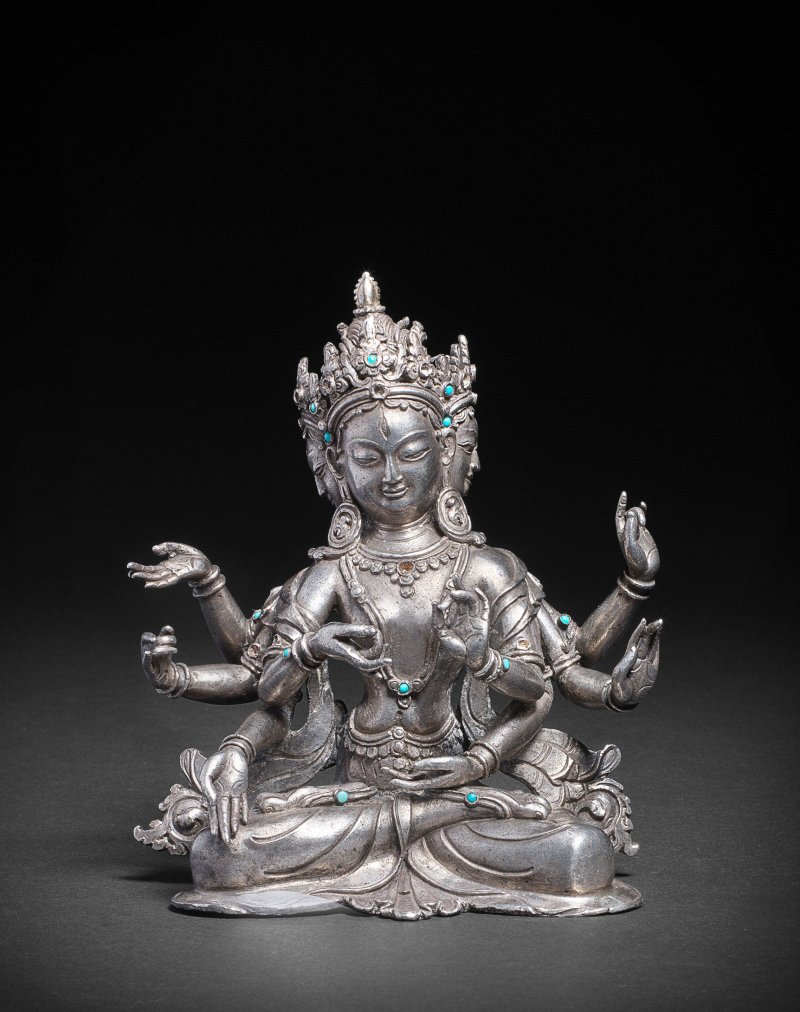
西藏 約十七世紀 尊勝佛母銀像 | A SILVER FIGURE OF USHNISHAVIJAYA
年代
TIBET, CIRCA 17TH CENTURY
起拍价
HKD 500,000
估值区间
HKD 500000 - 700000
尺寸
未知
品相
未知
更多信息
TIBET, CIRCA 17TH CENTURY
Himalayan Art Resources item no. 61767
12 cm (4 3/4 in.) high
Footnotes
西藏 約十七世紀 尊勝佛母銀像
Provenance
The Younghusband Expedition to Tibet, 1903-4
Lavishly adorned with jewelry inset with semi-precious stones, the seated goddess possesses a dignified beauty that surpasses the splendor of her adornment. With a friendly and compassionate expression on her principal face, she gracefully extends one of her eight hands forward, granting wishes to her admirers.
Ushnishavijaya fulfills wishes for long life. As the personification of a Buddhist mantra associated with longevity and favorable rebirth, she is one of the three long-life deities in Tibetan Buddhism, together with Amitayus and White Tara. According to Amy Heller, images of the goddess "were frequent commissions by lay people, either made as part of memorial rituals, to accompany prayers for favorable rebirth of a loved one or to gain merit in the hopes of a favorable rebirth for those not yet deceased." (See Heller, , 1999, p. 196.) This may explain why this exceptional sculpture of Ushnishavijaya was cast in silver, considered more precious than gilded copper in Tibet, so that commissioning it was considered to generate greater merit for the donor.
Another lavish example of Ushnishavijaya cast in silver is published in ibid., p. 197, no. 105. A related gilt silver figure of White Tara, formerly in the Rockefeller Collection, is published in Leidy, , 1994, p. 88, fig. 71. Also compare the modeling and treatment of the garment to a circa-17th-century silver figure of Mahapratisara in the Nyingjei Lam Collection, published in Weldon and Singer, , 1999, pp. 124–125, pl. 29.
Himalayan Art Resources item no. 61767
12 cm (4 3/4 in.) high
Footnotes
西藏 約十七世紀 尊勝佛母銀像
Provenance
The Younghusband Expedition to Tibet, 1903-4
Lavishly adorned with jewelry inset with semi-precious stones, the seated goddess possesses a dignified beauty that surpasses the splendor of her adornment. With a friendly and compassionate expression on her principal face, she gracefully extends one of her eight hands forward, granting wishes to her admirers.
Ushnishavijaya fulfills wishes for long life. As the personification of a Buddhist mantra associated with longevity and favorable rebirth, she is one of the three long-life deities in Tibetan Buddhism, together with Amitayus and White Tara. According to Amy Heller, images of the goddess "were frequent commissions by lay people, either made as part of memorial rituals, to accompany prayers for favorable rebirth of a loved one or to gain merit in the hopes of a favorable rebirth for those not yet deceased." (See Heller, , 1999, p. 196.) This may explain why this exceptional sculpture of Ushnishavijaya was cast in silver, considered more precious than gilded copper in Tibet, so that commissioning it was considered to generate greater merit for the donor.
Another lavish example of Ushnishavijaya cast in silver is published in ibid., p. 197, no. 105. A related gilt silver figure of White Tara, formerly in the Rockefeller Collection, is published in Leidy, , 1994, p. 88, fig. 71. Also compare the modeling and treatment of the garment to a circa-17th-century silver figure of Mahapratisara in the Nyingjei Lam Collection, published in Weldon and Singer, , 1999, pp. 124–125, pl. 29.
常见问题
这件西藏 約十七世紀 尊勝佛母銀像 | A SILVER FIGURE OF USHNISHAVIJAYA的成交价是多少?
落槌价为 预展中。 成交价为 预展中。