
拍品信息
拍品名称
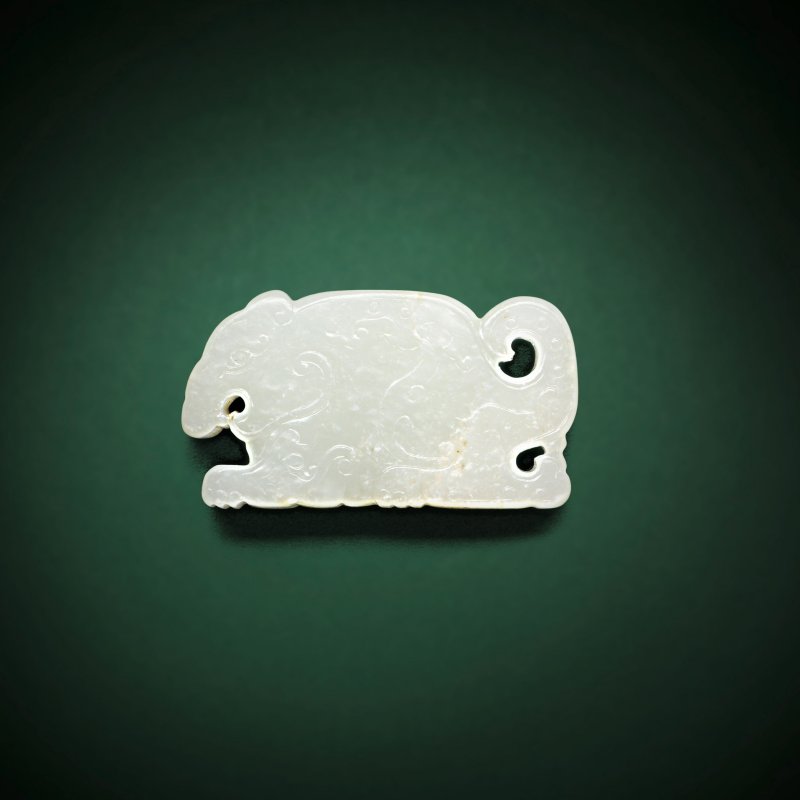
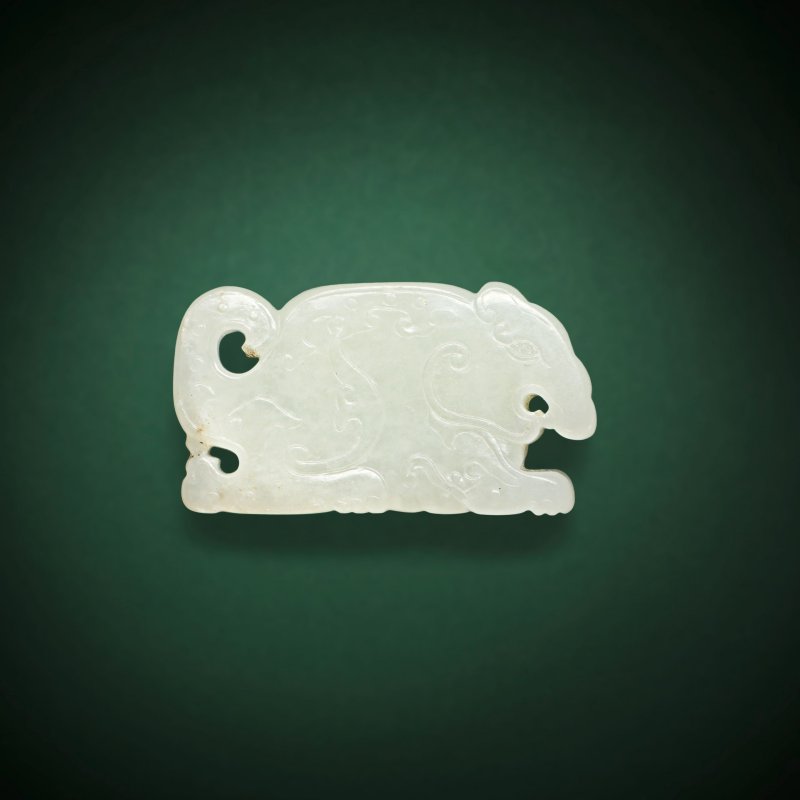
十八世紀 青玉貘形佩 | A PALE GREEN JADE TAPIR PENDANT
年代
18th century
起拍价
GBP 1,500
估值区间
GBP 1500 - 2000
尺寸
未知
品相
未知
更多信息
18th century
Carved in a recumbent pose, with a bowing head, the legs tucked beneath the body, and the tail curled upwards, detailed in low relief with bulging eyes and archaistic scrolls, the stone of a pale green tone with natural inclusions. 5cm (2in) wide.
Footnotes
十八世紀 青玉貘形佩
In ancient China, the tapir (mo 貘) was regarded as an auspicious mythical beast believed to possess the power to ward off evil. The Tang dynasty poet Bai Juyi (772-846) described the tapir in his Eulogy on a Painted Screen of a Tapir (貘屏赞) as follows: 'The mo has the trunk of an elephant, the eyes of a rhinoceros, the tail of an ox, and the feet of a tiger. It dwells in the mountain valleys of the south. It was believed that using its hide as bedding could protect against rheumatism and epidemic diseases, while hanging an image of the creature would ward off evil spirits.'
A possible prototype may be found in a jade plaque carved in the form of a tapir, Shang dynasty, in the collection of the Tianjin Museum, illustrated in Jade Wares Collected by Tianjin Museum (天津博物館藏玉), Beijing, 2012, p.54, no.38.
Carved in a recumbent pose, with a bowing head, the legs tucked beneath the body, and the tail curled upwards, detailed in low relief with bulging eyes and archaistic scrolls, the stone of a pale green tone with natural inclusions. 5cm (2in) wide.
Footnotes
十八世紀 青玉貘形佩
In ancient China, the tapir (mo 貘) was regarded as an auspicious mythical beast believed to possess the power to ward off evil. The Tang dynasty poet Bai Juyi (772-846) described the tapir in his Eulogy on a Painted Screen of a Tapir (貘屏赞) as follows: 'The mo has the trunk of an elephant, the eyes of a rhinoceros, the tail of an ox, and the feet of a tiger. It dwells in the mountain valleys of the south. It was believed that using its hide as bedding could protect against rheumatism and epidemic diseases, while hanging an image of the creature would ward off evil spirits.'
A possible prototype may be found in a jade plaque carved in the form of a tapir, Shang dynasty, in the collection of the Tianjin Museum, illustrated in Jade Wares Collected by Tianjin Museum (天津博物館藏玉), Beijing, 2012, p.54, no.38.
常见问题
这件十八世紀 青玉貘形佩 | A PALE GREEN JADE TAPIR PENDANT的成交价是多少?
落槌价为 预展中。 成交价为 预展中。


