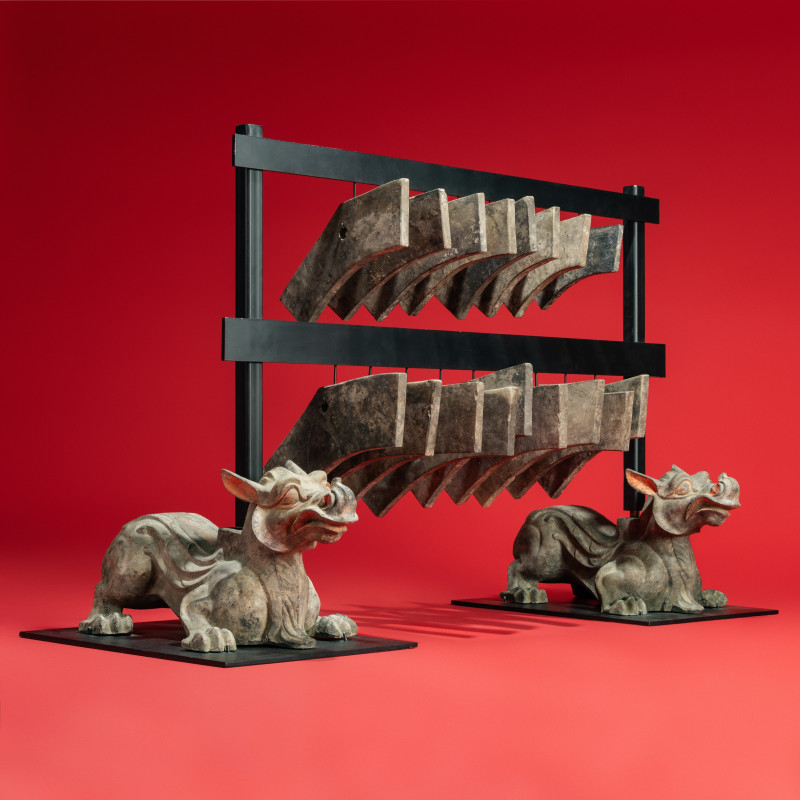

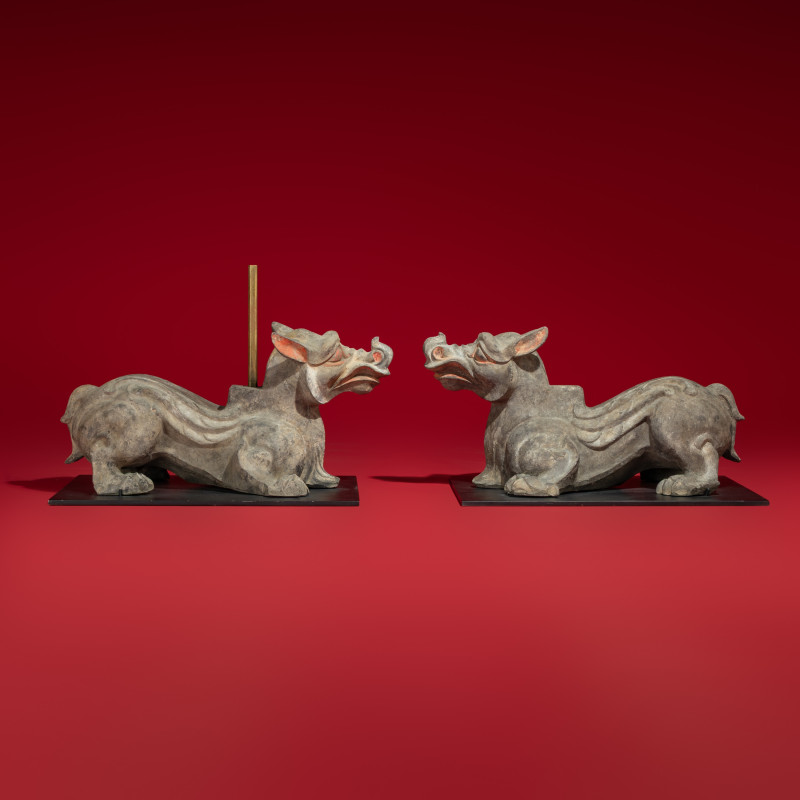
Lot 214 西漢 灰陶編磬一組連辟邪座 | A Rare Chinese Painted Earthenware Chimera and Chimes Set, Qing and Bixie, Western Han Dynasty
落槌价
****
成交价
****
拍品信息
拍品名称
西漢 灰陶編磬一組連辟邪座 | A Rare Chinese Painted Earthenware Chimera and Chimes Set, Qing and Bixie, Western Han Dynasty
年代
Western Han Dynasty (206 B.C.-9 A.D.)
起拍价
未知
估值区间
$20,000 - $40,000
尺寸
Total height 24 1/4 x width 39 3/8 in., 61.5 x 100 cm.; Figures: Length 16 1/2 x Height 8 3/4 in., 42 x 22 cm. Chimes: Lengths range from 8-13 in., 20.2-33 cm.
品相
未知
更多信息
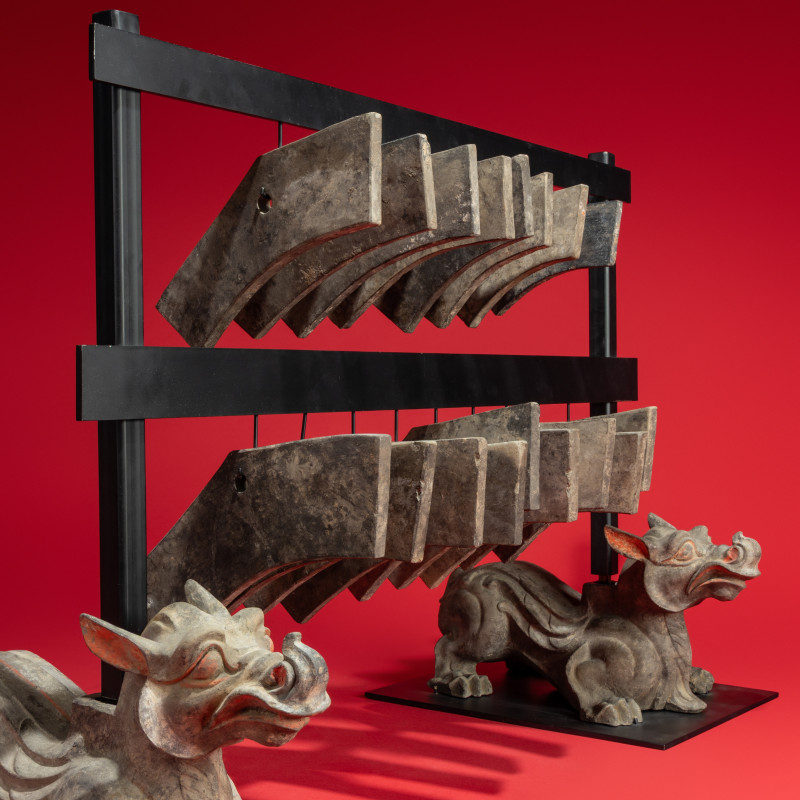
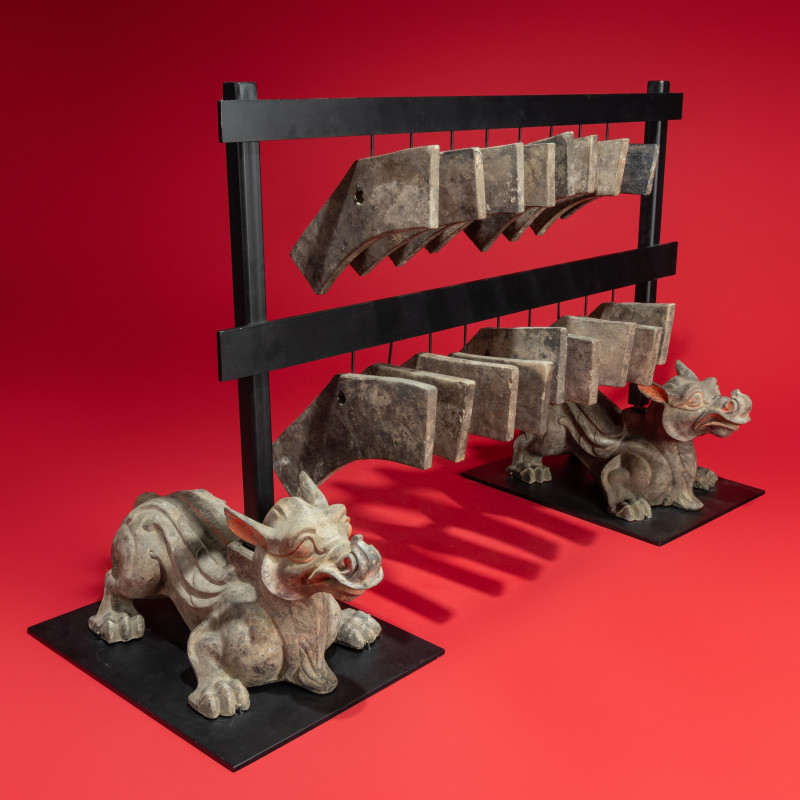
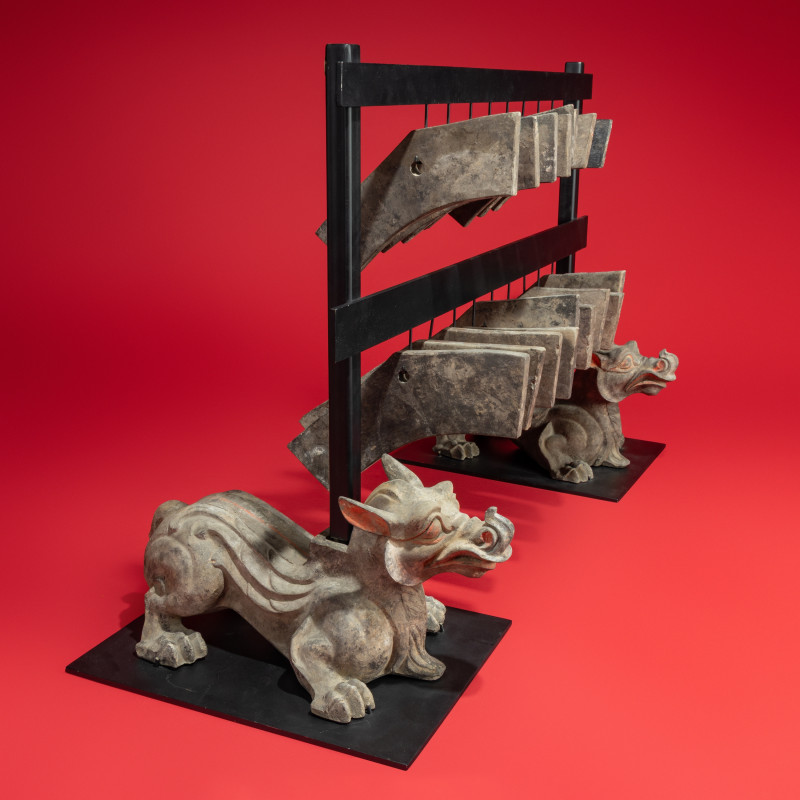
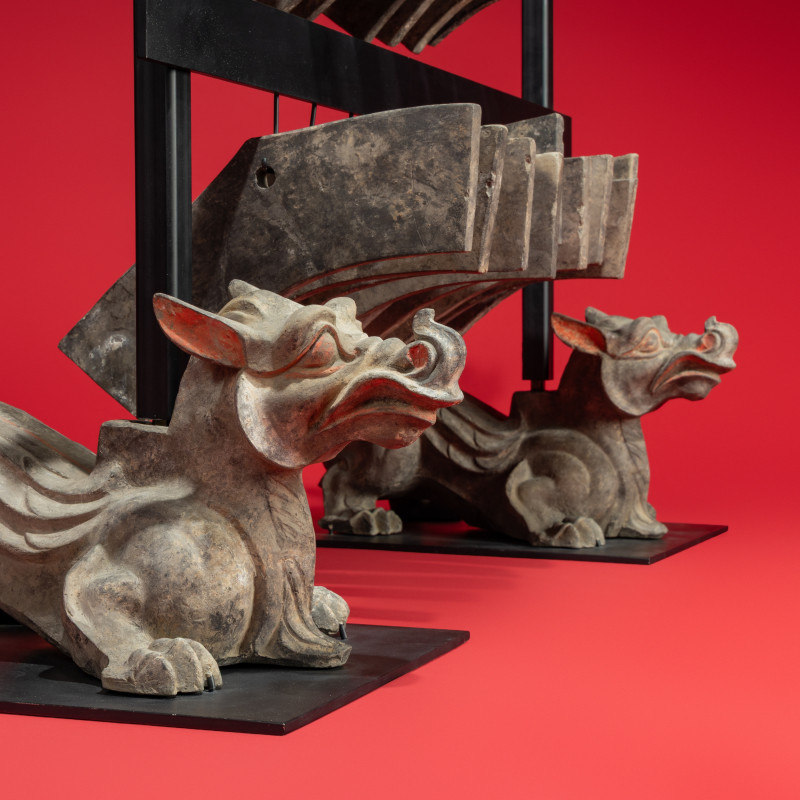
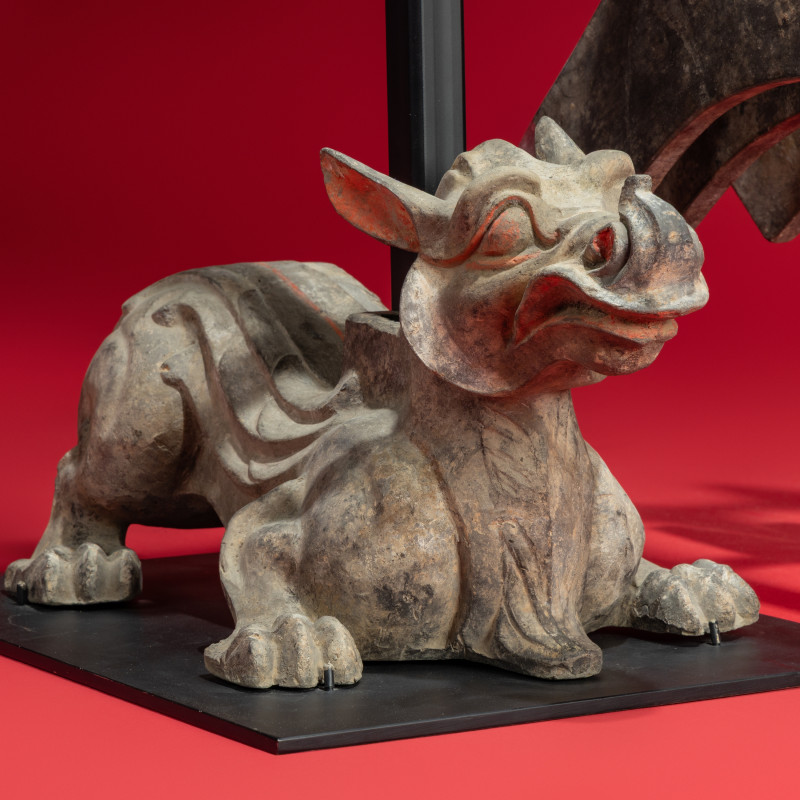
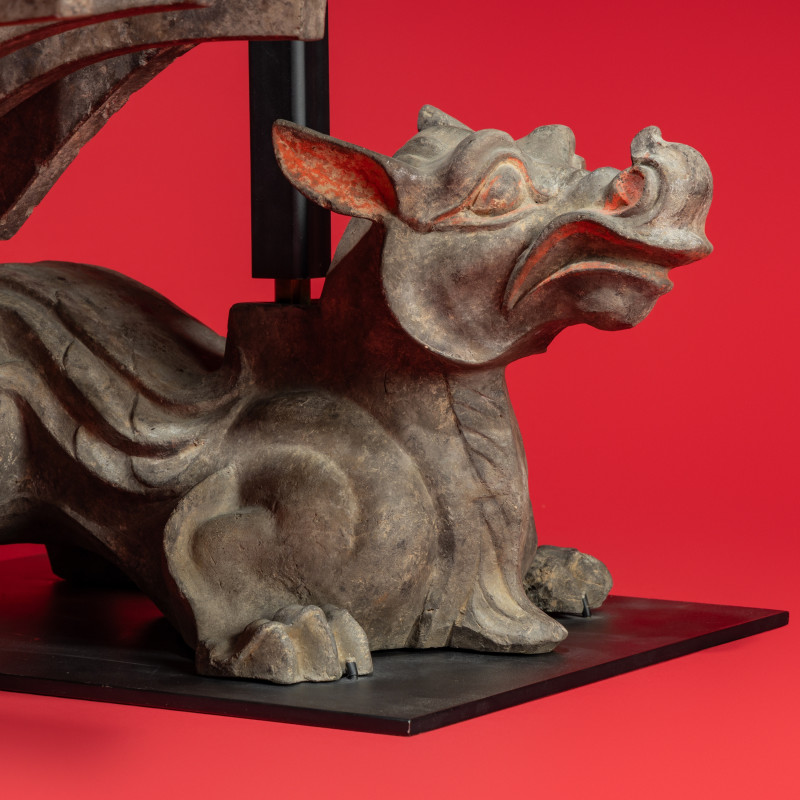
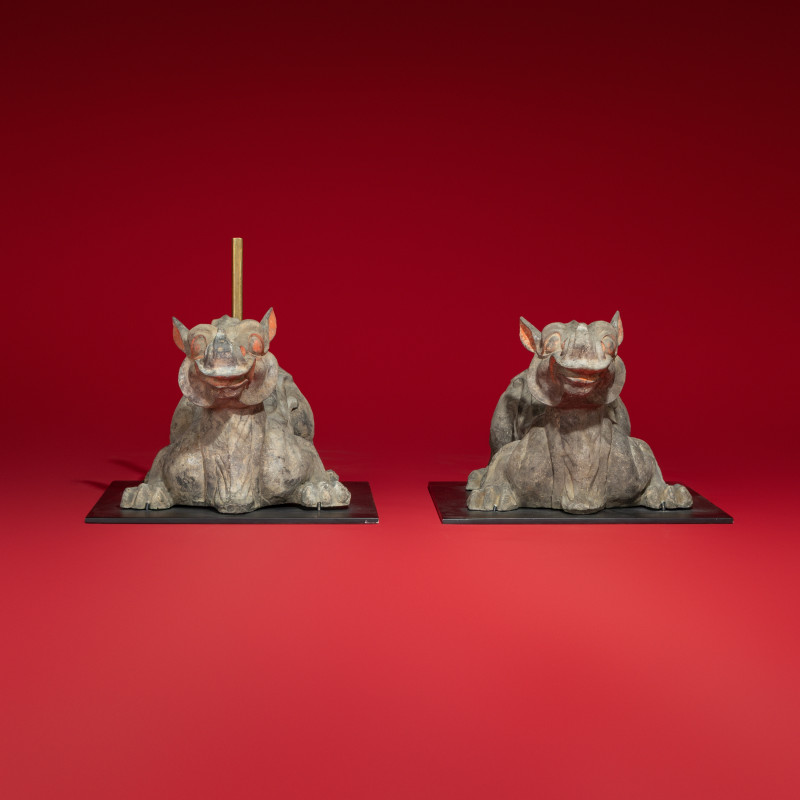
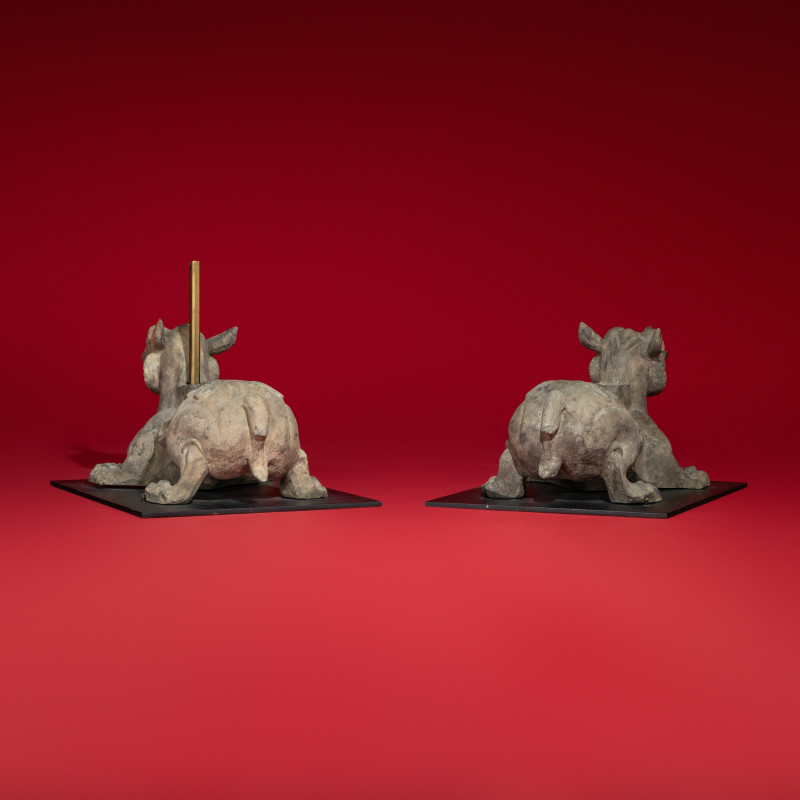
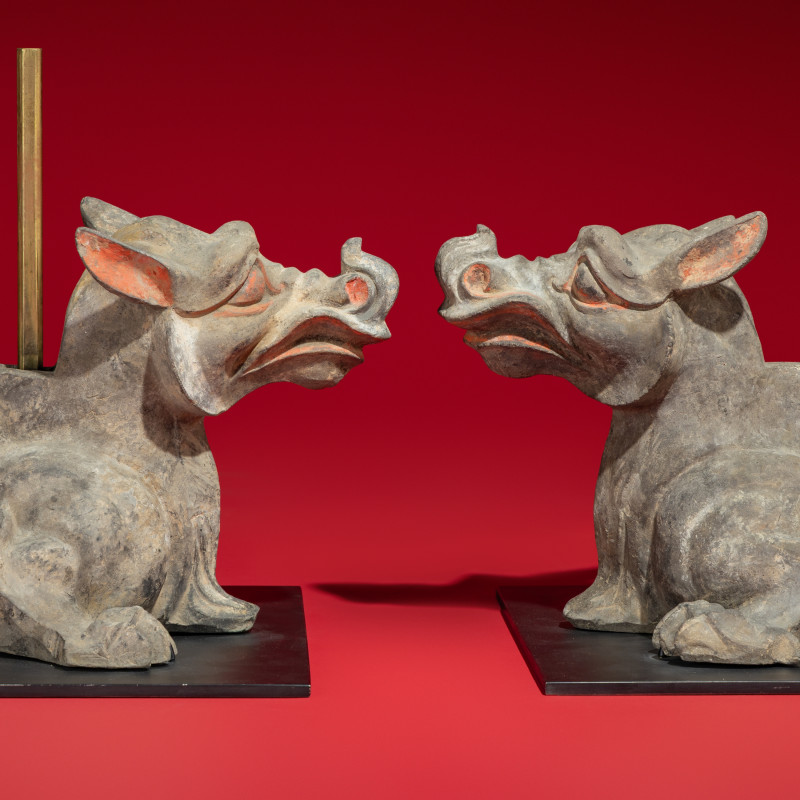
These chimeras or bixie (meaning to ward off evil), combine a variety of animal characteristics: feline, horned heads with elongated snouts; powerfully modeled leonine bodies with paws extended and claws firmly grasping the surface; and feathered wings lying flat against their bodies.
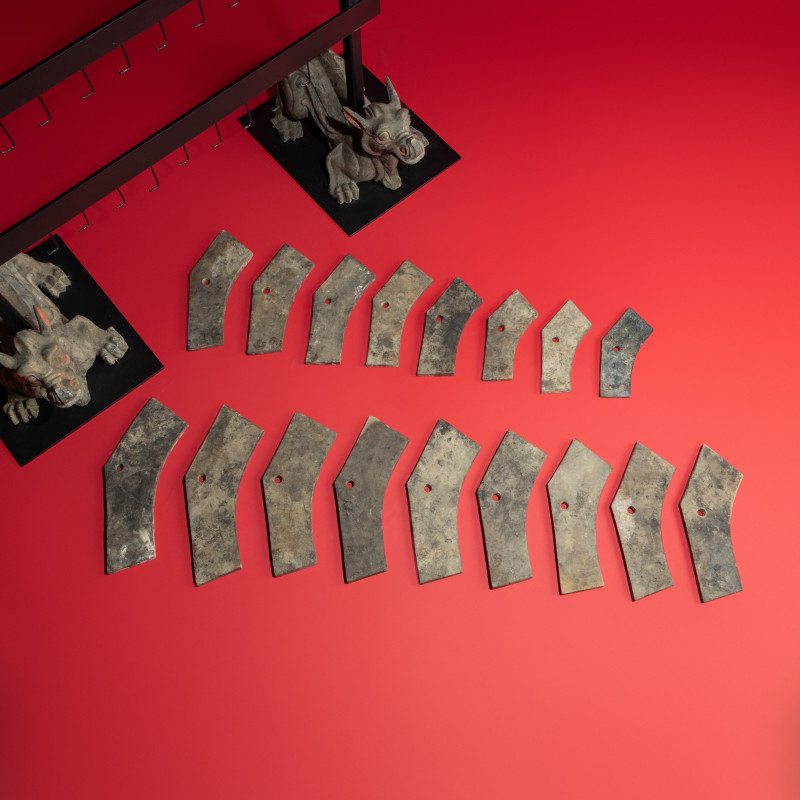
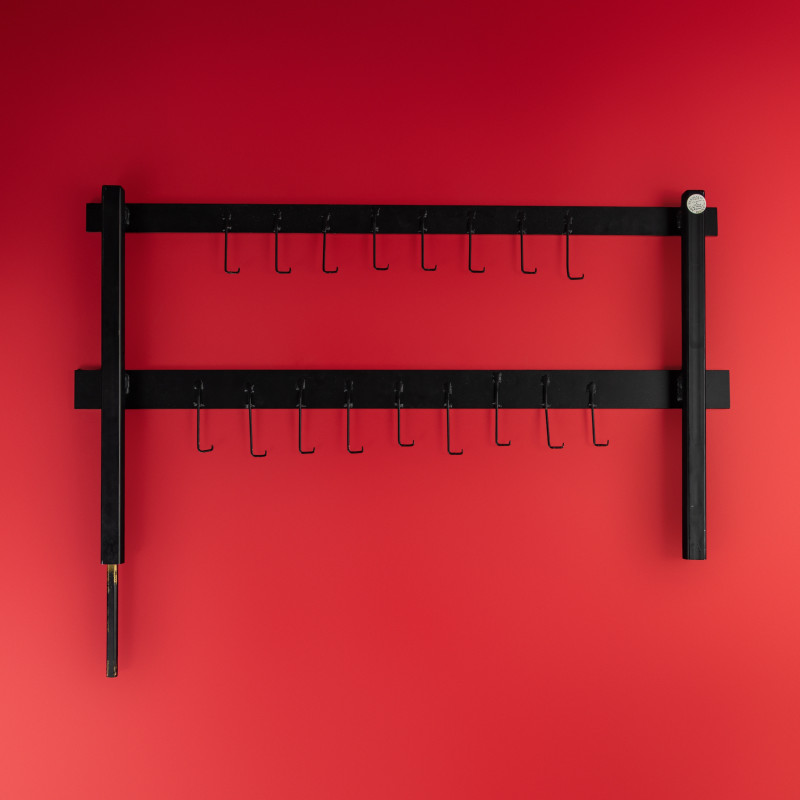
Each vigorously modeled figure has a square aperture between the shoulders for the supports of the set of chimes. The mythical beasts retain traces of their original polychromy, including red pigment on the eyes, ears, and mouths, and white and black pigment on the wings. The seventeen qing (sounding stones) are graduated in size.
Note:
Sounding stones, frequently represented in Chinese art, are among the Eight Treasures and symbolize justice, described as “a summons to the exercise of discrimination.”
Images of mythical beasts known as chimera or bixie first appeared during the Eastern Zhou dynasty and remained an enduring part of the Chinese artistic tradition. They were rendered in a variety of materials, including bronze, stone, jade, and ceramics, as exemplified by the present group.
A similar example, together with a chimera supporting a complete set of bells, is illustrated in Mysterious Spirits, Strange Beasts, Earthly Delights: Early Chinese Art from the Arlene and Harold Schnitzer Collection, Portland Art Museum, edited by Donald Jenkins, Portland, OR, 2005, pp. 106–111.
A similar pair of chimeras without bells or chimes is illustrated in Lisa Rotondo-McCord, ed., Five Thousand Years of Chinese Ceramics from the Robin and R. Randolph Richmond, Jr. Collection, New Orleans Museum of Art, 2005, no. 11.
泥質灰陶磬一組十七件,配辟邪座一對。辟邪又名天祿,是想像中的神話動物。昂首側身,睜眼張口,四肢俯坐,氣宇非凡。
陶磬尺寸不一,上八下九,平滑如玉,叩之鏘鏘。此類編磬为雅乐重器,多與編鐘成套出土,象征墓主身份等级,配以數量衆多的樂舞俑,合场递进,按次而俟。海外所藏知名者,莫過於美國波特蘭博物館中的兩套。
國内館藏,首推陕西考古博物馆展出的2021年咸阳市泾阳县大堡子墓地出土的一套;以及陝西歷史博物館展出的2018年西安市灞桥区狄寨街道栗家村村西一漢代女性墓葬出土的套組。
同服駢奏,合體齊聲。欢洽宴夜,視死如生。
Provenance:
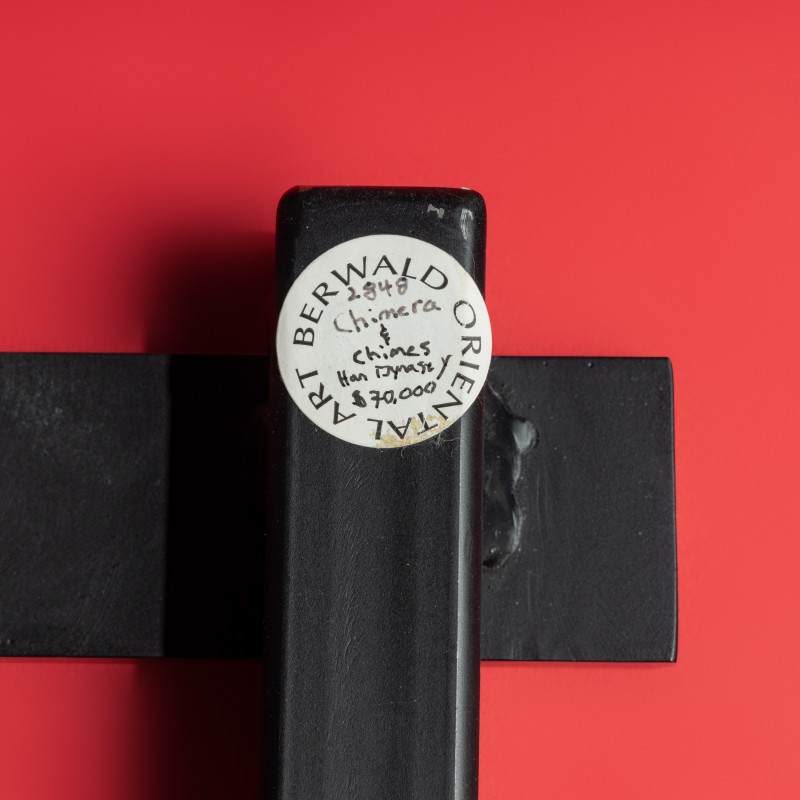
Berwald Oriental Art Ltd., London, acquired in spring 2007.
來源:
2007年春購自倫敦心雅堂。
以下内容由AI翻译:
【名称】
西漢 灰陶編磬一組連辟邪座
【年代】
西汉(公元前206年-公元9年)
【描述】
这些辟邪(意为驱邪),结合了多种动物特征:猫科动物的有角头部,长鼻;强壮的狮子身体,爪子紧紧抓住表面;平贴在身上的羽毛翅膀。
每个生动的雕像在肩部之间有一个方形孔,用于支撑一组编磬。这些神兽保留了原来的彩绘痕迹,包括眼睛、耳朵和嘴上的红色颜料,以及翅膀上的白色和黑色颜料。十七块磬按大小排列。
注:
编磬在中国艺术中经常出现,是八宝之一,象征正义,被描述为“召唤辨别力”。
被称为辟邪的神话动物形象最早出现在东周时期,并一直是中国艺术传统的一部分。它们用各种材料制成,包括青铜、石头、玉和陶瓷,如本组所示。
一个类似的例子,连同一只支撑完整一套钟的辟邪,见于《神秘精灵,奇异野兽,人间乐事:阿琳和哈罗德·施尼策收藏的早期中国艺术》,波特兰艺术博物馆,唐纳德·詹金斯编辑,俄勒冈州波特兰,2005年,第106-111页。
一对没有钟或磬的类似辟邪见于丽莎·罗通多-麦考德编辑,《五千年中国陶瓷:罗宾和R. 兰道夫·里士满二世收藏》,新奥尔良艺术博物馆,2005年,编号11。
泥质灰陶磬一组十七件,配辟邪座一对。辟邪又名天禄,是想象中的神话动物。昂首侧身,睁眼张口,四肢俯坐,气宇非凡。
陶磬尺寸不一,上八下九,平滑如玉,叩之锵锵。此类编磬为雅乐重器,多与编钟成套出土,象征墓主身份等级,配以数量众多的乐舞俑,合场递进,按次而俟。海外所藏知名者,莫过于美国波特兰博物馆中的两套。
国内馆藏,首推陕西考古博物馆展出的2021年咸阳市泾阳县大堡子墓地出土的一套;以及陕西历史博物馆展出的2018年西安市灞桥区狄寨街道栗家村村西一汉代女性墓葬出土的套组。
同服骈奏,合体齐声。欢洽宴夜,视死如生。
Each vigorously modeled figure has a square aperture between the shoulders for the supports of the set of chimes. The mythical beasts retain traces of their original polychromy, including red pigment on the eyes, ears, and mouths, and white and black pigment on the wings. The seventeen qing (sounding stones) are graduated in size.
Note:
Sounding stones, frequently represented in Chinese art, are among the Eight Treasures and symbolize justice, described as “a summons to the exercise of discrimination.”
Images of mythical beasts known as chimera or bixie first appeared during the Eastern Zhou dynasty and remained an enduring part of the Chinese artistic tradition. They were rendered in a variety of materials, including bronze, stone, jade, and ceramics, as exemplified by the present group.
A similar example, together with a chimera supporting a complete set of bells, is illustrated in Mysterious Spirits, Strange Beasts, Earthly Delights: Early Chinese Art from the Arlene and Harold Schnitzer Collection, Portland Art Museum, edited by Donald Jenkins, Portland, OR, 2005, pp. 106–111.
A similar pair of chimeras without bells or chimes is illustrated in Lisa Rotondo-McCord, ed., Five Thousand Years of Chinese Ceramics from the Robin and R. Randolph Richmond, Jr. Collection, New Orleans Museum of Art, 2005, no. 11.
泥質灰陶磬一組十七件,配辟邪座一對。辟邪又名天祿,是想像中的神話動物。昂首側身,睜眼張口,四肢俯坐,氣宇非凡。
陶磬尺寸不一,上八下九,平滑如玉,叩之鏘鏘。此類編磬为雅乐重器,多與編鐘成套出土,象征墓主身份等级,配以數量衆多的樂舞俑,合场递进,按次而俟。海外所藏知名者,莫過於美國波特蘭博物館中的兩套。
國内館藏,首推陕西考古博物馆展出的2021年咸阳市泾阳县大堡子墓地出土的一套;以及陝西歷史博物館展出的2018年西安市灞桥区狄寨街道栗家村村西一漢代女性墓葬出土的套組。
同服駢奏,合體齊聲。欢洽宴夜,視死如生。
Provenance:
Berwald Oriental Art Ltd., London, acquired in spring 2007.
來源:
2007年春購自倫敦心雅堂。
以下内容由AI翻译:
【名称】
西漢 灰陶編磬一組連辟邪座
【年代】
西汉(公元前206年-公元9年)
【描述】
这些辟邪(意为驱邪),结合了多种动物特征:猫科动物的有角头部,长鼻;强壮的狮子身体,爪子紧紧抓住表面;平贴在身上的羽毛翅膀。
每个生动的雕像在肩部之间有一个方形孔,用于支撑一组编磬。这些神兽保留了原来的彩绘痕迹,包括眼睛、耳朵和嘴上的红色颜料,以及翅膀上的白色和黑色颜料。十七块磬按大小排列。
注:
编磬在中国艺术中经常出现,是八宝之一,象征正义,被描述为“召唤辨别力”。
被称为辟邪的神话动物形象最早出现在东周时期,并一直是中国艺术传统的一部分。它们用各种材料制成,包括青铜、石头、玉和陶瓷,如本组所示。
一个类似的例子,连同一只支撑完整一套钟的辟邪,见于《神秘精灵,奇异野兽,人间乐事:阿琳和哈罗德·施尼策收藏的早期中国艺术》,波特兰艺术博物馆,唐纳德·詹金斯编辑,俄勒冈州波特兰,2005年,第106-111页。
一对没有钟或磬的类似辟邪见于丽莎·罗通多-麦考德编辑,《五千年中国陶瓷:罗宾和R. 兰道夫·里士满二世收藏》,新奥尔良艺术博物馆,2005年,编号11。
泥质灰陶磬一组十七件,配辟邪座一对。辟邪又名天禄,是想象中的神话动物。昂首侧身,睁眼张口,四肢俯坐,气宇非凡。
陶磬尺寸不一,上八下九,平滑如玉,叩之锵锵。此类编磬为雅乐重器,多与编钟成套出土,象征墓主身份等级,配以数量众多的乐舞俑,合场递进,按次而俟。海外所藏知名者,莫过于美国波特兰博物馆中的两套。
国内馆藏,首推陕西考古博物馆展出的2021年咸阳市泾阳县大堡子墓地出土的一套;以及陕西历史博物馆展出的2018年西安市灞桥区狄寨街道栗家村村西一汉代女性墓葬出土的套组。
同服骈奏,合体齐声。欢洽宴夜,视死如生。
常见问题
拍品的尺寸是多少?
Total height 24 1/4 x width 39 3/8 in., 61.5 x 100 cm.; Figures: Length 16 1/2 x Height 8 3/4 in., 42 x 22 cm. Chimes: Lengths range from 8-13 in., 20.2-33 cm.