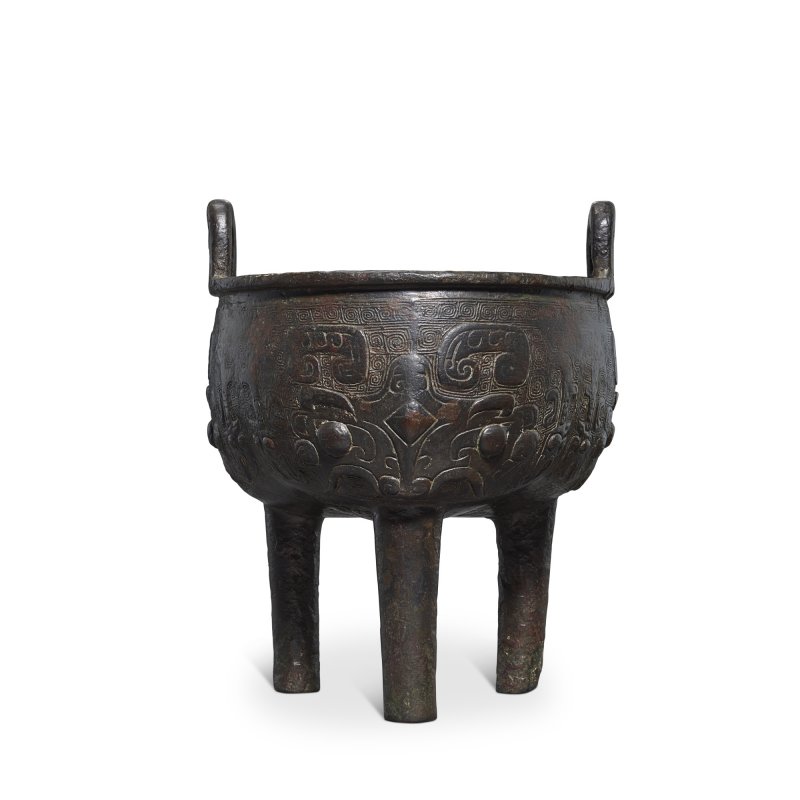

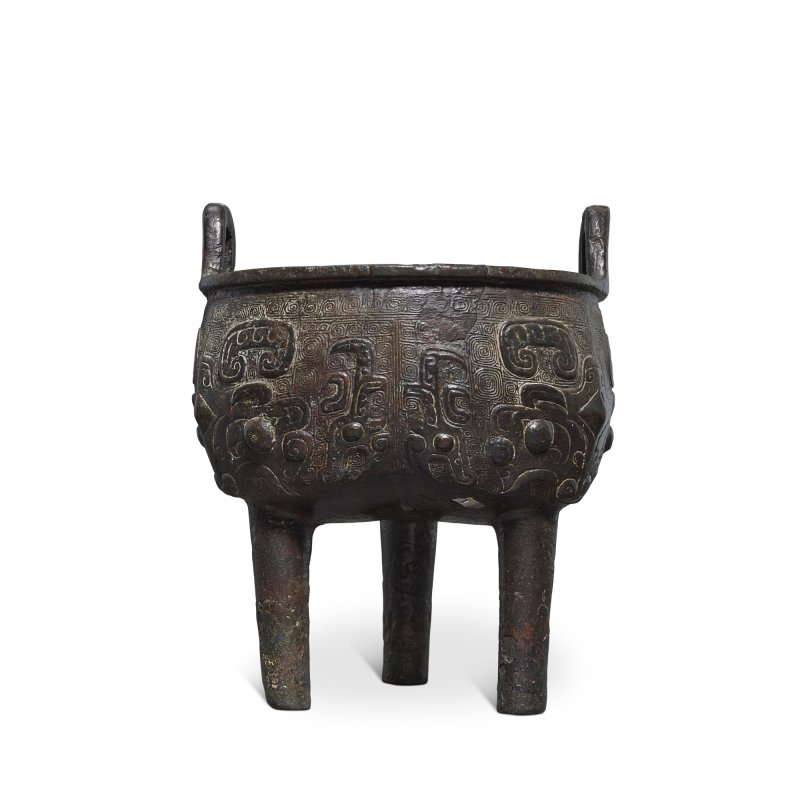
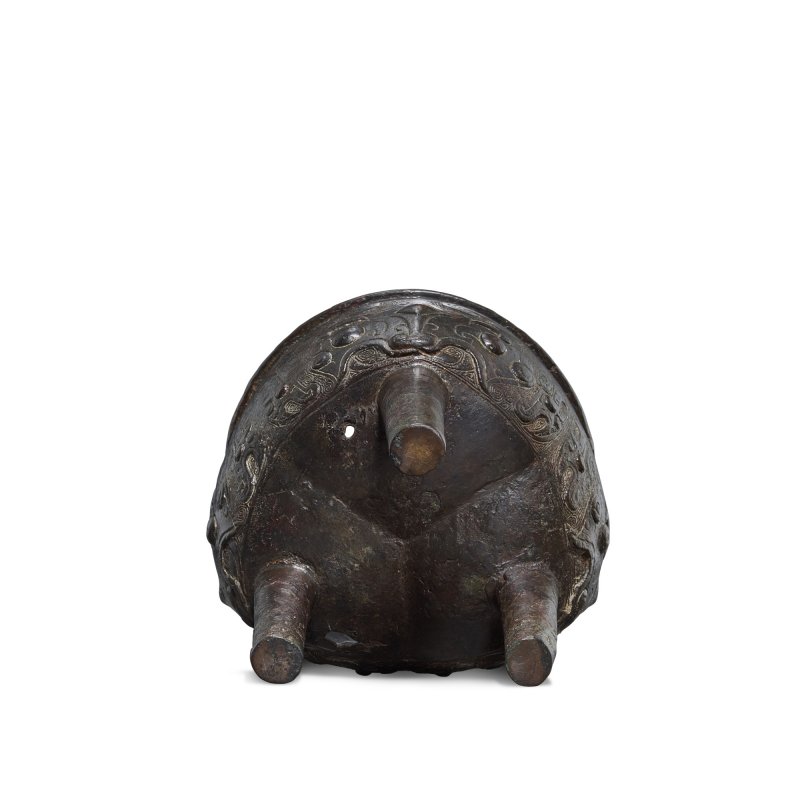
Lot 309 An archaic bronze ritual food vessel, ding, Late Shang dynasty | 商晚期 青銅獸面紋鼎
落槌价
预展中
成交价
预展中
| 拍卖公司 | 苏富比 |
|---|---|
| 拍卖时间 | 2026年11月11日 |
拍品信息
拍品名称
An archaic bronze ritual food vessel, ding, Late Shang dynasty | 商晚期 青銅獸面紋鼎
起拍价
HKD 50,000
估值区间
50,000 - 150,000 HKD
尺寸
未知
品相
如欲了解本拍品狀況的更多資訊,請聯絡 xiaoye.yang@sothebys.com
更多信息
An archaic bronze ritual food vessel, ding
Late Shang dynasty
商晚期 青銅獸面紋鼎
w. 17 cm
来源:Collection of Dr SP Jacobson, Johannesburg, acquired between 1945 and 1950, and thence by the descent.
來源:
SP Jacobson醫生收藏,約翰內斯堡,購於1945年至1950年間,後由家族傳承
图录
说明:Sotheby's London did valuation to Dr Jacobson' s collection including this ding on 18th May 1990.
倫敦蘇富比曾對此鼎在內的Jacobson醫生藏品進行估值,時惟1990年5月18日。
Derived from Neolithic pottery tripods, bronze ding were paramount symbols of royal authority in China's Bronze Age. These ritual food vessels legitimized a ruler's power and played a crucial role in Shang and Zhou ceremonies, as evidenced by the large numbers excavated from royal tombs, such as that of Fu Hao.
The present vessel features a globular lobed body boldly cast with large taotie masks, distinguished by protruding eyes, raised curled horns and curved fangs. This striking motif is most frequently found in the Shang/Western Zhou transitional period. Excavations in 1984 of tomb M1713 in Anyang, Henan, revealed a liding of similar design, the Ya Yu Ding, recorded in the Institute of Archaeology CASS, Yinxu xin chutu qingtongqi [Ritual bronzes recently excavated in Yinxu], Beijing, 2008, pl. 196. See also four similarly decorated lobed vessels, illustrated in Robert Bagley, Shang Ritual Bronzes in the Arthur M. Sackler Collections, Cambridge, 1987, nos 93-95.
青銅鼎源自新石器時代的陶鼎,是中國青銅時代王權的最高象徵。作為祭祀用的盛食器,鼎確立了統治者的權威,並在商周祭典中扮演著至關重要的角色。從婦好墓等皇家陵墓中出土的大量鼎器便可見一斑。
本品呈分襠鼓腹,器身滿飾碩大的饕餮紋,凸目、浮雕捲角與彎曲的獠牙特徵鮮明。此類醒目紋飾最常見於商末周初過渡期。1984年河南安陽M1713號墓曾出土一件設計相似的鬲鼎(亞魚鼎),錄於中國社會科學院考古研究所編,《殷墟新出土青銅器》,北京,2008年,圖版196。另見四件裝飾相似的分襠器,載於羅伯特·貝格利(Robert Bagley)著,《Shang Ritual Bronzes in the Arthur M. Sackler Collections》,劍橋,1987年,編號93-95。
常见问题
这件An archaic bronze ritual food vessel, ding, Late Shang dynasty | 商晚期 青銅獸面紋鼎的成交价是多少?
落槌价为 预展中。 成交价为 预展中。
拍品的品相状况如何?
如欲了解本拍品狀況的更多資訊,請聯絡 xiaoye.yang@sothebys.com
这件拍品的流传来源是什么?
Collection of Dr SP Jacobson, Johannesburg, acquired between 1945 and 1950, and thence by the descent.
來源:
SP Jacobson醫生收藏,約翰內斯堡,購於1945年至1950年間,後由家族傳承
图录
來源:
SP Jacobson醫生收藏,約翰內斯堡,購於1945年至1950年間,後由家族傳承
图录