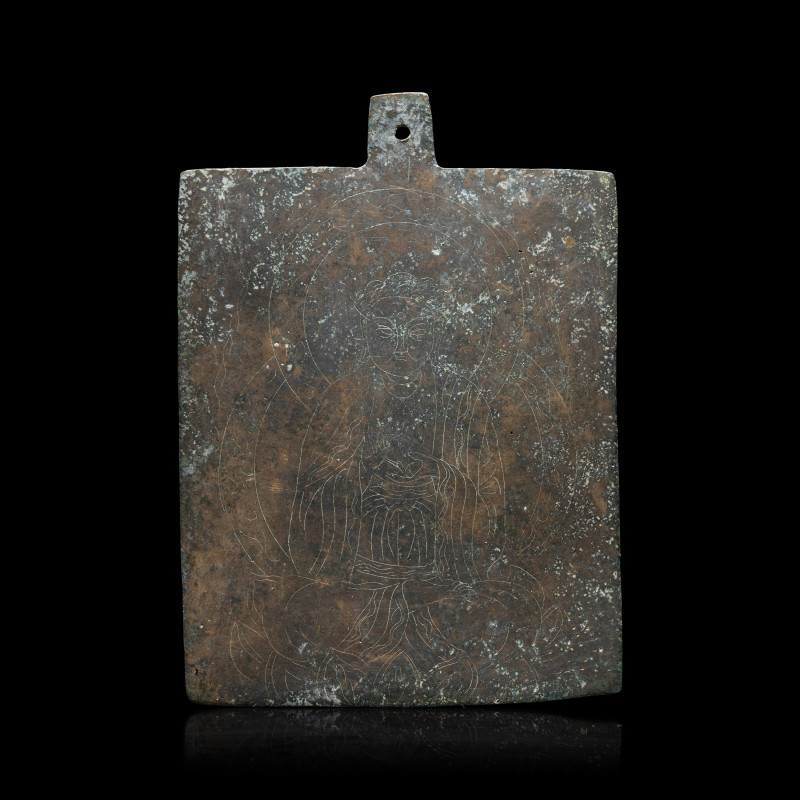

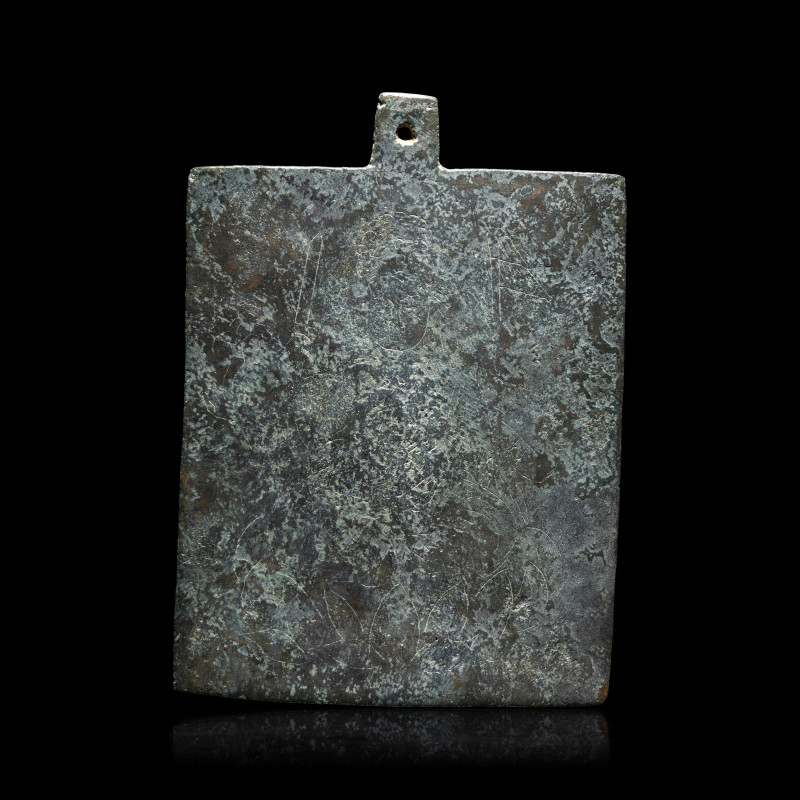
Lot 206 遼-金 雙面綫刻銅佛板 | A Chinese Bronze Incised Buddhist Votive Plaque, Liao-Jin Dynasty
落槌价
****
成交价
****
拍品信息
拍品名称
遼-金 雙面綫刻銅佛板 | A Chinese Bronze Incised Buddhist Votive Plaque, Liao-Jin Dynasty
年代
Liao-Jin Dynasty (916-1234)
起拍价
未知
估值区间
$5,000 - $7,000
尺寸
Height 5 7/8 in., 15 cm.
品相
Overall decent and complete condition with wear and encrustation, in particular on the reverse. Examined under UV light, no visible cracks or restorations.
更多信息
The surface is incised on one side with a Buddha; the reverse is incised with Virūḍhaka (Guardian of the South, 南方增长天王).
Note:
The origins of this type of bronze Buddhist plaque can be traced back to line-engraved bronze mirrors from the Wuyue Kingdom during the Five Dynasties period. According to Wang Mu’s study, Line-Engraved Bronze Mirrors Unearthed in China and Related Issues, approximately twenty such mirrors have been discovered in China. They date primarily from the late Five Dynasties/early Northern Song periods through the Liao and Jin dynasties.
Sixteen mirrors with documented provenances were found in locations including Hangzhou, Dongyang, and Huangyan (Zhejiang); Suzhou (Jiangsu); Changsha (Hunan); Xuanhua (Hebei); Qingzhou (Inner Mongolia); Acheng (Heilongjiang); and Fuxin (Liaoning)——areas largely corresponding to the territories of the Wuyue Kingdom and the Liao and Jin dynasties. Most were unearthed from Buddhist pagodas and tombs.
The engraved motifs invariably feature Buddhist themes or imagery related to religious offerings, underscoring their function as devotional objects. Notably, the "Mirror of Lady Liu Qiniang"—unearthed from a Song-dynasty tomb in the suburbs of Changsha, Hunan, and featuring an engraving of Guanyin standing on a lotus, has a small hole along its rim, likely intended for securing the mirror within the tomb or for suspension during the propagation of the Buddhist faith. The short handle on the present piece likely served a similar purpose.
Among the finds from the Lingshi Temple in Huangyan City, a site that yielded six bronze mirrors featuring incised designs and date inscriptions, five bear images of Buddhist figures, specifically Shakyamuni Buddha, his disciples, and the Four Heavenly Kings. Huangyan is located in Taizhou, Zhejiang Province, a region where Buddhism flourished; it was the birthplace of the Tiantai school, which subsequently spread widely to Japan and Korea. The bronze mirrors recovered from the Lingshi Temple pagoda had been enshrined within the pagoda's internal compartments or in iron reliquary caskets. The placement of four mirrors depicting the Four Heavenly Kings within the pagoda mirrors the practice of painting guardian kings at the four corners of Buddhist grottoes to protect the site.
Bronze mirrors were believed to ward off evil spirits, and since the Four Heavenly Kings served as protectors of the Dharma, their inclusion further enhanced the mirrors' apotropaic function. It can be inferred that the piece depicting Virūḍhaka (the Heavenly King of the South) was originally part of a complete set.
Furthermore, traces of wind and sand erosion on the surface of the plaque suggest it was not enshrined indoors but hung from the eaves—a practice consistent with archaeological findings from the Liao and Jin dynasties.
Based on existing archaeological evidence, while the line-engraved mirrors from the Liao and Jin dynasties were primarily recovered from pagodas and tombs, they were typically hung on the exterior of Buddhist pagodas or embedded in the ceilings of burial chambers.
For instance, the White Pagoda at Qingzhou in the Bairin Right Banner of Chifeng, Inner Mongolia, features over eight hundred circular and lozenge-shaped bronze mirrors inlaid into its body. A bronze mirror discovered within the sarira casket of the "Xumicang" Stone Sutra Pagoda at Yunju Temple in Fangshan, Beijing—now held by the Capital Museum—features a short handle with a drilled hole, indicating it was also intended for suspension. Similarly, among the six bronze mirrors unearthed from the Zhangjiayingzi tomb in Jianping County, Liaoning Province, five were hung on the chamber walls, and one was suspended from the ceiling. Furthermore, in the Zhang family Liao tomb complex in Xuanhua District, Zhangjiakou City, Hebei Province, many bronze mirrors retain traces of iron bars, iron hooks, or wooden blocks on their knobs, all of which served as suspension mechanisms.
Compare the Liao dynasty bronze plaque with a linear-engraved image of a Buddha formerly in the collection of Jin Shen; it is illustrated in Complete Collection of Buddhist Art (Vol. 6): Appraisal and Collection of Buddhist Images, pp. 30–31, and Ancient Buddhist Images from Two Collections: The Taihuazhai Collection, p. 70. It was later offered at the China Guardian auction on November 15, 2011, Lot 3990, with an estimated value of RMB 800,000–1,200,000.
Another example, a Liao Dynasty bronze double-sided plaque with incised Buddha figures, sold for HKD 288,000 at Wanchangsi, Hong Kong, on November 29, 2018, Lot 7850. Compare also a silver-gilt bronze plaque featuring a Buddha flanked by two Bodhisattvas, sold for €60,855 at the Bonhams, Paris auction of the Robert and Jean-Pierre Rousset family collection of Asian art on October 25, 2022, lot 40.
長方形,一面刻坐佛,一面刻增长天王,细如游絲,若隱若現,上沿焊梯形短柄,中有孔,當爲懸挂之用,兩面俱有侵蝕,天王像一面風痕甚重,可能向外懸于簷下。
這種銅佛板的起源大約是五代吳越囯的綫刻銅鏡。据王牧《中国境内所出的线刻铜镜及相关问题》,中国境内所出线刻镜约二十面,时代集中于五代末至北宋初和辽、金时期,有明确出土地的十六面分别出自今浙江杭州、东阳、黄岩、江苏苏州、湖南长沙、河北宣化、内蒙古庆州、黑龙江阿城、辽宁阜新——多爲五代吴越国及辽、金辖境,且多出土于佛塔和墓葬。线刻纹饰均爲佛教题材或供养内容,供品特性顯著。
其中,出土于湖南长沙郊外宋墓、刻有踏莲观音的“刘氏七娘镜”边缘有小洞,当为固定在墓中或弘扬佛法的悬挂之用。本品的短柄用途相似。
在线刻镜集中的发现地——出有六面帶纪年线刻镜的黄岩市灵石寺中,五面线刻有佛像,分别刻释迦佛、弟子及四天王像。黄岩地处浙江台州,佛教发达,天台宗發源於此,遠播日韓。灵石寺塔所出的銅鏡供奉于塔内隔層或鐵函。寺塔中放置四面线刻有四天王的铜镜,寓意与石窟四角绘镇窟天王相仿。铜镜本身避邪,四大天王的职能又是护法,更加压胜驱邪。由此推之,刻有南方增长天王的本品應當原爲一套,又据佛板表面的風沙痕跡,并非供于室内,而是懸于屋簷,這也與遼、金時期的考古發現吻合。
从现有考古资料看,辽、金属地所出的线刻镜,出土途径雖然也主要是塔和墓葬,但通常悬挂于佛塔之外或鑲于墓室顶上。譬如著名的内蒙古赤峰巴林右旗庆州白塔,塔身鑲有八百余面圓形和菱形銅鏡。首都博物馆所藏北京房山雲居寺续秘藏石经塔舍利函内发现的銅鏡,上有與本品一致的鑽孔短柄,也是懸挂所用。再如辽宁建平县张家营子墓所出六面铜镜,五面挂于墓室四壁,一面悬于室顶。又如河北省张家口市宣化區张氏遼墓群,不少銅镜镜钮上残留铁条、鐵鈎、木枋,均係懸挂所用。
私人收藏與市場記錄,參見金申舊藏遼代线刻佛画像铜板,著錄于《佛教美术全集(六):佛像鉴定与收藏》第30、31页;《两家藏古代佛像:苔华斋藏佛像》第70页,后上拍于中國嘉德2011年11月15日雅玩清赏:文房工艺品專場第3990號,估價¥800,000-1,200,000。
又見香港萬昌斯2018年11月29日佛造像及中国古董珍玩專場第7850號"辽铜阴线刻双面佛板画",港幣288,000成交。以及巴黎邦瀚斯2022年10月25日Robert與Jean-Pierre Rousset家族珍藏亞洲藝術專場第40號“鎏銀銅一佛二菩薩紋牌”,60,855歐元成交。
以下内容由AI翻译:
【名称】
遼-金 雙面綫刻銅佛板
【年代】
遼-金 (916-1234)
【描述】
表面一面刻有佛陀;另一面刻有增长天王(南方守护神,南方增长天王)。
注:
这种类型的青铜佛教牌的起源可以追溯到五代时期吴越国的线刻青铜镜。根据王牧的研究《中国境内所出的线刻铜镜及相关问题》,在中国发现了大约二十面这样的镜子。它们主要来自五代末/北宋初至辽、金时期。
十六面有明确出土地点的镜子分别在杭州、东阳和黄岩(浙江)、苏州(江苏)、长沙(湖南)、宣化(河北)、庆州(内蒙古)、阿城(黑龙江)和阜新(辽宁)等地发现——这些地区大致对应于吴越国和辽、金的领土。大多数是从佛教塔和墓葬中出土的。
雕刻的图案无一例外地具有佛教主题或与宗教供奉相关的图像,强调了它们作为供奉物品的功能。值得注意的是,“刘氏七娘镜”——从湖南长沙郊区的一座宋朝墓葬中出土,上面刻有站在莲花上的观音像,其边缘有一个小孔,可能是为了将镜子固定在墓中或在传播佛教信仰时悬挂使用。本品的短柄可能也有类似用途。
在黄岩市灵石寺的发现中,该遗址出土了六面带有线刻设计和日期铭文的青铜镜,其中五面刻有佛教人物,特别是释迦牟尼佛、他的弟子和四大天王。黄岩位于浙江省台州,是一个佛教繁荣的地区;它是天台宗的发源地,后来广泛传播到日本和韩国。从灵石寺塔中回收的青铜镜被供奉在塔内的隔层或铁函中。在塔内放置四面刻有四大天王的镜子的做法类似于在佛教石窟的四个角落绘制守护国王以保护遗址的做法。
人们相信青铜镜可以驱邪,而四大天王作为佛法的守护者,他们的加入进一步增强了镜子的避邪功能。可以推断,刻有增长天王(南方守护神)的这件作品原本是一整套的一部分。
此外,牌匾表面的风沙侵蚀痕迹表明它不是供奉在室内,而是悬挂在屋檐下——这一做法与辽、金时期的考古发现一致。
根据现有的考古证据,虽然辽、金时期的线刻镜主要从塔和墓葬中出土,但通常悬挂在佛教塔的外部或嵌入墓室的天花板上。
例如,内蒙古赤峰巴林右旗庆州白塔的塔身镶嵌有八百多面圆形和菱形的青铜镜。北京房山云居寺续秘藏石经塔舍利函内发现的一面青铜镜——现由首都博物馆收藏——其上有钻孔的短柄,也用于悬挂。同样,在辽宁建平县张家营子墓出土的六面铜镜中,五面挂在墓室墙壁上,一面悬挂在天花板上。此外,在河北省张家口市宣化区张氏辽墓群中,许多青铜镜的钮上保留有铁条、铁钩或木块,这些都是悬挂装置。
比较辽代线刻佛画像铜板,曾为金申旧藏;见《佛教美术全集(六):佛像鉴定与收藏》第30–31页,以及《两家藏古代佛像:苔华斋藏佛像》第70页。后于2011年11月15日在中国嘉德拍卖会上拍,编号3990,估价人民币800,000–1,200,000。
另见香港万昌斯2018年11月29日佛造像及中国古董珍玩专场第7850号“辽铜阴线刻双面佛板画”,成交价港币288,000。再比较巴黎邦瀚斯2022年10月25日Robert与Jean-Pierre Rousset家族珍藏亚洲艺术专场第40号“鎏银铜一佛二菩萨纹牌”,成交价60,855欧元。
长方形,一面刻坐佛,一面刻增长天王,细如游丝,若隐若现,上沿焊梯形短柄,中有孔,当为悬挂之用,两面俱有侵蚀,天王像一面风痕甚重,可能向外悬于檐下。
这种铜佛板的起源大约是五代吴越国的线刻铜镜。据王牧《中国境内所出的线刻铜镜及相关问题》,中国境内所出线刻镜约二十面,时代集中于五代末至北宋初和辽、金时期,有明确出土地的十六面分别出自今浙江杭州、东阳、黄岩、江苏苏州、湖南长沙、河北宣化、内蒙古庆州、黑龙江阿城、辽宁阜新——多为五代吴越国及辽、金辖境,且多出土于佛塔和墓葬。线刻纹饰均为佛教题材或供养内容,供品特性显著。
其中,出土于湖南长沙郊外宋墓、刻有踏莲观音的“刘氏七娘镜”边缘有小洞,当为固定在墓中或弘扬佛法的悬挂之用。本品的短柄用途相似。
在线刻镜集中的发现地——出有六面带纪年线刻镜的黄岩市灵石寺中,五面线刻有佛像,分别刻释迦佛、弟子及四天王像。黄岩地处浙江台州,佛教发达,天台宗发源于此,远播日韩。灵石寺塔所出的铜镜供奉于塔内隔层或铁函。寺塔中放置四面线刻有四天王的铜镜,寓意与石窟四角绘镇窟天王相仿。铜镜本身避邪,四大天王的职能又是护法,更加压胜驱邪。由此推之,刻有南方增长天王的本品应当原为一套,又据佛板表面的风沙痕迹,并非供于室内,而是悬于屋檐,这也与辽、金时期的考古发现吻合。
从现有考古资料看,辽、金属地所出的线刻镜,出土途径虽然是塔和墓葬,但通常悬挂于佛塔之外或镶于墓室顶上。譬如著名的内蒙古赤峰巴林右旗庆州白塔,塔身镶有八百余面圆形和菱形铜镜。首都博物馆所藏北京房山云居寺续秘藏石经塔舍利函内发现的铜镜,上有与本品一致的钻孔短柄,也是悬挂所用。再如辽宁建平县张家营子墓所出六面铜镜,五面挂于墓室四壁,一面悬于室顶。又如河北省张家口市宣化区张氏辽墓群,不少铜镜镜钮上残留铁条、铁钩、木枋,均系悬挂所用。
私人收藏与市场记录,参见金申旧藏辽代线刻佛画像铜板,著录于《佛教美术全集(六):佛像鉴定与收藏》第30、31页;《两家藏古代佛像:苔华斋藏佛像》第70页,后上拍于中国嘉德2011年11月15日雅玩清赏:文房工艺品专场第3990号,估价¥800,000-1,200,000。
又见香港万昌斯2018年11月29日佛造像及中国古董珍玩专场第7850号"辽铜阴线刻双面佛板画",港币288,000成交。以及巴黎邦瀚斯2022年10月25日Robert与Jean-Pierre Rousset家族珍藏亚洲艺术专场第40号“鎏银铜一佛二菩萨纹牌”,60,855欧元成交。
【品相】
整体状况良好且完整,有磨损和附着物,特别是在背面。在紫外光下检查,未见明显裂纹或修复痕迹。
Note:
The origins of this type of bronze Buddhist plaque can be traced back to line-engraved bronze mirrors from the Wuyue Kingdom during the Five Dynasties period. According to Wang Mu’s study, Line-Engraved Bronze Mirrors Unearthed in China and Related Issues, approximately twenty such mirrors have been discovered in China. They date primarily from the late Five Dynasties/early Northern Song periods through the Liao and Jin dynasties.
Sixteen mirrors with documented provenances were found in locations including Hangzhou, Dongyang, and Huangyan (Zhejiang); Suzhou (Jiangsu); Changsha (Hunan); Xuanhua (Hebei); Qingzhou (Inner Mongolia); Acheng (Heilongjiang); and Fuxin (Liaoning)——areas largely corresponding to the territories of the Wuyue Kingdom and the Liao and Jin dynasties. Most were unearthed from Buddhist pagodas and tombs.
The engraved motifs invariably feature Buddhist themes or imagery related to religious offerings, underscoring their function as devotional objects. Notably, the "Mirror of Lady Liu Qiniang"—unearthed from a Song-dynasty tomb in the suburbs of Changsha, Hunan, and featuring an engraving of Guanyin standing on a lotus, has a small hole along its rim, likely intended for securing the mirror within the tomb or for suspension during the propagation of the Buddhist faith. The short handle on the present piece likely served a similar purpose.
Among the finds from the Lingshi Temple in Huangyan City, a site that yielded six bronze mirrors featuring incised designs and date inscriptions, five bear images of Buddhist figures, specifically Shakyamuni Buddha, his disciples, and the Four Heavenly Kings. Huangyan is located in Taizhou, Zhejiang Province, a region where Buddhism flourished; it was the birthplace of the Tiantai school, which subsequently spread widely to Japan and Korea. The bronze mirrors recovered from the Lingshi Temple pagoda had been enshrined within the pagoda's internal compartments or in iron reliquary caskets. The placement of four mirrors depicting the Four Heavenly Kings within the pagoda mirrors the practice of painting guardian kings at the four corners of Buddhist grottoes to protect the site.
Bronze mirrors were believed to ward off evil spirits, and since the Four Heavenly Kings served as protectors of the Dharma, their inclusion further enhanced the mirrors' apotropaic function. It can be inferred that the piece depicting Virūḍhaka (the Heavenly King of the South) was originally part of a complete set.
Furthermore, traces of wind and sand erosion on the surface of the plaque suggest it was not enshrined indoors but hung from the eaves—a practice consistent with archaeological findings from the Liao and Jin dynasties.
Based on existing archaeological evidence, while the line-engraved mirrors from the Liao and Jin dynasties were primarily recovered from pagodas and tombs, they were typically hung on the exterior of Buddhist pagodas or embedded in the ceilings of burial chambers.
For instance, the White Pagoda at Qingzhou in the Bairin Right Banner of Chifeng, Inner Mongolia, features over eight hundred circular and lozenge-shaped bronze mirrors inlaid into its body. A bronze mirror discovered within the sarira casket of the "Xumicang" Stone Sutra Pagoda at Yunju Temple in Fangshan, Beijing—now held by the Capital Museum—features a short handle with a drilled hole, indicating it was also intended for suspension. Similarly, among the six bronze mirrors unearthed from the Zhangjiayingzi tomb in Jianping County, Liaoning Province, five were hung on the chamber walls, and one was suspended from the ceiling. Furthermore, in the Zhang family Liao tomb complex in Xuanhua District, Zhangjiakou City, Hebei Province, many bronze mirrors retain traces of iron bars, iron hooks, or wooden blocks on their knobs, all of which served as suspension mechanisms.
Compare the Liao dynasty bronze plaque with a linear-engraved image of a Buddha formerly in the collection of Jin Shen; it is illustrated in Complete Collection of Buddhist Art (Vol. 6): Appraisal and Collection of Buddhist Images, pp. 30–31, and Ancient Buddhist Images from Two Collections: The Taihuazhai Collection, p. 70. It was later offered at the China Guardian auction on November 15, 2011, Lot 3990, with an estimated value of RMB 800,000–1,200,000.
Another example, a Liao Dynasty bronze double-sided plaque with incised Buddha figures, sold for HKD 288,000 at Wanchangsi, Hong Kong, on November 29, 2018, Lot 7850. Compare also a silver-gilt bronze plaque featuring a Buddha flanked by two Bodhisattvas, sold for €60,855 at the Bonhams, Paris auction of the Robert and Jean-Pierre Rousset family collection of Asian art on October 25, 2022, lot 40.
長方形,一面刻坐佛,一面刻增长天王,细如游絲,若隱若現,上沿焊梯形短柄,中有孔,當爲懸挂之用,兩面俱有侵蝕,天王像一面風痕甚重,可能向外懸于簷下。
這種銅佛板的起源大約是五代吳越囯的綫刻銅鏡。据王牧《中国境内所出的线刻铜镜及相关问题》,中国境内所出线刻镜约二十面,时代集中于五代末至北宋初和辽、金时期,有明确出土地的十六面分别出自今浙江杭州、东阳、黄岩、江苏苏州、湖南长沙、河北宣化、内蒙古庆州、黑龙江阿城、辽宁阜新——多爲五代吴越国及辽、金辖境,且多出土于佛塔和墓葬。线刻纹饰均爲佛教题材或供养内容,供品特性顯著。
其中,出土于湖南长沙郊外宋墓、刻有踏莲观音的“刘氏七娘镜”边缘有小洞,当为固定在墓中或弘扬佛法的悬挂之用。本品的短柄用途相似。
在线刻镜集中的发现地——出有六面帶纪年线刻镜的黄岩市灵石寺中,五面线刻有佛像,分别刻释迦佛、弟子及四天王像。黄岩地处浙江台州,佛教发达,天台宗發源於此,遠播日韓。灵石寺塔所出的銅鏡供奉于塔内隔層或鐵函。寺塔中放置四面线刻有四天王的铜镜,寓意与石窟四角绘镇窟天王相仿。铜镜本身避邪,四大天王的职能又是护法,更加压胜驱邪。由此推之,刻有南方增长天王的本品應當原爲一套,又据佛板表面的風沙痕跡,并非供于室内,而是懸于屋簷,這也與遼、金時期的考古發現吻合。
从现有考古资料看,辽、金属地所出的线刻镜,出土途径雖然也主要是塔和墓葬,但通常悬挂于佛塔之外或鑲于墓室顶上。譬如著名的内蒙古赤峰巴林右旗庆州白塔,塔身鑲有八百余面圓形和菱形銅鏡。首都博物馆所藏北京房山雲居寺续秘藏石经塔舍利函内发现的銅鏡,上有與本品一致的鑽孔短柄,也是懸挂所用。再如辽宁建平县张家营子墓所出六面铜镜,五面挂于墓室四壁,一面悬于室顶。又如河北省张家口市宣化區张氏遼墓群,不少銅镜镜钮上残留铁条、鐵鈎、木枋,均係懸挂所用。
私人收藏與市場記錄,參見金申舊藏遼代线刻佛画像铜板,著錄于《佛教美术全集(六):佛像鉴定与收藏》第30、31页;《两家藏古代佛像:苔华斋藏佛像》第70页,后上拍于中國嘉德2011年11月15日雅玩清赏:文房工艺品專場第3990號,估價¥800,000-1,200,000。
又見香港萬昌斯2018年11月29日佛造像及中国古董珍玩專場第7850號"辽铜阴线刻双面佛板画",港幣288,000成交。以及巴黎邦瀚斯2022年10月25日Robert與Jean-Pierre Rousset家族珍藏亞洲藝術專場第40號“鎏銀銅一佛二菩薩紋牌”,60,855歐元成交。
以下内容由AI翻译:
【名称】
遼-金 雙面綫刻銅佛板
【年代】
遼-金 (916-1234)
【描述】
表面一面刻有佛陀;另一面刻有增长天王(南方守护神,南方增长天王)。
注:
这种类型的青铜佛教牌的起源可以追溯到五代时期吴越国的线刻青铜镜。根据王牧的研究《中国境内所出的线刻铜镜及相关问题》,在中国发现了大约二十面这样的镜子。它们主要来自五代末/北宋初至辽、金时期。
十六面有明确出土地点的镜子分别在杭州、东阳和黄岩(浙江)、苏州(江苏)、长沙(湖南)、宣化(河北)、庆州(内蒙古)、阿城(黑龙江)和阜新(辽宁)等地发现——这些地区大致对应于吴越国和辽、金的领土。大多数是从佛教塔和墓葬中出土的。
雕刻的图案无一例外地具有佛教主题或与宗教供奉相关的图像,强调了它们作为供奉物品的功能。值得注意的是,“刘氏七娘镜”——从湖南长沙郊区的一座宋朝墓葬中出土,上面刻有站在莲花上的观音像,其边缘有一个小孔,可能是为了将镜子固定在墓中或在传播佛教信仰时悬挂使用。本品的短柄可能也有类似用途。
在黄岩市灵石寺的发现中,该遗址出土了六面带有线刻设计和日期铭文的青铜镜,其中五面刻有佛教人物,特别是释迦牟尼佛、他的弟子和四大天王。黄岩位于浙江省台州,是一个佛教繁荣的地区;它是天台宗的发源地,后来广泛传播到日本和韩国。从灵石寺塔中回收的青铜镜被供奉在塔内的隔层或铁函中。在塔内放置四面刻有四大天王的镜子的做法类似于在佛教石窟的四个角落绘制守护国王以保护遗址的做法。
人们相信青铜镜可以驱邪,而四大天王作为佛法的守护者,他们的加入进一步增强了镜子的避邪功能。可以推断,刻有增长天王(南方守护神)的这件作品原本是一整套的一部分。
此外,牌匾表面的风沙侵蚀痕迹表明它不是供奉在室内,而是悬挂在屋檐下——这一做法与辽、金时期的考古发现一致。
根据现有的考古证据,虽然辽、金时期的线刻镜主要从塔和墓葬中出土,但通常悬挂在佛教塔的外部或嵌入墓室的天花板上。
例如,内蒙古赤峰巴林右旗庆州白塔的塔身镶嵌有八百多面圆形和菱形的青铜镜。北京房山云居寺续秘藏石经塔舍利函内发现的一面青铜镜——现由首都博物馆收藏——其上有钻孔的短柄,也用于悬挂。同样,在辽宁建平县张家营子墓出土的六面铜镜中,五面挂在墓室墙壁上,一面悬挂在天花板上。此外,在河北省张家口市宣化区张氏辽墓群中,许多青铜镜的钮上保留有铁条、铁钩或木块,这些都是悬挂装置。
比较辽代线刻佛画像铜板,曾为金申旧藏;见《佛教美术全集(六):佛像鉴定与收藏》第30–31页,以及《两家藏古代佛像:苔华斋藏佛像》第70页。后于2011年11月15日在中国嘉德拍卖会上拍,编号3990,估价人民币800,000–1,200,000。
另见香港万昌斯2018年11月29日佛造像及中国古董珍玩专场第7850号“辽铜阴线刻双面佛板画”,成交价港币288,000。再比较巴黎邦瀚斯2022年10月25日Robert与Jean-Pierre Rousset家族珍藏亚洲艺术专场第40号“鎏银铜一佛二菩萨纹牌”,成交价60,855欧元。
长方形,一面刻坐佛,一面刻增长天王,细如游丝,若隐若现,上沿焊梯形短柄,中有孔,当为悬挂之用,两面俱有侵蚀,天王像一面风痕甚重,可能向外悬于檐下。
这种铜佛板的起源大约是五代吴越国的线刻铜镜。据王牧《中国境内所出的线刻铜镜及相关问题》,中国境内所出线刻镜约二十面,时代集中于五代末至北宋初和辽、金时期,有明确出土地的十六面分别出自今浙江杭州、东阳、黄岩、江苏苏州、湖南长沙、河北宣化、内蒙古庆州、黑龙江阿城、辽宁阜新——多为五代吴越国及辽、金辖境,且多出土于佛塔和墓葬。线刻纹饰均为佛教题材或供养内容,供品特性显著。
其中,出土于湖南长沙郊外宋墓、刻有踏莲观音的“刘氏七娘镜”边缘有小洞,当为固定在墓中或弘扬佛法的悬挂之用。本品的短柄用途相似。
在线刻镜集中的发现地——出有六面带纪年线刻镜的黄岩市灵石寺中,五面线刻有佛像,分别刻释迦佛、弟子及四天王像。黄岩地处浙江台州,佛教发达,天台宗发源于此,远播日韩。灵石寺塔所出的铜镜供奉于塔内隔层或铁函。寺塔中放置四面线刻有四天王的铜镜,寓意与石窟四角绘镇窟天王相仿。铜镜本身避邪,四大天王的职能又是护法,更加压胜驱邪。由此推之,刻有南方增长天王的本品应当原为一套,又据佛板表面的风沙痕迹,并非供于室内,而是悬于屋檐,这也与辽、金时期的考古发现吻合。
从现有考古资料看,辽、金属地所出的线刻镜,出土途径虽然是塔和墓葬,但通常悬挂于佛塔之外或镶于墓室顶上。譬如著名的内蒙古赤峰巴林右旗庆州白塔,塔身镶有八百余面圆形和菱形铜镜。首都博物馆所藏北京房山云居寺续秘藏石经塔舍利函内发现的铜镜,上有与本品一致的钻孔短柄,也是悬挂所用。再如辽宁建平县张家营子墓所出六面铜镜,五面挂于墓室四壁,一面悬于室顶。又如河北省张家口市宣化区张氏辽墓群,不少铜镜镜钮上残留铁条、铁钩、木枋,均系悬挂所用。
私人收藏与市场记录,参见金申旧藏辽代线刻佛画像铜板,著录于《佛教美术全集(六):佛像鉴定与收藏》第30、31页;《两家藏古代佛像:苔华斋藏佛像》第70页,后上拍于中国嘉德2011年11月15日雅玩清赏:文房工艺品专场第3990号,估价¥800,000-1,200,000。
又见香港万昌斯2018年11月29日佛造像及中国古董珍玩专场第7850号"辽铜阴线刻双面佛板画",港币288,000成交。以及巴黎邦瀚斯2022年10月25日Robert与Jean-Pierre Rousset家族珍藏亚洲艺术专场第40号“鎏银铜一佛二菩萨纹牌”,60,855欧元成交。
【品相】
整体状况良好且完整,有磨损和附着物,特别是在背面。在紫外光下检查,未见明显裂纹或修复痕迹。
常见问题
拍品的品相状况如何?
Overall decent and complete condition with wear and encrustation, in particular on the reverse. Examined under UV light, no visible cracks or restorations.
拍品的尺寸是多少?
Height 5 7/8 in., 15 cm.