
拍品信息
拍品名称
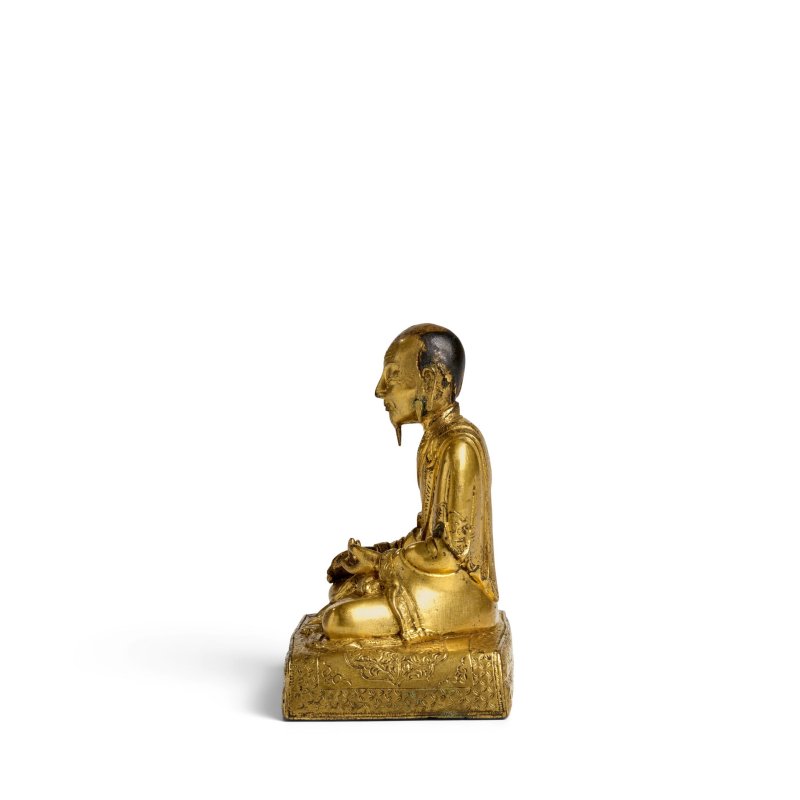
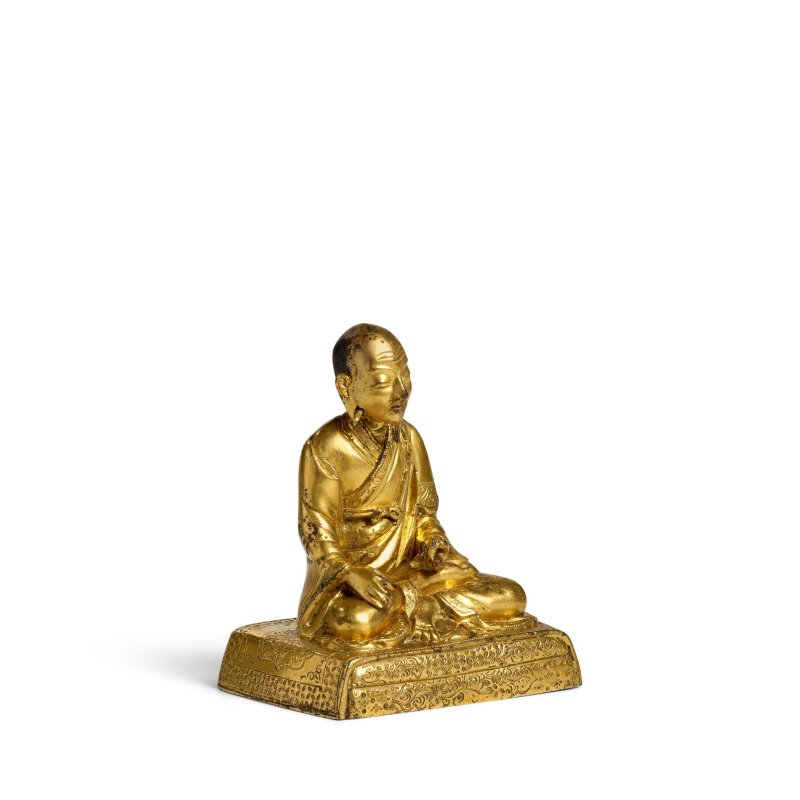
十八世紀 漢藏鎏金銅喇嘛坐像 | A SINO-TIBETAN GILT-BRONZE FIGURE OF A LAMA
年代
18th century
起拍价
USD 25,000
估值区间
未知
尺寸
未知
品相
未知
更多信息
18th century
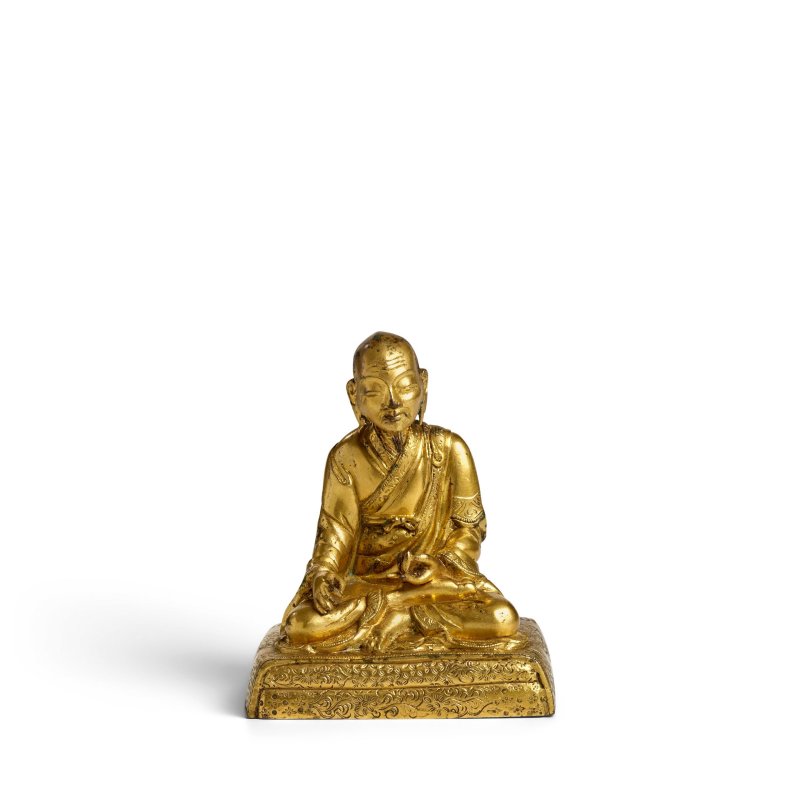
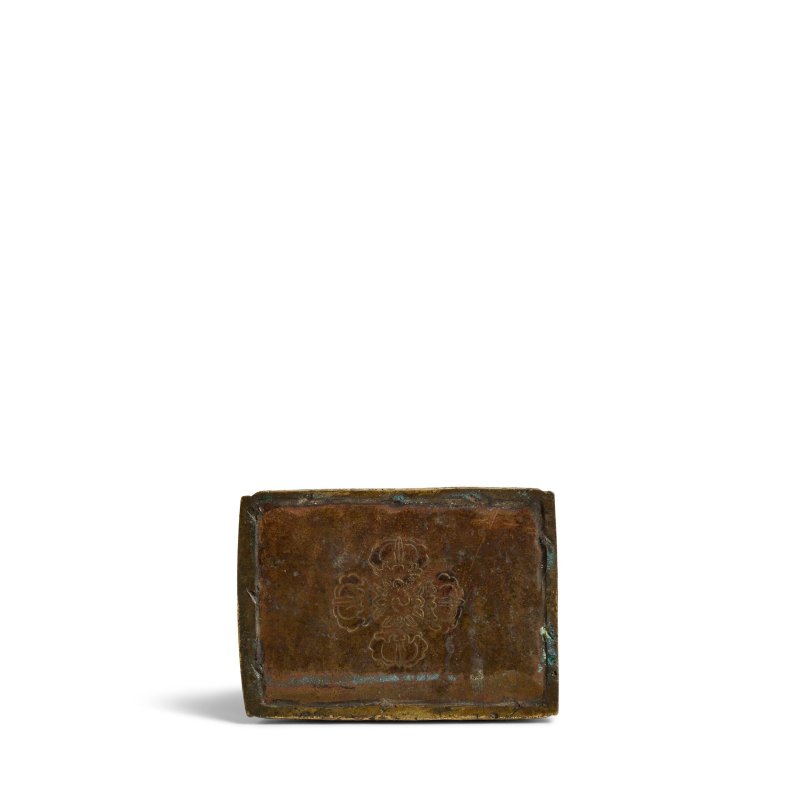
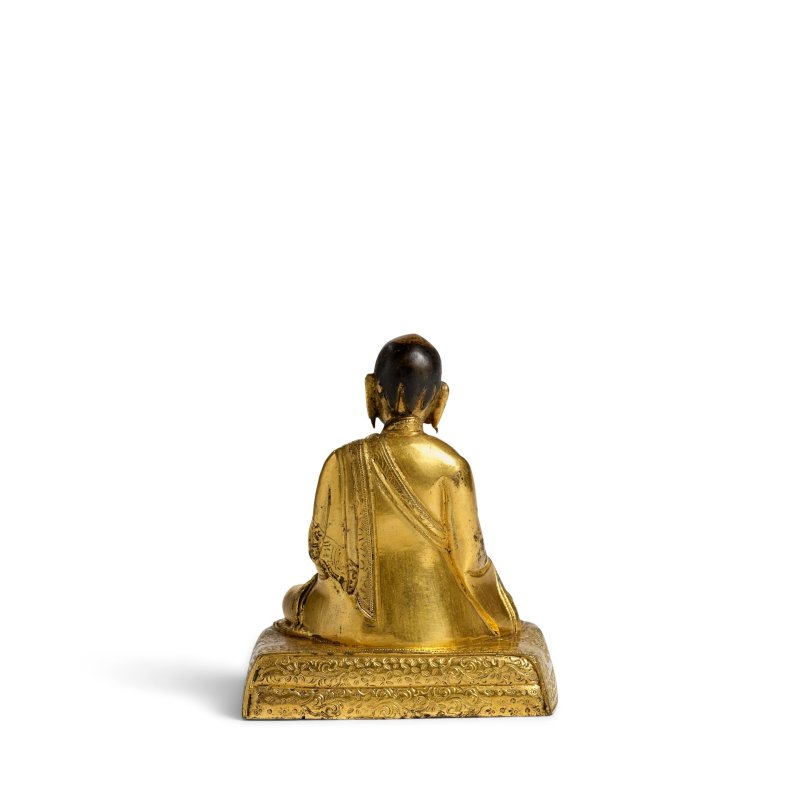
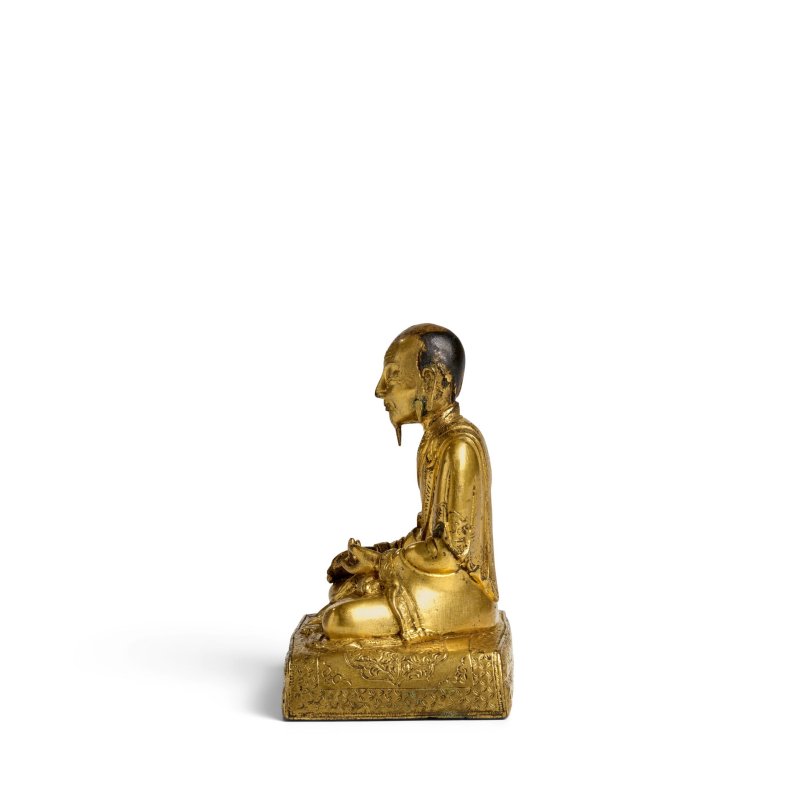
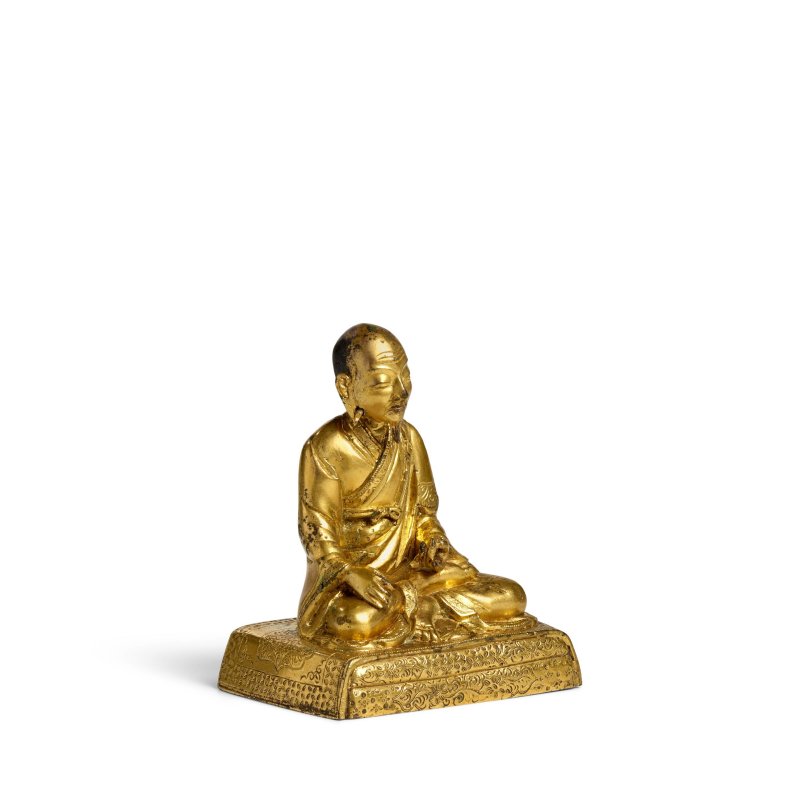
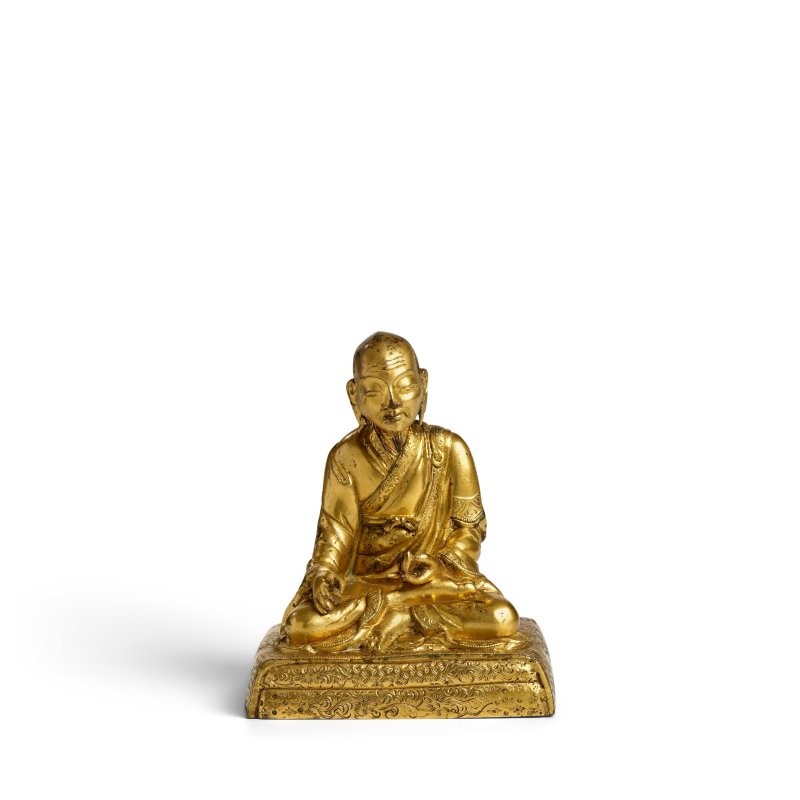
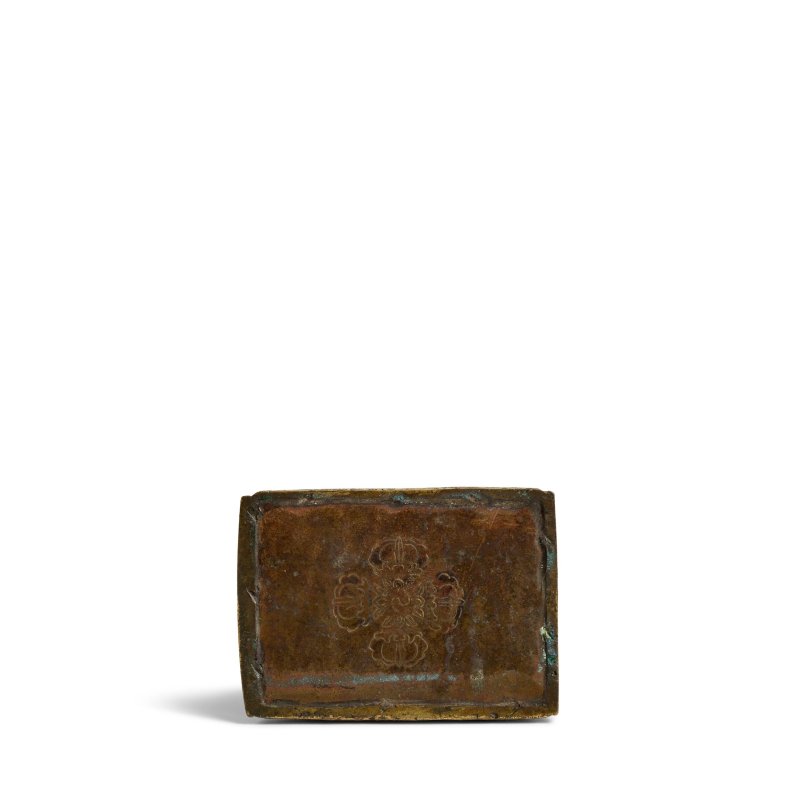
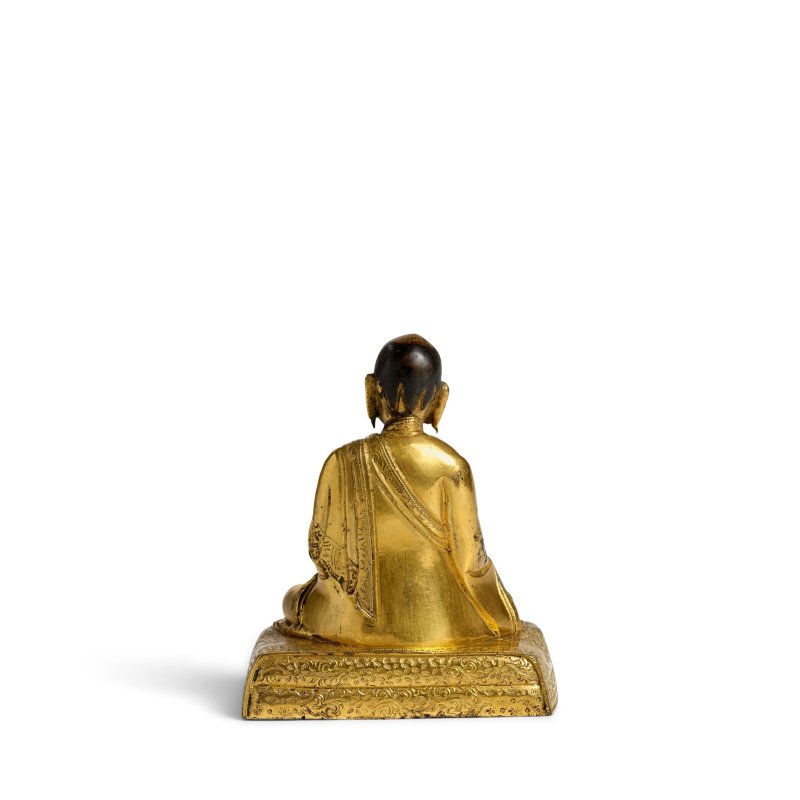
Seated in vajraparyanka on a rectangular carpeted throne finely engraved with floral scrolls and diaper borders, dressed in layered monastic robes with elaborately chased hems, the face finely modelled with downcast eyes beneath arched brows, elongated earlobes, his facial hair neatly delineated with a slender moustache, a small beard at the chin, flanked by a pair of separately cast side whiskers before the ears, the hands held before the body in a gesture of instruction, the base plate with four-headed vajra.
3 7/8in (9.9cm) high (fitted box).
Footnotes
十八世紀 漢藏鎏金銅喇嘛坐像
The style of the cushioned throne is characteristic of 18th-century Tibetan gilt-bronze sculpture, yet the highly individualized physiognomy of the present figure as well as the distinctive separately casted side whiskers suggests that it represents a specific lama. The pronounced facial wrinkles, long beard and tufts of hair extending beside the cheeks indicate that the sculptor was working from an established portrait likeness rather than creating an idealized image. Such portrait sculptures served to preserve the appearance and memory of revered teachers within Tibetan Buddhist traditions. Compare with a related gilt-bronze figure of a lama, 18th century, with similar throne, illustrated in , Chicago and London, 2003, p.327, no.93.
See also a related gilt-bronze figure of the seventh Dalai Lama, 18th century, with similar cushioned throne, which was sold at Bonhams London, 10 November 2016, lot 113.
Seated in vajraparyanka on a rectangular carpeted throne finely engraved with floral scrolls and diaper borders, dressed in layered monastic robes with elaborately chased hems, the face finely modelled with downcast eyes beneath arched brows, elongated earlobes, his facial hair neatly delineated with a slender moustache, a small beard at the chin, flanked by a pair of separately cast side whiskers before the ears, the hands held before the body in a gesture of instruction, the base plate with four-headed vajra.
3 7/8in (9.9cm) high (fitted box).
Footnotes
十八世紀 漢藏鎏金銅喇嘛坐像
The style of the cushioned throne is characteristic of 18th-century Tibetan gilt-bronze sculpture, yet the highly individualized physiognomy of the present figure as well as the distinctive separately casted side whiskers suggests that it represents a specific lama. The pronounced facial wrinkles, long beard and tufts of hair extending beside the cheeks indicate that the sculptor was working from an established portrait likeness rather than creating an idealized image. Such portrait sculptures served to preserve the appearance and memory of revered teachers within Tibetan Buddhist traditions. Compare with a related gilt-bronze figure of a lama, 18th century, with similar throne, illustrated in , Chicago and London, 2003, p.327, no.93.
See also a related gilt-bronze figure of the seventh Dalai Lama, 18th century, with similar cushioned throne, which was sold at Bonhams London, 10 November 2016, lot 113.