
拍品信息
拍品名称
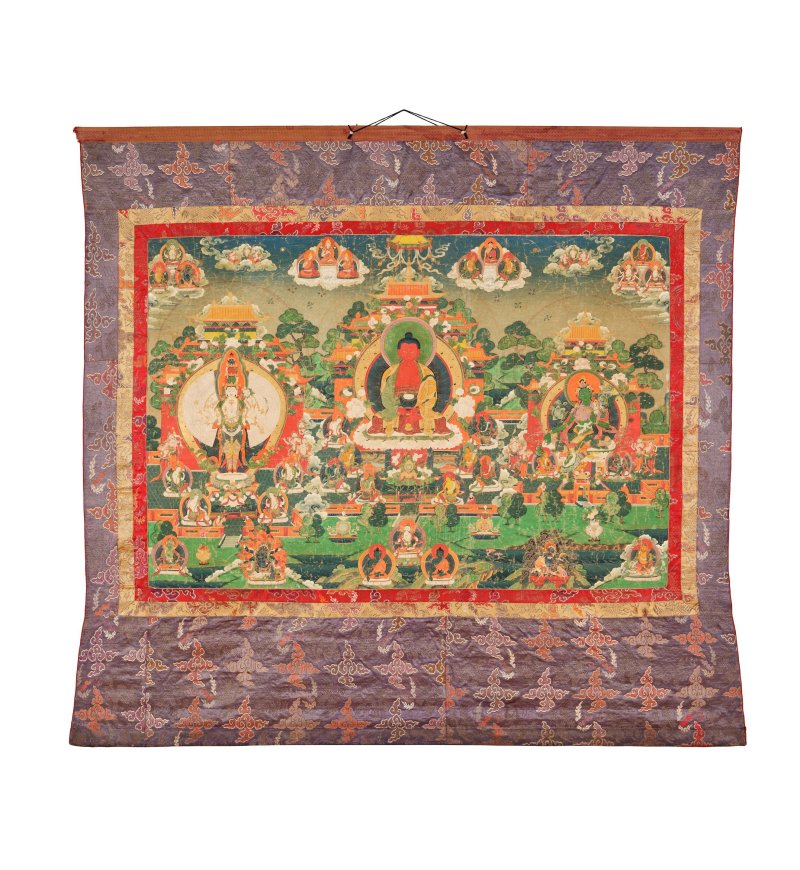
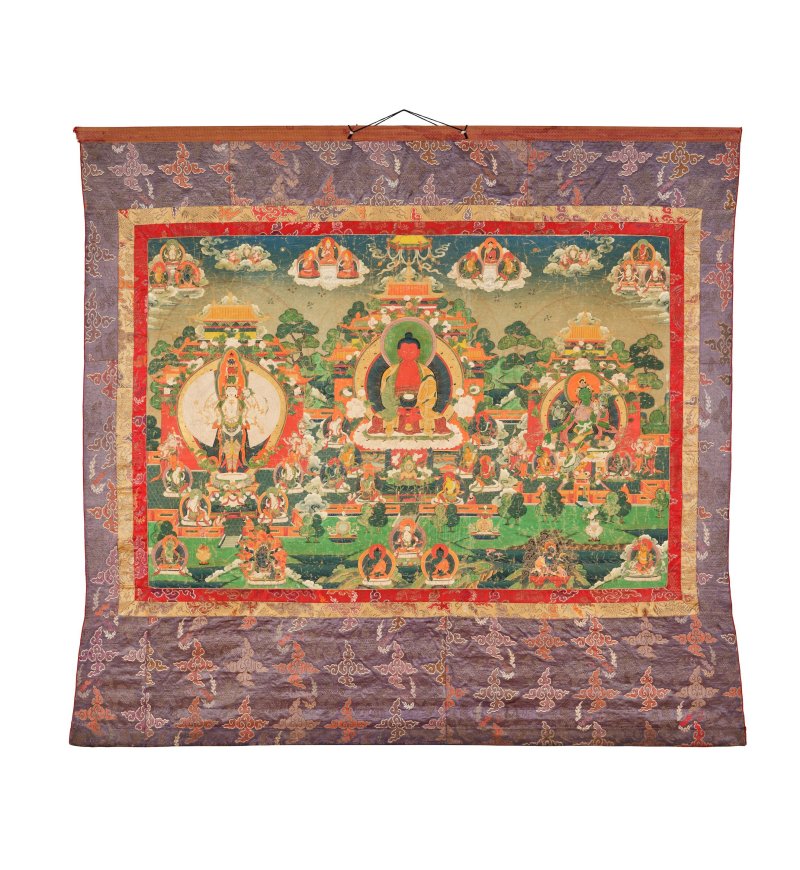
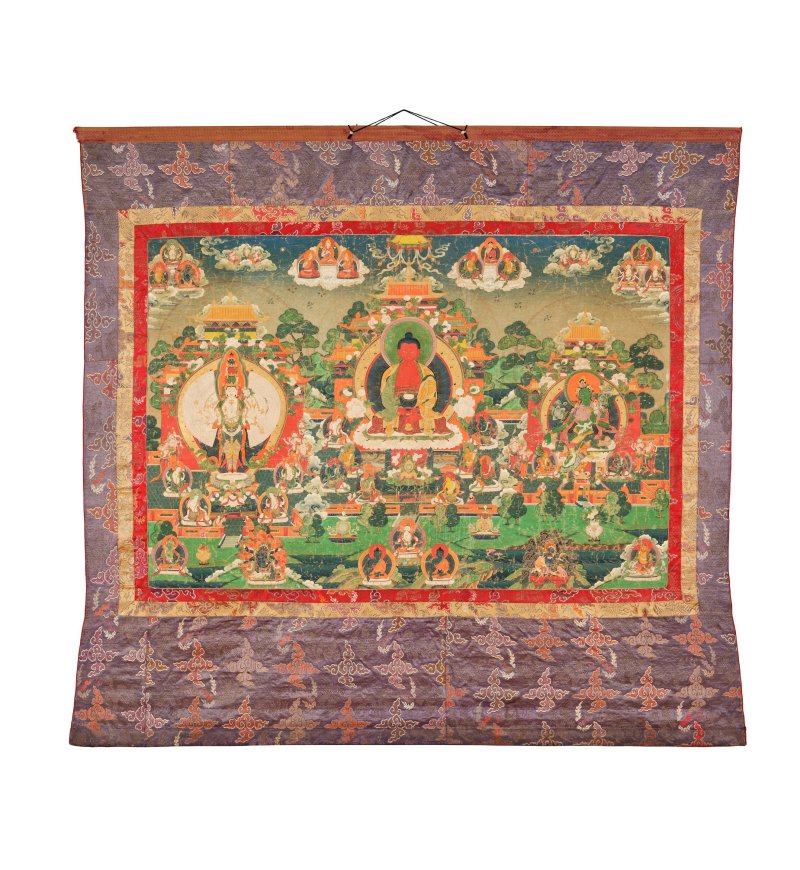
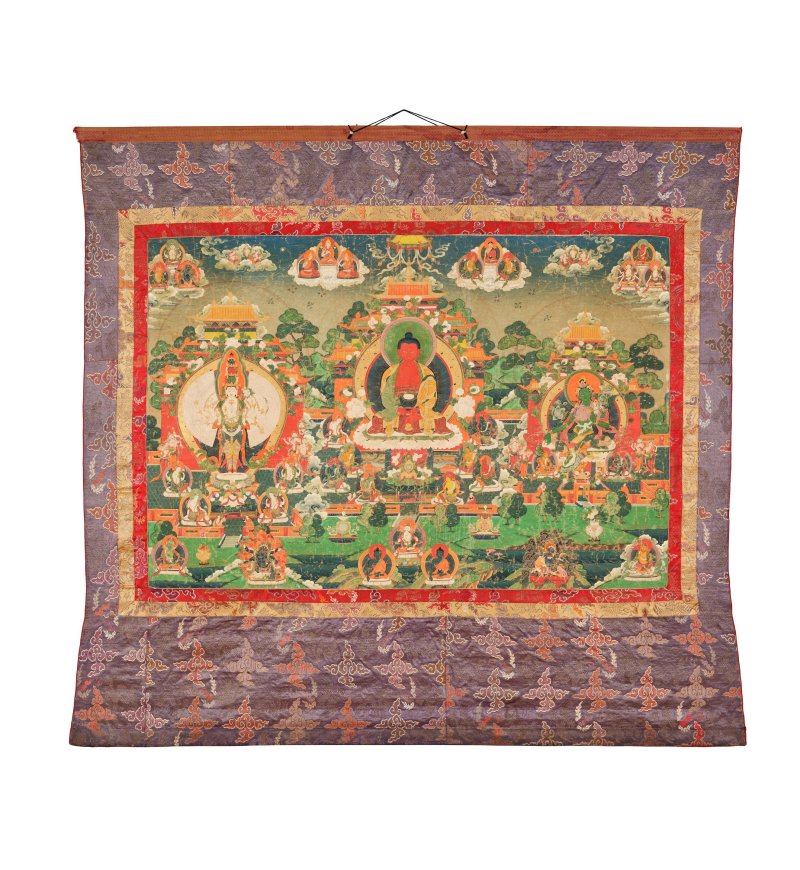
藏中 十八世紀 無量光佛與觀音及綠度母唐卡 | A THANGKA OF AMITABHA, AVALOKITESHVARA AND GREEN TARA
年代
CENTRAL TIBET, 18TH CENTURY
起拍价
HKD 200,000
估值区间
HKD 200000 - 300000
尺寸
未知
品相
未知
更多信息
CENTRAL TIBET, 18TH CENTURY
Distemper on cloth, mounted with silks.
Himalayan Art Resources item no. 60678
Image: 84.5 x 125 cm (33 1/4 x 49 1/4 in.);
With silks: 145 x 155.5 cm (57 1/8 x 61 1/4 in.)
Footnotes
藏中 十八世紀 無量光佛與觀音及綠度母唐卡
Provenance
With Albert Rudolph, Rudi Oriental Arts, New York, before 1973
Private Collection, Portland, acquired in 1994
Christie's, New York, 12 September 2012, lot 574
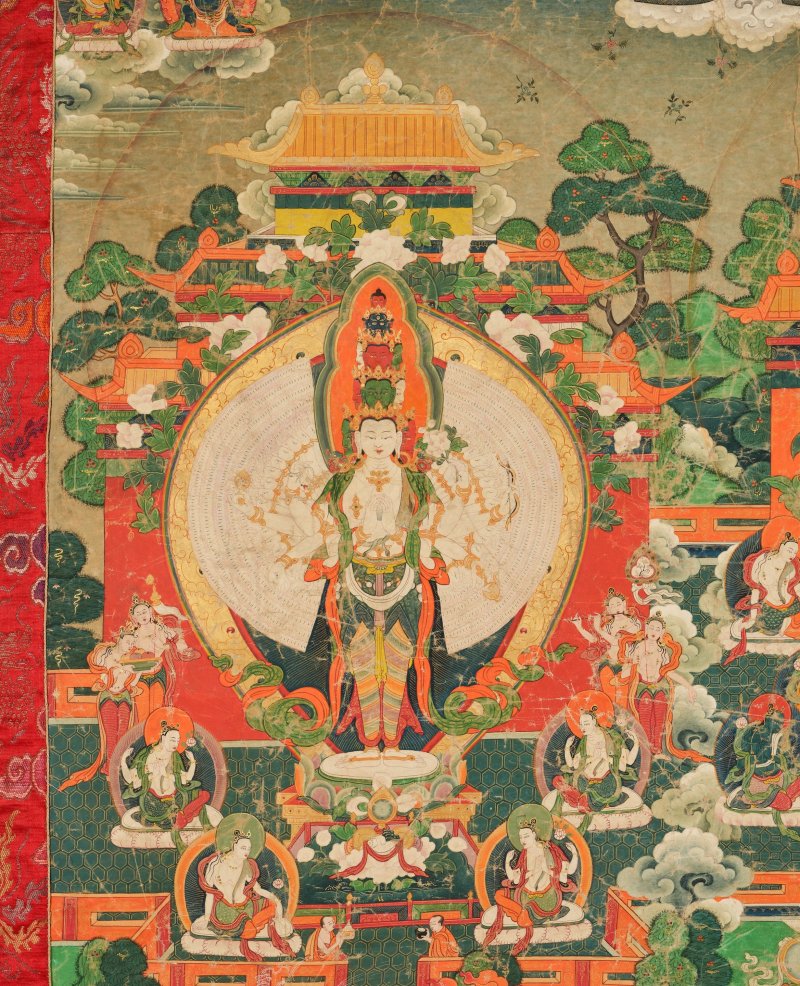
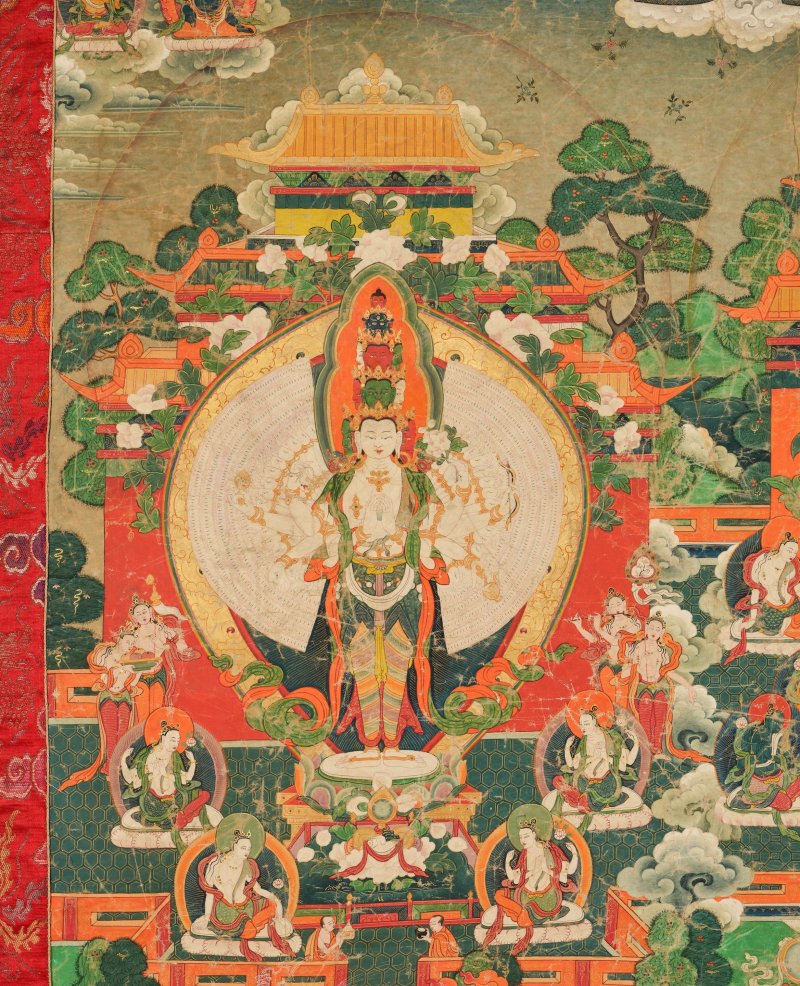
Unusually conceived in a horizontal format, this thangka presents an extensive Gelug pantheon within a continuous architectural landscape. Amitabha occupies the center, seated in dhyanasana, holding an alms bowl and surrounded by the Eight Great Bodhisattvas. He is flanked by Eleven-Faced, Thousand-Armed Avalokiteshvara at left and Green Tara at right, accompanied by Marichi and Ekajati. Surmounted by a parasol and set amid palatial architecture and flowering vegetation, the celestial landscape is suggestive of Amitabha's Western Pure Land, Sukhavati.
The surrounding figures include the Three Lords of the World, Je Tsongkhapa with Gyaltsab Je and Khedrub Je, Shakyamuni with Maitreya and Manjushri, and the Three Long-Life Deities. Below are Vajrasattva, Akshobhya and Medicine Buddha, together with Vajravidarana, Vaishravana, Shadbhuja Mahakala and Shri Devi Magzor Gyalmo.
Landscape-format thangkas are comparatively uncommon and adapt the broad proportions associated with Tibetan mural painting. Here, the format allows the three principal deities to be presented side by side while accommodating numerous subsidiary figures within an expansive sacred landscape. A close iconographic and compositional parallel may be found in an Amitabha painting from the Shelley and Donald Rubin Collection (HAR 1120).
Compare also the treatment of Eleven-Faced Avalokiteshvara, tiered architecture, flowering vegetation, cloud formations and saturated palette with an 18th-century thangka of Thousand-Armed Avalokiteshvara, sold at Bonhams, New York, 17 September 2014, lot 43.
Distemper on cloth, mounted with silks.
Himalayan Art Resources item no. 60678
Image: 84.5 x 125 cm (33 1/4 x 49 1/4 in.);
With silks: 145 x 155.5 cm (57 1/8 x 61 1/4 in.)
Footnotes
藏中 十八世紀 無量光佛與觀音及綠度母唐卡
Provenance
With Albert Rudolph, Rudi Oriental Arts, New York, before 1973
Private Collection, Portland, acquired in 1994
Christie's, New York, 12 September 2012, lot 574
Unusually conceived in a horizontal format, this thangka presents an extensive Gelug pantheon within a continuous architectural landscape. Amitabha occupies the center, seated in dhyanasana, holding an alms bowl and surrounded by the Eight Great Bodhisattvas. He is flanked by Eleven-Faced, Thousand-Armed Avalokiteshvara at left and Green Tara at right, accompanied by Marichi and Ekajati. Surmounted by a parasol and set amid palatial architecture and flowering vegetation, the celestial landscape is suggestive of Amitabha's Western Pure Land, Sukhavati.
The surrounding figures include the Three Lords of the World, Je Tsongkhapa with Gyaltsab Je and Khedrub Je, Shakyamuni with Maitreya and Manjushri, and the Three Long-Life Deities. Below are Vajrasattva, Akshobhya and Medicine Buddha, together with Vajravidarana, Vaishravana, Shadbhuja Mahakala and Shri Devi Magzor Gyalmo.
Landscape-format thangkas are comparatively uncommon and adapt the broad proportions associated with Tibetan mural painting. Here, the format allows the three principal deities to be presented side by side while accommodating numerous subsidiary figures within an expansive sacred landscape. A close iconographic and compositional parallel may be found in an Amitabha painting from the Shelley and Donald Rubin Collection (HAR 1120).
Compare also the treatment of Eleven-Faced Avalokiteshvara, tiered architecture, flowering vegetation, cloud formations and saturated palette with an 18th-century thangka of Thousand-Armed Avalokiteshvara, sold at Bonhams, New York, 17 September 2014, lot 43.
常见问题
这件藏中 十八世紀 無量光佛與觀音及綠度母唐卡 | A THANGKA OF AMITABHA, AVALOKITESHVARA AND GREEN TARA的成交价是多少?
落槌价为 预展中。 成交价为 预展中。