
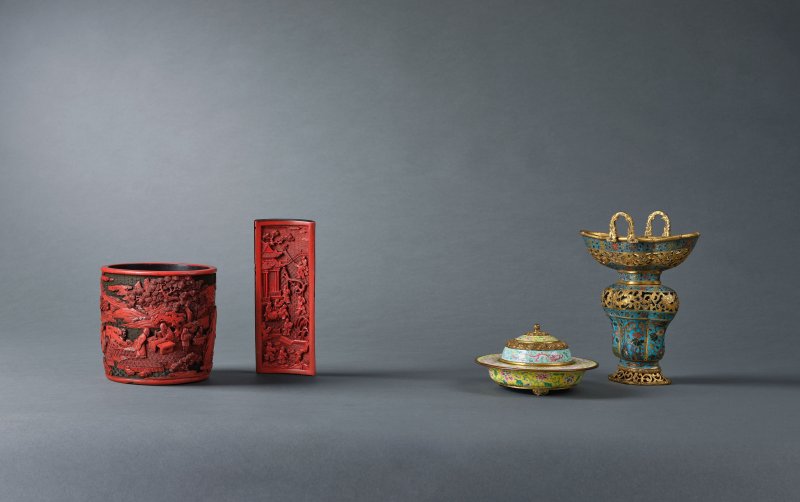
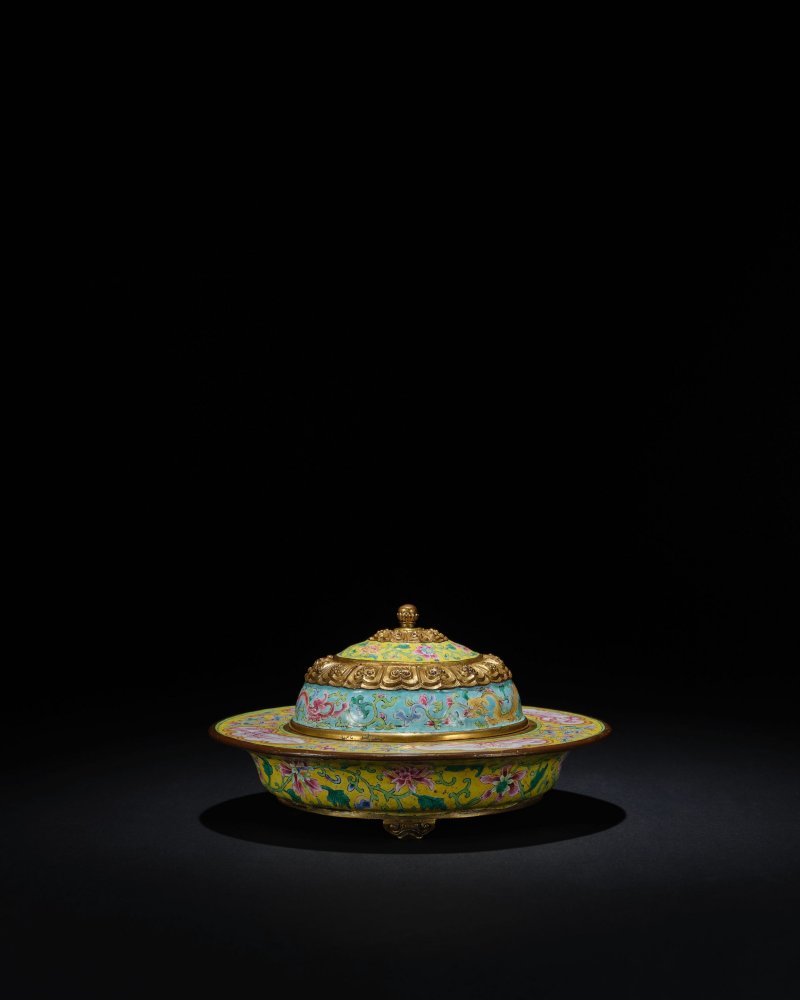
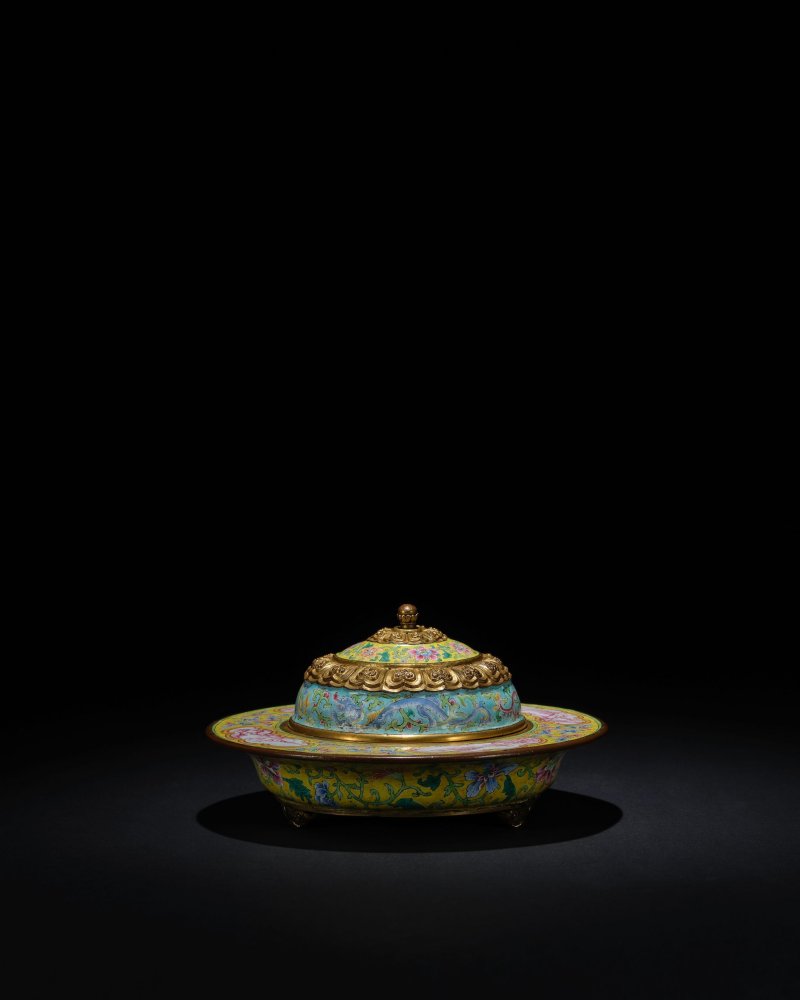
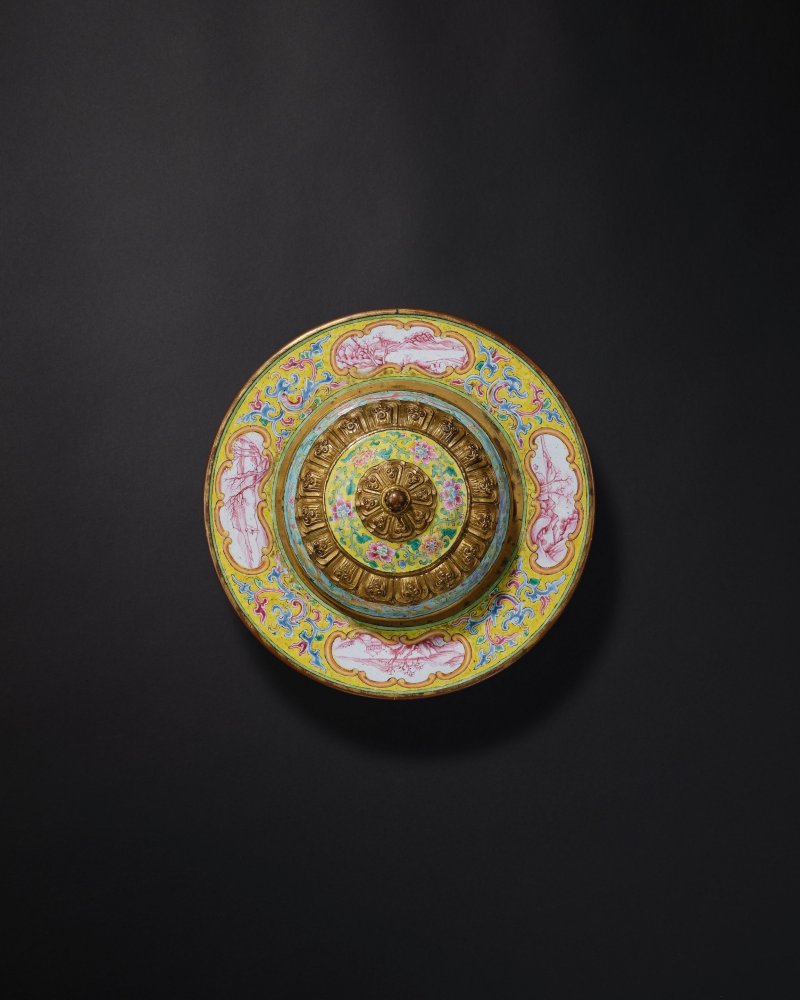
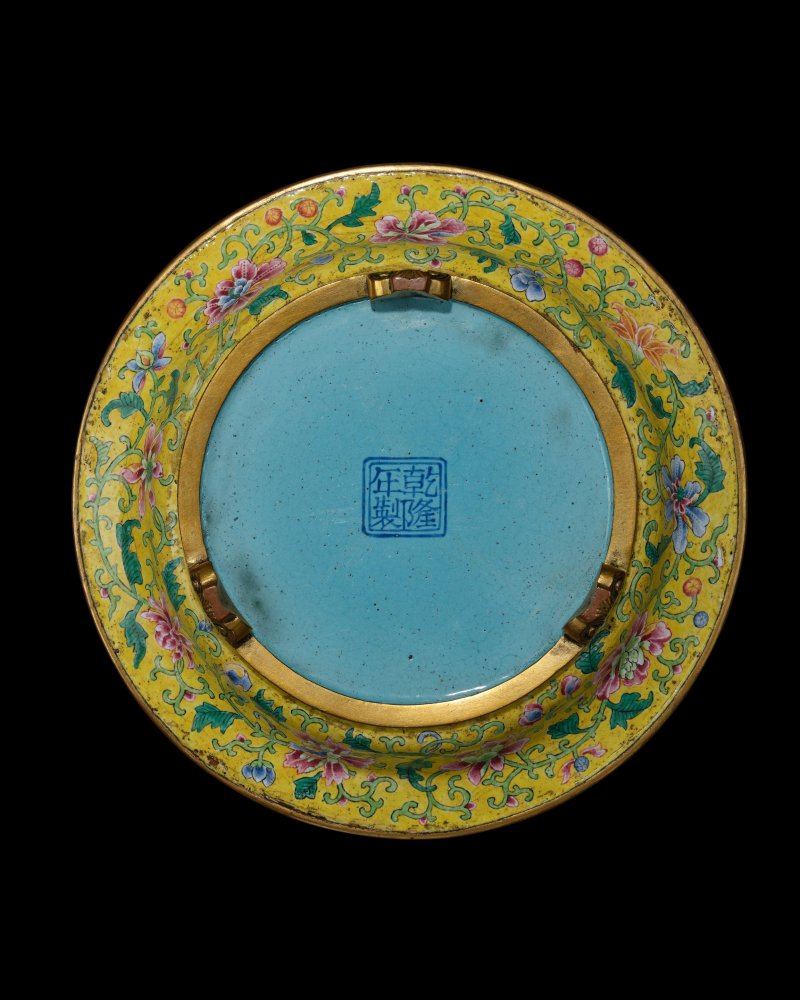
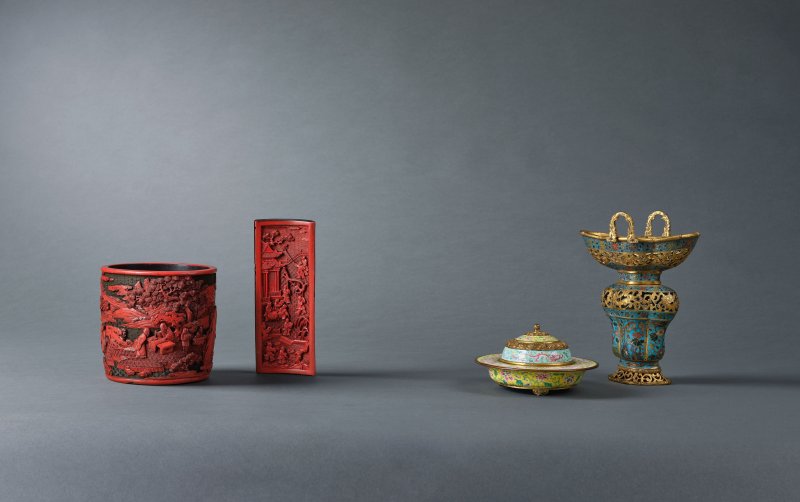
Lot 48 清乾隆 銅胎北京畫琺瑯黃地開光山水圖奓斗 | AN IMPERIAL BEIJING ENAMEL YELLOW-GROUND SHALLOW ZHADOU AND COVER
落槌价
预展中
成交价
预展中
| 拍卖公司 | 邦瀚斯 |
|---|---|
| 拍卖时间 | 2026年10月28日 |
拍品信息
拍品名称
清乾隆 銅胎北京畫琺瑯黃地開光山水圖奓斗 | AN IMPERIAL BEIJING ENAMEL YELLOW-GROUND SHALLOW ZHADOU AND COVER
年代
Qianlong blue-enamel four-character mark and of the period
起拍价
HKD 700,000
估值区间
HKD 700000 - 900000
尺寸
未知
品相
未知
更多信息
Qianlong blue-enamel four-character mark and of the period
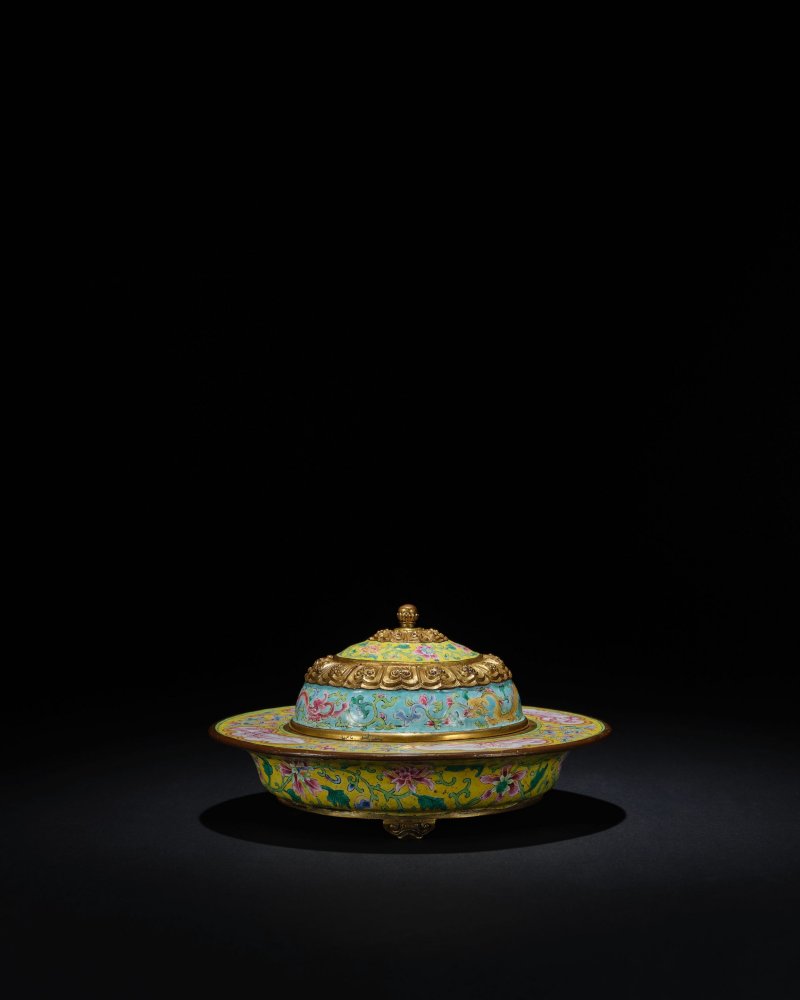
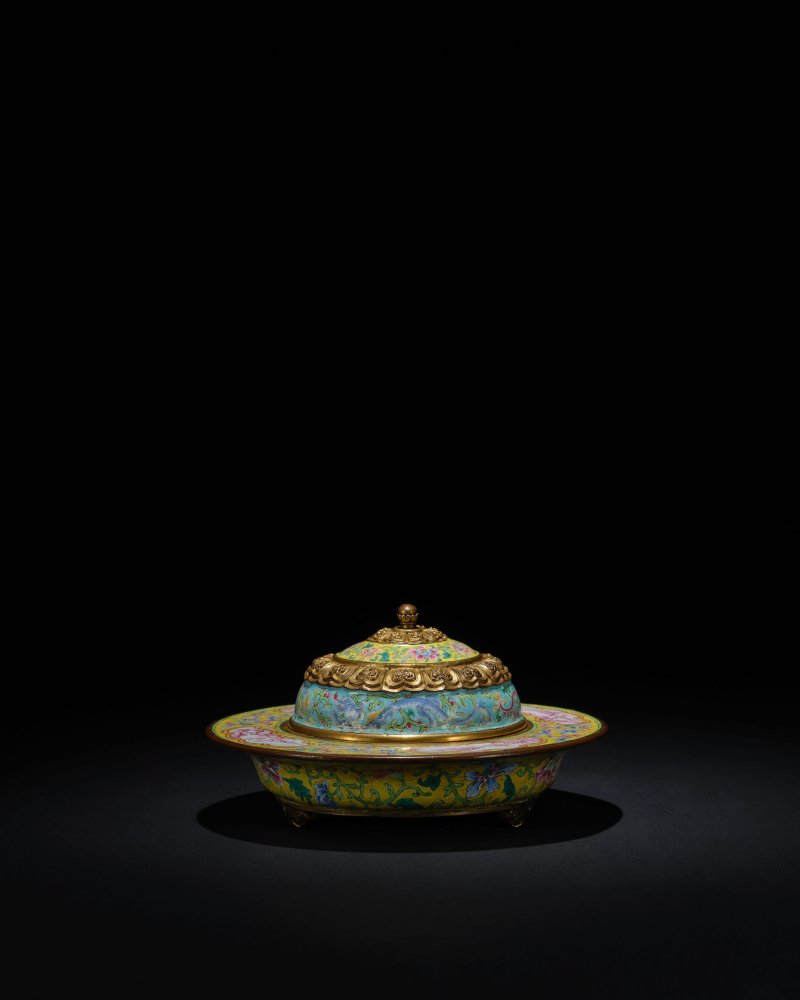
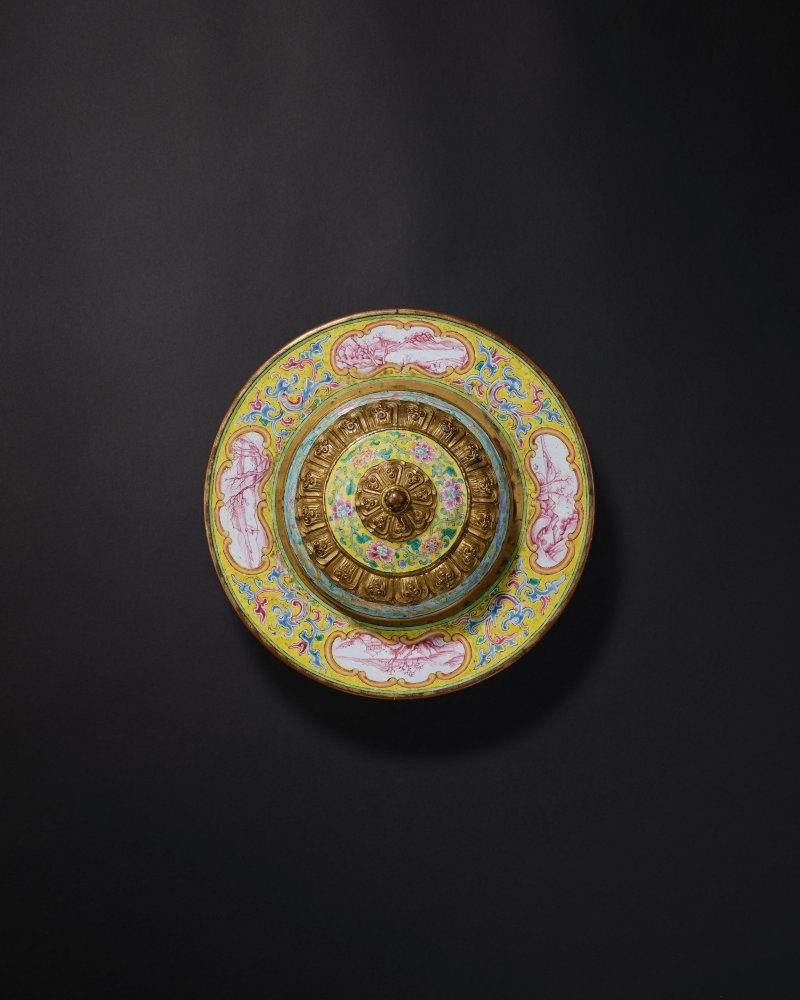
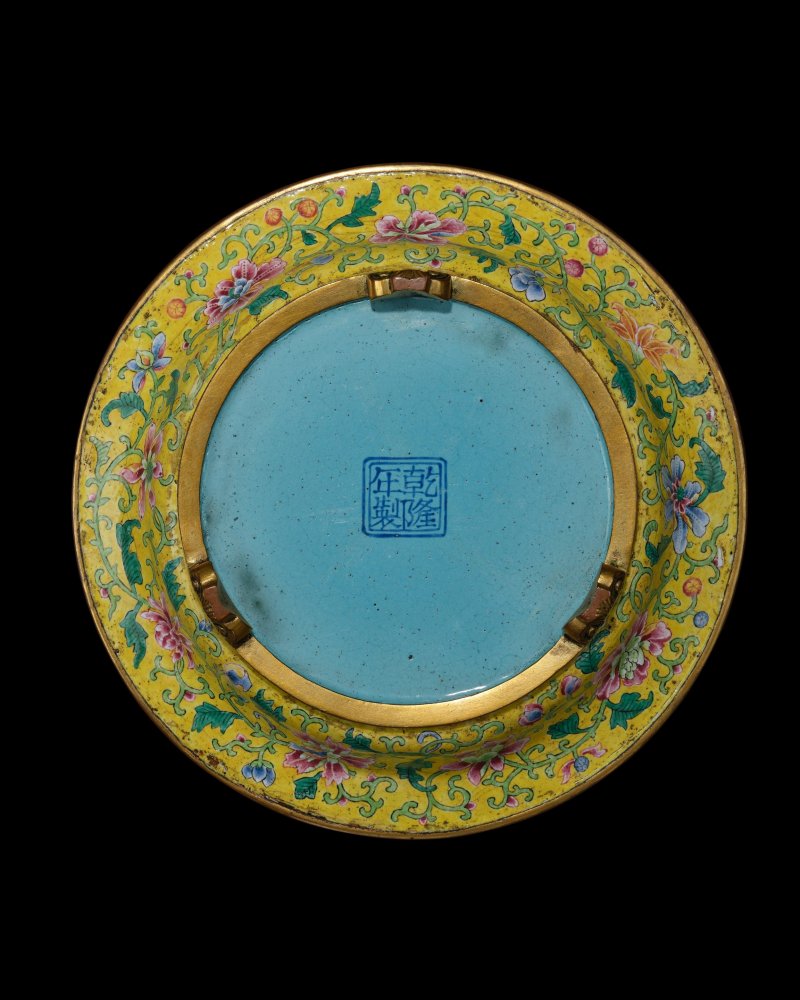
The vessel with rounded sides supported on three gilt-bronze ruyi-head feet joined by a gilt-bronze ring, the shallow-sided body decorated around the exterior with scrolling composite flowers reserved against a bright lemon-yellow ground, beneath a broad, everted rim, the upper surface of the rim embellished in puce grisaille with four shaped panels enclosing landscapes, all reserved against the same lemon-yellow ground, the domed cover similarly richly decorated, with encircling bands of archaistic chilong on a turquoise ground and floral scroll on yellow, separated by a gilt-bronze band of petal lappets, the lappet motif repeated around the base of the finial, the interior and base covered in turquoise enamel, box.
14.3cm (5 5/8in) diam. (3).
Footnotes
清乾隆 銅胎北京畫琺瑯黃地開光山水圖奓斗
藍彩雙方框「乾隆年製」楷書款
Provenance:
Manheim Galleries, New York, 1980s
Christie's New York, 14 September 2018, lot 1219
Manheim Galleries,紐約,1980年代
紐約佳士得,2018年9月14日,拍品編號1219
The form and domed cover identify the present vessel as a , or covered spittoon, a specialised vessel associated with the ritualised domestic life of the Qing elite. Surviving examples are rare outside the Imperial collections. A painted-enamel and cover, 18th century, decorated with butterflies amidst flowering branches, is illustrated by C.Ho and B.Bronson, , Chicago, 2004, p.261, no.337.
The refined palette and manner of decoration of the present vessel, particularly the lemon-yellow ground, turquoise enamel, and puce landscapes, are comparable to Beijing enamelware of the Qianlong period. See a painted enamel box and cover in the shape of a ridged melon with landscape panels on yellow ground, Qianlong four-character mark and of the period, in the Qing Court Collection, illustrated in , vol.5, Beijing, 2011, pp.142-143, no.105. A painted enamel covered bowl with similar landscapes in pink against a yellow ground, Qianlong four-character mark and of the period, in the Qing Court Collection is illustrated ibid., pp.202-203, no.151. A painted enamel incense burner with pink enamel landscapes in panels on a yellow ground, Qianlong four-character mark and of the period, is also in ibid., p.115, no.80. Compare also with a painted enamel covered jar with puce enamel landscape scenes, Qianlong four-character mark and of the period, in the Palace Museum, Taipei (acc.no.gufa000119), illustrated in , Taipei, 1999, pp.226-227, no.115.
The use of specialised vessels for oral hygiene in elite dining is vividly recorded in Cao Xueqin's (), written in the eighteenth century. When Lin Daiyu first arrives at the Rongguo Mansion, she observes the elaborate etiquette surrounding Grandmother Jia's meals. The text describes the maidservants standing by with a fly-whisk, a ('mouth-rinsing vessel') and cloth:
'Beside her, maidservants stood holding fly-whisks, mouth-rinsing vessels and cloth. ... When the meal was over, maidservants brought tea on small trays. ... Someone then brought a , and Daiyu rinsed her mouth as well. After washing her hands, another tea was brought; this was the tea intended actually to be drunk.'
The passage is particularly revealing in its description of the sequence of the dining ritual: after the meal, tea is initially presented, followed by mouth-rinsing and handwashing, after which tea is again brought for drinking. Daiyu, accustomed to the customs of her own household, notices that the practices of the Jia household differ from those she is familiar with and consciously adapts to its more elaborate conventions. The is thus presented not merely as a utilitarian receptacle but as part of a highly codified system of elite dining etiquette.
渣斗乃清朝貴族生活儀式用器,宮藏以外,例子甚稀。參考十八世紀畫琺瑯蝶戀花圖帶蓋奓斗例,收入何翠媚及 B.Bronson,《Splendor of China's Forbidden City: The Glorious Reign of Emperor Qianlong》,芝加哥,2004年,頁261,編號337。
此器畫工精緻,飾紋細膩,明黃配松綠,加上開光胭脂紅彩山水圖,與乾隆北京畫琺瑯器吻合。參考北京故宮清宮舊藏三例,皆署乾隆四字款、飾黃地胭脂紅山水圖,收入《故宮博物院藏品大系:琺瑯器編》,卷5,北京,2011年,瓜棱式蓋盒,頁142-143,編號105;蓋碗,頁202-203,編號151;香爐,頁115,編號80。台北故宮也有乾隆四字款蓋罐類例(故琺000119),見《明清琺瑯器展覽圖錄》,台北,1999年,編號115。
奓斗應乃漱盂,十八世紀曹雪芹《紅樓夢》中,黛玉在榮府見賈母用膳與林家有別:「旁邊丫鬟執著拂塵、漱盂、巾帕......飯畢,各各有丫鬟用小茶盤捧上茶來......又有人捧過漱盂來,黛玉也漱了口,又盥手畢。然後又捧上茶來,這方是吃的茶。」可見當時在名門府第,漱盂乃餐桌禮儀用器。
The vessel with rounded sides supported on three gilt-bronze ruyi-head feet joined by a gilt-bronze ring, the shallow-sided body decorated around the exterior with scrolling composite flowers reserved against a bright lemon-yellow ground, beneath a broad, everted rim, the upper surface of the rim embellished in puce grisaille with four shaped panels enclosing landscapes, all reserved against the same lemon-yellow ground, the domed cover similarly richly decorated, with encircling bands of archaistic chilong on a turquoise ground and floral scroll on yellow, separated by a gilt-bronze band of petal lappets, the lappet motif repeated around the base of the finial, the interior and base covered in turquoise enamel, box.
14.3cm (5 5/8in) diam. (3).
Footnotes
清乾隆 銅胎北京畫琺瑯黃地開光山水圖奓斗
藍彩雙方框「乾隆年製」楷書款
Provenance:
Manheim Galleries, New York, 1980s
Christie's New York, 14 September 2018, lot 1219
Manheim Galleries,紐約,1980年代
紐約佳士得,2018年9月14日,拍品編號1219
The form and domed cover identify the present vessel as a , or covered spittoon, a specialised vessel associated with the ritualised domestic life of the Qing elite. Surviving examples are rare outside the Imperial collections. A painted-enamel and cover, 18th century, decorated with butterflies amidst flowering branches, is illustrated by C.Ho and B.Bronson, , Chicago, 2004, p.261, no.337.
The refined palette and manner of decoration of the present vessel, particularly the lemon-yellow ground, turquoise enamel, and puce landscapes, are comparable to Beijing enamelware of the Qianlong period. See a painted enamel box and cover in the shape of a ridged melon with landscape panels on yellow ground, Qianlong four-character mark and of the period, in the Qing Court Collection, illustrated in , vol.5, Beijing, 2011, pp.142-143, no.105. A painted enamel covered bowl with similar landscapes in pink against a yellow ground, Qianlong four-character mark and of the period, in the Qing Court Collection is illustrated ibid., pp.202-203, no.151. A painted enamel incense burner with pink enamel landscapes in panels on a yellow ground, Qianlong four-character mark and of the period, is also in ibid., p.115, no.80. Compare also with a painted enamel covered jar with puce enamel landscape scenes, Qianlong four-character mark and of the period, in the Palace Museum, Taipei (acc.no.gufa000119), illustrated in , Taipei, 1999, pp.226-227, no.115.
The use of specialised vessels for oral hygiene in elite dining is vividly recorded in Cao Xueqin's (), written in the eighteenth century. When Lin Daiyu first arrives at the Rongguo Mansion, she observes the elaborate etiquette surrounding Grandmother Jia's meals. The text describes the maidservants standing by with a fly-whisk, a ('mouth-rinsing vessel') and cloth:
'Beside her, maidservants stood holding fly-whisks, mouth-rinsing vessels and cloth. ... When the meal was over, maidservants brought tea on small trays. ... Someone then brought a , and Daiyu rinsed her mouth as well. After washing her hands, another tea was brought; this was the tea intended actually to be drunk.'
The passage is particularly revealing in its description of the sequence of the dining ritual: after the meal, tea is initially presented, followed by mouth-rinsing and handwashing, after which tea is again brought for drinking. Daiyu, accustomed to the customs of her own household, notices that the practices of the Jia household differ from those she is familiar with and consciously adapts to its more elaborate conventions. The is thus presented not merely as a utilitarian receptacle but as part of a highly codified system of elite dining etiquette.
渣斗乃清朝貴族生活儀式用器,宮藏以外,例子甚稀。參考十八世紀畫琺瑯蝶戀花圖帶蓋奓斗例,收入何翠媚及 B.Bronson,《Splendor of China's Forbidden City: The Glorious Reign of Emperor Qianlong》,芝加哥,2004年,頁261,編號337。
此器畫工精緻,飾紋細膩,明黃配松綠,加上開光胭脂紅彩山水圖,與乾隆北京畫琺瑯器吻合。參考北京故宮清宮舊藏三例,皆署乾隆四字款、飾黃地胭脂紅山水圖,收入《故宮博物院藏品大系:琺瑯器編》,卷5,北京,2011年,瓜棱式蓋盒,頁142-143,編號105;蓋碗,頁202-203,編號151;香爐,頁115,編號80。台北故宮也有乾隆四字款蓋罐類例(故琺000119),見《明清琺瑯器展覽圖錄》,台北,1999年,編號115。
奓斗應乃漱盂,十八世紀曹雪芹《紅樓夢》中,黛玉在榮府見賈母用膳與林家有別:「旁邊丫鬟執著拂塵、漱盂、巾帕......飯畢,各各有丫鬟用小茶盤捧上茶來......又有人捧過漱盂來,黛玉也漱了口,又盥手畢。然後又捧上茶來,這方是吃的茶。」可見當時在名門府第,漱盂乃餐桌禮儀用器。
常见问题
这件清乾隆 銅胎北京畫琺瑯黃地開光山水圖奓斗 | AN IMPERIAL BEIJING ENAMEL YELLOW-GROUND SHALLOW ZHADOU AND COVER的成交价是多少?
落槌价为 预展中。 成交价为 预展中。