
拍品信息
拍品名称
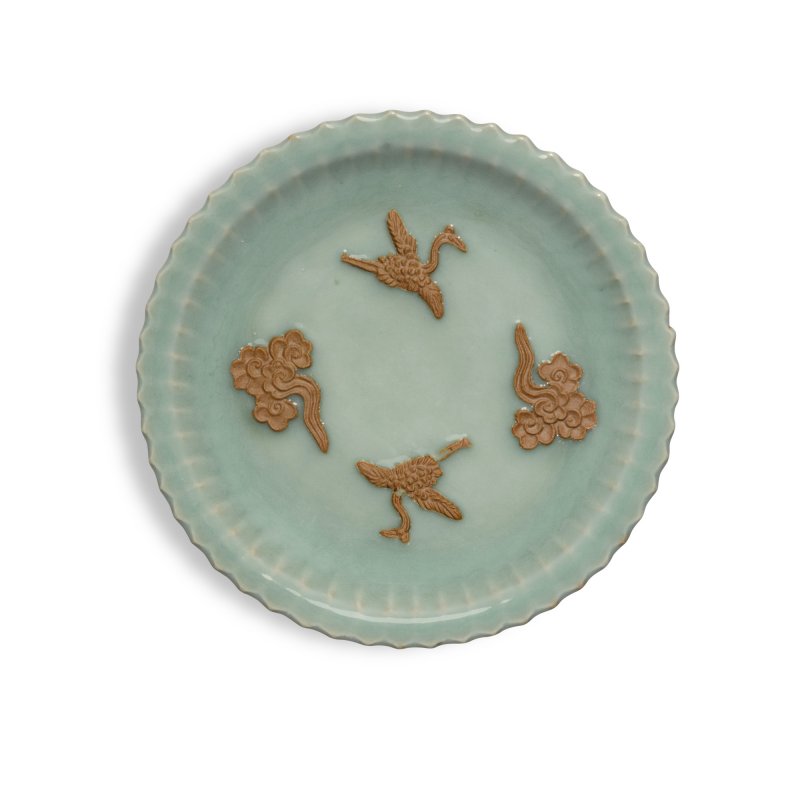
元 龍泉窰青釉素雲鶴紋盤
起拍价
GBP 15,000
估值区间
15,000 - 30,000 GBP
尺寸
未知
品相
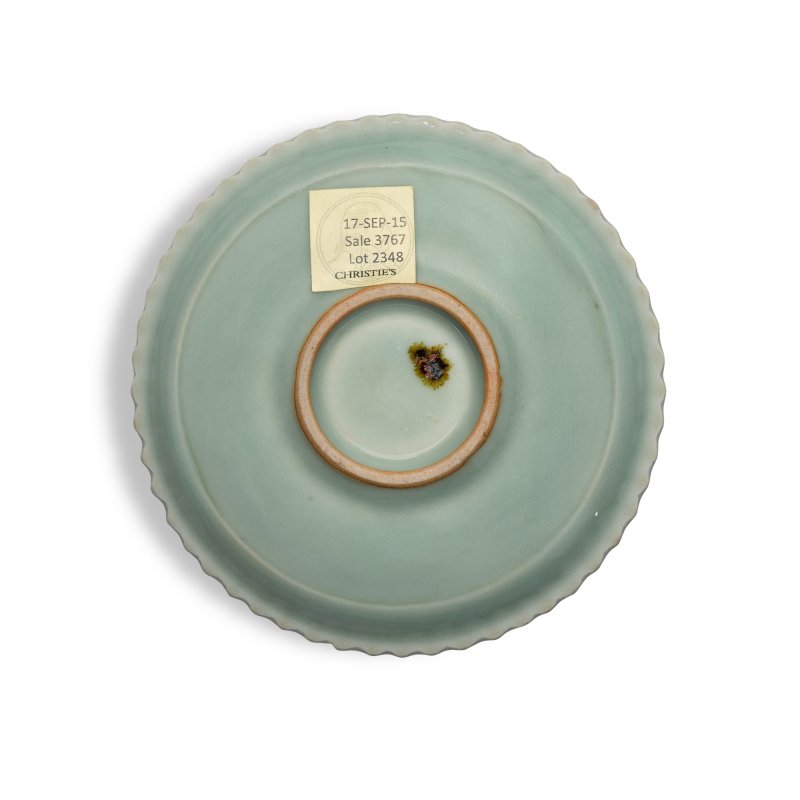
The dish is in excellent condition with a rich unctuous glaze. Minimal surface wear and a minute knock to one of the lobes at the rim.
If a condition report is provided to assist you with assessing the condition of the lot, it is for guidance purposes only. Such condition report may not refer to all faults, restoration, alterations, or adaptations because Sotheby's is not a professional conservator or restorer but rather a condition report is a statement of subjective, qualified opinion genuinely held by Sotheby's. For these reasons, any such condition report is not an alternative to taking your own professional advice regarding the condition of the lot. Prospective buyers should also refer to the Guide for Buyers at Auction which includes important notices concerning the type of property in this sale.
If a condition report is provided to assist you with assessing the condition of the lot, it is for guidance purposes only. Such condition report may not refer to all faults, restoration, alterations, or adaptations because Sotheby's is not a professional conservator or restorer but rather a condition report is a statement of subjective, qualified opinion genuinely held by Sotheby's. For these reasons, any such condition report is not an alternative to taking your own professional advice regarding the condition of the lot. Prospective buyers should also refer to the Guide for Buyers at Auction which includes important notices concerning the type of property in this sale.
更多信息
Diameter 13.3 cm, 5¼ in.
来源:日本私人收藏,得於1980年代
紐約佳士得,2015年9月17至18日,編號2348
图录
说明:This rare dish is distinguished by its subtle bluish celadon glaze, characteristic of the finest Longquan wares, its soft tone providing a striking contrast to the crisp biscuit decoration. Delicately moulded in a chrysanthemum foliate form, the interior is applied with two cranes in flight alternating with scrolling clouds, the sprig-moulded motifs left unglazed to fire to a warm tone, beautifully accentuating the delicate design. Compared with the restraint and clarity of form characteristic of earlier Longquan wares, the use of biscuit appliqué during the Yuan dynasty introduced a more expressive aesthetic.
Very few dishes of this design appear to be known. A similar dish, with the same biscuit decoration but larger in size, is preserved in the Art Institute of Chicago (accession no. 1941.597), exhibited in Ice and Green Clouds: Traditions of Chinese Celadon, Indianapolis Museum of Art, Indiana, 1986, cat. no. 85; another example formerly in the collection of John Platt-Warren E. Cox, and subsequently in the Boston Museum, is illustrated in Warren E. Cox, The Book of Pottery and Porcelain, vol. I, New York, 1944, fig. 310. For related dishes, compare another example in the Art Institute of Chicago decorated with two phoenixes encircling a jewel, (accession no. 2013.271); and a further dish decorated with two phoenixes alternating with two butterflies, formerly in the Avery Brundage Collection, now preserved in the Asian Art Museum, San Francisco, illustrated in Sherman E. Lee and Wai-Kam Ho, Chinese Art Under the Mongols: The Yuan Dynasty (1279-1368), Cleveland Museum of Art, Cleveland, 1968, cat. no. 75.
常见问题
这件元 龍泉窰青釉素雲鶴紋盤的成交价是多少?
落槌价为 预展中。 成交价为 预展中。
拍品的品相状况如何?
The dish is in excellent condition with a rich unctuous glaze. Minimal surface wear and a minute knock to one of the lobes at the rim.
If a condition report is provided to assist you with assessing the condition of the lot, it is for guidance purposes only. Such condition report may not refer to all faults, restoration, alterations, or adaptations because Sotheby's is not a professional conservator or restorer but rather a condition report is a statement of subjective, qualified opinion genuinely held by Sotheby's. For these reasons, any such condition report is not an alternative to taking your own professional advice regarding the condition of the lot. Prospective buyers should also refer to the Guide for Buyers at Auction which includes important notices concerning the type of property in this sale.
If a condition report is provided to assist you with assessing the condition of the lot, it is for guidance purposes only. Such condition report may not refer to all faults, restoration, alterations, or adaptations because Sotheby's is not a professional conservator or restorer but rather a condition report is a statement of subjective, qualified opinion genuinely held by Sotheby's. For these reasons, any such condition report is not an alternative to taking your own professional advice regarding the condition of the lot. Prospective buyers should also refer to the Guide for Buyers at Auction which includes important notices concerning the type of property in this sale.
这件拍品的流传来源是什么?
日本私人收藏,得於1980年代
紐約佳士得,2015年9月17至18日,編號2348
图录
紐約佳士得,2015年9月17至18日,編號2348
图录