
拍品信息
拍品名称
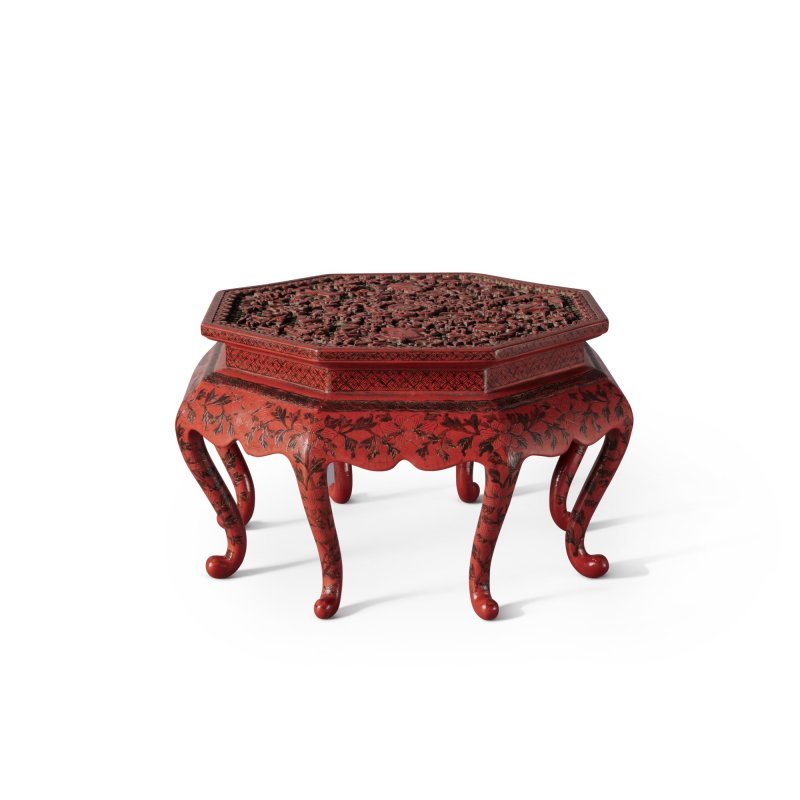
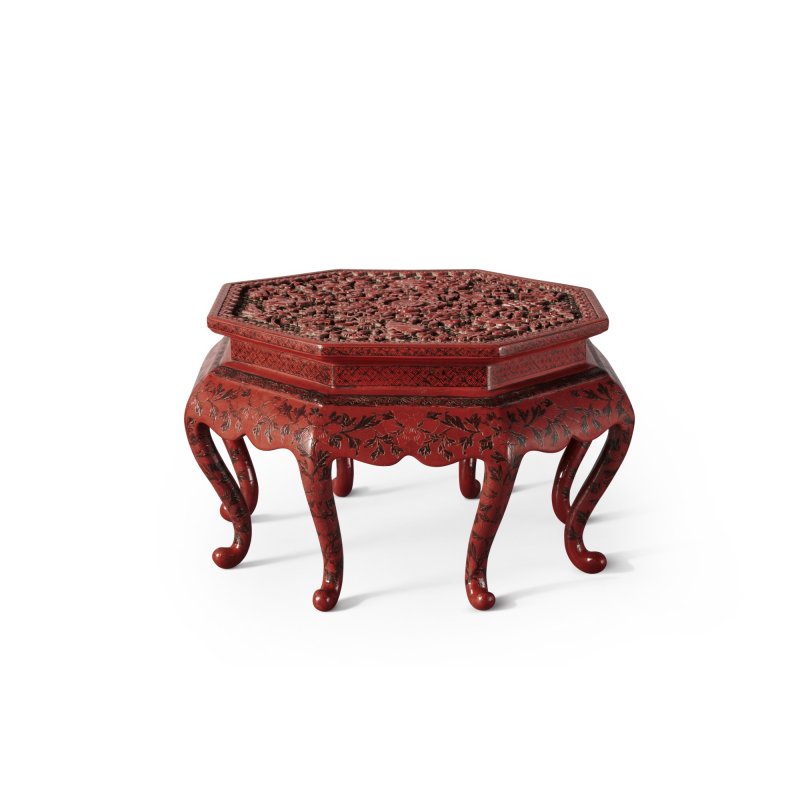
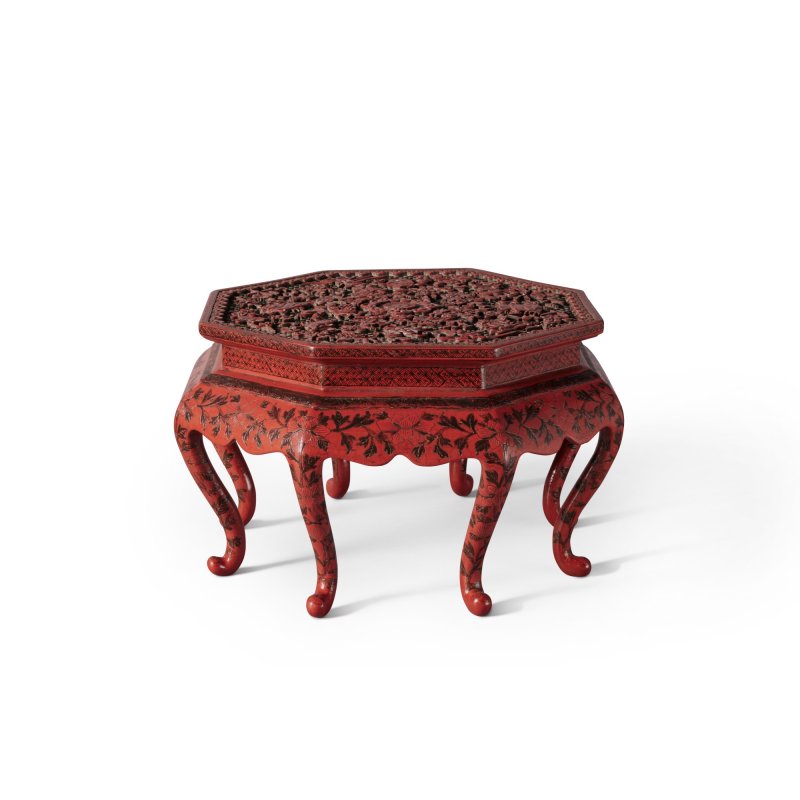
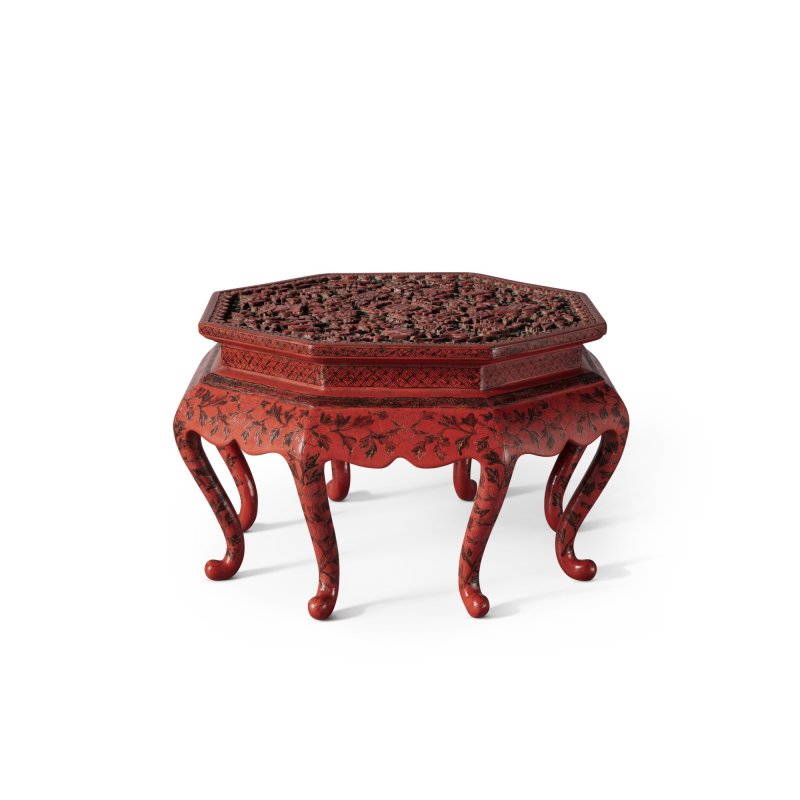
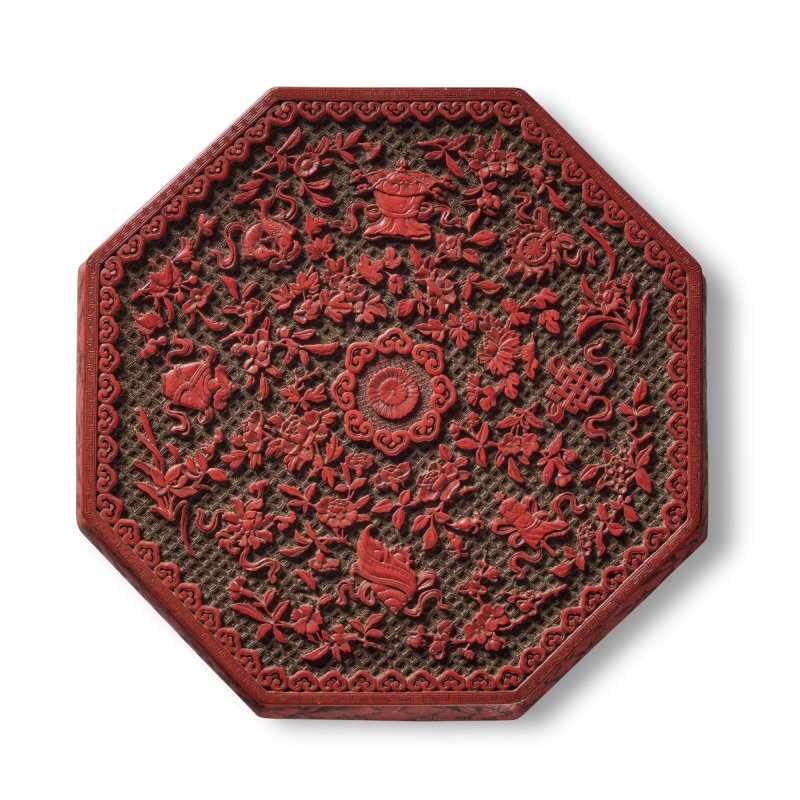
明末 剔紅八吉祥紋填漆八方几
起拍价
USD 40,000
估值区间
40,000 - 60,000 USD
尺寸
未知
品相
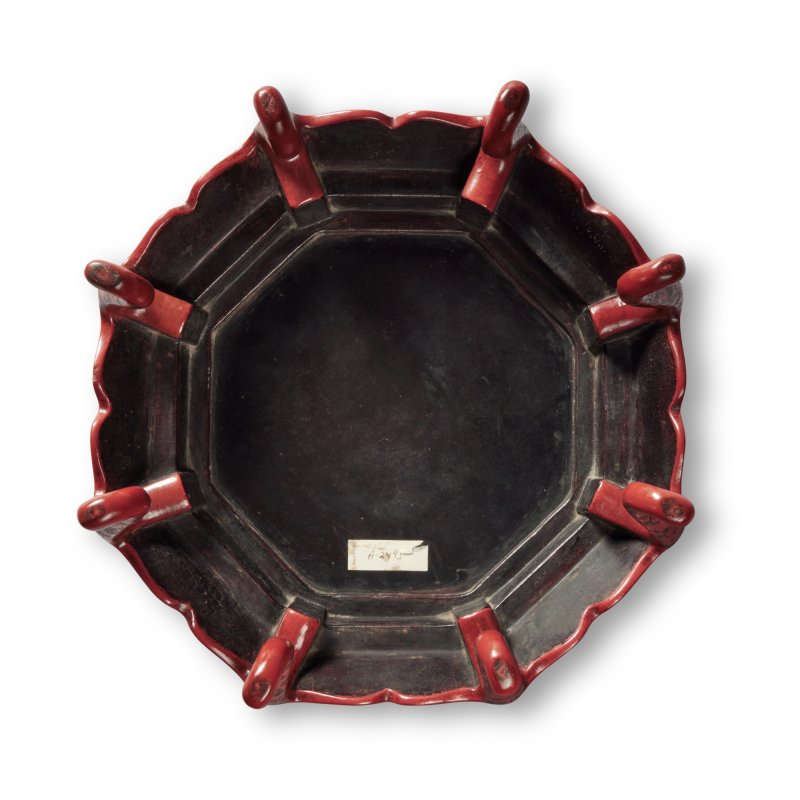
There are some restorations to the legs. Otherwise, the stand is in overall good condition with some expected age-consistent wear, including some minute chips and loses to the extremities of the carved desgin.
腿見修。除此外,整體品相良好,見些許正常年久磨損,包括剔紅紋飾邊緣等處見些許微磕及微缺。
腿見修。除此外,整體品相良好,見些許正常年久磨損,包括剔紅紋飾邊緣等處見些許微磕及微缺。
更多信息
Width 13⅛ in., 33.2 cm
来源:Roger Keverne Ltd,倫敦
图录
说明:This superb stand is an exceptional example of late Ming lacquer, essentially combining two Chinese lacquering techniques, carved cinnabar lacquer (tihong) and infilled-lacquer (tianqi), exemplifying all the admired qualities of the extraordinary late Ming lacquer craftsmanship. The top is carved with a complex design of the 'Eight Buddhist Emblems' depicted amidst various flower sprays rendered in a meticulous and sensitive quality. The shape of this stand is also elegantly constructed, supported on eight cabriole legs springing from an intricately formed lobed apron executed in the tianqi technique with intricate flower scrolls, creating an exuberance and complex visual effect.
Carving lacquer wares is a laborious, time-consuming process that can stretch over years. It requires the gradual build-up of the lacquer coating by adding and preparing thin layers of lacquer, each of which needs to dry before it can be polished and the next one applied, and finally the carving of the design and the smoothing out of all irregularities. In addition, the tianqi method consists of filling outlined areas with different-colored lacquer, thereby defining the detailed pattern. This technique allowed craftsmen to achieve attractive shading effects in vibrant colors within clearly defined forms.
Late Ming lacquer stands skillfully combining both methods are very rare, as most stands were made using only the tianqi technique, such as one of a rectangular form, sold in our Paris rooms, 13th November 2018, lot 26; and another one of larger size, previously on loan to the Royal Ontario Museum, Toronto, sold twice in these rooms, 28th and 29th September 1989, lot 398 and lot 23rd March 2011, lot 660.
来源:Roger Keverne Ltd,倫敦
图录
说明:This superb stand is an exceptional example of late Ming lacquer, essentially combining two Chinese lacquering techniques, carved cinnabar lacquer (tihong) and infilled-lacquer (tianqi), exemplifying all the admired qualities of the extraordinary late Ming lacquer craftsmanship. The top is carved with a complex design of the 'Eight Buddhist Emblems' depicted amidst various flower sprays rendered in a meticulous and sensitive quality. The shape of this stand is also elegantly constructed, supported on eight cabriole legs springing from an intricately formed lobed apron executed in the tianqi technique with intricate flower scrolls, creating an exuberance and complex visual effect.
Carving lacquer wares is a laborious, time-consuming process that can stretch over years. It requires the gradual build-up of the lacquer coating by adding and preparing thin layers of lacquer, each of which needs to dry before it can be polished and the next one applied, and finally the carving of the design and the smoothing out of all irregularities. In addition, the tianqi method consists of filling outlined areas with different-colored lacquer, thereby defining the detailed pattern. This technique allowed craftsmen to achieve attractive shading effects in vibrant colors within clearly defined forms.
Late Ming lacquer stands skillfully combining both methods are very rare, as most stands were made using only the tianqi technique, such as one of a rectangular form, sold in our Paris rooms, 13th November 2018, lot 26; and another one of larger size, previously on loan to the Royal Ontario Museum, Toronto, sold twice in these rooms, 28th and 29th September 1989, lot 398 and lot 23rd March 2011, lot 660.
常见问题
这件明末 剔紅八吉祥紋填漆八方几的成交价是多少?
落槌价为 预展中。 成交价为 预展中。
拍品的品相状况如何?
There are some restorations to the legs. Otherwise, the stand is in overall good condition with some expected age-consistent wear, including some minute chips and loses to the extremities of the carved desgin.
腿見修。除此外,整體品相良好,見些許正常年久磨損,包括剔紅紋飾邊緣等處見些許微磕及微缺。
腿見修。除此外,整體品相良好,見些許正常年久磨損,包括剔紅紋飾邊緣等處見些許微磕及微缺。
这件拍品的流传来源是什么?
Roger Keverne Ltd,倫敦
图录
图录