
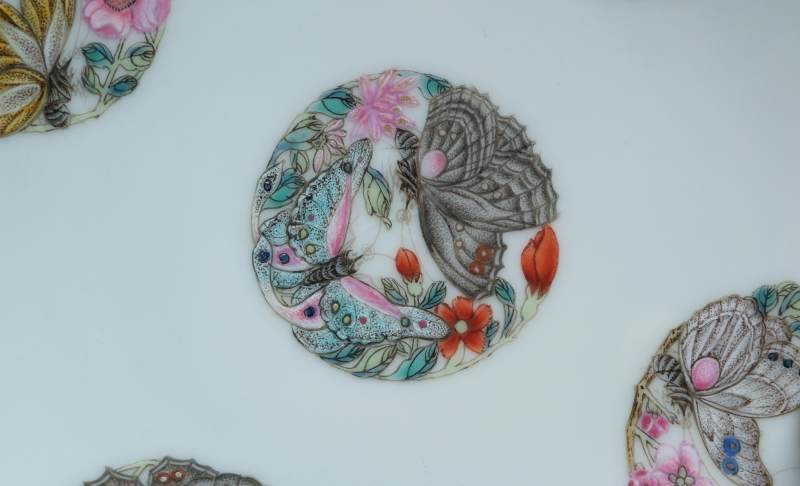
Lot 84 A famille rose falangcai 'butterfly' and doucai 'floral' medallion dish, Yongzheng mark and of the period (1723-1735)
落槌价
****
成交价
****
拍品信息
拍品名称
A famille rose falangcai 'butterfly' and doucai 'floral' medallion dish, Yongzheng mark and of the period (1723-1735)
年代
Qing Dynasty
起拍价
EUR 50,000
估值区间
€50,000 - €100,000
尺寸
D 14.8 cm
品相
Two tiny superficial stress lines in the glaze in the central enamelled medallion (do not go through to the other side) and a few very minor surface scratches. Miniscule crazing on a few of the outside enamelled medallions. Two firing flaws at the base. No chips or fritting and no restoration.
更多信息
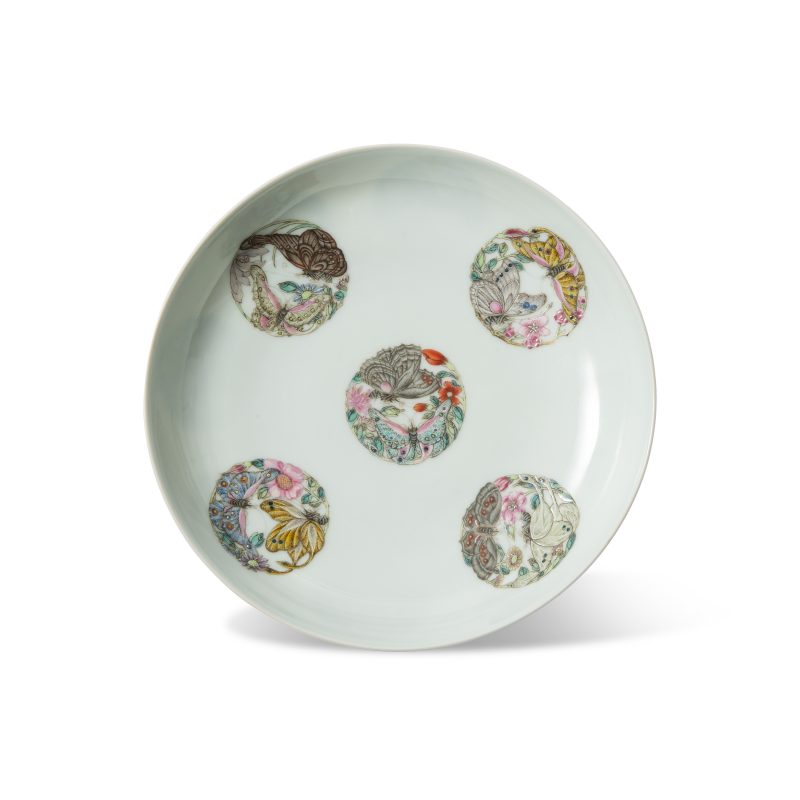
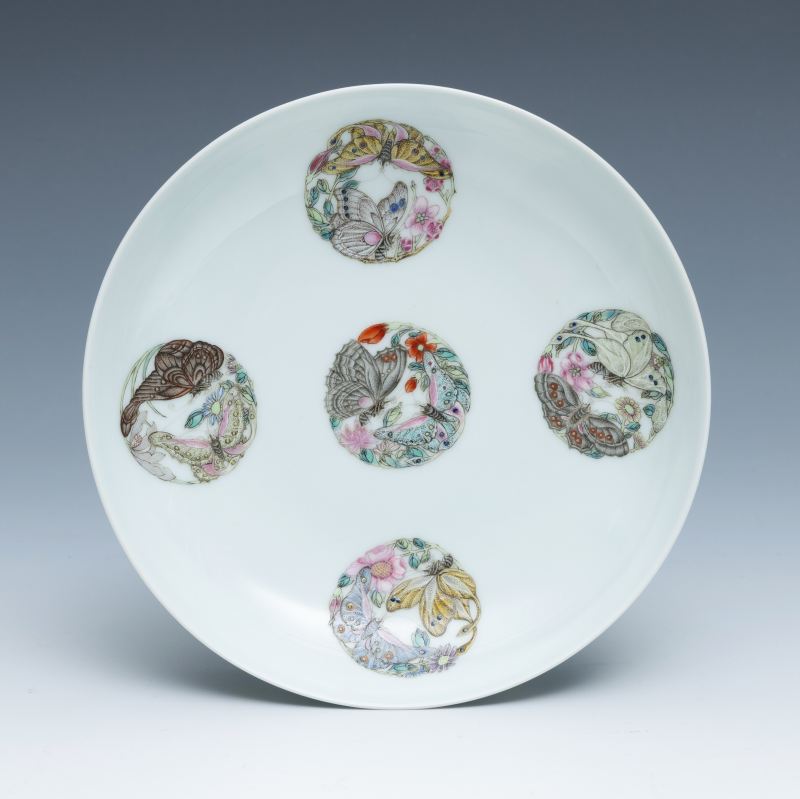
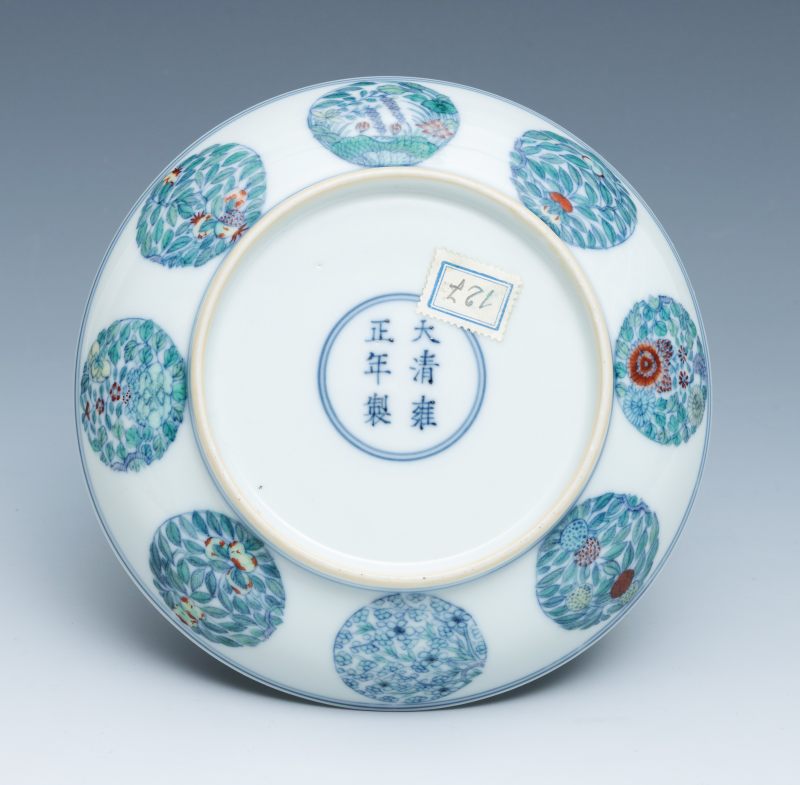
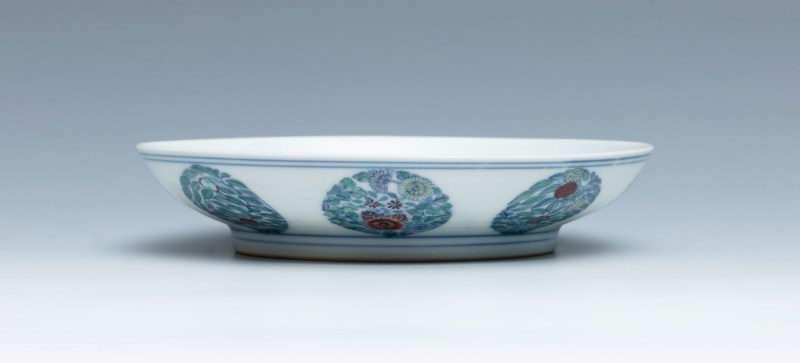
The front of the dish decorated with five roundels each featuring a motif of two facing butterflies amidst leafy floral sprays including peonies, chrysanthemums, peaches, plums and orchids, the exterior is decorated with eight medallions of stylized flowering or fruiting trees. Marked with a Yongzheng six-character reign mark within a double circle in underglaze blue on the base.
In Chinese tradition, butterflies are auspicious symbols associated with longevity and were widely used in decorative art. Their rebus symbolism could double auspicious wishes and allude to an eightieth birthday; when combined with peonies, they form the pun ‘fudie fugui’ (“May you enjoy an abundance of blessings, wealth, and high rank”). Furthermore, such imagery was commonly used to decorate birthday gifts and lanterns for the Autumn Moon Festival, celebrated on the fifteenth day of the eighth lunar month, and was likely inspired by Chenghua-period doucai wares with comparable decoration.
The famille rose overglaze enameling technique was perfected during the reign of the Yongzheng emperor (1723-1735) and is regarded as the last major technological innovation at the Jingdezhen kilns. Its distinctive pink enamel, produced by adding small amounts of gold to red pigment, allowed for a wider range of opaque colours than previously possible. Although butterflies frequently appear on Yongzheng famille rose and doucai porcelains, they are usually secondary elements within larger floral compositions. When used as the principal motif, as on the present dish, they are painted with exceptional refinement, exemplifying the highest standards of artistry achieved during the period.
Yongzheng famille rose- and doucai-decorated medallion dishes (or bowls) of this rare pattern appear to be exceptionally rare. There are numerous examples of each motif, but they do not appear together in combination on a single piece of mark and period porcelain. A comparable dish with five famille rose medallions depicting pairs of butterflies and flowering plants is held in the collection of The National Gallery of Victoria, Melbourne, nr. 3932-D3. This dish is only larger and features a monochrome green-glazed exterior, according to the description.
以下内容由AI翻译:
【名称】
清雍正粉彩珐琅彩蝴蝶花卉纹开光盘
【年代】
清
【描述】
盘正面装饰有五个圆形框,每个框内绘有两只相对的蝴蝶在叶状花卉枝条中,包括牡丹、菊花、桃子、梅花和兰花,外部装饰有八个风格化的开花或结果树木的圆形框。底部有青花双圈内的雍正六字款。
在中国传统中,蝴蝶是吉祥的象征,与长寿有关,广泛用于装饰艺术。它们的谐音可以双重表达吉祥的愿望,并暗示八十岁生日;当与牡丹结合时,形成“福蝶富贵”(“愿你享受丰富的祝福、财富和高地位”)的谐音。此外,这种图像常用于装饰生日礼物和中秋节灯笼,中秋节在农历八月十五庆祝,可能受到成化时期斗彩瓷器类似装饰的启发。
粉彩釉上彩技术在雍正皇帝统治期间(1723-1735)完善,被认为是景德镇窑最后的重大技术创新。其独特的粉红色釉料通过在红色颜料中添加少量金制成,允许比以前更多的不透明颜色。虽然蝴蝶经常出现在雍正时期的粉彩和斗彩瓷器上,但通常是较大花卉组合中的次要元素。当作为主要图案使用时,如在当前的盘子上,它们被绘制得异常精致,体现了该时期的最高艺术标准。
雍正时期的粉彩和斗彩开光盘(或碗)这种罕见图案似乎非常稀少。有许多单独的图案例子,但它们没有一起出现在一件标记和时期的瓷器上。维多利亚国家美术馆收藏了一件类似的盘子,编号3932-D3。这只盘子更大,外部为单色绿釉。
【品相】
中央釉上彩圆形框中有两条非常细小的表面应力线(未穿透到另一侧),并有一些非常微小的表面划痕。外部几个釉上彩圆形框上有极小的开片。底部有两个烧制瑕疵。没有缺损或崩边,未经过修复。
In Chinese tradition, butterflies are auspicious symbols associated with longevity and were widely used in decorative art. Their rebus symbolism could double auspicious wishes and allude to an eightieth birthday; when combined with peonies, they form the pun ‘fudie fugui’ (“May you enjoy an abundance of blessings, wealth, and high rank”). Furthermore, such imagery was commonly used to decorate birthday gifts and lanterns for the Autumn Moon Festival, celebrated on the fifteenth day of the eighth lunar month, and was likely inspired by Chenghua-period doucai wares with comparable decoration.
The famille rose overglaze enameling technique was perfected during the reign of the Yongzheng emperor (1723-1735) and is regarded as the last major technological innovation at the Jingdezhen kilns. Its distinctive pink enamel, produced by adding small amounts of gold to red pigment, allowed for a wider range of opaque colours than previously possible. Although butterflies frequently appear on Yongzheng famille rose and doucai porcelains, they are usually secondary elements within larger floral compositions. When used as the principal motif, as on the present dish, they are painted with exceptional refinement, exemplifying the highest standards of artistry achieved during the period.
Yongzheng famille rose- and doucai-decorated medallion dishes (or bowls) of this rare pattern appear to be exceptionally rare. There are numerous examples of each motif, but they do not appear together in combination on a single piece of mark and period porcelain. A comparable dish with five famille rose medallions depicting pairs of butterflies and flowering plants is held in the collection of The National Gallery of Victoria, Melbourne, nr. 3932-D3. This dish is only larger and features a monochrome green-glazed exterior, according to the description.
以下内容由AI翻译:
【名称】
清雍正粉彩珐琅彩蝴蝶花卉纹开光盘
【年代】
清
【描述】
盘正面装饰有五个圆形框,每个框内绘有两只相对的蝴蝶在叶状花卉枝条中,包括牡丹、菊花、桃子、梅花和兰花,外部装饰有八个风格化的开花或结果树木的圆形框。底部有青花双圈内的雍正六字款。
在中国传统中,蝴蝶是吉祥的象征,与长寿有关,广泛用于装饰艺术。它们的谐音可以双重表达吉祥的愿望,并暗示八十岁生日;当与牡丹结合时,形成“福蝶富贵”(“愿你享受丰富的祝福、财富和高地位”)的谐音。此外,这种图像常用于装饰生日礼物和中秋节灯笼,中秋节在农历八月十五庆祝,可能受到成化时期斗彩瓷器类似装饰的启发。
粉彩釉上彩技术在雍正皇帝统治期间(1723-1735)完善,被认为是景德镇窑最后的重大技术创新。其独特的粉红色釉料通过在红色颜料中添加少量金制成,允许比以前更多的不透明颜色。虽然蝴蝶经常出现在雍正时期的粉彩和斗彩瓷器上,但通常是较大花卉组合中的次要元素。当作为主要图案使用时,如在当前的盘子上,它们被绘制得异常精致,体现了该时期的最高艺术标准。
雍正时期的粉彩和斗彩开光盘(或碗)这种罕见图案似乎非常稀少。有许多单独的图案例子,但它们没有一起出现在一件标记和时期的瓷器上。维多利亚国家美术馆收藏了一件类似的盘子,编号3932-D3。这只盘子更大,外部为单色绿釉。
【品相】
中央釉上彩圆形框中有两条非常细小的表面应力线(未穿透到另一侧),并有一些非常微小的表面划痕。外部几个釉上彩圆形框上有极小的开片。底部有两个烧制瑕疵。没有缺损或崩边,未经过修复。
常见问题
拍品的品相状况如何?
Two tiny superficial stress lines in the glaze in the central enamelled medallion (do not go through to the other side) and a few very minor surface scratches. Miniscule crazing on a few of the outside enamelled medallions. Two firing flaws at the base. No chips or fritting and no restoration.
拍品的尺寸是多少?
D 14.8 cm