







Lot 38 清康熙 灑藍釉描金後赤壁赋圖詩文棒槌瓶 | IMPORTANT VASE ROULEAU EN PORCELAINE BLEU POUDRÉ À DÉCOR À L'OR
落槌价
****
成交价
****
| 拍卖公司 | 邦瀚斯 |
|---|---|
| 拍卖时间 | 2026年06月09日 |
请安装多宝古瓷宝典APP,查看高清无损大图
拍品信息
拍品名称
清康熙 灑藍釉描金後赤壁赋圖詩文棒槌瓶 | IMPORTANT VASE ROULEAU EN PORCELAINE BLEU POUDRÉ À DÉCOR À L'OR
起拍价
EUR 20,000
估值区间
未知
尺寸
未知
品相
未知
更多信息
Dynastie Qing, époque Kangxi (1662-1722)
A RARE GILT-DECORATED POWDER-BLUE 'ODE TO THE RED CLIFF' ROULEAU VASE
Qing Dynasty, Kangxi period
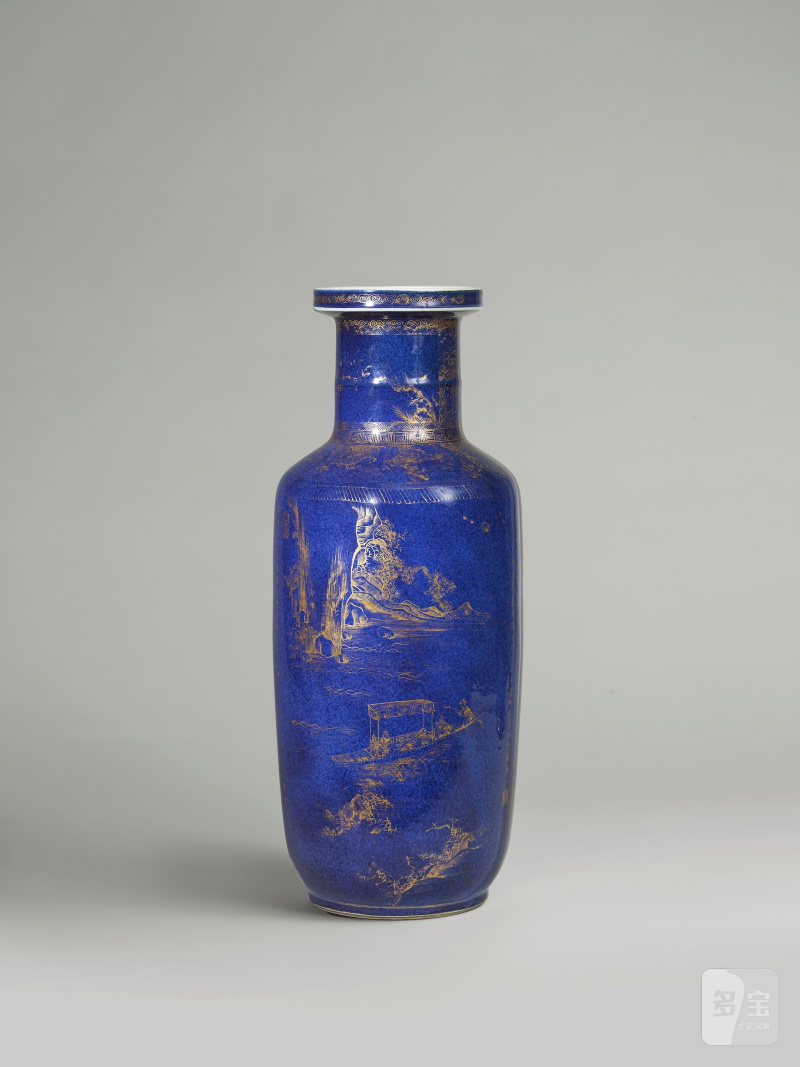
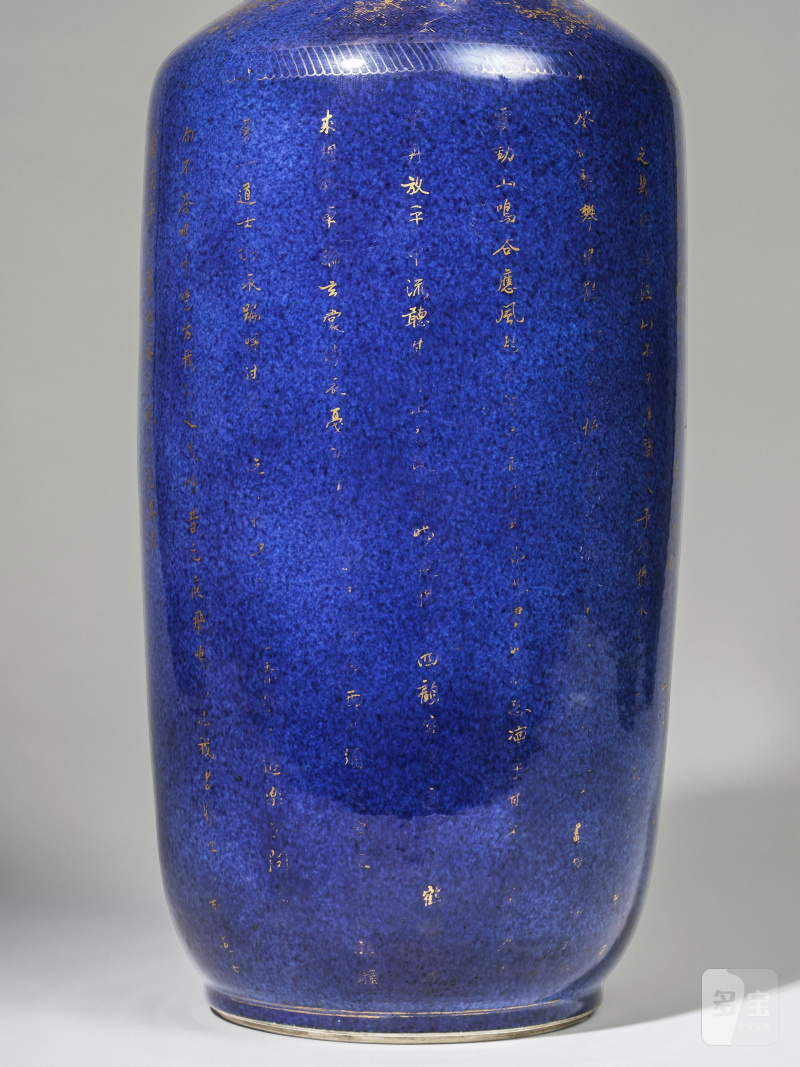
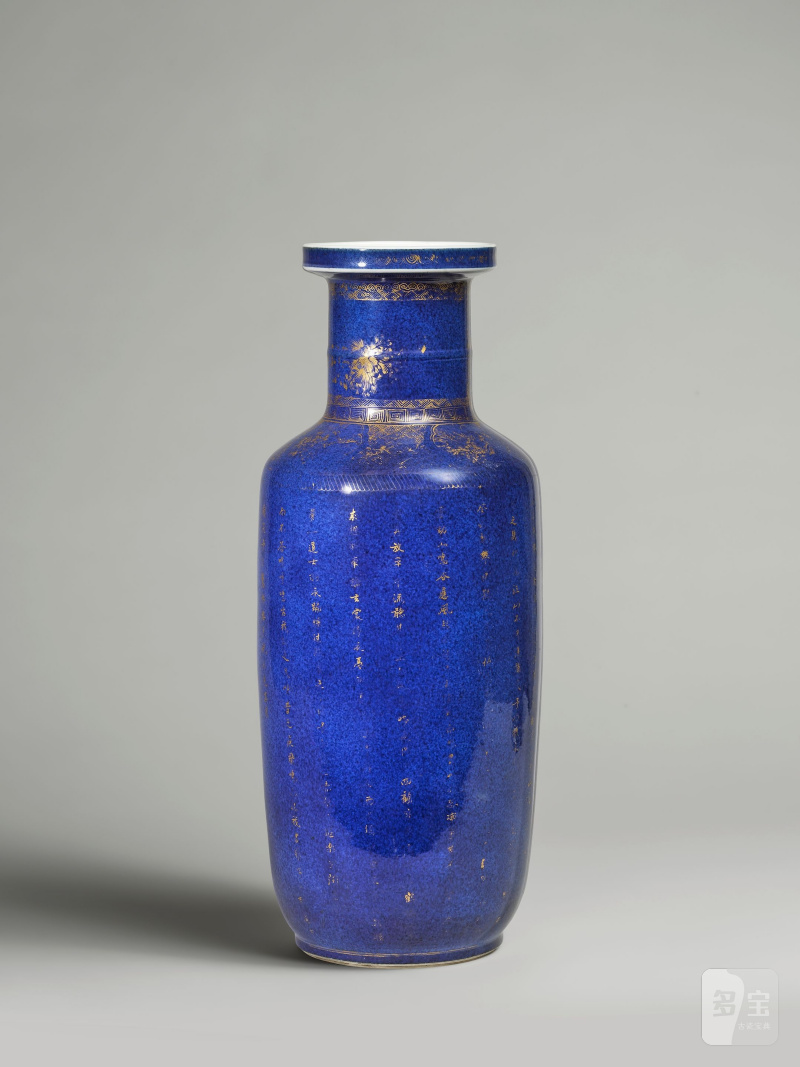
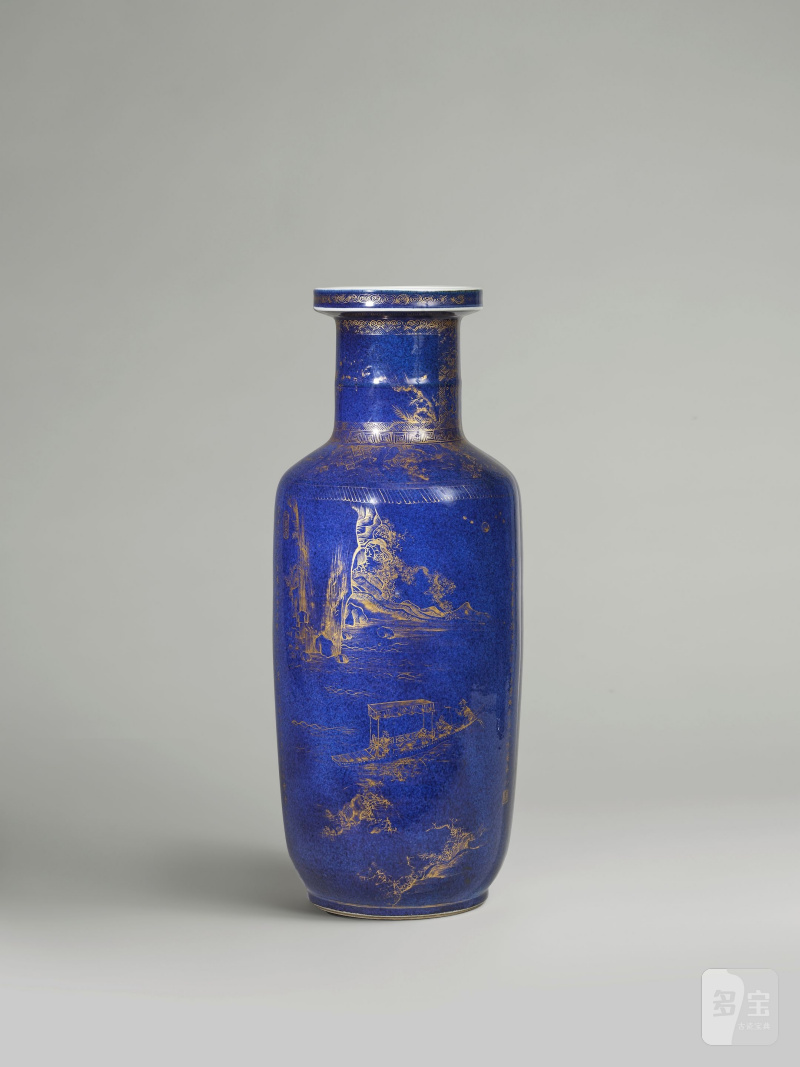
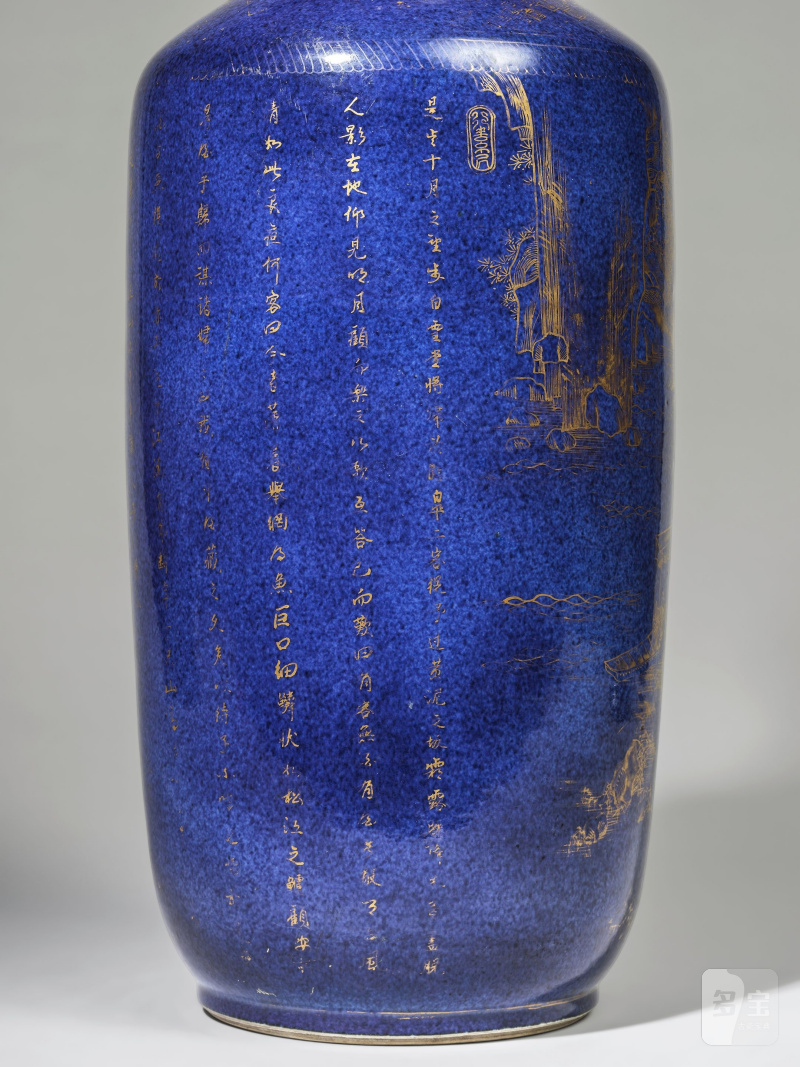
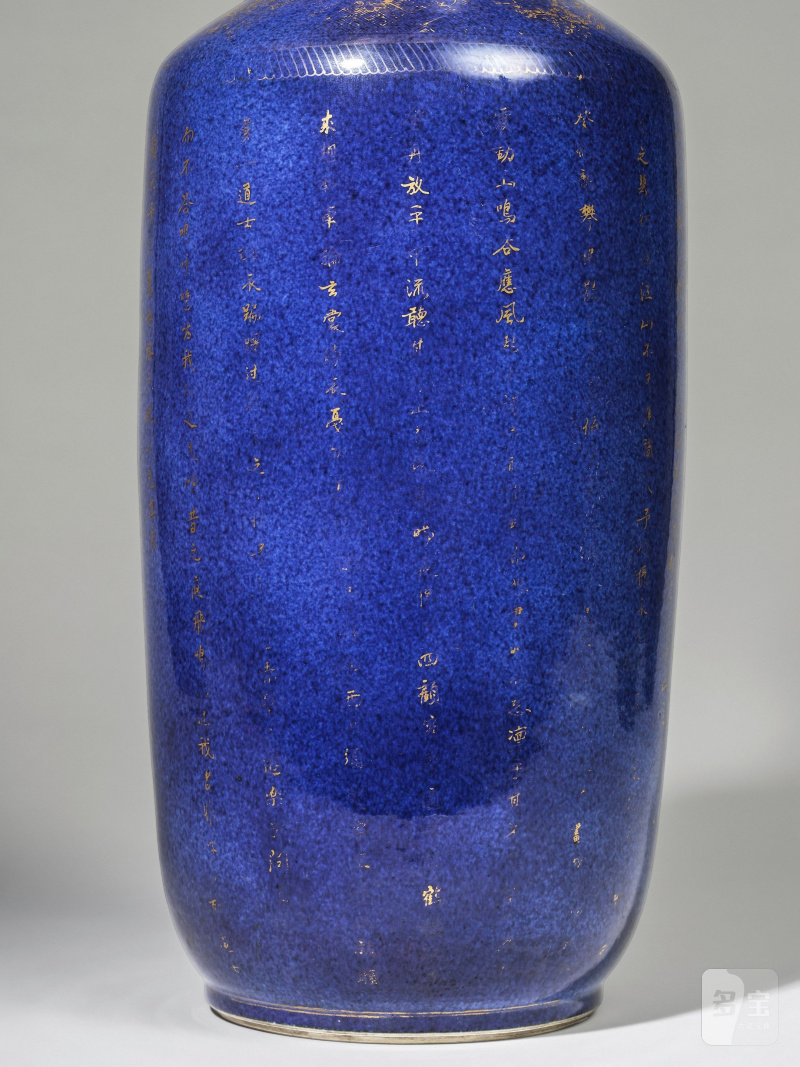
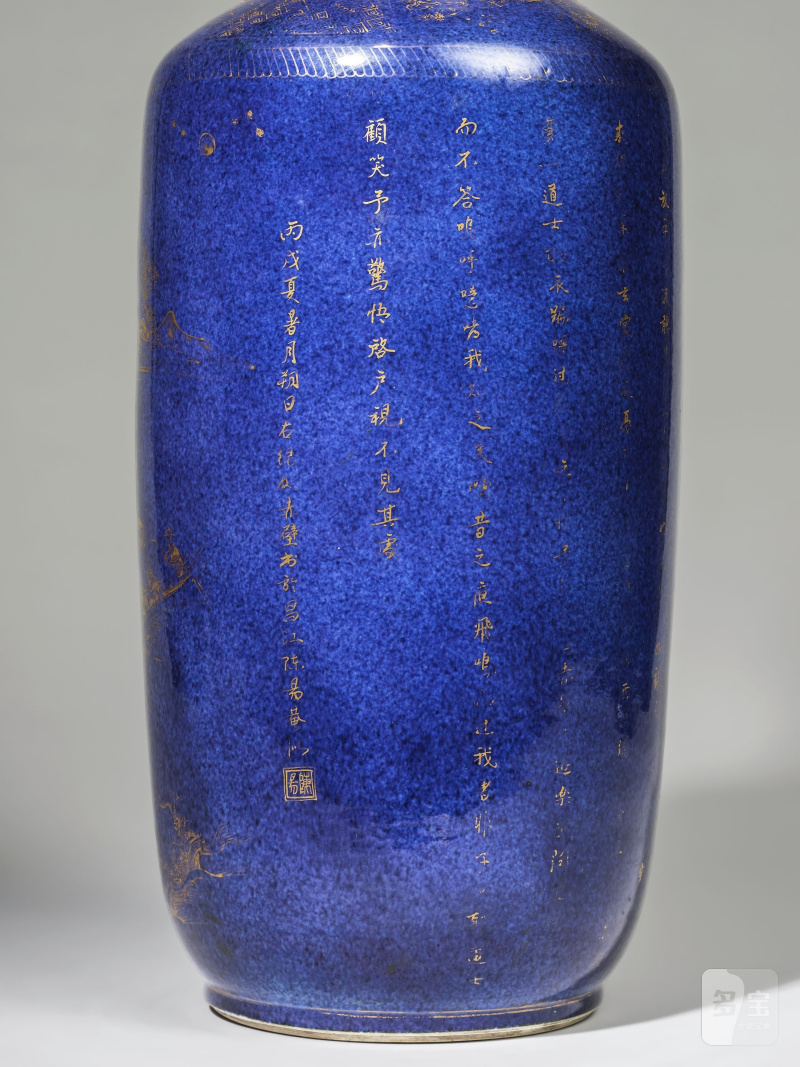
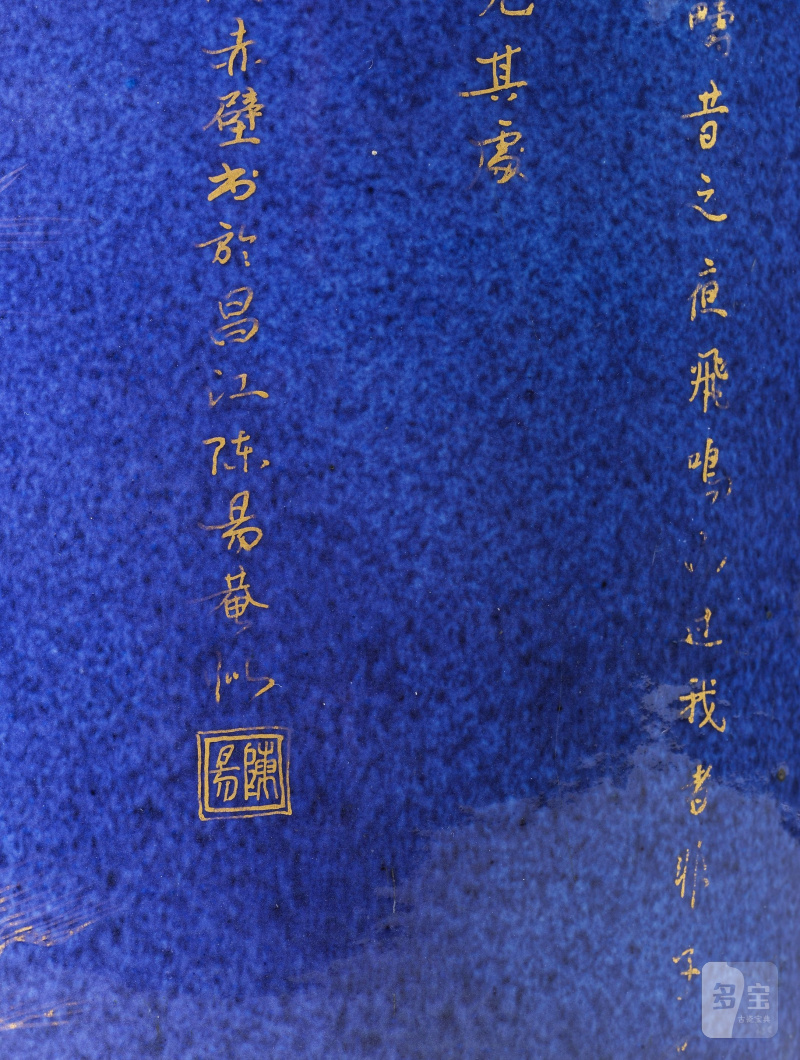
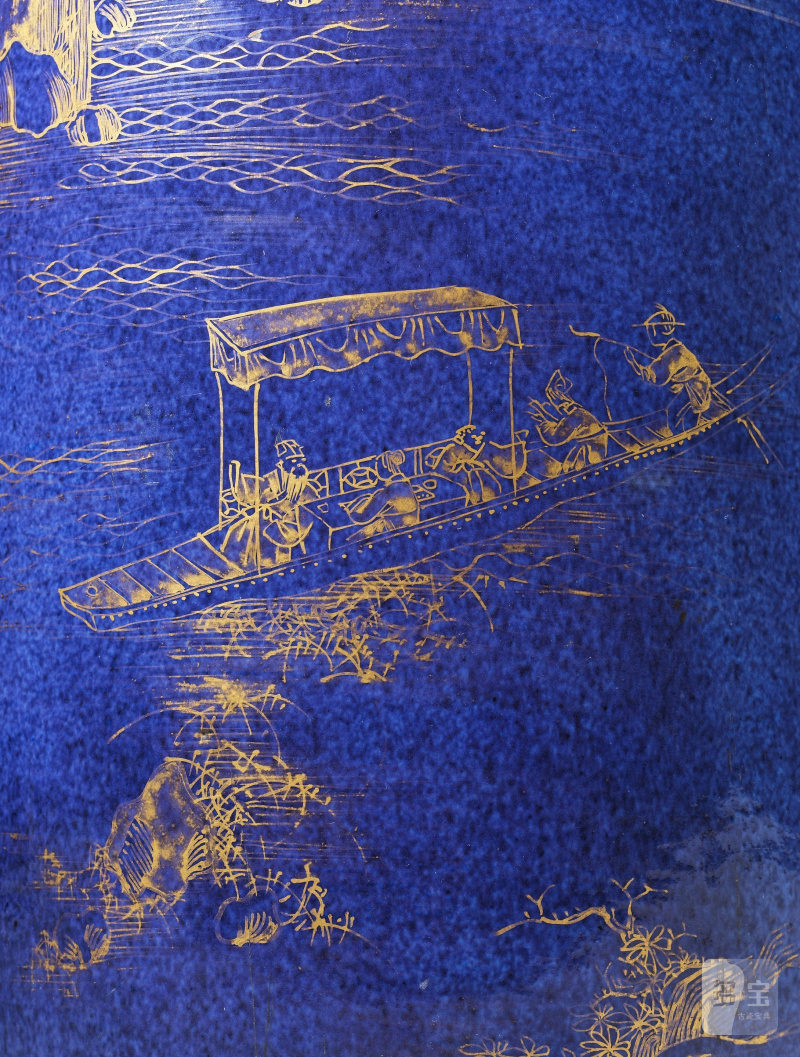
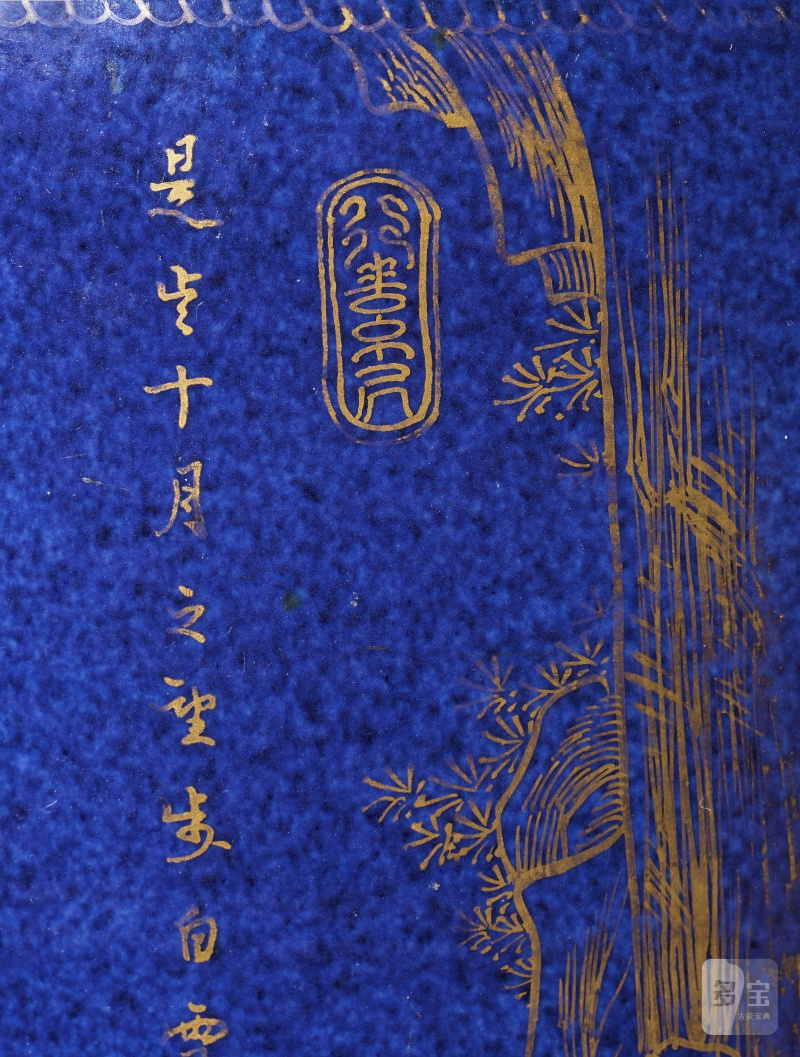
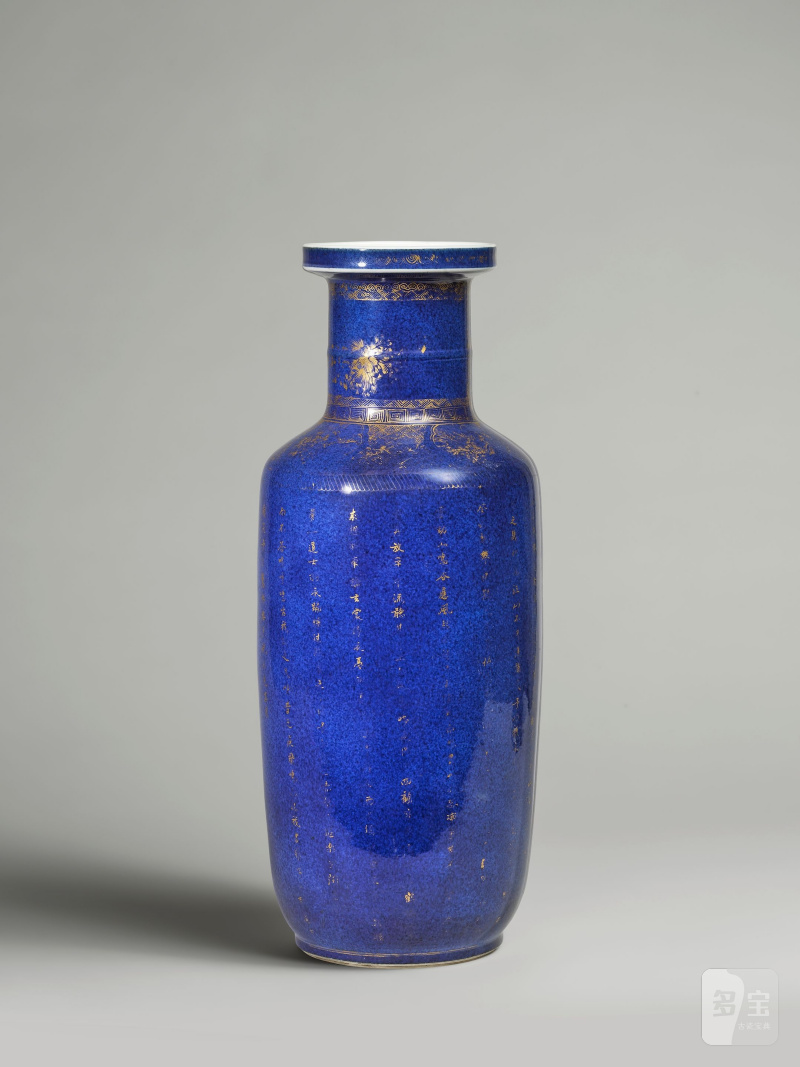
The cylindrical body rising to a columnar neck with galleried rim, richly and finely painted in gold against a bright, mottled-blue ground with a riverscape scene featuring a scholar and his companions gathered under an awning on a boat drifting under towering cliffs, the other side with a lengthy inscription taken from Su Shi's 'Latter Ode on the Red Cliffs', dated to the first day of the hottest month of the bingxu year, signed Chen Yi and with a seal reading Chen Yi and a second seal reading Xingsuju.
45.5 cm (17 7/8 in.) high
Footnotes
清康熙 灑藍釉描金後赤壁赋圖詩文棒槌瓶
Porcelains with powder-blue glazes were popular during the Kangxi period. The mottled blue effect was the result of a very particular technique employed to apply the cobalt blue pigment to the unglazed porcelain body. The powdered pigment was blown onto the surface through a tube with a thin gauze on the end, then covered with a clear glaze and fired. The effect, when fired, was of a deep, finely mottled or soufflé blue. The difference between powder-blue and other plain blue glazes is the size of the cobalt particles. In the case of powder-blue, the oxide particles appear as powder specks giving the colour a mottled appearance. While some porcelains were covered entirely with a powder-blue glaze, on others shaped panels were reserved in white and decorated with enamels over the glaze in a second firing. A third group of powder blue-glazed porcelains were decorated with designs finely painted in gold onto the brilliant blue surface creating a dramatic effect as illustrated by the present vase.
The scene depicted on one side of the vase shows a group of scholars in a boat drifting beneath steep cliffs. The lengthy inscription on the other side of the body identifies the figure as the poet Su Shi (Su Dongpo, 1037-1101) who undertook two journeys by boat to an area known as Red Cliff which in 1082 he commemorated in two essays titled 'Former Ode to the Red Cliff' and 'Latter Ode to the Red Cliff', expressing his thoughts on the cosmos, nature, and human existence. The scene of the poet gathering with his companions on a boat became a favourite subject on porcelains of the Ming and Qing dynasty, see Eva Ströber,, Berlin, 2001, pp. 104-105.
Few powder blue-glazed gilt-decorated porcelains are inscribed, the inscriptions often referring to the designs painted on the porcelains. Several inscriptions bear the seals of the '' (hall or residence of wood and stone hall) and '' (hall or residence of bamboo and stone), see for instance, a powder-blue and gilt-decorated rouleau vase, dated 1709) in the collection of the Metropolitan Museum of Art, New York, (accession no. 79.2.153), or another example from the Grandidier Collection in the Guimet Museum, Paris, (G 123). The inscription on the present vase is signed Chen Yi and is accompanied by a seal also reading . From the similarities in the calligraphy style, we can assume that the present vase was decorated and inscribed in the same workshop or atelier as the vases bearing the and .
A RARE GILT-DECORATED POWDER-BLUE 'ODE TO THE RED CLIFF' ROULEAU VASE
Qing Dynasty, Kangxi period
The cylindrical body rising to a columnar neck with galleried rim, richly and finely painted in gold against a bright, mottled-blue ground with a riverscape scene featuring a scholar and his companions gathered under an awning on a boat drifting under towering cliffs, the other side with a lengthy inscription taken from Su Shi's 'Latter Ode on the Red Cliffs', dated to the first day of the hottest month of the bingxu year, signed Chen Yi and with a seal reading Chen Yi and a second seal reading Xingsuju.
45.5 cm (17 7/8 in.) high
Footnotes
清康熙 灑藍釉描金後赤壁赋圖詩文棒槌瓶
Porcelains with powder-blue glazes were popular during the Kangxi period. The mottled blue effect was the result of a very particular technique employed to apply the cobalt blue pigment to the unglazed porcelain body. The powdered pigment was blown onto the surface through a tube with a thin gauze on the end, then covered with a clear glaze and fired. The effect, when fired, was of a deep, finely mottled or soufflé blue. The difference between powder-blue and other plain blue glazes is the size of the cobalt particles. In the case of powder-blue, the oxide particles appear as powder specks giving the colour a mottled appearance. While some porcelains were covered entirely with a powder-blue glaze, on others shaped panels were reserved in white and decorated with enamels over the glaze in a second firing. A third group of powder blue-glazed porcelains were decorated with designs finely painted in gold onto the brilliant blue surface creating a dramatic effect as illustrated by the present vase.
The scene depicted on one side of the vase shows a group of scholars in a boat drifting beneath steep cliffs. The lengthy inscription on the other side of the body identifies the figure as the poet Su Shi (Su Dongpo, 1037-1101) who undertook two journeys by boat to an area known as Red Cliff which in 1082 he commemorated in two essays titled 'Former Ode to the Red Cliff' and 'Latter Ode to the Red Cliff', expressing his thoughts on the cosmos, nature, and human existence. The scene of the poet gathering with his companions on a boat became a favourite subject on porcelains of the Ming and Qing dynasty, see Eva Ströber,, Berlin, 2001, pp. 104-105.
Few powder blue-glazed gilt-decorated porcelains are inscribed, the inscriptions often referring to the designs painted on the porcelains. Several inscriptions bear the seals of the '' (hall or residence of wood and stone hall) and '' (hall or residence of bamboo and stone), see for instance, a powder-blue and gilt-decorated rouleau vase, dated 1709) in the collection of the Metropolitan Museum of Art, New York, (accession no. 79.2.153), or another example from the Grandidier Collection in the Guimet Museum, Paris, (G 123). The inscription on the present vase is signed Chen Yi and is accompanied by a seal also reading . From the similarities in the calligraphy style, we can assume that the present vase was decorated and inscribed in the same workshop or atelier as the vases bearing the and .