
拍品信息
拍品名称
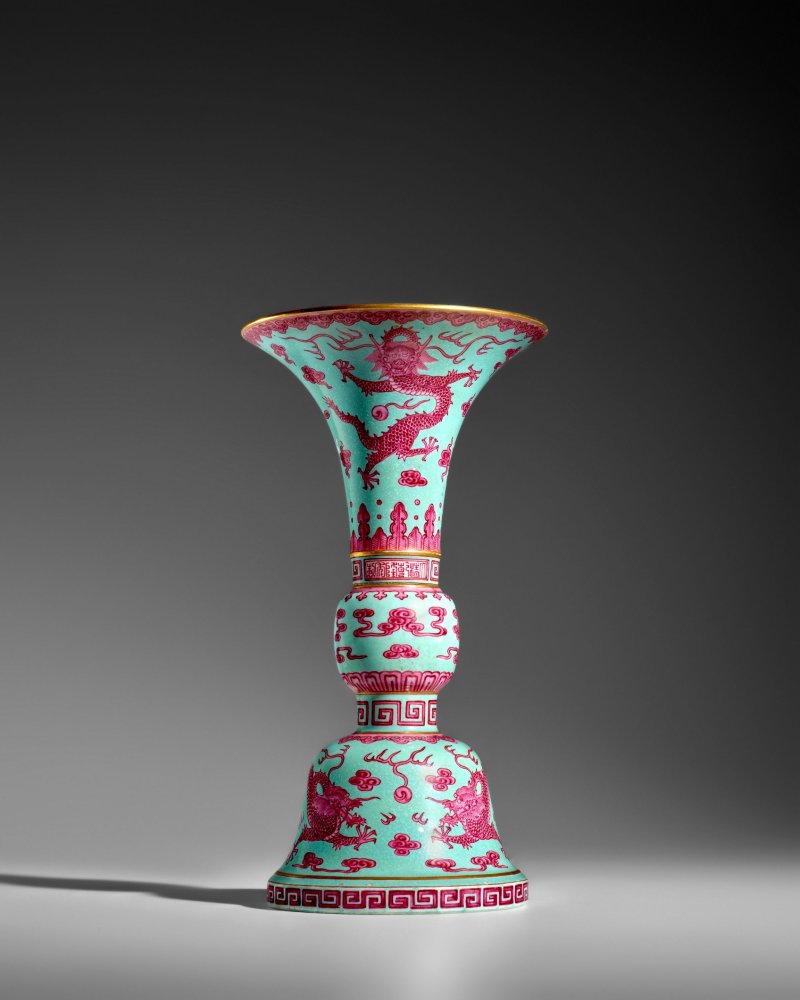
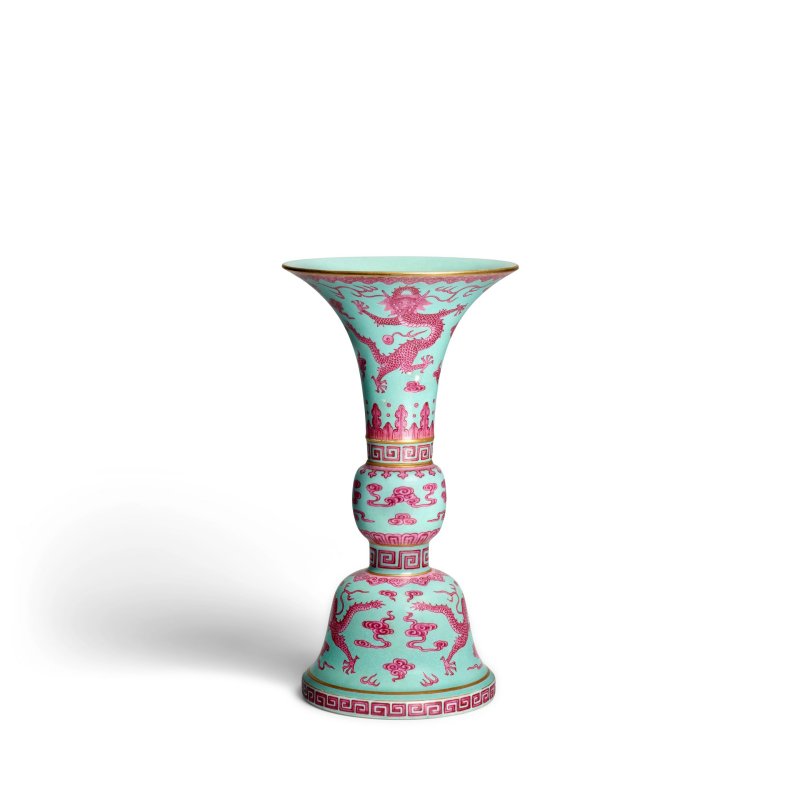
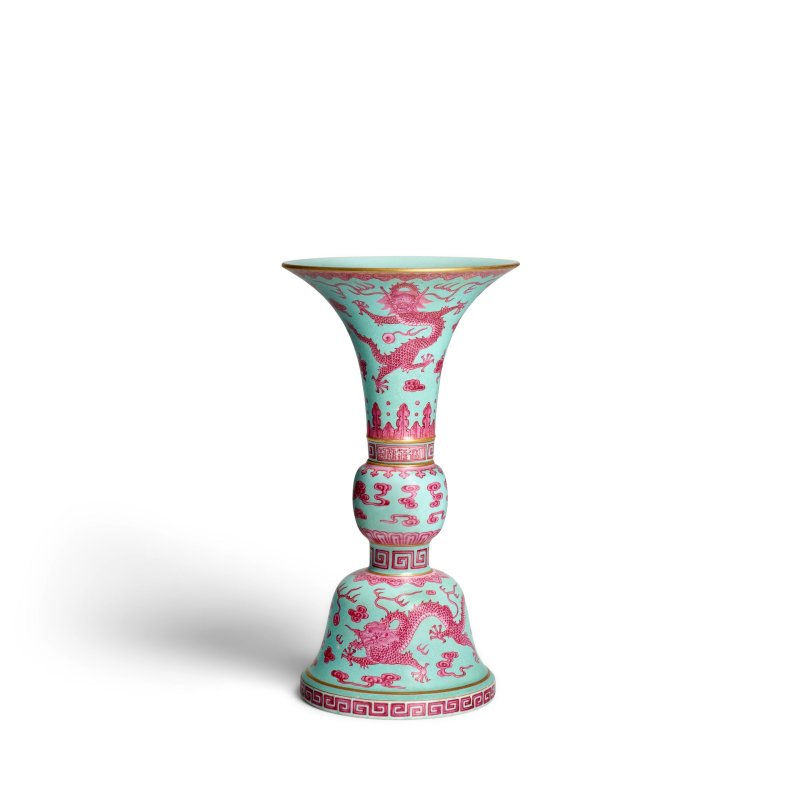
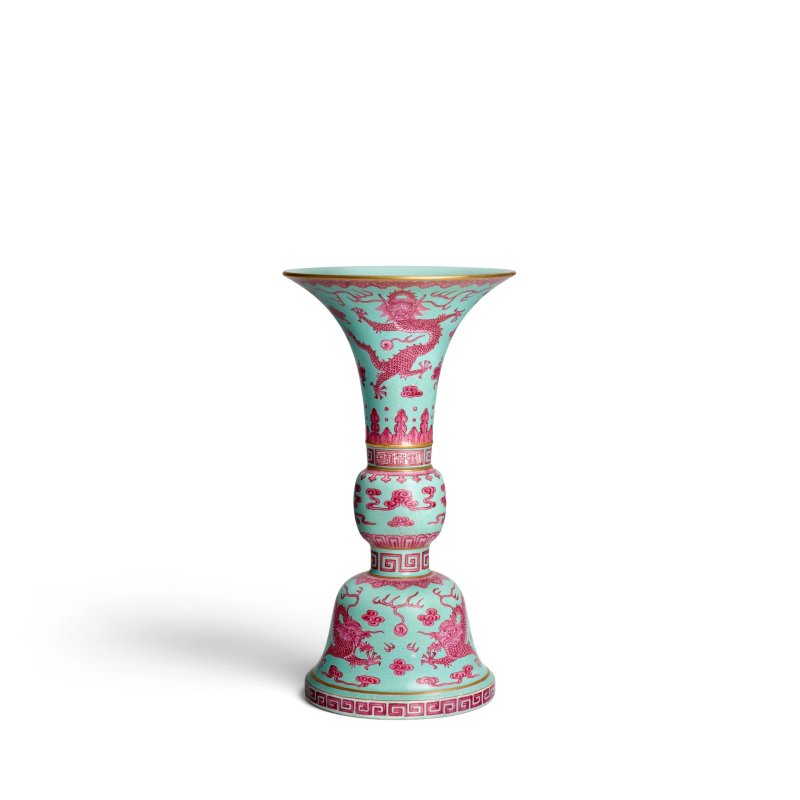
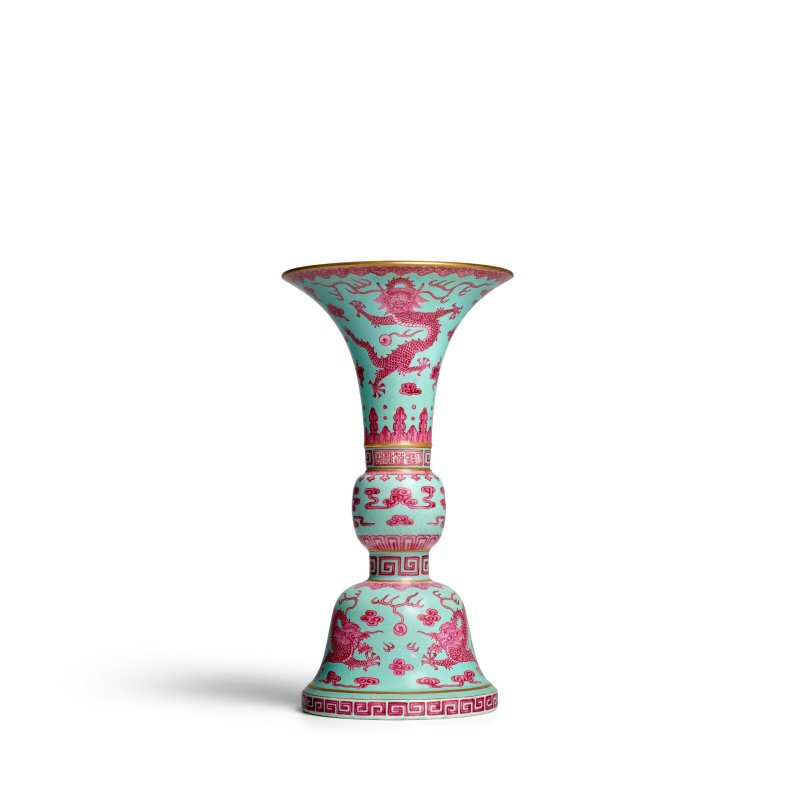
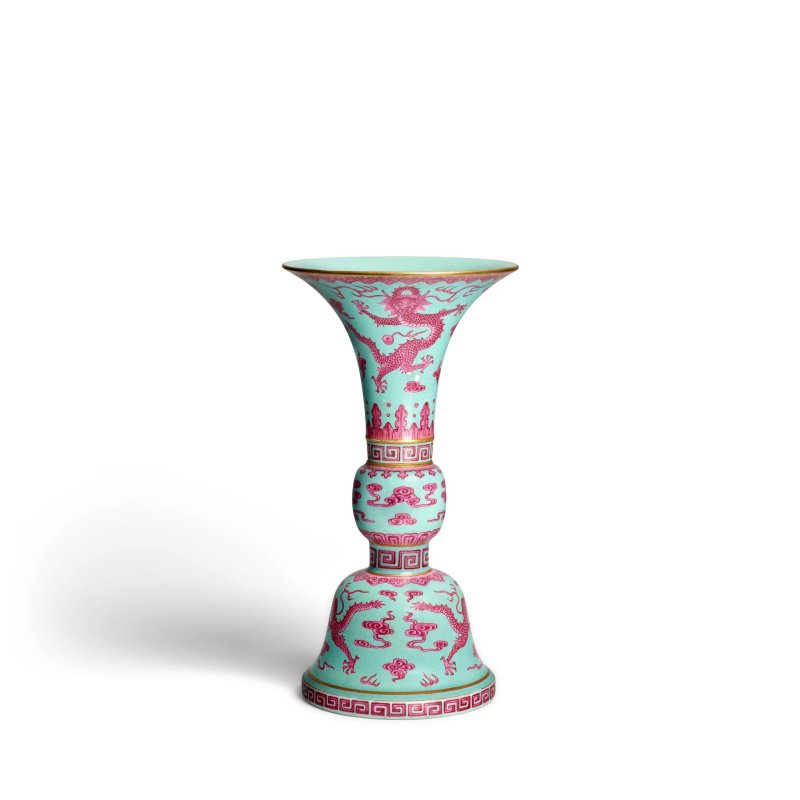
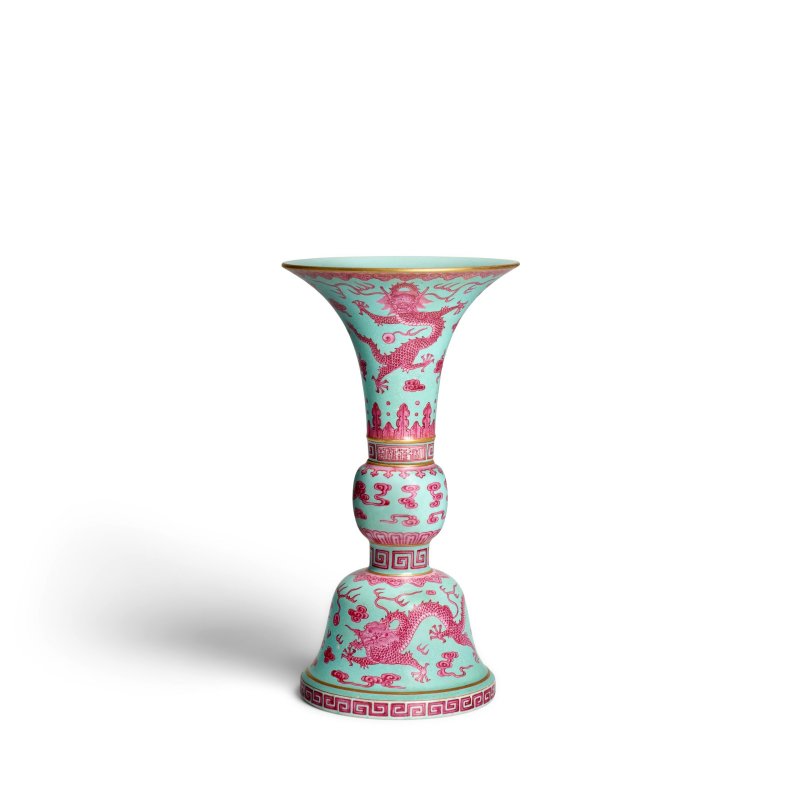
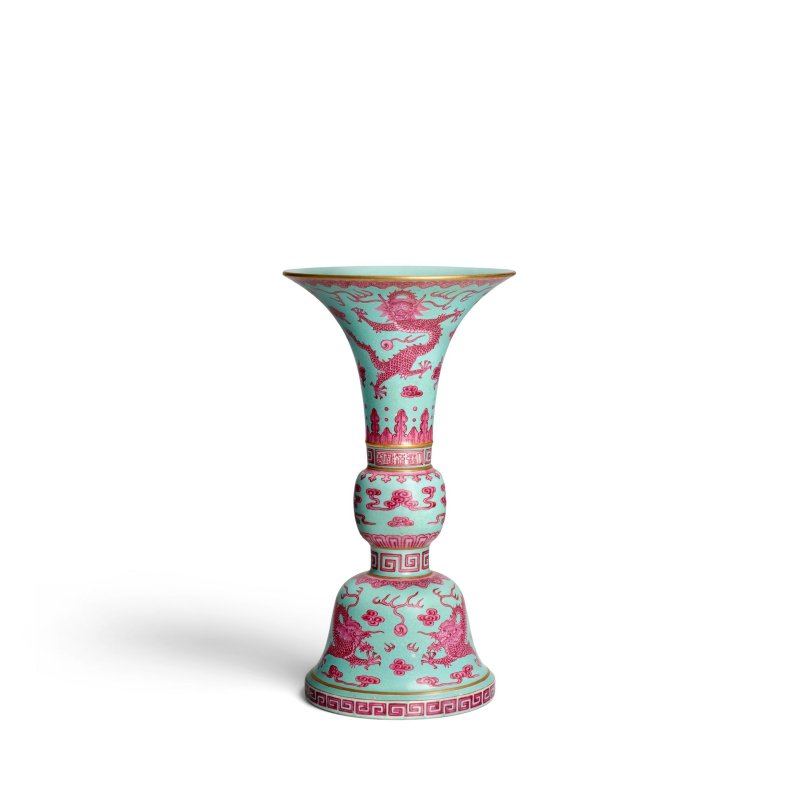
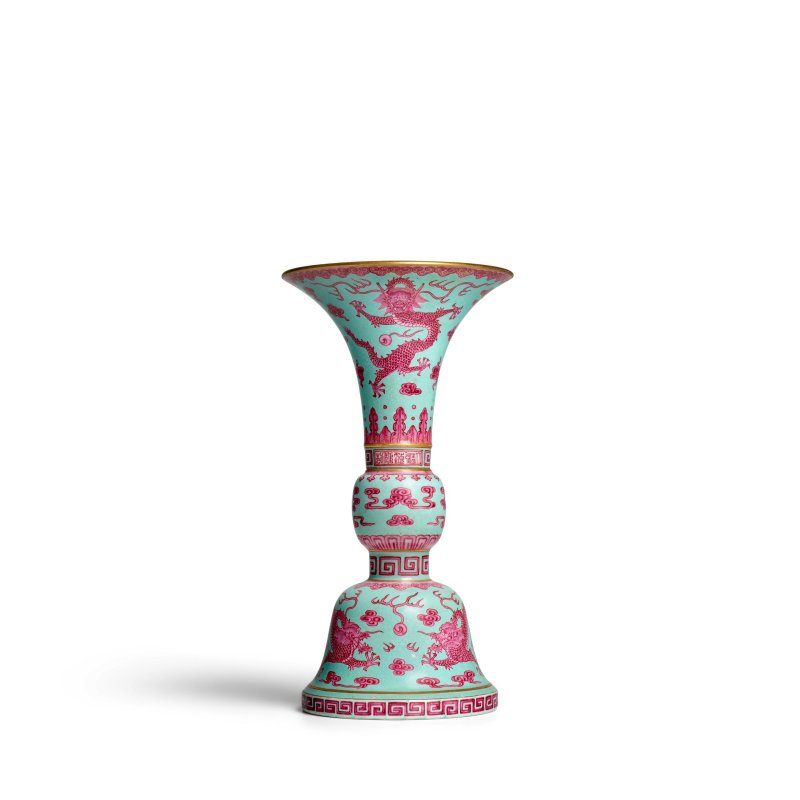
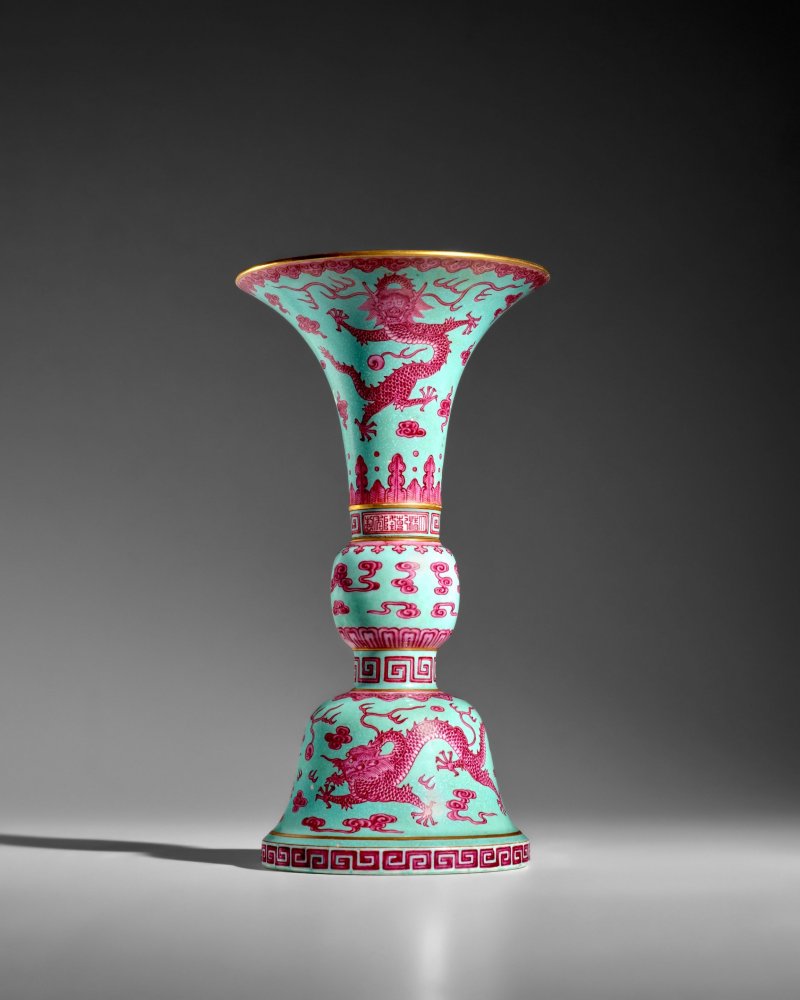
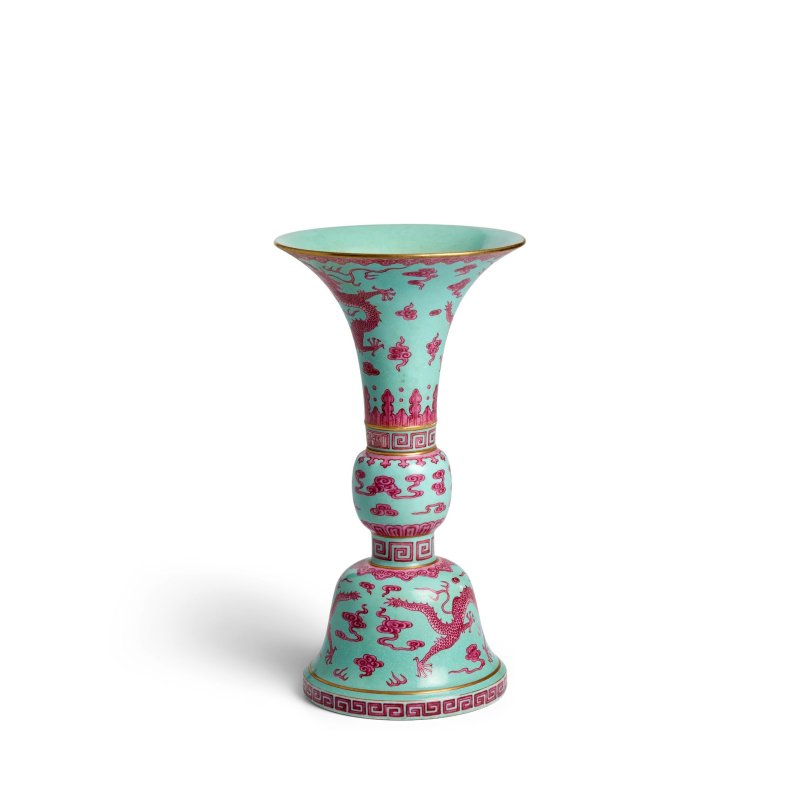
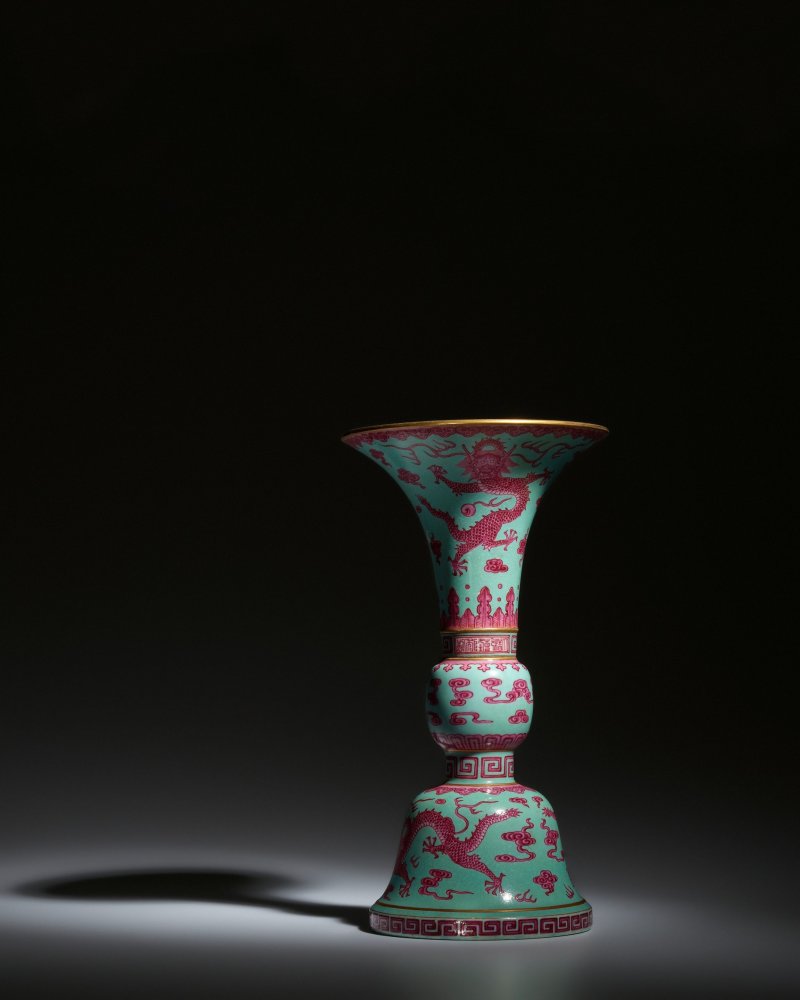
清乾隆 松石綠地胭脂紅彩雲龍紋花觚 | A RARE TURQUOISE-GROUND PUCE-ENAMELED 'DRAGON' ALTAR VASE, GU
年代
Qianlong six-character mark and of the period
起拍价
USD 40,000
估值区间
未知
尺寸
未知
品相
未知
更多信息
Qianlong six-character mark and of the period
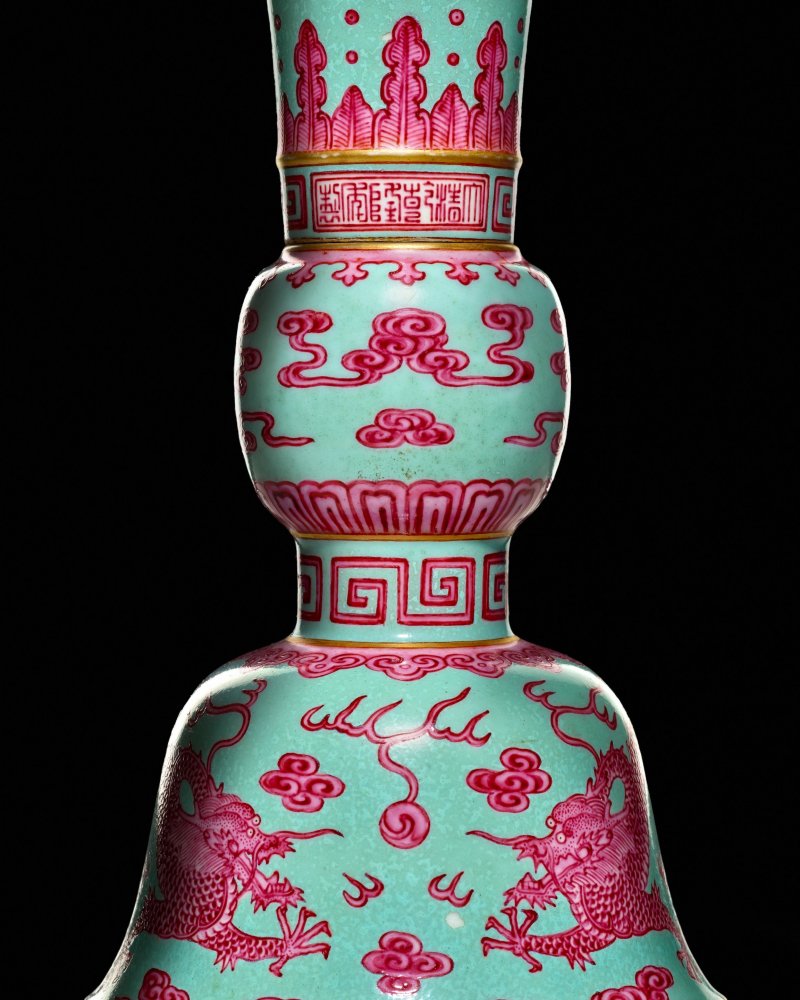
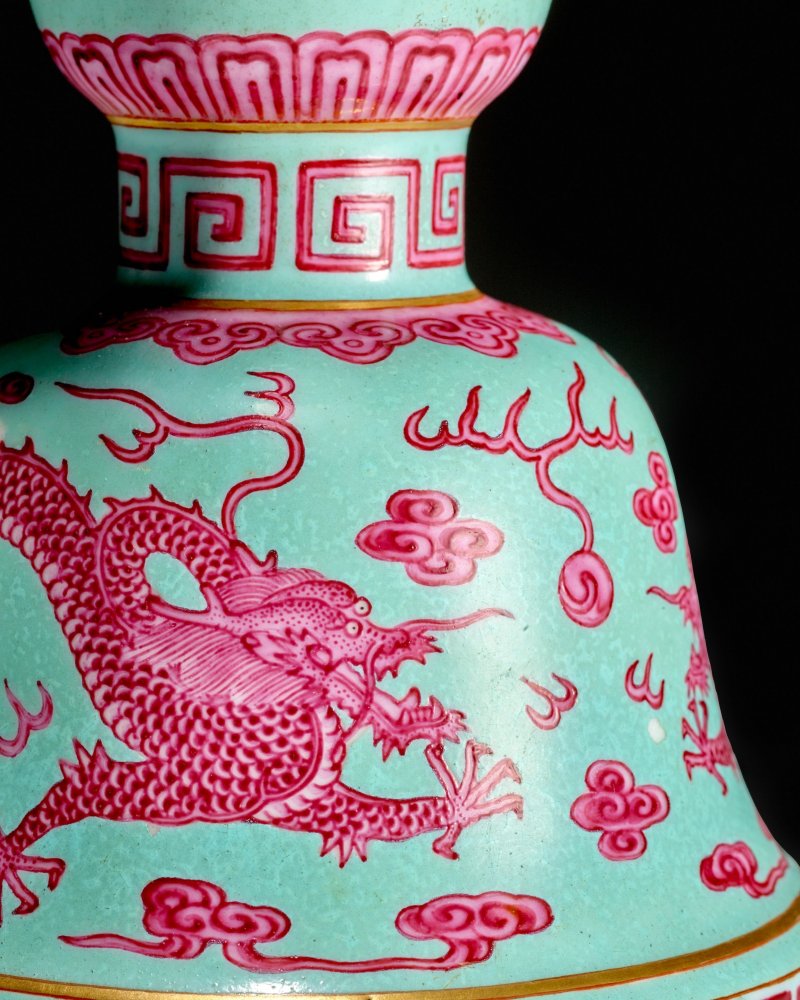
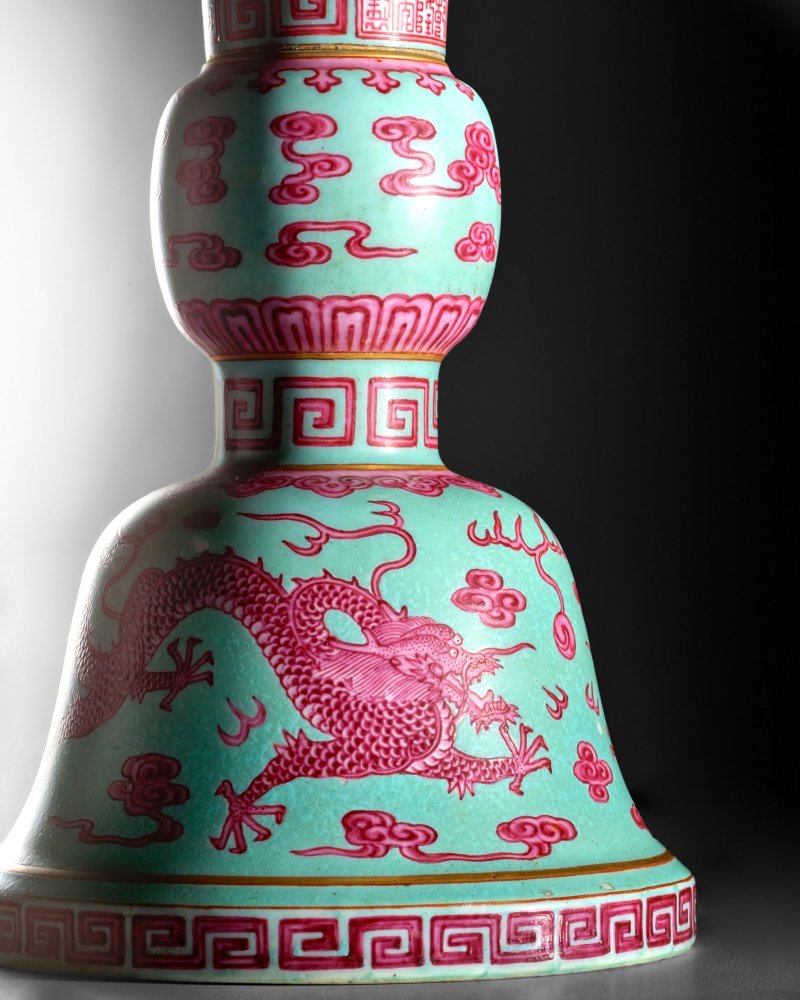
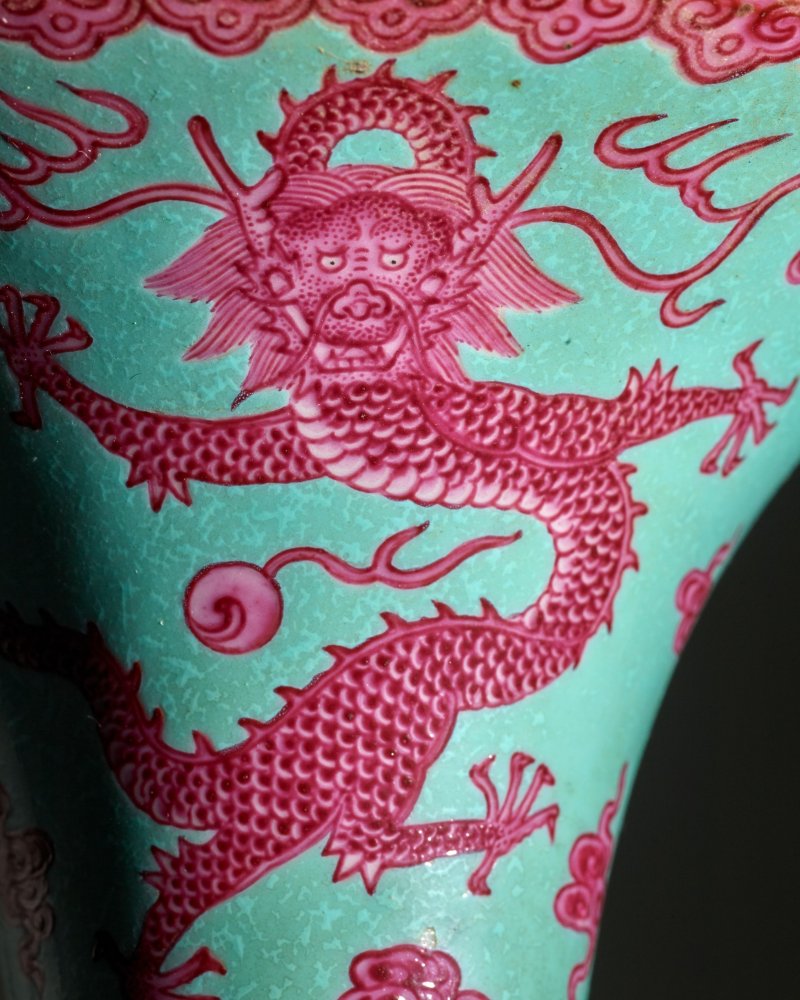
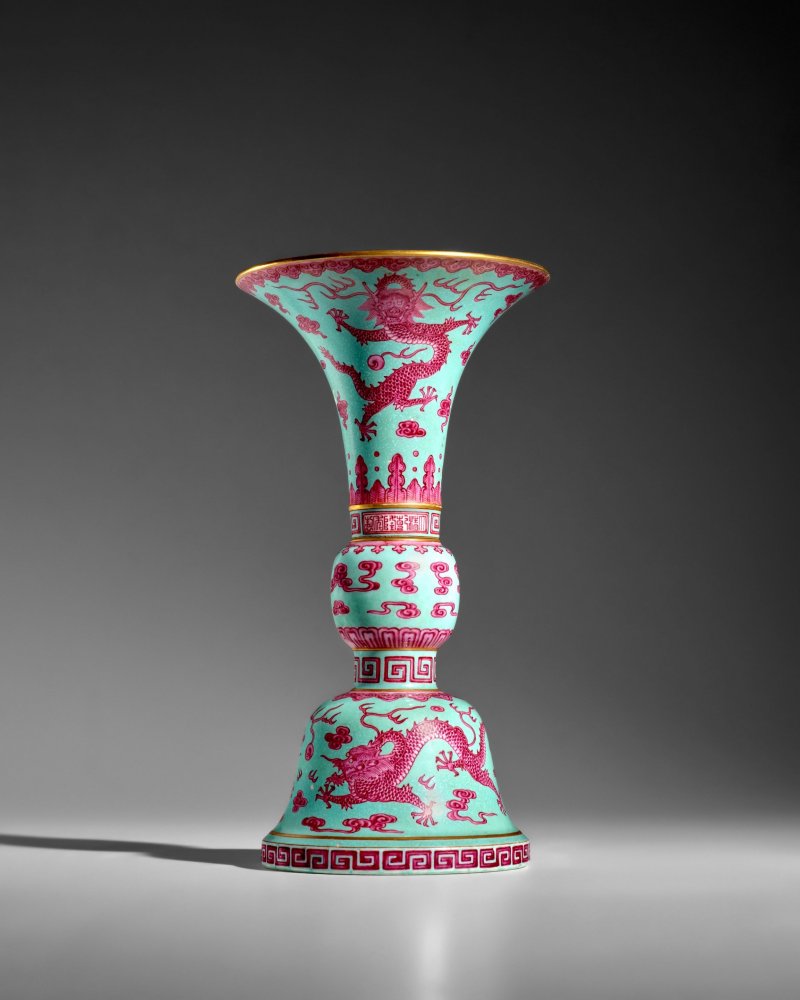
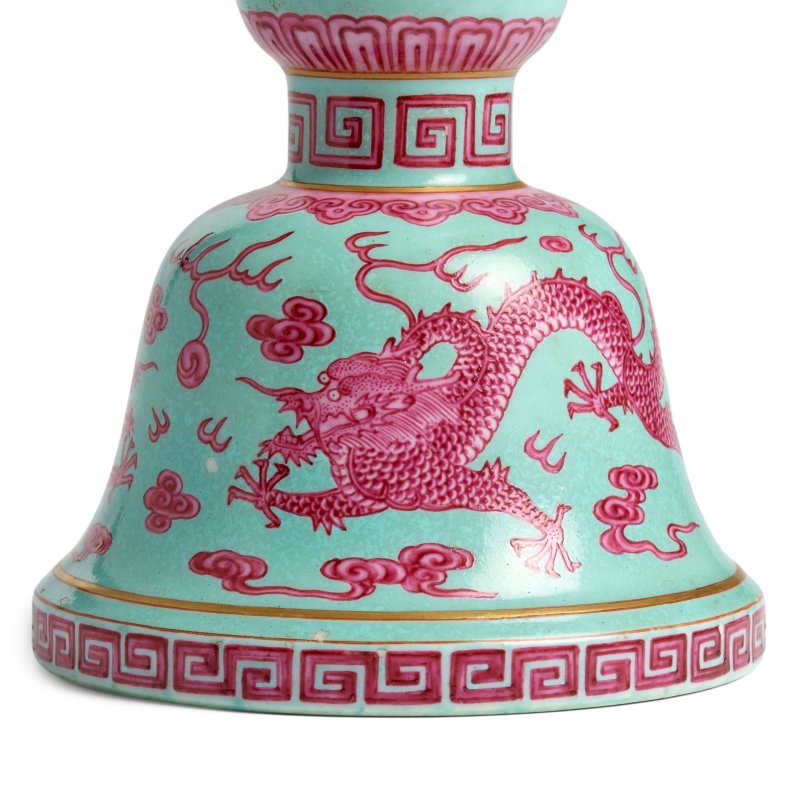
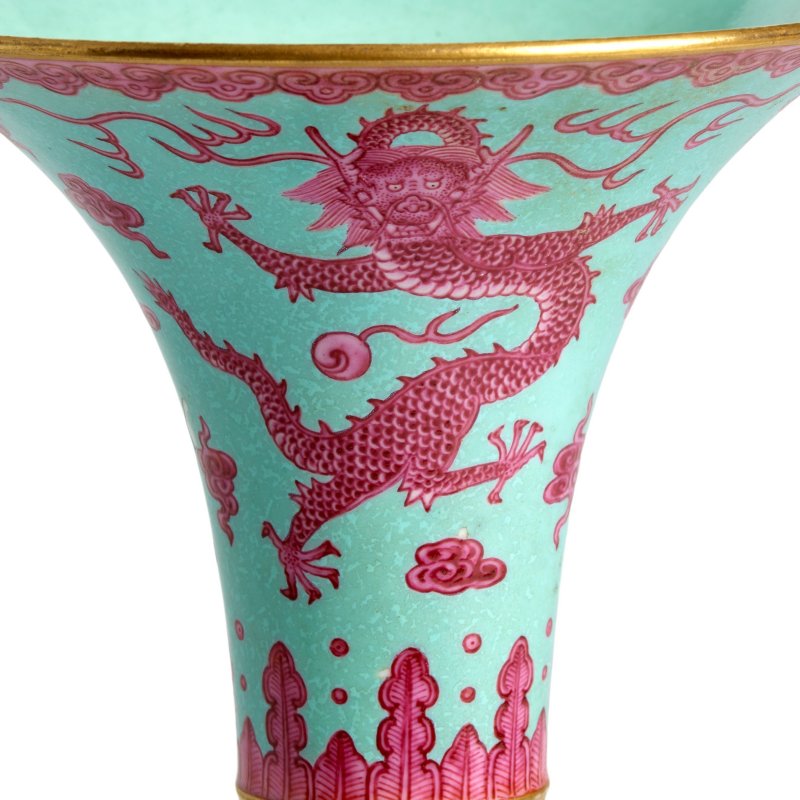
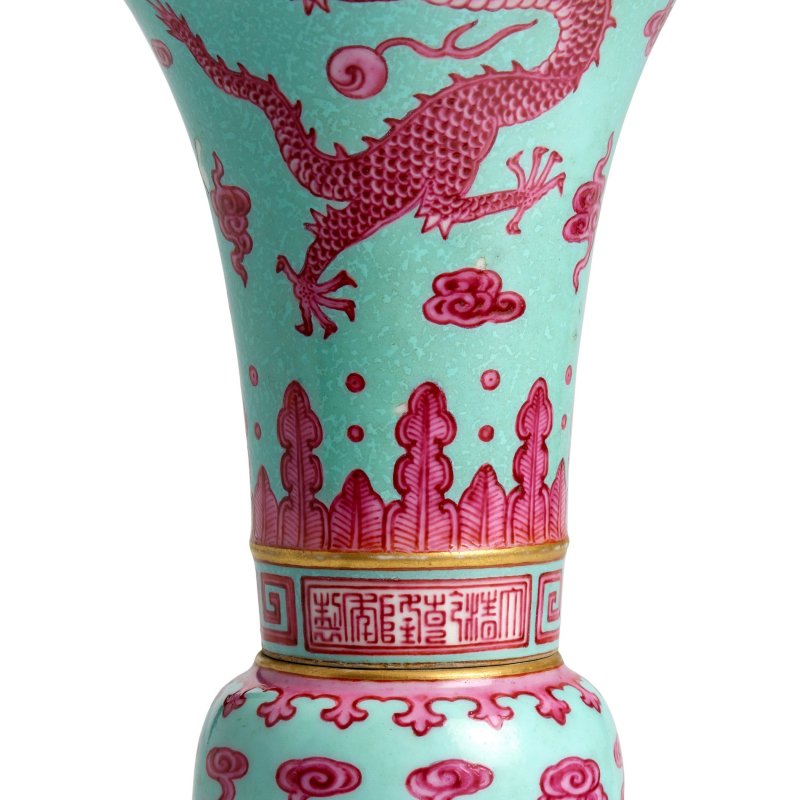
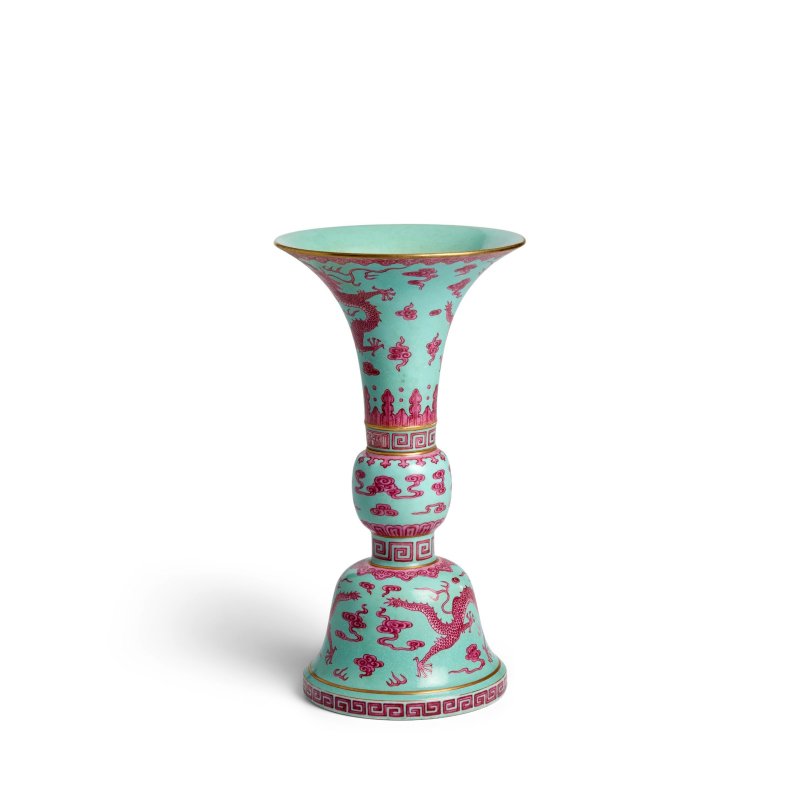
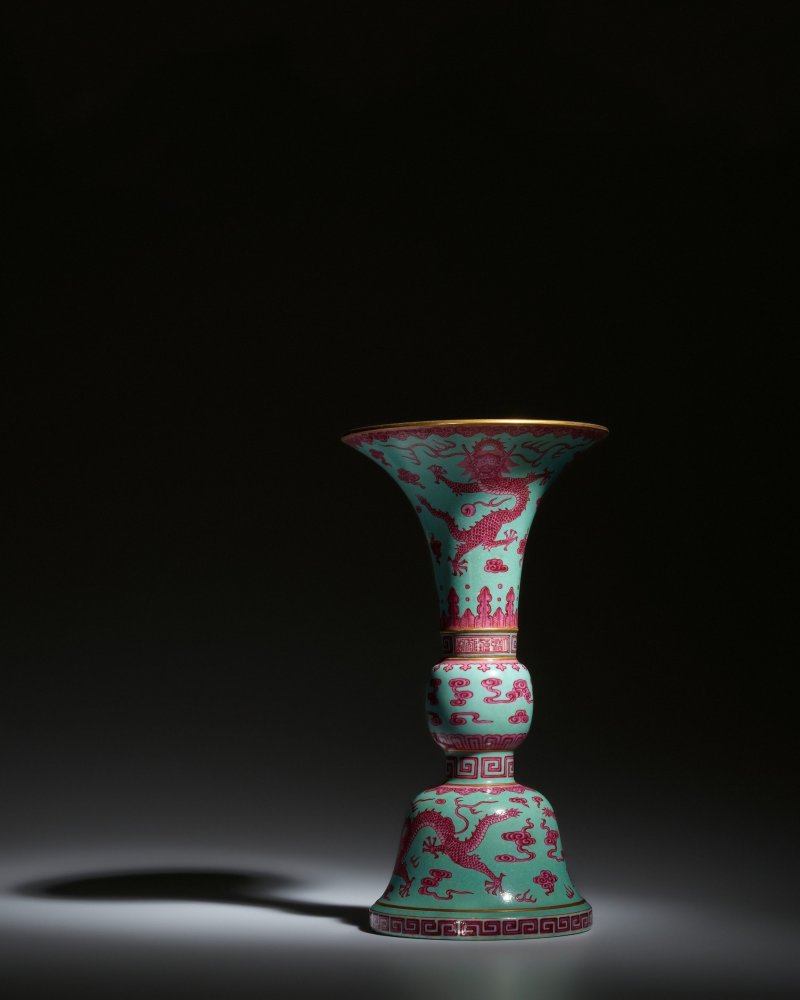
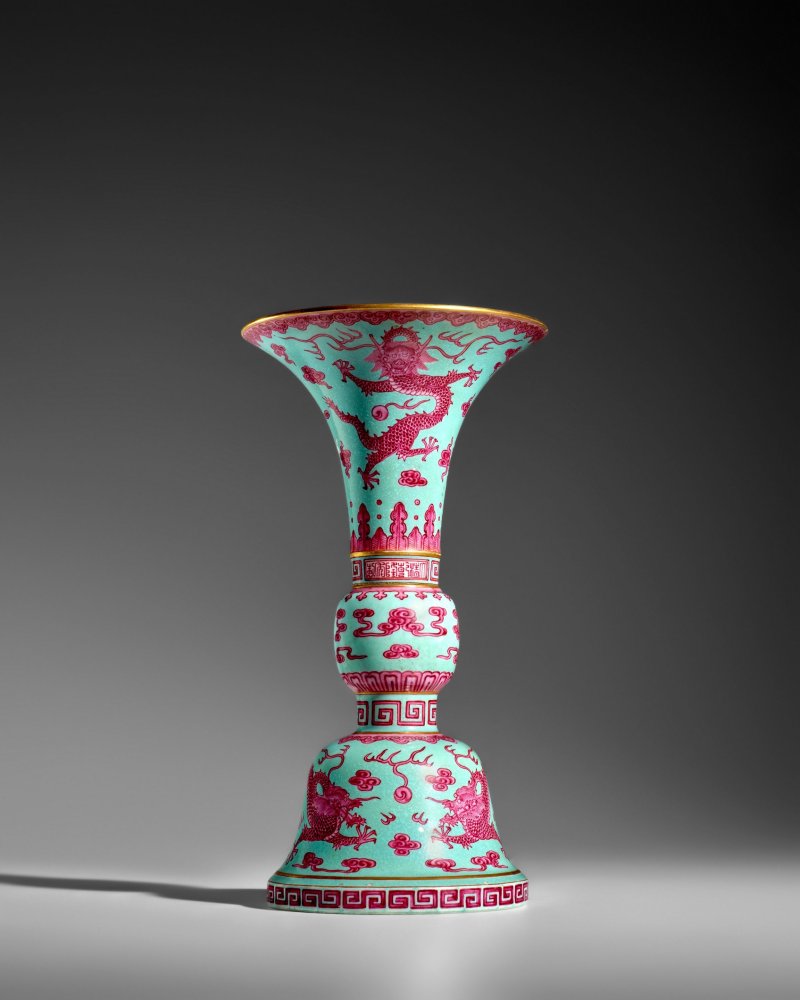
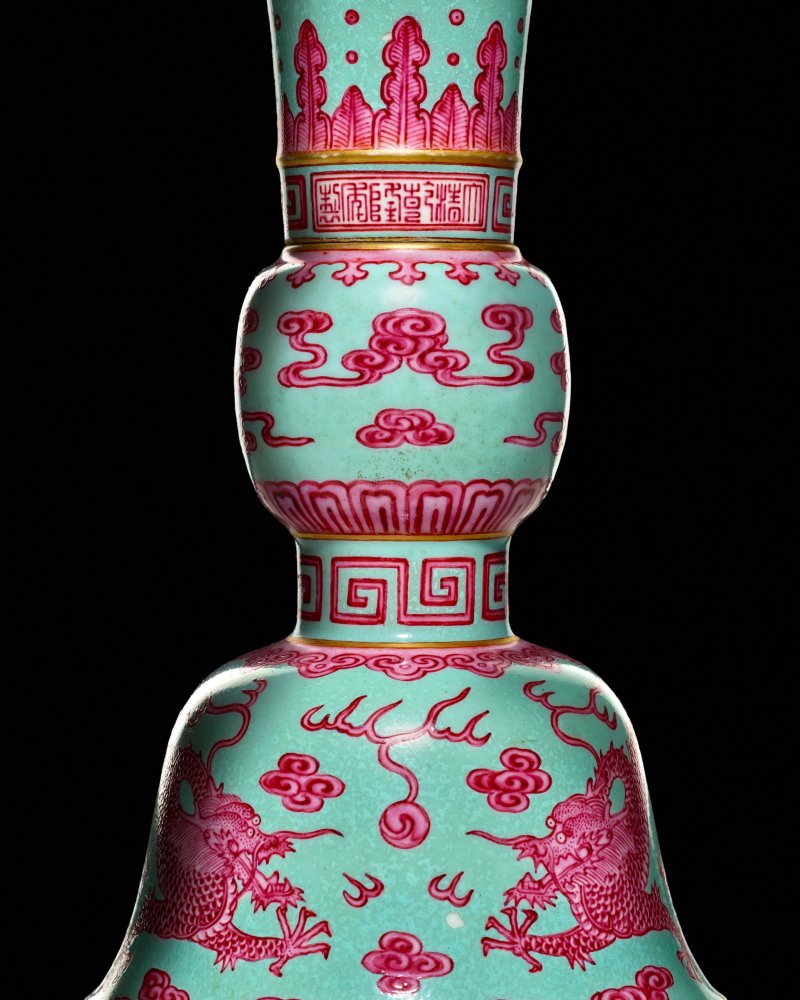
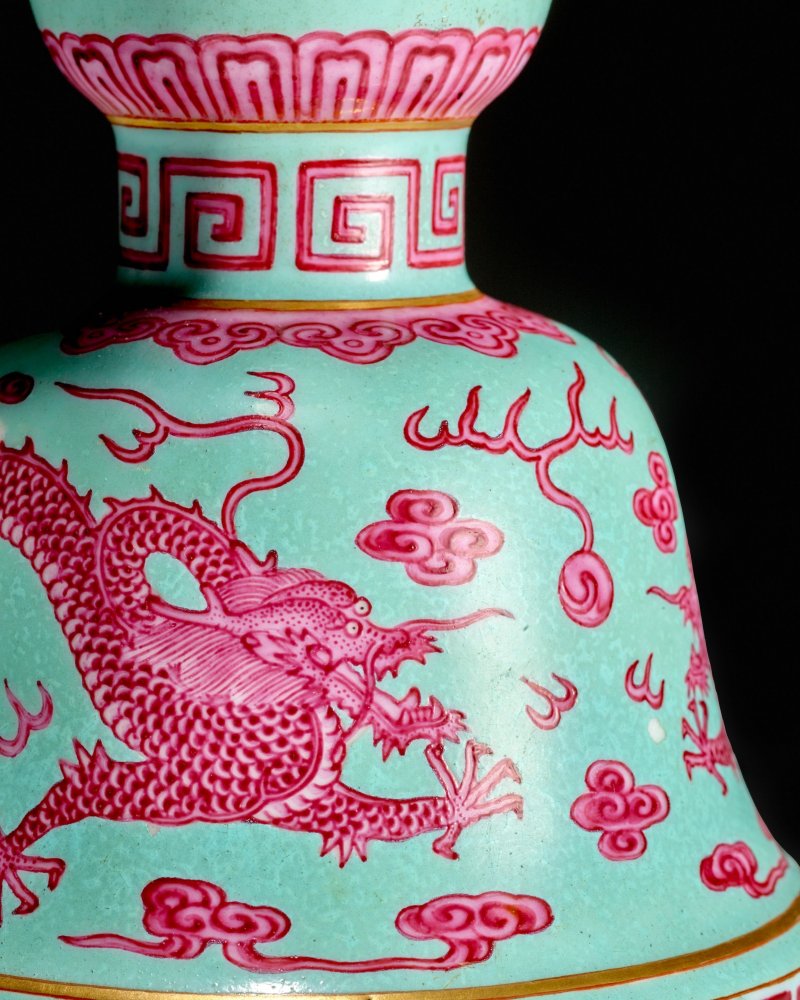
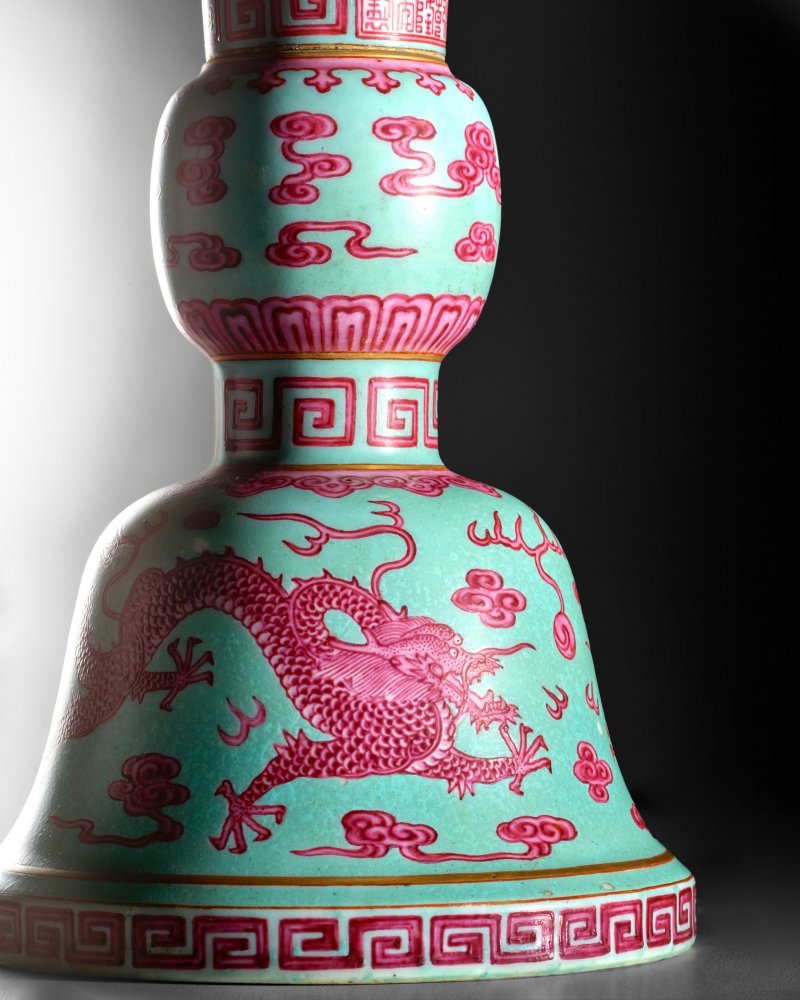
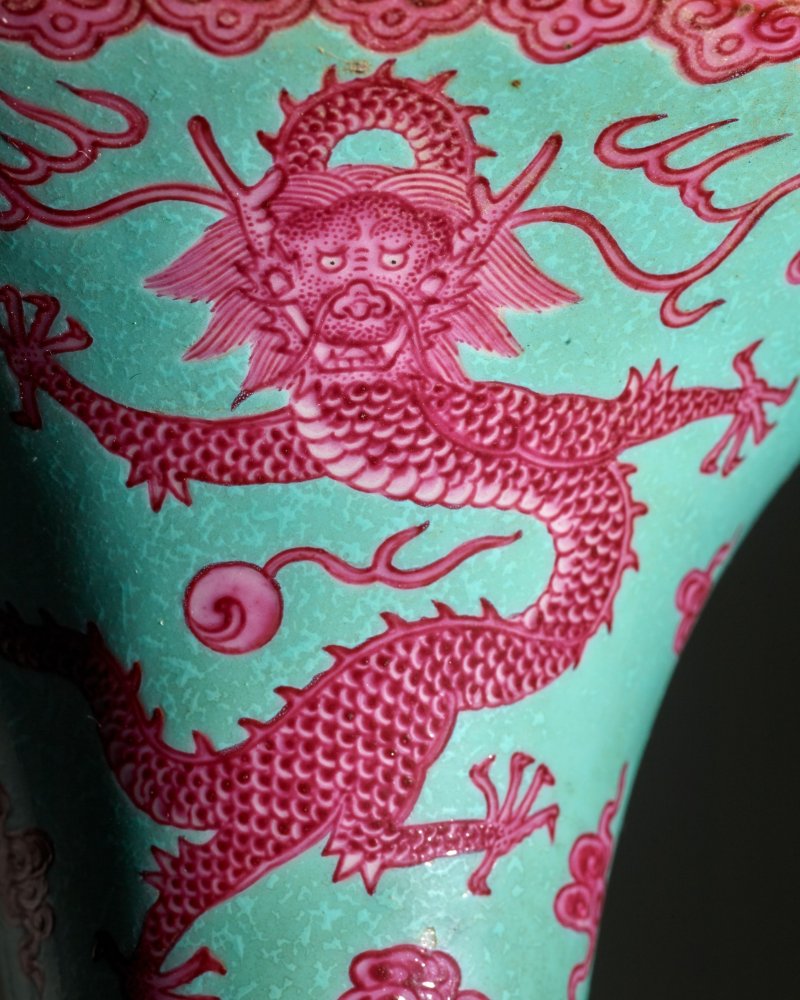
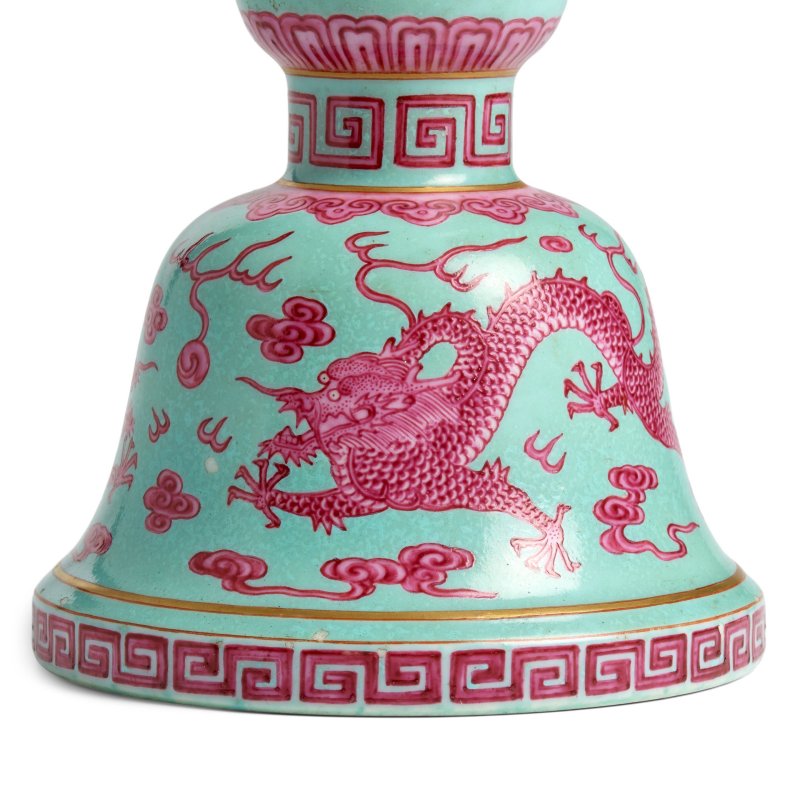
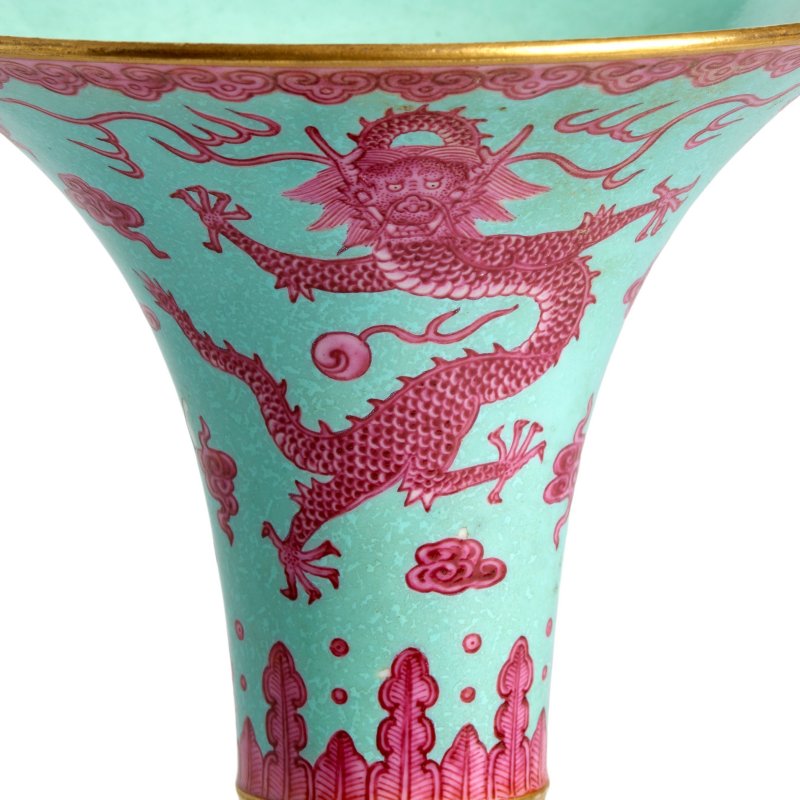
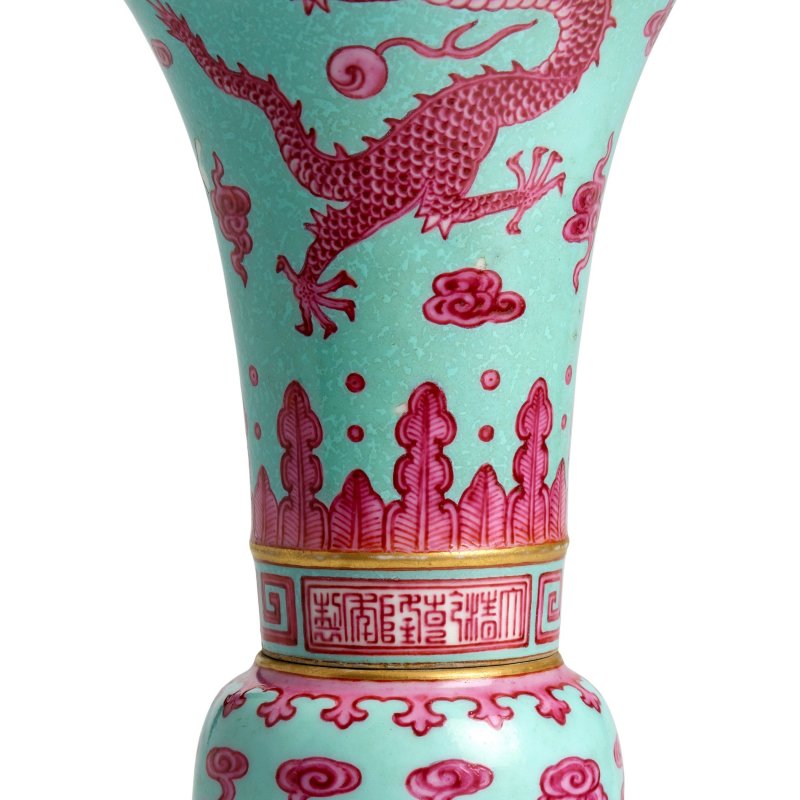
Of archaistic gu form, finely modelled with a flaring trumpet neck rising above a central bulb and a bell-shaped foot, vividly decorated in rouge enamel against a turquoise ground with one five-clawed dragon leaping amidst clouds on the upper and lower sections each, the central bulb bears a puce-enameled six-character seal mark enclosed within a rectangular cartouche, each sections finely encircled by a ruyi-band and a keyfret border, the interiors of the neck and foot enameled turquoise.
11 1/4in (28.5cm) high
Footnotes
清乾隆 松石綠地胭脂紅彩雲龍紋花觚
胭脂紅彩「大清乾隆年製」六字篆書橫款
A devout Buddhist and dedicated patron of Tibetan Buddhism, the Qianlong emperor placed considerable importance on the furnishing of Imperial Buddhist temples and ancestral halls, commissioning ritual vessels in precious and finely worked materials including cloisonné enamel, bronze, jade, and porcelain. Vases of the present form belong to this group of imperial ritual wares, which were produced in a variety of sizes and color schemes and were likely intended as components of five-piece altar garnitures.
The present altar vase appears to be very rare in its decorative palette and associated techniques. Particularly noteworthy is its use of rouge enamel, a costly and technically demanding color introduced from the West during the Kangxi reign and subsequently refined at the Imperial workshops. By the Yongzheng and Qianlong periods, rouge enamel had become a highly prized imperial color, valued for its delicate range of tones from soft pink to deep crimson. Although no identical vase seems to have appeared on the market, a few related wares with similar scheme can be found in prominent museum or private collections. A related Qianlong mark and period altar censer with dragon-form handles, decorated in puce enamel against a turquoise ground, is in the National Museum of China, Beijing, illustrated in , Shanghai, 2007, pl. 107, p. 163; another censer of puce enamel and turquoise ground was sold at Christie's Hong Kong, 28 November 2018, lot 2925. See also a similar vase decorated in rouge enamels with a pair of five-clawed dragons pursuing 'flaming pearls', but against a white ground, illustrated in The Tsui Museum of Art, , vol. 4, Hong Kong, 1995, pl. 177.
Of archaistic gu form, finely modelled with a flaring trumpet neck rising above a central bulb and a bell-shaped foot, vividly decorated in rouge enamel against a turquoise ground with one five-clawed dragon leaping amidst clouds on the upper and lower sections each, the central bulb bears a puce-enameled six-character seal mark enclosed within a rectangular cartouche, each sections finely encircled by a ruyi-band and a keyfret border, the interiors of the neck and foot enameled turquoise.
11 1/4in (28.5cm) high
Footnotes
清乾隆 松石綠地胭脂紅彩雲龍紋花觚
胭脂紅彩「大清乾隆年製」六字篆書橫款
A devout Buddhist and dedicated patron of Tibetan Buddhism, the Qianlong emperor placed considerable importance on the furnishing of Imperial Buddhist temples and ancestral halls, commissioning ritual vessels in precious and finely worked materials including cloisonné enamel, bronze, jade, and porcelain. Vases of the present form belong to this group of imperial ritual wares, which were produced in a variety of sizes and color schemes and were likely intended as components of five-piece altar garnitures.
The present altar vase appears to be very rare in its decorative palette and associated techniques. Particularly noteworthy is its use of rouge enamel, a costly and technically demanding color introduced from the West during the Kangxi reign and subsequently refined at the Imperial workshops. By the Yongzheng and Qianlong periods, rouge enamel had become a highly prized imperial color, valued for its delicate range of tones from soft pink to deep crimson. Although no identical vase seems to have appeared on the market, a few related wares with similar scheme can be found in prominent museum or private collections. A related Qianlong mark and period altar censer with dragon-form handles, decorated in puce enamel against a turquoise ground, is in the National Museum of China, Beijing, illustrated in , Shanghai, 2007, pl. 107, p. 163; another censer of puce enamel and turquoise ground was sold at Christie's Hong Kong, 28 November 2018, lot 2925. See also a similar vase decorated in rouge enamels with a pair of five-clawed dragons pursuing 'flaming pearls', but against a white ground, illustrated in The Tsui Museum of Art, , vol. 4, Hong Kong, 1995, pl. 177.