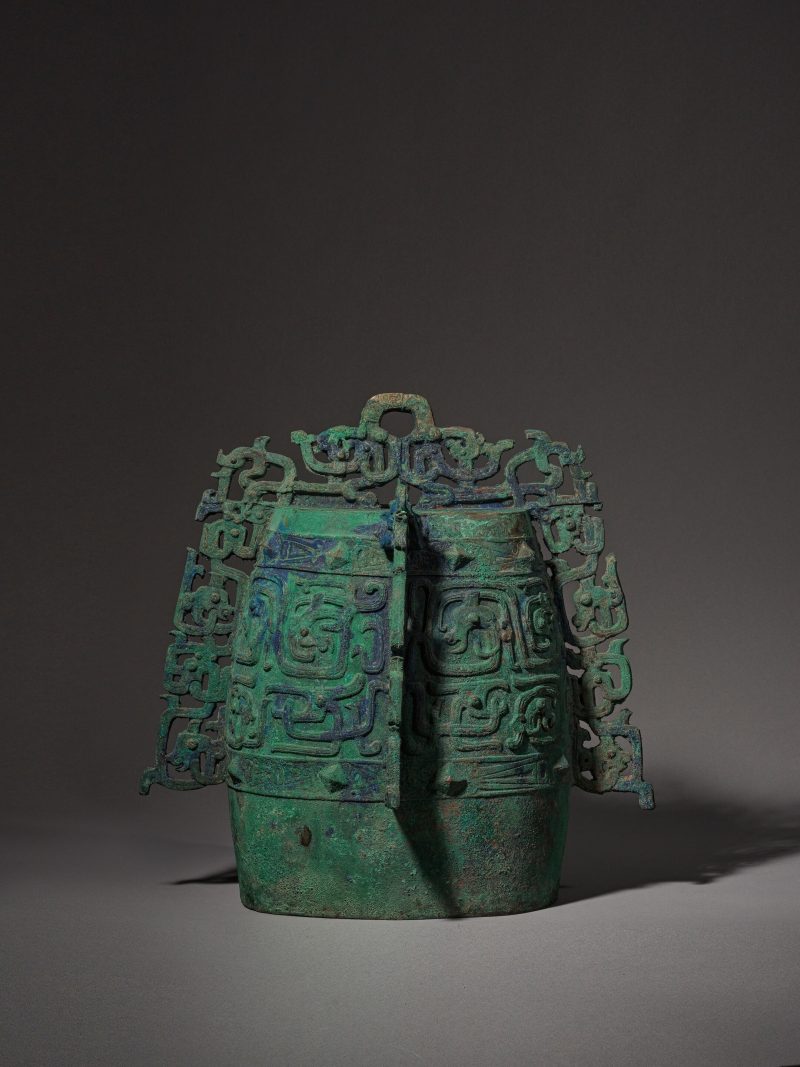

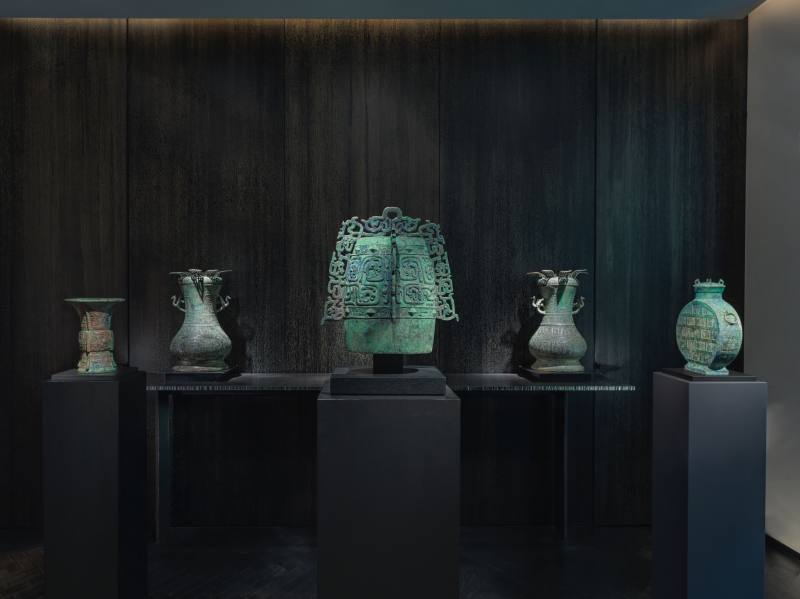
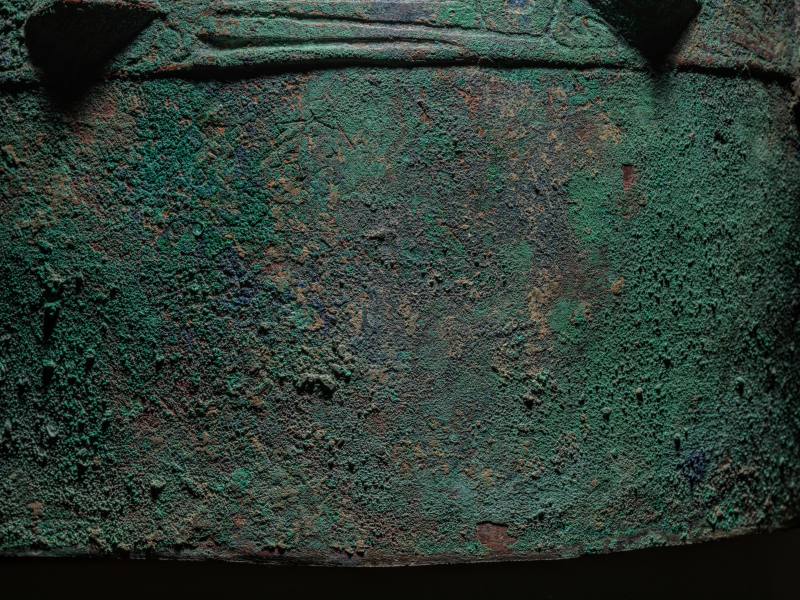
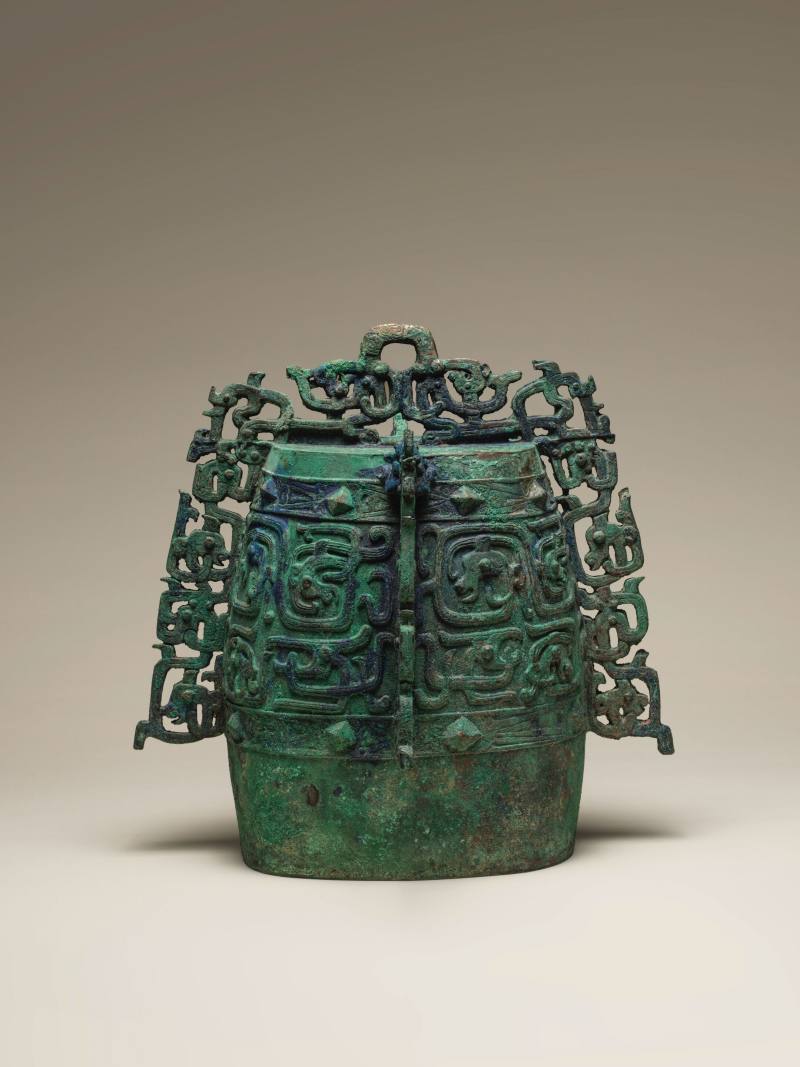
Lot 35 春秋時期 公元前七世紀早期 青銅鎛 | MAGNIFIQUE ET TRÈS RARE CLOCHE RITUELLE EN BRONZE, BO
落槌价
预展中
成交价
预展中
| 拍卖公司 | 邦瀚斯 |
|---|---|
| 拍卖时间 | 2026年12月10日 |
拍品信息
拍品名称
春秋時期 公元前七世紀早期 青銅鎛 | MAGNIFIQUE ET TRÈS RARE CLOCHE RITUELLE EN BRONZE, BO
年代
春秋時期 公元前七世紀早期
起拍价
未知
估值区间
EUR 80,000–120,000
尺寸
42 cm (16 1/2 in.) high x 41 cm (16 1/8 in.) wide x 36 cm (14 1/8 in.) deep
品相
未知
更多信息
MAGNIFIQUE ET TRÈS RARE CLOCHE RITUELLE EN BRONZE, BO
Période des Printemps et Automnes, début du VIIe siècle av. J.-C.
A MAGNIFICENT AND VERY RARE LARGE ARCHAIC BRONZE BELL, BO
Spring and Autumn period, early 7th century BC
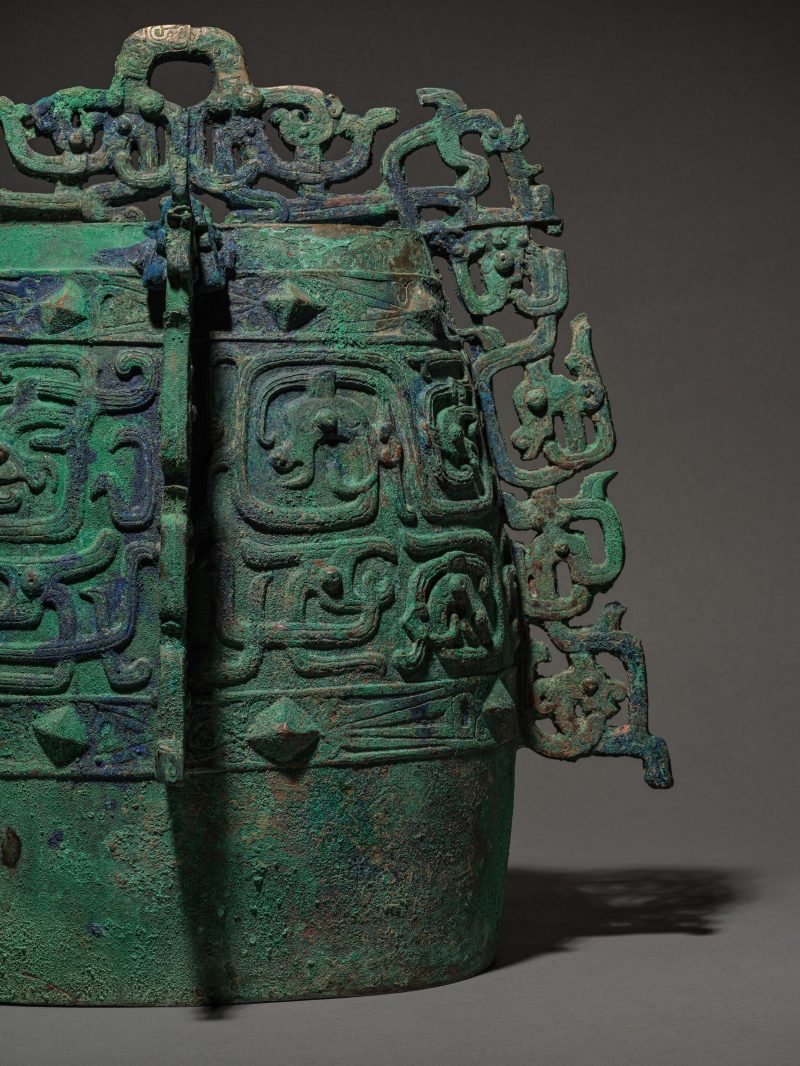
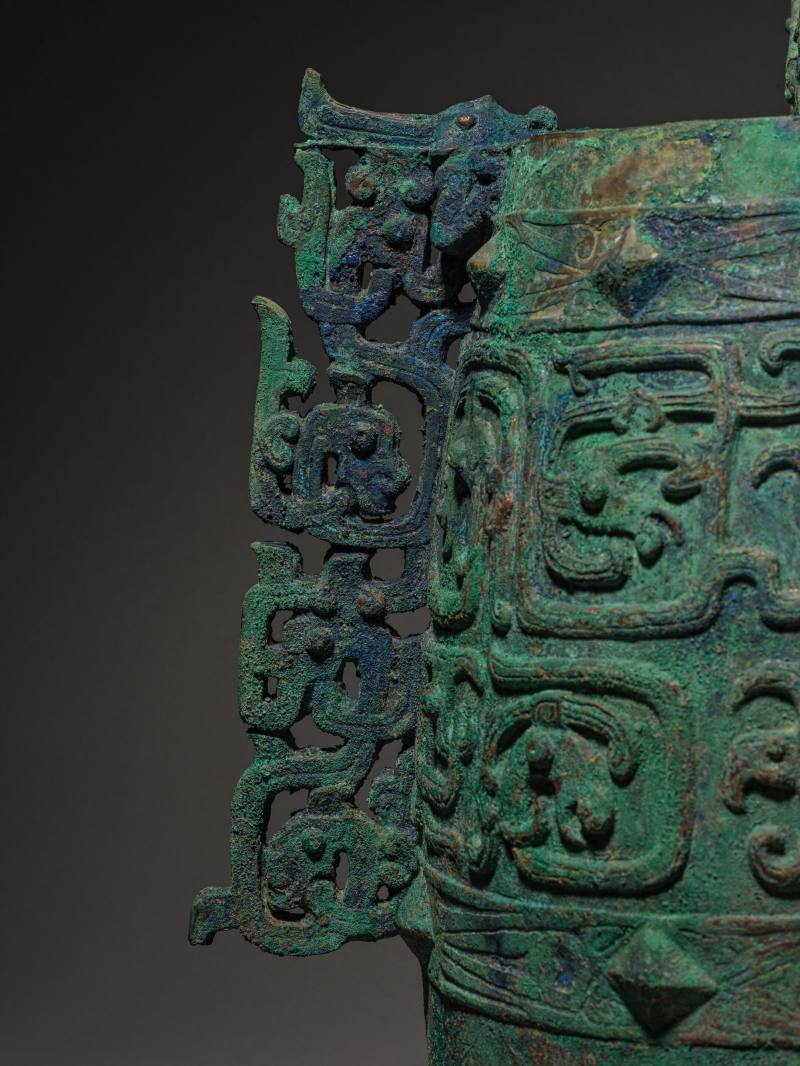
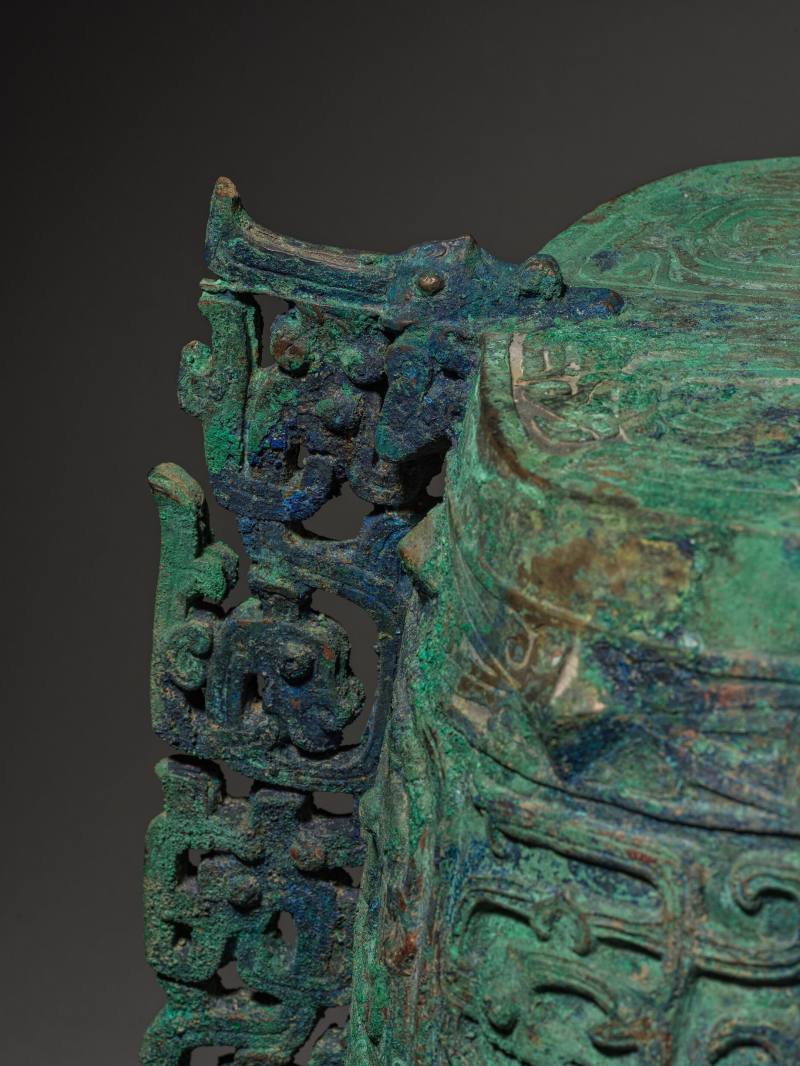
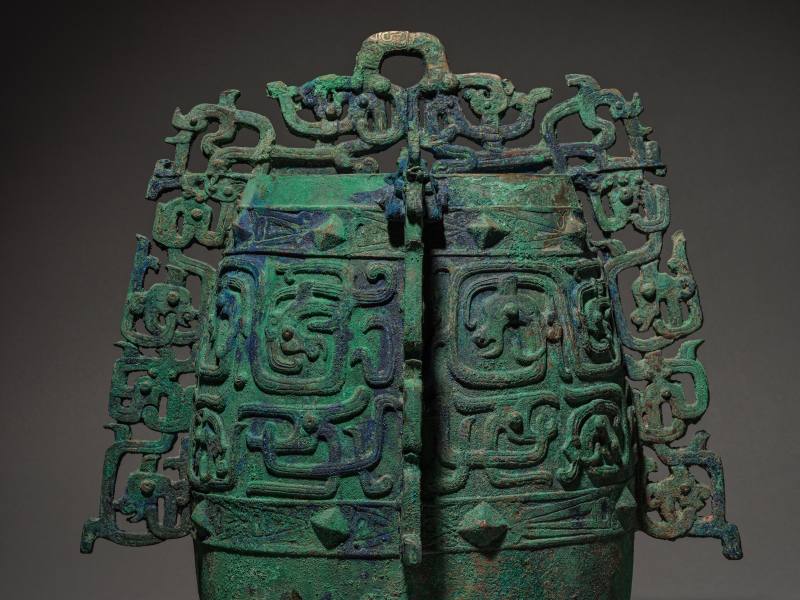
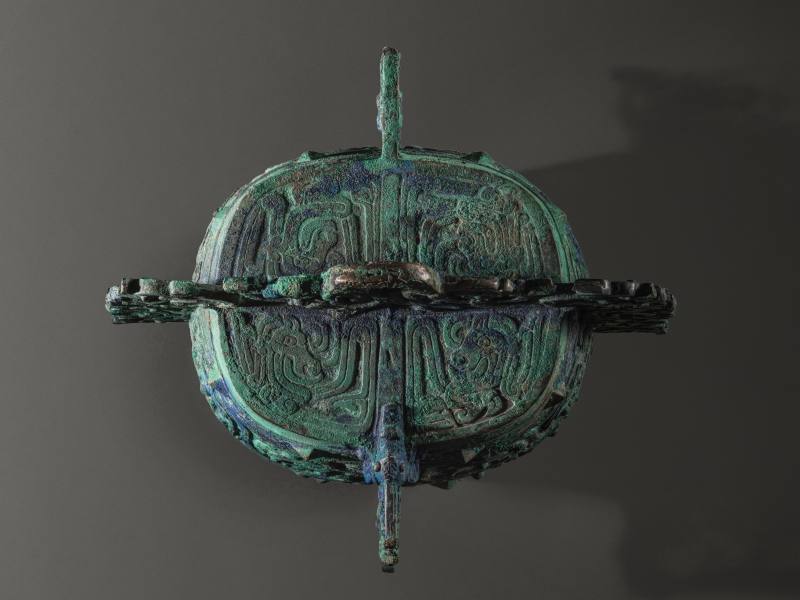
Of elliptical section, with a level rim and swelling sides narrowing to a flat top, the surface divided into four sections by hooked openwork flanges depicting interlacing snake-dragons, the sides cast with a band enclosing two rows of interlaced sinuous dragons, with large bulging eyes and open, hooked snouts, between a band of diamond-shaped bosses alternating with cicadas, surmounted at the top by an inverted U-shaped loop, the interior cast with a seven-character inscription reading Qin gong zuo zhu bo he zhong ('the Duke of Qin had this bell (bo) cast to accompany the bells (zhong) harmoniously').
42 cm (16 1/2 in.) high x 41 cm (16 1/8 in.) wide x 36 cm (14 1/8 in.) deep
春秋時期 公元前七世紀早期 青銅鎛
銘文:秦公作鑄鎛龢鐘
Provenance:
Ching Wan Society, Taiwan, by 2000
Gisèle Croës Arts d'Extrême Orient, Brussels, 2017
Published, Illustrated and Exhibited:
The Chang Foundation, Ching Wan Society Millennium Exhibition, Taipei, 2000, p. 214, no. 118 (Published)
Gisèle Croës Arts d'Extrême Orient, Collecting Chinese Art, Bronze – Gold – Silver, Part 1, New York, 2018
來源:
清翫雅集,台灣,2000年前
Gisèle Croës Arts d'Extrême Orient,布魯塞爾,2017年
展覽著錄:
鴻禧藝術文教基金會,《千禧年清翫雅集收藏展》,台灣,2000年,第214頁,編號118 (著錄)
Gisèle Croës Arts d'Extrême Orient,《Collecting Chinese Art, Bronze – Gold – Silver, Part 1》,紐約,2018年
This magnificent bell with its exquisitely cast design of intricately interlaced sinuous snake-dragons is a technical masterpiece, and a superb example of the bronzes made during the early Spring and Autumn period (ca. 770-476 BC) of the Eastern Zhou dynasty. It represents the second important category of bells popular in early dynastic China known as bo. Visually, its shape and design are very different from bells of the nao type. Like the nao, it is of elliptical cross-section but where the nao is pointed, the bo has a rounded shape, and where the nao has a concave mouth, the bo has an entirely flat mouth. The inverted U-shaped suspension loop cast at the top of this bell indicates that it was suspended vertically from a large, solid frame with the mouth facing down. Like the nao bell, there is no indication that it had a clapper but was sounded by striking it with a mallet at a central spot above the mouth. The rounded shape and flat mouth did not permit the bo to produce two tones like the nao, and it has been suggested that bo bells such as this example may have served to accent the tempo or underlying rhythm for melodies produced by the musical two-toned nao bells. The large size of this bo bell and related examples suggests that they may have occupied a special status and function within a percussion assemblage. Never has a set of more than three bo bells been discovered and it is possible that this example was originally part of a set of three.
The surface decoration on this bell is arranged in a wide band enclosing a double register of generously spaced large interlacing sinuous snake-dragons, their bodies entwined and bordered by a band of large pointed diamond-shaped bosses. Large openwork flanges divide the surface into four segments and are joined by the loop at the flat top of the bell. The style of this bell is distinctive and very different from other bo excavated from sites in northern and central China. With predecessors in the Shang dynasty similarly cast with flanges, the features of this bo are much closer related to bells of this type made in the South during the late Western Zhou and early Eastern Zhou period, distinguished by their large, hooked flanges, see Jessica Rawson, Western Zhou Ritual Bronzes in the Sackler Collections, Washington, D.C., pp. 753-757, no. 129.
The present bo is inscribed on the inside, the inscription reading Qin gong zuo zhu bo he zhong and may be translated as 'the Duke of Qin had this bell (bo) cast to accompany the bells (zhong) harmoniously'. The inscription records that this magnificent bell was cast by order of the Duke of Qin, establishing a link to a famous set of three massive, almost identical bronze bo bells excavated 1978 in Taigongmiao village, Baoji, Shaanxi province, illustrated in Jessica Rawson, ibid., p. 758, fig. 129.8. Known as the 'Qin Gong' bells, each bell is inscribed with a lengthy inscription on the lower part of the body documenting that these bells were cast on the order of a Duke of Qin (r. 697-677 BC). During the Spring and Autumn period the state of Qin emerged as one of the major powers and one of the five hegemons competing for supremacy. It may be assumed that the present bo bell may have been cast in the same workshop and at the same time as the set of Qin Gong bo bells from Baoji.
This present bo is a rare example and, apart from the set of three 'Qin Gong' bo bells, only two other bells of this shape and design and distinctive features are known. The first is a closely related bronze bo bells of similarly large proportions and design is in the collection of the Miho Museum, Kaga, Japan, illustrated in The Miho Museum. South Wing, Kaga, 1997, pp. 176-177, no. 81, the second in the collection of the Shanghai Museum, published in Chen Xiejun (ed.), Shanghai Museum, Hong Kong, 2007, p. 41, no 37.
以下内容由AI翻译:
【描述】
呈椭圆形,平缘,两侧鼓起并向顶部逐渐收窄至平顶,表面由饰交缠蛇龙纹的钩形镂空扉棱划分为四区,侧面铸有两排交错的蜿蜒龙纹,大而凸出的眼睛和张开的钩状鼻,中间是一圈菱形凸起与蝉纹交替排列,顶部有一个倒U形环,内部铸有七字铭文“秦公作鑄鎛龢鐘”,意为秦公命铸此鎛,以与诸鐘和鸣。
这件精美的青铜镈以其精细铸造的交错蜿蜒龙蛇纹设计,是一件技术杰作,是东周春秋早期(约公元前770-476年)青铜器的杰出代表。它代表了中国古代流行的第二种重要类型的钟——镈。从外观上看,它的形状和设计与铙类钟非常不同。虽然两者都是椭圆形截面,但铙类钟尖端突出,而镈则呈圆形,且铙类钟口部凹陷,而镈口部完全平坦。顶部铸有的倒U形悬挂环表明,这种钟是垂直悬挂在大型实心框架上,口部朝下。与铙类钟一样,没有迹象表明它有钟舌,而是通过在口部上方中央位置用槌敲击发声。圆形和平坦的口部使镈不能像铙类钟那样发出两个音调,有人认为这类镈钟可能用于强调旋律的节奏或基本节拍,这些旋律是由双音调的铙类钟产生的。这件镈钟及其相关实例的尺寸较大,表明它们可能在一个打击乐器组合中具有特殊的地位和功能。从未发现超过三件一组的镈钟,因此这件镈钟可能是原来三件一组的一部分。
这件钟的表面装饰由一个宽大的带状图案组成,包含两排间距较大的交错蜿蜒龙蛇纹,其身体缠绕并由一圈大型尖头菱形凸起包围。大型镂空边饰将表面分成四个部分,并通过顶部的环连接在一起。这种钟的风格独特,与其他在中国北部和中部地区出土的镈钟非常不同。其前身为商代同样铸有边饰的钟,但这件镈钟的特点更接近于西周晚期和东周早期南方制作的同类钟,以大型钩状边饰为特征,见Jessica Rawson,《Sackler Collections中的西周礼器》,华盛顿特区,第753-757页,编号129。
这件镈钟内侧有铭文,铭文内容为“秦公作鑄鎛龢鐘”,可以译为“秦公命铸此镈钟以和谐地伴奏其他钟”。铭文记录了这件宏伟的钟是由秦公下令铸造的,这与1978年在陕西省宝鸡市太公庙村出土的一组三件几乎相同的青铜镈钟有关,见Jessica Rawson,同上,第758页,图129.8。这组被称为“秦公”钟的每件钟都在下部铸有长篇铭文,记载这些钟是在一位秦公(公元前697-677年在位)的命令下铸造的。在春秋时期,秦国成为主要强国之一,并与其他四个霸主争夺霸权。可以假设,这件镈钟可能与宝鸡出土的“秦公”镈钟在同一作坊、同一时间铸造。
这件镈钟是一个罕见的例子,除了那组三件“秦公”镈钟外,只有另外两件具有类似形状、设计和特征的钟已知。第一件是日本加贺美秀博物馆收藏的一件尺寸和设计类似的青铜镈钟,见《美秀博物馆·南翼》,加贺,1997年,第176-177页,编号81;第二件在上海博物馆收藏,见陈燮君主编,《上海博物馆》,香港,2007年,第41页,编号37。
常见问题
这件春秋時期 公元前七世紀早期 青銅鎛 | MAGNIFIQUE ET TRÈS RARE CLOCHE RITUELLE EN BRONZE, BO的成交价是多少?
落槌价为 预展中。 成交价为 预展中。
拍品的尺寸是多少?
42 cm (16 1/2 in.) high x 41 cm (16 1/8 in.) wide x 36 cm (14 1/8 in.) deep