
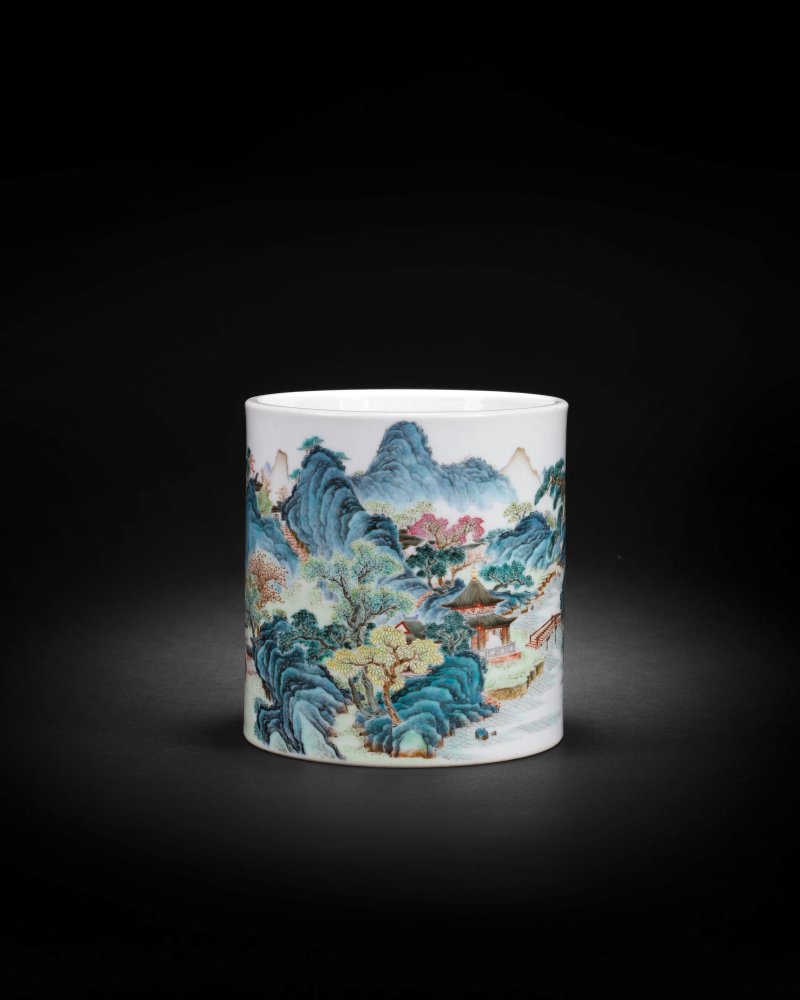
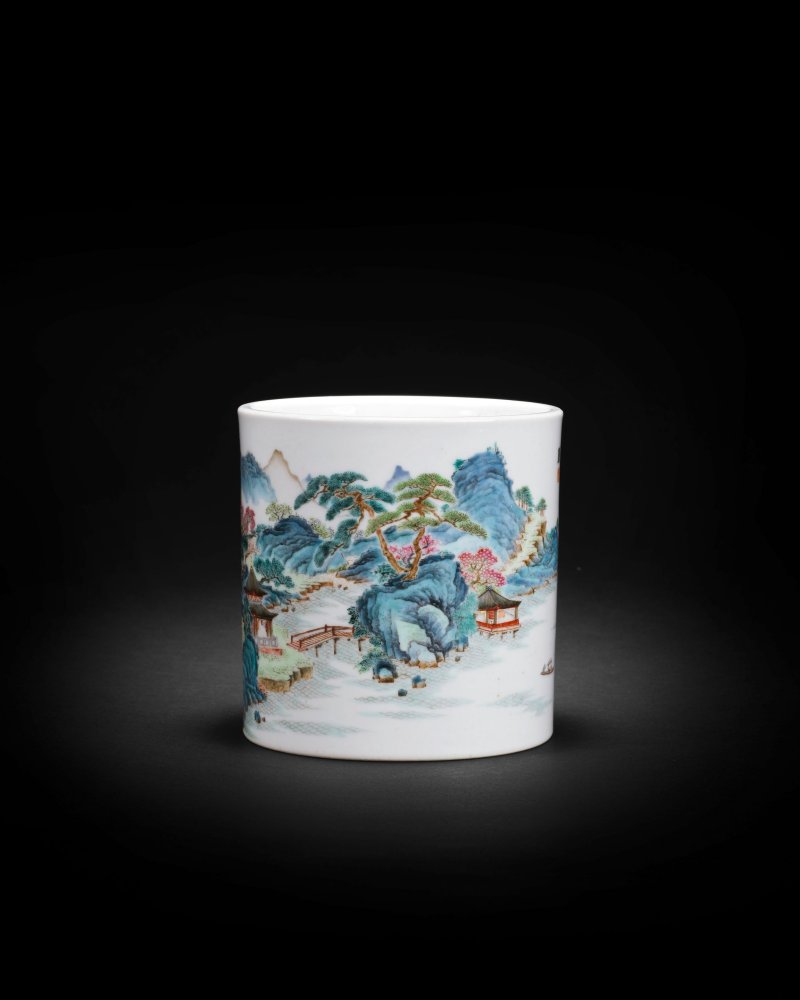
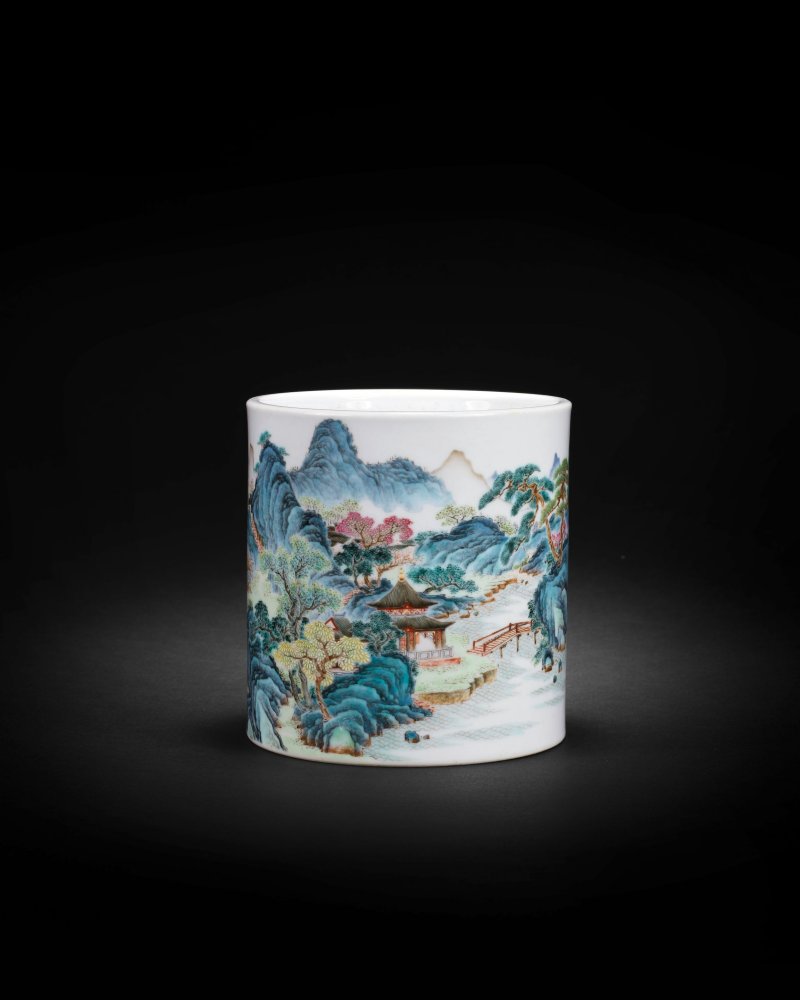
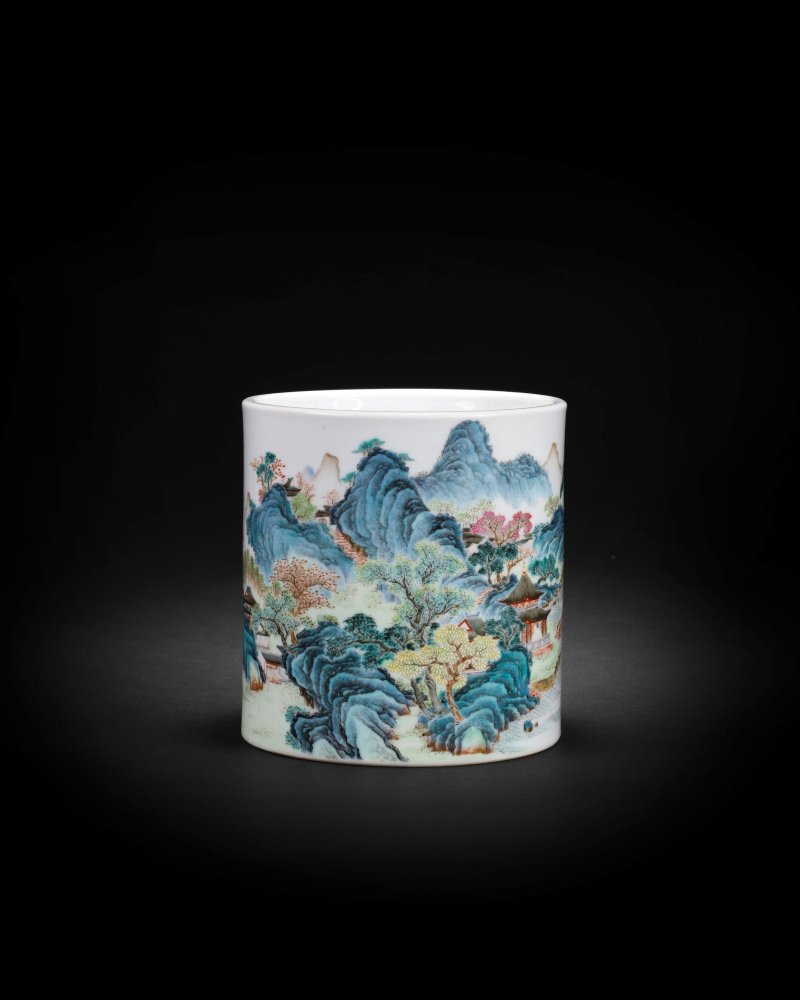

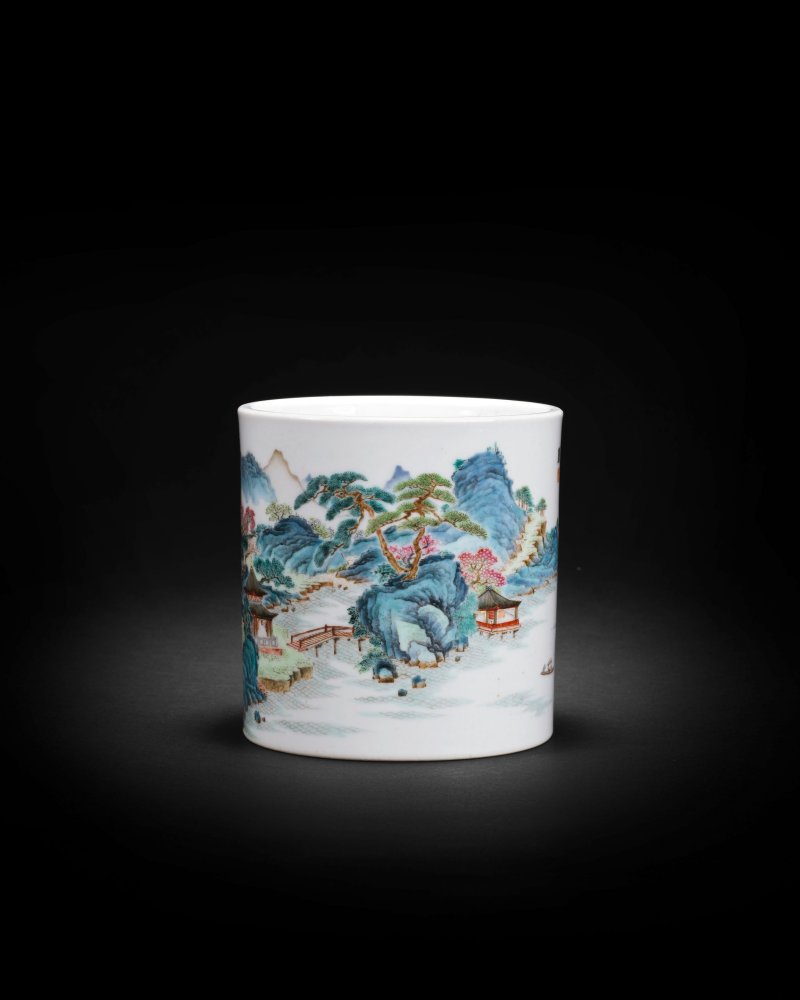
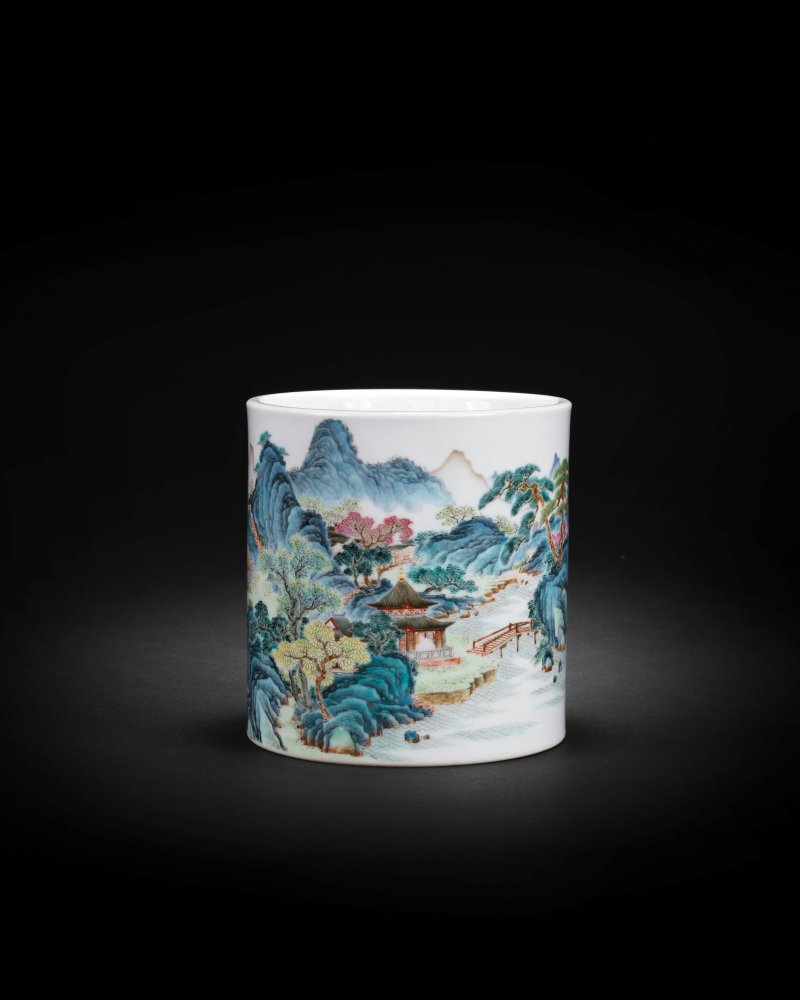
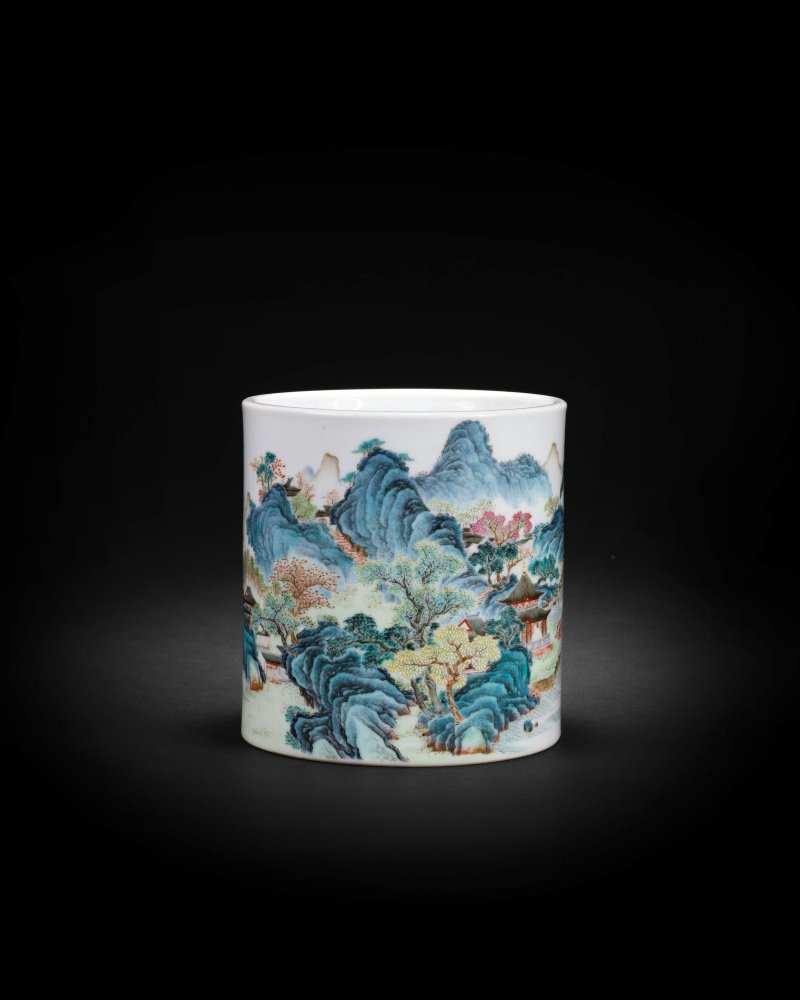
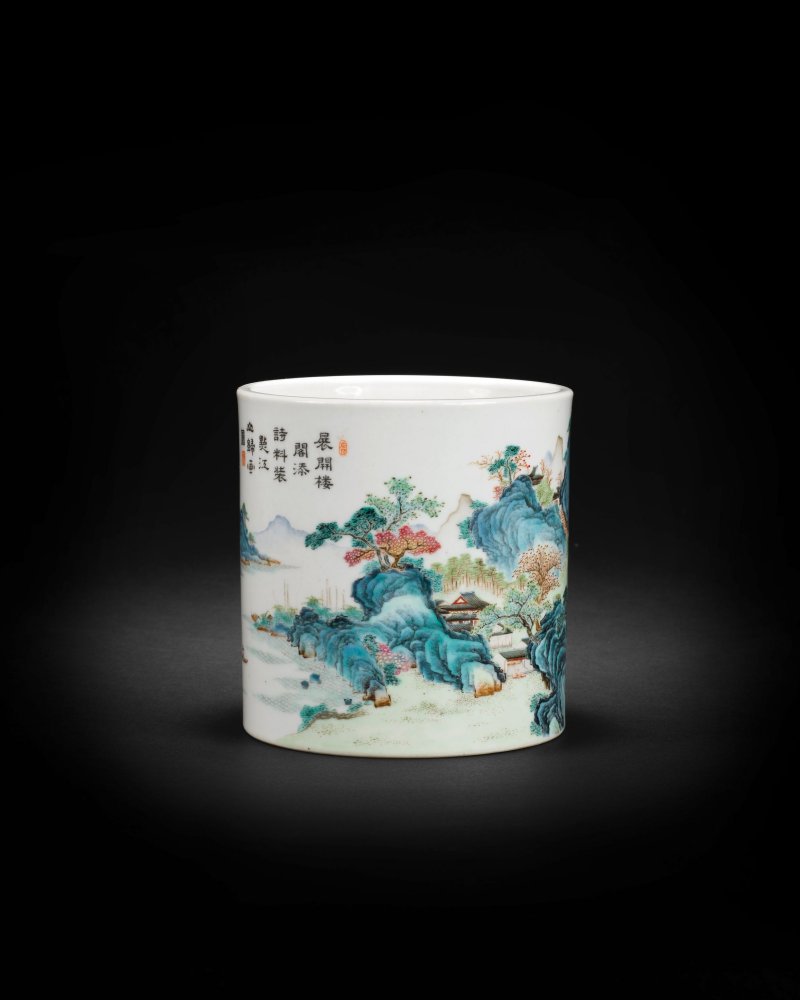
Lot 3 清乾隆 粉彩九江琵琶亭山水圖筆筒 | AN EXTREMELY RARE AND IMPORTANT 'TANG YING' FAMILLE ROSE BRUSHPOT, BITONG
落槌价
预展中
成交价
预展中
| 拍卖公司 | 邦瀚斯 |
|---|---|
| 拍卖时间 | 2026年11月05日 |
拍品信息
拍品名称
清乾隆 粉彩九江琵琶亭山水圖筆筒 | AN EXTREMELY RARE AND IMPORTANT 'TANG YING' FAMILLE ROSE BRUSHPOT, BITONG
年代
Qianlong
起拍价
GBP 300,000
估值区间
GBP 300000 - 400000
尺寸
未知
品相
未知
更多信息
Qianlong
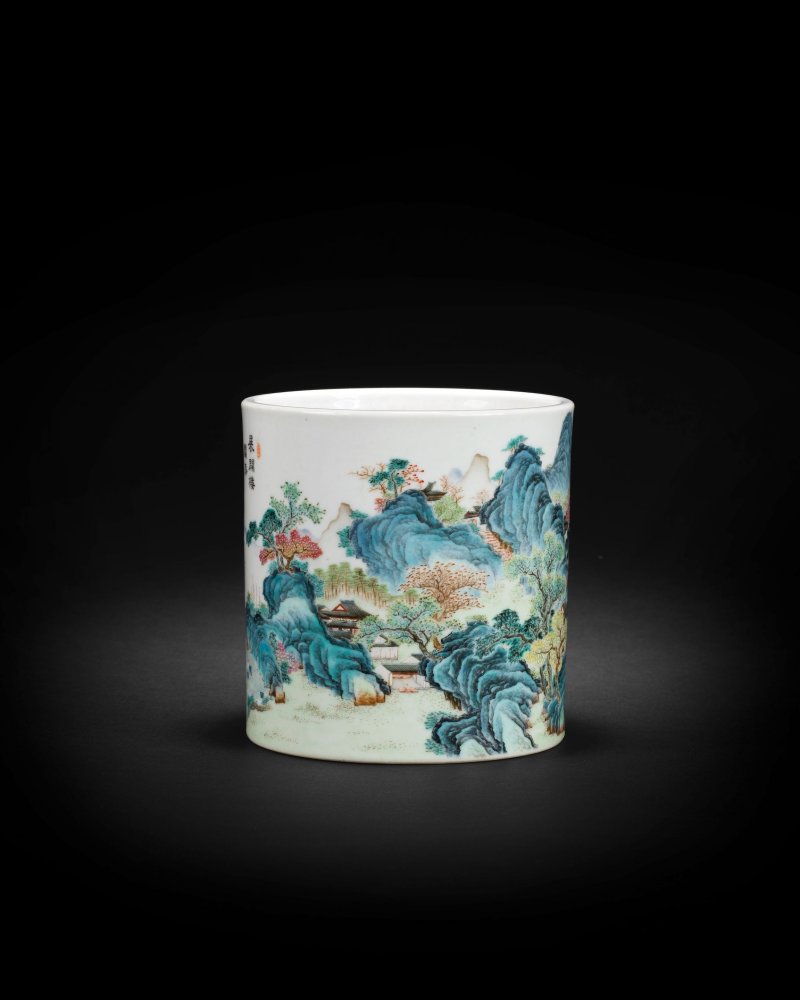
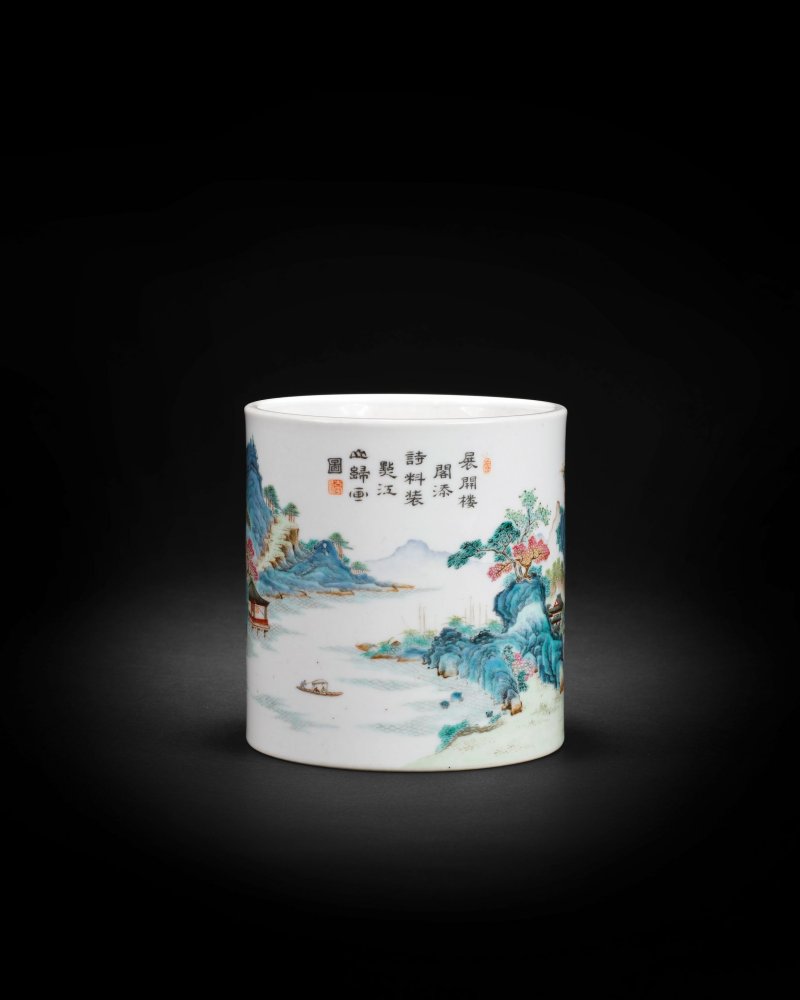
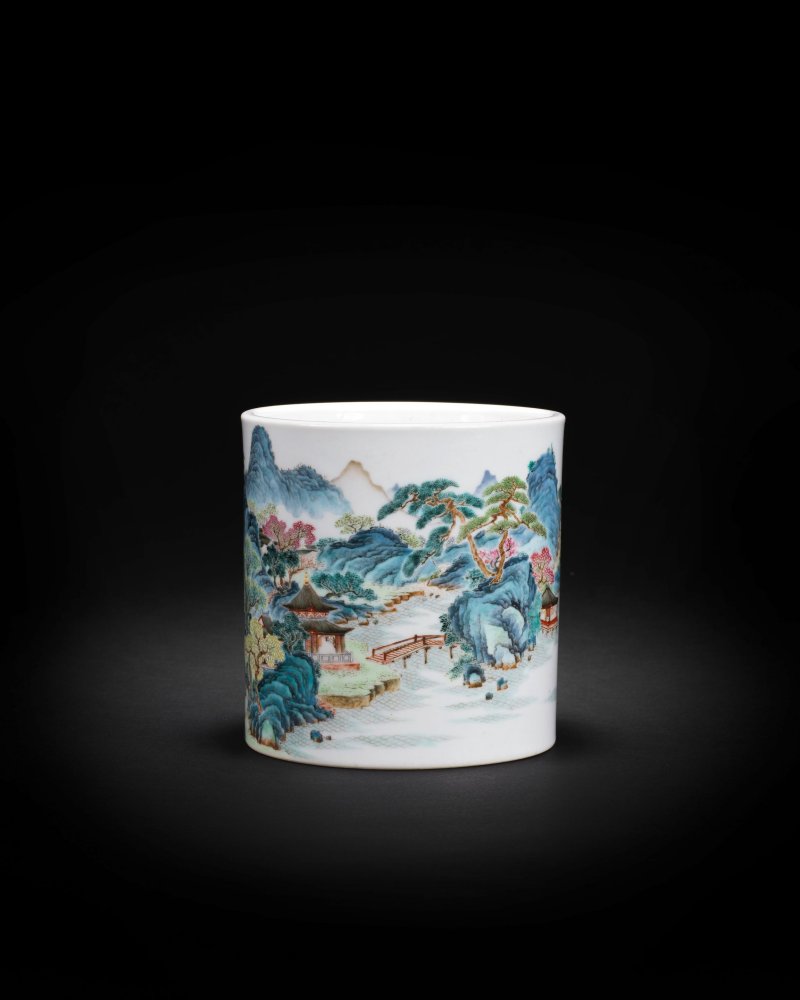
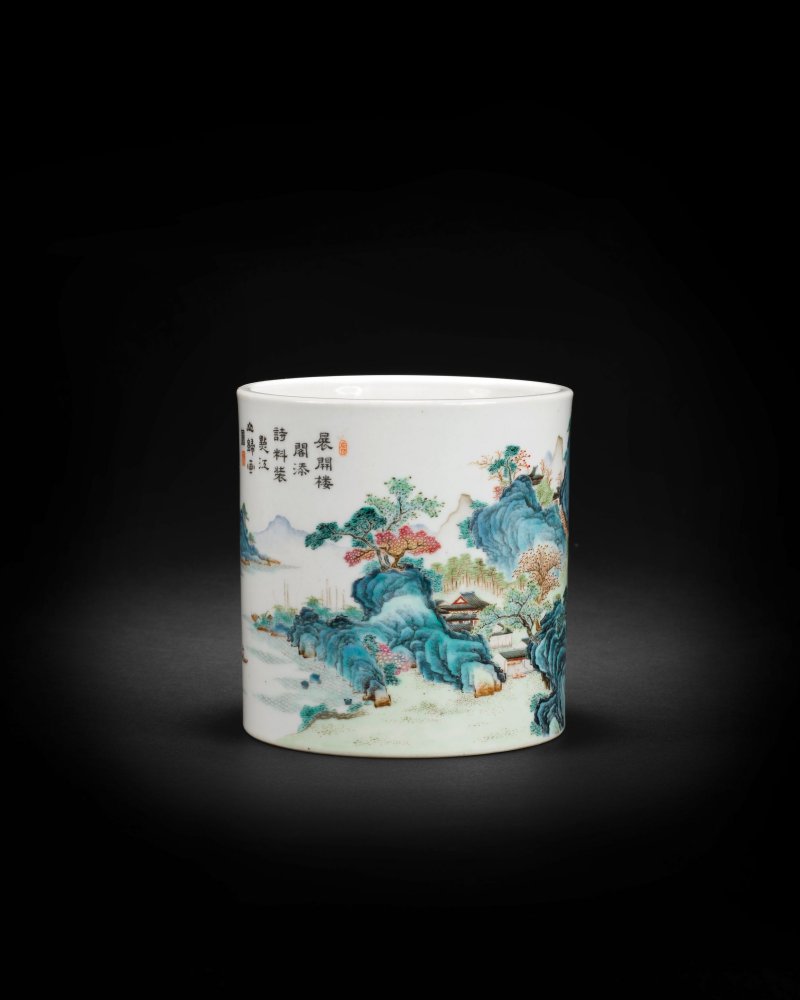
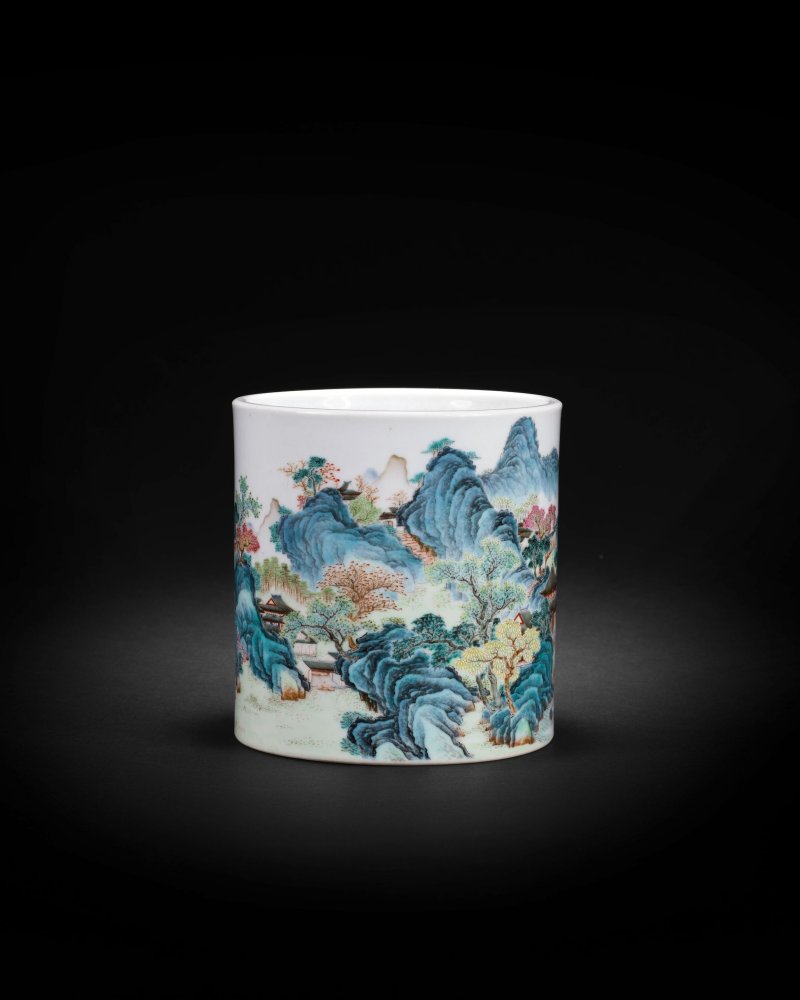
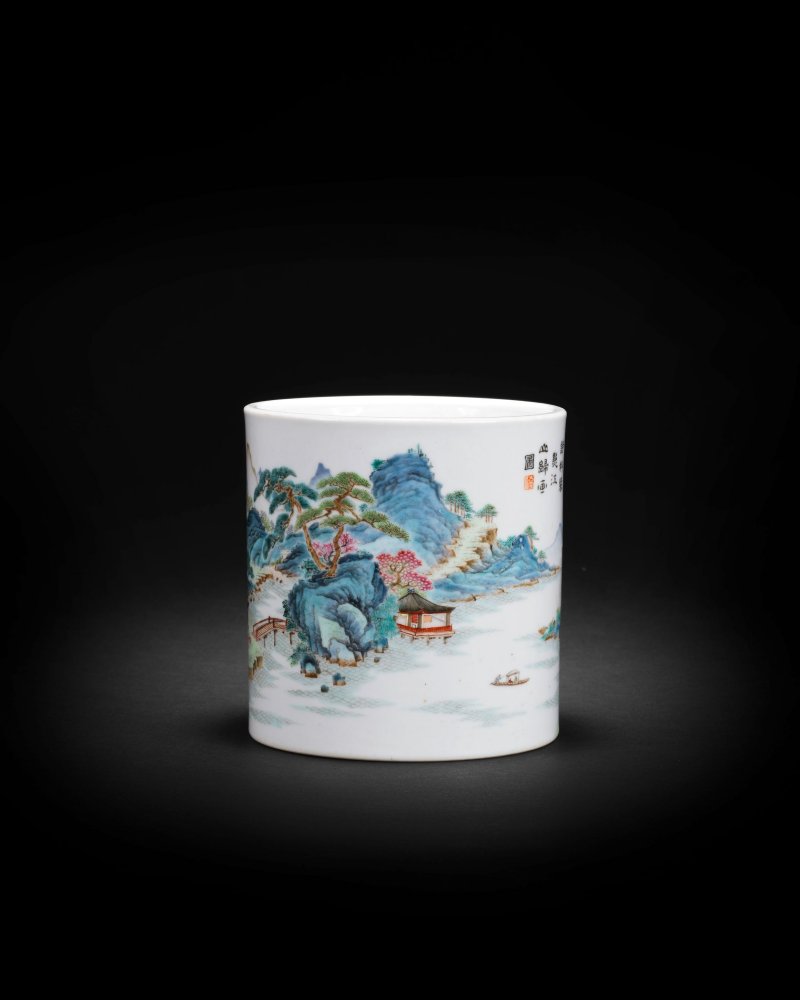
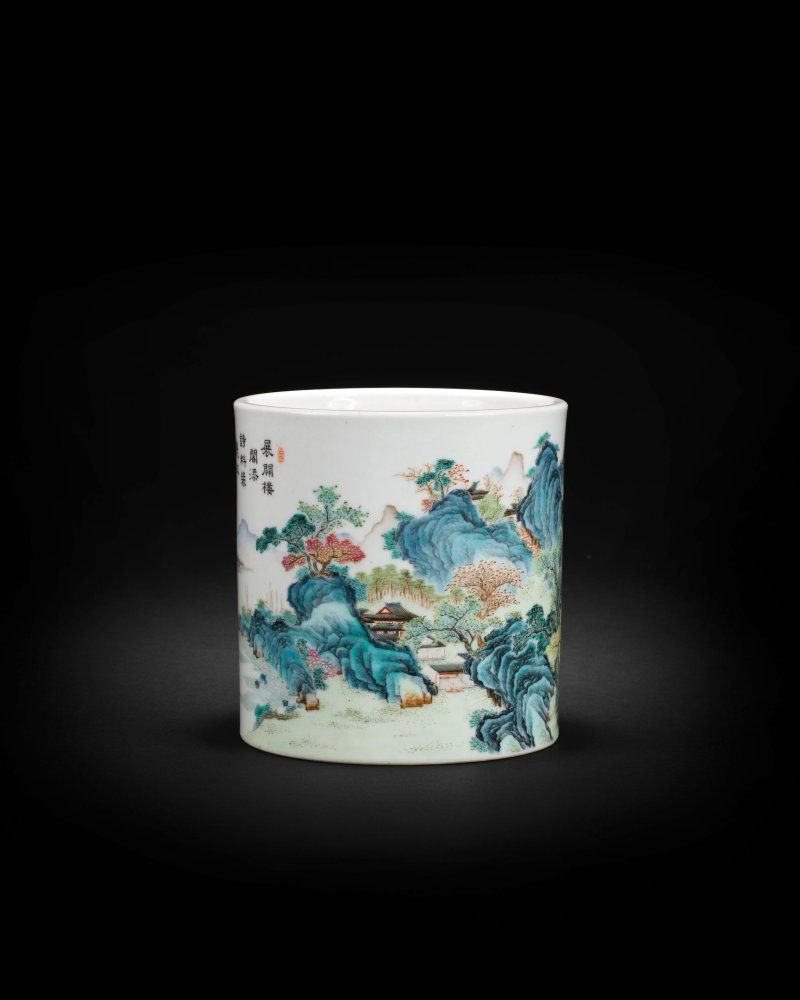
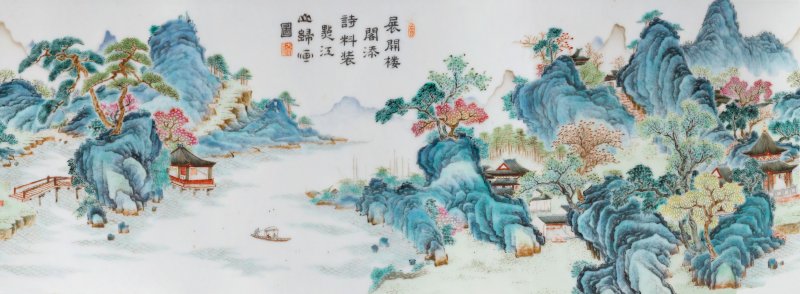
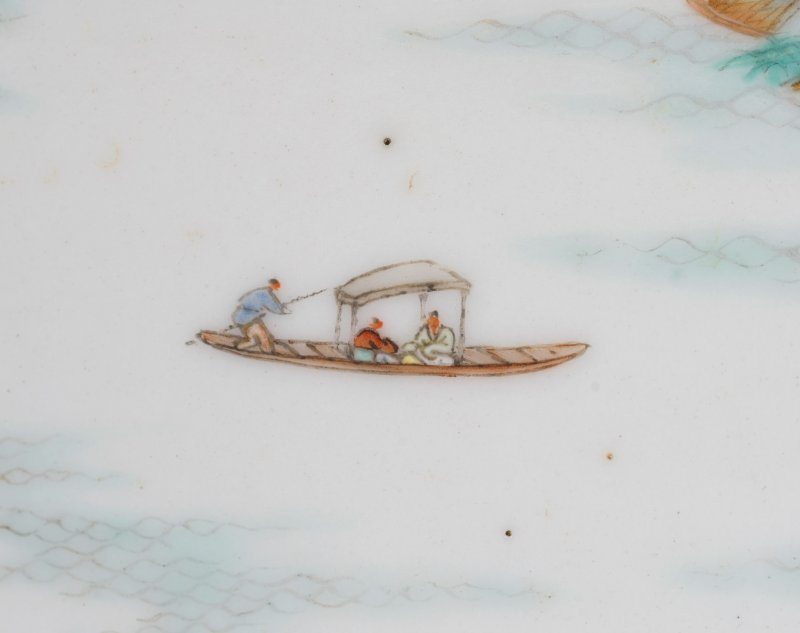
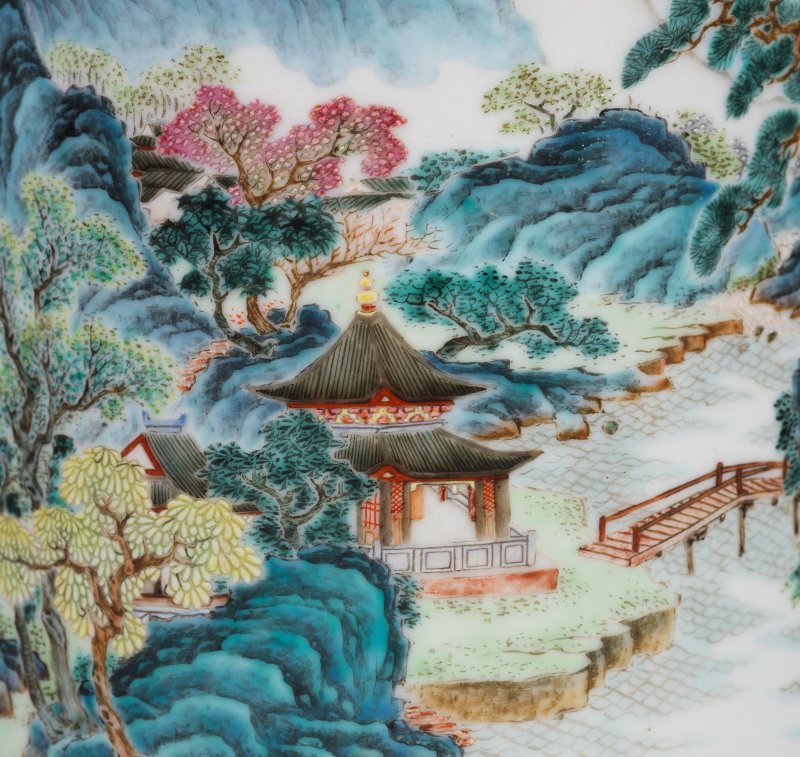
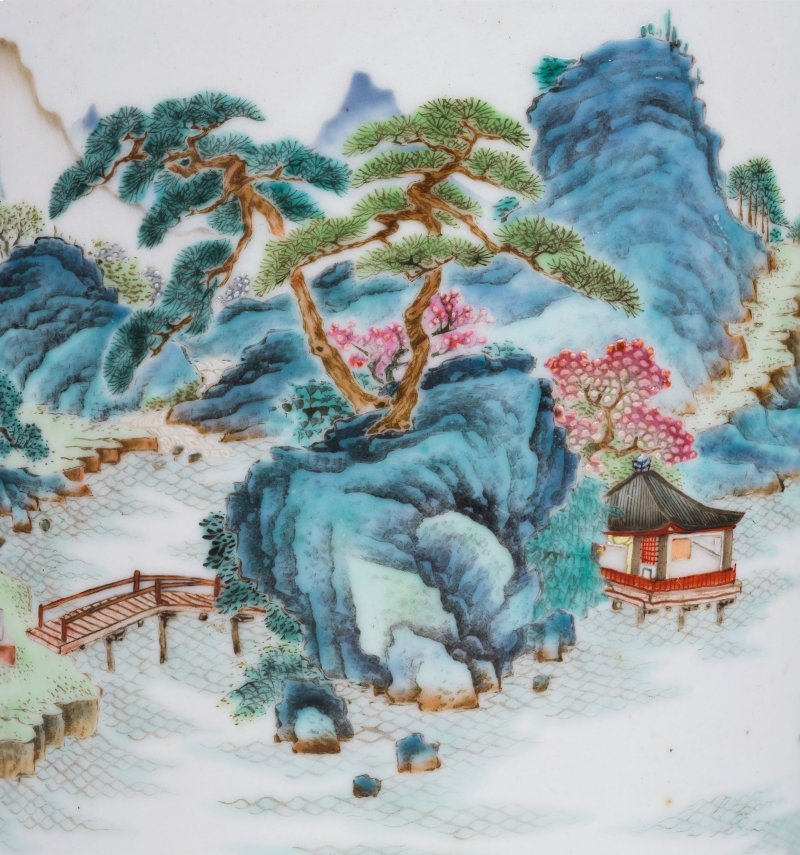
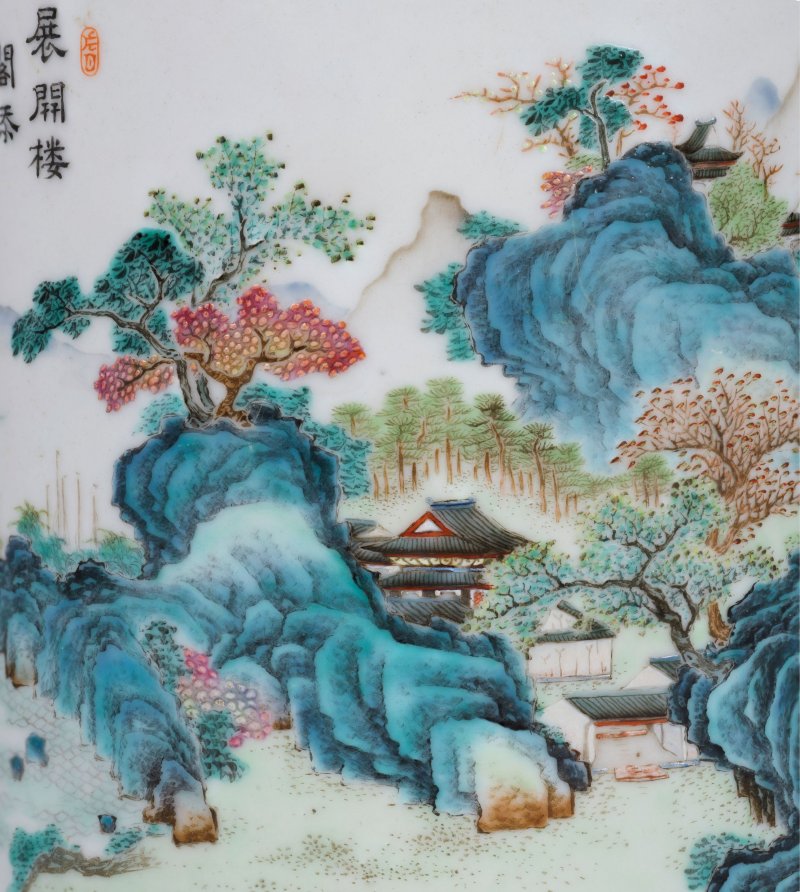
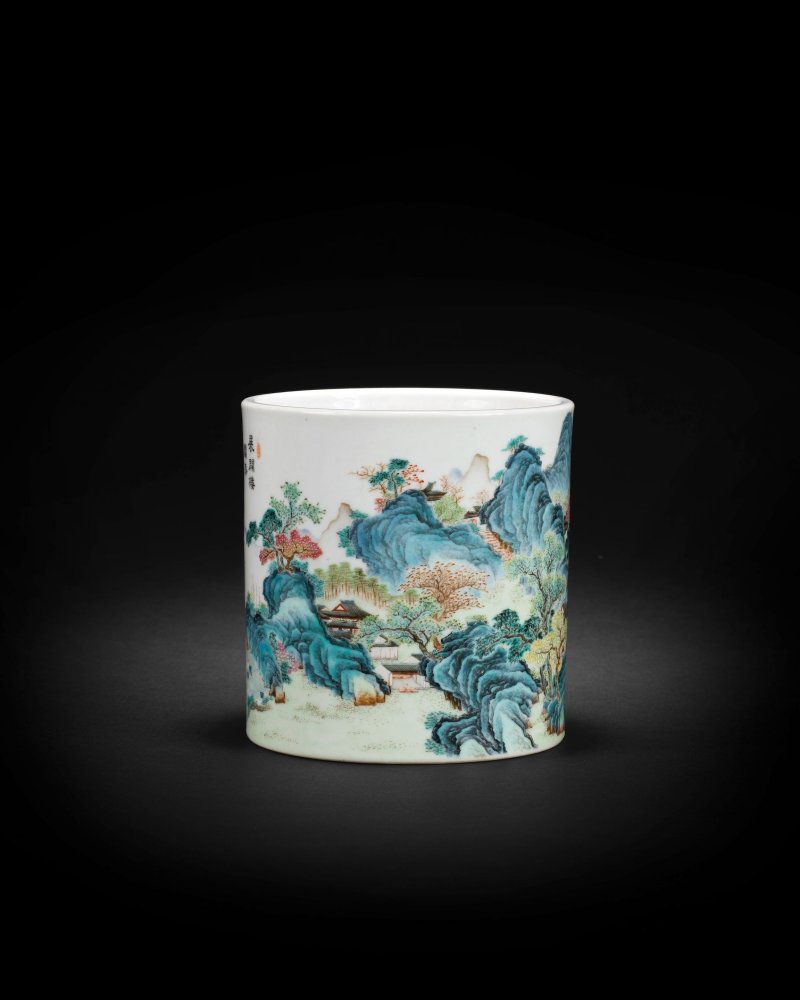
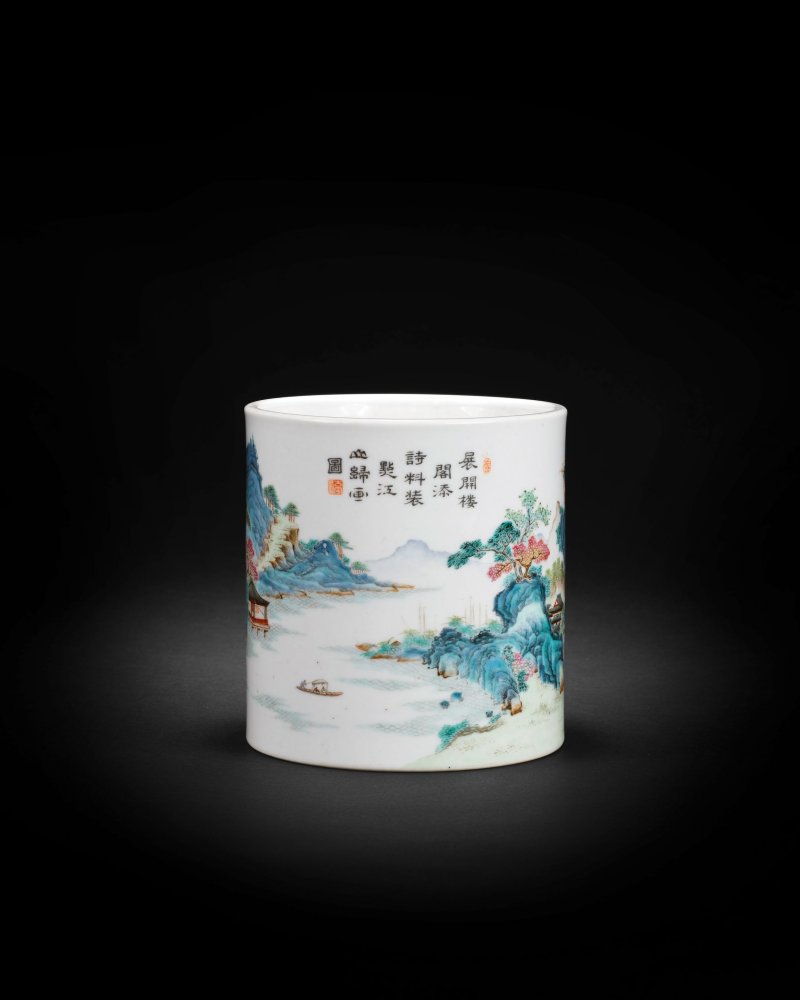
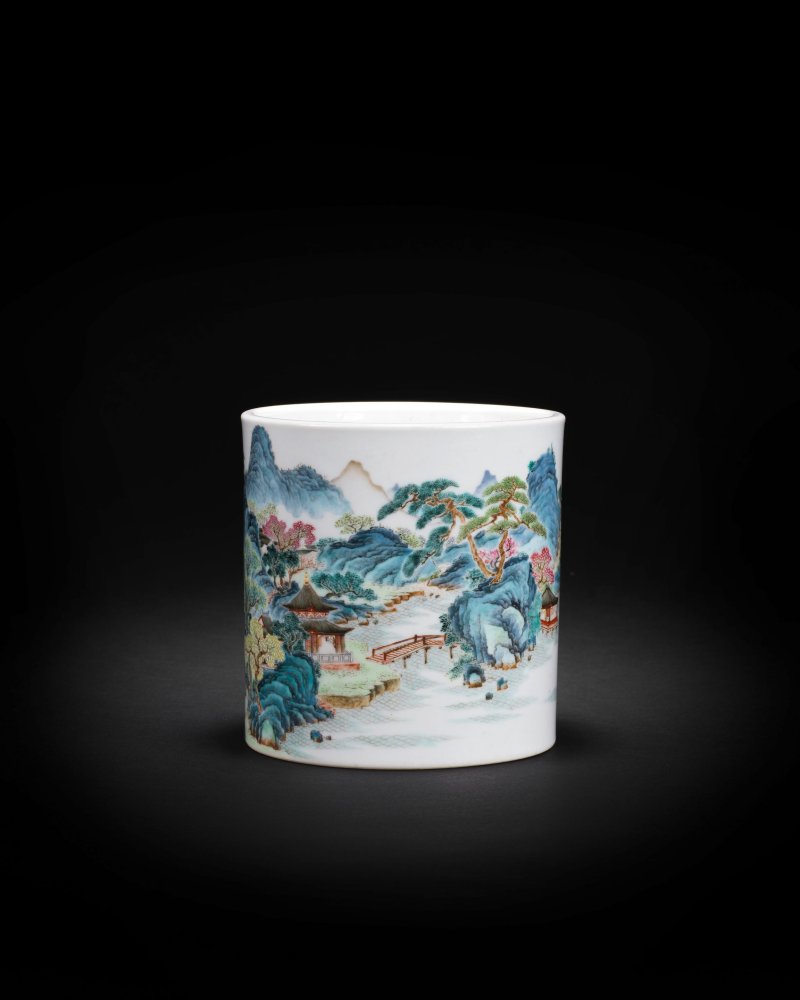
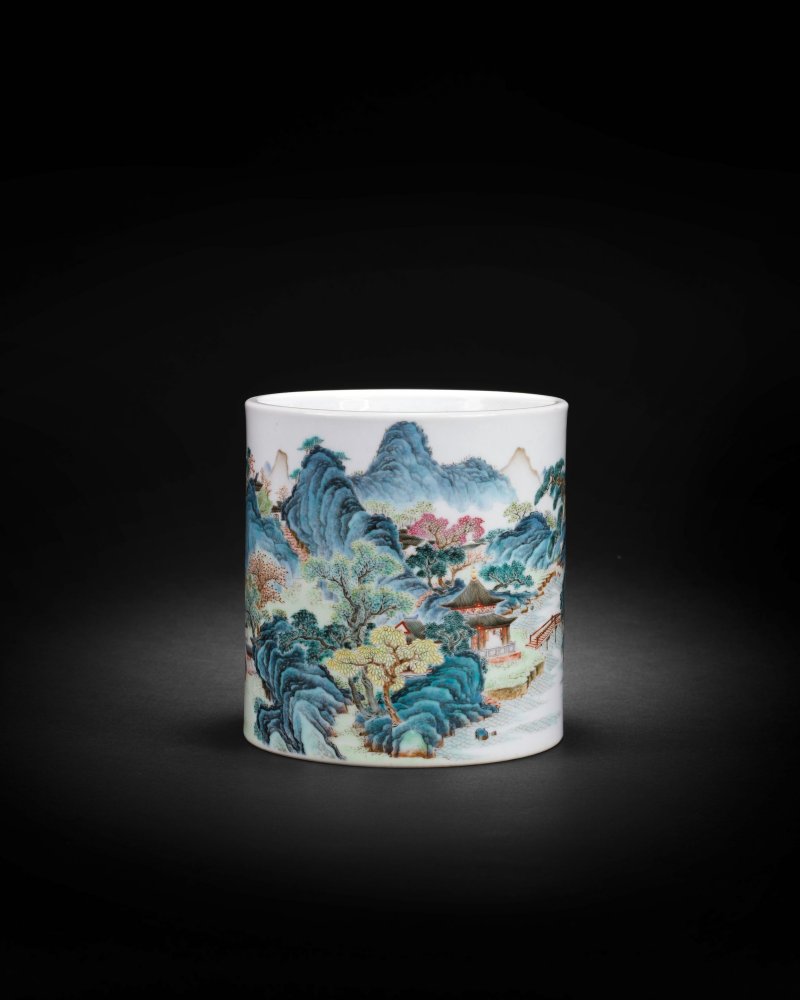
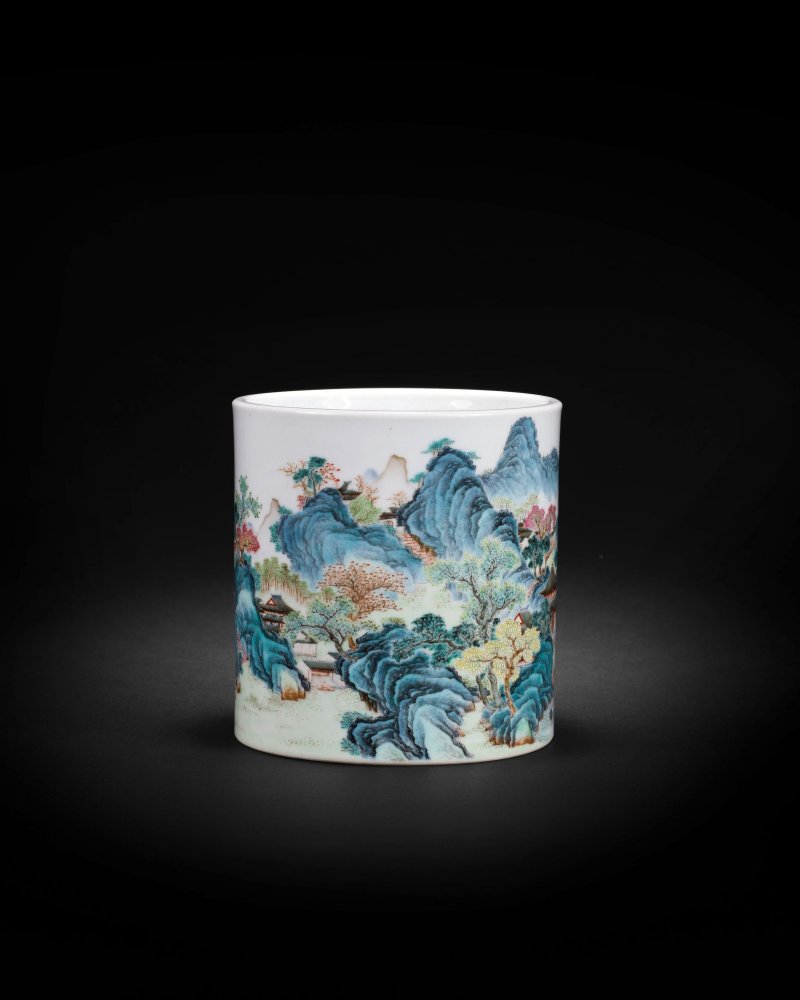
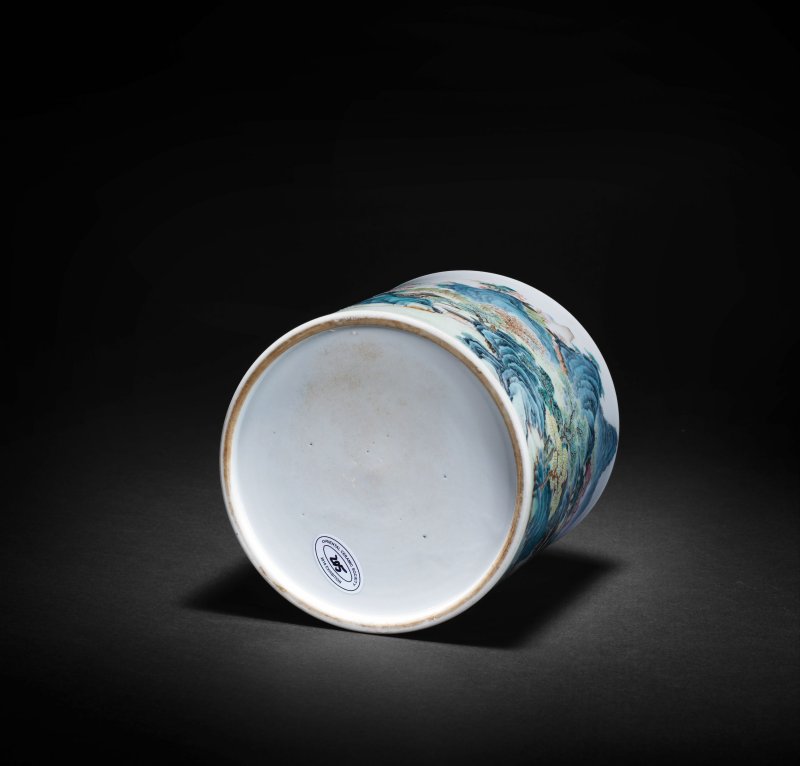
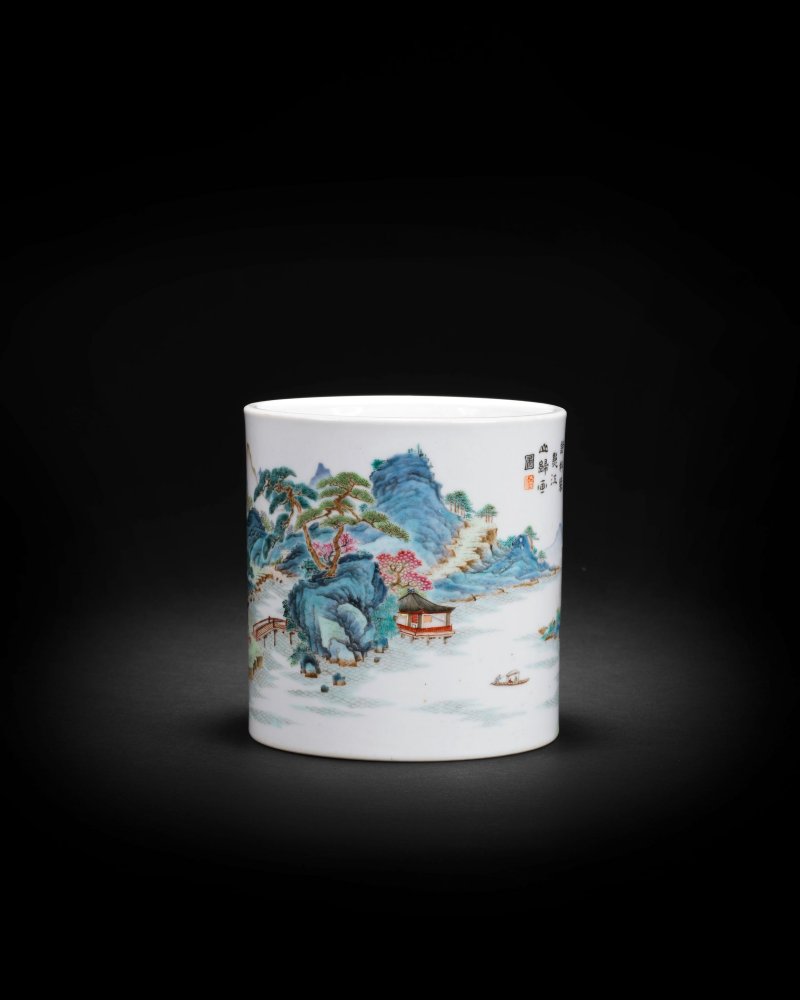
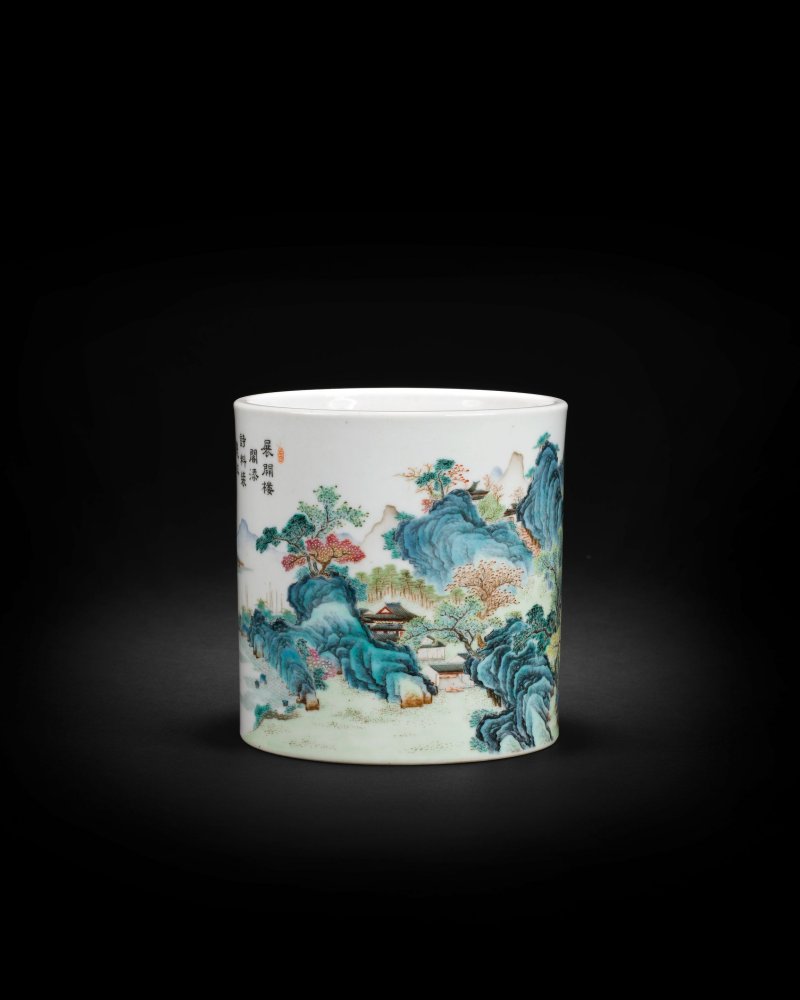
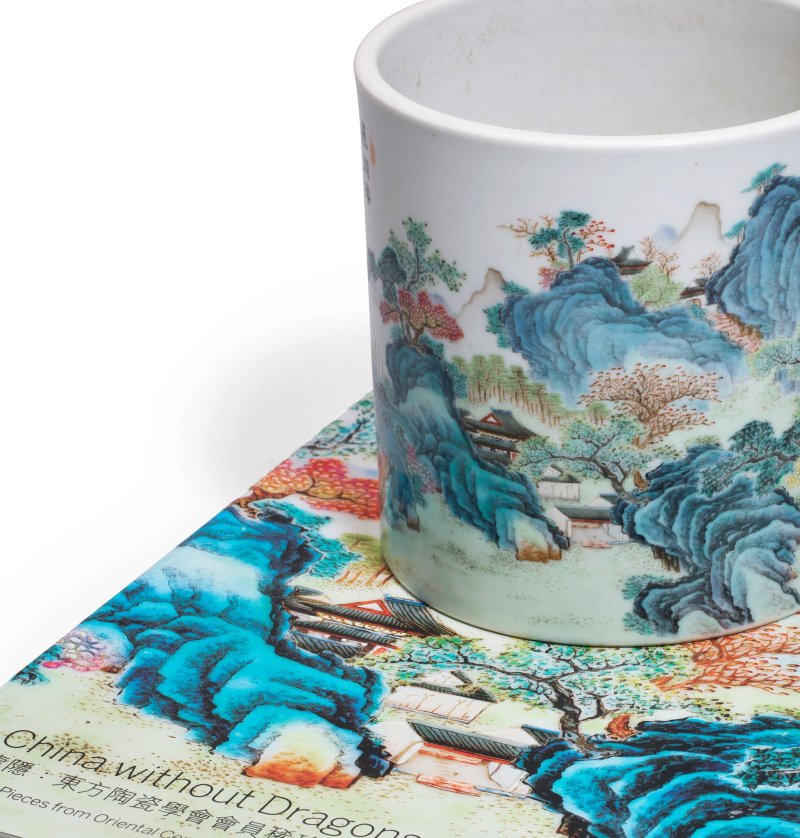
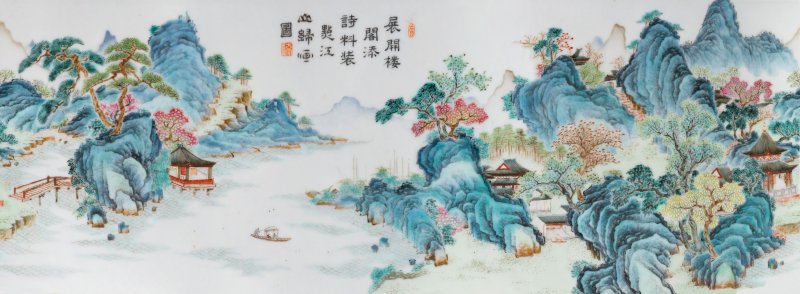
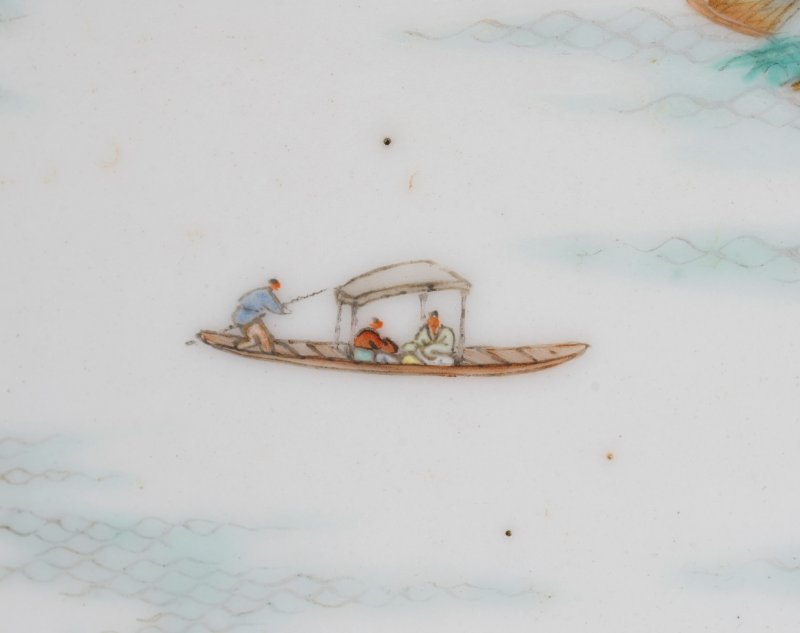
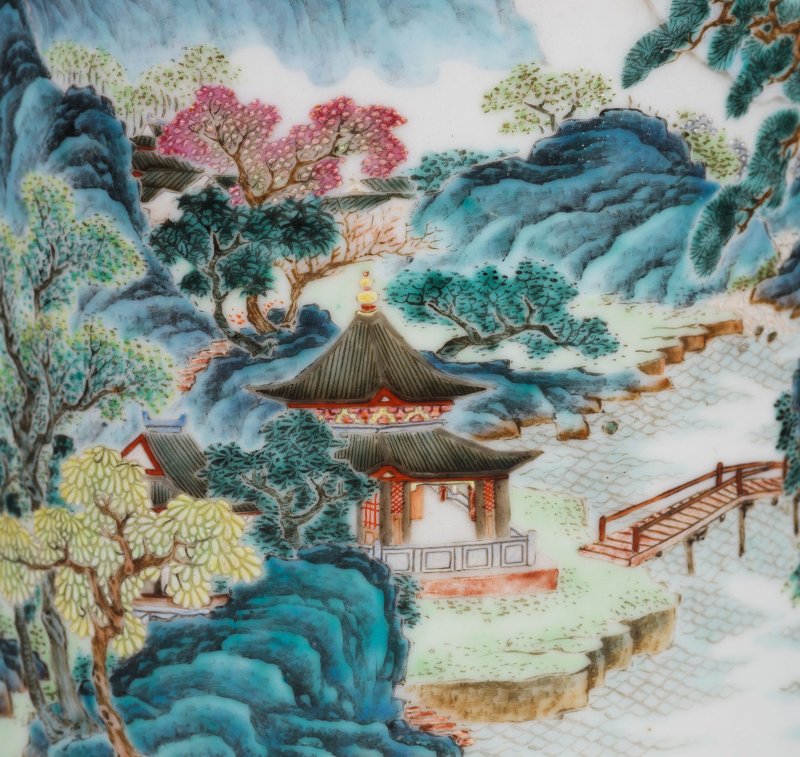
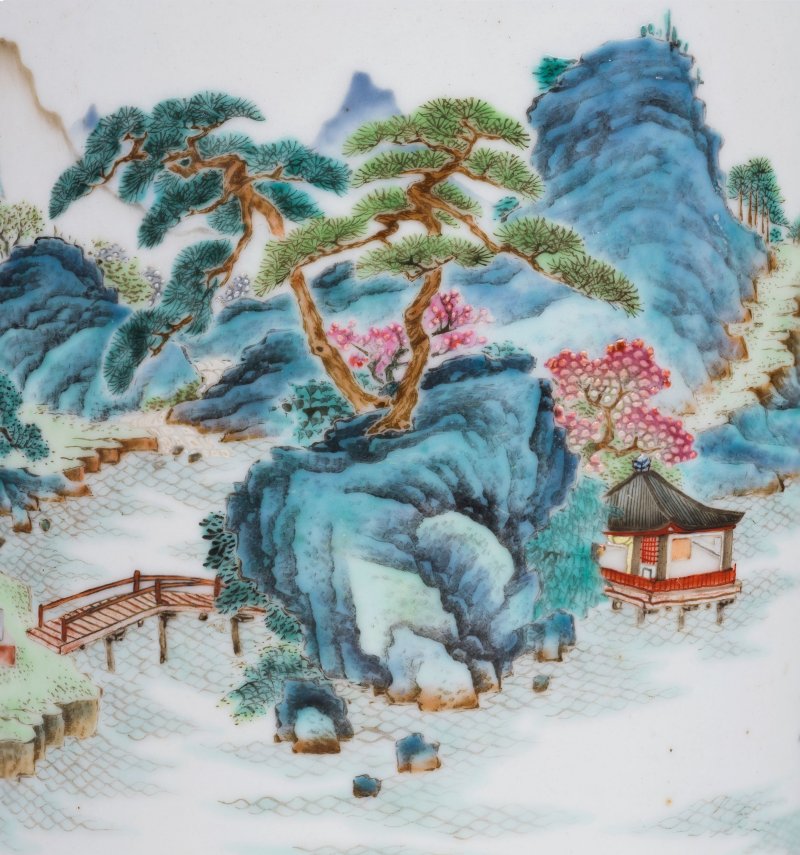
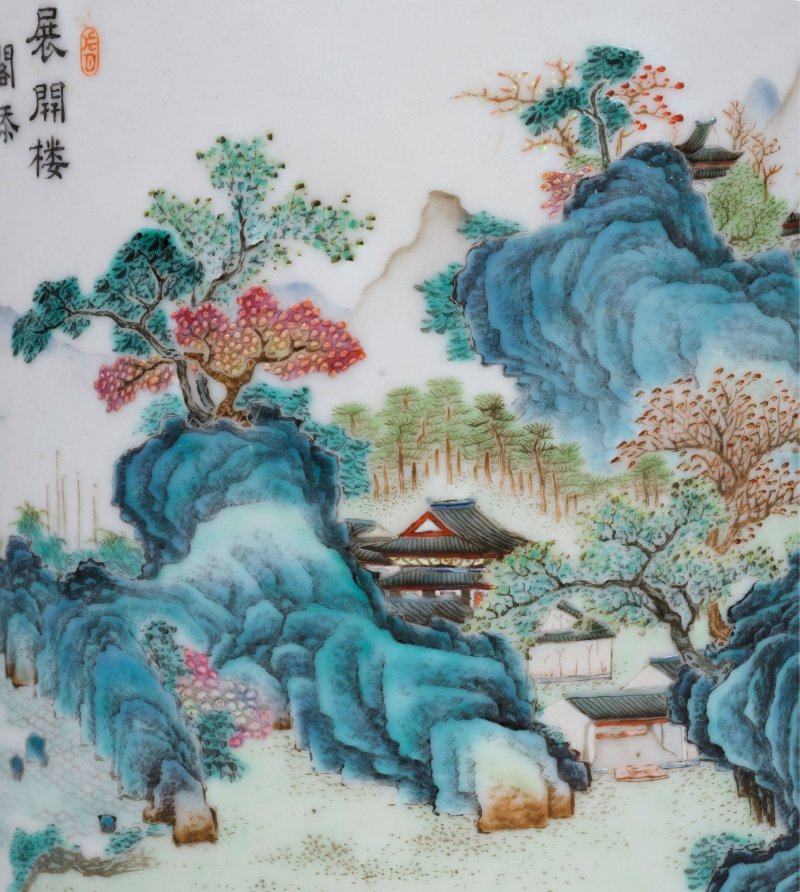
Exquisitely enamelled around the straight sides with a continuous mountain landscape, craggy peaks receding into the distance from bold turquoise to pale blue and a misty brown horizon, dotted with delicate trees in blush pink and gnarled evergreens, wutong trees fluttering among the rocks, winding paths and stone stairways ascending to walled pavilions nestled within the folds of the mountains, beside a tranquil lake where a sampan carries three figures and other boats lie moored along the shore, above a finely inscribed poem in lishu script flanked by two painted seals reading Pianyue ('Crescent of the Moon') and Guwanshi ('Master of Ancient Accomplishments'), box. 13.5cm (5 1/4in) high. (2).
Footnotes
清乾隆 粉彩九江琵琶亭山水圖筆筒
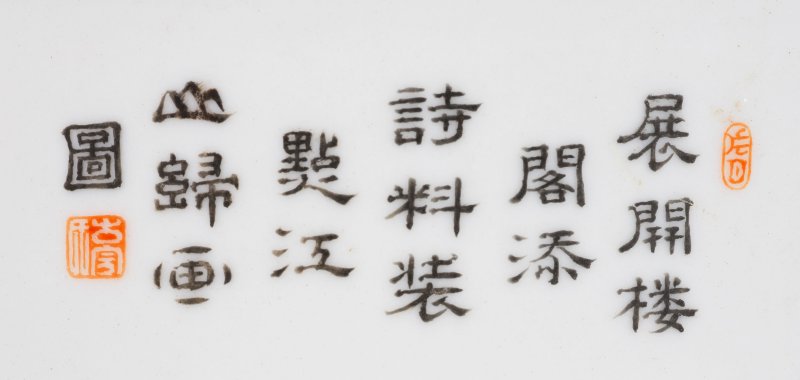
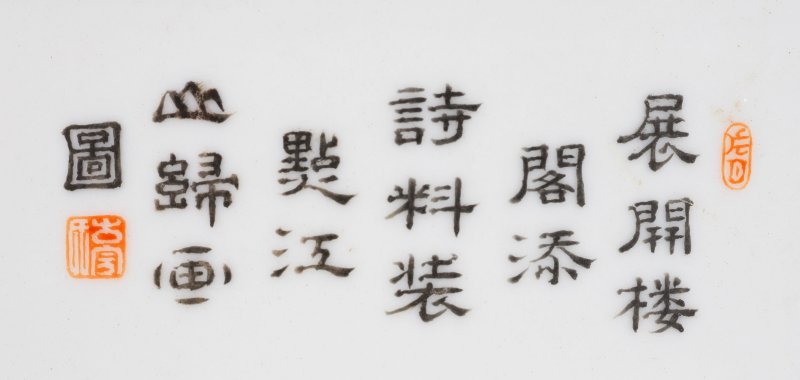
款識:展開樓閣添詩料,裝點江山歸畫圖
鈐印:「片月」「古完氏」
Provenance: Spink & Son Ltd., London
Acquired from the above on 21 July 1994
Spink & Son Ltd., , London, 1994, p.25, no.26.
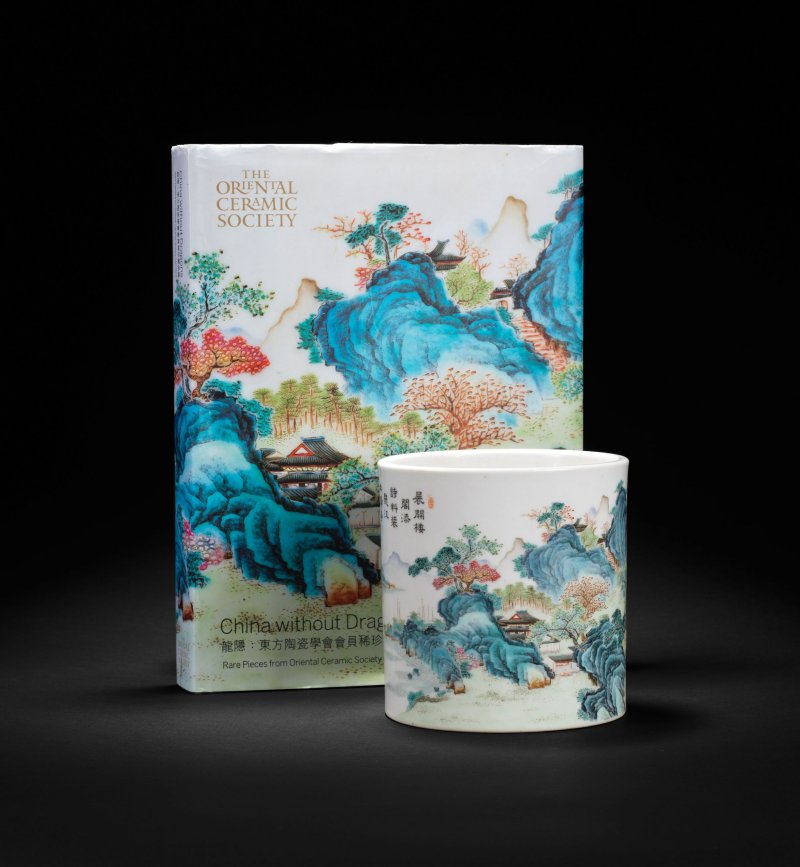
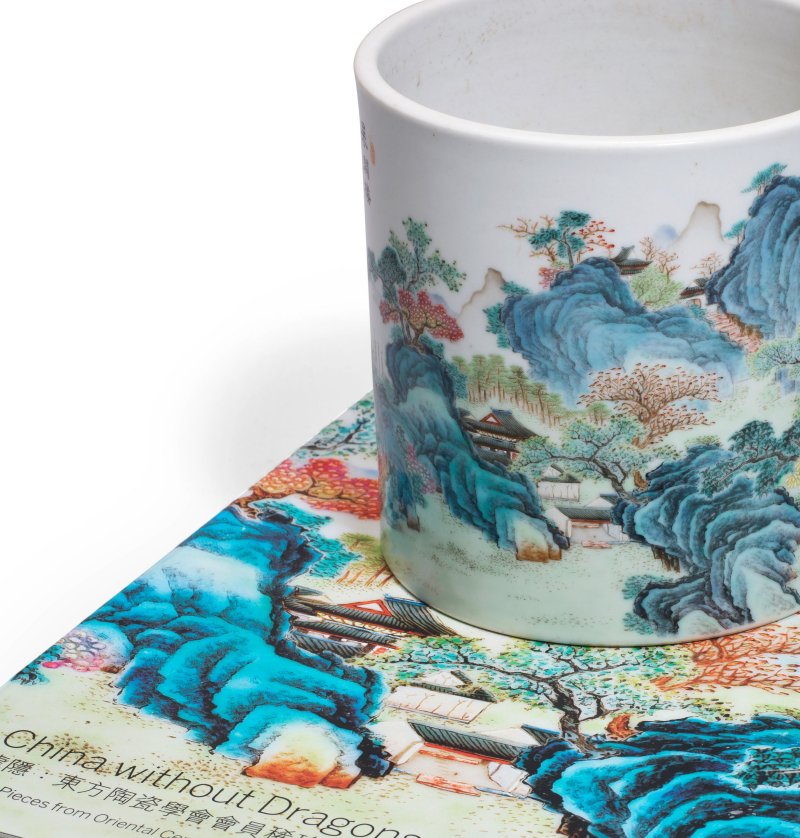
The Oriental Ceramic Society, , London, 2016, pp.344-345, no.205 (and cover)
R.Krahl, 'China without Dragons: An Exhibition of the Oriental Ceramic Society', , 2016, p.99, fig.12.
S.Marsh, , Hong Kong, 2020, pp.108-109
倫敦古董商 Spink & Son Ltd.
從上處獲得于1994年7月21日
Spink & Son Ltd.,《Far Eastern Art at Spink》,倫敦,1994年,第25頁,編號26
東方陶瓷學會,《龍隱:英國東方陶瓷學會會員珍稀藏品展》,倫敦,2016年,第344-345頁,編號205(及封面)
R.Krahl,《龍隱:英國東方陶瓷學會會員珍稀藏品展》,《Orientations》,2016年,第99頁,插圖12
墨一閑,《筆筒淵鑒:收藏家的隨心所悟》,香港,2020年,第108-109頁
The present brushpot is an exceptionally rare and remarkable example of mid 18th century porcelain, combining technical virtuosity and refined aesthetic sensibility. Executed in vibrant famille rose enamels, it presents a landscape identified in , as the Pipa Pavilion (琵琶亭) at Jiujiang, a site closely associated with Tang Ying 唐英 (1682–1756), the celebrated superintendent of the Imperial Porcelain Manufactory at Jingdezhen. The brushpot bears the seal (片月, 'Crescent Moon'), associated with Tang Ying, together with the seal (古完氏, 'Master of Ancient Accomplishments'), which recent scholarship by Huang Qinghua has identified as being associated with Lü Ji (呂績), a painter active under Tang Ying at the Imperial kilns (see the essay at the beginning of this catalogue). The presence of these seals provides a rare insight into the collaborative nature of 18th century porcelain production, revealing the interaction between Tang Ying's literary and artistic direction and the individual hands responsible for its execution. Beyond its beauty, this brushpot exemplifies the confluence of literati culture, craftsmanship, and banner technocracy, preserving a rare survival in which the personalities behind the Imperial workshops can be glimpsed through the object itself.
Tang Ying occupies a singular position in the history of 18th century Chinese porcelain. Appointed Superintendent of the Imperial Porcelain Manufactory at Jingdezhen from 1728 until his death in 1756, he was not merely an administrator overseeing production, but a transformative figure who reshaped the aesthetic identity of Imperial wares during the Yongzheng and Qianlong reigns. Under his direction, Jingdezhen became a centre where technical innovation, Court taste, antiquarian learning, and literati ideals converged, producing porcelains of exceptional refinement and intellectual ambition.
Prior to the Qing dynasty, supervision of the Imperial kilns was frequently entrusted to Court eunuchs, while the identities of artisan and literatus remained largely distinct. Craftsmen possessed technical expertise, while scholar-officials cultivated the arts of poetry, calligraphy, and painting. Under the Qing, however, a new figure emerged: the banner technocrat, a Court official whose administrative responsibilities were combined with literary education and artistic discernment. For a discussion of Qing dynasty technocratic culture, see D.Ko, , Seattle, 2017, pp.18–35. Tang Ying embodied this new model. Born into a bondservant family and affiliated with one of the Three Banners under direct Imperial command, he entered the Imperial Household Department ( 內務府) at sixteen, where he developed a close relationship with the future Yongzheng Emperor and gained access to the Imperial collections of ancient bronzes, jades, paintings, and calligraphy. These encounters shaped the antiquarian interests and refined visual sensibility that would later inform his supervision of the Jingdezhen Imperial manufactory.
Despite his privileged access to the finest works of art and the leading arbiters of Court taste, Tang Ying was not merely a patron or administrator. He cultivated a profound engagement with ceramic production itself, writing extensively on porcelain manufacture and embracing the identity of the ceramic specialist. In the preface to his play (夢玉溪), Tang Ying articulated a self-conscious identity that united official responsibility with cultivated leisure:
Here, the distinction between scholar and craftsman becomes fluid. The kiln became, in Tang Ying's imagination, not simply an industrial site but a place of cultivated creation. Yet the production of Imperial porcelain remained fundamentally collaborative: Tang Ying's literary and aesthetic vision was realised through the skills of painters, decorators, and craftsmen working under his direction.
The present brushpot should be understood within this intellectual and artistic environment. Its cylindrical surface unfolds like a handscroll, painted in meticulously controlled famille rose enamels with a landscape traditionally identified as the Pipa Pavilion (琵琶亭) at Jiujiang. Although the precise topographical identification remains uncertain, the association is highly significant in relation to Tang Ying's life. Following his appointment as Customs Supervisor after the accession of the Qianlong Emperor in 1736, Tang Ying was stationed first at Huai'an and subsequently transferred to Jiujiang in 1739. While residing near the Jiujiang Customs Barrier on the Yangzi River, he developed a profound personal connection with the Pipa Pavilion, composing more than fifty poems and essays on the site and contributing funds towards its restoration in 1744 and 1746. Whether conceived as a literal depiction or a literati evocation of the landscape, the subject reflects the close relationship between place, memory, and artistic expression in Tang Ying's world.
The landscape decoration reflects the aesthetic ideals associated with the orthodox landscape tradition of the early Qing Court, particularly the influence of the Four Wangs: Wang Shimin, Wang Jian, Wang Hui, and Wang Yuanqi, whose styles shaped elite painting culture during the period. The present composition may be understood as a ceramic translation of ink painting, transforming brush-and-ink conventions into the medium of famille rose enamels. Tang Ying's surviving paintings, including a hanging scroll, in the Qing Court Collection, in the Palace Museum, Beijing (acc.no.新00071391), display atmospheric washes and precise brushwork indebted to orthodox landscape models, particularly those associated with Wang Yuanqi (1642/1646–1715), under whom Tang Ying studied. Comparable effects can be observed in the Marsh brushpot in the delicate trees, layered distance, and subtle tonal modulation achieved through enamel painting.
The influence of orthodox literati landscape painting on porcelain decoration became particularly prominent during the Qianlong reign, and Tang Ying played a crucial role in facilitating this translation of elite artistic ideals into Imperial manufacture. Comparable examples include a famille rose two-handled vase and a teapot with landscape panels, both with Qianlong marks and of the period, illustrated in , Beijing, 2009, nos.130 and 110. These works demonstrate the period's preference for greenish-blue mountains receding into sepia-toned distance, enriched with famille rose foliage, a refined visual language derived from orthodox literati painting.
The calligraphy on the present brushpot similarly reflects the literary culture surrounding Tang Ying's circle. The clerical script, with its sharply pointed brushstrokes and archaistic character, closely parallels Tang Ying's own calligraphic style, which was modelled on the Xia Chen stele of the Eastern Han dynasty (2nd century AD); see P.Y.K. Lam, 'Tang Ying (1682–1756): The Imperial Factory Superintendent at Jingdezhen,' , vol.63, 1998–1999, pp.73 and 75, fig.10. Whether the inscription was written personally by Tang Ying or carefully transcribed under his direction cannot be established with certainty; nevertheless, its archaistic character aligns closely with the Qing Court fascination with antiquity and the refined revival of earlier artistic traditions. See also a square brushpot with an inscription by Tang Ying in the Palace Museum, Beijing (acc.no.新00154083).
The fourteen-character couplet derives from the Southern Song writer Hua Yue (華岳, d.1221), though adapted by Tang Ying:
展開樓閣添詩料,裝點江山歸畫圖
Which may be translated as:
The inscription is more than a literary quotation: it describes the very process embodied by the vessel itself. Architecture unfolds like a handscroll, landscape is transformed into painted image, and poetry, painting, and porcelain converge in a single act of cultured creation.
Accompanying the inscription are the iron-red seals (片月, 'Crescent Moon') and Guwanshi (古完氏, 'Master of Ancient Accomplishments'). The former has traditionally been associated with Tang Ying, while recent research by Huang Qinghua has reconsidered the identity of the latter, identifying as the sobriquet of Lü Ji (呂績), a skilled painter active under Tang Ying at the Jingdezhen Imperial manufactory.
A similar Tang Ying landscape and inscription can be seen on a famille rose vase from the collections of Wong Kai Zu, Charles Russell, Paul and Helen Bernat and now Alan Chuang, illustrated by J.Thompson, , Hong Kong, 2009, no.101, which was sold at Sotheby's London, 25 June 1946, lot 79, Sotheby's Hong Kong, 15 November 1988, lot 52, and Christie's Hong Kong, 29 April 2001, lot 516, and illustrated in , Hong Kong, 1993, pl.294, fig.2.
Other porcelain works by Tang Ying, with seal, include a celadon-glazed famille rose bamboo-shaped brushpot, Qianlong, in the Capital Museum, Beijing, illustrated by Geng Baochang, (明清瓷器鑑定), Hong Kong, 1993, p.291, no.497; and a sepia-enamel 'dragon' brushpot, early Qianlong, signed by Tang Ying, in the Art Museum of the Chinese University of Hong Kong, illustrated in , Hong Kong, 1995, pl.85. See also a coral-ground famille rose 'Tang Ying' bowl, Qianlong cyclical date, corresponding to 1755 and of the period, which was sold at Christie's Hong Kong, 1 December 2009 lot 1921, and illustrated in , Hong Kong, 2003, p.314, pl.355.
Compare also with a related famille rose 'landscape' brushpot, Jiaqing seal mark and of the period, which reflects the enduring influence of Tang Ying and the orthodox landscape manner of the Four Wangs, in the Baur Collection, illustrated by J.Ayers, , vol.4, Geneva, 1974, no.A 635.
Exquisitely enamelled around the straight sides with a continuous mountain landscape, craggy peaks receding into the distance from bold turquoise to pale blue and a misty brown horizon, dotted with delicate trees in blush pink and gnarled evergreens, wutong trees fluttering among the rocks, winding paths and stone stairways ascending to walled pavilions nestled within the folds of the mountains, beside a tranquil lake where a sampan carries three figures and other boats lie moored along the shore, above a finely inscribed poem in lishu script flanked by two painted seals reading Pianyue ('Crescent of the Moon') and Guwanshi ('Master of Ancient Accomplishments'), box. 13.5cm (5 1/4in) high. (2).
Footnotes
清乾隆 粉彩九江琵琶亭山水圖筆筒
款識:展開樓閣添詩料,裝點江山歸畫圖
鈐印:「片月」「古完氏」
Provenance: Spink & Son Ltd., London
Acquired from the above on 21 July 1994
Spink & Son Ltd., , London, 1994, p.25, no.26.
The Oriental Ceramic Society, , London, 2016, pp.344-345, no.205 (and cover)
R.Krahl, 'China without Dragons: An Exhibition of the Oriental Ceramic Society', , 2016, p.99, fig.12.
S.Marsh, , Hong Kong, 2020, pp.108-109
倫敦古董商 Spink & Son Ltd.
從上處獲得于1994年7月21日
Spink & Son Ltd.,《Far Eastern Art at Spink》,倫敦,1994年,第25頁,編號26
東方陶瓷學會,《龍隱:英國東方陶瓷學會會員珍稀藏品展》,倫敦,2016年,第344-345頁,編號205(及封面)
R.Krahl,《龍隱:英國東方陶瓷學會會員珍稀藏品展》,《Orientations》,2016年,第99頁,插圖12
墨一閑,《筆筒淵鑒:收藏家的隨心所悟》,香港,2020年,第108-109頁
The present brushpot is an exceptionally rare and remarkable example of mid 18th century porcelain, combining technical virtuosity and refined aesthetic sensibility. Executed in vibrant famille rose enamels, it presents a landscape identified in , as the Pipa Pavilion (琵琶亭) at Jiujiang, a site closely associated with Tang Ying 唐英 (1682–1756), the celebrated superintendent of the Imperial Porcelain Manufactory at Jingdezhen. The brushpot bears the seal (片月, 'Crescent Moon'), associated with Tang Ying, together with the seal (古完氏, 'Master of Ancient Accomplishments'), which recent scholarship by Huang Qinghua has identified as being associated with Lü Ji (呂績), a painter active under Tang Ying at the Imperial kilns (see the essay at the beginning of this catalogue). The presence of these seals provides a rare insight into the collaborative nature of 18th century porcelain production, revealing the interaction between Tang Ying's literary and artistic direction and the individual hands responsible for its execution. Beyond its beauty, this brushpot exemplifies the confluence of literati culture, craftsmanship, and banner technocracy, preserving a rare survival in which the personalities behind the Imperial workshops can be glimpsed through the object itself.
Tang Ying occupies a singular position in the history of 18th century Chinese porcelain. Appointed Superintendent of the Imperial Porcelain Manufactory at Jingdezhen from 1728 until his death in 1756, he was not merely an administrator overseeing production, but a transformative figure who reshaped the aesthetic identity of Imperial wares during the Yongzheng and Qianlong reigns. Under his direction, Jingdezhen became a centre where technical innovation, Court taste, antiquarian learning, and literati ideals converged, producing porcelains of exceptional refinement and intellectual ambition.
Prior to the Qing dynasty, supervision of the Imperial kilns was frequently entrusted to Court eunuchs, while the identities of artisan and literatus remained largely distinct. Craftsmen possessed technical expertise, while scholar-officials cultivated the arts of poetry, calligraphy, and painting. Under the Qing, however, a new figure emerged: the banner technocrat, a Court official whose administrative responsibilities were combined with literary education and artistic discernment. For a discussion of Qing dynasty technocratic culture, see D.Ko, , Seattle, 2017, pp.18–35. Tang Ying embodied this new model. Born into a bondservant family and affiliated with one of the Three Banners under direct Imperial command, he entered the Imperial Household Department ( 內務府) at sixteen, where he developed a close relationship with the future Yongzheng Emperor and gained access to the Imperial collections of ancient bronzes, jades, paintings, and calligraphy. These encounters shaped the antiquarian interests and refined visual sensibility that would later inform his supervision of the Jingdezhen Imperial manufactory.
Despite his privileged access to the finest works of art and the leading arbiters of Court taste, Tang Ying was not merely a patron or administrator. He cultivated a profound engagement with ceramic production itself, writing extensively on porcelain manufacture and embracing the identity of the ceramic specialist. In the preface to his play (夢玉溪), Tang Ying articulated a self-conscious identity that united official responsibility with cultivated leisure:
Here, the distinction between scholar and craftsman becomes fluid. The kiln became, in Tang Ying's imagination, not simply an industrial site but a place of cultivated creation. Yet the production of Imperial porcelain remained fundamentally collaborative: Tang Ying's literary and aesthetic vision was realised through the skills of painters, decorators, and craftsmen working under his direction.
The present brushpot should be understood within this intellectual and artistic environment. Its cylindrical surface unfolds like a handscroll, painted in meticulously controlled famille rose enamels with a landscape traditionally identified as the Pipa Pavilion (琵琶亭) at Jiujiang. Although the precise topographical identification remains uncertain, the association is highly significant in relation to Tang Ying's life. Following his appointment as Customs Supervisor after the accession of the Qianlong Emperor in 1736, Tang Ying was stationed first at Huai'an and subsequently transferred to Jiujiang in 1739. While residing near the Jiujiang Customs Barrier on the Yangzi River, he developed a profound personal connection with the Pipa Pavilion, composing more than fifty poems and essays on the site and contributing funds towards its restoration in 1744 and 1746. Whether conceived as a literal depiction or a literati evocation of the landscape, the subject reflects the close relationship between place, memory, and artistic expression in Tang Ying's world.
The landscape decoration reflects the aesthetic ideals associated with the orthodox landscape tradition of the early Qing Court, particularly the influence of the Four Wangs: Wang Shimin, Wang Jian, Wang Hui, and Wang Yuanqi, whose styles shaped elite painting culture during the period. The present composition may be understood as a ceramic translation of ink painting, transforming brush-and-ink conventions into the medium of famille rose enamels. Tang Ying's surviving paintings, including a hanging scroll, in the Qing Court Collection, in the Palace Museum, Beijing (acc.no.新00071391), display atmospheric washes and precise brushwork indebted to orthodox landscape models, particularly those associated with Wang Yuanqi (1642/1646–1715), under whom Tang Ying studied. Comparable effects can be observed in the Marsh brushpot in the delicate trees, layered distance, and subtle tonal modulation achieved through enamel painting.
The influence of orthodox literati landscape painting on porcelain decoration became particularly prominent during the Qianlong reign, and Tang Ying played a crucial role in facilitating this translation of elite artistic ideals into Imperial manufacture. Comparable examples include a famille rose two-handled vase and a teapot with landscape panels, both with Qianlong marks and of the period, illustrated in , Beijing, 2009, nos.130 and 110. These works demonstrate the period's preference for greenish-blue mountains receding into sepia-toned distance, enriched with famille rose foliage, a refined visual language derived from orthodox literati painting.
The calligraphy on the present brushpot similarly reflects the literary culture surrounding Tang Ying's circle. The clerical script, with its sharply pointed brushstrokes and archaistic character, closely parallels Tang Ying's own calligraphic style, which was modelled on the Xia Chen stele of the Eastern Han dynasty (2nd century AD); see P.Y.K. Lam, 'Tang Ying (1682–1756): The Imperial Factory Superintendent at Jingdezhen,' , vol.63, 1998–1999, pp.73 and 75, fig.10. Whether the inscription was written personally by Tang Ying or carefully transcribed under his direction cannot be established with certainty; nevertheless, its archaistic character aligns closely with the Qing Court fascination with antiquity and the refined revival of earlier artistic traditions. See also a square brushpot with an inscription by Tang Ying in the Palace Museum, Beijing (acc.no.新00154083).
The fourteen-character couplet derives from the Southern Song writer Hua Yue (華岳, d.1221), though adapted by Tang Ying:
展開樓閣添詩料,裝點江山歸畫圖
Which may be translated as:
The inscription is more than a literary quotation: it describes the very process embodied by the vessel itself. Architecture unfolds like a handscroll, landscape is transformed into painted image, and poetry, painting, and porcelain converge in a single act of cultured creation.
Accompanying the inscription are the iron-red seals (片月, 'Crescent Moon') and Guwanshi (古完氏, 'Master of Ancient Accomplishments'). The former has traditionally been associated with Tang Ying, while recent research by Huang Qinghua has reconsidered the identity of the latter, identifying as the sobriquet of Lü Ji (呂績), a skilled painter active under Tang Ying at the Jingdezhen Imperial manufactory.
A similar Tang Ying landscape and inscription can be seen on a famille rose vase from the collections of Wong Kai Zu, Charles Russell, Paul and Helen Bernat and now Alan Chuang, illustrated by J.Thompson, , Hong Kong, 2009, no.101, which was sold at Sotheby's London, 25 June 1946, lot 79, Sotheby's Hong Kong, 15 November 1988, lot 52, and Christie's Hong Kong, 29 April 2001, lot 516, and illustrated in , Hong Kong, 1993, pl.294, fig.2.
Other porcelain works by Tang Ying, with seal, include a celadon-glazed famille rose bamboo-shaped brushpot, Qianlong, in the Capital Museum, Beijing, illustrated by Geng Baochang, (明清瓷器鑑定), Hong Kong, 1993, p.291, no.497; and a sepia-enamel 'dragon' brushpot, early Qianlong, signed by Tang Ying, in the Art Museum of the Chinese University of Hong Kong, illustrated in , Hong Kong, 1995, pl.85. See also a coral-ground famille rose 'Tang Ying' bowl, Qianlong cyclical date, corresponding to 1755 and of the period, which was sold at Christie's Hong Kong, 1 December 2009 lot 1921, and illustrated in , Hong Kong, 2003, p.314, pl.355.
Compare also with a related famille rose 'landscape' brushpot, Jiaqing seal mark and of the period, which reflects the enduring influence of Tang Ying and the orthodox landscape manner of the Four Wangs, in the Baur Collection, illustrated by J.Ayers, , vol.4, Geneva, 1974, no.A 635.
常见问题
这件清乾隆 粉彩九江琵琶亭山水圖筆筒 | AN EXTREMELY RARE AND IMPORTANT 'TANG YING' FAMILLE ROSE BRUSHPOT, BITONG的成交价是多少?
落槌价为 预展中。 成交价为 预展中。