
拍品信息
拍品名称
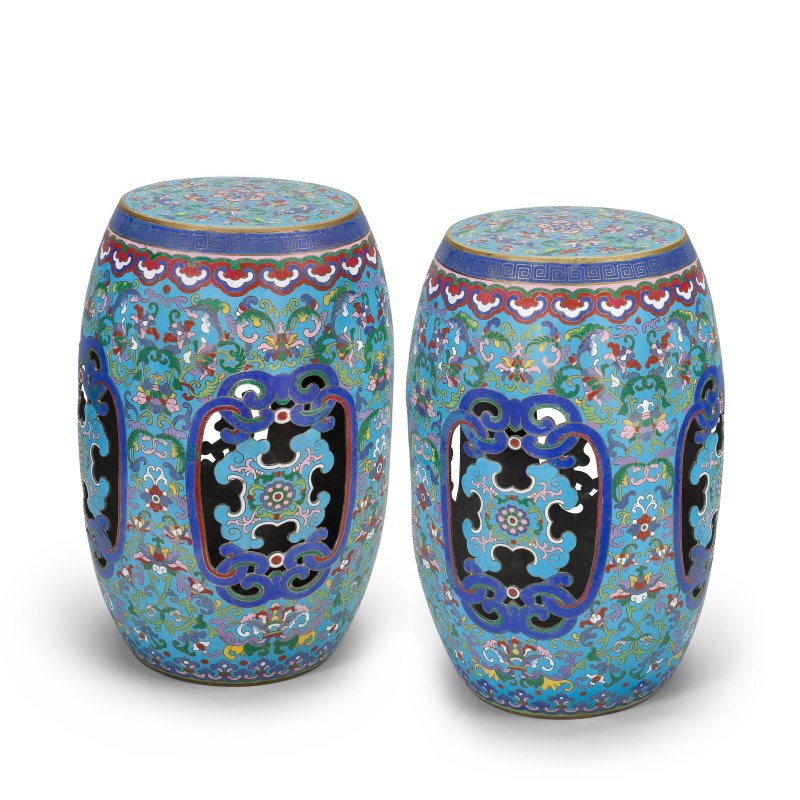
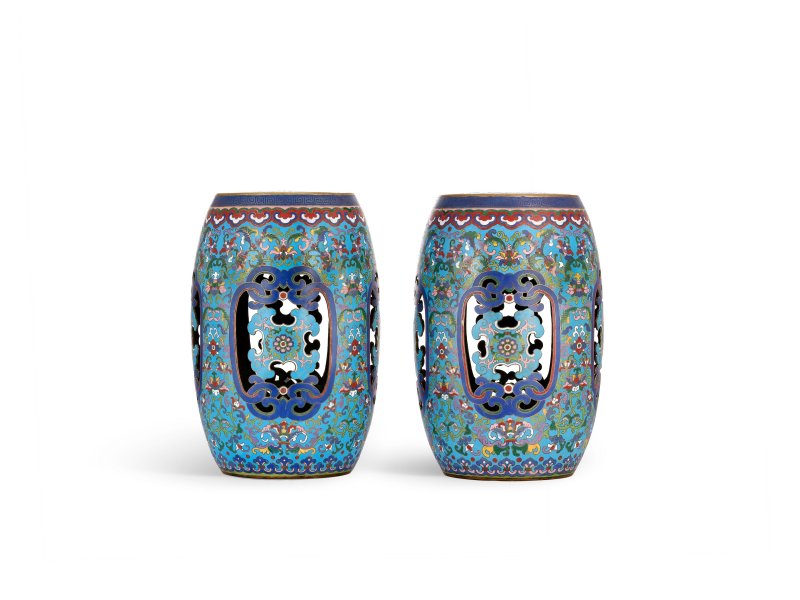
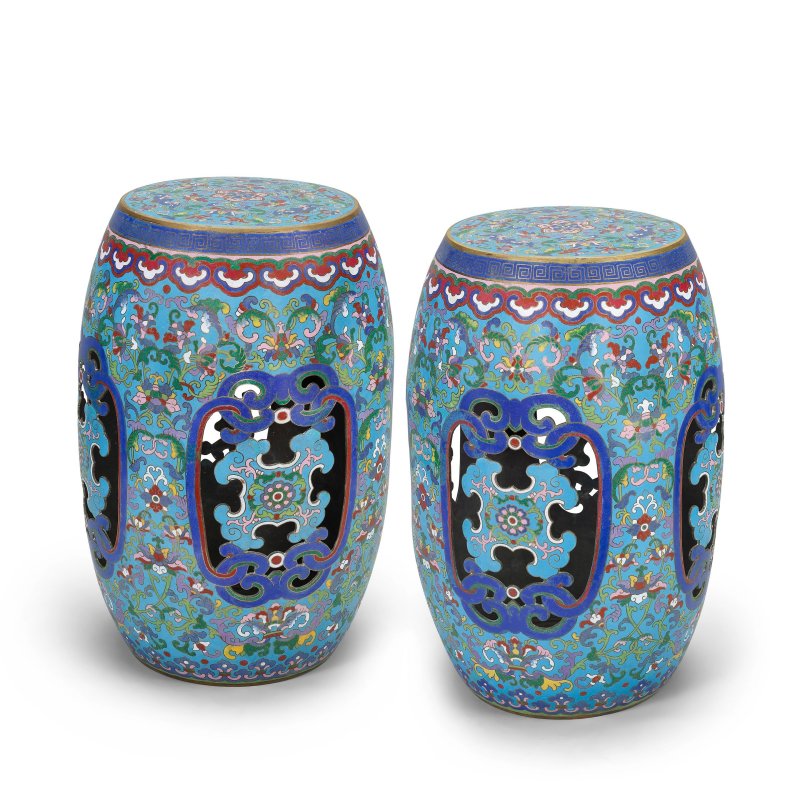
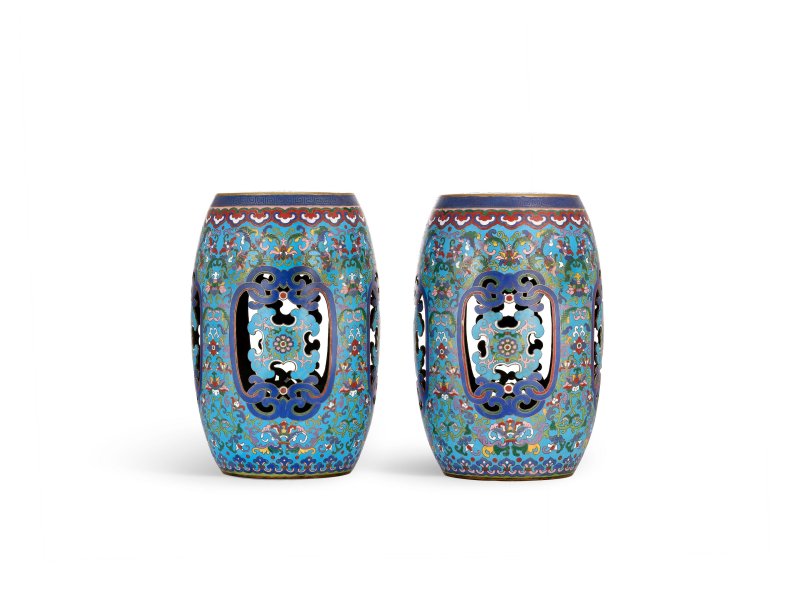
清乾隆 御製掐絲琺瑯蓮蝠紋坐墩一對 | A SUPERB PAIR OF IMPERIAL CLOISONNÉ ENAMEL STOOLS
年代
Qianlong
起拍价
HKD 800,000
估值区间
HKD 800000 - 1200000
尺寸
未知
品相
未知
更多信息
Qianlong
Of barrel form, the sides pierced with shaped panels and decorated in polychrome enamels with meandering lotus scrolls reserved against a turquoise ground, all between bands of ruyi-heads, the top similarly decorated with scrolling lotus surrounding a six-lobed florette formed of interlocking ruyi-heads.
Each 53.8cm (21 1/4in) high. (2).
Footnotes
清乾隆 御製掐絲琺瑯蓮蝠紋坐墩一對
Provenance:
An important German noble private collection, circa October 1900-June 1901, and thence by descent until 2021
來源:
重要德國貴族私人收藏,約1900年10月至1901年6月間入藏,此後家族傳承直到2021年
The vibrant enamel palette and turquoise ground are characteristic of finely executed Qing cloisonné wares. Compare with a cloisonné enamel garden seat with butterflies and flower design, mid-Qing dynasty, illustrated in , Beijing, 2011, p.182, no.130. Another similar example with related openwork panels, Qianlong, is also in the Palace Museum, Beijing (acc.no.故00156558).
A closely related pair of Qianlong Imperial champlevé enamel openwork garden seats, reputedly from the collection of Marcel Proust, was sold at Bonhams Hong Kong, 3 December 2015, lot 61. Compare another pair of Qianlong champlevé enamel barrel-form garden seats, which was sold at Christie's Hong Kong, 28 May 2014, lot 3333. Compare also with a related pair of cloisonné enamel stools, Qianlong (incorrectly dated as 20th century), which was sold at Sotheby's London, 6 November 2019, lot 316.
The decoration on the present garden seats combines meandering lotus scrolls and -head motifs, both among the most enduring auspicious designs in the Chinese decorative arts. The lotus, prized in both Buddhist and secular traditions, symbolises purity, harmony and abundance, while the , derived from the ceremonial sceptre of the same name, conveys wishes for prosperity and the fulfilment of one's desires. Together, these motifs create an appropriately auspicious decorative scheme for an object intended for a refined domestic or garden setting.
Garden seats of this type derive from ceramic prototypes that emerged during the Song dynasty and became increasingly popular as furnishings for gardens, pavilions and reception halls during the Ming and Qing periods. Their distinctive barrel form, often pierced with shaped apertures imitating cash motifs or floral cartouches, was subsequently adapted into a variety of luxurious materials, including cloisonné enamel, for use by the Imperial Court and elite patrons.
器身作鼓形,天藍地滿飾纏枝蓮紋,器腹有四組開光對稱分布,上下各有一周如意雲頭。墩面亦以纏枝蓮為飾,中心以六枚如意頭攢成花形,下承回紋一周。此類坐墩之形制,源於宋代瓷製原型,至明清時期廣為流行,多陳設於園林、亭榭或廳堂之間。其獨特之鼓形器身,常鏤雕錢幣紋或開光花卉圖案,後以掐絲琺瑯等奢華材料製作,專供宮廷及貴冑使用。
此器以天藍為地,釉彩明麗,色澤勻淨,實為清代掐絲琺瑯精工之作。比較一件清中期掐絲琺瑯花蝶紋坐墩,著錄於《故宮博物院藏品大系:琺瑯器編4:清掐絲琺瑯》,北京,2011年,頁182,編號130。另參考一乾隆例,飾有類似開光,現藏於北京故宮博物院(館藏編號:故00156558)。
香港邦瀚斯曾售一對乾隆時期御製銅胎鎏金內填琺瑯繡墩,傳由法國作家馬塞爾·普魯斯特收藏,2015年12月3日,拍品編號61。參考另一對乾隆時期鏨胎琺瑯繡墩,售於香港佳士得,2014年5月28日,拍品編號3333;另有一對乾隆朝掐絲琺瑯繡墩(誤斷為二十世紀),售於倫敦蘇富比,2019年11月6日,拍品編號316。
這對坐墩的紋飾融纏枝蓮紋與如意雲頭於一體,二者皆為傳統吉祥圖案之經典。蓮花於佛教文化中象徵純潔、和諧與豐足,深為世人所重;如意則源自同名禮器,寄寓順心如意、富貴吉祥之願。兩者相互呼應,為此陳設器增添祥瑞之意。
此類坐墩之形制,源於宋代瓷製原型,至明清時期廣為流行,多陳設於園林、亭榭或廳堂之間。其獨特之鼓形器身,常鏤雕錢紋或開光花卉圖案,後亦發展為掐絲琺瑯等名貴材質,專供宮廷及貴冑所用。
Of barrel form, the sides pierced with shaped panels and decorated in polychrome enamels with meandering lotus scrolls reserved against a turquoise ground, all between bands of ruyi-heads, the top similarly decorated with scrolling lotus surrounding a six-lobed florette formed of interlocking ruyi-heads.
Each 53.8cm (21 1/4in) high. (2).
Footnotes
清乾隆 御製掐絲琺瑯蓮蝠紋坐墩一對
Provenance:
An important German noble private collection, circa October 1900-June 1901, and thence by descent until 2021
來源:
重要德國貴族私人收藏,約1900年10月至1901年6月間入藏,此後家族傳承直到2021年
The vibrant enamel palette and turquoise ground are characteristic of finely executed Qing cloisonné wares. Compare with a cloisonné enamel garden seat with butterflies and flower design, mid-Qing dynasty, illustrated in , Beijing, 2011, p.182, no.130. Another similar example with related openwork panels, Qianlong, is also in the Palace Museum, Beijing (acc.no.故00156558).
A closely related pair of Qianlong Imperial champlevé enamel openwork garden seats, reputedly from the collection of Marcel Proust, was sold at Bonhams Hong Kong, 3 December 2015, lot 61. Compare another pair of Qianlong champlevé enamel barrel-form garden seats, which was sold at Christie's Hong Kong, 28 May 2014, lot 3333. Compare also with a related pair of cloisonné enamel stools, Qianlong (incorrectly dated as 20th century), which was sold at Sotheby's London, 6 November 2019, lot 316.
The decoration on the present garden seats combines meandering lotus scrolls and -head motifs, both among the most enduring auspicious designs in the Chinese decorative arts. The lotus, prized in both Buddhist and secular traditions, symbolises purity, harmony and abundance, while the , derived from the ceremonial sceptre of the same name, conveys wishes for prosperity and the fulfilment of one's desires. Together, these motifs create an appropriately auspicious decorative scheme for an object intended for a refined domestic or garden setting.
Garden seats of this type derive from ceramic prototypes that emerged during the Song dynasty and became increasingly popular as furnishings for gardens, pavilions and reception halls during the Ming and Qing periods. Their distinctive barrel form, often pierced with shaped apertures imitating cash motifs or floral cartouches, was subsequently adapted into a variety of luxurious materials, including cloisonné enamel, for use by the Imperial Court and elite patrons.
器身作鼓形,天藍地滿飾纏枝蓮紋,器腹有四組開光對稱分布,上下各有一周如意雲頭。墩面亦以纏枝蓮為飾,中心以六枚如意頭攢成花形,下承回紋一周。此類坐墩之形制,源於宋代瓷製原型,至明清時期廣為流行,多陳設於園林、亭榭或廳堂之間。其獨特之鼓形器身,常鏤雕錢幣紋或開光花卉圖案,後以掐絲琺瑯等奢華材料製作,專供宮廷及貴冑使用。
此器以天藍為地,釉彩明麗,色澤勻淨,實為清代掐絲琺瑯精工之作。比較一件清中期掐絲琺瑯花蝶紋坐墩,著錄於《故宮博物院藏品大系:琺瑯器編4:清掐絲琺瑯》,北京,2011年,頁182,編號130。另參考一乾隆例,飾有類似開光,現藏於北京故宮博物院(館藏編號:故00156558)。
香港邦瀚斯曾售一對乾隆時期御製銅胎鎏金內填琺瑯繡墩,傳由法國作家馬塞爾·普魯斯特收藏,2015年12月3日,拍品編號61。參考另一對乾隆時期鏨胎琺瑯繡墩,售於香港佳士得,2014年5月28日,拍品編號3333;另有一對乾隆朝掐絲琺瑯繡墩(誤斷為二十世紀),售於倫敦蘇富比,2019年11月6日,拍品編號316。
這對坐墩的紋飾融纏枝蓮紋與如意雲頭於一體,二者皆為傳統吉祥圖案之經典。蓮花於佛教文化中象徵純潔、和諧與豐足,深為世人所重;如意則源自同名禮器,寄寓順心如意、富貴吉祥之願。兩者相互呼應,為此陳設器增添祥瑞之意。
此類坐墩之形制,源於宋代瓷製原型,至明清時期廣為流行,多陳設於園林、亭榭或廳堂之間。其獨特之鼓形器身,常鏤雕錢紋或開光花卉圖案,後亦發展為掐絲琺瑯等名貴材質,專供宮廷及貴冑所用。
常见问题
这件清乾隆 御製掐絲琺瑯蓮蝠紋坐墩一對 | A SUPERB PAIR OF IMPERIAL CLOISONNÉ ENAMEL STOOLS的成交价是多少?
落槌价为 预展中。 成交价为 预展中。