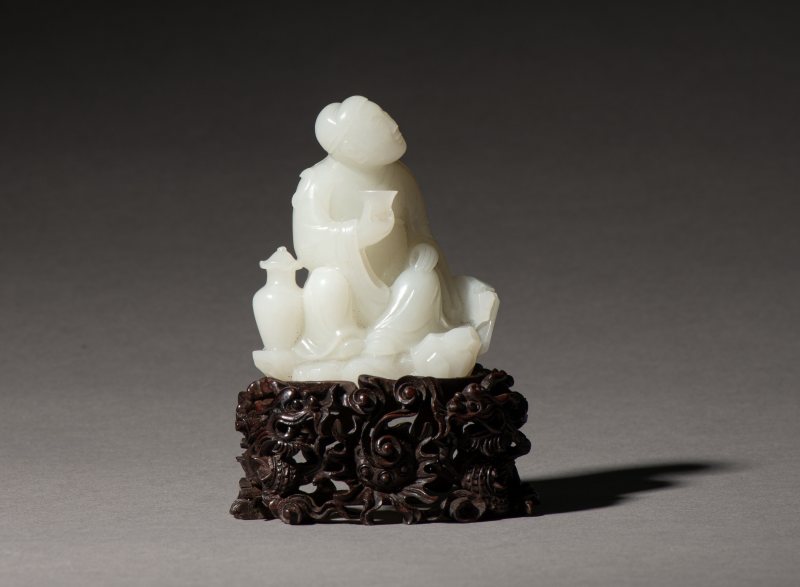

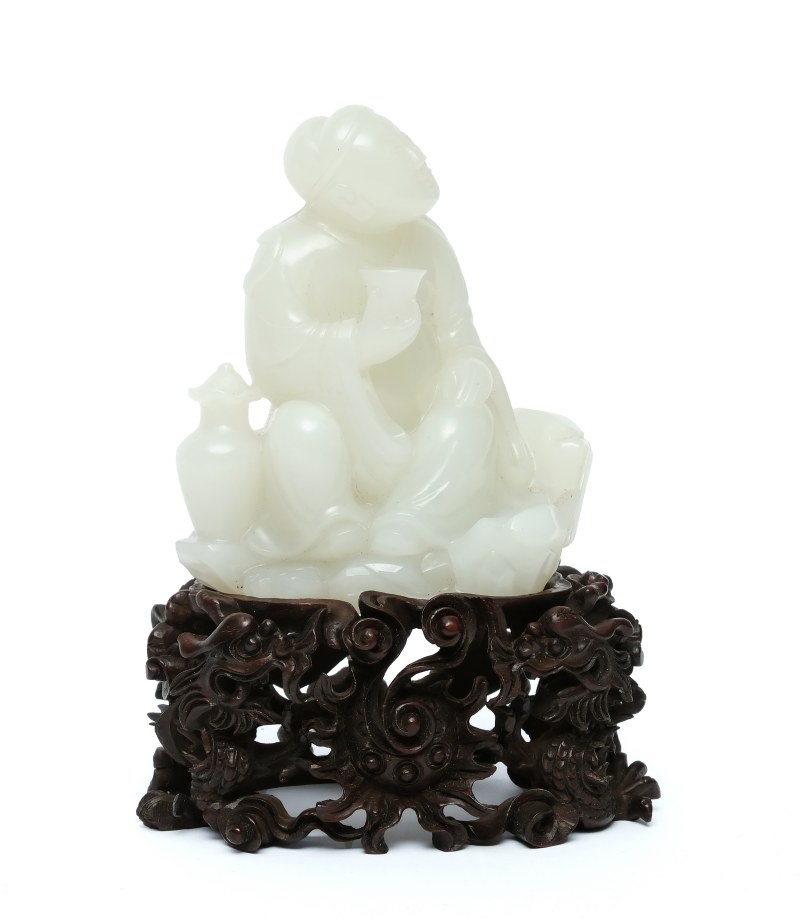
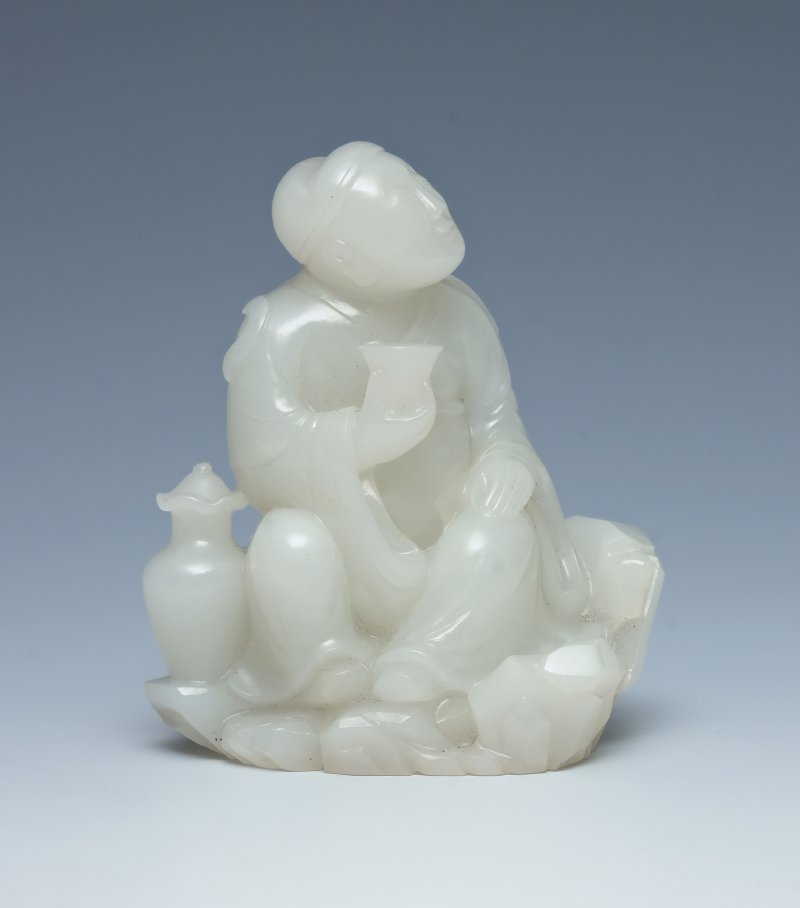
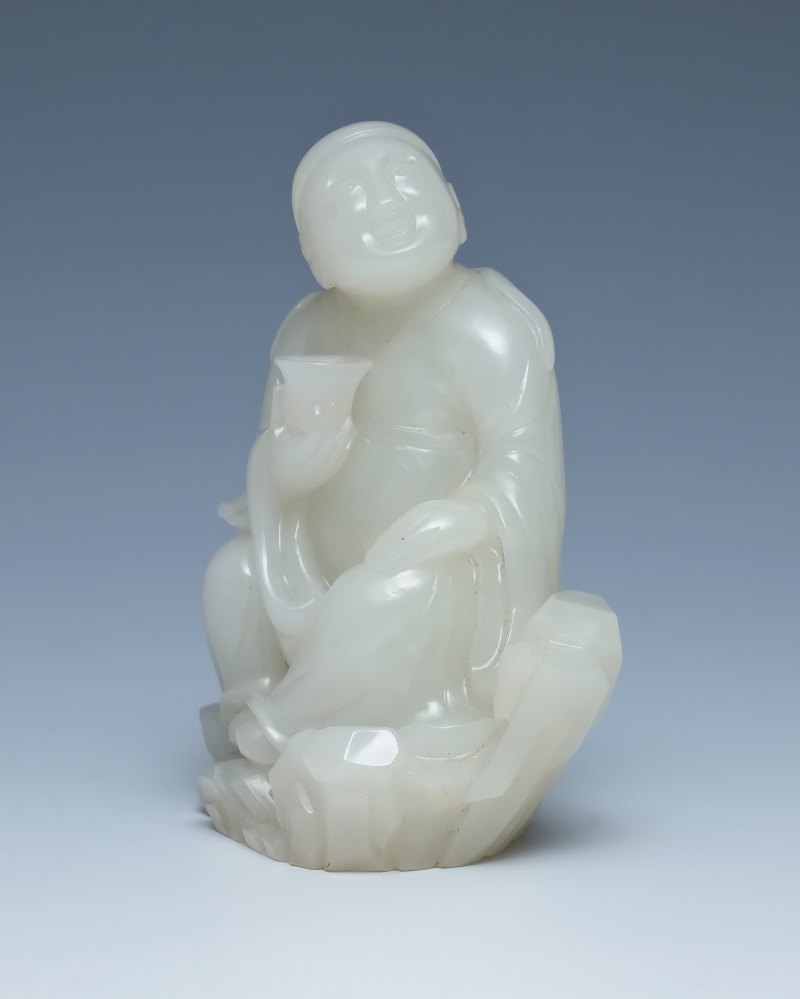
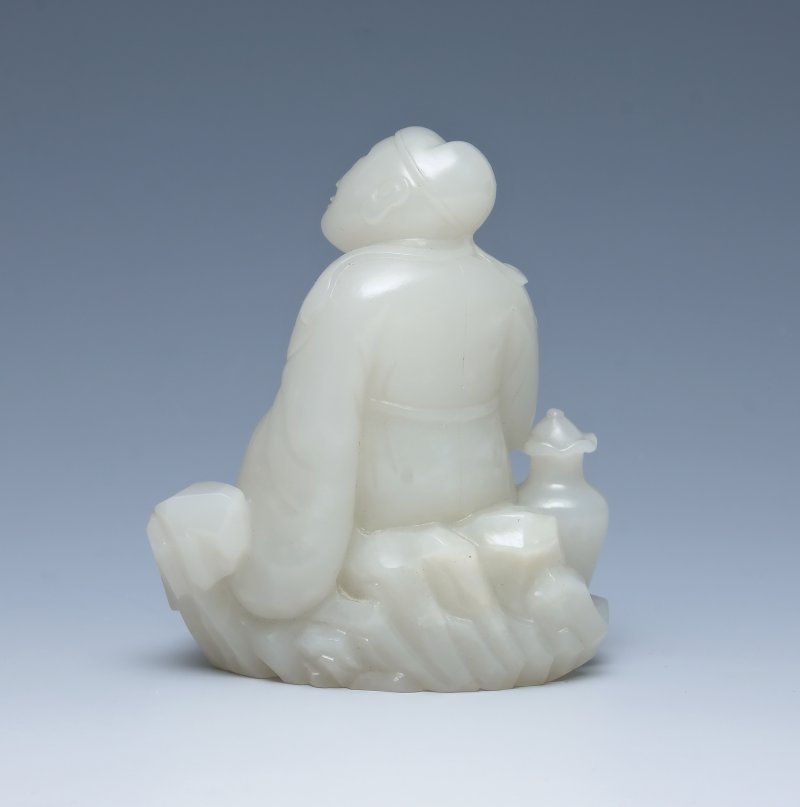
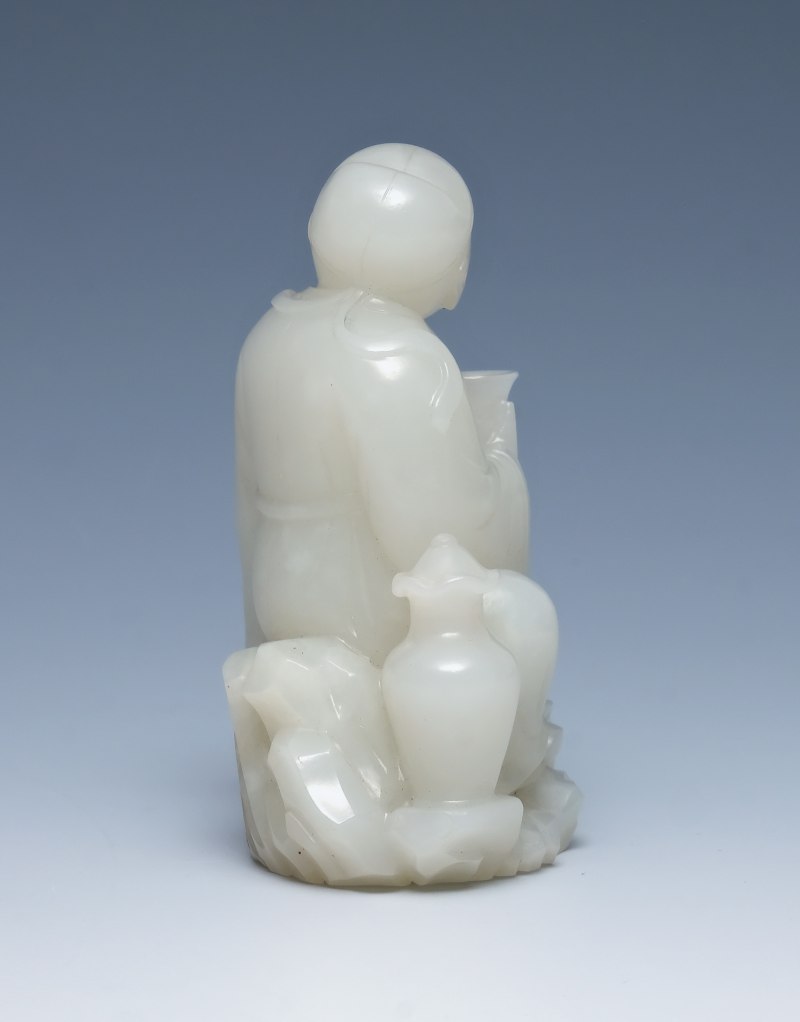
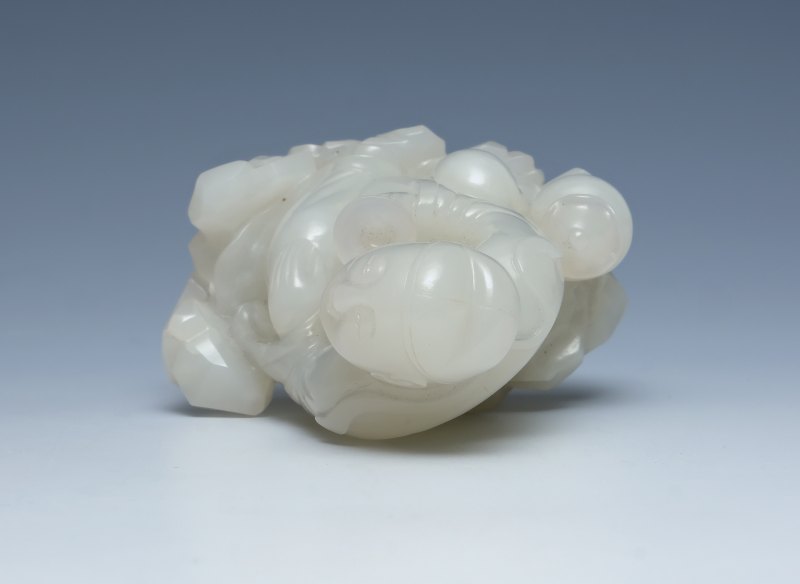
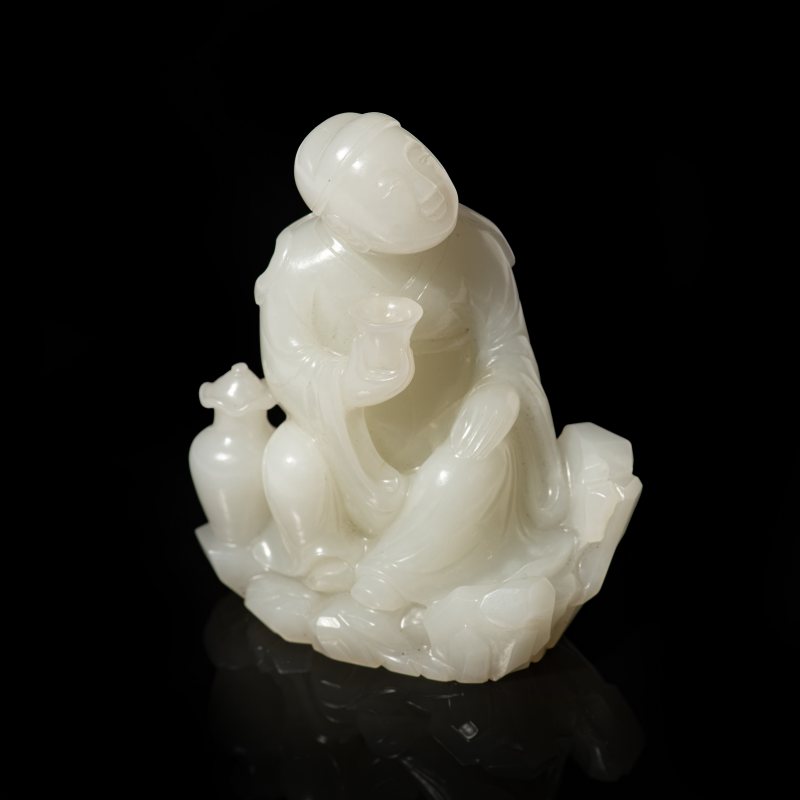
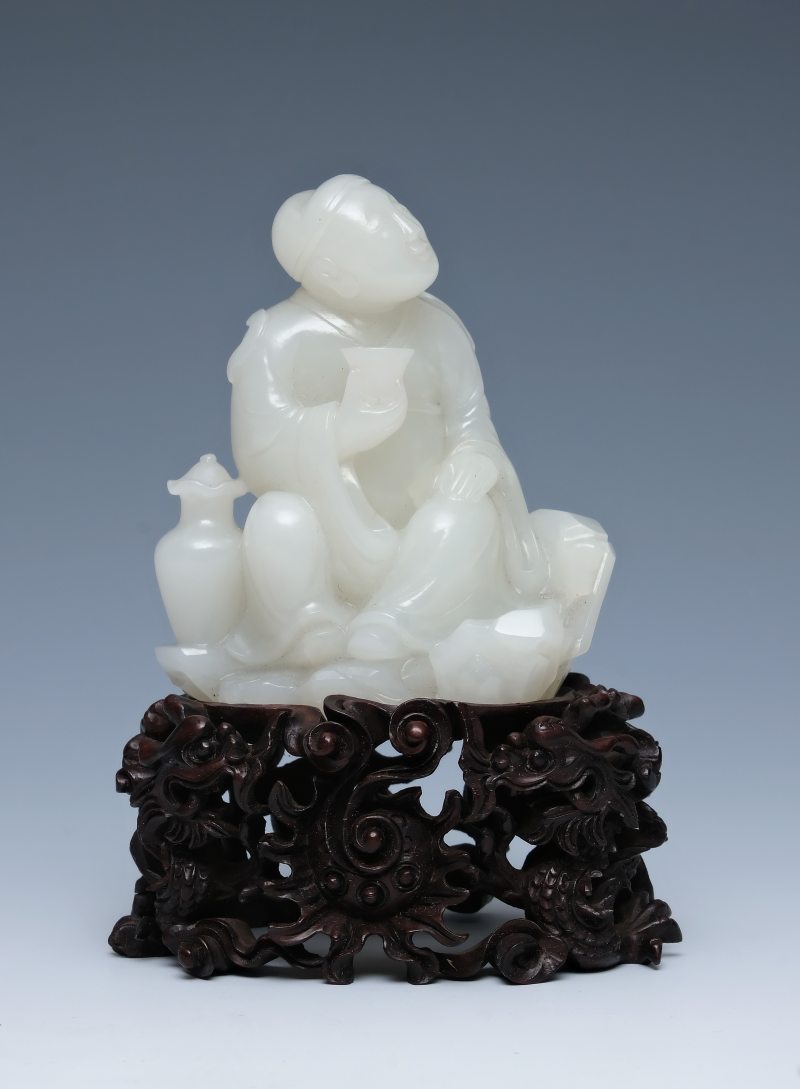
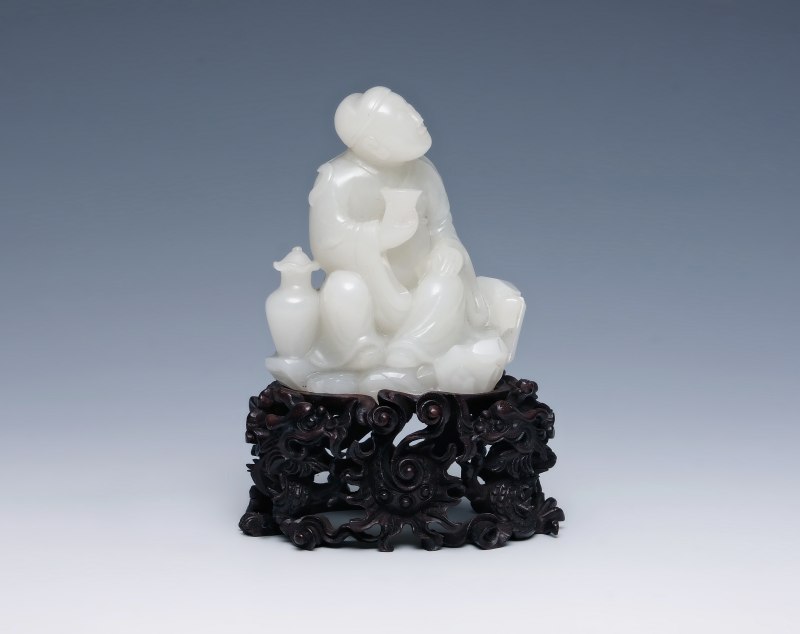
Lot 24 An exceptional white jade figure, Qianlong mark and of the period (1736-1795)
落槌价
****
成交价
****
拍品信息
拍品名称
An exceptional white jade figure, Qianlong mark and of the period (1736-1795)
年代
Qing Dynasty, Qianlong period (1736-1795)
起拍价
EUR 100,000
估值区间
€100,000 - €200,000
尺寸
H 8 cm, W 6.3 x 3.7 cm (just the jade figure, measured without the wooden stand).
品相
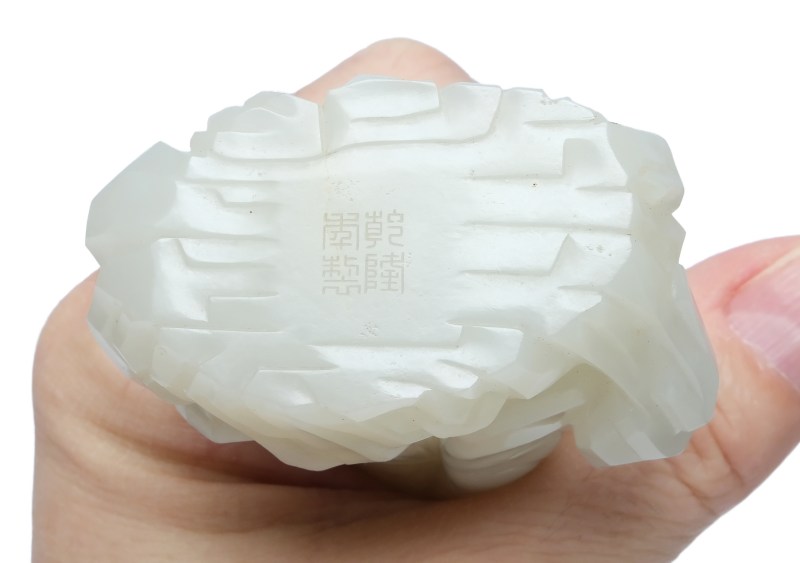
A few natural cracks in the jade, most noticeably one through the underside which continues slightly up the front side.
更多信息
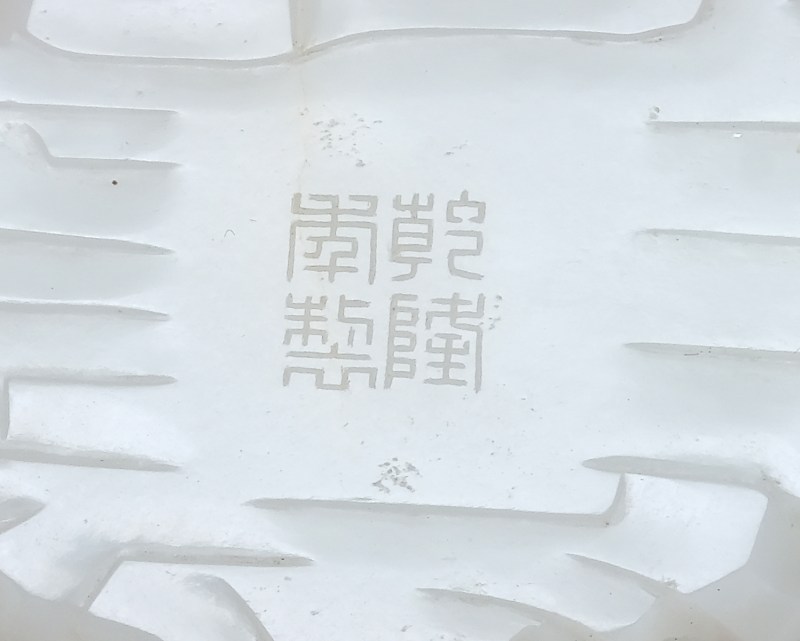
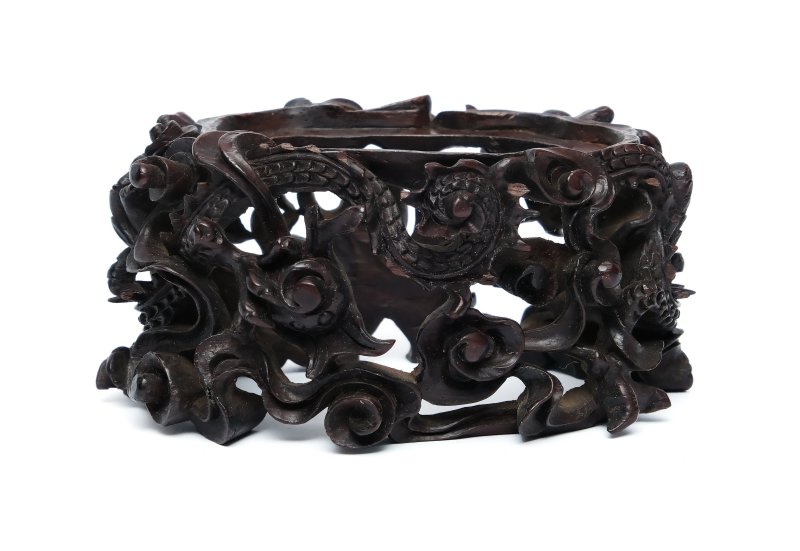
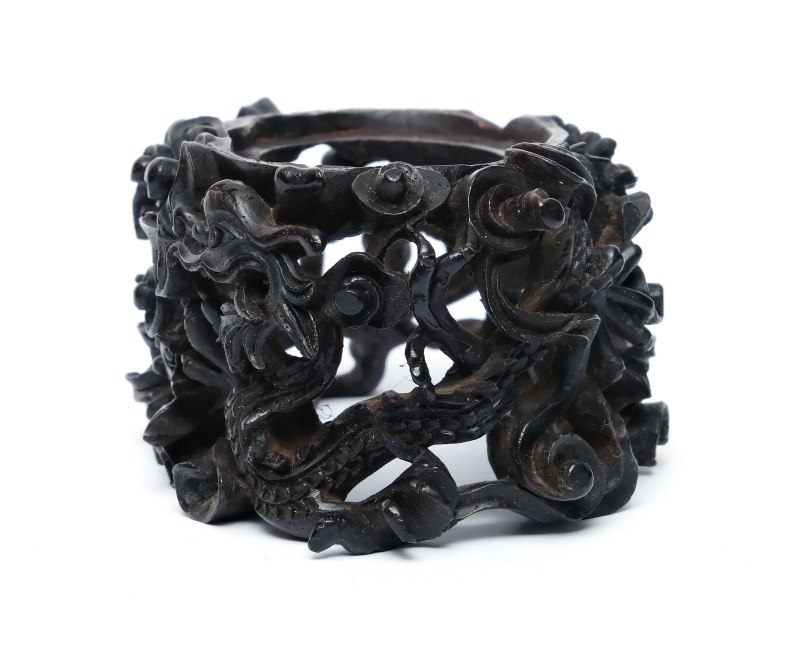
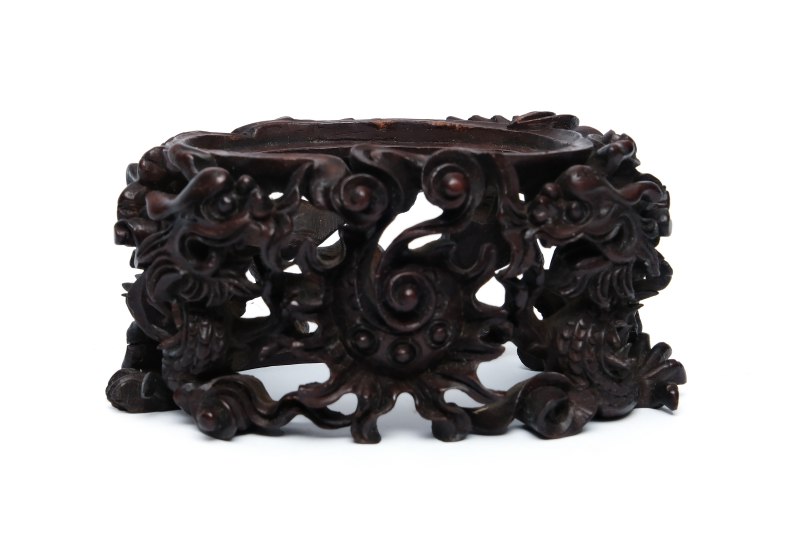
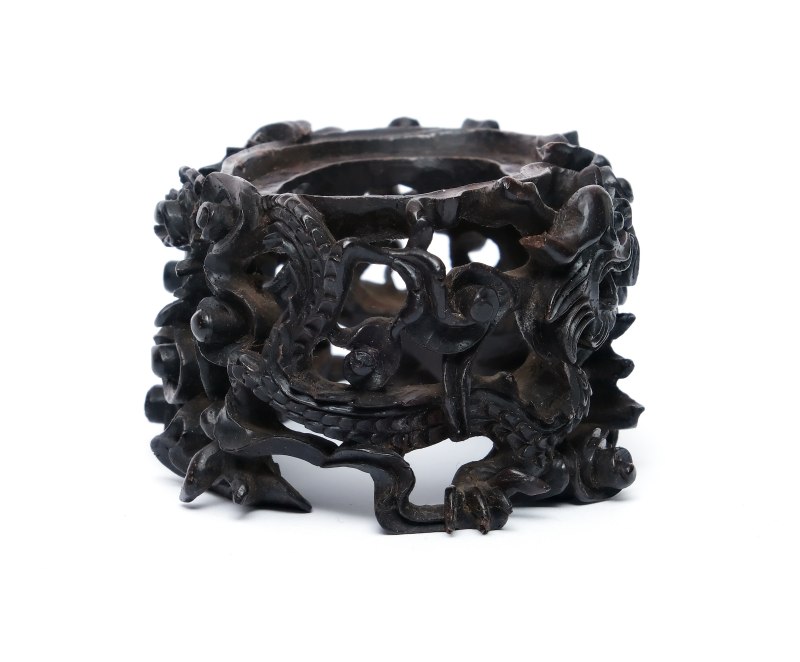
Marked with a small four-character Zhuanshu Qianlong imperial mark on the base. Possibly representing Li Bai. Set on a custom wooden carved stand (featuring two open-work carved dragons chasing a flaming pearl), and in a later custom wooden fitted case.
**Literature**
In eighteenth-century China, no material carried greater symbolic weight than white jade. Prized for millennia, jade had long been associated with purity, virtue, and moral integrity. Yet it was during the reign of the Qianlong Emperor (1735–1796) that white jade reached an unprecedented level of importance, becoming not only a luxury material but a powerful expression of imperial identity.
Qianlong’s fascination with jade was both personal and political. As a deeply educated ruler steeped in Confucian philosophy, he embraced the ancient idea that jade embodied the qualities of a virtuous man: its smoothness suggested benevolence, its translucency clarity of thought, and its durability moral strength. White jade, in particular—valued for its even, creamy tone—came to represent purity and perfection. By surrounding himself with such objects, the emperor was making a subtle but unmistakable statement about his own legitimacy and moral authority.
This symbolic role was reinforced by historical circumstance. In the 1750s, Qing military campaigns secured control over Xinjiang, the region that supplied the finest nephrite jade from the rivers of Khotan. With direct access to these sources, the imperial court effectively monopolized the highest quality material. White jade thus became closely tied to imperial power: it was not simply rare, but controlled by the throne itself.
At the same time, Qianlong used jade as a means of connecting his reign to the distant past. Many jade objects produced for the court deliberately imitate ancient ritual bronzes from the Shang and Zhou dynasties. These archaistic forms were not copies in a modern sense, but reinterpretations that allowed the emperor to position himself as the heir to China’s earliest sage-kings. By reviving ancient styles in the most precious material available, Qianlong presented his rule as both continuous with and superior to antiquity.
The emperor’s personal involvement further elevated the status of jade. He frequently composed poems about individual pieces, which were sometimes inscribed directly onto the stone. These inscriptions transformed objects into intimate records of imperial taste and thought. In this way, a jade carving was no longer just a work of craftsmanship—it became a dialogue between ruler, material, and history.
White jade objects served many functions at court. Some were ritual in nature, echoing ancient ceremonial practices. Others were intended for display in palace interiors, where their refined surfaces and intricate carvings reflected the cultivated environment of the imperial household. Jade was also worn in the form of pendants, belt plaques, and thumb rings, signalling rank and status. In diplomatic contexts, finely worked jade pieces could be presented as gifts, reinforcing relationships and hierarchies both within the empire and beyond.
Ultimately, under the Qianlong Emperor, white jade became far more than a decorative medium. It was a material through which power was expressed, history was curated, and moral ideals were made visible. To modern viewers, these objects may appear as masterpieces of craftsmanship—and they are—but to Qianlong himself, they were also instruments of rulership, embodying the values and authority of the empire he sought to define.
**Footnote**
Jade in the Qing dynasty was valued in a wide range of colours and textures, each appreciated for its aesthetic and symbolic qualities. Among these, white jade—especially the fine, even-toned nephrite from Khotan—was considered the most prestigious. Its soft, luminous surface and relative purity made it the ideal material for imperial commissions, closely aligning with long-standing Confucian associations of jade with moral virtue, clarity, and refinement. Under the Qianlong Emperor, white jade came to represent the highest standard of both material quality and cultural meaning.
Other hues of jade, however, were by no means secondary, but fulfilled different roles within the broader artistic and symbolic vocabulary of the court. Green jade, including the richly coloured “spinach green” variety, was admired for its depth and visual richness. Yellow jade carried associations with the imperial colour, though fine examples were comparatively rare. Stones with russet “skin,” caused by natural weathering, were often deliberately incorporated into carvings to enhance their visual and poetic character. Darker jades, including black or mottled varieties, were used to create contrast or to evoke antiquity.
Rather than a strict hierarchy, Qing taste reflects a nuanced appreciation in which white jade occupied the highest position, while other colours contributed to a sophisticated and varied aesthetic language.
以下内容由AI翻译:
【名称】
清乾隆白玉人物像
【年代】
清乾隆时期(1736-1795)
【描述】
底座刻有小四字篆书乾隆御制款。可能代表李白。置于一个定制的木雕底座上(底座上雕刻有两条镂空的龙追逐火焰珠),并配有后来定制的木盒。
**著录**
在中国十八世纪,没有任何材料比白玉具有更大的象征意义。白玉自古以来就被视为纯洁、美德和道德正直的象征。然而,在乾隆皇帝(1735-1796年在位)统治期间,白玉达到了前所未有的重要地位,不仅成为一种奢侈品,而且成为皇权身份的强大表达。
乾隆对玉的喜爱既是个人的也是政治的。作为深受儒家哲学熏陶的博学君主,他接受了古代认为玉体现了君子品质的观点:其光滑暗示仁慈,透明度暗示清晰的思想,耐久性暗示道德力量。特别是白玉——因其均匀、奶油般的色调而受到重视——代表着纯洁与完美。通过周围摆放这些物品,皇帝在微妙但明确地表明自己的合法性与道德权威。
这一象征作用因历史环境而得到加强。在18世纪50年代,清朝军事行动控制了新疆地区,该地区提供了来自和田河的最佳软玉。通过直接获取这些资源,宫廷实际上垄断了最高质量的材料。因此,白玉与皇权紧密联系在一起:它不仅是稀有的,而且由皇权本身控制。
同时,乾隆利用玉器将其统治与遥远的过去联系起来。为宫廷制作的许多玉器故意模仿商周时期的古代青铜礼器。这些复古形式不是现代意义上的复制品,而是重新诠释,使皇帝能够将自己定位为中国最早圣王的继承者。通过用最珍贵的材料复兴古代风格,乾隆将其统治呈现为既延续又超越古代。
皇帝的个人参与进一步提升了玉的地位。他经常为个别作品作诗,有时直接刻在石头上。这些题词将物品变成了皇帝品味和思想的亲密记录。这样,一件玉雕不再仅仅是工艺作品,而是成为了统治者、材料和历史之间的对话。
在宫廷中,白玉物件有许多用途。有些是仪式性的,呼应古代礼仪实践。其他则用于宫殿内部展示,其精致的表面和复杂的雕刻反映了皇家家庭的文化环境。玉还以挂件、腰牌和扳指的形式佩戴,显示等级和地位。在外交场合,精美的玉器可以作为礼物赠送,强化帝国内外的关系和等级。
最终,在乾隆皇帝统治下,白玉远不止是一种装饰材料。它是权力表达、历史策划和道德理想可视化的媒介。对于现代观众来说,这些物品可能是工艺杰作——它们确实是——但对于乾隆本人来说,它们也是统治工具,体现了他所追求定义的帝国的价值观和权威。
**注**
清代玉器在颜色和质地方面都有广泛的欣赏价值,每种都因其美学和象征意义而受到赞赏。其中,白玉——尤其是来自和田的细腻均匀的软玉——被认为是最尊贵的。其柔软、发光的表面和相对纯净使其成为皇家委托的理想材料,与长期以来儒家将玉与道德美德、清晰和精致联系在一起的观点相一致。在乾隆皇帝统治下,白玉代表了物质质量和文化意义的最高标准。
然而,其他颜色的玉也并非次要,但在宫廷更广泛的艺术和象征词汇中扮演了不同的角色。绿色玉,包括色彩丰富的“菠菜绿”品种,因其深度和视觉丰富性而受到赞赏。黄色玉带有皇室色彩的联想,尽管优质例子相对罕见。由于自然风化造成的红褐色“皮”,常常被有意融入雕刻中,以增强其视觉和诗意特征。较暗的玉,包括黑色或斑驳的品种,用于创造对比或唤起古意。
与其说是一个严格的等级制度,不如说清代品味反映了一种细致入微的欣赏,在这种欣赏中,白玉占据最高位置,而其他颜色则贡献了一个复杂多样的审美语言。
【品相】
玉中有几处天然裂纹,最明显的是底部的一条裂纹,延伸到前面一点。
**Literature**
In eighteenth-century China, no material carried greater symbolic weight than white jade. Prized for millennia, jade had long been associated with purity, virtue, and moral integrity. Yet it was during the reign of the Qianlong Emperor (1735–1796) that white jade reached an unprecedented level of importance, becoming not only a luxury material but a powerful expression of imperial identity.
Qianlong’s fascination with jade was both personal and political. As a deeply educated ruler steeped in Confucian philosophy, he embraced the ancient idea that jade embodied the qualities of a virtuous man: its smoothness suggested benevolence, its translucency clarity of thought, and its durability moral strength. White jade, in particular—valued for its even, creamy tone—came to represent purity and perfection. By surrounding himself with such objects, the emperor was making a subtle but unmistakable statement about his own legitimacy and moral authority.
This symbolic role was reinforced by historical circumstance. In the 1750s, Qing military campaigns secured control over Xinjiang, the region that supplied the finest nephrite jade from the rivers of Khotan. With direct access to these sources, the imperial court effectively monopolized the highest quality material. White jade thus became closely tied to imperial power: it was not simply rare, but controlled by the throne itself.
At the same time, Qianlong used jade as a means of connecting his reign to the distant past. Many jade objects produced for the court deliberately imitate ancient ritual bronzes from the Shang and Zhou dynasties. These archaistic forms were not copies in a modern sense, but reinterpretations that allowed the emperor to position himself as the heir to China’s earliest sage-kings. By reviving ancient styles in the most precious material available, Qianlong presented his rule as both continuous with and superior to antiquity.
The emperor’s personal involvement further elevated the status of jade. He frequently composed poems about individual pieces, which were sometimes inscribed directly onto the stone. These inscriptions transformed objects into intimate records of imperial taste and thought. In this way, a jade carving was no longer just a work of craftsmanship—it became a dialogue between ruler, material, and history.
White jade objects served many functions at court. Some were ritual in nature, echoing ancient ceremonial practices. Others were intended for display in palace interiors, where their refined surfaces and intricate carvings reflected the cultivated environment of the imperial household. Jade was also worn in the form of pendants, belt plaques, and thumb rings, signalling rank and status. In diplomatic contexts, finely worked jade pieces could be presented as gifts, reinforcing relationships and hierarchies both within the empire and beyond.
Ultimately, under the Qianlong Emperor, white jade became far more than a decorative medium. It was a material through which power was expressed, history was curated, and moral ideals were made visible. To modern viewers, these objects may appear as masterpieces of craftsmanship—and they are—but to Qianlong himself, they were also instruments of rulership, embodying the values and authority of the empire he sought to define.
**Footnote**
Jade in the Qing dynasty was valued in a wide range of colours and textures, each appreciated for its aesthetic and symbolic qualities. Among these, white jade—especially the fine, even-toned nephrite from Khotan—was considered the most prestigious. Its soft, luminous surface and relative purity made it the ideal material for imperial commissions, closely aligning with long-standing Confucian associations of jade with moral virtue, clarity, and refinement. Under the Qianlong Emperor, white jade came to represent the highest standard of both material quality and cultural meaning.
Other hues of jade, however, were by no means secondary, but fulfilled different roles within the broader artistic and symbolic vocabulary of the court. Green jade, including the richly coloured “spinach green” variety, was admired for its depth and visual richness. Yellow jade carried associations with the imperial colour, though fine examples were comparatively rare. Stones with russet “skin,” caused by natural weathering, were often deliberately incorporated into carvings to enhance their visual and poetic character. Darker jades, including black or mottled varieties, were used to create contrast or to evoke antiquity.
Rather than a strict hierarchy, Qing taste reflects a nuanced appreciation in which white jade occupied the highest position, while other colours contributed to a sophisticated and varied aesthetic language.
以下内容由AI翻译:
【名称】
清乾隆白玉人物像
【年代】
清乾隆时期(1736-1795)
【描述】
底座刻有小四字篆书乾隆御制款。可能代表李白。置于一个定制的木雕底座上(底座上雕刻有两条镂空的龙追逐火焰珠),并配有后来定制的木盒。
**著录**
在中国十八世纪,没有任何材料比白玉具有更大的象征意义。白玉自古以来就被视为纯洁、美德和道德正直的象征。然而,在乾隆皇帝(1735-1796年在位)统治期间,白玉达到了前所未有的重要地位,不仅成为一种奢侈品,而且成为皇权身份的强大表达。
乾隆对玉的喜爱既是个人的也是政治的。作为深受儒家哲学熏陶的博学君主,他接受了古代认为玉体现了君子品质的观点:其光滑暗示仁慈,透明度暗示清晰的思想,耐久性暗示道德力量。特别是白玉——因其均匀、奶油般的色调而受到重视——代表着纯洁与完美。通过周围摆放这些物品,皇帝在微妙但明确地表明自己的合法性与道德权威。
这一象征作用因历史环境而得到加强。在18世纪50年代,清朝军事行动控制了新疆地区,该地区提供了来自和田河的最佳软玉。通过直接获取这些资源,宫廷实际上垄断了最高质量的材料。因此,白玉与皇权紧密联系在一起:它不仅是稀有的,而且由皇权本身控制。
同时,乾隆利用玉器将其统治与遥远的过去联系起来。为宫廷制作的许多玉器故意模仿商周时期的古代青铜礼器。这些复古形式不是现代意义上的复制品,而是重新诠释,使皇帝能够将自己定位为中国最早圣王的继承者。通过用最珍贵的材料复兴古代风格,乾隆将其统治呈现为既延续又超越古代。
皇帝的个人参与进一步提升了玉的地位。他经常为个别作品作诗,有时直接刻在石头上。这些题词将物品变成了皇帝品味和思想的亲密记录。这样,一件玉雕不再仅仅是工艺作品,而是成为了统治者、材料和历史之间的对话。
在宫廷中,白玉物件有许多用途。有些是仪式性的,呼应古代礼仪实践。其他则用于宫殿内部展示,其精致的表面和复杂的雕刻反映了皇家家庭的文化环境。玉还以挂件、腰牌和扳指的形式佩戴,显示等级和地位。在外交场合,精美的玉器可以作为礼物赠送,强化帝国内外的关系和等级。
最终,在乾隆皇帝统治下,白玉远不止是一种装饰材料。它是权力表达、历史策划和道德理想可视化的媒介。对于现代观众来说,这些物品可能是工艺杰作——它们确实是——但对于乾隆本人来说,它们也是统治工具,体现了他所追求定义的帝国的价值观和权威。
**注**
清代玉器在颜色和质地方面都有广泛的欣赏价值,每种都因其美学和象征意义而受到赞赏。其中,白玉——尤其是来自和田的细腻均匀的软玉——被认为是最尊贵的。其柔软、发光的表面和相对纯净使其成为皇家委托的理想材料,与长期以来儒家将玉与道德美德、清晰和精致联系在一起的观点相一致。在乾隆皇帝统治下,白玉代表了物质质量和文化意义的最高标准。
然而,其他颜色的玉也并非次要,但在宫廷更广泛的艺术和象征词汇中扮演了不同的角色。绿色玉,包括色彩丰富的“菠菜绿”品种,因其深度和视觉丰富性而受到赞赏。黄色玉带有皇室色彩的联想,尽管优质例子相对罕见。由于自然风化造成的红褐色“皮”,常常被有意融入雕刻中,以增强其视觉和诗意特征。较暗的玉,包括黑色或斑驳的品种,用于创造对比或唤起古意。
与其说是一个严格的等级制度,不如说清代品味反映了一种细致入微的欣赏,在这种欣赏中,白玉占据最高位置,而其他颜色则贡献了一个复杂多样的审美语言。
【品相】
玉中有几处天然裂纹,最明显的是底部的一条裂纹,延伸到前面一点。
常见问题
拍品的品相状况如何?
A few natural cracks in the jade, most noticeably one through the underside which continues slightly up the front side.
拍品的尺寸是多少?
H 8 cm, W 6.3 x 3.7 cm (just the jade figure, measured without the wooden stand).