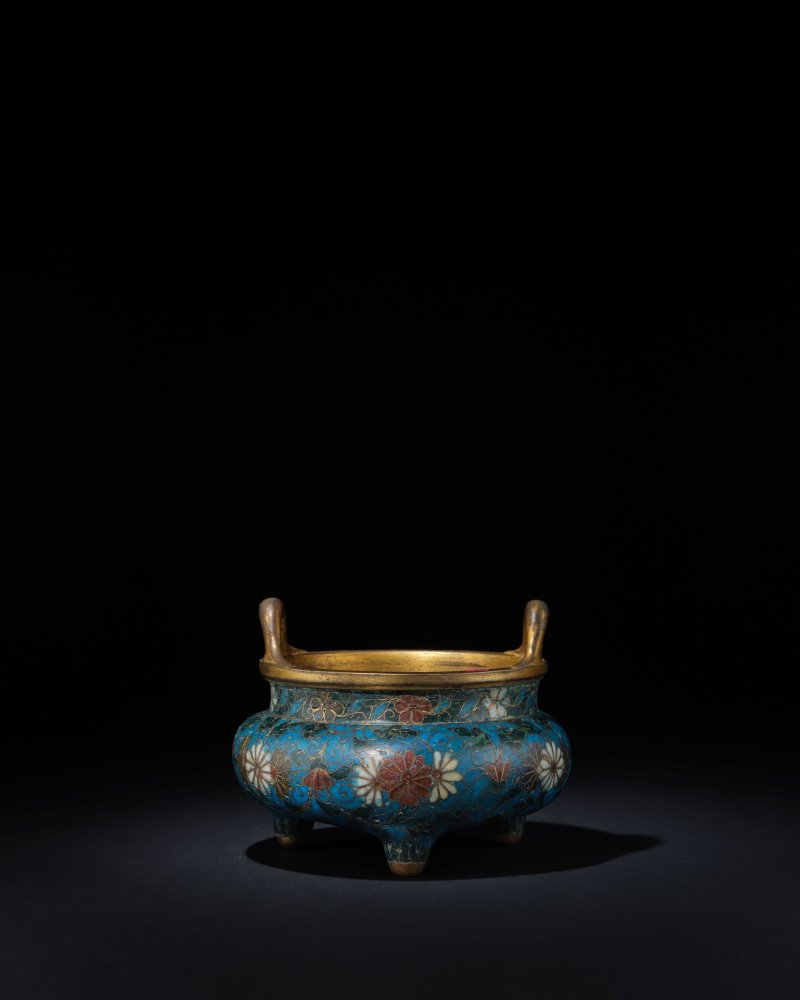

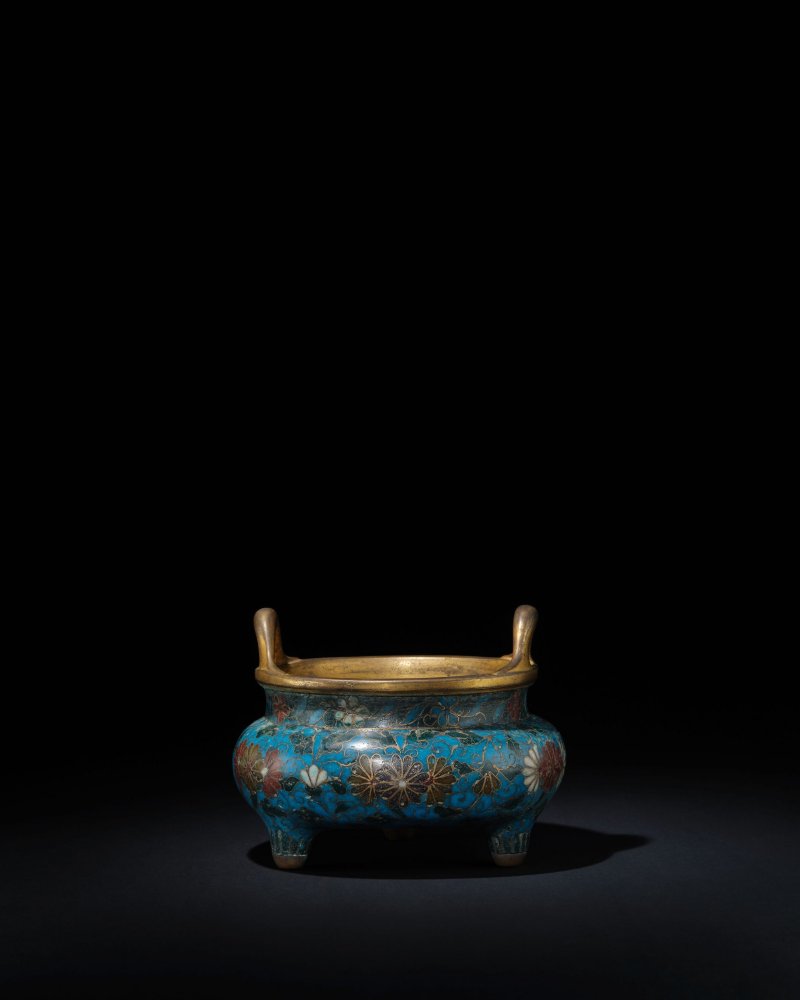
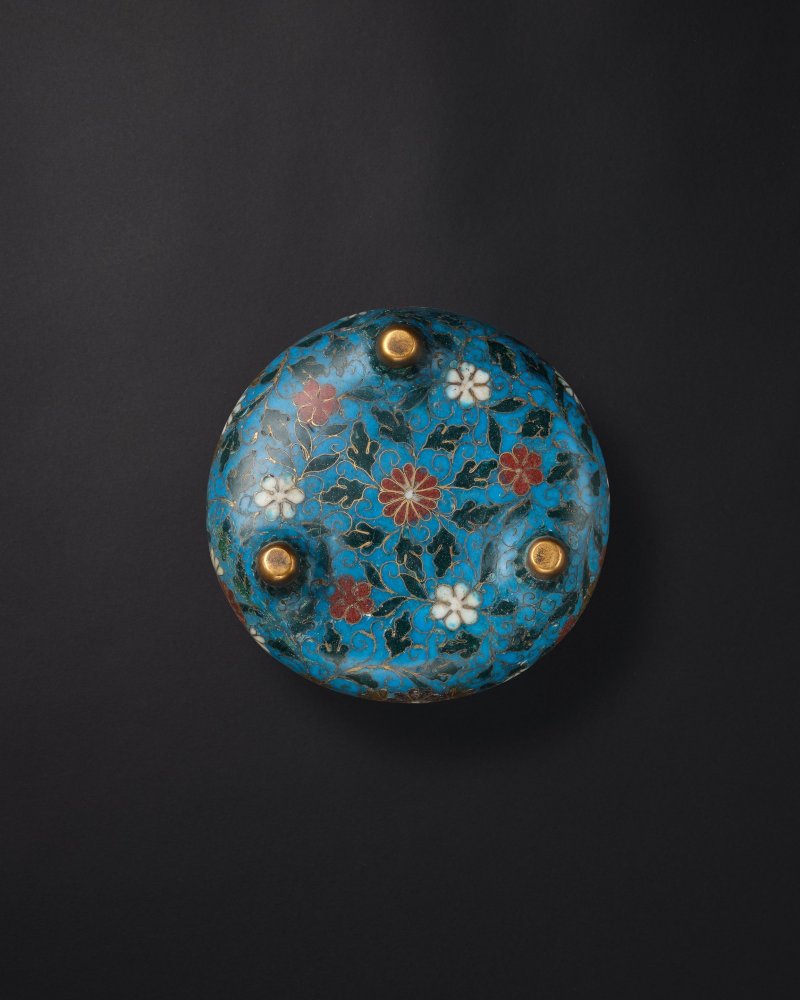
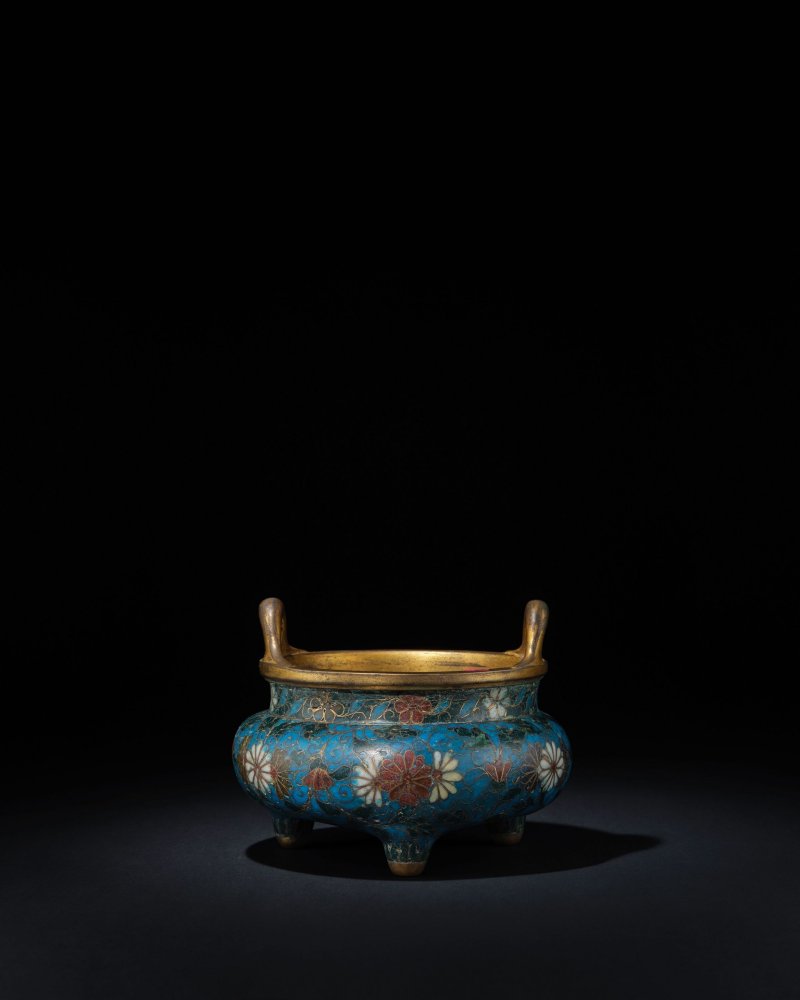
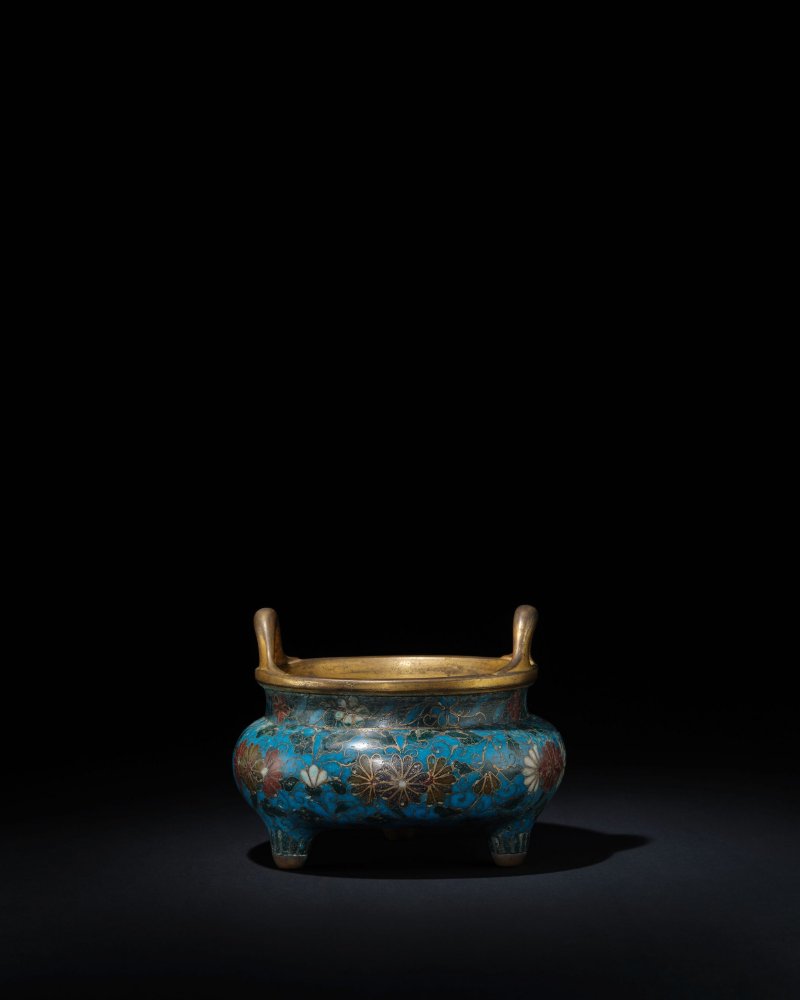
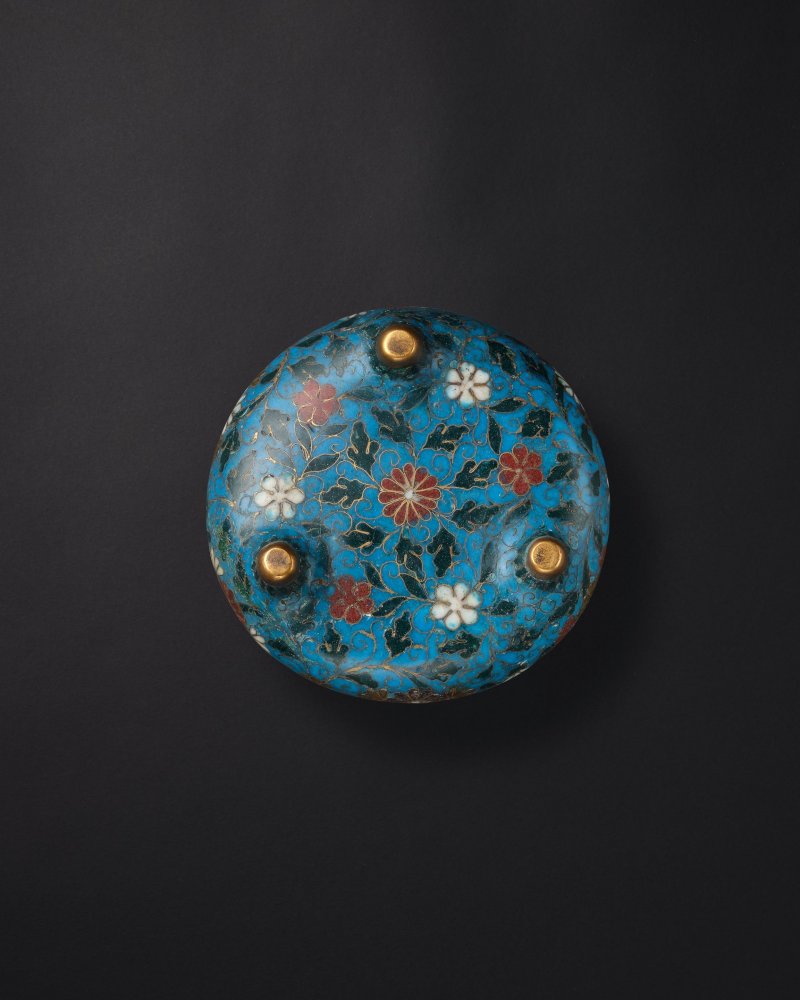
Lot 30 明中期 掐絲琺瑯纏枝菊紋橋耳三足爐 | A CLOISONNÉ ENAMEL 'CHRYSANTHEMUM' TRIPOD INCENSE BURNER, DING
落槌价
预展中
成交价
预展中
| 拍卖公司 | 邦瀚斯 |
|---|---|
| 拍卖时间 | 2026年10月28日 |
拍品信息
拍品名称
明中期 掐絲琺瑯纏枝菊紋橋耳三足爐 | A CLOISONNÉ ENAMEL 'CHRYSANTHEMUM' TRIPOD INCENSE BURNER, DING
年代
Mid-Ming Dynasty
起拍价
HKD 300,000
估值区间
HKD 300000 - 400000
尺寸
未知
品相
未知
更多信息
Mid-Ming Dynasty
Of compressed globular form, supported on three tapering feet, the exterior brightly decorated in polychrome enamels with flowering chrysanthemums borne on scrolling leafy vines, below a band of florettes on the waisted neck, surmounted by a gilt-bronze rim applied with a pair of upright loop handles, all reserved against a turquoise-blue ground, fitted box.
14cm (5 1/2in) wide. (2).
Footnotes
明中期 掐絲琺瑯纏枝菊紋橋耳三足爐
Provenance:
A & J Speelman Oriental Art, London
Poly Auction Hong Kong, 2 October 2018, lot 3462
來源:
倫敦古董商 A & J Speelman Oriental Art
香港保利,2018年10月2日,拍品編號3462
The principal decorative motif of the present incense burner is the chrysanthemum, arranged in distinctive clusters of three flowerheads amid scrolling foliage. Chrysanthemums are less commonly encountered on Ming dynasty cloisonné enamel incense burners than the ubiquitous lotus, and their inclusion here is noteworthy. Traditionally associated with autumn and longevity, the chrysanthemum also held a particular significance in connection with the Double Ninth Festival (), celebrated on the ninth day of the ninth lunar month, when chrysanthemum wine was traditionally consumed.
Compare with three similar cloisonné enamel tripod incense burners, early to mid-Ming dynasty, with similar decoration of clusters of chrysanthemums, in the Qing Court Collection, illustrated in the , vol.1, Beijing, 2011, nos.46, 80 and 81.
以菊為題,三三成組,枝葉茂盛,甚是雅致 。明朝掐絲琺瑯香爐圖樣,以番蓮為大宗,菊紋較為鮮見。菊乃秋之妍,又稱壽菊,九月九日重陽節,更有淺酌菊花酒以養生延年、祈福消災的傳統。
參考清宮舊藏明初至中期三例,同飾成組菊花,收入《故宮博物院藏品大系:琺瑯器編》,卷1,北京,2011年,編號46、80及81。
Of compressed globular form, supported on three tapering feet, the exterior brightly decorated in polychrome enamels with flowering chrysanthemums borne on scrolling leafy vines, below a band of florettes on the waisted neck, surmounted by a gilt-bronze rim applied with a pair of upright loop handles, all reserved against a turquoise-blue ground, fitted box.
14cm (5 1/2in) wide. (2).
Footnotes
明中期 掐絲琺瑯纏枝菊紋橋耳三足爐
Provenance:
A & J Speelman Oriental Art, London
Poly Auction Hong Kong, 2 October 2018, lot 3462
來源:
倫敦古董商 A & J Speelman Oriental Art
香港保利,2018年10月2日,拍品編號3462
The principal decorative motif of the present incense burner is the chrysanthemum, arranged in distinctive clusters of three flowerheads amid scrolling foliage. Chrysanthemums are less commonly encountered on Ming dynasty cloisonné enamel incense burners than the ubiquitous lotus, and their inclusion here is noteworthy. Traditionally associated with autumn and longevity, the chrysanthemum also held a particular significance in connection with the Double Ninth Festival (), celebrated on the ninth day of the ninth lunar month, when chrysanthemum wine was traditionally consumed.
Compare with three similar cloisonné enamel tripod incense burners, early to mid-Ming dynasty, with similar decoration of clusters of chrysanthemums, in the Qing Court Collection, illustrated in the , vol.1, Beijing, 2011, nos.46, 80 and 81.
以菊為題,三三成組,枝葉茂盛,甚是雅致 。明朝掐絲琺瑯香爐圖樣,以番蓮為大宗,菊紋較為鮮見。菊乃秋之妍,又稱壽菊,九月九日重陽節,更有淺酌菊花酒以養生延年、祈福消災的傳統。
參考清宮舊藏明初至中期三例,同飾成組菊花,收入《故宮博物院藏品大系:琺瑯器編》,卷1,北京,2011年,編號46、80及81。
常见问题
这件明中期 掐絲琺瑯纏枝菊紋橋耳三足爐 | A CLOISONNÉ ENAMEL 'CHRYSANTHEMUM' TRIPOD INCENSE BURNER, DING的成交价是多少?
落槌价为 预展中。 成交价为 预展中。