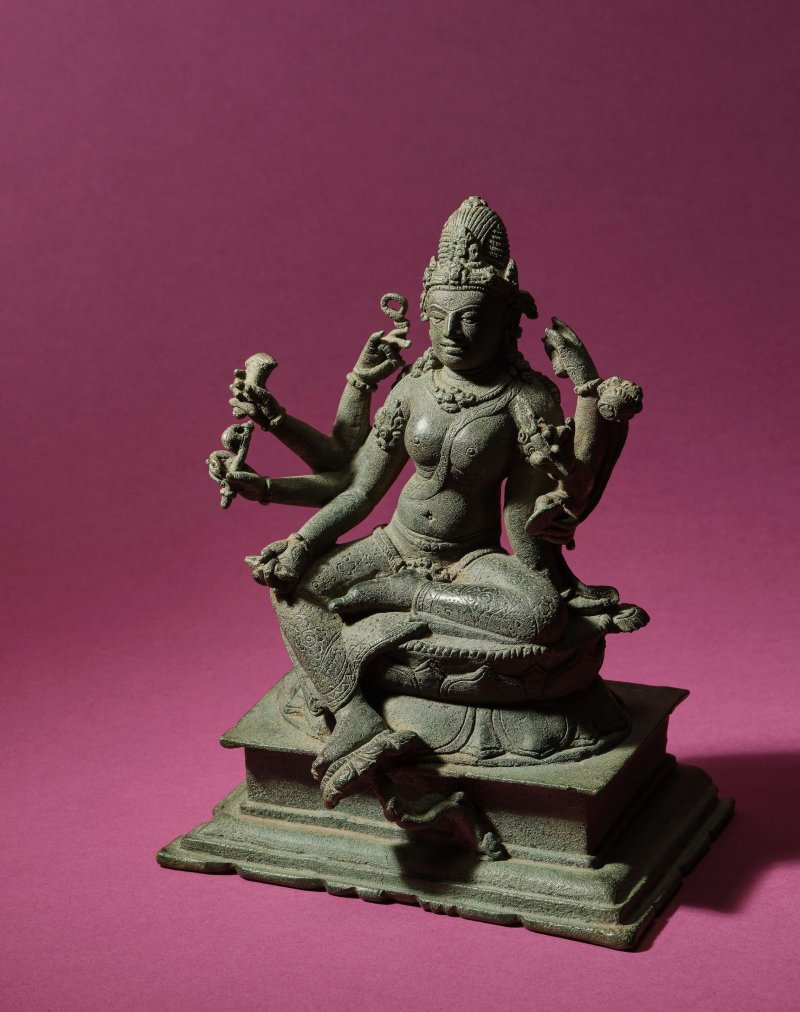

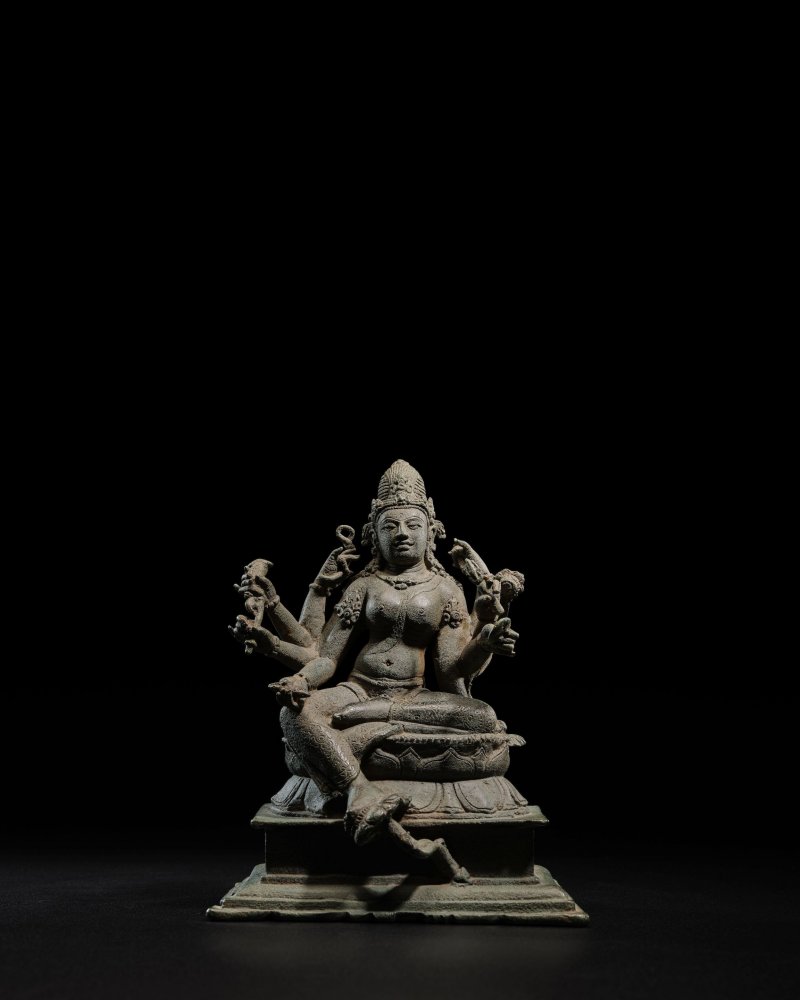
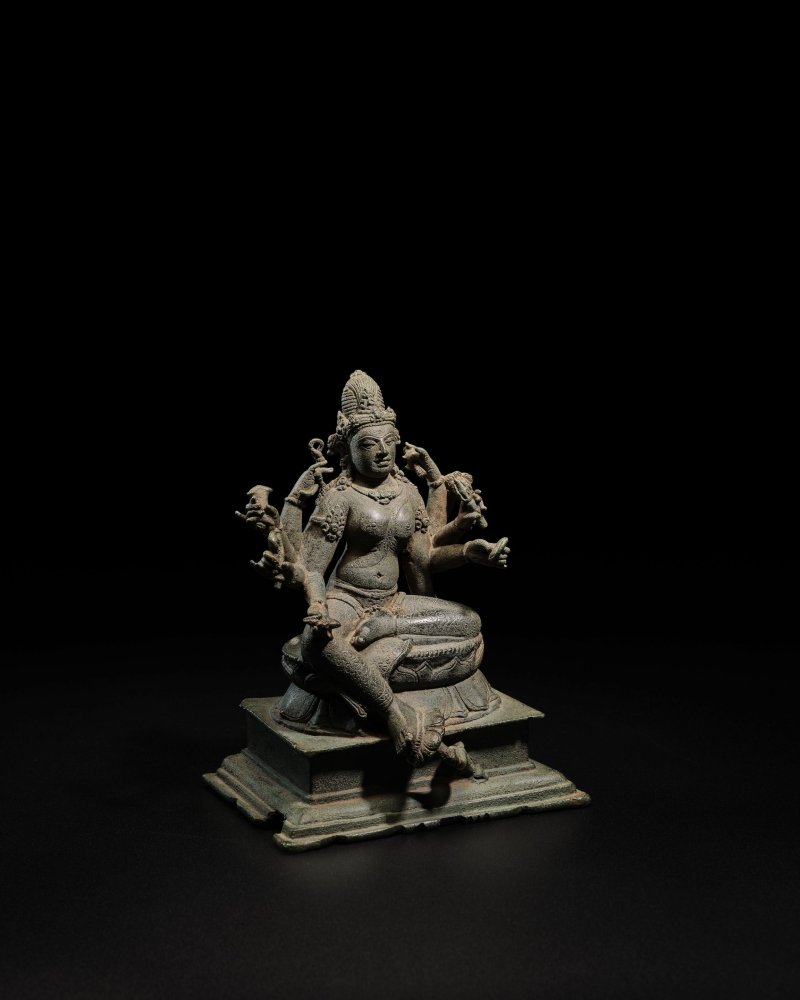
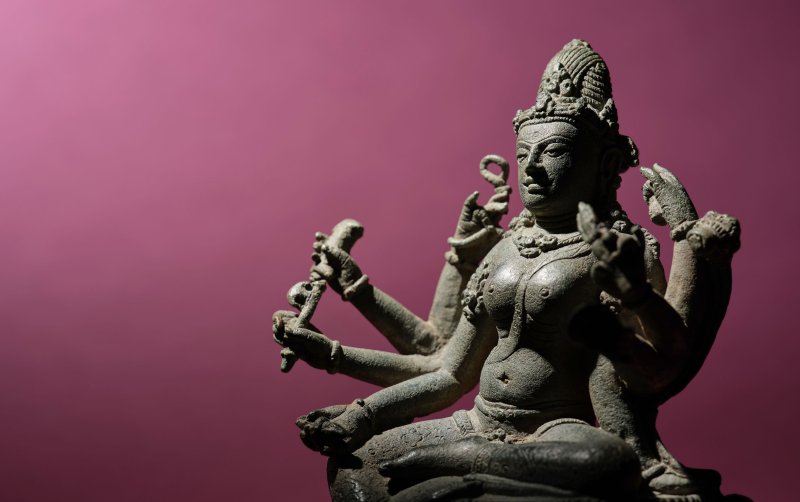
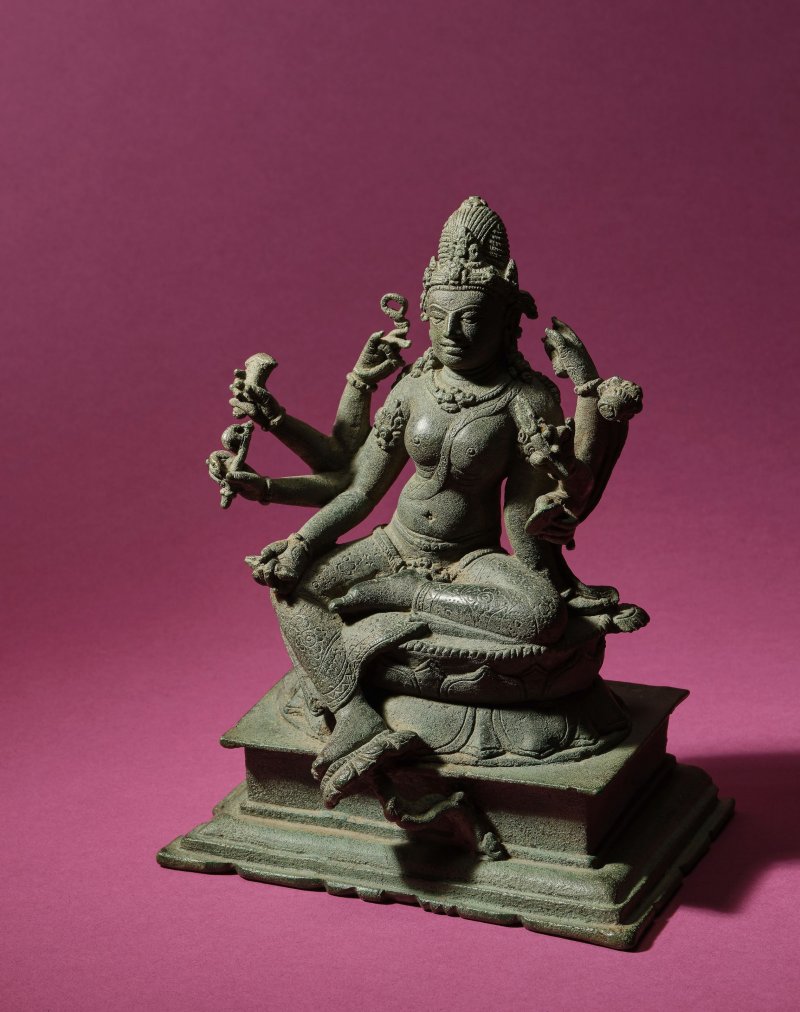
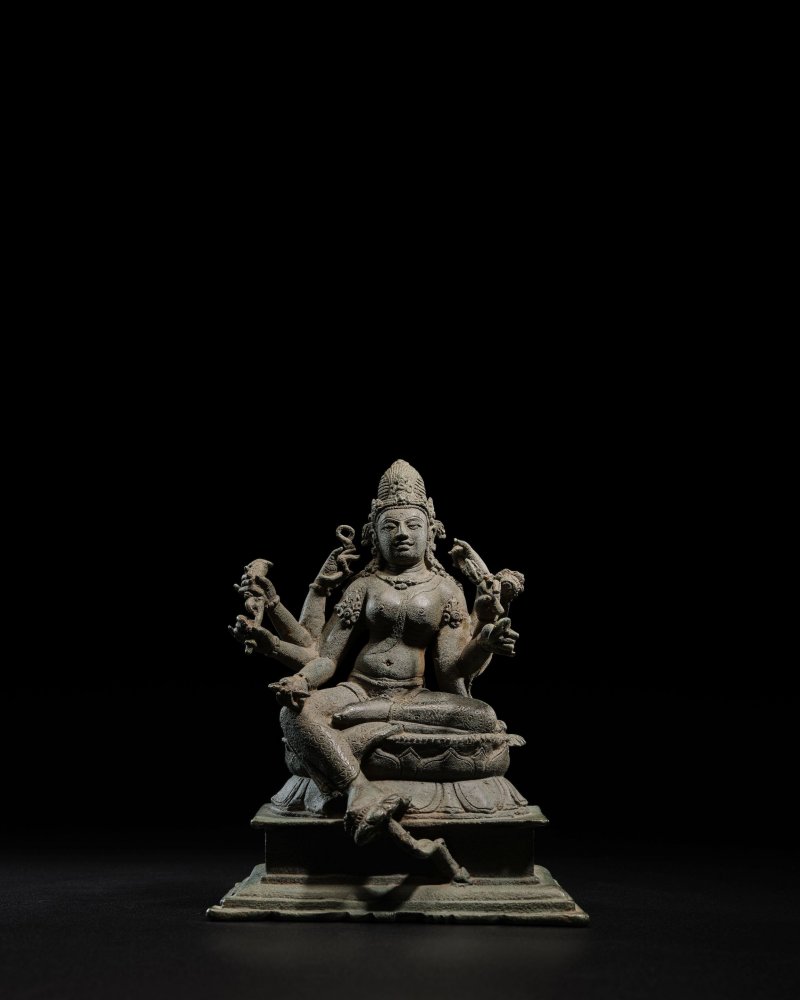
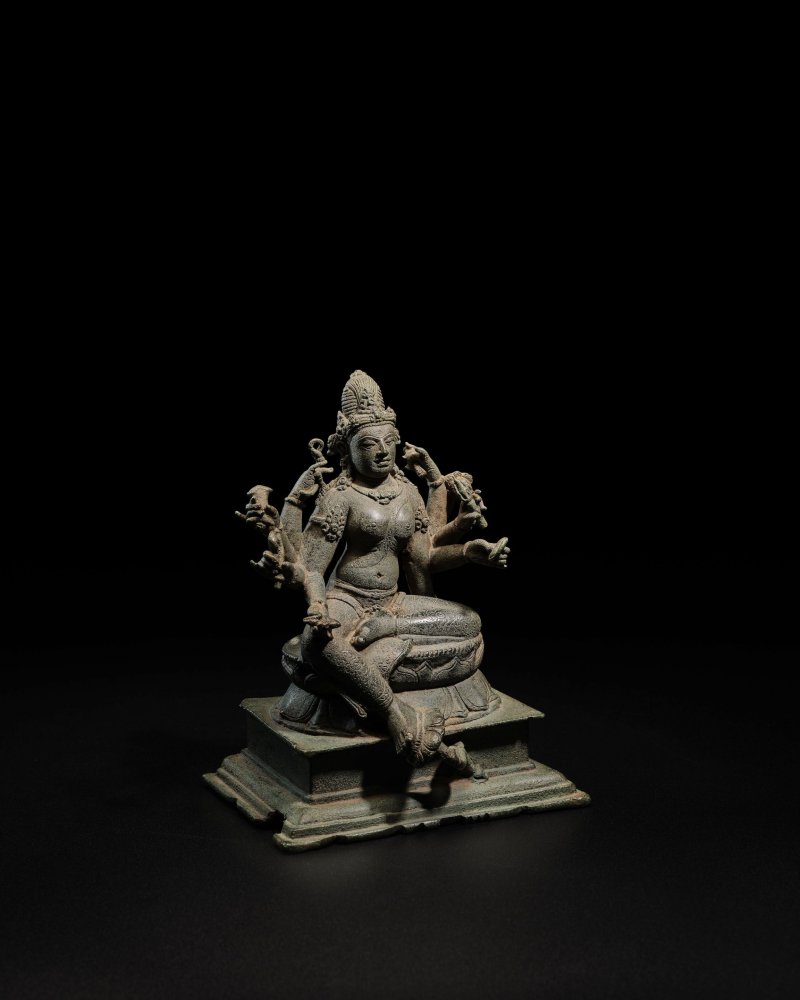
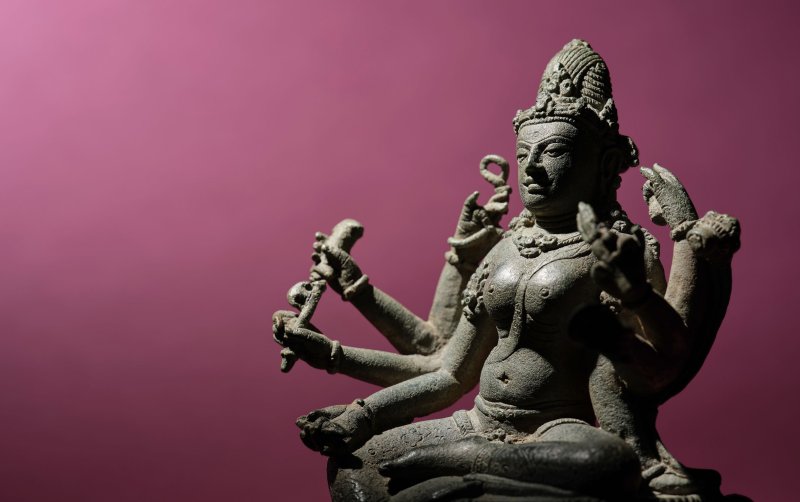
Lot 807 爪哇中部 九世紀 準提佛母銅像 | A COPPER ALLOY FIGURE OF CUNDA
落槌价
预展中
成交价
预展中
| 拍卖公司 | 邦瀚斯 |
|---|---|
| 拍卖时间 | 2026年10月29日 |
拍品信息
拍品名称
爪哇中部 九世紀 準提佛母銅像 | A COPPER ALLOY FIGURE OF CUNDA
年代
CENTRAL JAVA, 9TH CENTURY
起拍价
HKD 1,200,000
估值区间
HKD 1200000 - 1600000
尺寸
未知
品相
未知
更多信息
CENTRAL JAVA, 9TH CENTURY
19.2 cm (7 1/2 in.) high
Footnotes
爪哇中部 九世紀 準提佛母銅像
Published
Marcel Nies Oriental Art, 'Synergy in the Antwerp Art Trade,' in Arta, no. 003, 2013, p. 52.
Marcel Nies Oriental Art, The Path to Enlightenment, 2013, pp. 24-25.
Meinrad Maria Grewenig & Eberhard Rist (eds.), Buddha: 2000 Years of Buddhist Art, 232 Masterpieces, Völklingen, 2016, pp. 284-285, no. 118.
Exhibited
Buddha: 2000 Years of Buddhist Art, 232 Masterpieces, Völklingen, 24 June 2016 —19 February 2017.
Provenance
Collection of Mr. Ir. F. J. L. Ghijsels (1882-1947), the Netherlands
By descent to his heirs
Marcel Nies Oriental Art, Antwerp, Belgium, 2013
Cunda is a Vajrayana Buddhist female deity associated with wisdom, purification, and longevity. She is depicted here with eight arms, seated in a relaxed posture upon a double-lotus throne, her pendant right foot supported by a lotus issuing from the moulded rectangular pedestal. Her facial features are finely articulated, with full lips, incised eyebrows, and eyes with cavities that may once have held inlay, a feature found in some of the finest examples of Javanese bronze casting. Compare, for example, the large bronze Shiva Mahadeva in the National Museum, Jakarta, illustrated in Diskul, (1980, p. 37, fig. 8).
Cunda's attributes show close connections to Shaivism and reflect key themes of Vajrayana Buddhist practice. The vajra symbolizes indestructible wisdom and enlightenment; the sword and axe signify the cutting away of ignorance and worldly attachment; the noose represents the subjugation of obstructive forces; the trident denotes transcendent authority and spiritual power; the manuscript alludes to sacred knowledge and liturgical practice; the mirror symbolizes reflective wisdom and insight, while the lotus remains the enduring emblem of spiritual purity.
Buddhism flourished in Central Java between the late 8th and early 10th centuries. Bronze images were produced in significant numbers during this period, which also witnessed the construction of numerous temples and monumental complexes, including the great Buddhist sanctuary of Borobudur.
Cunda's worship formed part of the flourishing esoteric Buddhist traditions of Java and Sumatra during the Sailendra period, circa late 8th and 9th centuries. The expansion of maritime networks linking Indonesia with the Buddhist centres of northeastern India, particularly Nalanda, facilitated the transmission of Vajrayana teachings and ritual practices throughout maritime Southeast Asia. A Pala bronze image of sixteen-armed Cunda, attributed to the 8th or 9th century and now in the Patna Museum, Bihar (acc. no. 8367), provides an early representation in India. The Chinese monk Yijing famously resided in Srivijaya, Sumatra, before travelling to India, illustrating the vitality of these transregional religious networks. Through such connections, the worship of Cunda and related esoteric practices spread widely across the Indonesian archipelago.
In China she is known as Zhunti. Her cult derives from Indian Buddhist literature and tantric traditions that circulated between India and China during the Tang dynasty. Several translations of the were produced in China during the 7th and 8th centuries, helping to establish her worship throughout East Asia.
Indonesian bronze sculptures frequently display remarkable affinities with the Pala-period bronzes that inspired them; compare the present sculpture, for example, to a 9th- or 10th-century bronze figure of Vajrapani from Bangladesh in the collection of the Metropolitan Museum of Art (1987.142.214; fig. 1).
Related examples include a slightly larger sixteen-armed Cunda in the Asian Art Museum, San Francisco (2006.48.a-.c; fig. 2), and a large twelve-armed bronze goddess identified as Cunda, published Fontein, (1990, cat. no. 63). Fontein also notes the existence of a monumental eight-armed representation of Cunda carved in relief on the northeastern facade of Candi Mendut, near Borobudur, further attesting to the importance of her cult within the esoteric Buddhist traditions of Central Java.
For the figures listed in this essay, please refer to our printed or digital catalogue.
19.2 cm (7 1/2 in.) high
Footnotes
爪哇中部 九世紀 準提佛母銅像
Published
Marcel Nies Oriental Art, 'Synergy in the Antwerp Art Trade,' in Arta, no. 003, 2013, p. 52.
Marcel Nies Oriental Art, The Path to Enlightenment, 2013, pp. 24-25.
Meinrad Maria Grewenig & Eberhard Rist (eds.), Buddha: 2000 Years of Buddhist Art, 232 Masterpieces, Völklingen, 2016, pp. 284-285, no. 118.
Exhibited
Buddha: 2000 Years of Buddhist Art, 232 Masterpieces, Völklingen, 24 June 2016 —19 February 2017.
Provenance
Collection of Mr. Ir. F. J. L. Ghijsels (1882-1947), the Netherlands
By descent to his heirs
Marcel Nies Oriental Art, Antwerp, Belgium, 2013
Cunda is a Vajrayana Buddhist female deity associated with wisdom, purification, and longevity. She is depicted here with eight arms, seated in a relaxed posture upon a double-lotus throne, her pendant right foot supported by a lotus issuing from the moulded rectangular pedestal. Her facial features are finely articulated, with full lips, incised eyebrows, and eyes with cavities that may once have held inlay, a feature found in some of the finest examples of Javanese bronze casting. Compare, for example, the large bronze Shiva Mahadeva in the National Museum, Jakarta, illustrated in Diskul, (1980, p. 37, fig. 8).
Cunda's attributes show close connections to Shaivism and reflect key themes of Vajrayana Buddhist practice. The vajra symbolizes indestructible wisdom and enlightenment; the sword and axe signify the cutting away of ignorance and worldly attachment; the noose represents the subjugation of obstructive forces; the trident denotes transcendent authority and spiritual power; the manuscript alludes to sacred knowledge and liturgical practice; the mirror symbolizes reflective wisdom and insight, while the lotus remains the enduring emblem of spiritual purity.
Buddhism flourished in Central Java between the late 8th and early 10th centuries. Bronze images were produced in significant numbers during this period, which also witnessed the construction of numerous temples and monumental complexes, including the great Buddhist sanctuary of Borobudur.
Cunda's worship formed part of the flourishing esoteric Buddhist traditions of Java and Sumatra during the Sailendra period, circa late 8th and 9th centuries. The expansion of maritime networks linking Indonesia with the Buddhist centres of northeastern India, particularly Nalanda, facilitated the transmission of Vajrayana teachings and ritual practices throughout maritime Southeast Asia. A Pala bronze image of sixteen-armed Cunda, attributed to the 8th or 9th century and now in the Patna Museum, Bihar (acc. no. 8367), provides an early representation in India. The Chinese monk Yijing famously resided in Srivijaya, Sumatra, before travelling to India, illustrating the vitality of these transregional religious networks. Through such connections, the worship of Cunda and related esoteric practices spread widely across the Indonesian archipelago.
In China she is known as Zhunti. Her cult derives from Indian Buddhist literature and tantric traditions that circulated between India and China during the Tang dynasty. Several translations of the were produced in China during the 7th and 8th centuries, helping to establish her worship throughout East Asia.
Indonesian bronze sculptures frequently display remarkable affinities with the Pala-period bronzes that inspired them; compare the present sculpture, for example, to a 9th- or 10th-century bronze figure of Vajrapani from Bangladesh in the collection of the Metropolitan Museum of Art (1987.142.214; fig. 1).
Related examples include a slightly larger sixteen-armed Cunda in the Asian Art Museum, San Francisco (2006.48.a-.c; fig. 2), and a large twelve-armed bronze goddess identified as Cunda, published Fontein, (1990, cat. no. 63). Fontein also notes the existence of a monumental eight-armed representation of Cunda carved in relief on the northeastern facade of Candi Mendut, near Borobudur, further attesting to the importance of her cult within the esoteric Buddhist traditions of Central Java.
For the figures listed in this essay, please refer to our printed or digital catalogue.
常见问题
这件爪哇中部 九世紀 準提佛母銅像 | A COPPER ALLOY FIGURE OF CUNDA的成交价是多少?
落槌价为 预展中。 成交价为 预展中。