
拍品信息
拍品名称
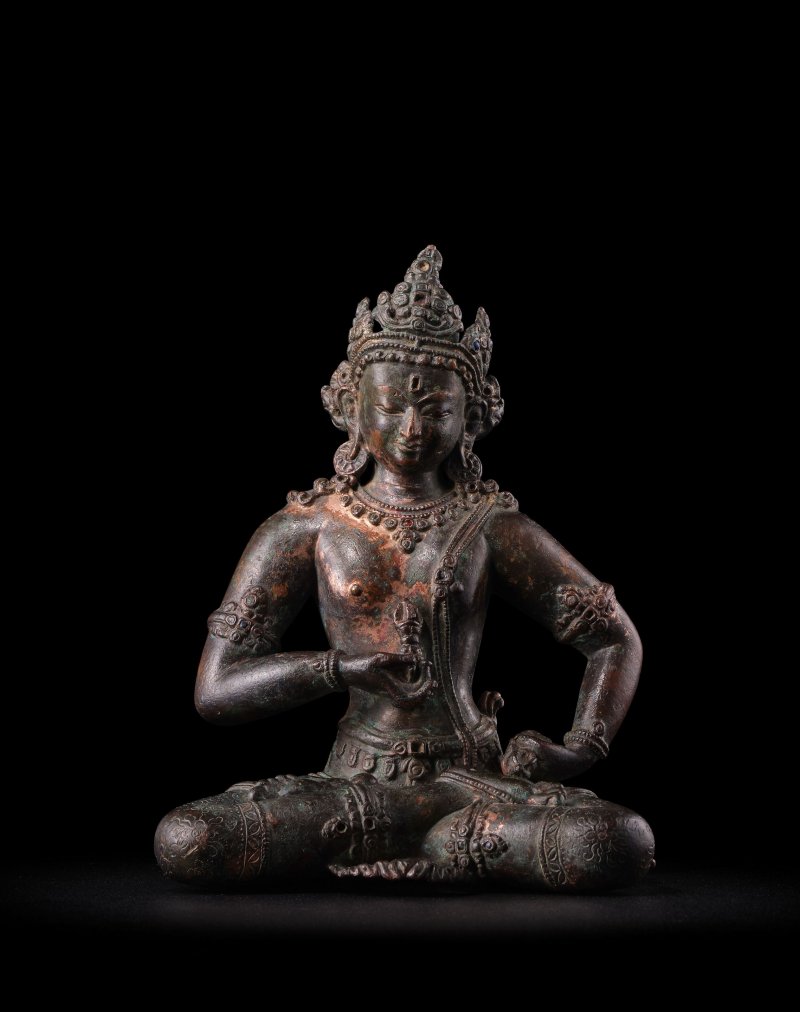
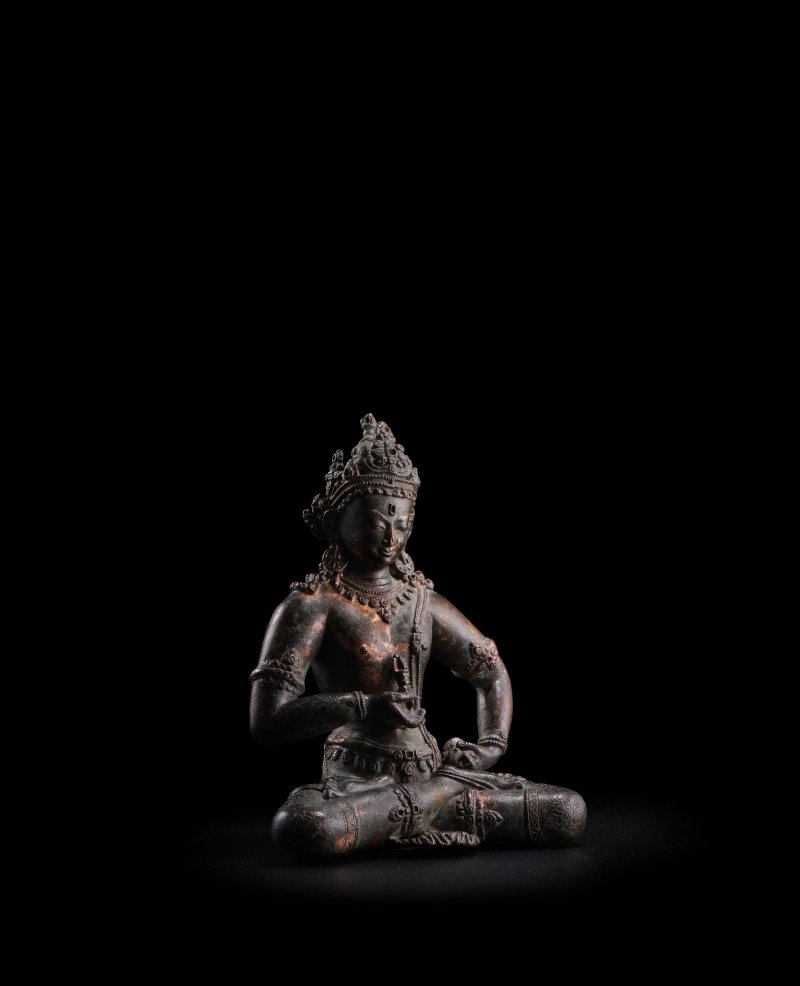
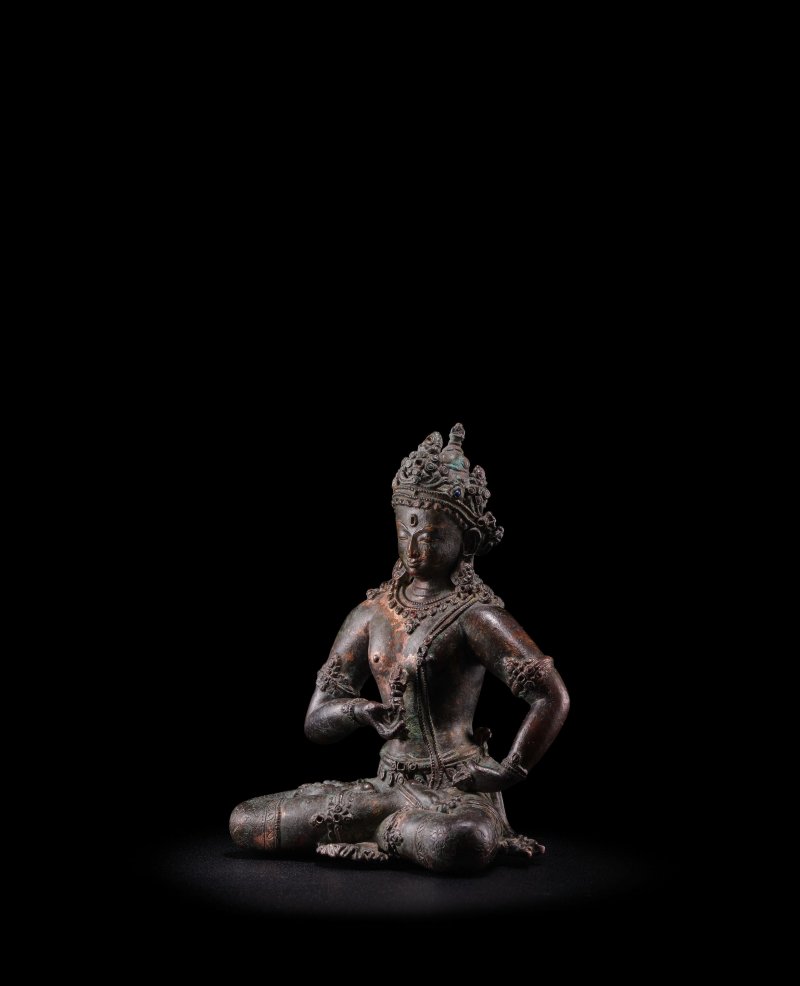
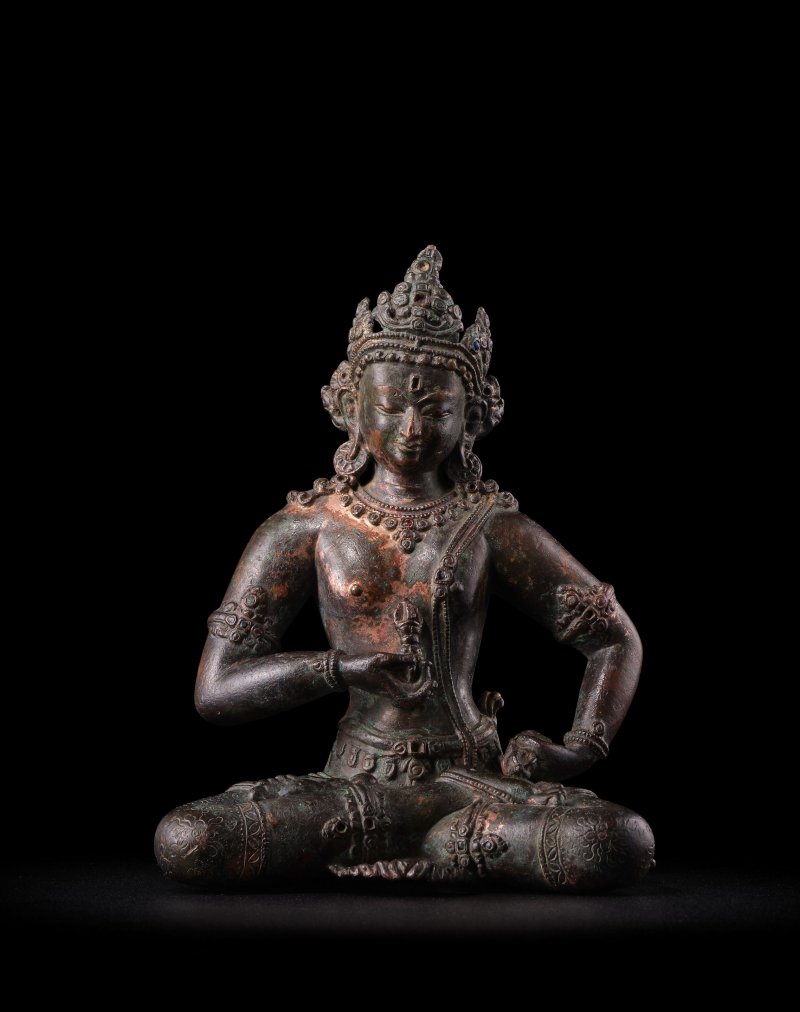
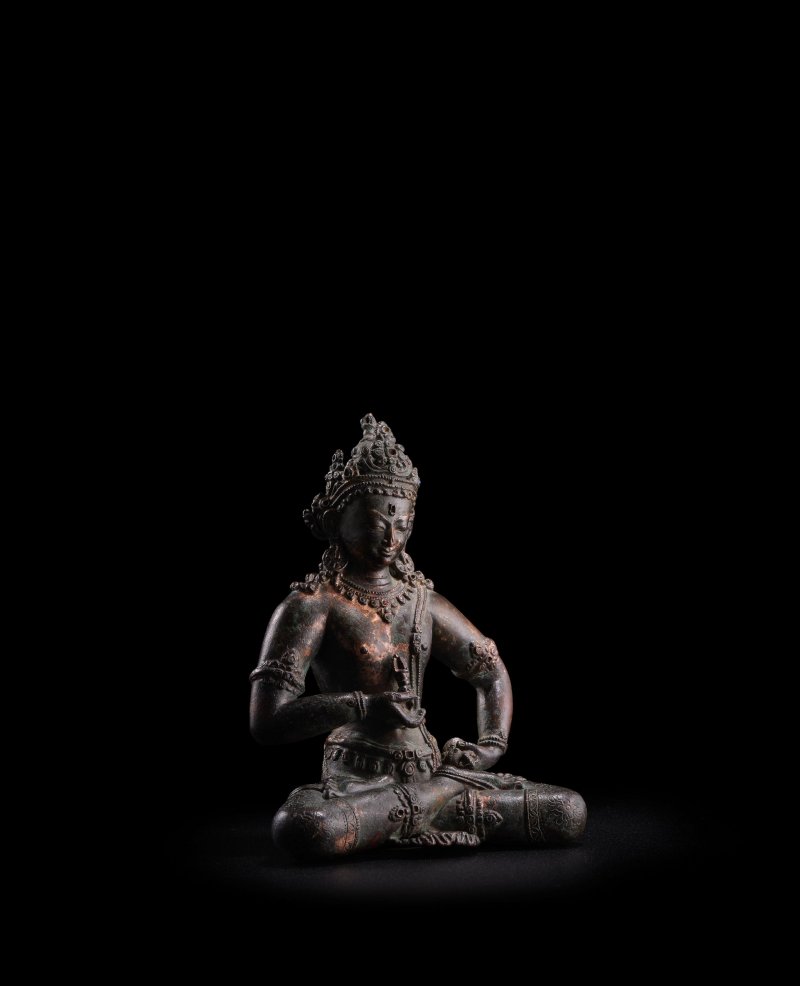
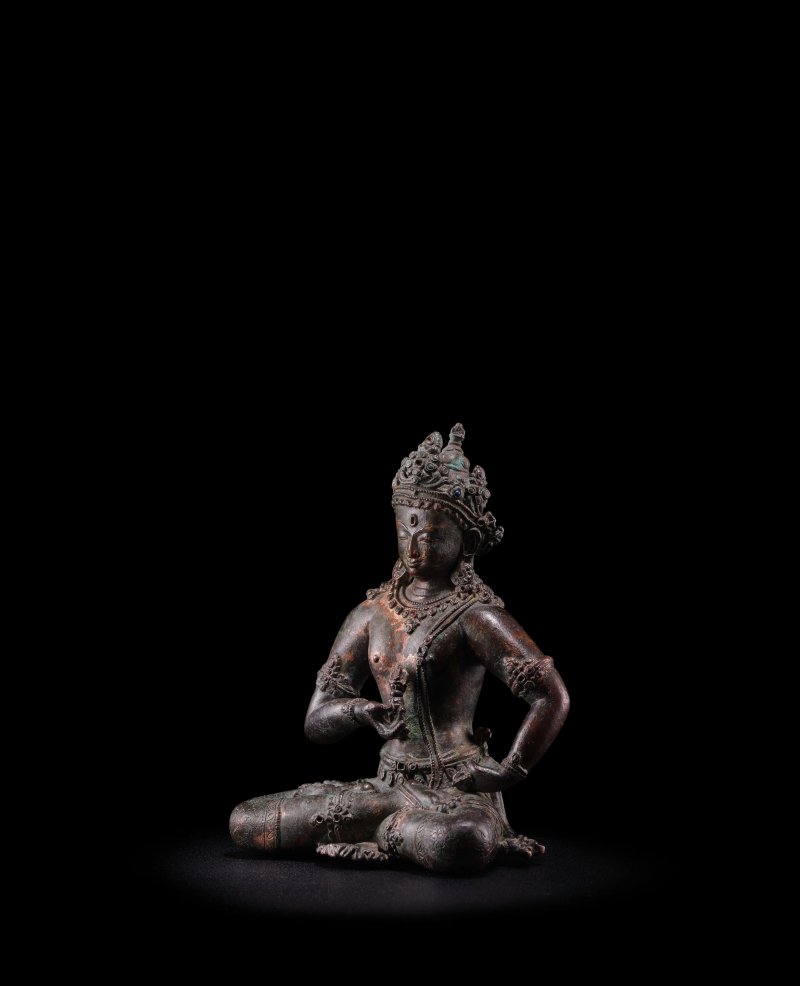
尼泊爾 馬拉時期 十三/十四世紀 金剛薩埵銅像 | A COPPER ALLOY FIGURE OF VAJRASATTVA
年代
NEPAL, MALLA PERIOD, 13TH/14TH CENTURY
起拍价
HKD 150,000
估值区间
HKD 150000 - 200000
尺寸
未知
品相
未知
更多信息
NEPAL, MALLA PERIOD, 13TH/14TH CENTURY
With traces of gilding.
Himalayan Art Resources item no. 207023
12 cm (4 3/4 in.) high
Footnotes
尼泊爾 馬拉時期 十三/十四世紀 金剛薩埵銅像
Provenance
Acquired from European market
Vajrasattva, the 'Adamantine Being', sits in padmasana, holding the vajra upright before his heart and the ghanta (bell) at his hip, his left arm set akimbo. The vajra embodies upaya, compassionate skillful means, and the bell prajna, the wisdom that realises emptiness. Held together, they express the union of wisdom and compassion through which enlightenment is attained. Though revered as a primordial Buddha, Vajrasattva wears the crown and jewels of a bodhisattva. In the Newar Buddhism of the Kathmandu Valley his standing is exceptional. Long regarded as the priest of the Five Buddhas, he is the archetypal guru of the Vajracharya priests and is invoked in the Gurumandala rite that underlies virtually all Newar ritual.
This majestic bronze demonstrates the finest craftsmanship and aesthetics of the Malla period. Beginning around 1200, the Malla period is widely regarded as the classical age of Newar metal sculpture, and Newar artists were prized far beyond the Valley. The supple torso, with its full chest and narrow waist, and the serene face, with heavy-lidded downcast eyes and a small, full-lipped smile, are characteristic of Newar sculpture. The jewellery is rich yet disciplined: a tall foliate crown, large circular earrings, a beaded necklace with floral pendants and jewelled armlets. The is finely incised with floral roundels and foliate scrolls, a testament to the Newar metalworker's skill. Compare a closely related 14th-century gilded Vajrasattva in the collection of Margot and Thomas Pritzker (HAR 58342). See also a larger gilt example in the Rubin Museum of Himalayan Art, New York (acc. no. C2005.16.10; HAR 65432).
With traces of gilding.
Himalayan Art Resources item no. 207023
12 cm (4 3/4 in.) high
Footnotes
尼泊爾 馬拉時期 十三/十四世紀 金剛薩埵銅像
Provenance
Acquired from European market
Vajrasattva, the 'Adamantine Being', sits in padmasana, holding the vajra upright before his heart and the ghanta (bell) at his hip, his left arm set akimbo. The vajra embodies upaya, compassionate skillful means, and the bell prajna, the wisdom that realises emptiness. Held together, they express the union of wisdom and compassion through which enlightenment is attained. Though revered as a primordial Buddha, Vajrasattva wears the crown and jewels of a bodhisattva. In the Newar Buddhism of the Kathmandu Valley his standing is exceptional. Long regarded as the priest of the Five Buddhas, he is the archetypal guru of the Vajracharya priests and is invoked in the Gurumandala rite that underlies virtually all Newar ritual.
This majestic bronze demonstrates the finest craftsmanship and aesthetics of the Malla period. Beginning around 1200, the Malla period is widely regarded as the classical age of Newar metal sculpture, and Newar artists were prized far beyond the Valley. The supple torso, with its full chest and narrow waist, and the serene face, with heavy-lidded downcast eyes and a small, full-lipped smile, are characteristic of Newar sculpture. The jewellery is rich yet disciplined: a tall foliate crown, large circular earrings, a beaded necklace with floral pendants and jewelled armlets. The is finely incised with floral roundels and foliate scrolls, a testament to the Newar metalworker's skill. Compare a closely related 14th-century gilded Vajrasattva in the collection of Margot and Thomas Pritzker (HAR 58342). See also a larger gilt example in the Rubin Museum of Himalayan Art, New York (acc. no. C2005.16.10; HAR 65432).
常见问题
这件尼泊爾 馬拉時期 十三/十四世紀 金剛薩埵銅像 | A COPPER ALLOY FIGURE OF VAJRASATTVA的成交价是多少?
落槌价为 预展中。 成交价为 预展中。