
拍品信息
拍品名称
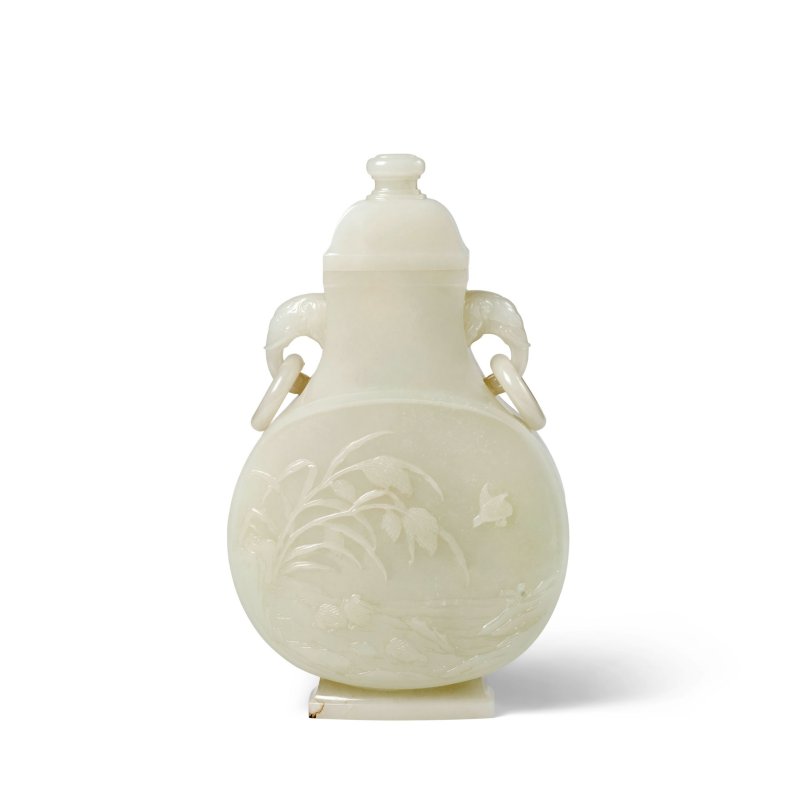
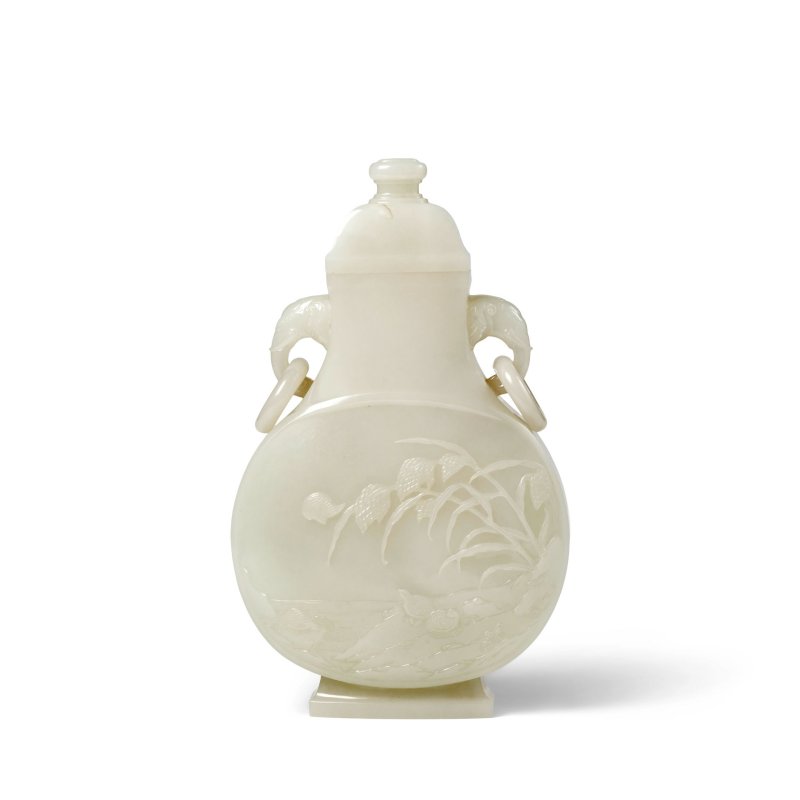
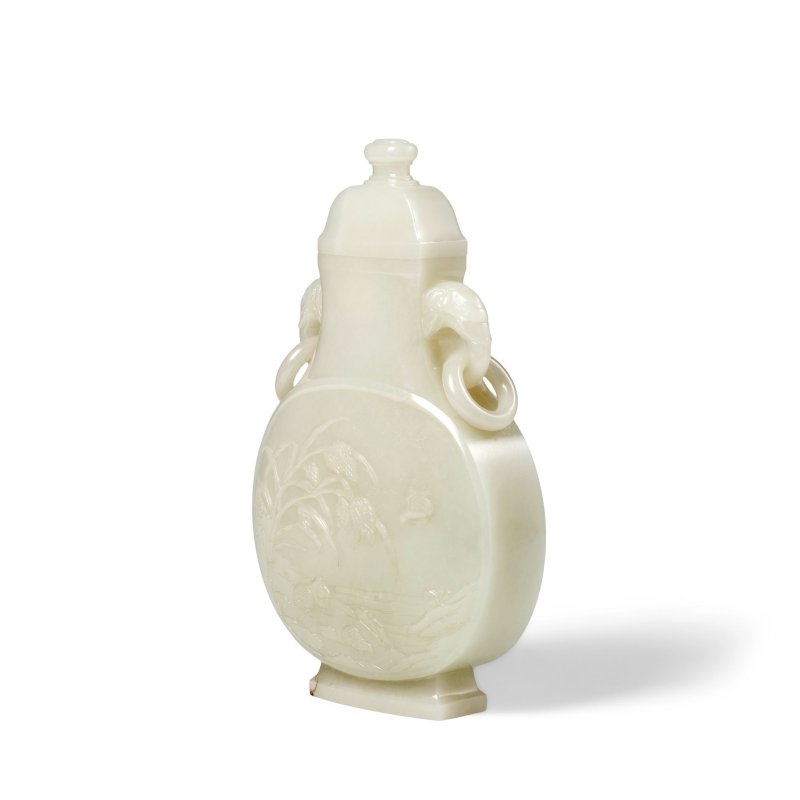
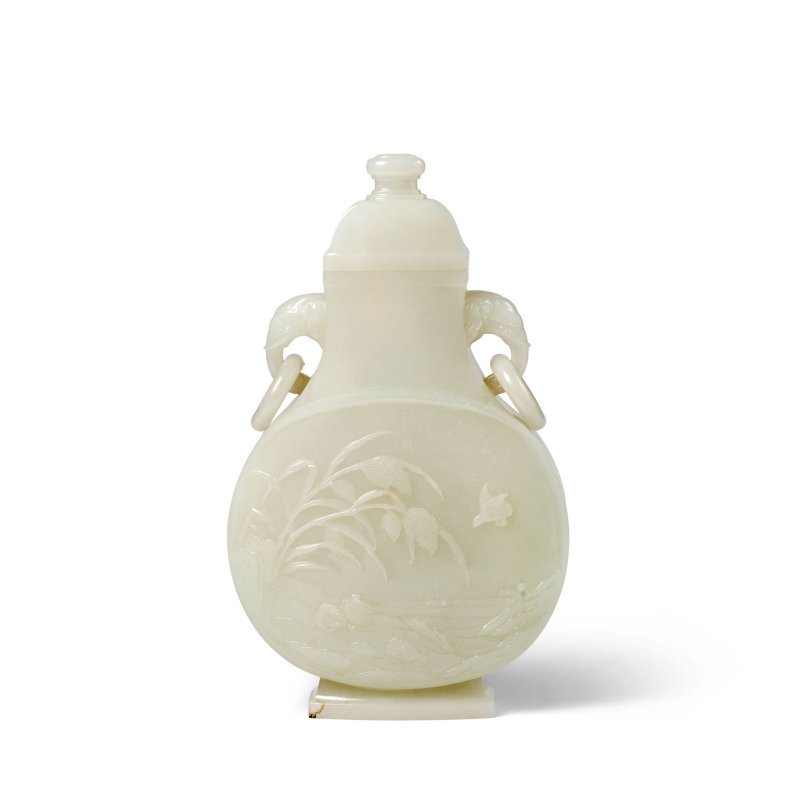
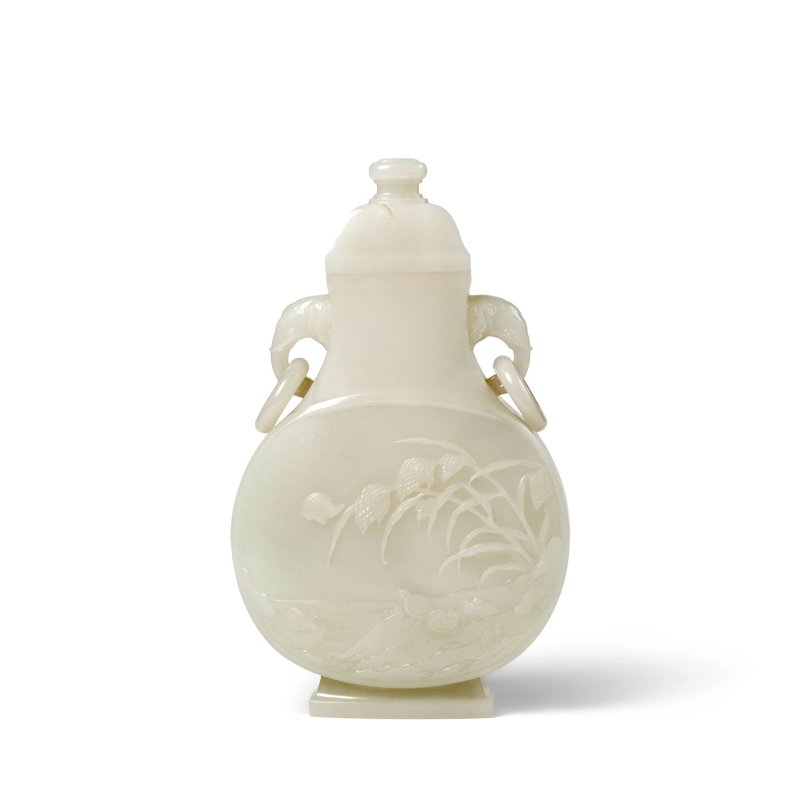
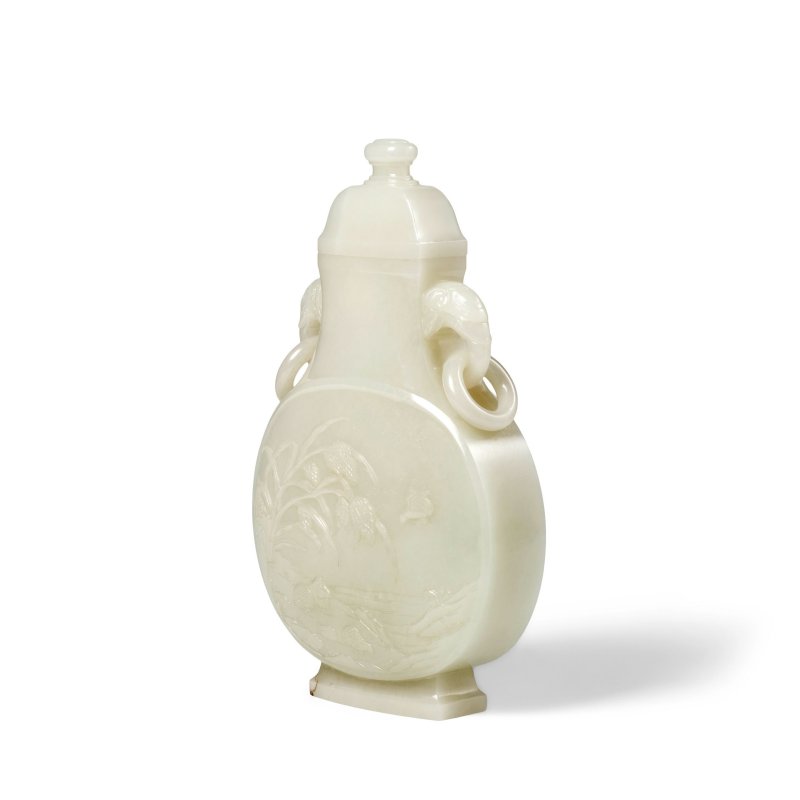
十八世紀 白玉雕嵗嵗平安圖象耳活環蓋瓶 | A WHITE JADE 'QUAILS AND MILET' VASE AND COVER
年代
18th century
起拍价
USD 40,000
估值区间
未知
尺寸
未知
品相
未知
更多信息
18th century
Of flattened form rising from a slightly flaring stepped foot, each broad side finely carved in relief with a roundel depicting three quails perched on rocky promontory and one other sweeping downwards, the scene further decorated with millet stems issuing from behind jagged rockwork, the neck flanked by a pair of elephant heads suspending loose ring handles, the stone of luminous white color with icy inclusions.
10 5/8in (27cm) high overall (box).
Footnotes
十八世紀 白玉雕嵗嵗平安圖象耳活環蓋瓶
Delicately carved in shallow relief with quails amid sprays of millet, the decoration conveys the auspicious rebus suisui pingan (歲歲平安, may there be peace year after year). The Chinese word for quail, (鵪), is a homophone for an (安), meaning 'peace', while the ears of millet, sui (穗), are homophonous with sui (歲), meaning 'year'. Together, the motif forms one of the most enduring auspicious visual puns of the Qing dynasty, expressing the wish for enduring peace and harmony. The composition also reflects the long-established flower-and-bird painting tradition, which flourished from the Five Dynasties period (907–960) onward and remained an important source of inspiration for jade carvers throughout the Ming and Qing dynasties.
Compare a flattened jade vase carved with the same motif in the collection of the Palace Museum, Beijing, illustrated in (Complete Collection of Chinese Jades), vol. 6, Shijiazhuang, 1993, pl. 217; and another example in the collection of the Victoria and Albert Museum, London (accession no. C.1920-1910), published by Ming Wilson in , London, 2004, pl. 50, and Jessica Rawson and John Ayers, , London, Oriental Ceramics Society, 1975, no. 424.
Of flattened form rising from a slightly flaring stepped foot, each broad side finely carved in relief with a roundel depicting three quails perched on rocky promontory and one other sweeping downwards, the scene further decorated with millet stems issuing from behind jagged rockwork, the neck flanked by a pair of elephant heads suspending loose ring handles, the stone of luminous white color with icy inclusions.
10 5/8in (27cm) high overall (box).
Footnotes
十八世紀 白玉雕嵗嵗平安圖象耳活環蓋瓶
Delicately carved in shallow relief with quails amid sprays of millet, the decoration conveys the auspicious rebus suisui pingan (歲歲平安, may there be peace year after year). The Chinese word for quail, (鵪), is a homophone for an (安), meaning 'peace', while the ears of millet, sui (穗), are homophonous with sui (歲), meaning 'year'. Together, the motif forms one of the most enduring auspicious visual puns of the Qing dynasty, expressing the wish for enduring peace and harmony. The composition also reflects the long-established flower-and-bird painting tradition, which flourished from the Five Dynasties period (907–960) onward and remained an important source of inspiration for jade carvers throughout the Ming and Qing dynasties.
Compare a flattened jade vase carved with the same motif in the collection of the Palace Museum, Beijing, illustrated in (Complete Collection of Chinese Jades), vol. 6, Shijiazhuang, 1993, pl. 217; and another example in the collection of the Victoria and Albert Museum, London (accession no. C.1920-1910), published by Ming Wilson in , London, 2004, pl. 50, and Jessica Rawson and John Ayers, , London, Oriental Ceramics Society, 1975, no. 424.