
拍品信息
拍品名称
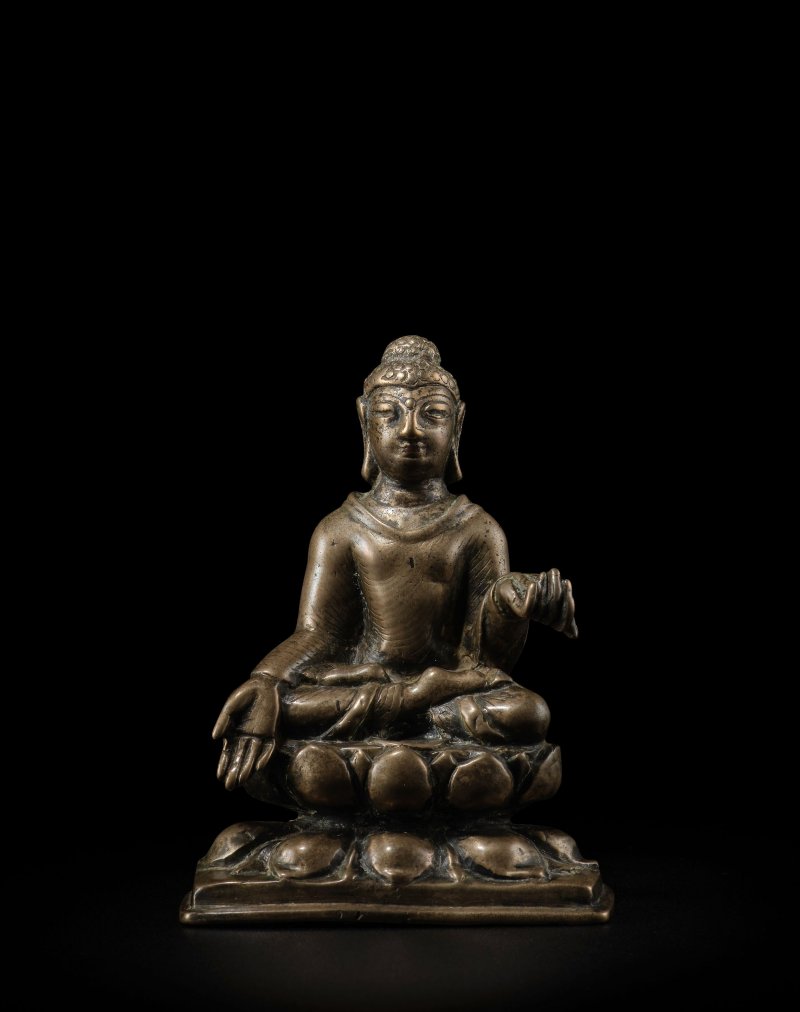
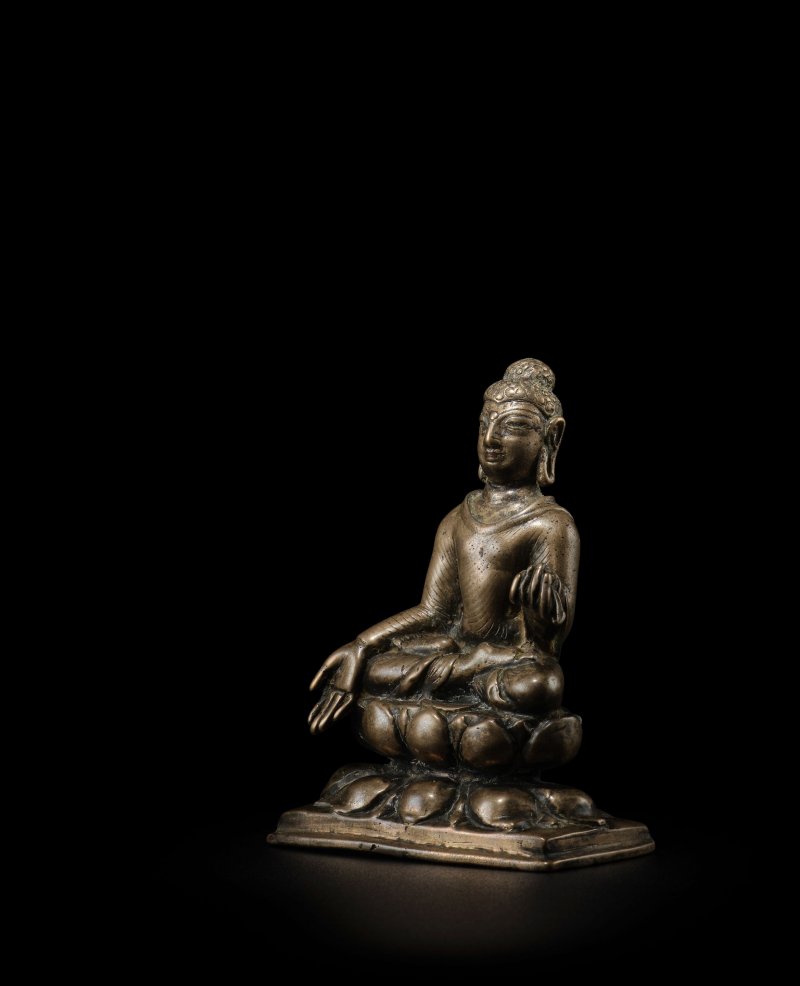
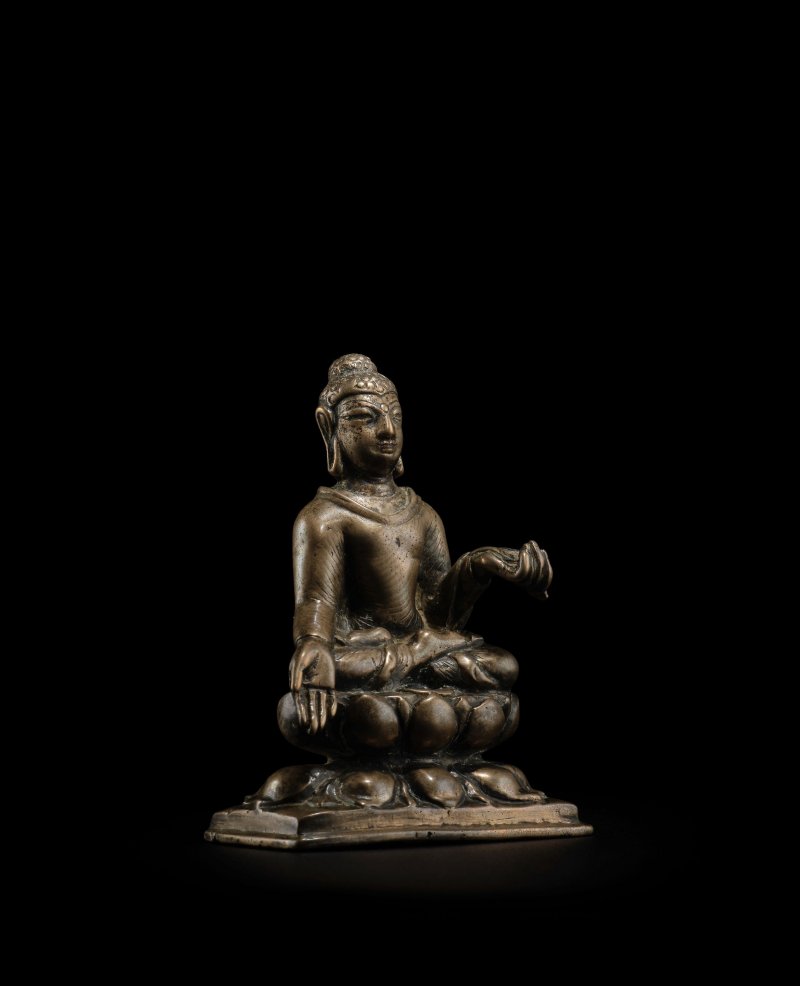
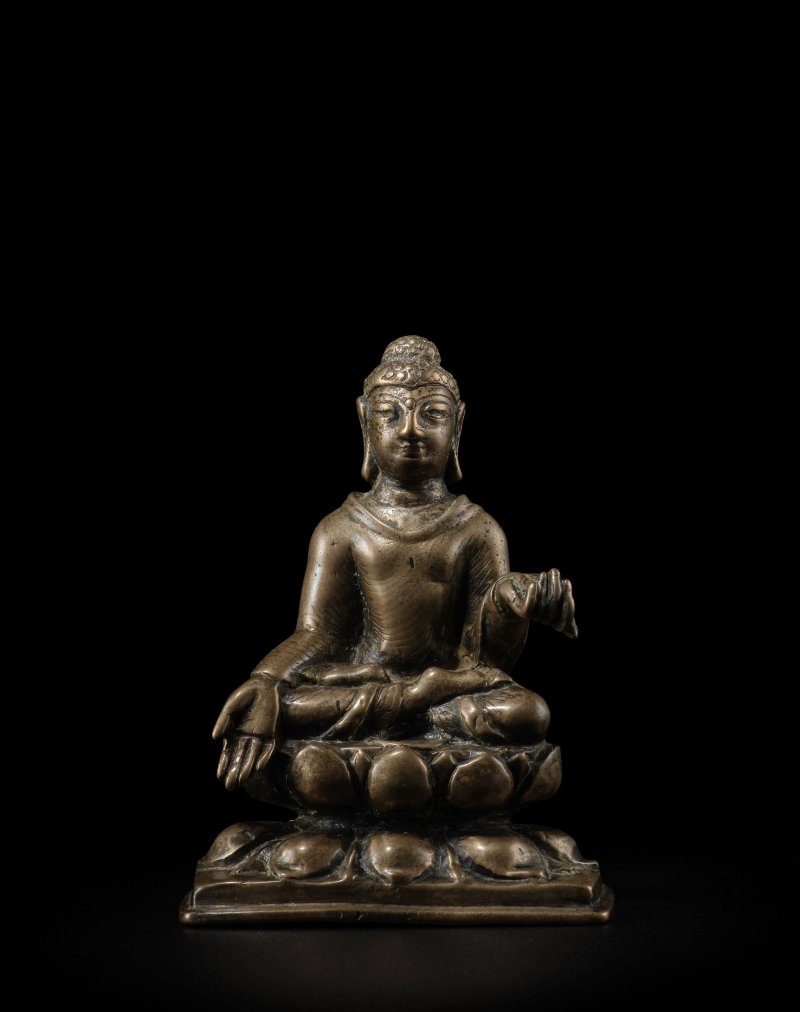
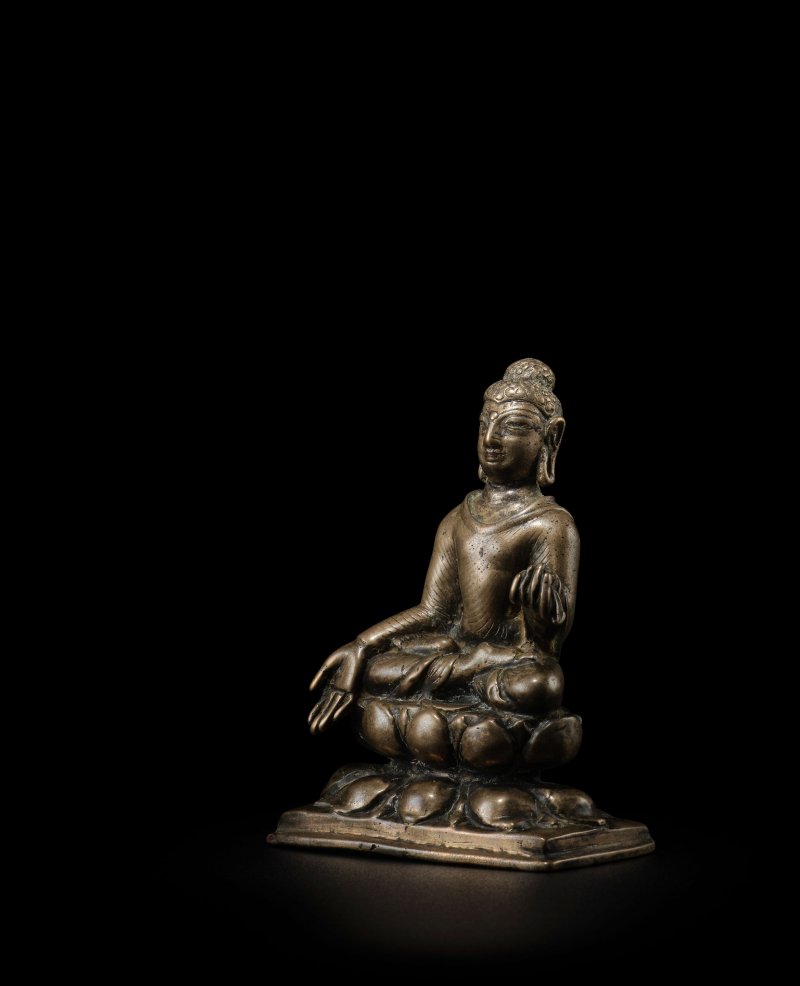
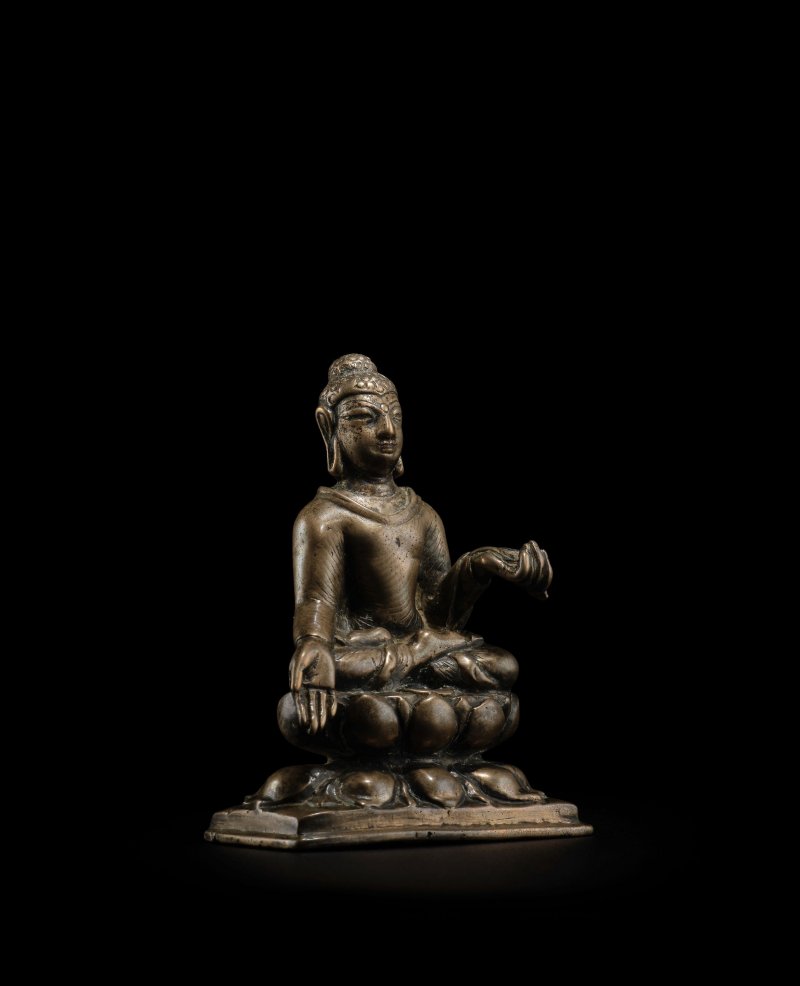
斯瓦特 七/八世紀 釋迦牟尼銅像 | A COPPER ALLOY FIGURE OF BUDDHA SHAKYAMUNI
年代
SWAT VALLEY, 7TH/8TH CENTURY
起拍价
HKD 300,000
估值区间
HKD 300000 - 500000
尺寸
未知
品相
未知
更多信息
SWAT VALLEY, 7TH/8TH CENTURY
Himalayan Art Resources item no. 1334
9.5 cm (3 3/4 in.) high
Footnotes
斯瓦特 七/八世紀 釋迦牟尼銅像
Published
Ulrich von Schroeder, Indo-Tibetan Bronzes, Hong Kong, 1981, p. 89, fig. 8D.
Provenance
Bruce Miller, San Francisco, 9 June 1976
The James and Marilynn Alsdorf Collection, Chicago
Christie's, New York, 24 September 2020, lot 954
This figure of Buddha Shakyamuni belongs to a corpus of bronzes occupying a pivotal position in the artistic evolution of the western Himalayas, bridging the classical naturalism of ancient Gandhara with the refined aesthetic traditions that would come to define Kashmir and the Swat Valley in the 7th and 8th centuries.
The Buddha is seated in upon a waisted broad petaled lotus base, his right hand extended in the gesture of charity (), while his left hand is raised to chest level delicately grasping the gathered, pleated edge of his monastic robe (). The heavy fabric falls across both shoulders, cascading over the torso in deeply undercut, voluminous folds—a recognisable derivation of Gandharan stone prototypes from the 1st through 4th centuries. Notably, the border of the garment, leaving a relatively wide, open expanse across the chest, assumes an almost collar-like configuration; this distinctive feature would later evolve into the cape-like element frequently seen in Kashmiri Buddha images of subsequent centuries. See a closely comparable Buddha figure with similar collar, published in von Schroeder, , 1981, pp. 81-87, no. 7E.
The visage is distinctly Kashmiri in character, with full and rounded cheeks, a broad nose, almond-shaped eyes centered by a circular , and bow-shaped lips gently upturned in a subtle smile. The face is framed by elongated earlobes and a crown of tight, stylized curls rising to a prominent . At the same time, the figure has absorbed the soft, sensuous elegance that characterizes the Gupta Buddha images of northeastern India, an influence that traveled westward along the same trade and pilgrimage routes that connected the great monastic centers of the subcontinent. A closely comparable 7th-century Kashmiri Buddha is published in Pal, , 1975, p. 88, no. 20.
Himalayan Art Resources item no. 1334
9.5 cm (3 3/4 in.) high
Footnotes
斯瓦特 七/八世紀 釋迦牟尼銅像
Published
Ulrich von Schroeder, Indo-Tibetan Bronzes, Hong Kong, 1981, p. 89, fig. 8D.
Provenance
Bruce Miller, San Francisco, 9 June 1976
The James and Marilynn Alsdorf Collection, Chicago
Christie's, New York, 24 September 2020, lot 954
This figure of Buddha Shakyamuni belongs to a corpus of bronzes occupying a pivotal position in the artistic evolution of the western Himalayas, bridging the classical naturalism of ancient Gandhara with the refined aesthetic traditions that would come to define Kashmir and the Swat Valley in the 7th and 8th centuries.
The Buddha is seated in upon a waisted broad petaled lotus base, his right hand extended in the gesture of charity (), while his left hand is raised to chest level delicately grasping the gathered, pleated edge of his monastic robe (). The heavy fabric falls across both shoulders, cascading over the torso in deeply undercut, voluminous folds—a recognisable derivation of Gandharan stone prototypes from the 1st through 4th centuries. Notably, the border of the garment, leaving a relatively wide, open expanse across the chest, assumes an almost collar-like configuration; this distinctive feature would later evolve into the cape-like element frequently seen in Kashmiri Buddha images of subsequent centuries. See a closely comparable Buddha figure with similar collar, published in von Schroeder, , 1981, pp. 81-87, no. 7E.
The visage is distinctly Kashmiri in character, with full and rounded cheeks, a broad nose, almond-shaped eyes centered by a circular , and bow-shaped lips gently upturned in a subtle smile. The face is framed by elongated earlobes and a crown of tight, stylized curls rising to a prominent . At the same time, the figure has absorbed the soft, sensuous elegance that characterizes the Gupta Buddha images of northeastern India, an influence that traveled westward along the same trade and pilgrimage routes that connected the great monastic centers of the subcontinent. A closely comparable 7th-century Kashmiri Buddha is published in Pal, , 1975, p. 88, no. 20.
常见问题
这件斯瓦特 七/八世紀 釋迦牟尼銅像 | A COPPER ALLOY FIGURE OF BUDDHA SHAKYAMUNI的成交价是多少?
落槌价为 预展中。 成交价为 预展中。