
拍品信息
拍品名称
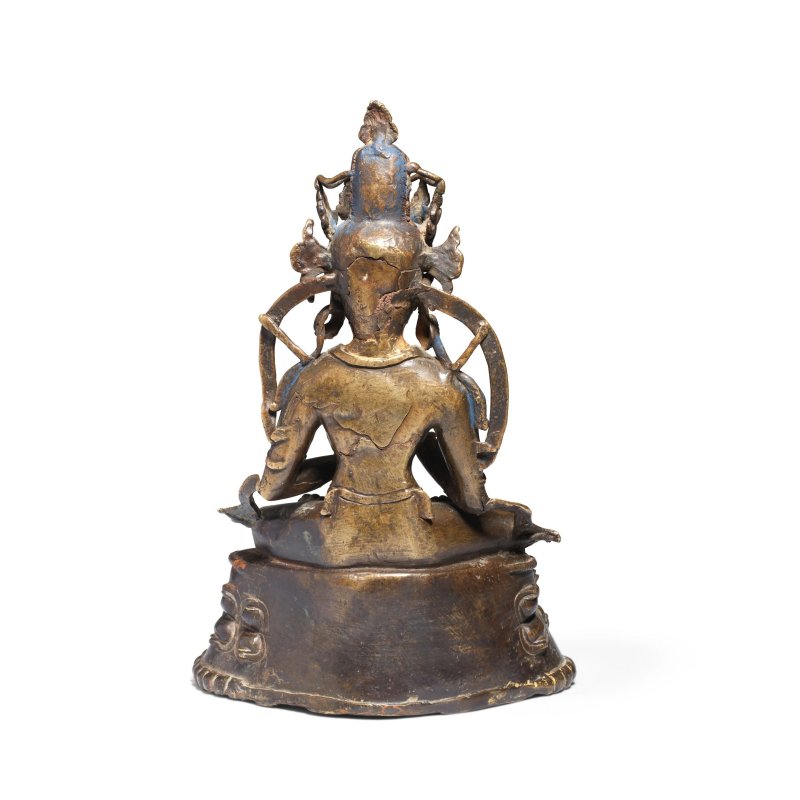
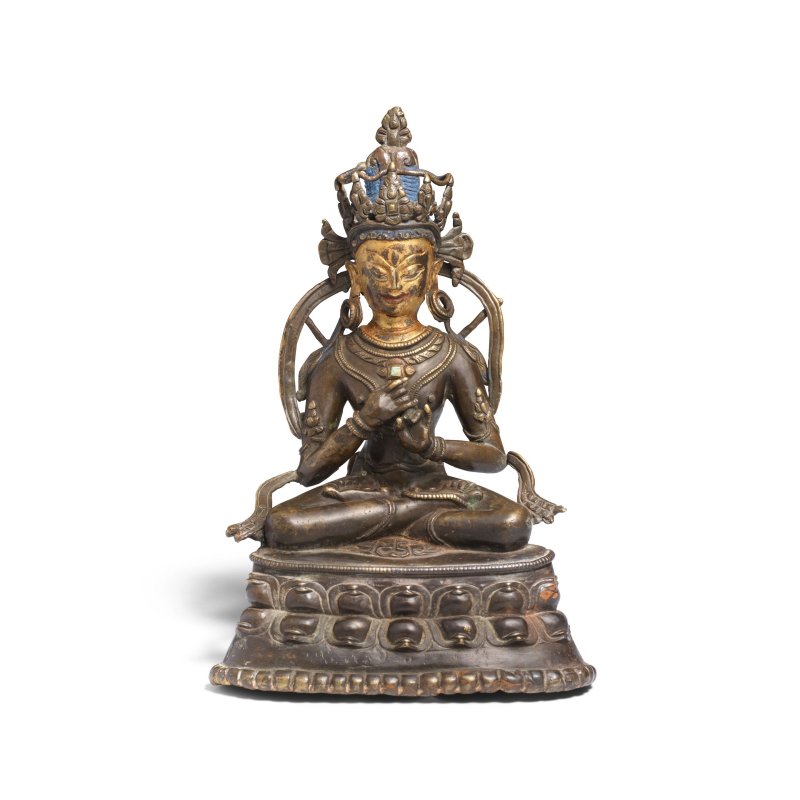
十四世紀 西藏 銅毗卢遮那佛像 | A RARE BRONZE FIGURE OF TATHAGATA VAIROCANA
年代
Tibet, 14th century
起拍价
GBP 6,000
估值区间
GBP 6000 - 8000
尺寸
未知
品相
未知
更多信息
Tibet, 14th century
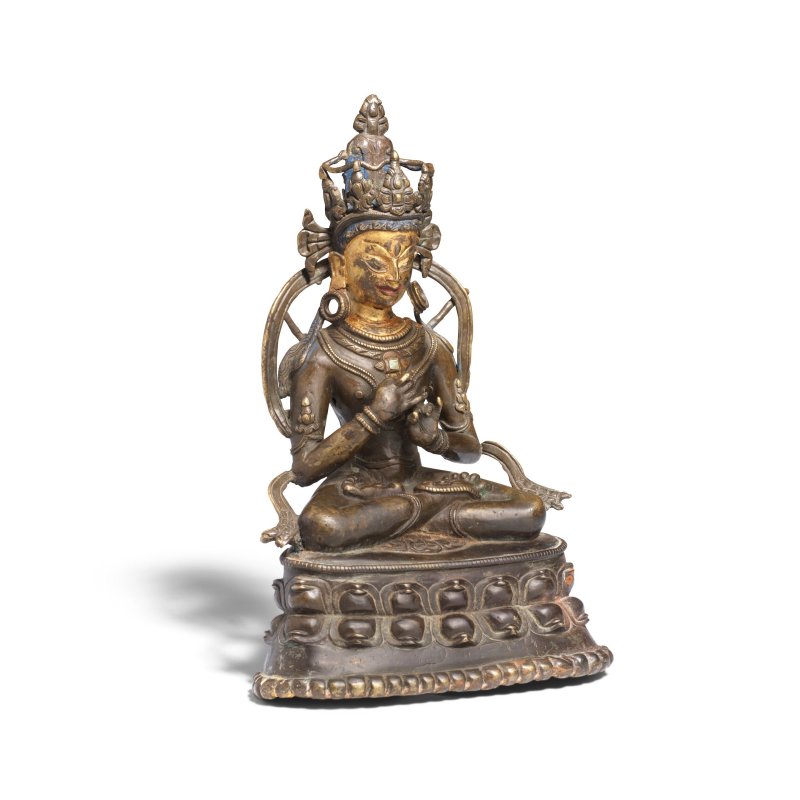
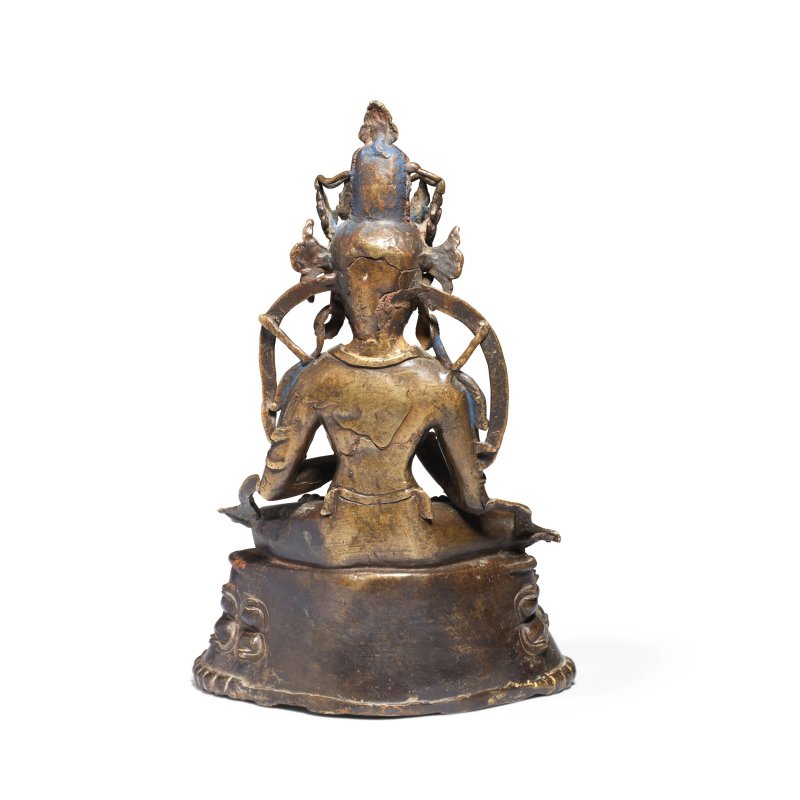
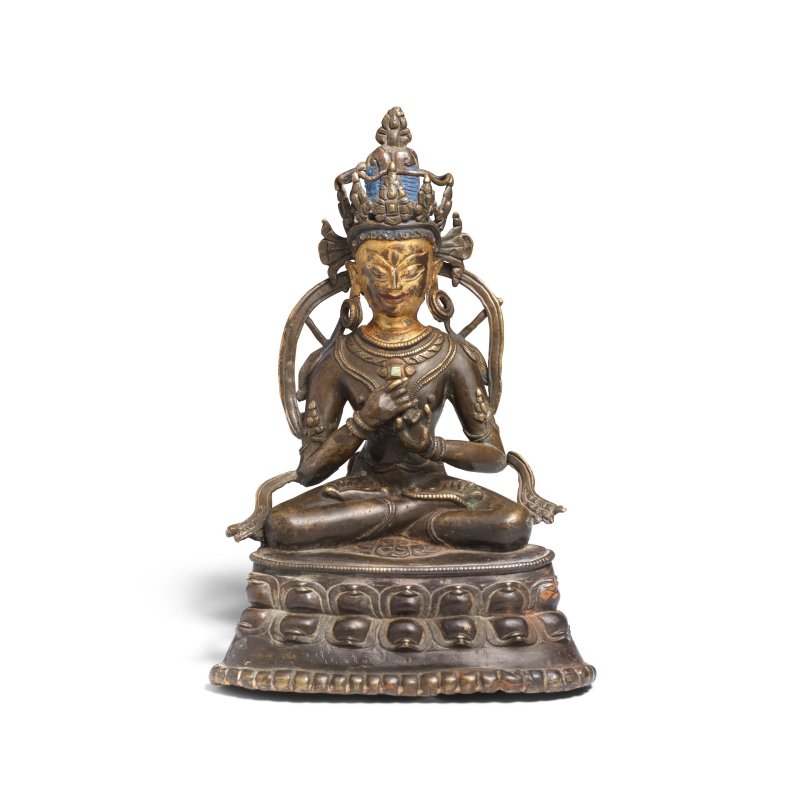
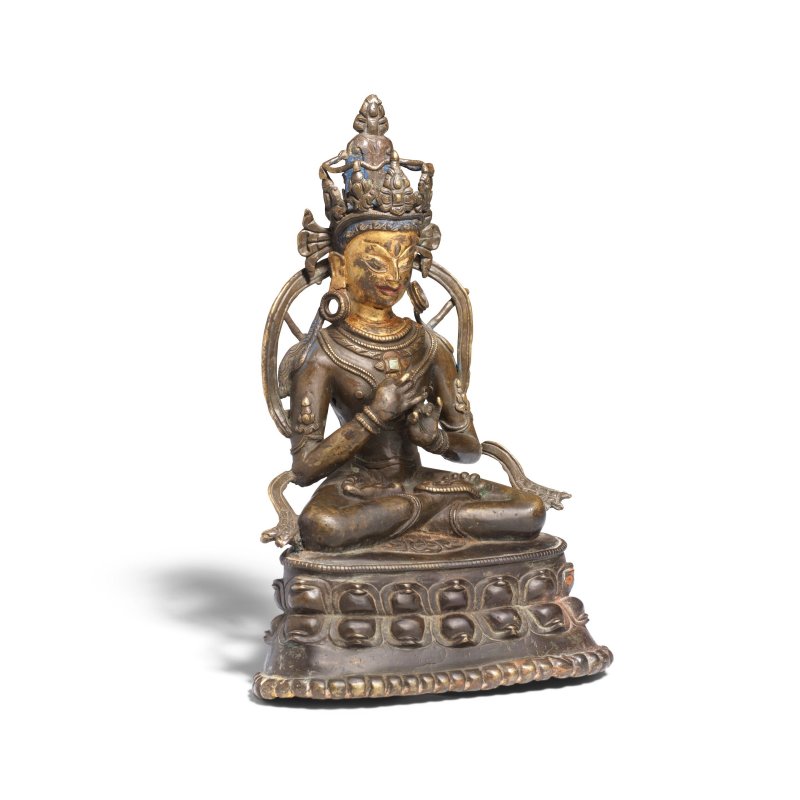
The deity seated in vajraparyankasana on a double-lotus base with beaded rims, his hands in bodhyagrimudra and the body clad in a diaphanous dhoti and various jewellery and a billowing scarf, the serene face with hooded eyes and sensuous lips all surmounted by an elaborate crown tied at the top with ribbons. 27cm (10 5/8in) high.
Footnotes
十四世紀 西藏 銅毗卢遮那佛像
Provenance: the Burkhart collection, acquired in Zug, Switzerland, in 1998
來源: Burkhart舊藏,1998年獲得於瑞士楚格
Vairocana (Tib. rNam-par snang-mdzad), whose name may be translated as 'the Illuminator' or 'He who radiates like the sun,' is the Tathagata who presides over the centre of the cosmic mandala of the pancakula, the family of the five meditation Buddhas (dhyani Buddhas). Within this cosmological scheme Vairocana occupies the central position of the universe and, in certain mandala representations, assumes the role of the primordial Buddha, with whom he is sometimes identified; in such contexts he is referred to as Mahavairocana. His iconographic colour is white and his principal symbol is the Wheel of the Law (), representing the Buddha's teaching. In later depictions the wheel is sometimes shown resting within his hands.
The present large sculpture depicts Vairocana richly adorned and seated in , the full meditative posture, on a double lotus throne encircled by a beaded border. His hands are held in , the gesture uniting skilful means () and wisdom (), symbolising enlightenment and the Buddha's all-encompassing knowledge.
Compare with a similar statue of Tathagata Vairocana, Western Tibet, 14th century, illustrated in , Zurich, 1995, p.65.
See a related bronze figure of Buddha Vairocana, Tibet, 14th century, which was sold at Christie's New York, 22 March 2011, lot 357.
The deity seated in vajraparyankasana on a double-lotus base with beaded rims, his hands in bodhyagrimudra and the body clad in a diaphanous dhoti and various jewellery and a billowing scarf, the serene face with hooded eyes and sensuous lips all surmounted by an elaborate crown tied at the top with ribbons. 27cm (10 5/8in) high.
Footnotes
十四世紀 西藏 銅毗卢遮那佛像
Provenance: the Burkhart collection, acquired in Zug, Switzerland, in 1998
來源: Burkhart舊藏,1998年獲得於瑞士楚格
Vairocana (Tib. rNam-par snang-mdzad), whose name may be translated as 'the Illuminator' or 'He who radiates like the sun,' is the Tathagata who presides over the centre of the cosmic mandala of the pancakula, the family of the five meditation Buddhas (dhyani Buddhas). Within this cosmological scheme Vairocana occupies the central position of the universe and, in certain mandala representations, assumes the role of the primordial Buddha, with whom he is sometimes identified; in such contexts he is referred to as Mahavairocana. His iconographic colour is white and his principal symbol is the Wheel of the Law (), representing the Buddha's teaching. In later depictions the wheel is sometimes shown resting within his hands.
The present large sculpture depicts Vairocana richly adorned and seated in , the full meditative posture, on a double lotus throne encircled by a beaded border. His hands are held in , the gesture uniting skilful means () and wisdom (), symbolising enlightenment and the Buddha's all-encompassing knowledge.
Compare with a similar statue of Tathagata Vairocana, Western Tibet, 14th century, illustrated in , Zurich, 1995, p.65.
See a related bronze figure of Buddha Vairocana, Tibet, 14th century, which was sold at Christie's New York, 22 March 2011, lot 357.
常见问题
这件十四世紀 西藏 銅毗卢遮那佛像 | A RARE BRONZE FIGURE OF TATHAGATA VAIROCANA的成交价是多少?
落槌价为 预展中。 成交价为 预展中。


