
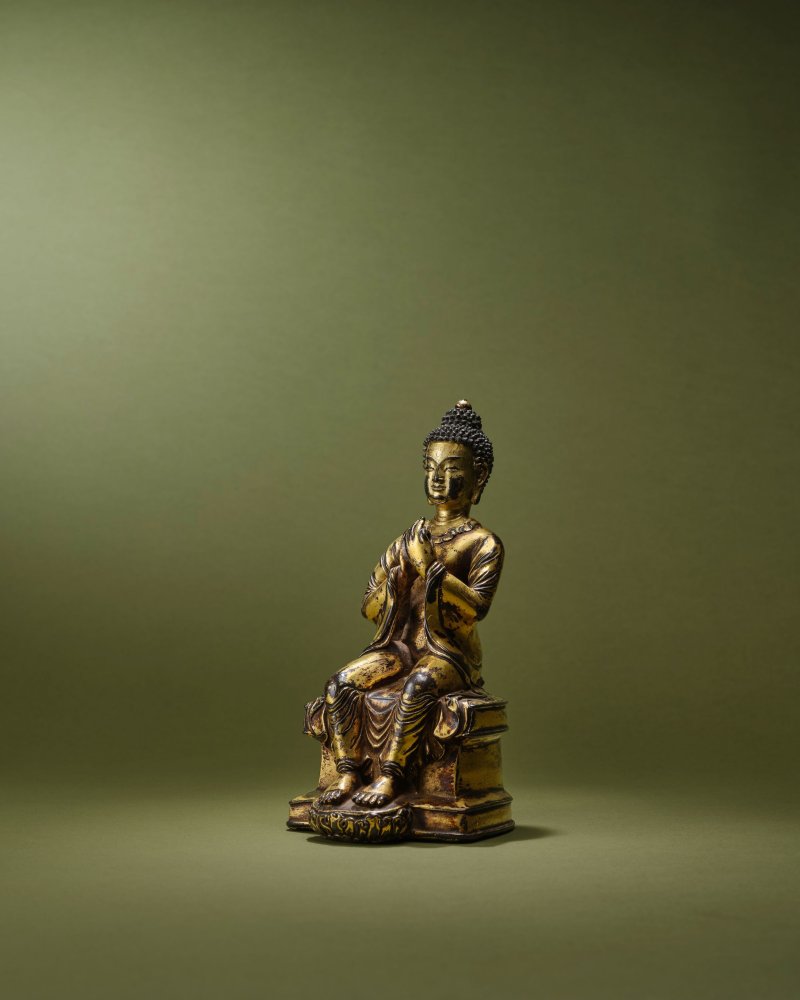
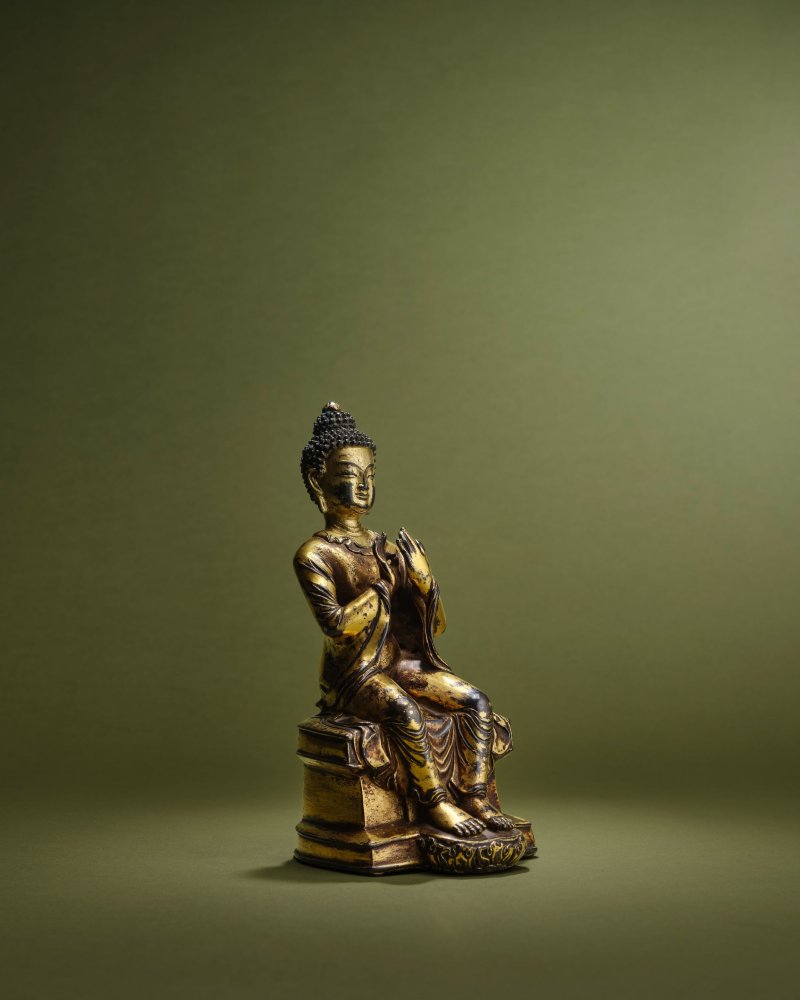
拍品信息
拍品名称
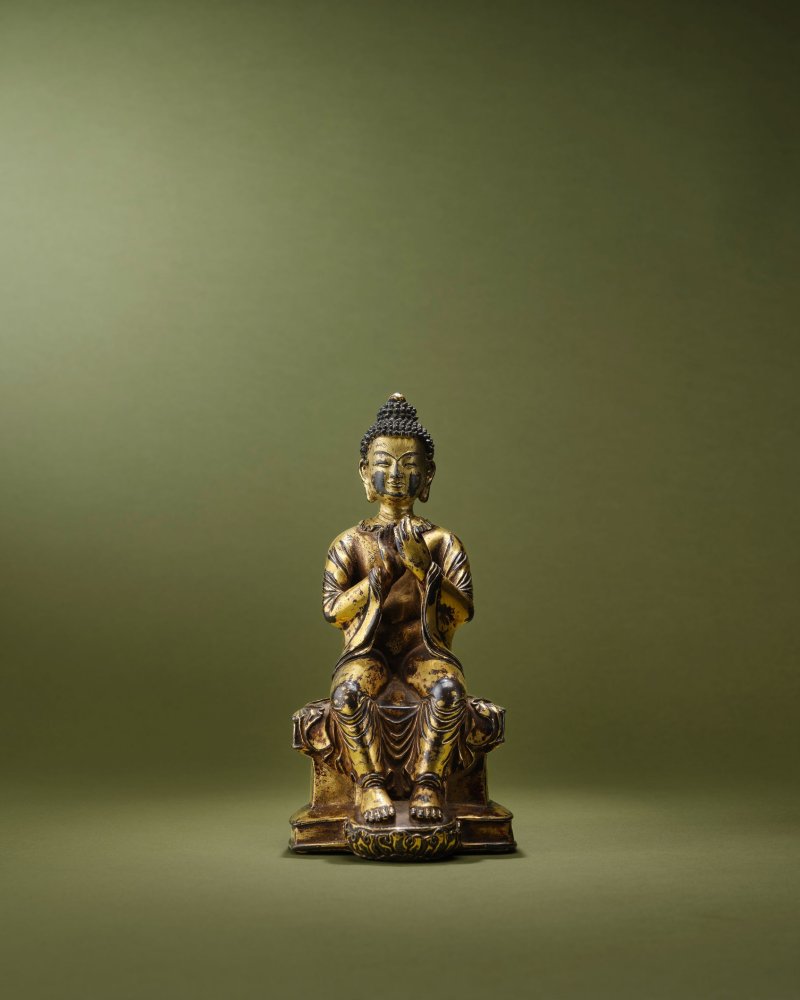
元 銅合金鎏金彌勒菩薩坐像 | A RARE GILT COPPER-ALLOY FIGURE OF BUDDHA MAITREYA
年代
Yuan Dynasty
起拍价
HKD 600,000
估值区间
HKD 600000 - 800000
尺寸
未知
品相
未知
更多信息
Yuan Dynasty
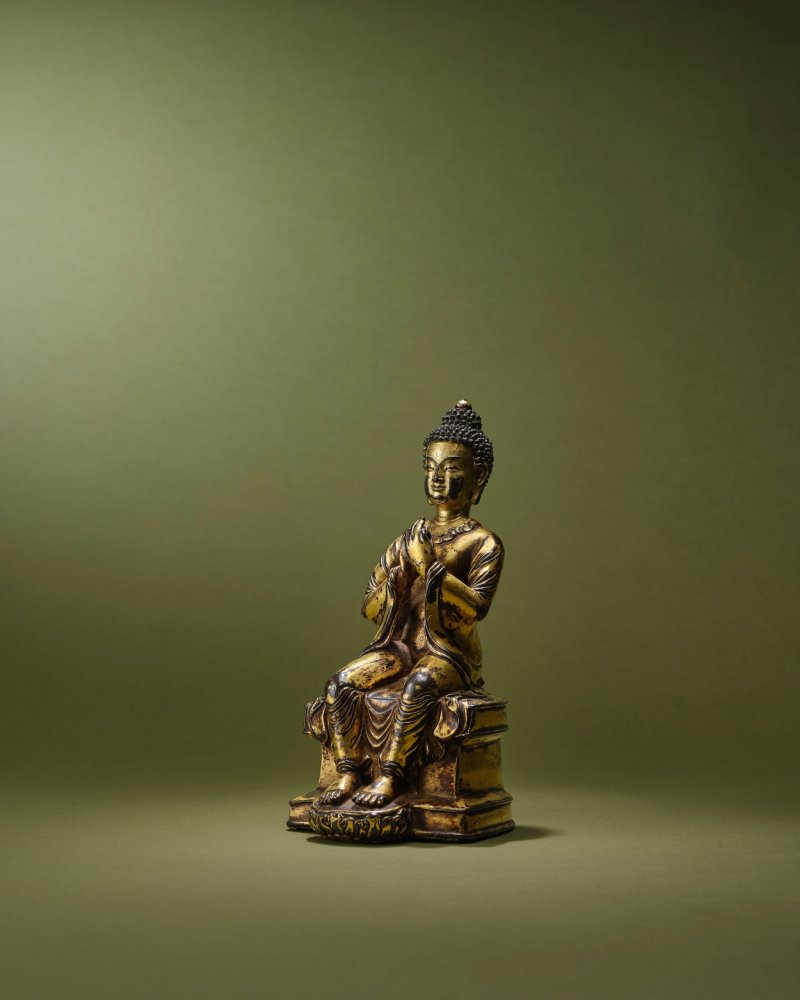
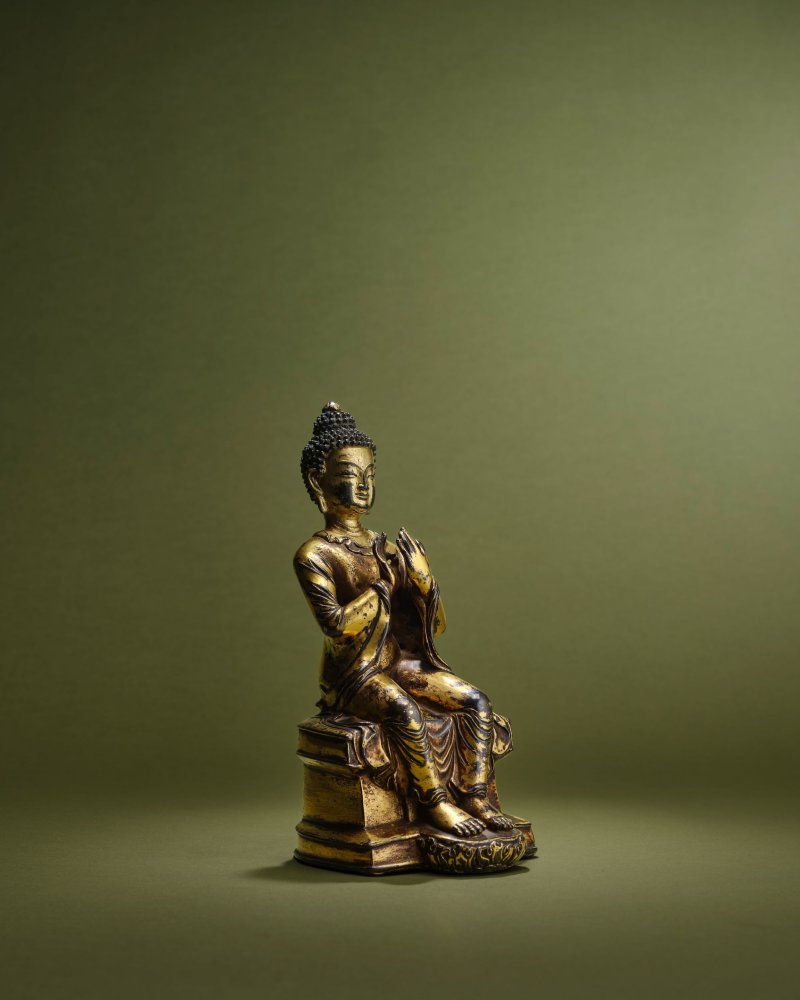
The figure expertly cast clad in diaphanous robes cascading in crisp folds revealing the contours of the body, seated on a semi-circular throne with legs pendants in bhadrasana and the feet resting on a lotus pedestal, the hands held before the chest in dharmachakramudra, the face with serene expression between long pendulous ears, the hair tightly knotted and rising to a small domed usnisa.
17.2cm (6 3/4in) high.
Footnotes
元 銅合金鎏金彌勒菩薩坐像
Himalayan Art Resources, item no.13821
Provenance:
An American private collection, pre 1970
Eskenazi Ltd., London, before 2008
Published, Illustrated and Exhibited:
Eskenazi Ltd., Chinese Sculpture and Works of Art, London, 2008, pp.48-49, no.17
H.Elias and G.Eskenazi, , London, 2012, p.215, pl.98
喜馬拉雅藝術資源,編號13821
美國私人收藏,1970年前
倫敦古董商埃斯卡納齊
埃斯卡納齊,《Chinese Sculpture and Works of Art》,倫敦,2008年,頁48至49,編號17
薛好佩及埃斯卡納齊,《中國藝術品經眼錄:埃斯卡納齊的回憶》,倫敦,2012年,頁215,圖版98
Maitreya, the Buddha of the Future, is characteristically represented seated in , with both feet planted symmetrically and resting upon a lotus pedestal. This formal, frontal posture conveys stability, readiness, and the auspicious nature of Maitreya's future descent from the Tusita Heaven to teach in the human realm. The hands are held before the chest in , the gesture of 'turning the Wheel of the Law,' signifying the act of preaching and the renewal of Buddhist doctrine in a future age. The combination of posture and gesture emphasises Maitreya's role not as an ascetic in retreat, but as a teacher poised to re-establish the Dharma.
The figure is clothed in a robe with an unusual ruffled neckline, a motif whose distant origins may be traced to early Indian representations of the Buddha from Mathura, dating to nearly a millennium earlier. By contrast, the treatment of the facial features, the seated posture, and the architectural form of the throne reflect a pronounced Tibetan influence. During the Mongol Yuan dynasty, Buddhism in China experienced a significant revival, with Tibetan Buddhism in particular enjoying Imperial favour. The richly gilded and visually opulent language of Tantric Buddhist imagery, exemplified by the present figure, became firmly established in China at this time, reflecting both contemporary devotional practices and the Mongol Court's patronage of lavishly adorned Buddhist art. See a related bronze standing figure of Udhyana Buddha, 14th century, in the Minneapolis Institute of Arts, with similar treatment of the draper folds, illustrated by S.E.Lee and W.K.Ho, , Cleveland, 1968, no.8.
For comparison, see also a larger gilt-copper alloy figure of Maitreya but with crown, Yuan dynasty, in the same seated posture, illustrated in , Sydney, 2001, no.121. That example is distinguished by its elaborate crown and jewellery, contrasting with the more restrained adornment of the present sculpture. Compare also with an earlier gilt bronze prototype of Buddha Shakyamuni, seated in similar position and similar treatment of the clothes but with different mudra, Tang dynasty, 7th/8th century, in the Potala Collection, illustrated by U.von Schroeder, , vol.2, Hong Kong, 2001, p.1232, pl.341A.
彌勒菩薩乃未來佛,結善跏趺坐,雙足並垂,踏蓮座,姿態端正,面相慈祥,示現從兜率天降生人間說法之相。雙手當胸結說法印,又稱「轉法輪印」,象徵佛說法,開啟弘揚佛法之道。彌勒非隱退修行者,而是人間弘化之導師。
此像身披袈裟,衣領作褶邊紋飾,其淵源可遠溯近千年前秣菟羅早期佛陀造像。然而其面容刻劃、坐姿及寶座式樣,則明顯體現藏傳佛教之影響。元代蒙古統治期間,佛教在中國有重大復興,藏傳佛教尤受皇室崇奉。如此像般金彩燦然、華麗莊嚴,並充分展現密教特色之造像,便因而在中國立足生根,反映當時信仰實踐與蒙古宮廷對華美佛教造像、藝術品的支持及贊助。參考明尼亞波利斯藝術館藏一件十四世紀銅旃檀佛立像,其衣紋處理與本品相似,見S.E.Lee與W.K.Ho編,《Chinese Art Under the Mongols》,克利夫蘭,1968年,編號8。
比較一件尺寸較大之元代銅合金鎏金彌勒菩薩像,帶寶冠,同為善跏趺坐姿,載於《Buddha: Radiant Awakening》,悉尼,2001年,編號121。該像飾以繁麗寶冠與瓔珞,與本品素雅簡練之風格形成對比。另可比對一件年代更早之例,唐代七至八世紀,銅鎏金釋迦牟尼佛坐像,其坐姿與衣紋處理與本品相類,然手印不同,現藏布達拉宮,見施羅德,《西藏佛教造像》,卷2,香港,2001年,頁1232,圖版341A。
The figure expertly cast clad in diaphanous robes cascading in crisp folds revealing the contours of the body, seated on a semi-circular throne with legs pendants in bhadrasana and the feet resting on a lotus pedestal, the hands held before the chest in dharmachakramudra, the face with serene expression between long pendulous ears, the hair tightly knotted and rising to a small domed usnisa.
17.2cm (6 3/4in) high.
Footnotes
元 銅合金鎏金彌勒菩薩坐像
Himalayan Art Resources, item no.13821
Provenance:
An American private collection, pre 1970
Eskenazi Ltd., London, before 2008
Published, Illustrated and Exhibited:
Eskenazi Ltd., Chinese Sculpture and Works of Art, London, 2008, pp.48-49, no.17
H.Elias and G.Eskenazi, , London, 2012, p.215, pl.98
喜馬拉雅藝術資源,編號13821
美國私人收藏,1970年前
倫敦古董商埃斯卡納齊
埃斯卡納齊,《Chinese Sculpture and Works of Art》,倫敦,2008年,頁48至49,編號17
薛好佩及埃斯卡納齊,《中國藝術品經眼錄:埃斯卡納齊的回憶》,倫敦,2012年,頁215,圖版98
Maitreya, the Buddha of the Future, is characteristically represented seated in , with both feet planted symmetrically and resting upon a lotus pedestal. This formal, frontal posture conveys stability, readiness, and the auspicious nature of Maitreya's future descent from the Tusita Heaven to teach in the human realm. The hands are held before the chest in , the gesture of 'turning the Wheel of the Law,' signifying the act of preaching and the renewal of Buddhist doctrine in a future age. The combination of posture and gesture emphasises Maitreya's role not as an ascetic in retreat, but as a teacher poised to re-establish the Dharma.
The figure is clothed in a robe with an unusual ruffled neckline, a motif whose distant origins may be traced to early Indian representations of the Buddha from Mathura, dating to nearly a millennium earlier. By contrast, the treatment of the facial features, the seated posture, and the architectural form of the throne reflect a pronounced Tibetan influence. During the Mongol Yuan dynasty, Buddhism in China experienced a significant revival, with Tibetan Buddhism in particular enjoying Imperial favour. The richly gilded and visually opulent language of Tantric Buddhist imagery, exemplified by the present figure, became firmly established in China at this time, reflecting both contemporary devotional practices and the Mongol Court's patronage of lavishly adorned Buddhist art. See a related bronze standing figure of Udhyana Buddha, 14th century, in the Minneapolis Institute of Arts, with similar treatment of the draper folds, illustrated by S.E.Lee and W.K.Ho, , Cleveland, 1968, no.8.
For comparison, see also a larger gilt-copper alloy figure of Maitreya but with crown, Yuan dynasty, in the same seated posture, illustrated in , Sydney, 2001, no.121. That example is distinguished by its elaborate crown and jewellery, contrasting with the more restrained adornment of the present sculpture. Compare also with an earlier gilt bronze prototype of Buddha Shakyamuni, seated in similar position and similar treatment of the clothes but with different mudra, Tang dynasty, 7th/8th century, in the Potala Collection, illustrated by U.von Schroeder, , vol.2, Hong Kong, 2001, p.1232, pl.341A.
彌勒菩薩乃未來佛,結善跏趺坐,雙足並垂,踏蓮座,姿態端正,面相慈祥,示現從兜率天降生人間說法之相。雙手當胸結說法印,又稱「轉法輪印」,象徵佛說法,開啟弘揚佛法之道。彌勒非隱退修行者,而是人間弘化之導師。
此像身披袈裟,衣領作褶邊紋飾,其淵源可遠溯近千年前秣菟羅早期佛陀造像。然而其面容刻劃、坐姿及寶座式樣,則明顯體現藏傳佛教之影響。元代蒙古統治期間,佛教在中國有重大復興,藏傳佛教尤受皇室崇奉。如此像般金彩燦然、華麗莊嚴,並充分展現密教特色之造像,便因而在中國立足生根,反映當時信仰實踐與蒙古宮廷對華美佛教造像、藝術品的支持及贊助。參考明尼亞波利斯藝術館藏一件十四世紀銅旃檀佛立像,其衣紋處理與本品相似,見S.E.Lee與W.K.Ho編,《Chinese Art Under the Mongols》,克利夫蘭,1968年,編號8。
比較一件尺寸較大之元代銅合金鎏金彌勒菩薩像,帶寶冠,同為善跏趺坐姿,載於《Buddha: Radiant Awakening》,悉尼,2001年,編號121。該像飾以繁麗寶冠與瓔珞,與本品素雅簡練之風格形成對比。另可比對一件年代更早之例,唐代七至八世紀,銅鎏金釋迦牟尼佛坐像,其坐姿與衣紋處理與本品相類,然手印不同,現藏布達拉宮,見施羅德,《西藏佛教造像》,卷2,香港,2001年,頁1232,圖版341A。
常见问题
这件元 銅合金鎏金彌勒菩薩坐像 | A RARE GILT COPPER-ALLOY FIGURE OF BUDDHA MAITREYA的成交价是多少?
落槌价为 预展中。 成交价为 预展中。