

拍品信息
拍品名称
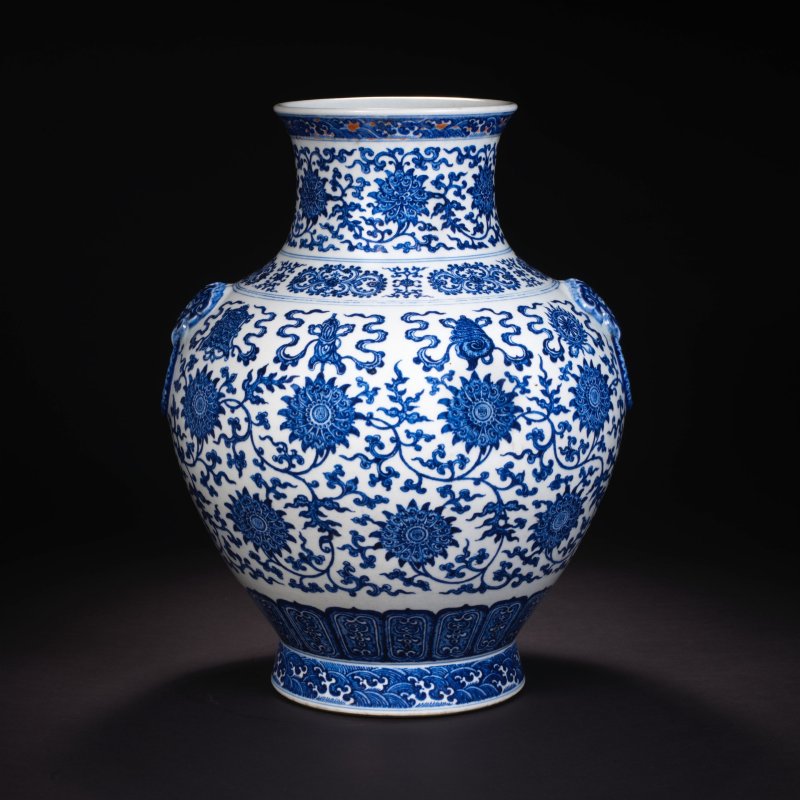
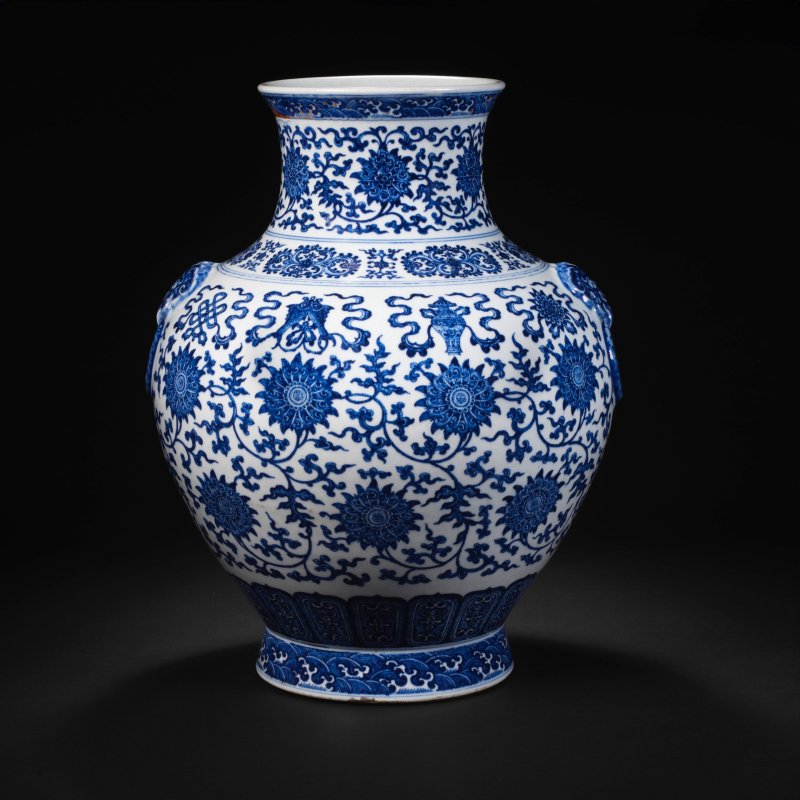
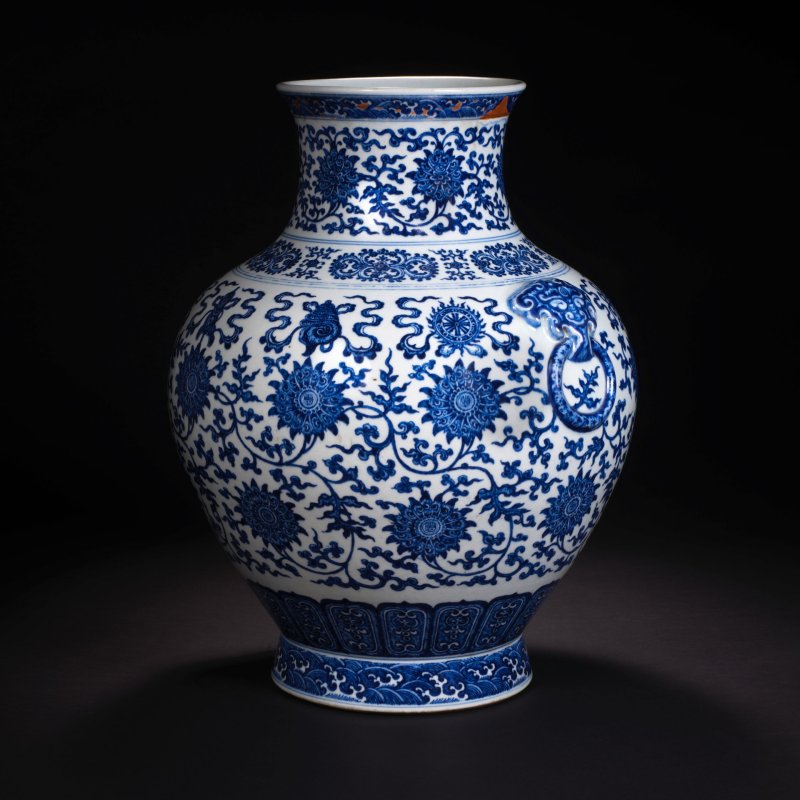
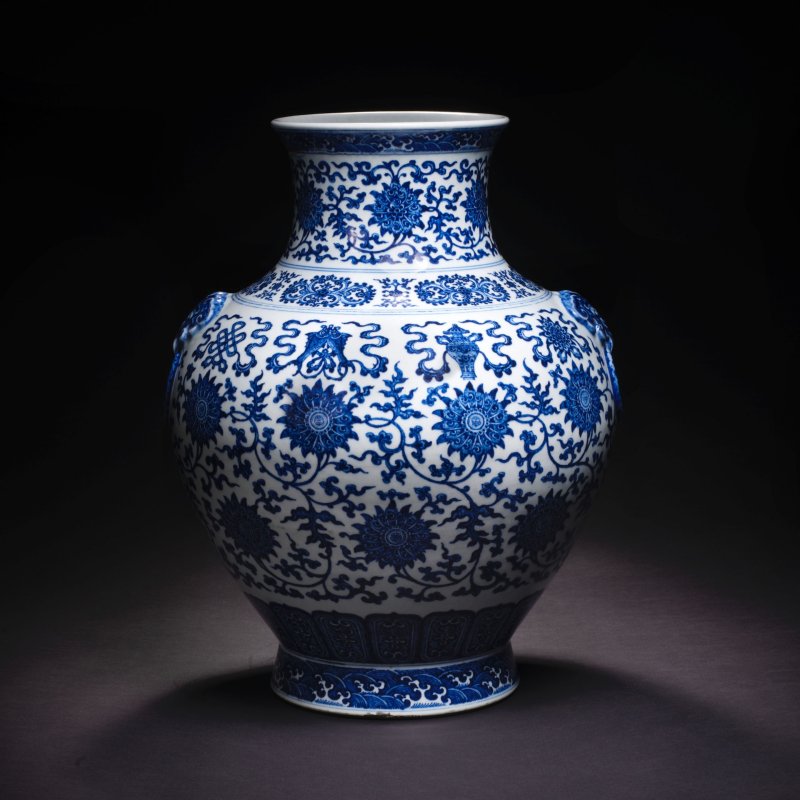
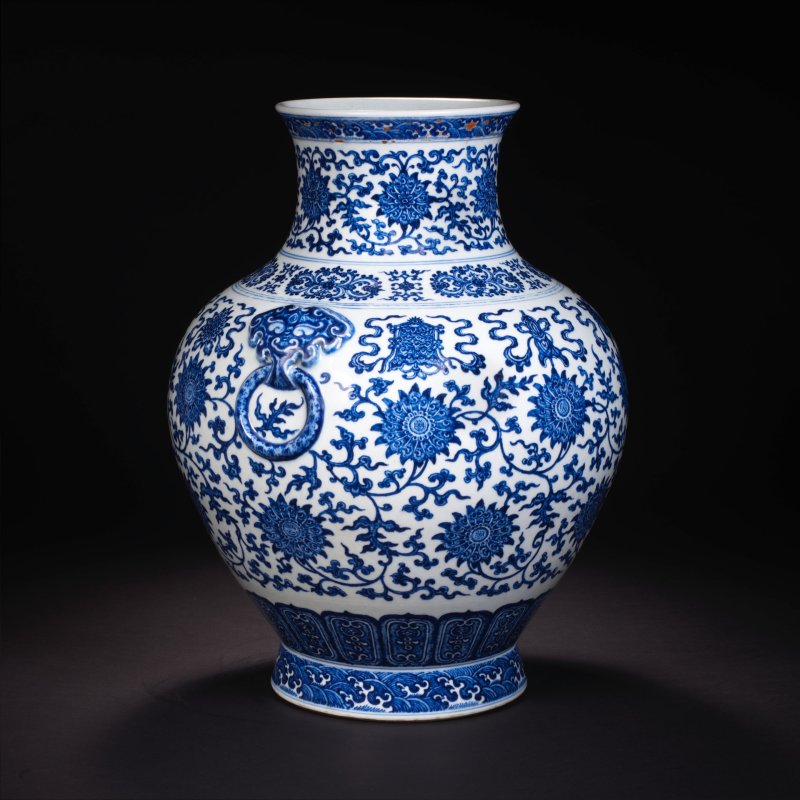
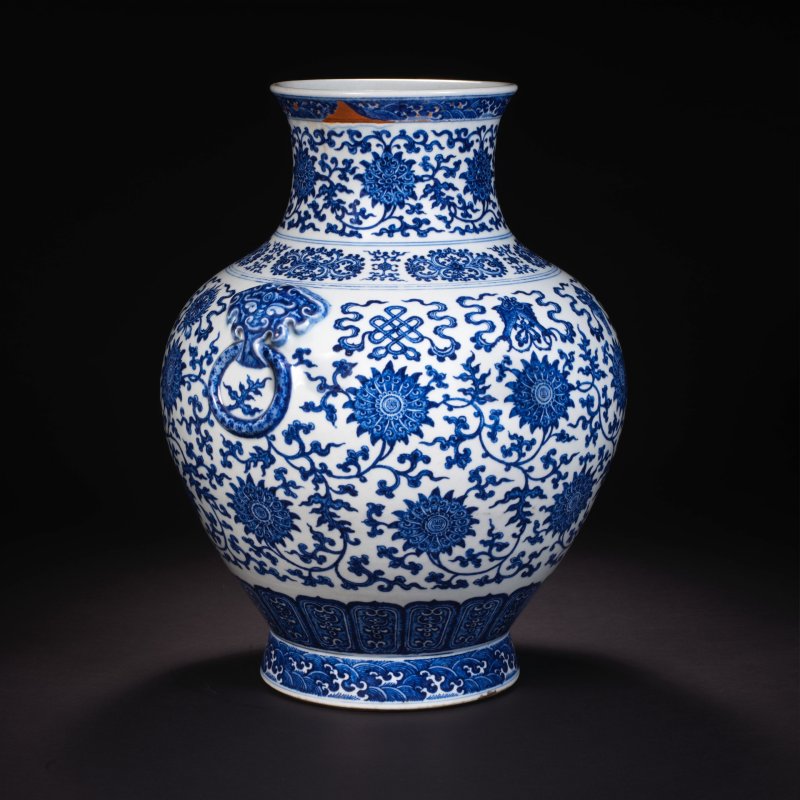
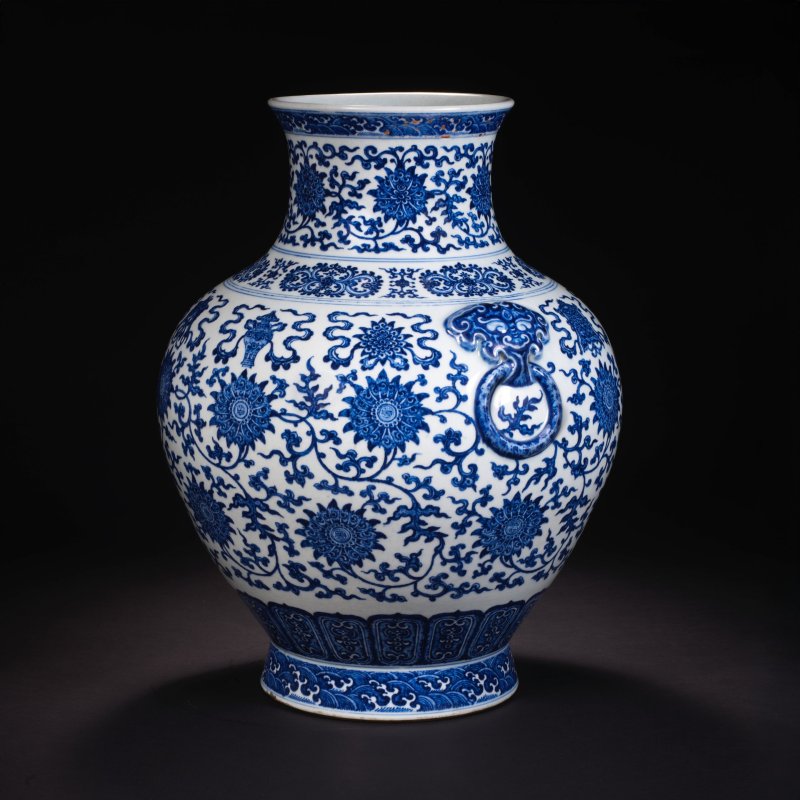
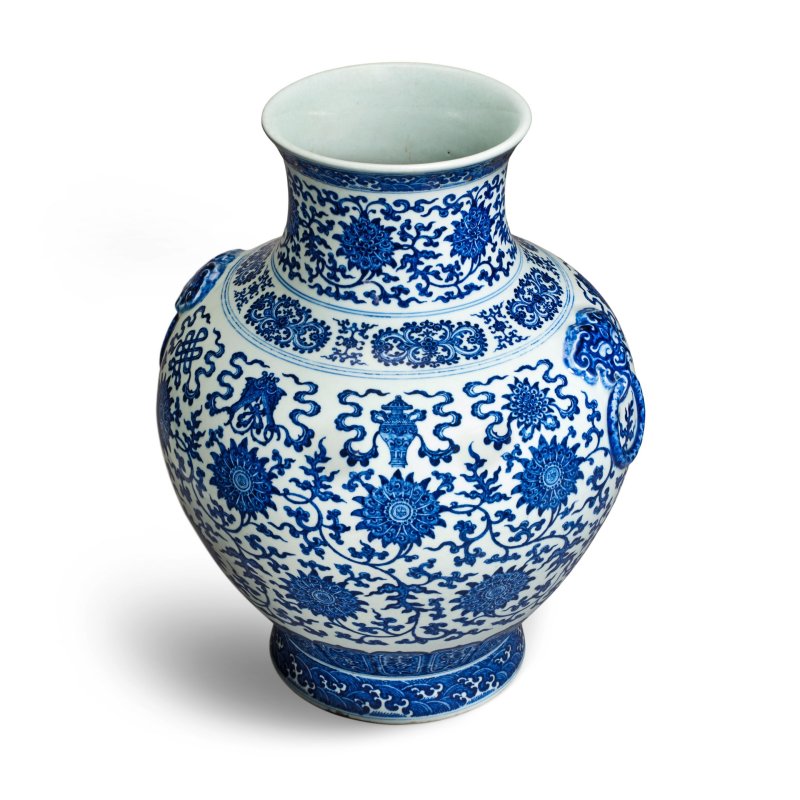
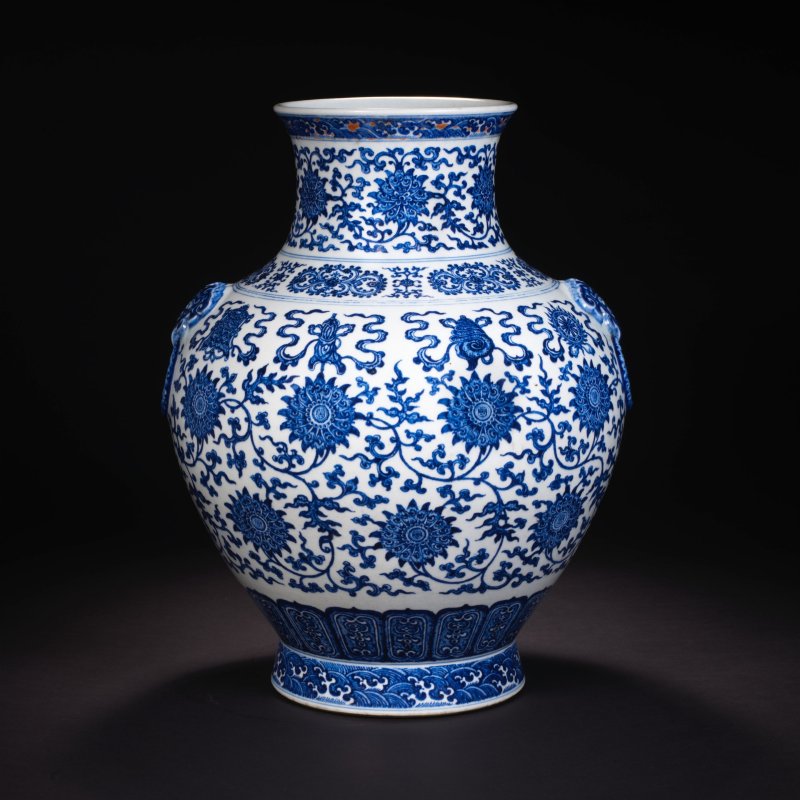
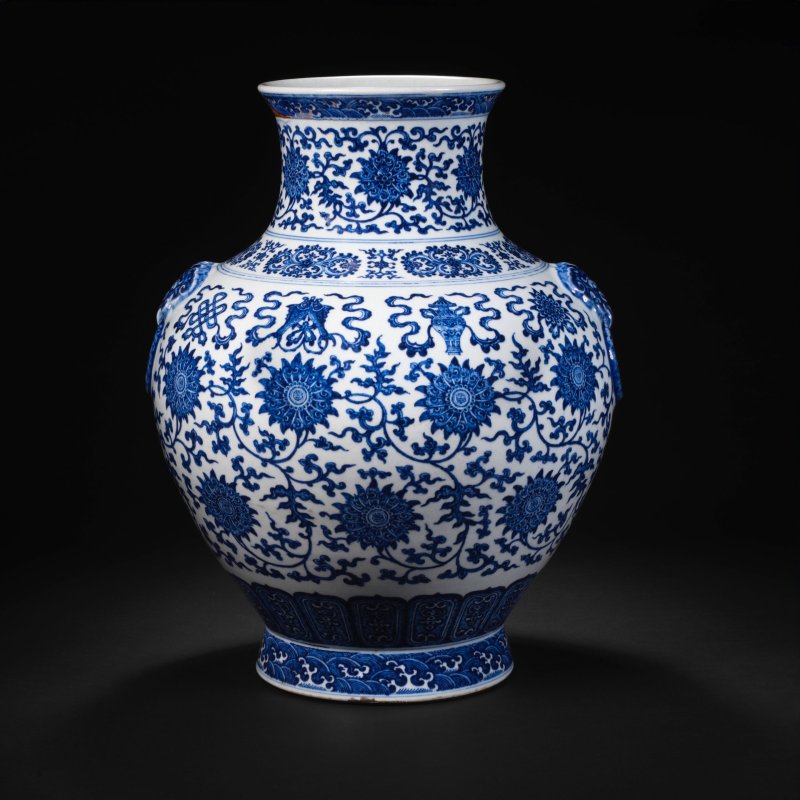
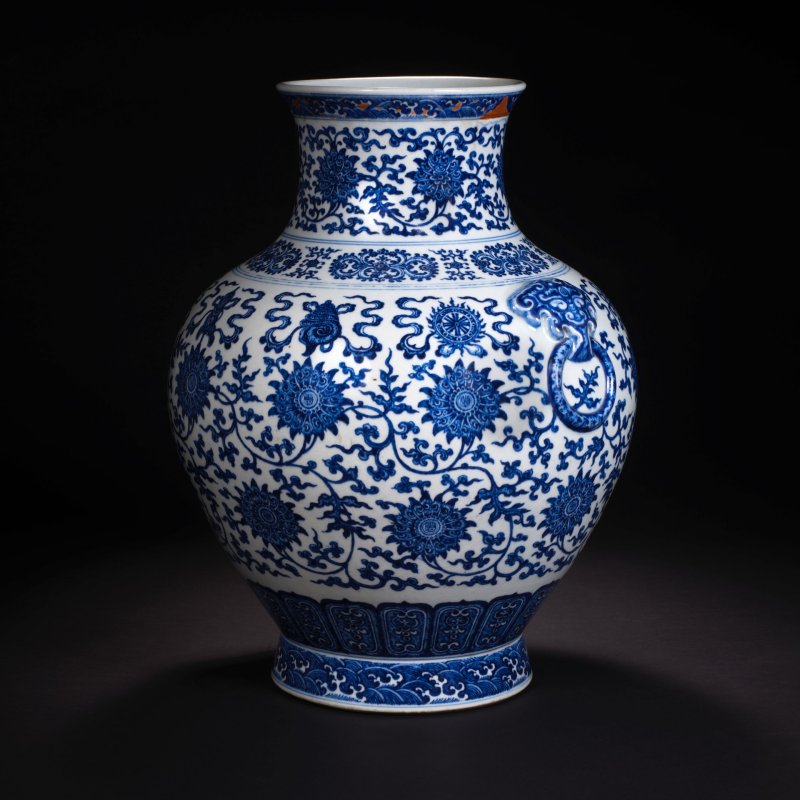
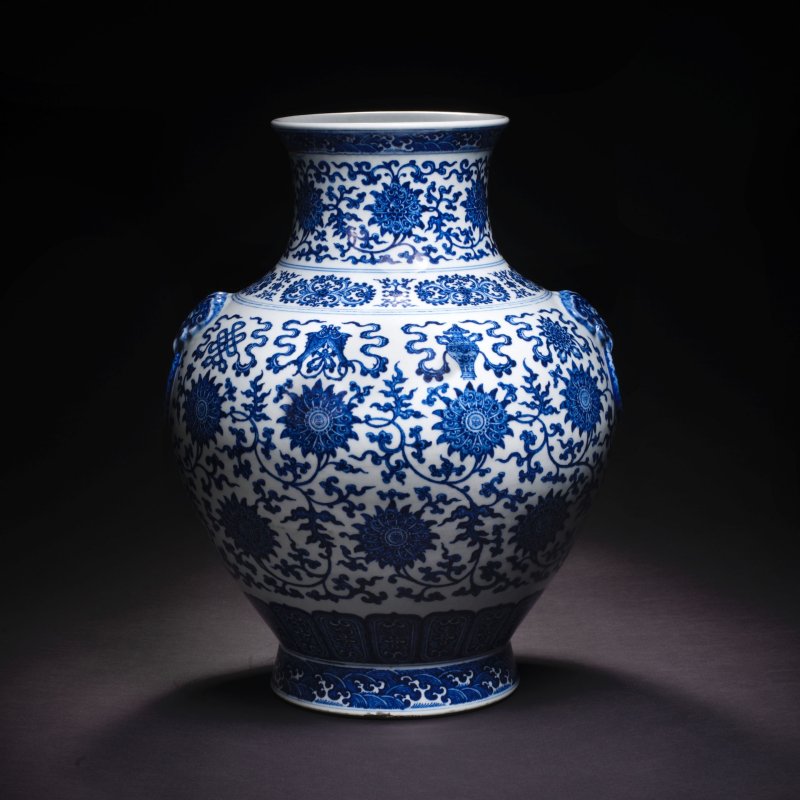
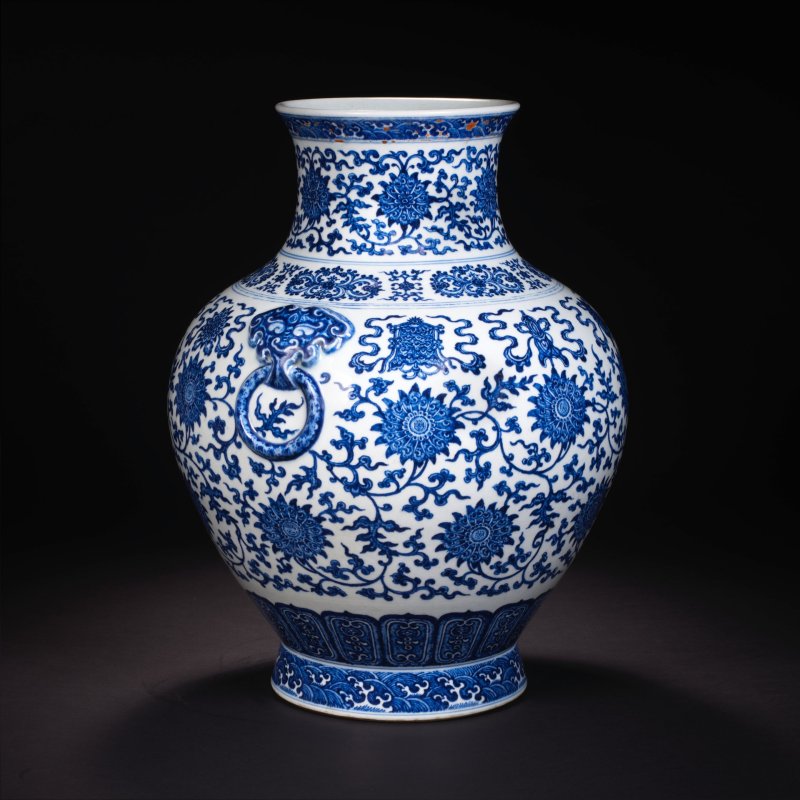
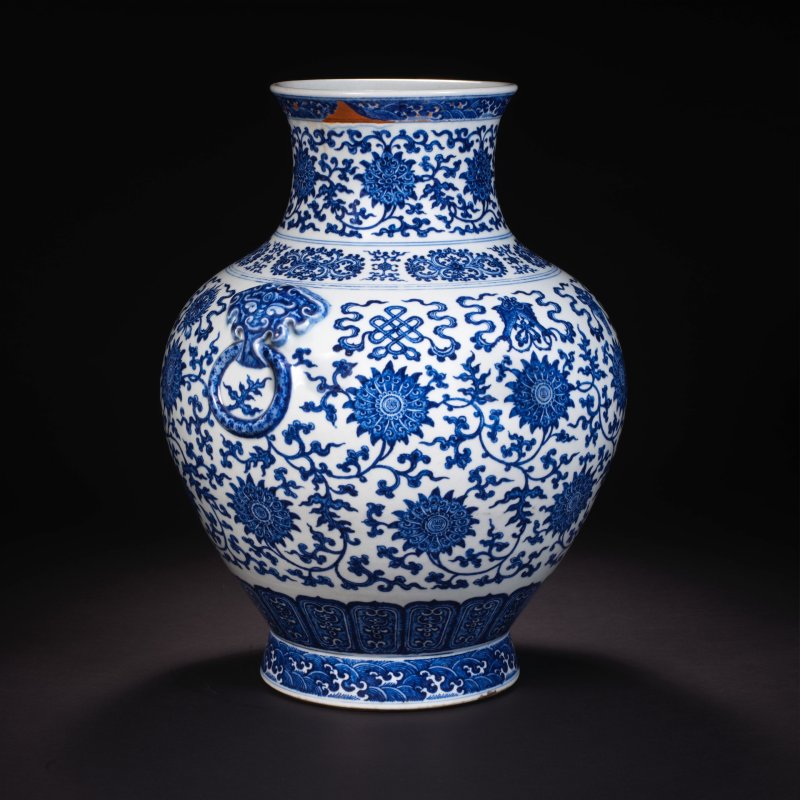
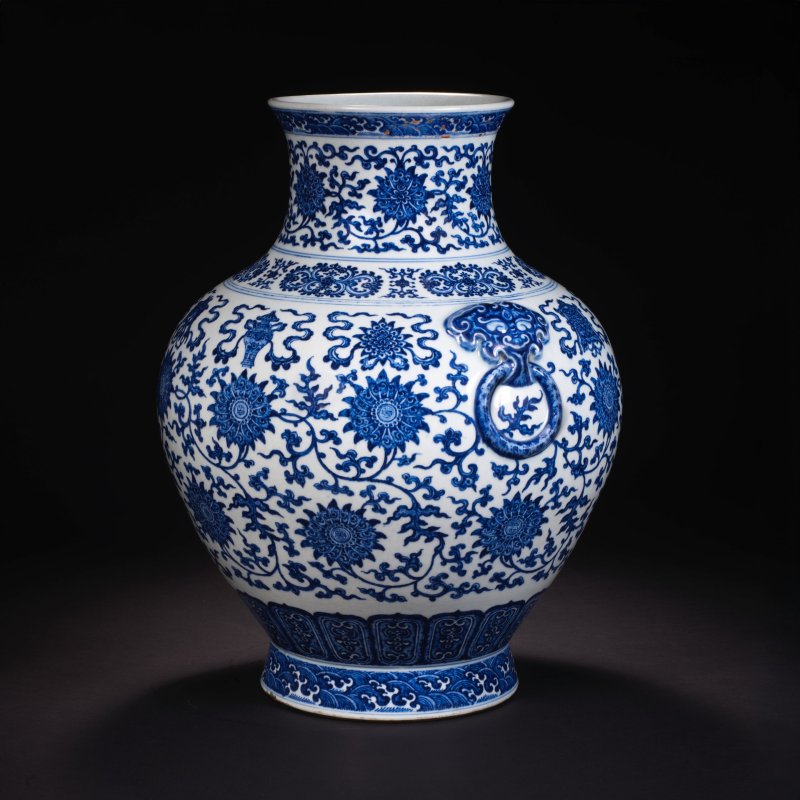
清乾隆 青花纏枝蓮八吉祥紋鋪首耳壺 | A VERY RARE LARGE IMPERIAL MING-STYLE BLUE AND WHITE 'BAJIXIANG' VASE, HU
年代
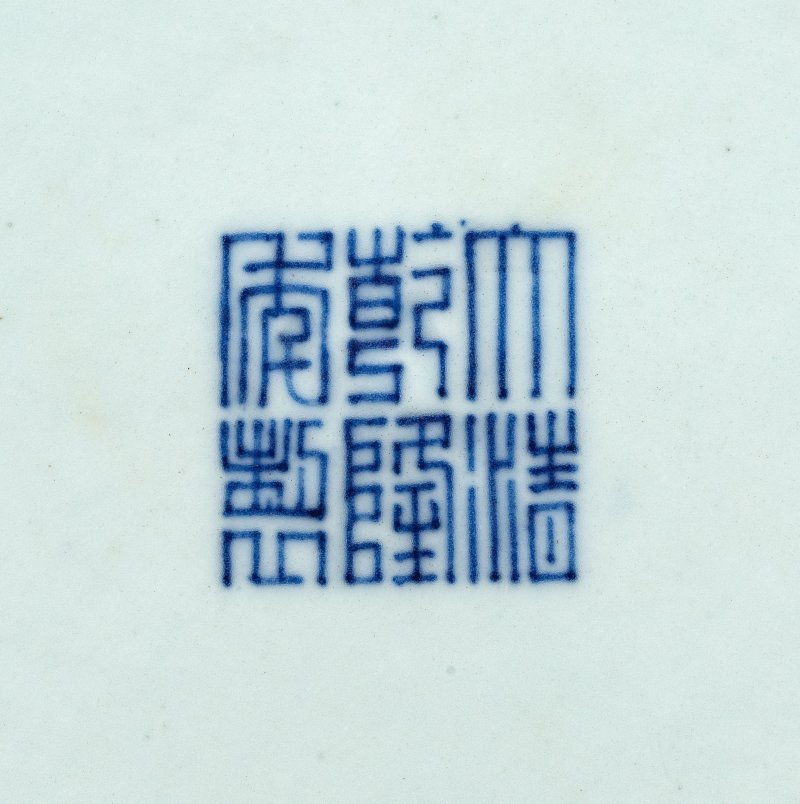
Qianlong seal mark and of the period
起拍价
GBP 120,000
估值区间
GBP 120000 - 150000
尺寸
未知
品相
未知
更多信息
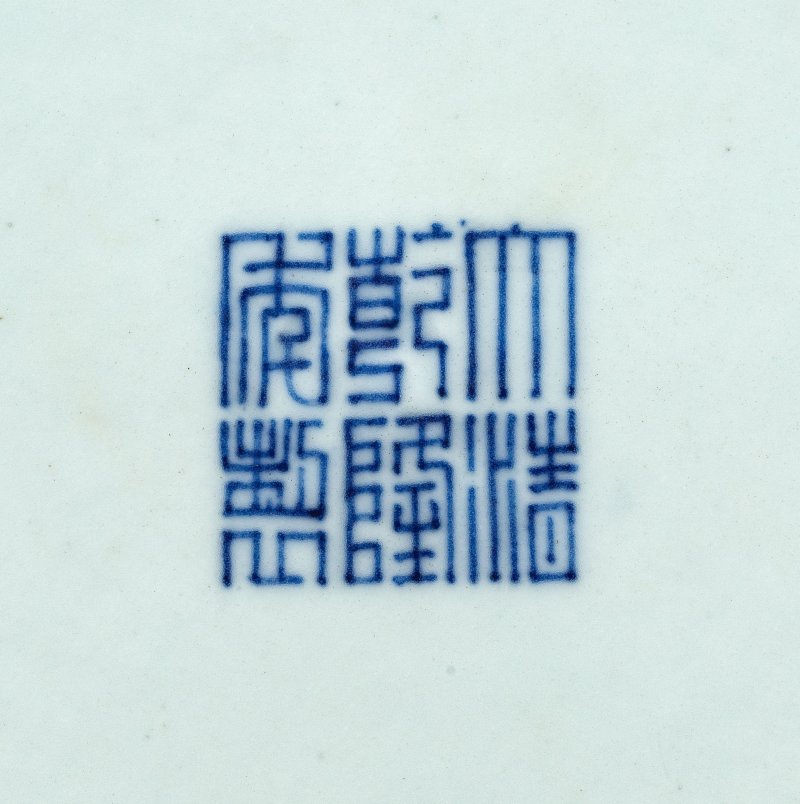
Qianlong seal mark and of the period
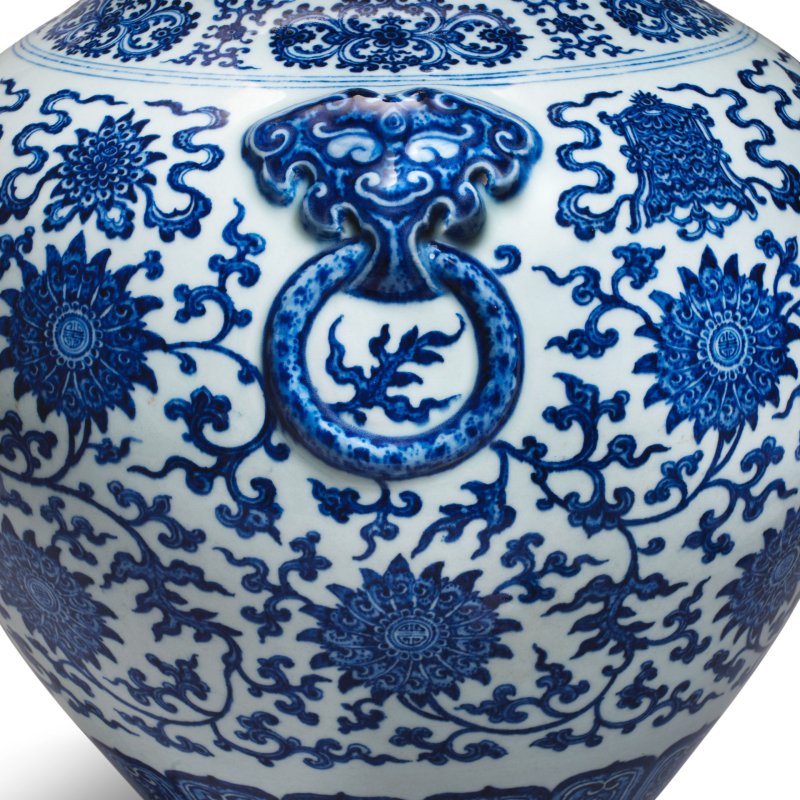
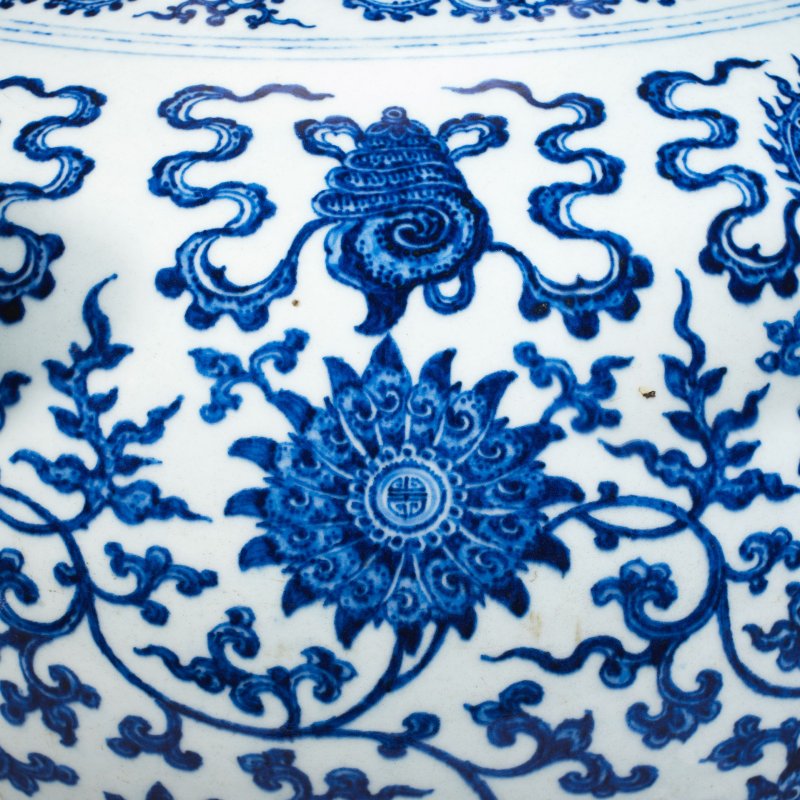
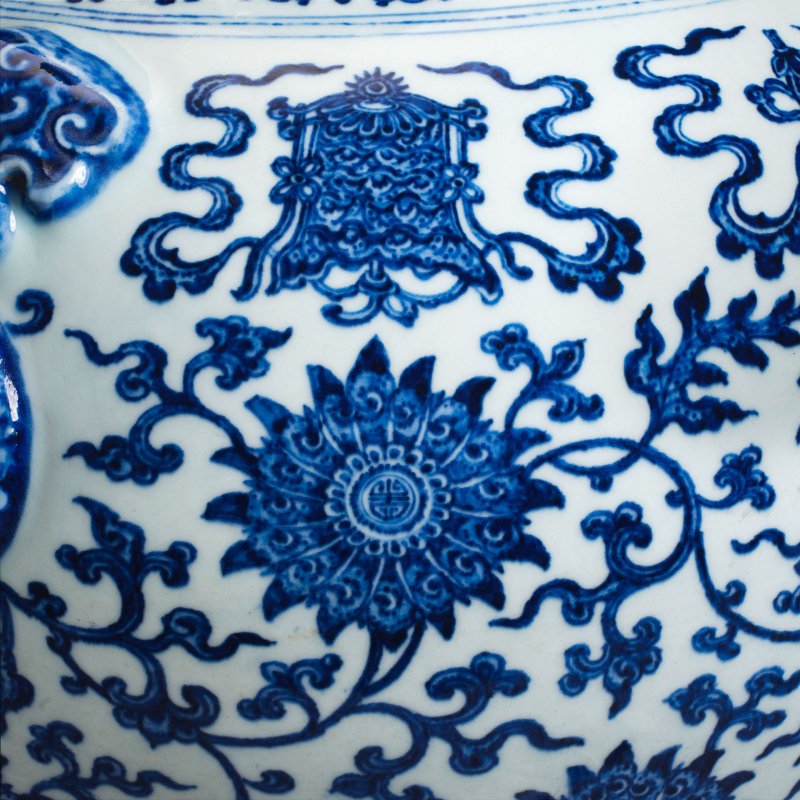
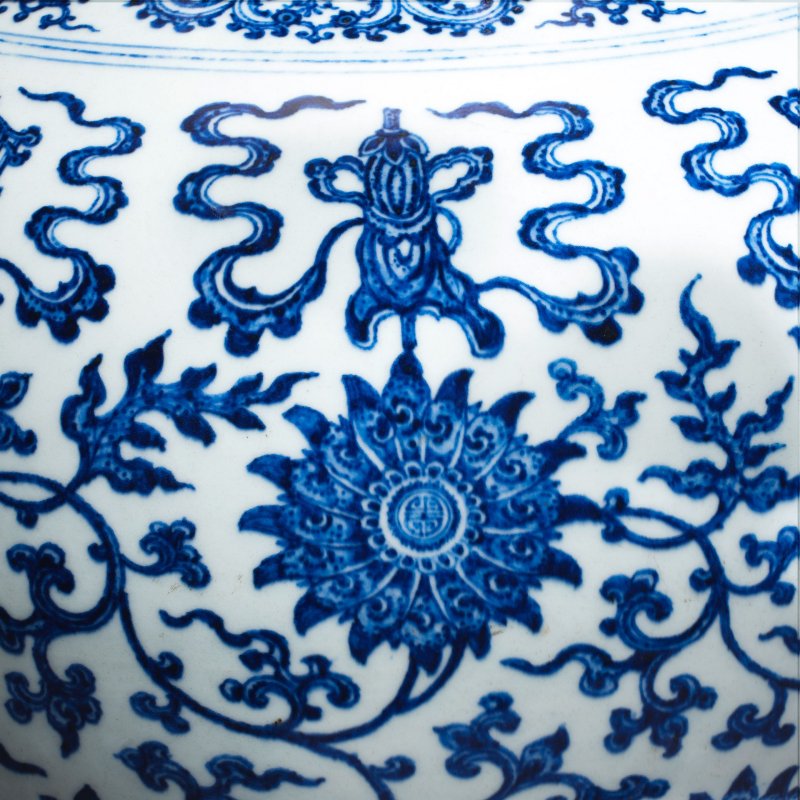
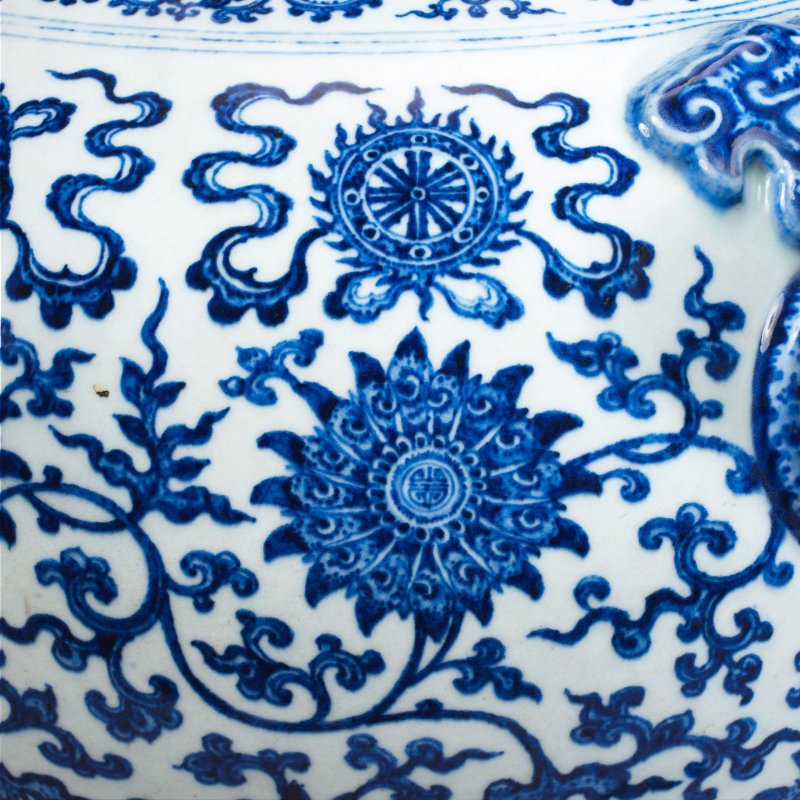
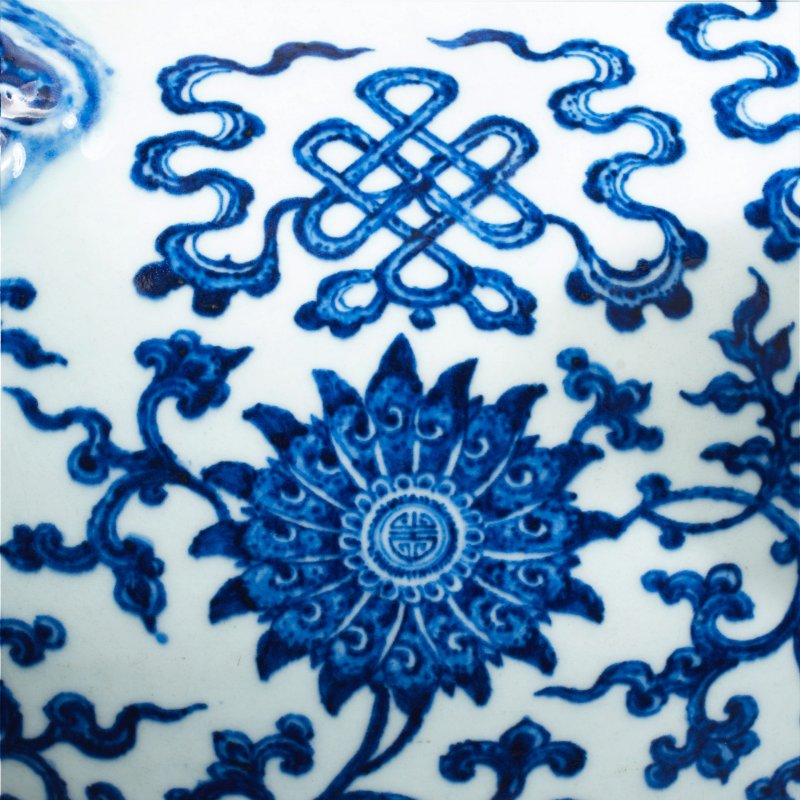
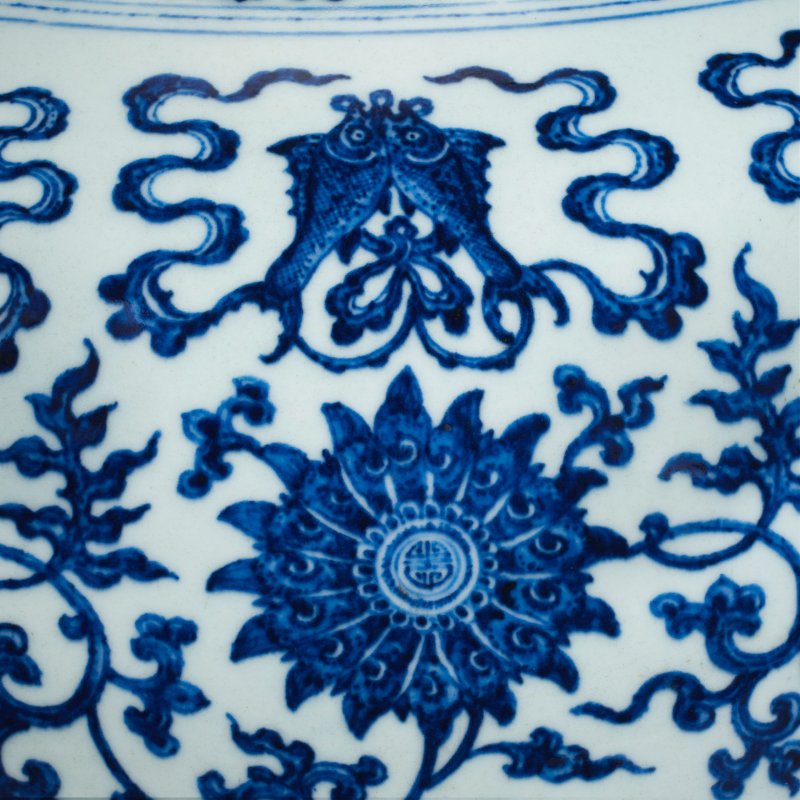
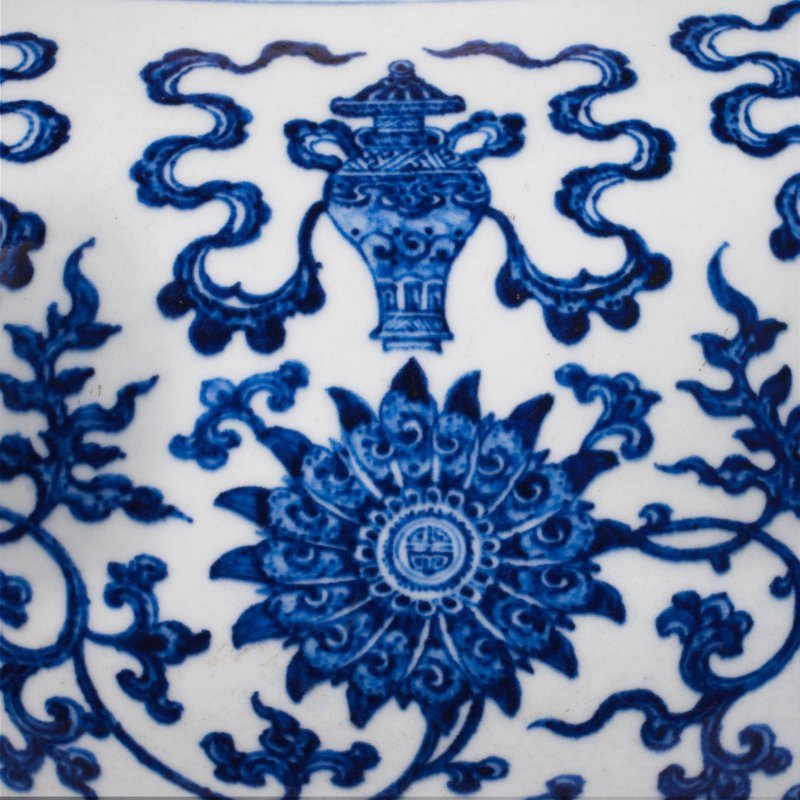
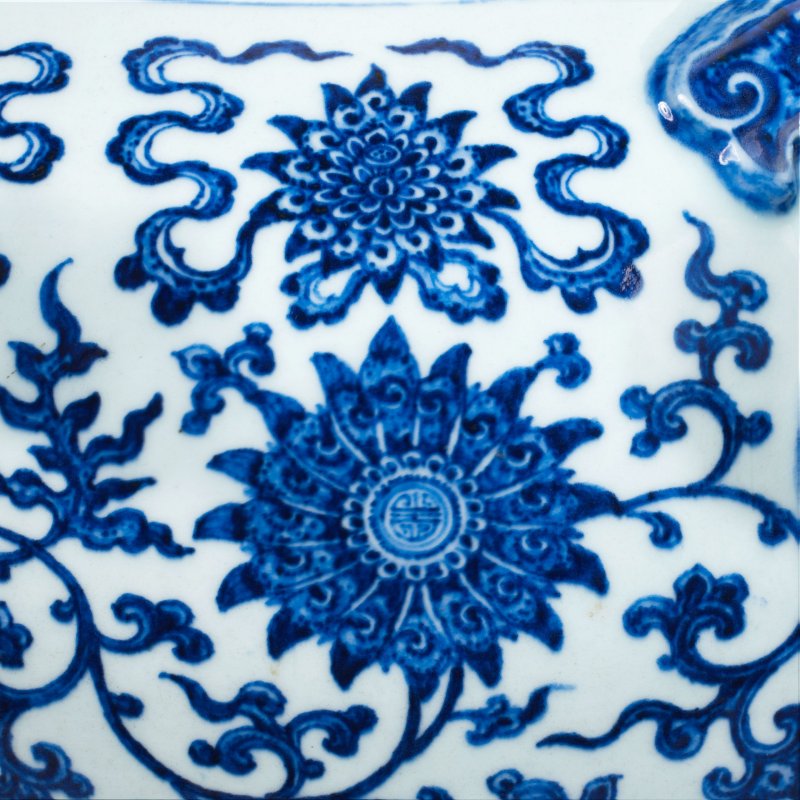
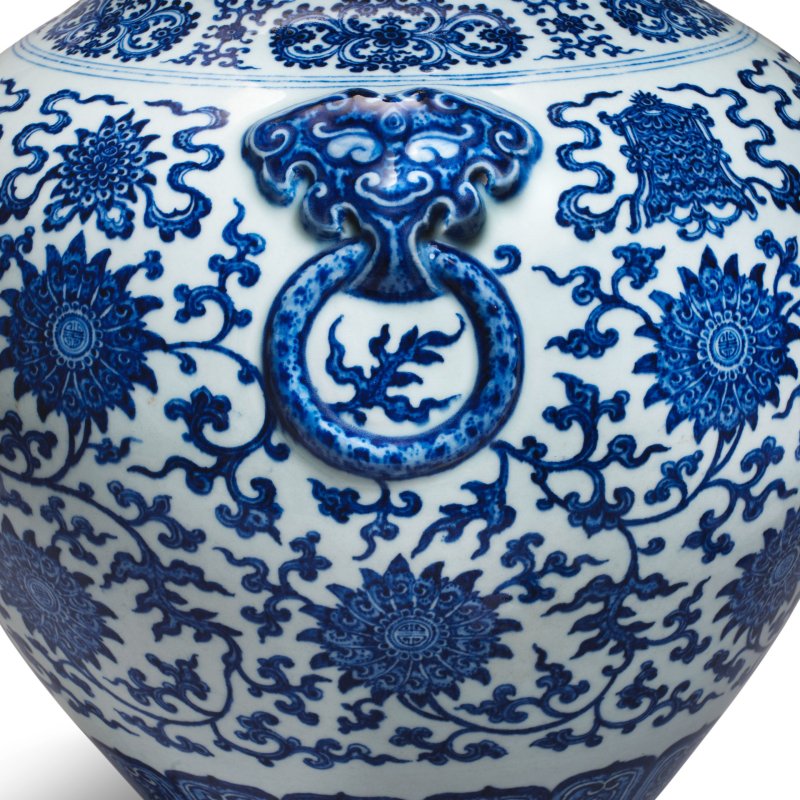
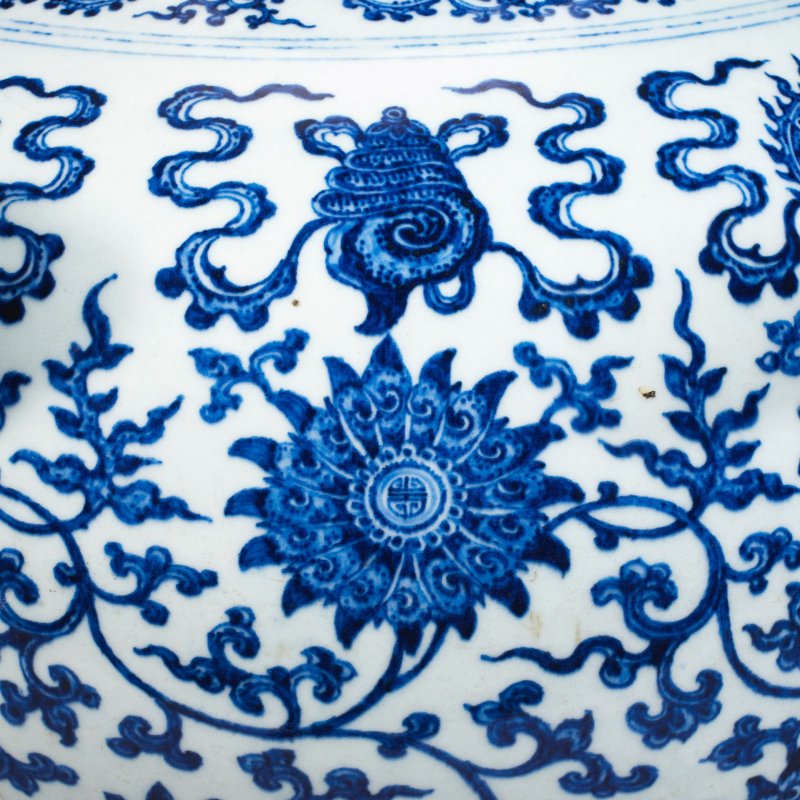
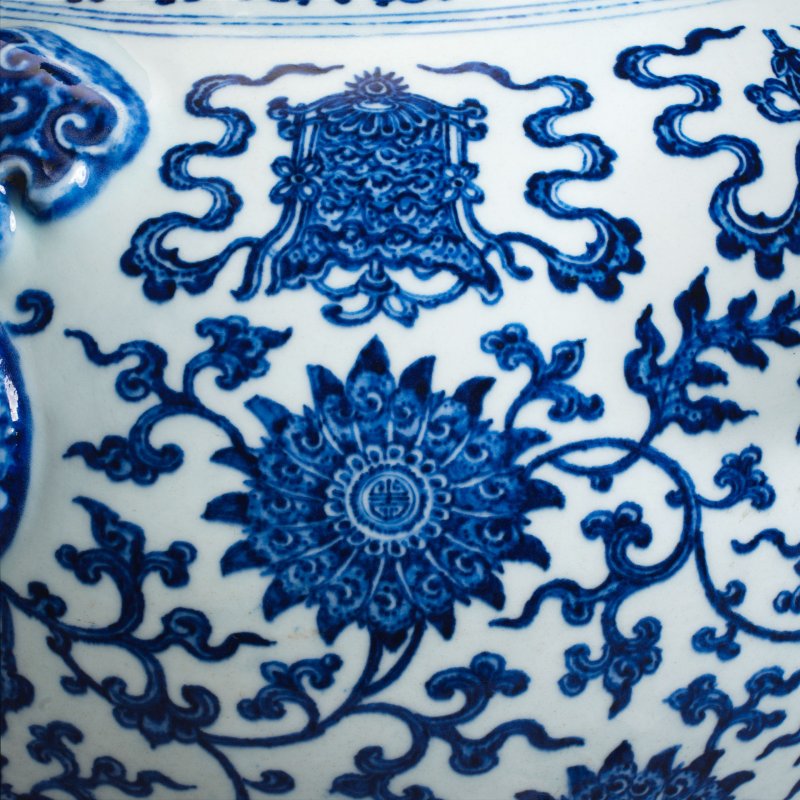
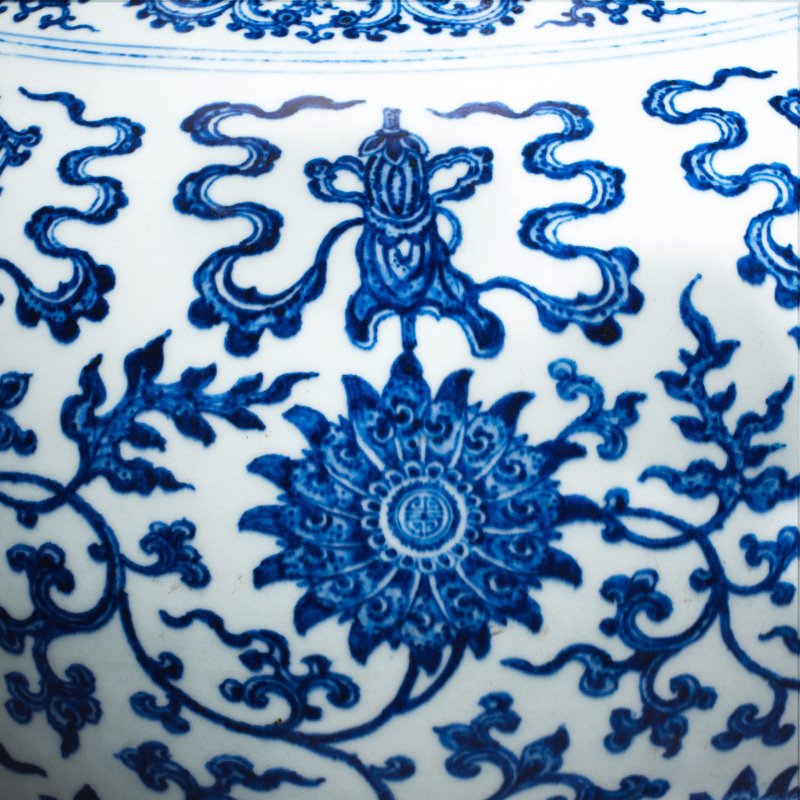
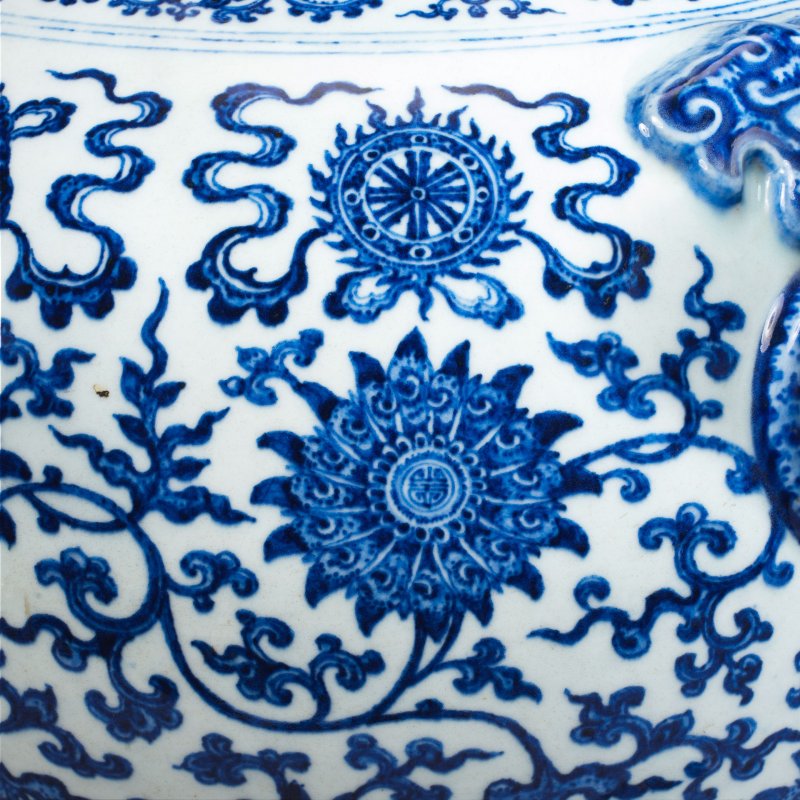
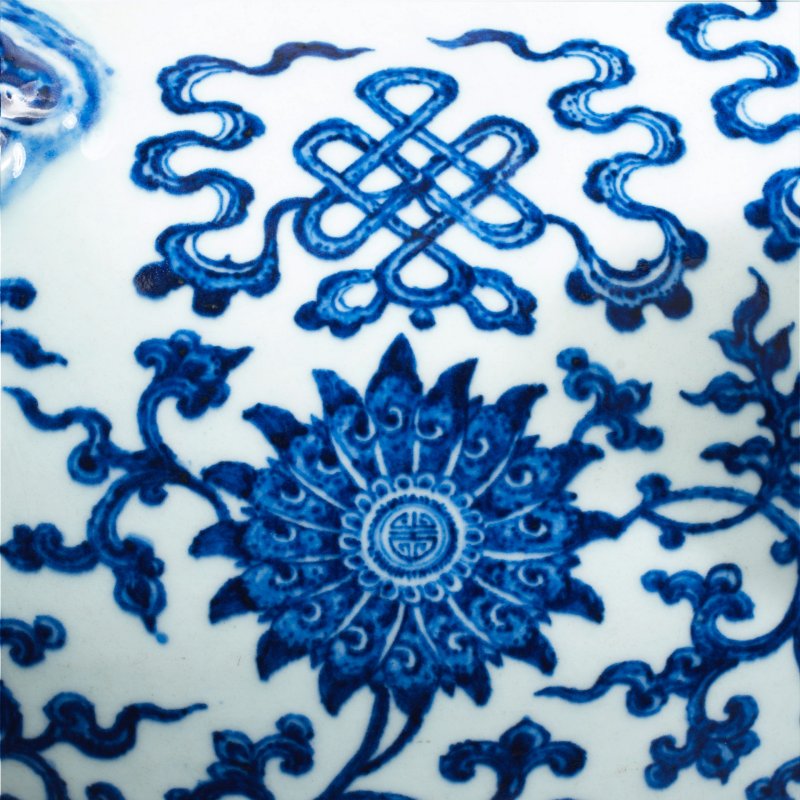
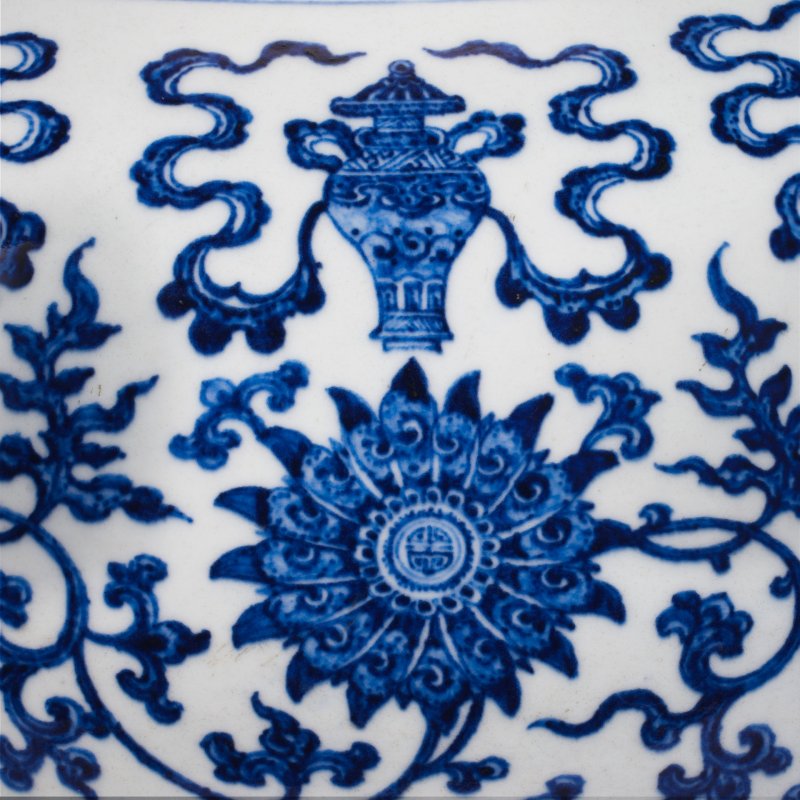
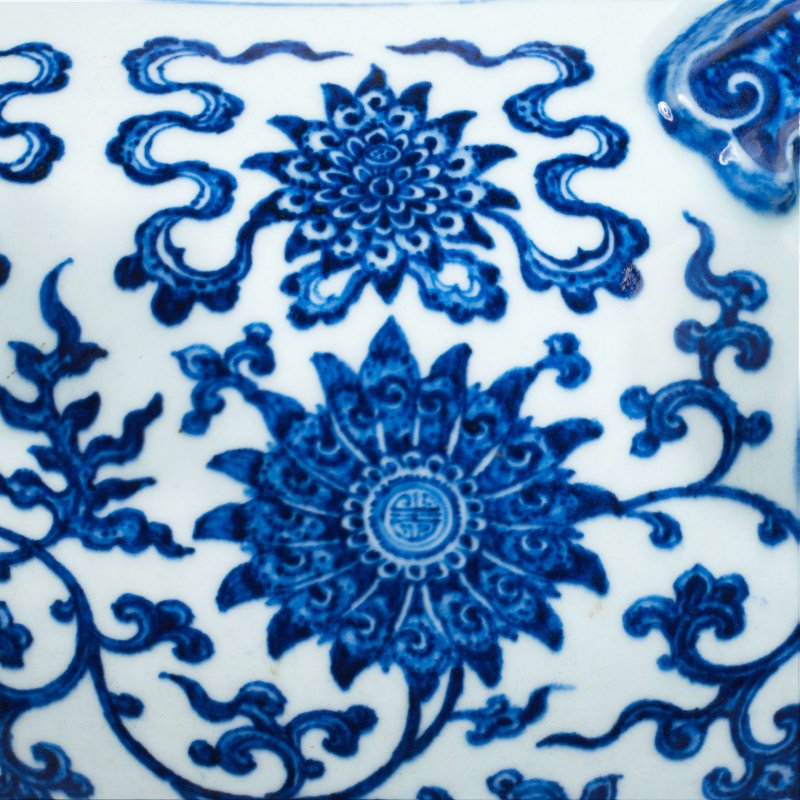
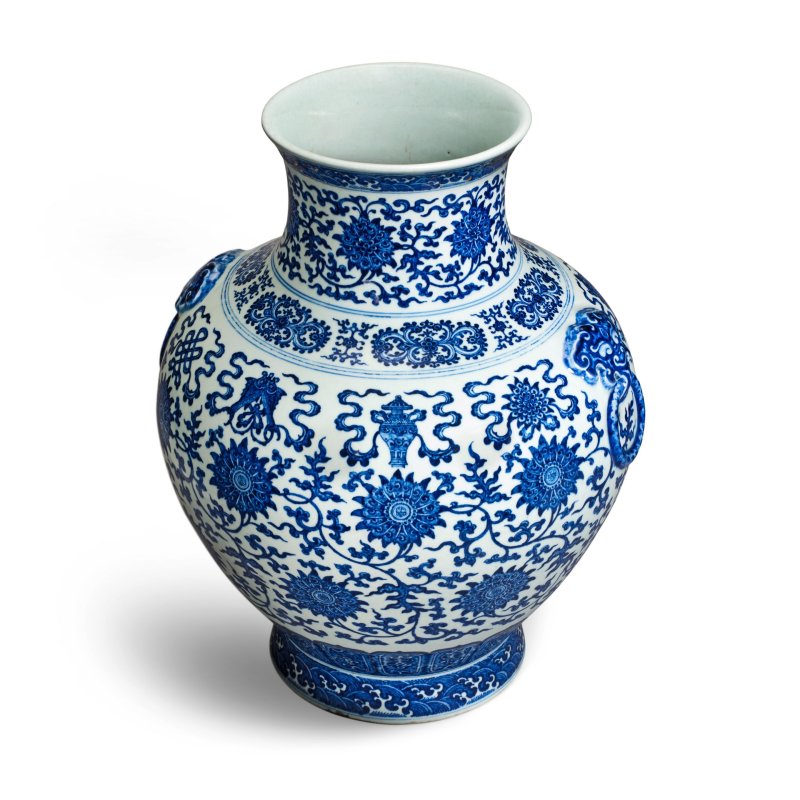
Robustly potted, with a deeply rounded body, raised on a spreading foot and rising to a gently tapered everted rim, deftly painted in the 'heaping and piling' technique with two rows of open lotus flowers all connected by supple, leafy branches all above a band of frothing waves at the foot supporting upward ruyi-head lappets, the shoulders set with raised twin taotie-head ring handles, deftly modelled and dividing a band of the Eight Buddhist Emblems framed by curving ribbons, the neck with a further single band of lotus scroll echoing the body, above a band of quatrefoil crenulated motifs divided by flower sprigs, with band of tumultuous waves just below the rim. 49cm (19 3/4in) high.
Footnotes
清乾隆 青花纏枝蓮八吉祥紋鋪首耳壺
青花「大清乾隆年製」篆書款
Provenance: Evaristo Caretti (1879-1955), China and Italy, and thence by descent
Noted in a valuation conducted by Robert Kleiner in 1988, stating it was acquired in Beijing in 1924
Evaristo Caretti (1879-1955),中國及意大利,並由後人保存迄今
Robert Kleiner于1988年所作的評估中提及,该件拍品于1924年獲得于北京
The considerable scale of the present lot, together with the precision of its potting and densely organised decoration, demonstrates the technical sophistication achieved at the Imperial kilns at Jingdezhen. The production and firing of such a substantial vessel demanded careful control, while the complex arrangement of motifs had to be planned across the broad, curved surface to achieve a balanced composition. The rich cobalt-blue further enhances the monumental character of the vase.
Earlier prototypes of the present design can be seen in the Yongzheng period. See, for example, a related blue and white , Yongzheng seal mark and of the period, decorated with the but without characters within the lotus blooms, illustrated in , Hong Kong, 1995, no.44. By the Qianlong reign, the lotus blossoms are found with characters incorporated within their centres, as on the present vase. See a very similar blue and white with decoration, Qianlong seal mark and of the period, illustrated in , Hong Kong, 1987, pl.58, subsequently sold at Sotheby's Hong Kong, 2 April 2019, lot 16. Another very similar blue and white vase, Qianlong seal mark and of the period, is illustrated in , Hong Kong, 1985, no.185. See also another similar vase, Qianlong seal mark and of the period, illustrated in , Taipei, 2008, pl.52. Another blue and white vase, Qianlong seal mark and of the period, was illustrated by A.du Boulay, , Oxford, 1984, p.202.
The present vase is distinguished by the sophisticated combination of an archaic form, early Ming inspired blue and white decoration and Tibetan Buddhist imagery. The arrangement of the , each emblem positioned above a lotus bloom enclosing a character, is particularly striking. The Eight Buddhist Auspicious Emblems were introduced into Chinese decorative arts through Tibetan Buddhism and appear on Chinese blue and white porcelain from the Yuan dynasty onwards, initially more commonly as border decoration. During the Ming and Qing periods they became increasingly prominent as principal motifs, frequently combined with lotus. A related blue and white jar with lotus scrolls supporting the Eight Buddhist Emblems, Zhengtong, is illustrated in , vol.1, Hong Kong, 2000, p.189, no.178. The addition of characters in the lotus bloom introduces the auspicious wish for longevity into an otherwise Buddhist decorative scheme.
The unusual combination of lotus blooms enclosing characters is also found on a very similar blue and white vase, , Qianlong but without the Imperial reign mark, illustrated in , Hong Kong, 2007, no.97. The recurrence of this motif on Imperial vessels suggests that the within lotus design formed part of the auspicious decorative repertoire of the Qianlong period Imperial kilns, combining the symbolism of longevity with the lotus, an important Buddhist and auspicious motif.
The archaistic form reflects the Qianlong Emperor's well known fascination with antiquity and, in particular, his study and collection of archaic bronzes, jades and other early works of art. The porcelain can be understood within the long Chinese tradition of translating ancient bronze forms into later materials, retaining the authority of the antique while allowing for new decorative possibilities. Here, the archaistic mask handles reinforce the reference to bronze, while the 15th century-inspired blue and white decoration and create a distinctly Qianlong period synthesis of antiquarian and contemporary Courtly taste.
The form remained in production throughout the Qing dynasty. A related smaller Qianlong period vase with a different decorative scheme, decorated with leafy lotus blooms, composite floral scrolls and a broad band of crashing waves, is in the Palace Museum, Taipei, and illustrated in , Hong Kong, 1968, pl.2. A related blue and white lotus scroll vase, , Daoguang mark and of the period, is illustrated by Geng Baochang, [Appraisal of Ming and Qing porcelains], Hong Kong, 1993, pl.510.
See a related but smaller (25cm high) blue and white floral vase, without , Qianlong seal mark and of the period, which was sold at Sotheby's New York, 11 September 2019, lot 623. Compare also with a related blue and white vase, Qianlong seal mark and of the period, but smaller (25.4cm high) which was sold at Sotheby's New York, 21-22 September 2021, lot 77. See also a similar blue and white vase, Qianlong seal mark and of the period, of similar size (50cm high), which was sold at Sotheby's Hong Kong, 3-4 May 1994, lot 183.
Robustly potted, with a deeply rounded body, raised on a spreading foot and rising to a gently tapered everted rim, deftly painted in the 'heaping and piling' technique with two rows of open lotus flowers all connected by supple, leafy branches all above a band of frothing waves at the foot supporting upward ruyi-head lappets, the shoulders set with raised twin taotie-head ring handles, deftly modelled and dividing a band of the Eight Buddhist Emblems framed by curving ribbons, the neck with a further single band of lotus scroll echoing the body, above a band of quatrefoil crenulated motifs divided by flower sprigs, with band of tumultuous waves just below the rim. 49cm (19 3/4in) high.
Footnotes
清乾隆 青花纏枝蓮八吉祥紋鋪首耳壺
青花「大清乾隆年製」篆書款
Provenance: Evaristo Caretti (1879-1955), China and Italy, and thence by descent
Noted in a valuation conducted by Robert Kleiner in 1988, stating it was acquired in Beijing in 1924
Evaristo Caretti (1879-1955),中國及意大利,並由後人保存迄今
Robert Kleiner于1988年所作的評估中提及,该件拍品于1924年獲得于北京
The considerable scale of the present lot, together with the precision of its potting and densely organised decoration, demonstrates the technical sophistication achieved at the Imperial kilns at Jingdezhen. The production and firing of such a substantial vessel demanded careful control, while the complex arrangement of motifs had to be planned across the broad, curved surface to achieve a balanced composition. The rich cobalt-blue further enhances the monumental character of the vase.
Earlier prototypes of the present design can be seen in the Yongzheng period. See, for example, a related blue and white , Yongzheng seal mark and of the period, decorated with the but without characters within the lotus blooms, illustrated in , Hong Kong, 1995, no.44. By the Qianlong reign, the lotus blossoms are found with characters incorporated within their centres, as on the present vase. See a very similar blue and white with decoration, Qianlong seal mark and of the period, illustrated in , Hong Kong, 1987, pl.58, subsequently sold at Sotheby's Hong Kong, 2 April 2019, lot 16. Another very similar blue and white vase, Qianlong seal mark and of the period, is illustrated in , Hong Kong, 1985, no.185. See also another similar vase, Qianlong seal mark and of the period, illustrated in , Taipei, 2008, pl.52. Another blue and white vase, Qianlong seal mark and of the period, was illustrated by A.du Boulay, , Oxford, 1984, p.202.
The present vase is distinguished by the sophisticated combination of an archaic form, early Ming inspired blue and white decoration and Tibetan Buddhist imagery. The arrangement of the , each emblem positioned above a lotus bloom enclosing a character, is particularly striking. The Eight Buddhist Auspicious Emblems were introduced into Chinese decorative arts through Tibetan Buddhism and appear on Chinese blue and white porcelain from the Yuan dynasty onwards, initially more commonly as border decoration. During the Ming and Qing periods they became increasingly prominent as principal motifs, frequently combined with lotus. A related blue and white jar with lotus scrolls supporting the Eight Buddhist Emblems, Zhengtong, is illustrated in , vol.1, Hong Kong, 2000, p.189, no.178. The addition of characters in the lotus bloom introduces the auspicious wish for longevity into an otherwise Buddhist decorative scheme.
The unusual combination of lotus blooms enclosing characters is also found on a very similar blue and white vase, , Qianlong but without the Imperial reign mark, illustrated in , Hong Kong, 2007, no.97. The recurrence of this motif on Imperial vessels suggests that the within lotus design formed part of the auspicious decorative repertoire of the Qianlong period Imperial kilns, combining the symbolism of longevity with the lotus, an important Buddhist and auspicious motif.
The archaistic form reflects the Qianlong Emperor's well known fascination with antiquity and, in particular, his study and collection of archaic bronzes, jades and other early works of art. The porcelain can be understood within the long Chinese tradition of translating ancient bronze forms into later materials, retaining the authority of the antique while allowing for new decorative possibilities. Here, the archaistic mask handles reinforce the reference to bronze, while the 15th century-inspired blue and white decoration and create a distinctly Qianlong period synthesis of antiquarian and contemporary Courtly taste.
The form remained in production throughout the Qing dynasty. A related smaller Qianlong period vase with a different decorative scheme, decorated with leafy lotus blooms, composite floral scrolls and a broad band of crashing waves, is in the Palace Museum, Taipei, and illustrated in , Hong Kong, 1968, pl.2. A related blue and white lotus scroll vase, , Daoguang mark and of the period, is illustrated by Geng Baochang, [Appraisal of Ming and Qing porcelains], Hong Kong, 1993, pl.510.
See a related but smaller (25cm high) blue and white floral vase, without , Qianlong seal mark and of the period, which was sold at Sotheby's New York, 11 September 2019, lot 623. Compare also with a related blue and white vase, Qianlong seal mark and of the period, but smaller (25.4cm high) which was sold at Sotheby's New York, 21-22 September 2021, lot 77. See also a similar blue and white vase, Qianlong seal mark and of the period, of similar size (50cm high), which was sold at Sotheby's Hong Kong, 3-4 May 1994, lot 183.
常见问题
这件清乾隆 青花纏枝蓮八吉祥紋鋪首耳壺 | A VERY RARE LARGE IMPERIAL MING-STYLE BLUE AND WHITE 'BAJIXIANG' VASE, HU的成交价是多少?
落槌价为 预展中。 成交价为 预展中。


