
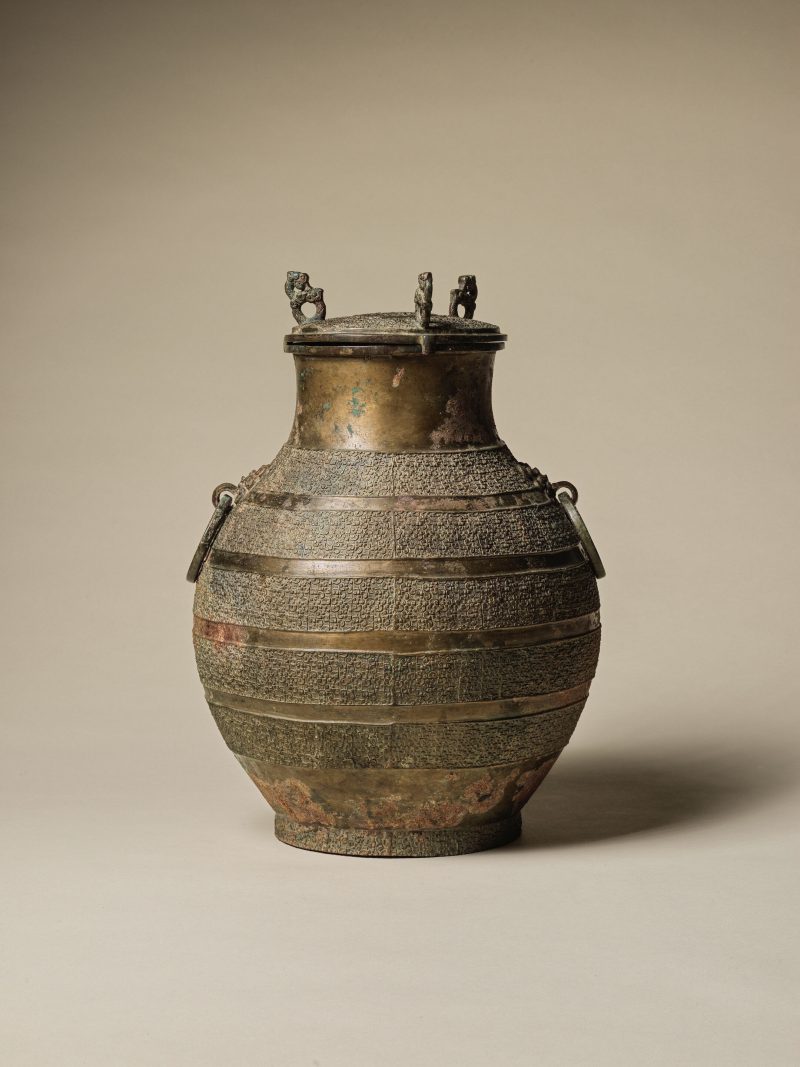
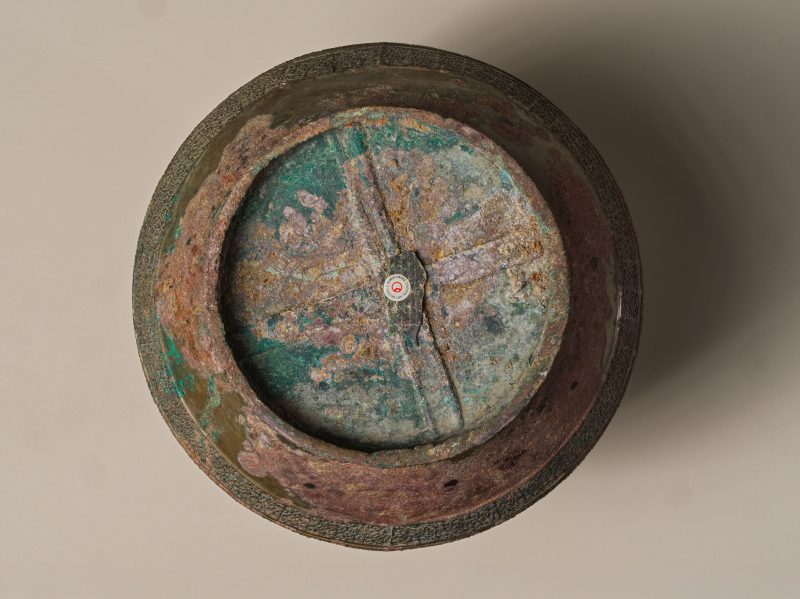
Lot 49 戰國時期 約公元前五世紀 青銅蟠螭紋蓋壺 | VASE BALUSTRE COUVERT RITUEL EN BRONZE, HU
落槌价
预展中
成交价
预展中
| 拍卖公司 | 邦瀚斯 |
|---|---|
| 拍卖时间 | 2026年12月10日 |
拍品信息
拍品名称
戰國時期 約公元前五世紀 青銅蟠螭紋蓋壺 | VASE BALUSTRE COUVERT RITUEL EN BRONZE, HU
年代
戰國時期 約公元前五世紀
起拍价
未知
估值区间
EUR 20,000–30,000
尺寸
42 cm (16 1/2 in) high
品相
未知
更多信息
VASE BALUSTRE COUVERT RITUEL EN BRONZE, HU
Période des Royaumes Combattants, vers Ve siècle av. J.-C.
AN ARCHAIC BRONZE RITUAL WINE VESSEL AND COVER, HU
Warring States period, ca. 5th century BC
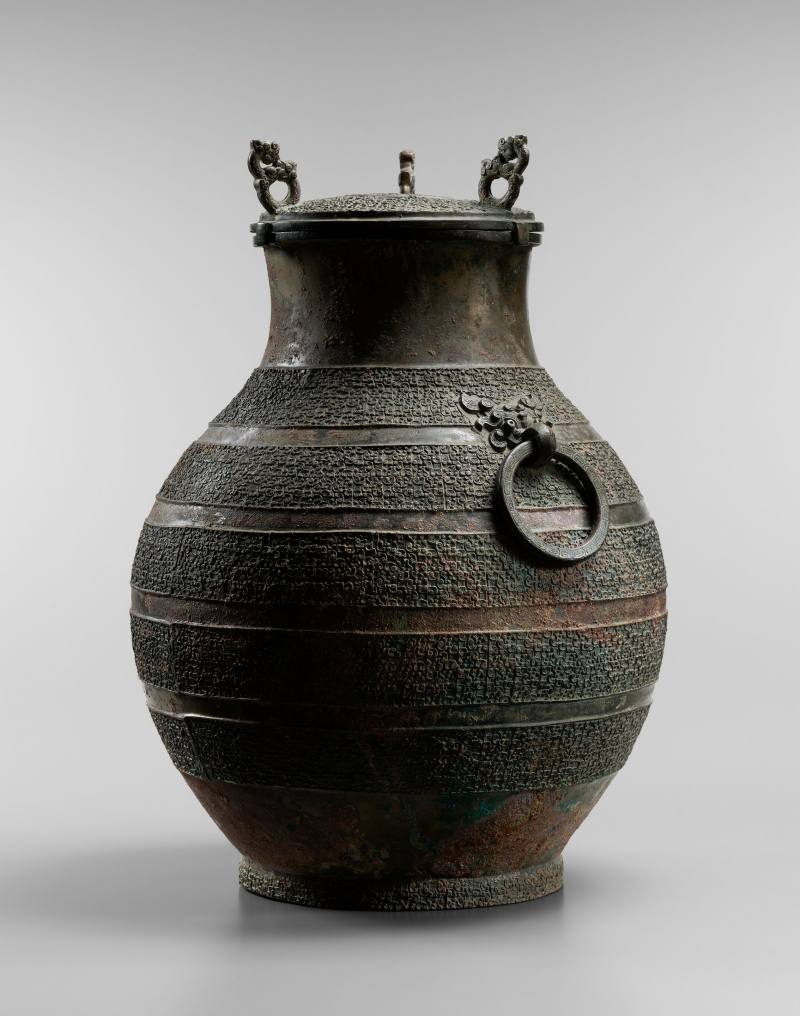
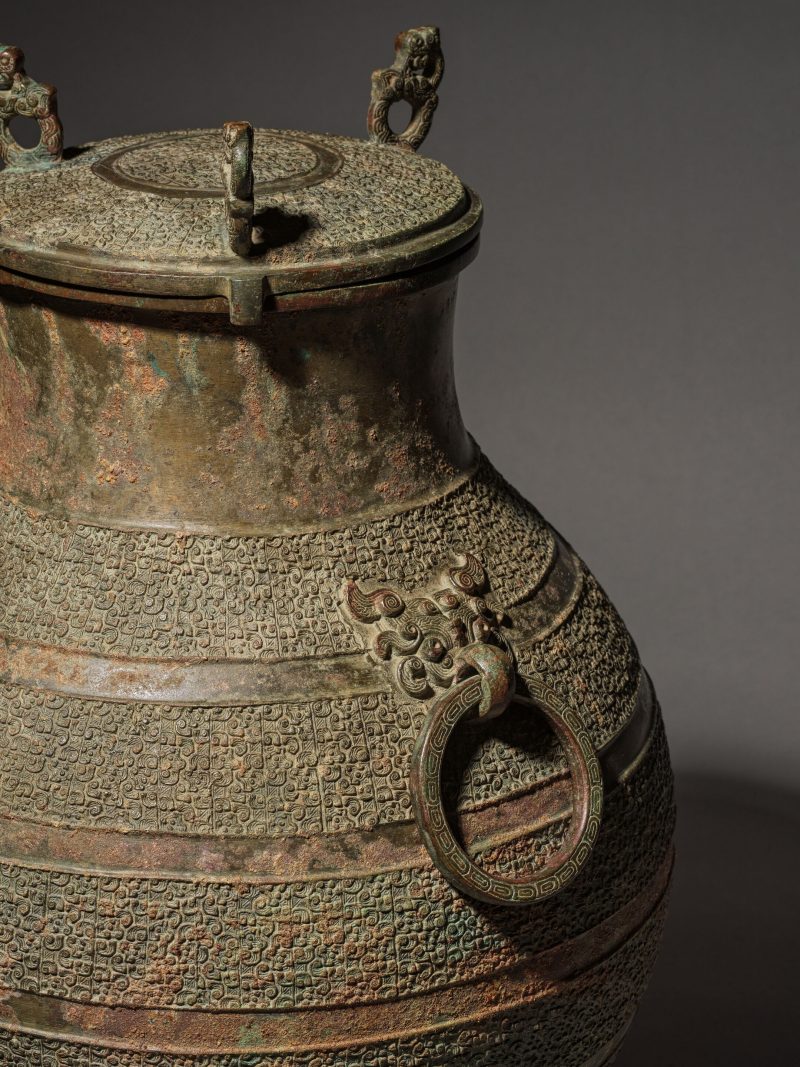
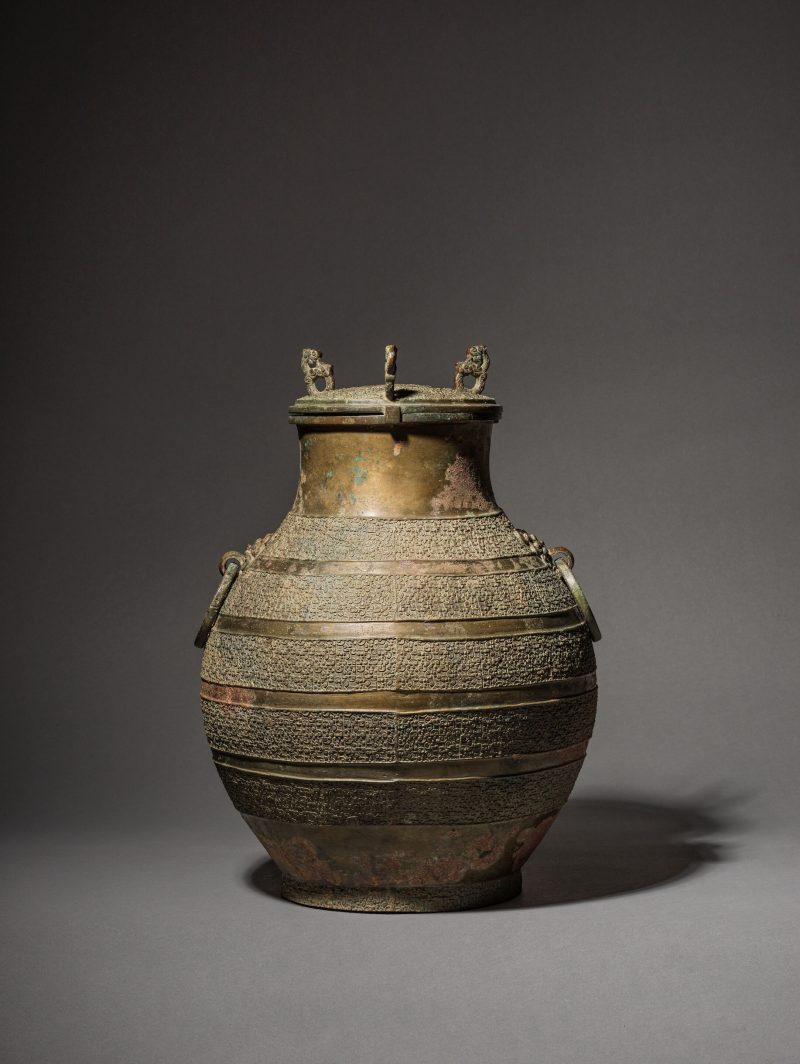
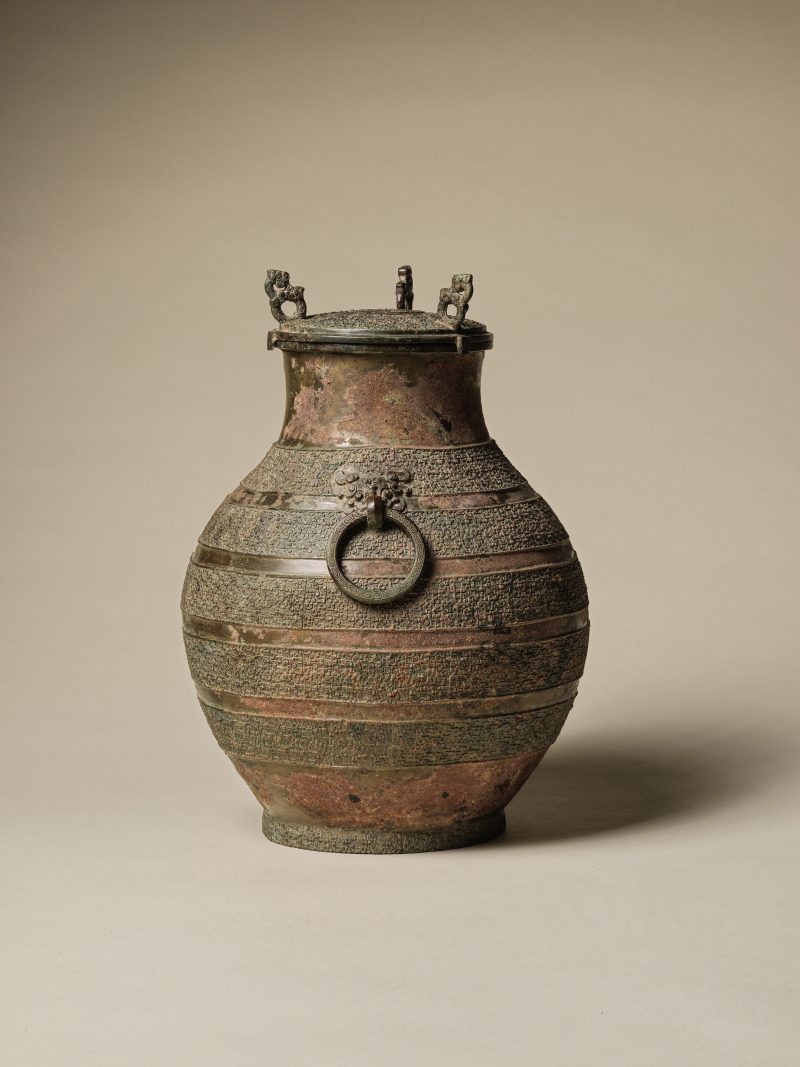
Of generous proportions, the pear-shaped body and foot cast with horizontal bands comprising sequences of joined and stacked stylised snake-dragons, each with a finely patterned S-curved body rising and falling in varying levels of relief and interspersed with small raised bosses, each register divided by narrow, slightly recessed bands, the shoulders set with a pair of taotie masks suspending loose rings, the slightly domed cover similarly decorated with a band of abstract interlaced snake-dragons and set with a three upright loops, the bronze a warm golden tone with areas of light encrustation.
42 cm (16 1/2 in) high (2).
戰國時期 約公元前五世紀 青銅蟠螭紋蓋壺
Provenance:
Gisèle Croës Arts d'Extrême Orient, Brussels
Published:
Gisèle Croës Arts d'Extrême Orient, Selected Masterpieces, the XVIIIe Biennale des Antiquaires, Carrousel du Louvre, Paris, September 1996
來源:
Gisèle Croës Arts d'Extrême Orient,布魯塞爾
著錄:
Gisèle Croës Arts d'Extrême Orient,《Selected Masterpieces》,第十八屆古董雙年展,巴黎羅浮宮卡魯塞爾展廳,1996年9月
The decoration on this bronze hu is in the tradition of the bronzes made in the Houma foundry in Shanxi province. The dense and highly intricate pattern of joined and stacked curled snake-dragons that occupies the horizontal registers around the body of this vessel are actually comprised of small, identical segments joined almost invisibly were it not for fine vertical lines where the original moulds were joined. This technique was first developed by the craftsmen in the Houma foundry in the late Spring and Autumn period alongside the highly individual and very original patterns of small intricate curls, feathers and striations that form stylised snake-dragon scrollwork. Fragments of clay moulds discovered in Houma show a variety of related designs, published in Li Xiating and Li Shaoxuan, Jinguo qingtong yushu tujian, Beijing, 2009, p. 218, fig. 315 and pp. 296 and 297, figs. 530-535.
以下内容由AI翻译:
【描述】
体型较大,梨形器身和足部铸有水平带纹,由一系列连接和堆叠的抽象蛇龙组成,每条蛇龙的身体呈S形,图案精细,高低起伏,其间点缀小凸起,每层纹饰之间以窄而略凹的带纹分隔,肩部设一对饕餮面具,悬挂活动环,盖子略微隆起,同样装饰有抽象交织的蛇龙纹,并设有三个竖立的环,青铜表面呈温暖的金色调,局部有轻微的锈蚀。
这件青铜壶的装饰风格继承了山西侯马铸造厂的传统。占据器身水平带纹的密集且高度复杂的连接和堆叠的卷曲蛇龙图案实际上是由许多相同的小段几乎无缝地连接而成,若不是细小的垂直线显示原始模具的接合处,几乎看不见接缝。这种技术最早是在春秋晚期由侯马铸造厂的工匠开发的,同时还有非常独特和原创的小型复杂卷曲、羽毛和条纹组成的抽象蛇龙纹。在侯马发现的陶范碎片展示了多种相关设计,见李夏廷和李少宣,《晋国青铜艺术图鉴》,北京,2009年,第218页,图315及第296和297页,图530-535。
常见问题
这件戰國時期 約公元前五世紀 青銅蟠螭紋蓋壺 | VASE BALUSTRE COUVERT RITUEL EN BRONZE, HU的成交价是多少?
落槌价为 预展中。 成交价为 预展中。
拍品的尺寸是多少?
42 cm (16 1/2 in) high