
拍品信息
拍品名称
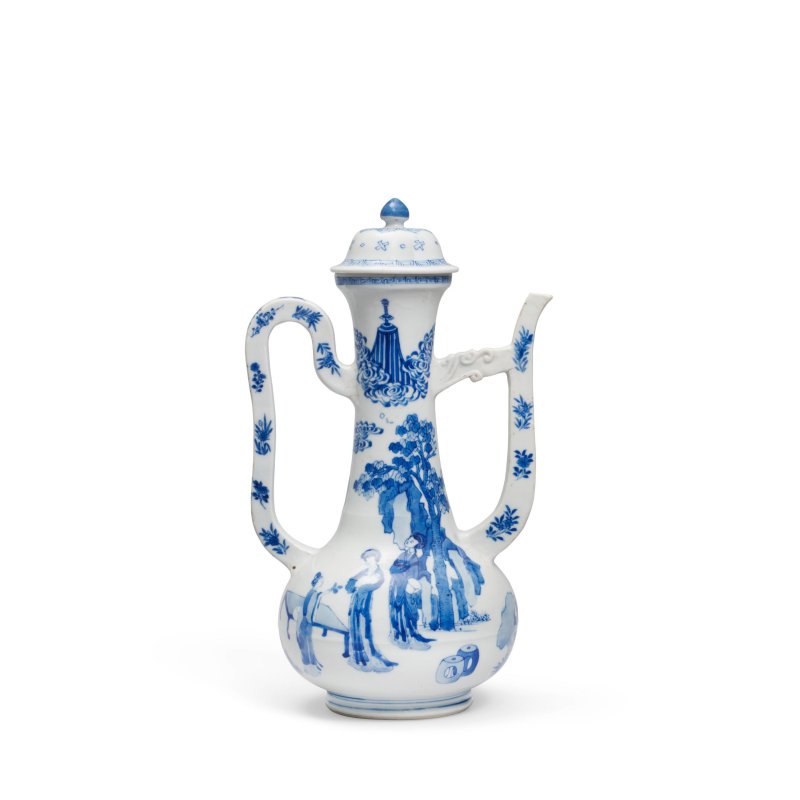
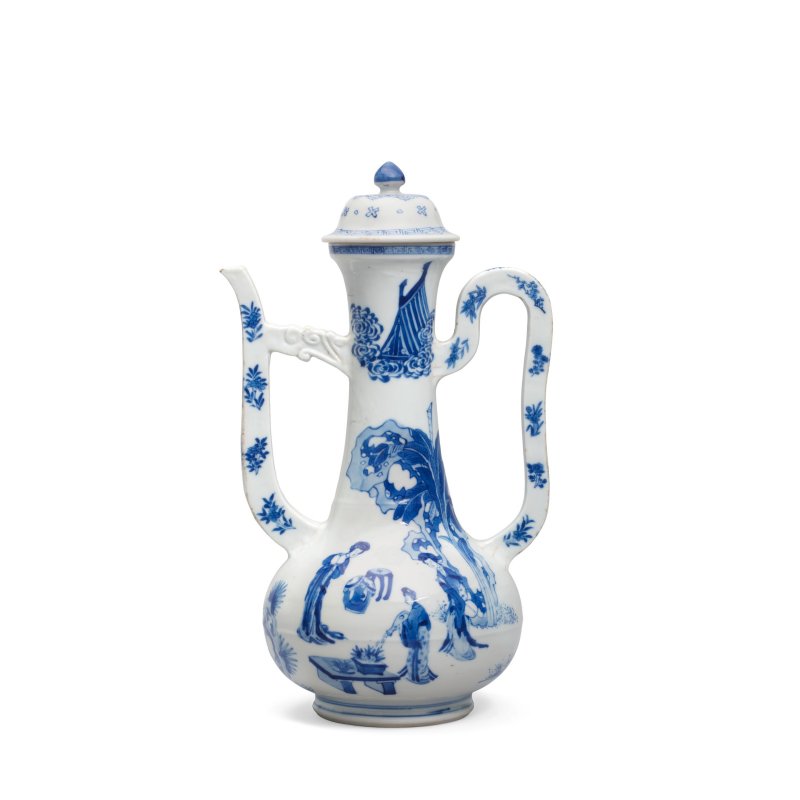
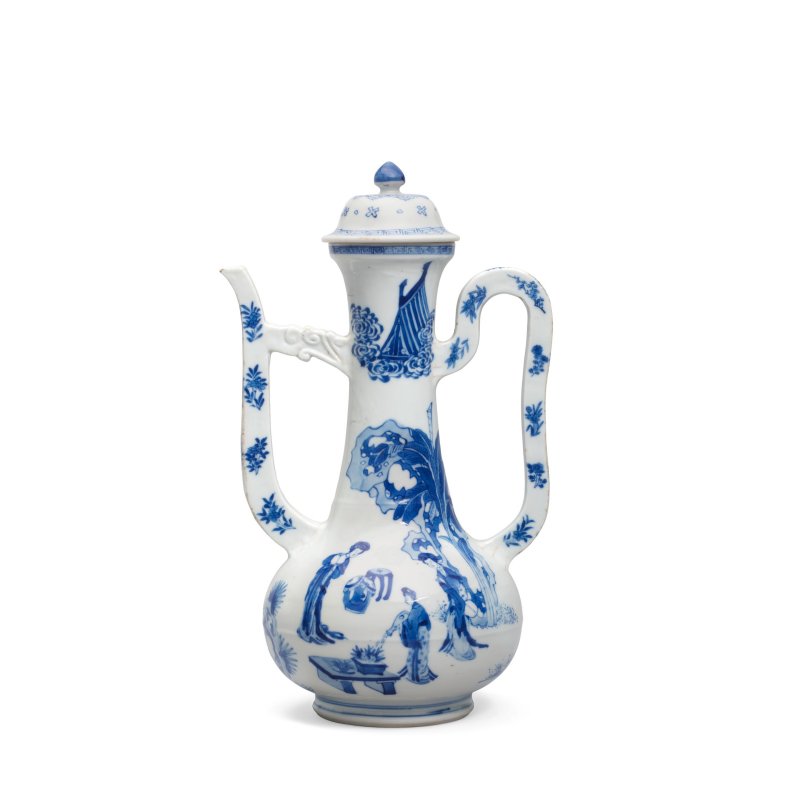
清康熙 青花蟾宮折桂圖執壺 | A RARE BLUE AND WHITE 'CHANG'E HOLDING THE MOON RABBIT' EWER AND COVER
年代
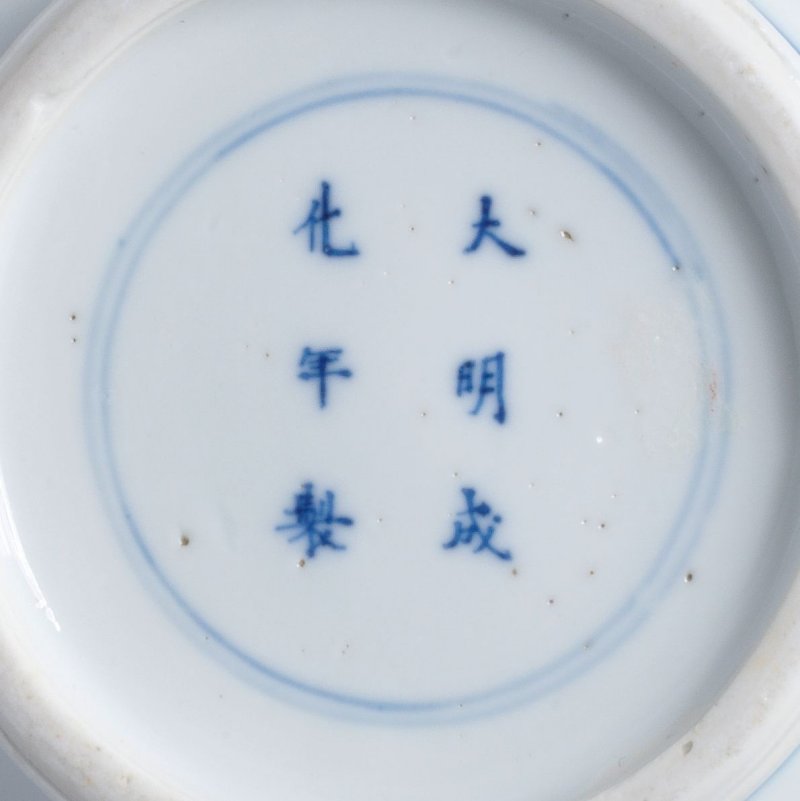
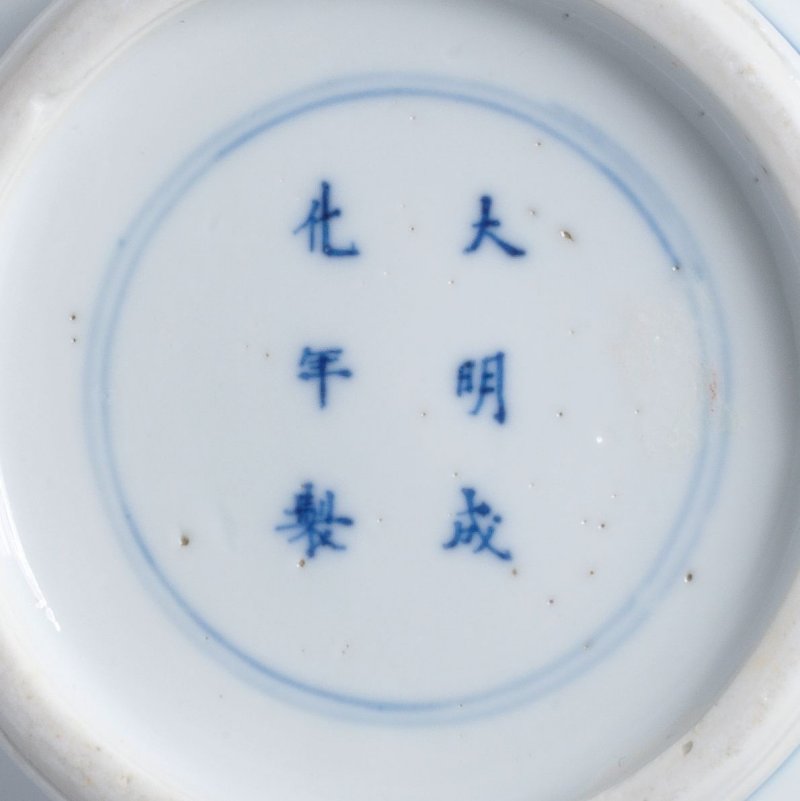
Chenghua six-character mark, Kangxi
起拍价
GBP 12,000
估值区间
GBP 12000 - 15000
尺寸
未知
品相
未知
更多信息
Chenghua six-character mark, Kangxi
Elegantly potted with a compressed globular body rising from a short spreading foot to a tall, waisted cylindrical neck and galleried mouth rim, applied with a long handle and curving spout joined to the neck by a stylised mythical-beast head, decorated in vibrant tones of cobalt-blue with Chang'e, the Goddess of the Moon, holding a rabbit within garden setting with rocks and wutong trees, and several elegant ladies watering plants, the domed cover surmounted by a lotus-bud finial. 27.5cm (10 7/8in) high. (2).
Footnotes
清康熙 青花蟾宮折桂圖執壺
青花「大明成化年製」楷書款
Provenance: William Howard Palmer (1865-1923) and Ada Morgan Palmer (1870-1953), Heathlands, Wokingham, Berkshire; acquired prior to 1909
Reginald Howard Reed Palmer (1898-1970), Bussock Wood House, Berkshire (inherited in 1953); and thence by descent
Published and Illustrated: J.F.Blacker, Chats on Oriental China, London, 1908, pp.188-189
William Howard Palmer (1865-1923)及Ada Morgan Palmer (1870-1953)伉儷,沃金厄姆,伯克郡,獲得于1909年前
Reginald Howard Reed Palmer (1898-1970), Bussock Wood別墅,伯克郡(繼承于1953年),並由後人保存迄今
J.F.Blacker,《Chats on Oriental China》,倫敦,1908年,第188-189頁
The Palmer family were the founders of Huntley & Palmers, the Reading biscuit manufacturers, and assembled an important collection of Chinese art. The collection was begun by William Howard Palmer (1865–1923) and his wife Ada (1870–1953) at their home, Heathlands, near Wokingham, and passed to their only son, Reginald Howard Reed Palmer (1898–1970). Reginald and his wife Lena (1900–1981) subsequently added the greatest number of pieces to the collection, acquiring extensively from leading London dealers including John Sparks, Bluett & Sons, H.R.N. Norton, Spink & Son and Mallett. Reginald was an early member of the Oriental Ceramics Society, and the collection was widely exhibited and published, including in the Oriental Ceramics Society's exhibitions of Chinese Jades in 1948 and Enamelled Polychrome Porcelain of the Manchu Dynasty in 1951, and the Ashmolean Museum's exhibition of Chinese Painted Enamels in 1978.
The present lot depicts Chang'e (嫦娥), the Chinese goddess of the Moon, holding the Jade Rabbit (玉兔), one of the most enduring figures in Chinese mythology. According to legend, Chang'e attained Immortality after consuming the elixir of life and ascended to the Moon, where she resides in the Moon Palace. Accompanying her is the Jade Rabbit, her faithful companion, who is traditionally shown pounding the ingredients for the elixir of Immortality with a mortar and pestle. Together, Chang'e and the Jade Rabbit became powerful symbols of the Moon, Immortality, and longevity, particularly celebrated during the Mid-Autumn Festival. Their appearance on porcelain conveys auspicious wishes for long life, harmony, and transcendence, while also evoking one of the best-loved legends in Chinese cultural tradition. The present lot may have been used during the Mid-Autumn moon festival when osmanthus wine was traditionally consumed.
Compare with a related blue and white ewer and cover, Kangxi, decorated with scenes from the , illustrated in , Hong Kong, 1998, p.76, no.49.
Elegantly potted with a compressed globular body rising from a short spreading foot to a tall, waisted cylindrical neck and galleried mouth rim, applied with a long handle and curving spout joined to the neck by a stylised mythical-beast head, decorated in vibrant tones of cobalt-blue with Chang'e, the Goddess of the Moon, holding a rabbit within garden setting with rocks and wutong trees, and several elegant ladies watering plants, the domed cover surmounted by a lotus-bud finial. 27.5cm (10 7/8in) high. (2).
Footnotes
清康熙 青花蟾宮折桂圖執壺
青花「大明成化年製」楷書款
Provenance: William Howard Palmer (1865-1923) and Ada Morgan Palmer (1870-1953), Heathlands, Wokingham, Berkshire; acquired prior to 1909
Reginald Howard Reed Palmer (1898-1970), Bussock Wood House, Berkshire (inherited in 1953); and thence by descent
Published and Illustrated: J.F.Blacker, Chats on Oriental China, London, 1908, pp.188-189
William Howard Palmer (1865-1923)及Ada Morgan Palmer (1870-1953)伉儷,沃金厄姆,伯克郡,獲得于1909年前
Reginald Howard Reed Palmer (1898-1970), Bussock Wood別墅,伯克郡(繼承于1953年),並由後人保存迄今
J.F.Blacker,《Chats on Oriental China》,倫敦,1908年,第188-189頁
The Palmer family were the founders of Huntley & Palmers, the Reading biscuit manufacturers, and assembled an important collection of Chinese art. The collection was begun by William Howard Palmer (1865–1923) and his wife Ada (1870–1953) at their home, Heathlands, near Wokingham, and passed to their only son, Reginald Howard Reed Palmer (1898–1970). Reginald and his wife Lena (1900–1981) subsequently added the greatest number of pieces to the collection, acquiring extensively from leading London dealers including John Sparks, Bluett & Sons, H.R.N. Norton, Spink & Son and Mallett. Reginald was an early member of the Oriental Ceramics Society, and the collection was widely exhibited and published, including in the Oriental Ceramics Society's exhibitions of Chinese Jades in 1948 and Enamelled Polychrome Porcelain of the Manchu Dynasty in 1951, and the Ashmolean Museum's exhibition of Chinese Painted Enamels in 1978.
The present lot depicts Chang'e (嫦娥), the Chinese goddess of the Moon, holding the Jade Rabbit (玉兔), one of the most enduring figures in Chinese mythology. According to legend, Chang'e attained Immortality after consuming the elixir of life and ascended to the Moon, where she resides in the Moon Palace. Accompanying her is the Jade Rabbit, her faithful companion, who is traditionally shown pounding the ingredients for the elixir of Immortality with a mortar and pestle. Together, Chang'e and the Jade Rabbit became powerful symbols of the Moon, Immortality, and longevity, particularly celebrated during the Mid-Autumn Festival. Their appearance on porcelain conveys auspicious wishes for long life, harmony, and transcendence, while also evoking one of the best-loved legends in Chinese cultural tradition. The present lot may have been used during the Mid-Autumn moon festival when osmanthus wine was traditionally consumed.
Compare with a related blue and white ewer and cover, Kangxi, decorated with scenes from the , illustrated in , Hong Kong, 1998, p.76, no.49.
常见问题
这件清康熙 青花蟾宮折桂圖執壺 | A RARE BLUE AND WHITE 'CHANG'E HOLDING THE MOON RABBIT' EWER AND COVER的成交价是多少?
落槌价为 预展中。 成交价为 预展中。


