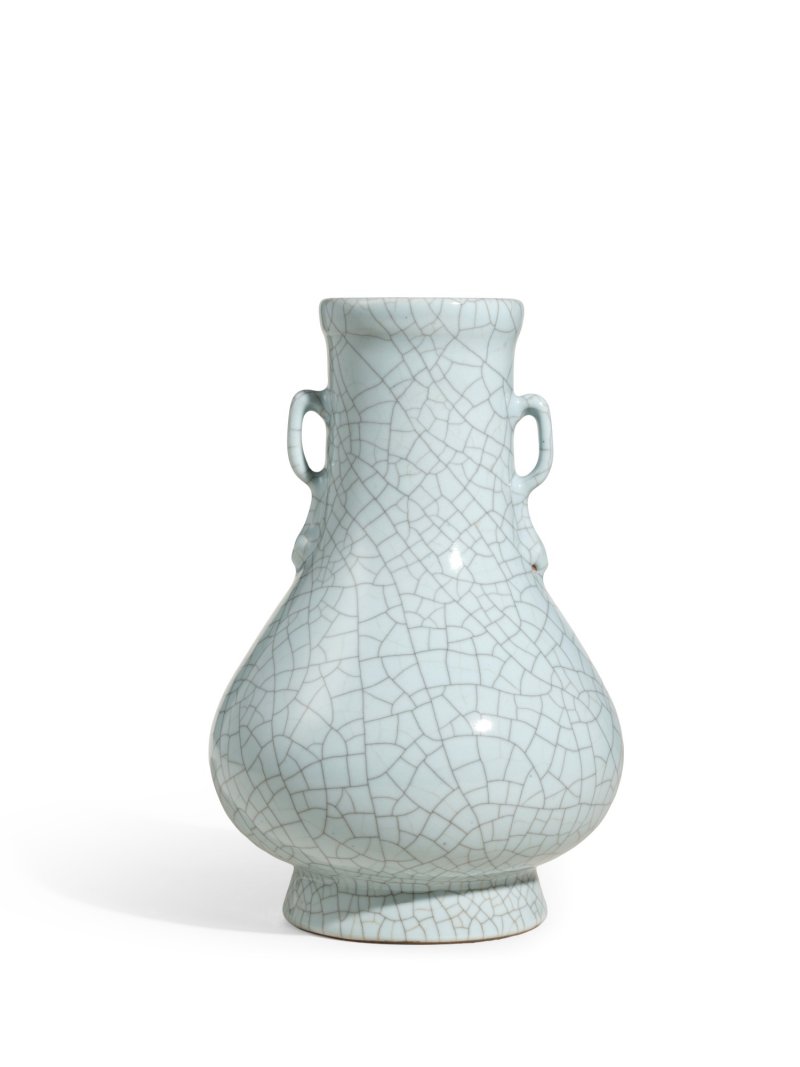

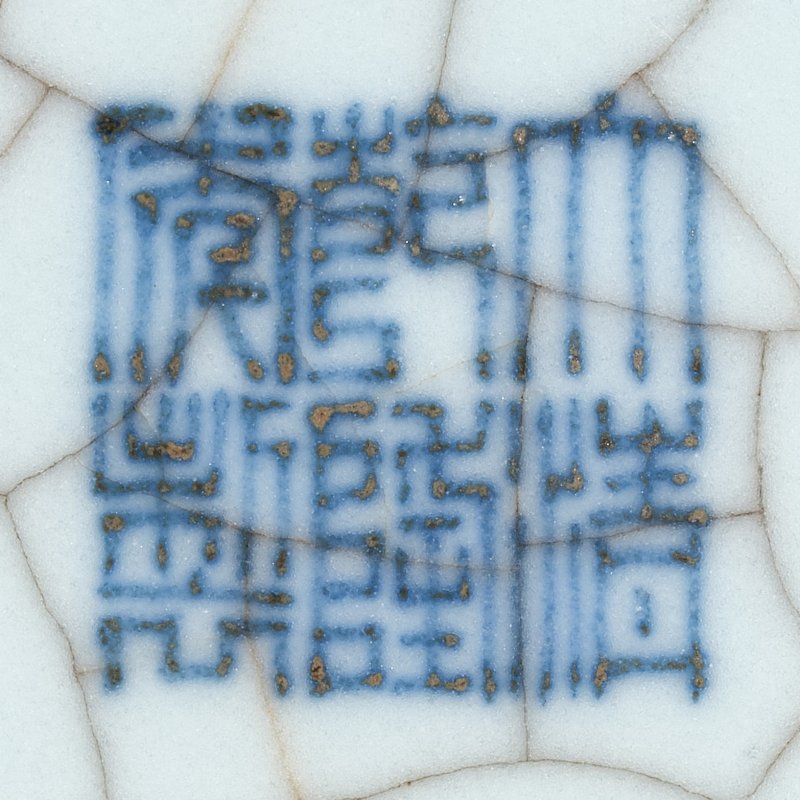
Lot 2052 A fine and rare Ge-type hu-form vase, Seal mark and period of Qianlong | 清乾隆 仿哥釉綬帶如意耳壺 《大清乾隆年製》款
落槌价
****
成交价
****
拍品信息
拍品名称
A fine and rare Ge-type hu-form vase, Seal mark and period of Qianlong | 清乾隆 仿哥釉綬帶如意耳壺 《大清乾隆年製》款
起拍价
HKD 1,000,000
估值区间
1,000,000 - 3,000,000 HKD
尺寸
未知
品相
Fine overall condition, with only a few minute insignificant glaze pulls to the handles.
整體品相佳。僅於雙耳見數點細小縮釉。
If a condition report is provided to assist you with assessing the condition of the lot, it is for guidance purposes only. Such condition report may not refer to all faults, restoration, alterations, or adaptations because Sotheby's is not a professional conservator or restorer but rather a condition report is a statement of subjective, qualified opinion genuinely held by Sotheby's. For these reasons, any such condition report is not an alternative to taking your own professional advice regarding the condition of the lot. Prospective buyers should also refer to the Guide for Buyers at Auction which includes important notices concerning the type of property in this sale.
整體品相佳。僅於雙耳見數點細小縮釉。
If a condition report is provided to assist you with assessing the condition of the lot, it is for guidance purposes only. Such condition report may not refer to all faults, restoration, alterations, or adaptations because Sotheby's is not a professional conservator or restorer but rather a condition report is a statement of subjective, qualified opinion genuinely held by Sotheby's. For these reasons, any such condition report is not an alternative to taking your own professional advice regarding the condition of the lot. Prospective buyers should also refer to the Guide for Buyers at Auction which includes important notices concerning the type of property in this sale.
更多信息
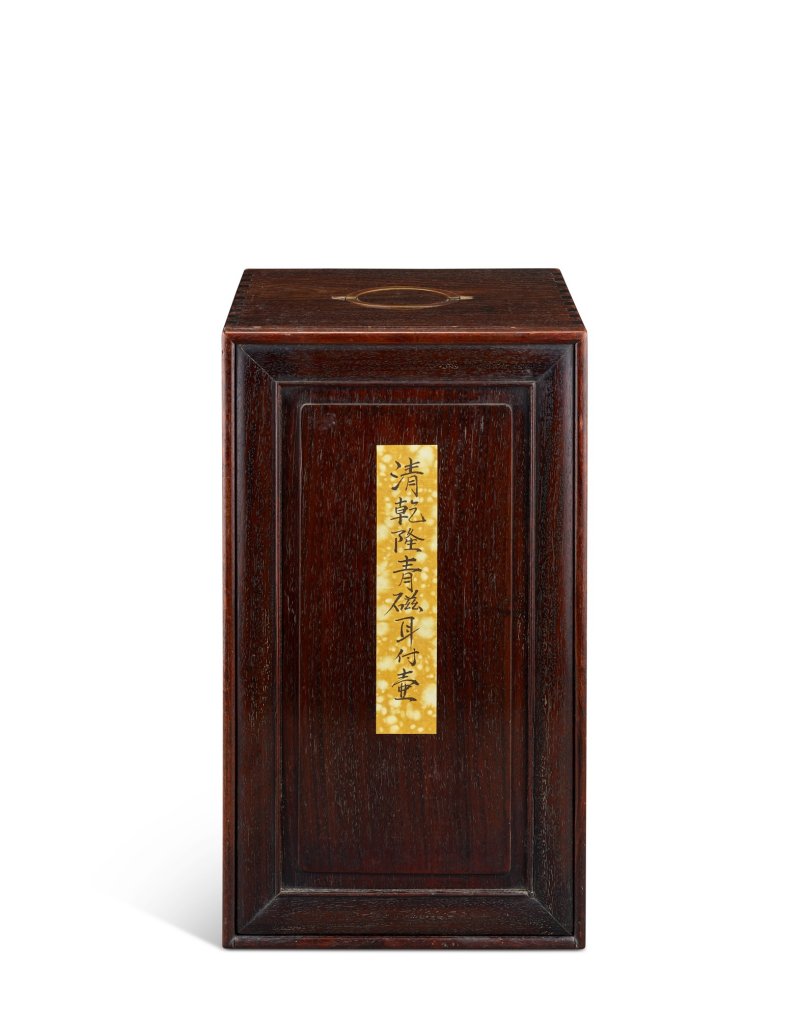
wood stand and Japanese wood box
28.3 cm
来源:Kochukyo Co., Ltd, Tokyo.
图录
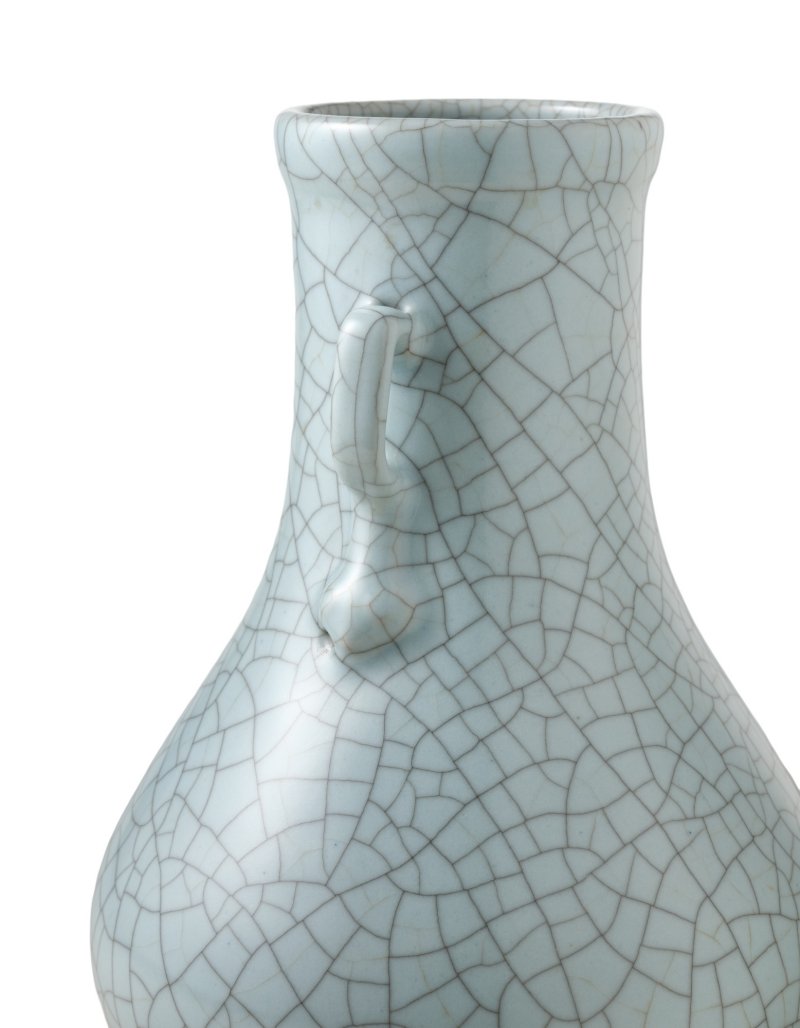
说明:The current vase, with its outstanding crackled ge-type glaze and skilful incorporation of the tassel handles, is an exceptional example of not only the Qianlong Emperor’s predilection for celebrated wares of the past—in particular the imperial wares of the Song dynasty (960-1279) and the Yongle – Xuande reigns (1403-1435) of the Ming dynasty—but also the technical developments in ceramic production as well as the creativity and level of innovation of the craftsmen working under the supervision of Tang Ying (1682-1756), Superintendent of the Imperial kilns in Jingdezhen. Under the rigorous standards that the Emperor upheld, craftsmen were prompted to search for and realise ever new designs that enabled them to showcase their technical proficiency and ability to hark back to antiquity.
The form of the vase also reflects elements borrowed from archaic bronze vessels, and the even glaze marked with an attractive matrix crackles was also inspired by the celebrated ge wares of the Song and Yuan (1279-1368) dynasties. In addition to the crackles, these archaistic vessels were dressed on the unglazed bodies with a dark brown slip, as seen on the footring of the present vase, to simulate the so-called 'iron foot' characteristic of the stoneware prototypes.
See a similar but shorter (25.7 cm) pear-shaped vase sold at Christie's Hong Kong, 29th April 2002, lot 664. For a related and relatively more commonly seen ge-type Qianlong vase, also decorated with tassel handles but potted with a different form, see one sold first in our London rooms, 12th July 2006, lot 134, and again in our New York rooms, 16th September 2009, lot 217.
來源
壺中居,東京
壺滿施仿哥釉,開片細密勻稱,巧妙飾以綬帶耳。乾隆帝以前朝名窰慕古而創新,尤以宋代(960-1279年)御窰及明代永樂至宣德時期(1403-1435年)之佳器為甚。此類作品也反映出景德鎮御窰廠督陶官唐英(1682-1756年)治下,製瓷技術之發展以及工匠之巧思與創新水平。在皇帝嚴苛之標準下,御窰廠不斷探索並實現嶄新設計,藉此展現其精湛技藝與好古之能。
此壺器形亦借鑒了古代青銅器之元素,釉面瑩潤勻淨,開片紋理迷人,其靈感源自宋元(1279-1368年)時期著名之哥窰。除開片之外,此類仿古器物之無釉胎體上更塗有一層深褐色護胎釉,如本品之圈足所示,以仿效宋代原器中標誌性的「鐵足」特徵。
參考一件相似但尺寸較小(25.7公分)之梨形瓶,售於香港佳士得2002年4月29日,編號664。另可參考一件相關且較為常見之乾隆仿哥釉瓶,同飾綬帶耳但器形不同,先後售於本行倫敦拍場2006年7月12日,編號134,以及本行紐約拍場2009年9月16日,編號217。
28.3 cm
来源:Kochukyo Co., Ltd, Tokyo.
图录
说明:The current vase, with its outstanding crackled ge-type glaze and skilful incorporation of the tassel handles, is an exceptional example of not only the Qianlong Emperor’s predilection for celebrated wares of the past—in particular the imperial wares of the Song dynasty (960-1279) and the Yongle – Xuande reigns (1403-1435) of the Ming dynasty—but also the technical developments in ceramic production as well as the creativity and level of innovation of the craftsmen working under the supervision of Tang Ying (1682-1756), Superintendent of the Imperial kilns in Jingdezhen. Under the rigorous standards that the Emperor upheld, craftsmen were prompted to search for and realise ever new designs that enabled them to showcase their technical proficiency and ability to hark back to antiquity.
The form of the vase also reflects elements borrowed from archaic bronze vessels, and the even glaze marked with an attractive matrix crackles was also inspired by the celebrated ge wares of the Song and Yuan (1279-1368) dynasties. In addition to the crackles, these archaistic vessels were dressed on the unglazed bodies with a dark brown slip, as seen on the footring of the present vase, to simulate the so-called 'iron foot' characteristic of the stoneware prototypes.
See a similar but shorter (25.7 cm) pear-shaped vase sold at Christie's Hong Kong, 29th April 2002, lot 664. For a related and relatively more commonly seen ge-type Qianlong vase, also decorated with tassel handles but potted with a different form, see one sold first in our London rooms, 12th July 2006, lot 134, and again in our New York rooms, 16th September 2009, lot 217.
來源
壺中居,東京
壺滿施仿哥釉,開片細密勻稱,巧妙飾以綬帶耳。乾隆帝以前朝名窰慕古而創新,尤以宋代(960-1279年)御窰及明代永樂至宣德時期(1403-1435年)之佳器為甚。此類作品也反映出景德鎮御窰廠督陶官唐英(1682-1756年)治下,製瓷技術之發展以及工匠之巧思與創新水平。在皇帝嚴苛之標準下,御窰廠不斷探索並實現嶄新設計,藉此展現其精湛技藝與好古之能。
此壺器形亦借鑒了古代青銅器之元素,釉面瑩潤勻淨,開片紋理迷人,其靈感源自宋元(1279-1368年)時期著名之哥窰。除開片之外,此類仿古器物之無釉胎體上更塗有一層深褐色護胎釉,如本品之圈足所示,以仿效宋代原器中標誌性的「鐵足」特徵。
參考一件相似但尺寸較小(25.7公分)之梨形瓶,售於香港佳士得2002年4月29日,編號664。另可參考一件相關且較為常見之乾隆仿哥釉瓶,同飾綬帶耳但器形不同,先後售於本行倫敦拍場2006年7月12日,編號134,以及本行紐約拍場2009年9月16日,編號217。
常见问题
拍品的品相状况如何?
Fine overall condition, with only a few minute insignificant glaze pulls to the handles.
整體品相佳。僅於雙耳見數點細小縮釉。
If a condition report is provided to assist you with assessing the condition of the lot, it is for guidance purposes only. Such condition report may not refer to all faults, restoration, alterations, or adaptations because Sotheby's is not a professional conservator or restorer but rather a condition report is a statement of subjective, qualified opinion genuinely held by Sotheby's. For these reasons, any such condition report is not an alternative to taking your own professional advice regarding the condition of the lot. Prospective buyers should also refer to the Guide for Buyers at Auction which includes important notices concerning the type of property in this sale.
整體品相佳。僅於雙耳見數點細小縮釉。
If a condition report is provided to assist you with assessing the condition of the lot, it is for guidance purposes only. Such condition report may not refer to all faults, restoration, alterations, or adaptations because Sotheby's is not a professional conservator or restorer but rather a condition report is a statement of subjective, qualified opinion genuinely held by Sotheby's. For these reasons, any such condition report is not an alternative to taking your own professional advice regarding the condition of the lot. Prospective buyers should also refer to the Guide for Buyers at Auction which includes important notices concerning the type of property in this sale.
这件拍品的流传来源是什么?
Kochukyo Co., Ltd, Tokyo.
图录
图录