

Lot 15 清順治 青花五彩詩文香薰 | A VERY RARE WUCAI BEEHIVE-SHAPED INCENSE BURNER
落槌价
预展中
成交价
预展中
| 拍卖公司 | 邦瀚斯 |
|---|---|
| 拍卖时间 | 2026年11月05日 |
拍品信息
拍品名称
清順治 青花五彩詩文香薰 | A VERY RARE WUCAI BEEHIVE-SHAPED INCENSE BURNER
年代
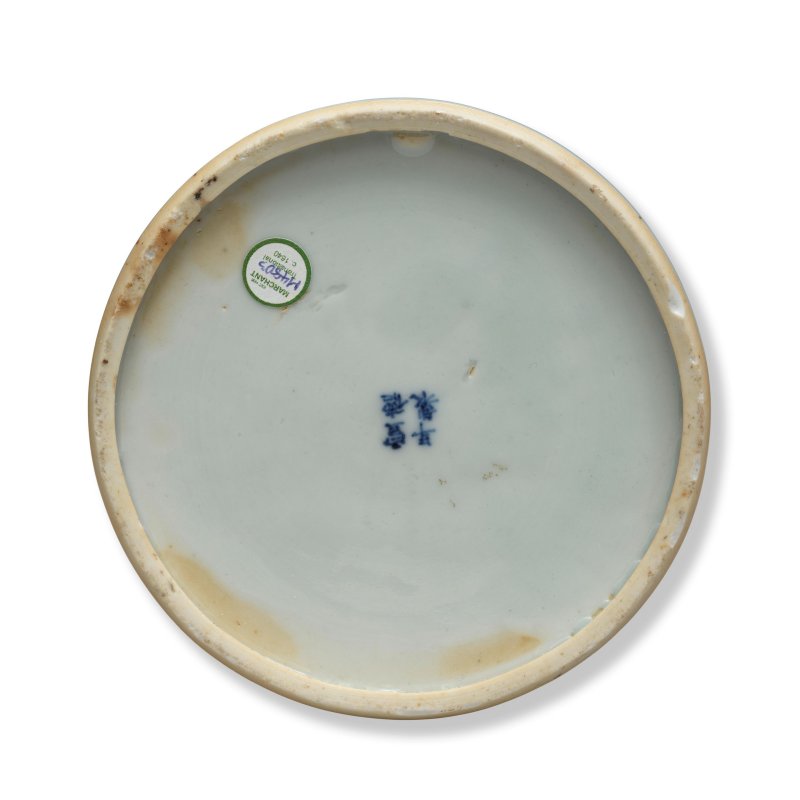
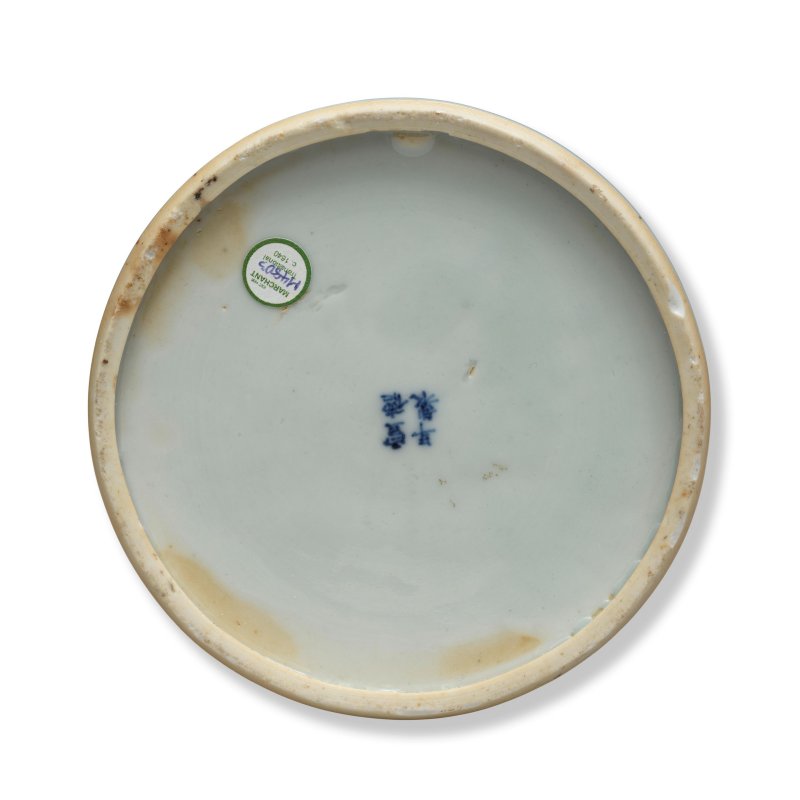
Xuande four-character mark, Shunzhi
起拍价
GBP 25,000
估值区间
GBP 25000 - 35000
尺寸
未知
品相
未知
更多信息
Xuande four-character mark, Shunzhi
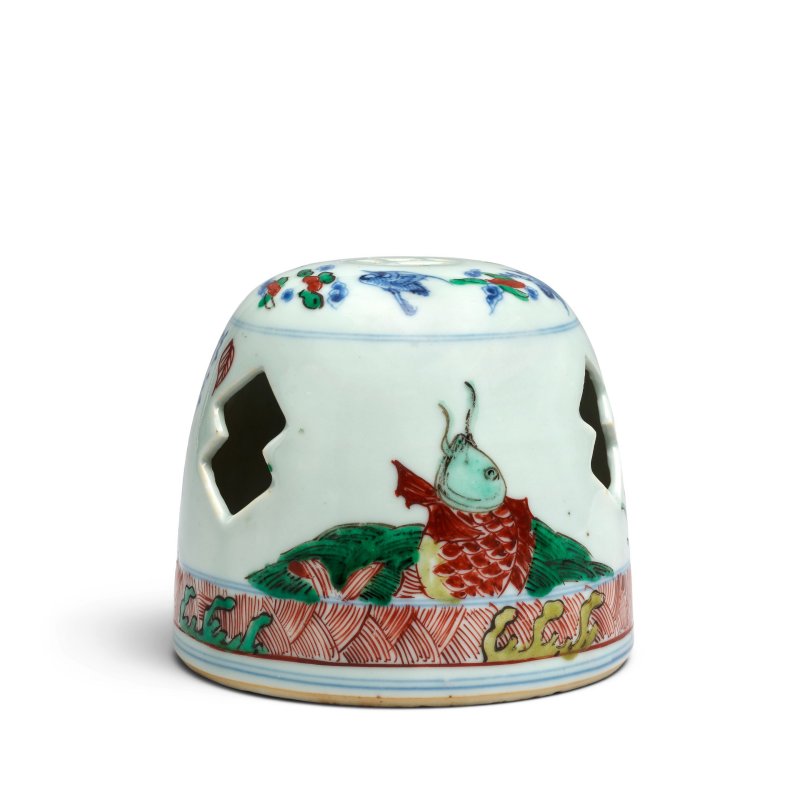
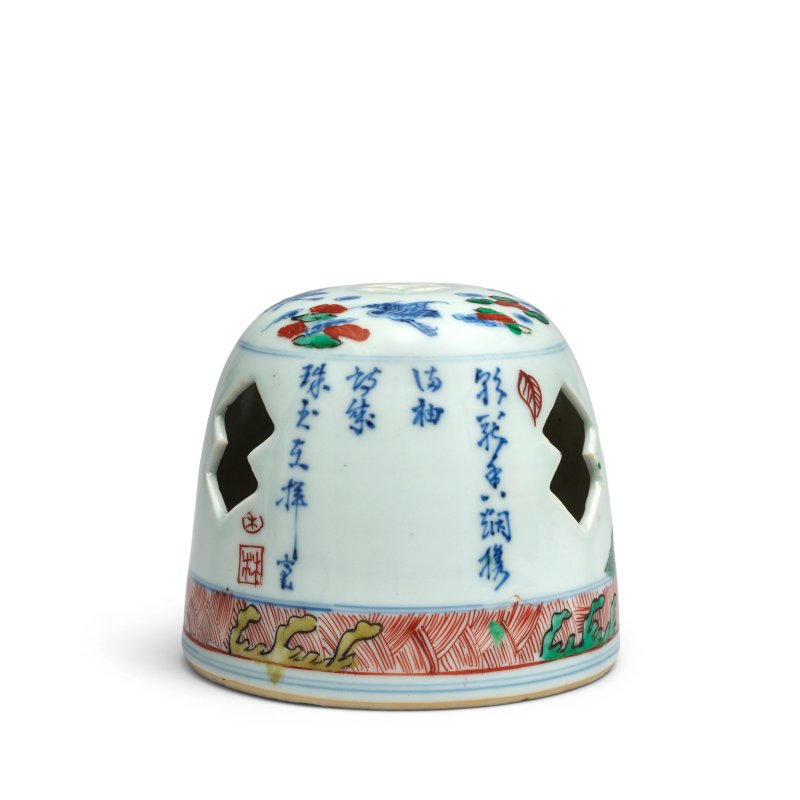
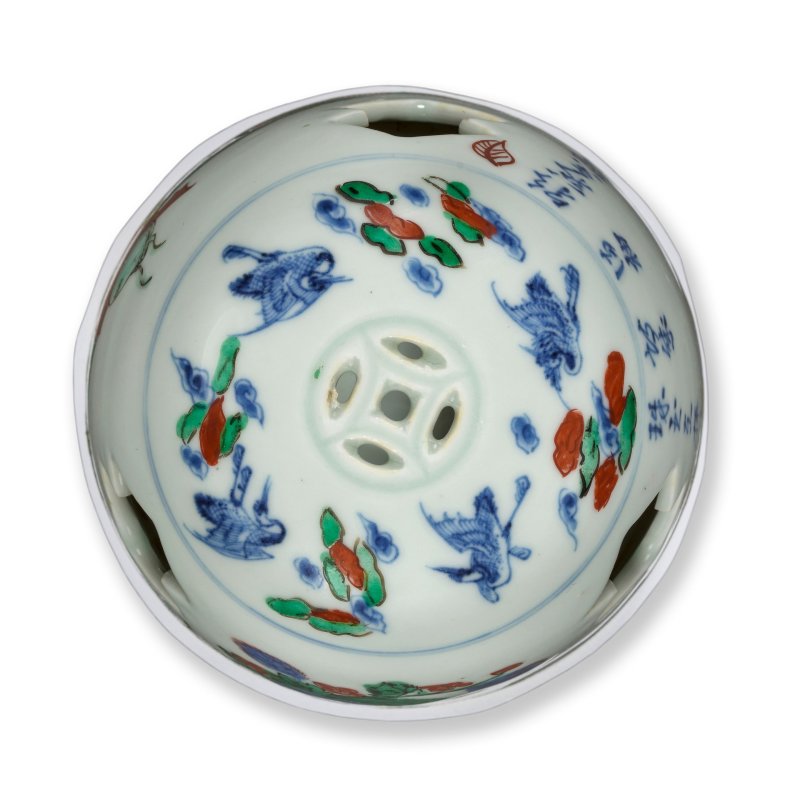
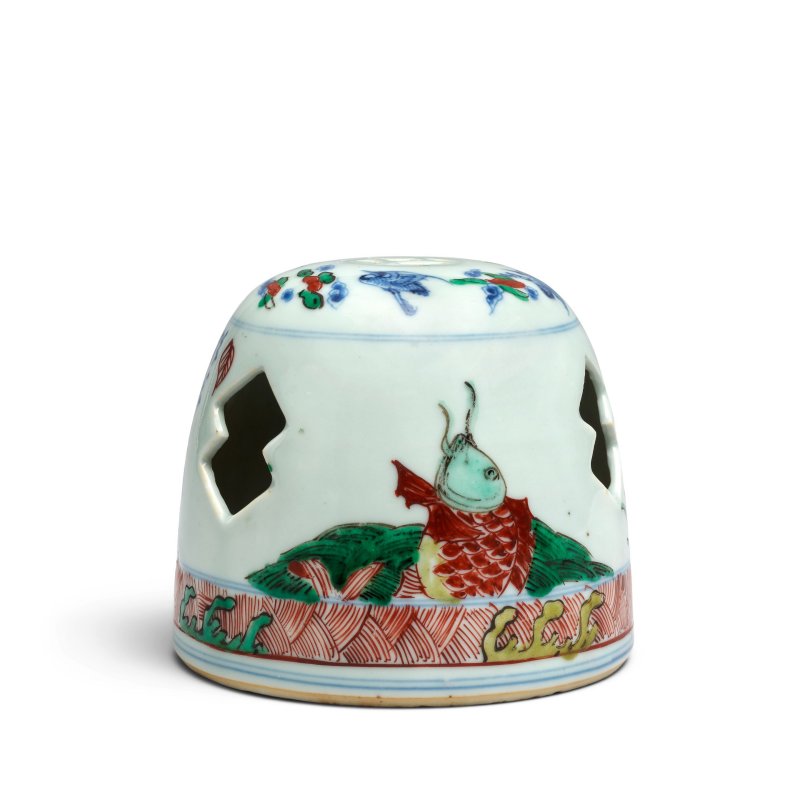
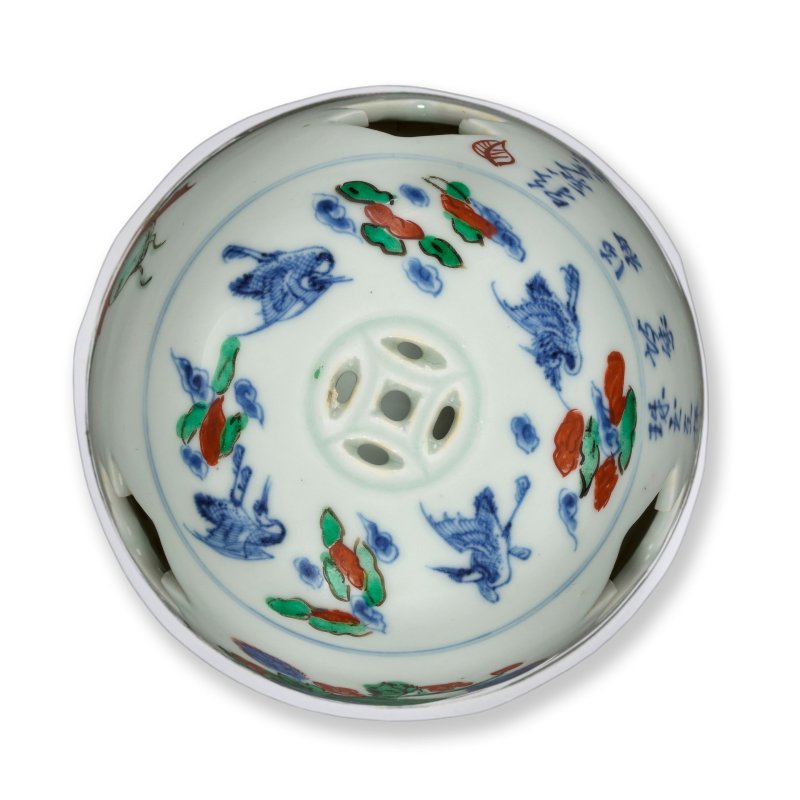
Finely potted of hollow domed form, the sides pierced with three lozenge-shaped panels and the top with a stylised cash-coin aperture, brightly enamelled around the exterior with a fish emerging from waves, a floral spray and a calligraphic inscription above a band of iron-red waves, the domed top decorated in cobalt blue with four cranes amidst ruyi-clouds. 11.4cm (5 1/2in) diam.
Footnotes
清順治 青花五彩詩文香薰
青花「宣德年製」楷書款
款識:朝罷香煙攜滿袖,詩成珠玉在揮毫
印:木 林
Provenance:
Nelson Aldrich Rockefeller (1908-1979), Vice President of the United States of America (December 1974 - January 1977) and Margaretta Large 'Happy' Rockefeller (1926-2015)
Sotheby's New York, Rockefeller - A Collecting Legacy, 18 January 2019, lot 486
Marchant, London
Acquired from the above on 7 February 2020
Nelson Aldrich Rockefeller (1908-1979),美國副總統(1974年12月-1977年1月)及Margaretta Large 'Happy' Rockefeller (1926-2015)
紐約蘇富比,"Rockefeller - A Collecting Legacy",2019年1月18日,拍品編號486
倫敦古董商馬錢特
從上處獲得于2020年2月7日
Nelson Aldrich Rockefeller (1908–1979) was an American politician, businessman, and member of the Rockefeller family, who served as Vice President of the United States from 1974 to 1977 under President Gerald Ford, having previously been Governor of New York (1959–1973) and a major advocate for public infrastructure and cultural patronage, particularly in the field of modern art. His wife, Margaretta Large 'Happy' Rockefeller (1926–2015), was a social figure and philanthropist active in civic and charitable work, and together they were a prominent couple in American political and cultural life during the mid-20th century.
The present lot is extremely rare. A related incense burner, circa 1670–1680, is illustrated by J.B.Curtis, , New York, 1995, pp.106–107, no.37, where the author notes that 'the only other incense burner of this type is in the British Museum, London (from the collection of Sir Augustus Wollaston Franks (1826-1897); acc.no.Franks.1347.+; described as a 'fire holder').
The inscription, followed by the seals reading and , quotes a well-known couplet associated with the Tang dynasty poet Du Fu (712–770), evoking the refined atmosphere of Court life at the imperial palace, in Chang'an. The verse reads:
朝罷香煙攜滿袖,詩成珠玉在揮毫
Which may be translated as:
The imagery expresses the sensory richness and ritualised elegance of the Tang Imperial Court, where the lingering fragrance of incense evokes the sacred and ceremonial space of governance, making the verse particularly apt for inscription on an incense burner. In the act of poetic composition, literary creation is elevated to something materially precious, the finished poem likened to pearls and jade brought forth through the movement of the calligraphic brush. The couplet thus encapsulates the ideal of the cultured official-poet, in which governance, ritual refinement, and literary accomplishment are seamlessly united.
As suggested by the poetic imagery, the domed form may further be understood in relation to the practice of fumigating and scenting garments, frequently described in domestic contexts in (). In such passages, interiors are permeated with fragrant smoke, while garments and bedding are warmed and imbued with scent within enclosed structures designed to contain heat and protect textiles from direct exposure to flame. The present form may therefore be associated with similar practices of scenting, warming, and ritual refinement within elite domestic life.
Finely potted of hollow domed form, the sides pierced with three lozenge-shaped panels and the top with a stylised cash-coin aperture, brightly enamelled around the exterior with a fish emerging from waves, a floral spray and a calligraphic inscription above a band of iron-red waves, the domed top decorated in cobalt blue with four cranes amidst ruyi-clouds. 11.4cm (5 1/2in) diam.
Footnotes
清順治 青花五彩詩文香薰
青花「宣德年製」楷書款
款識:朝罷香煙攜滿袖,詩成珠玉在揮毫
印:木 林
Provenance:
Nelson Aldrich Rockefeller (1908-1979), Vice President of the United States of America (December 1974 - January 1977) and Margaretta Large 'Happy' Rockefeller (1926-2015)
Sotheby's New York, Rockefeller - A Collecting Legacy, 18 January 2019, lot 486
Marchant, London
Acquired from the above on 7 February 2020
Nelson Aldrich Rockefeller (1908-1979),美國副總統(1974年12月-1977年1月)及Margaretta Large 'Happy' Rockefeller (1926-2015)
紐約蘇富比,"Rockefeller - A Collecting Legacy",2019年1月18日,拍品編號486
倫敦古董商馬錢特
從上處獲得于2020年2月7日
Nelson Aldrich Rockefeller (1908–1979) was an American politician, businessman, and member of the Rockefeller family, who served as Vice President of the United States from 1974 to 1977 under President Gerald Ford, having previously been Governor of New York (1959–1973) and a major advocate for public infrastructure and cultural patronage, particularly in the field of modern art. His wife, Margaretta Large 'Happy' Rockefeller (1926–2015), was a social figure and philanthropist active in civic and charitable work, and together they were a prominent couple in American political and cultural life during the mid-20th century.
The present lot is extremely rare. A related incense burner, circa 1670–1680, is illustrated by J.B.Curtis, , New York, 1995, pp.106–107, no.37, where the author notes that 'the only other incense burner of this type is in the British Museum, London (from the collection of Sir Augustus Wollaston Franks (1826-1897); acc.no.Franks.1347.+; described as a 'fire holder').
The inscription, followed by the seals reading and , quotes a well-known couplet associated with the Tang dynasty poet Du Fu (712–770), evoking the refined atmosphere of Court life at the imperial palace, in Chang'an. The verse reads:
朝罷香煙攜滿袖,詩成珠玉在揮毫
Which may be translated as:
The imagery expresses the sensory richness and ritualised elegance of the Tang Imperial Court, where the lingering fragrance of incense evokes the sacred and ceremonial space of governance, making the verse particularly apt for inscription on an incense burner. In the act of poetic composition, literary creation is elevated to something materially precious, the finished poem likened to pearls and jade brought forth through the movement of the calligraphic brush. The couplet thus encapsulates the ideal of the cultured official-poet, in which governance, ritual refinement, and literary accomplishment are seamlessly united.
As suggested by the poetic imagery, the domed form may further be understood in relation to the practice of fumigating and scenting garments, frequently described in domestic contexts in (). In such passages, interiors are permeated with fragrant smoke, while garments and bedding are warmed and imbued with scent within enclosed structures designed to contain heat and protect textiles from direct exposure to flame. The present form may therefore be associated with similar practices of scenting, warming, and ritual refinement within elite domestic life.
常见问题
这件清順治 青花五彩詩文香薰 | A VERY RARE WUCAI BEEHIVE-SHAPED INCENSE BURNER的成交价是多少?
落槌价为 预展中。 成交价为 预展中。