
Lot 39 佛像 | A large Chinese Buddhist hanging scroll depicting Amitābha Buddha, 佛像
落槌价
****
成交价
****
拍品信息
拍品名称
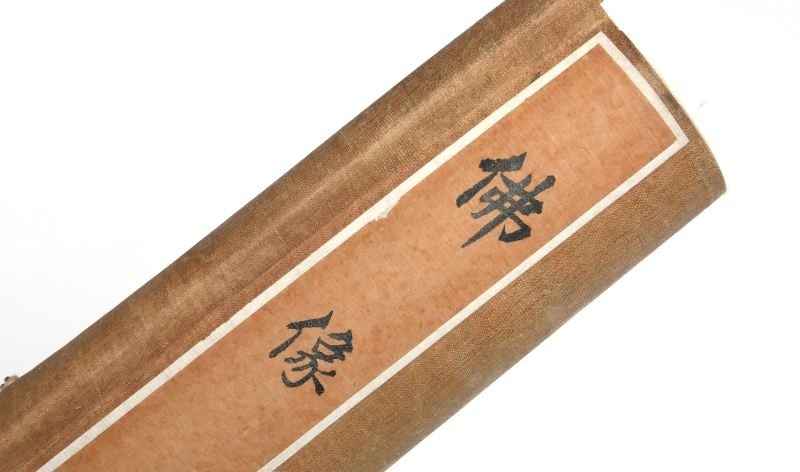
佛像 | A large Chinese Buddhist hanging scroll depicting Amitābha Buddha, 佛像
年代
China, late Ming to early Qing Dynasty, 17th–early 18th century
起拍价
EUR 7,000
估值区间
€7,000 - €9,000
尺寸
Image size: 119.1 x 63.4 cm (including frame: 164.4 x 85.9 cm)
品相
未知
更多信息
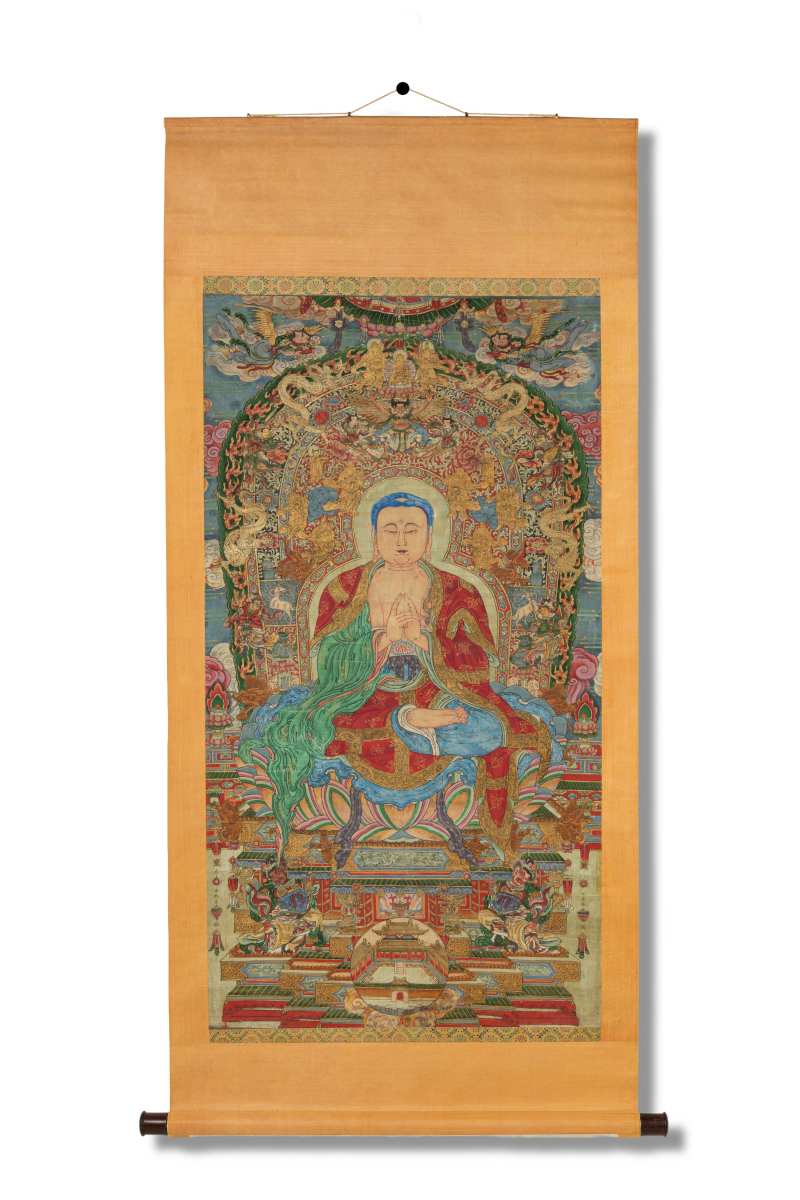
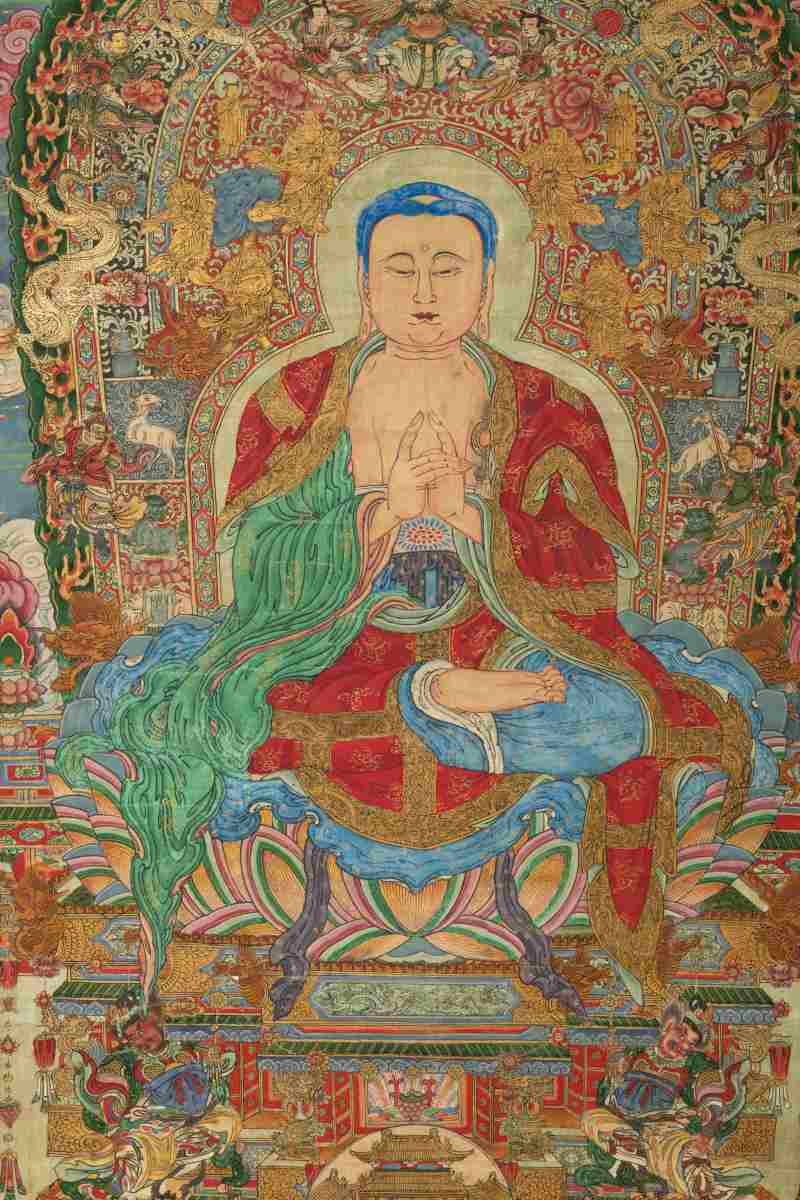
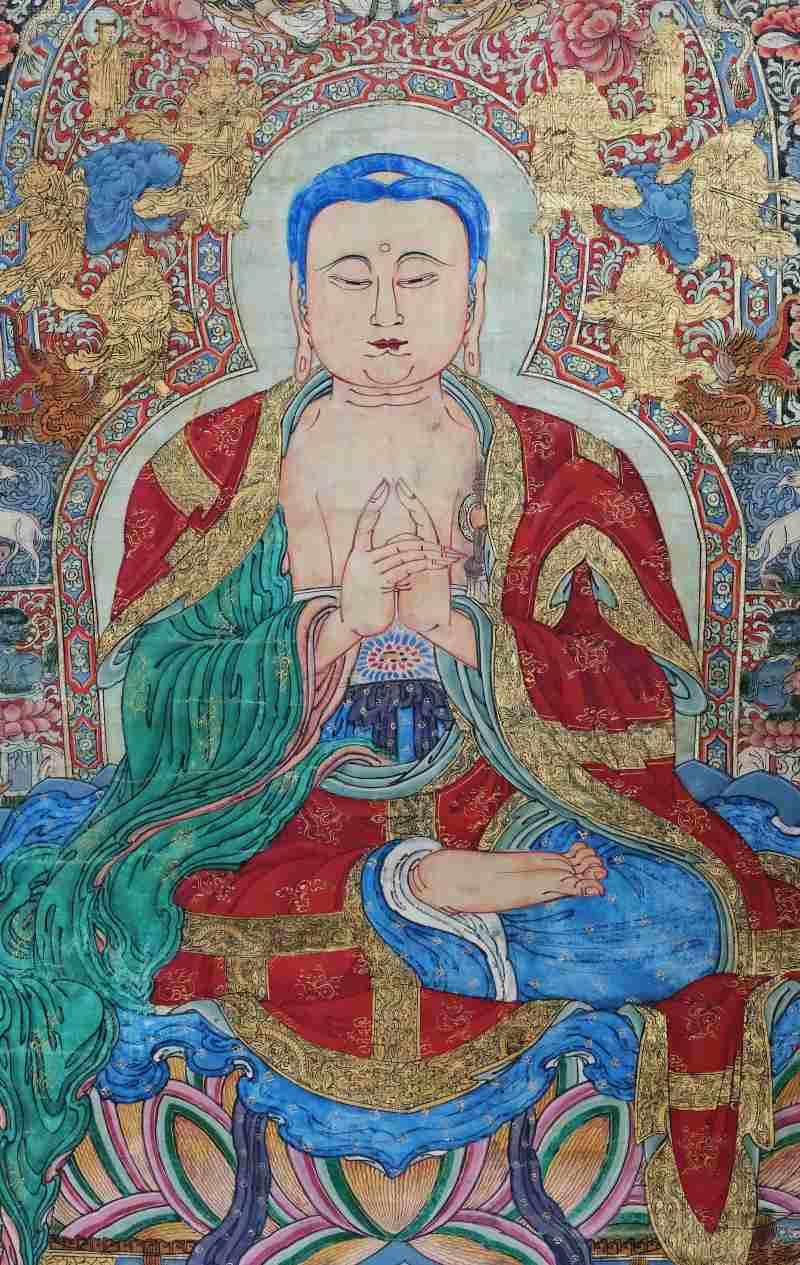
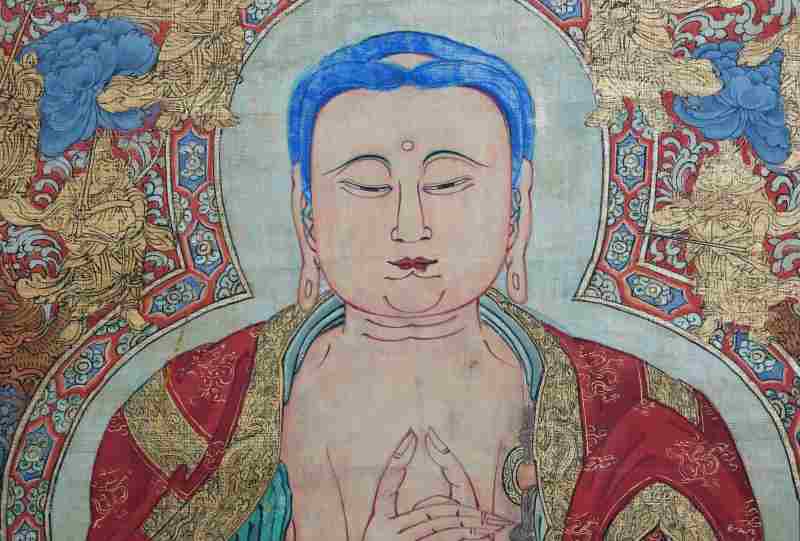
Pigments and gold on silk, depicting Amitābha Buddha seated upon a multi-coloured lotus throne in dhyāna asana, his legs folded in full lotus and his hands held in a form of the dhyāna mudrā (dìng yìn), the gesture of deep meditation and contemplation, signifying Amitābha’s vow to liberate sentient beings and his role as the presiding Buddha of the Western Pure Land (Sukhāvatī). The Buddha is shown with a serene, introspective countenance, his robe richly detailed with gilt scrolling motifs and mineral pigments.
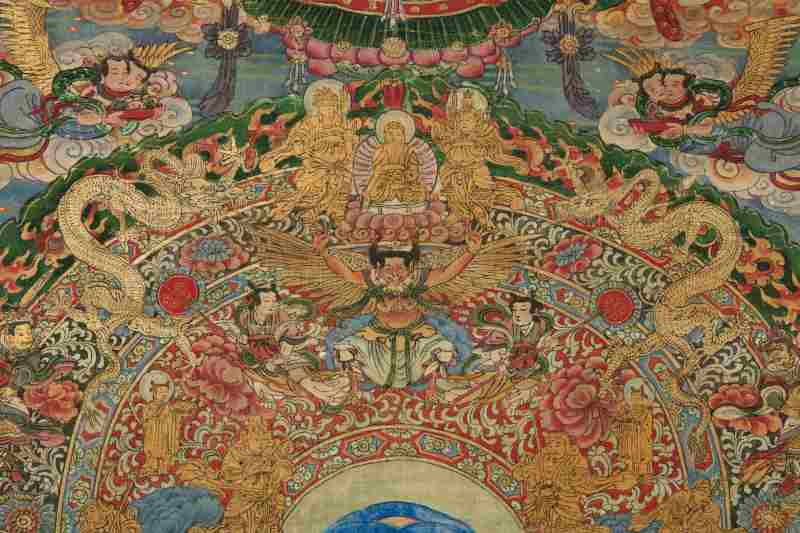
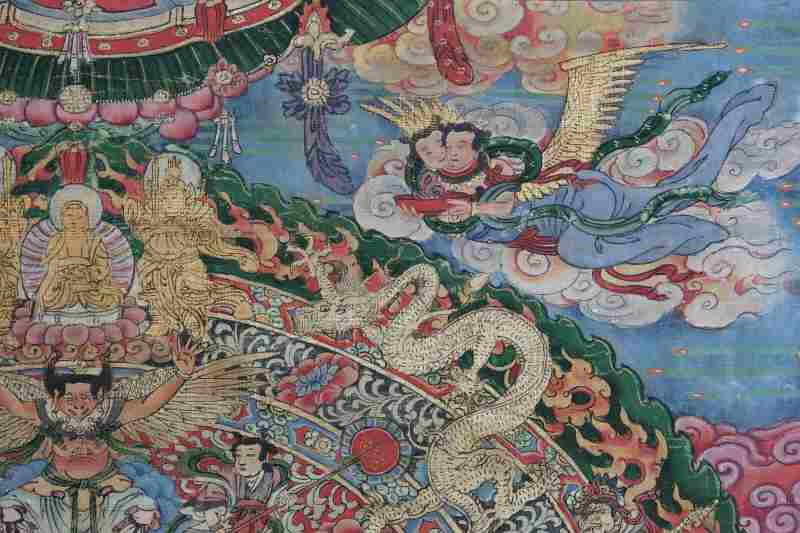
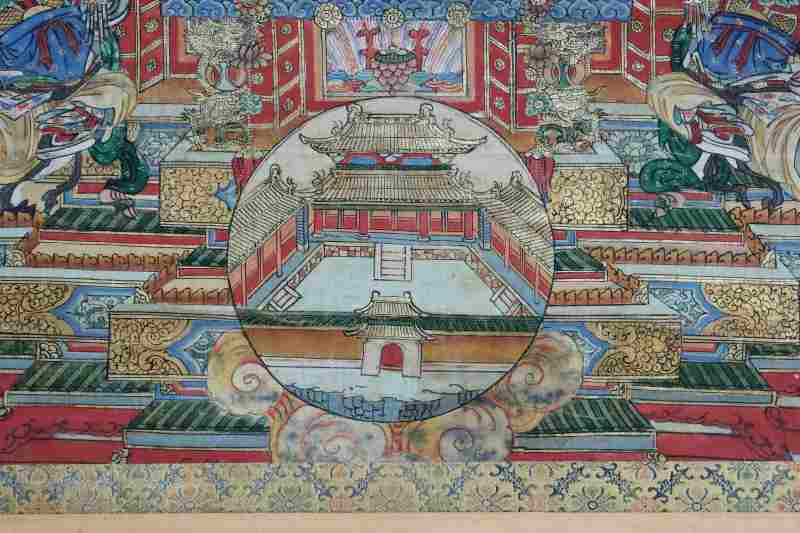
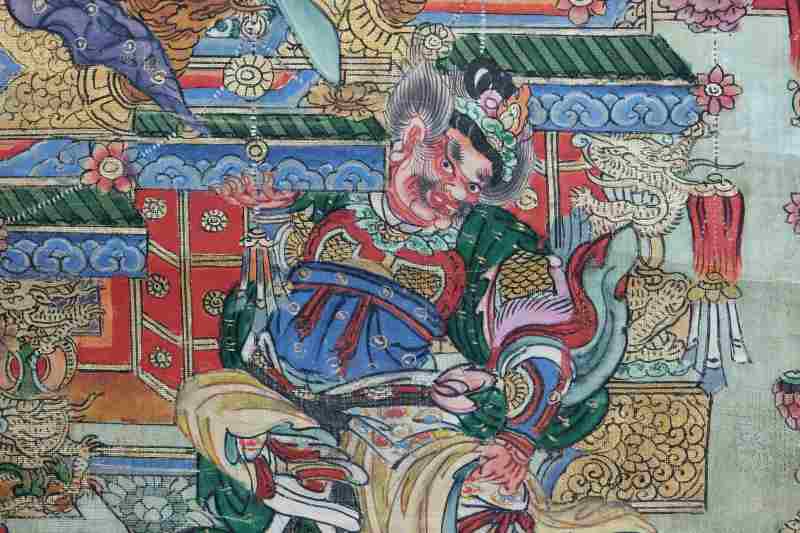
The figure is enclosed within a lavish flaming mandorla densely populated with celestial attendants, including apsaras and bodhisattvas bearing offerings and playing musical instruments. Two sinuous five-clawed dragons emerge amidst cloud-scrolls and peonies, their presence a symbol of imperial protection and auspicious authority. Above, the enthroned Buddha Amitābha and the Bodhisattvas Avalokiteśvara and Mahāsthāmaprāpta preside over the heavenly realm, reinforcing Amitābha’s position within the Mahāyāna cosmology. Below the pedestal spreads an ornate architectural Pure Land landscape, with guardian figures and palace structures representing the paradisiacal environment promised to the faithful.
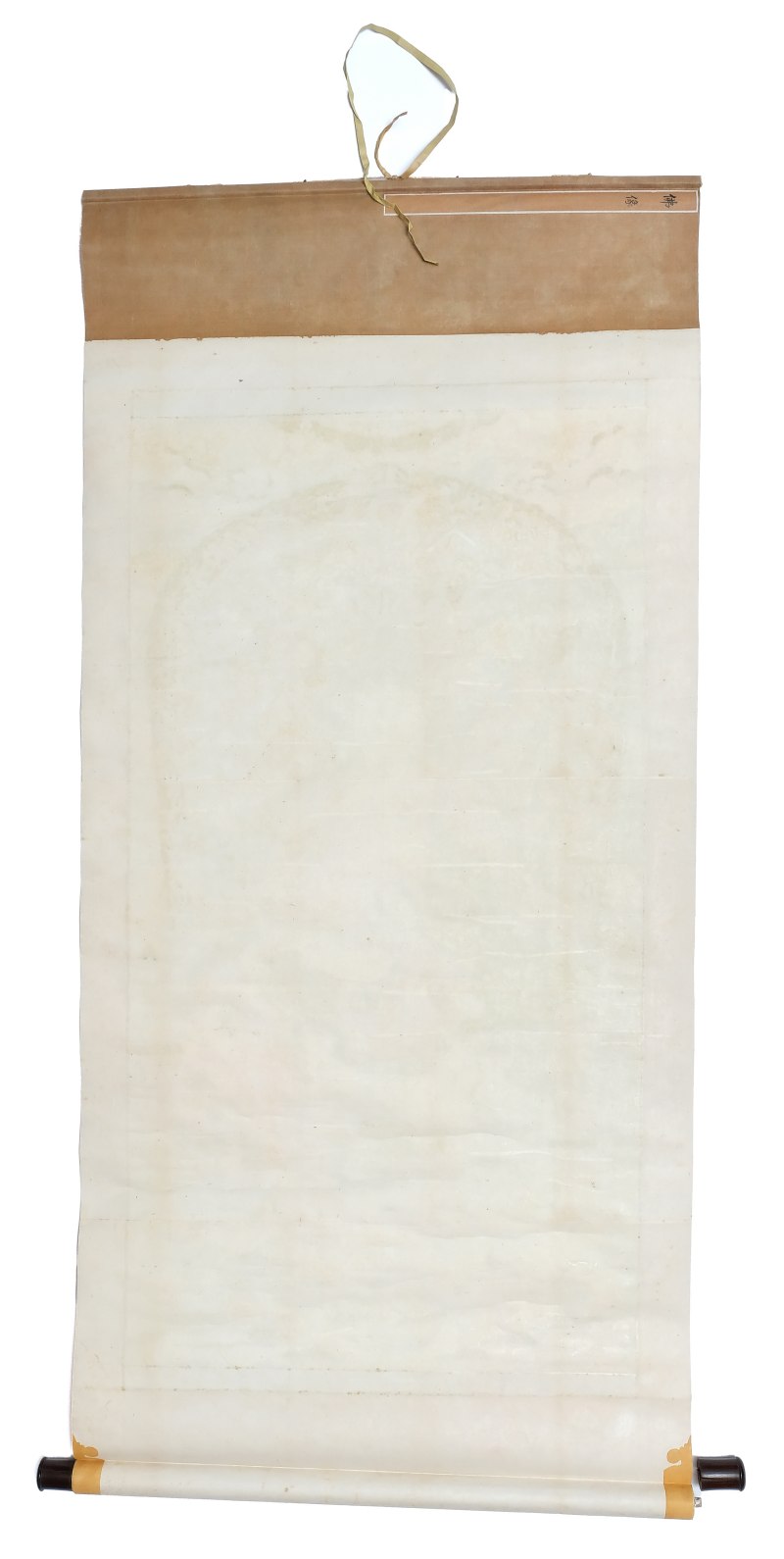
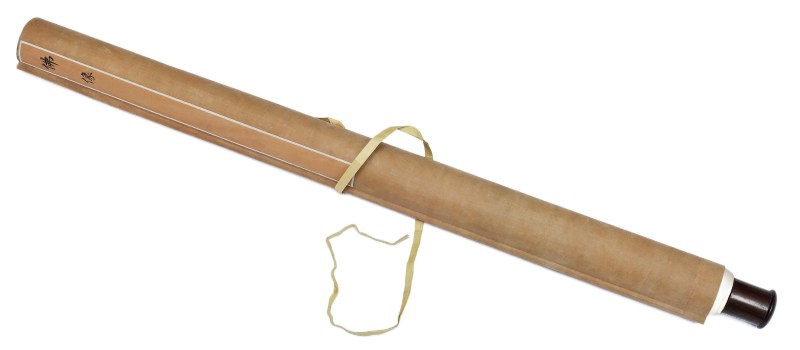
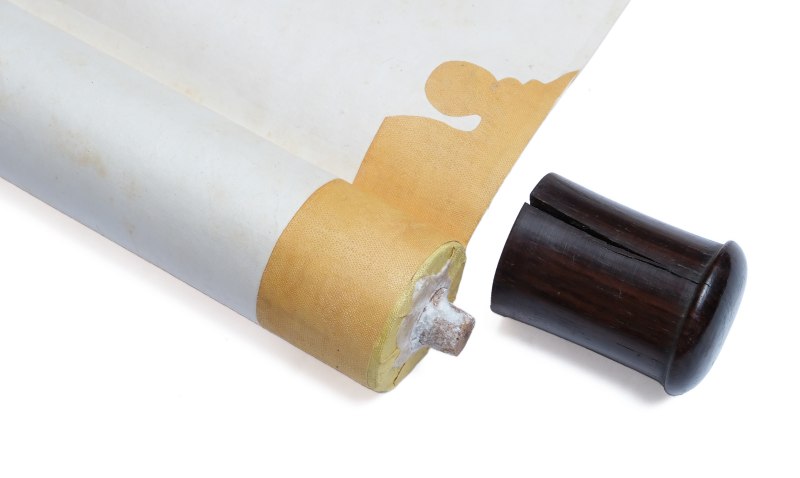
Executed with brilliant mineral pigments such as malachite, cinnabar and azurite, and extensive use of gold, the scroll reflects a courtly Sino-Buddhist devotional style associated with elite temple commissions of the late Ming to early Qing period. Mounted as a hanging scroll.
以下内容由AI翻译:
【名称】
十七至十八世纪初中国佛教阿弥陀佛挂轴
【年代】
中国,明末清初,十七至十八世纪初
【描述】
丝绢上彩绘及金粉,描绘阿弥陀佛坐在多彩莲花宝座上,双腿盘成全跏趺坐,双手结禅定印(dìng yìn),表示深沉冥想与观想,象征阿弥陀佛誓愿解救众生及其作为西方极乐世界(Sukhāvatī)主佛的角色。佛像面容宁静内省,袈裟上饰有金色卷草纹和矿物颜料。
佛像被一个华丽的火焰背光包围,背光中密集地布满了天人和菩萨,他们手持供品并演奏乐器。两条五爪龙从云朵和牡丹中蜿蜒而出,象征着皇权的保护和吉祥权威。上方,阿弥陀佛与观世音菩萨和大势至菩萨共同主持天界,强化了阿弥陀佛在大乘佛教宇宙观中的地位。下方是精美的建筑式净土景观,有守护者和宫殿结构,代表对信徒承诺的极乐环境。
使用如孔雀石、朱砂和蓝铜矿等鲜艳的矿物颜料以及大量金粉,这幅挂轴反映了明末清初宫廷佛教供养风格,与当时精英寺院委托的作品相关。装裱为挂轴。
The figure is enclosed within a lavish flaming mandorla densely populated with celestial attendants, including apsaras and bodhisattvas bearing offerings and playing musical instruments. Two sinuous five-clawed dragons emerge amidst cloud-scrolls and peonies, their presence a symbol of imperial protection and auspicious authority. Above, the enthroned Buddha Amitābha and the Bodhisattvas Avalokiteśvara and Mahāsthāmaprāpta preside over the heavenly realm, reinforcing Amitābha’s position within the Mahāyāna cosmology. Below the pedestal spreads an ornate architectural Pure Land landscape, with guardian figures and palace structures representing the paradisiacal environment promised to the faithful.
Executed with brilliant mineral pigments such as malachite, cinnabar and azurite, and extensive use of gold, the scroll reflects a courtly Sino-Buddhist devotional style associated with elite temple commissions of the late Ming to early Qing period. Mounted as a hanging scroll.
以下内容由AI翻译:
【名称】
十七至十八世纪初中国佛教阿弥陀佛挂轴
【年代】
中国,明末清初,十七至十八世纪初
【描述】
丝绢上彩绘及金粉,描绘阿弥陀佛坐在多彩莲花宝座上,双腿盘成全跏趺坐,双手结禅定印(dìng yìn),表示深沉冥想与观想,象征阿弥陀佛誓愿解救众生及其作为西方极乐世界(Sukhāvatī)主佛的角色。佛像面容宁静内省,袈裟上饰有金色卷草纹和矿物颜料。
佛像被一个华丽的火焰背光包围,背光中密集地布满了天人和菩萨,他们手持供品并演奏乐器。两条五爪龙从云朵和牡丹中蜿蜒而出,象征着皇权的保护和吉祥权威。上方,阿弥陀佛与观世音菩萨和大势至菩萨共同主持天界,强化了阿弥陀佛在大乘佛教宇宙观中的地位。下方是精美的建筑式净土景观,有守护者和宫殿结构,代表对信徒承诺的极乐环境。
使用如孔雀石、朱砂和蓝铜矿等鲜艳的矿物颜料以及大量金粉,这幅挂轴反映了明末清初宫廷佛教供养风格,与当时精英寺院委托的作品相关。装裱为挂轴。
常见问题
拍品的尺寸是多少?
Image size: 119.1 x 63.4 cm (including frame: 164.4 x 85.9 cm)