
拍品信息
拍品名称
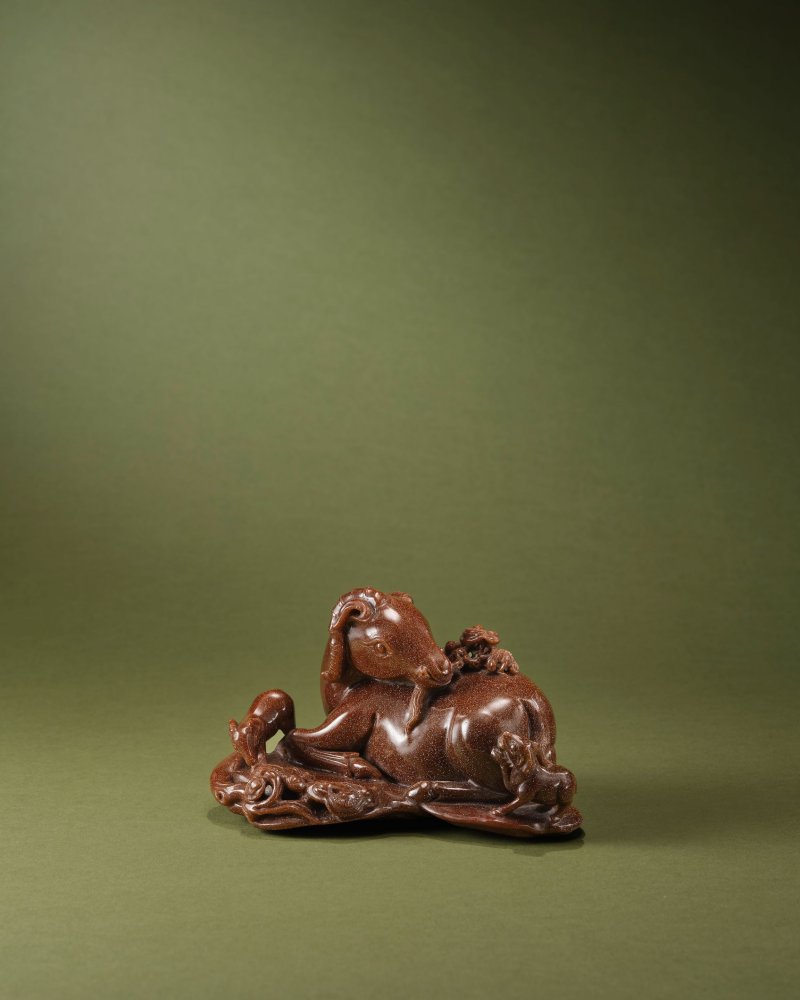
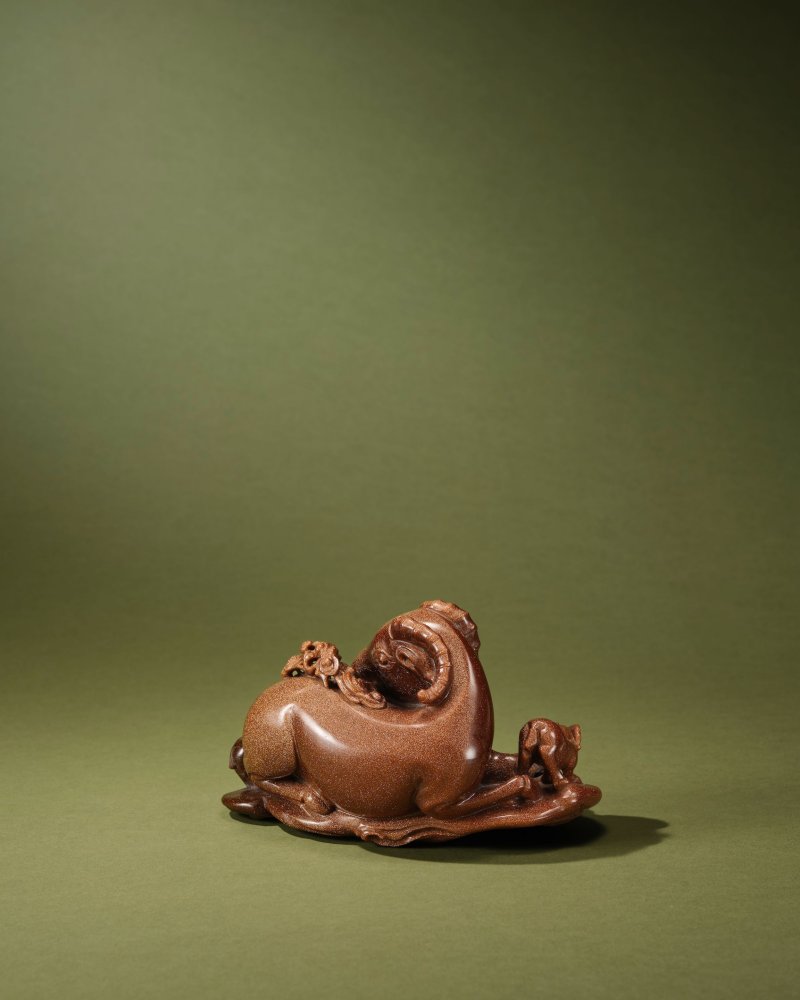
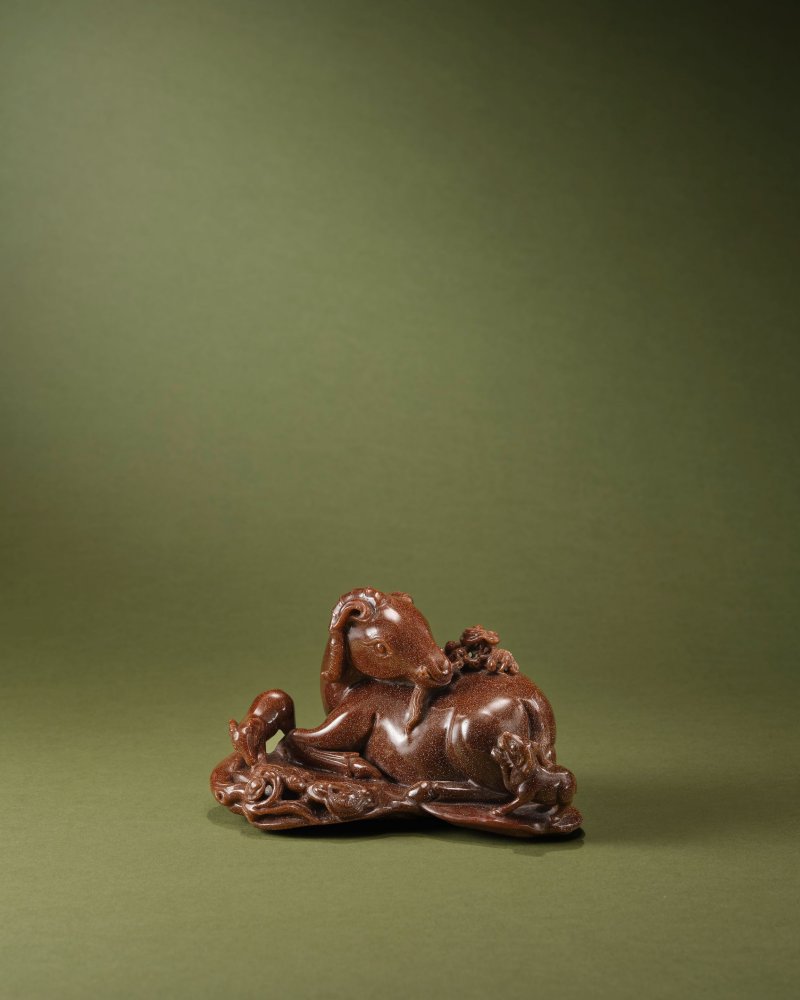
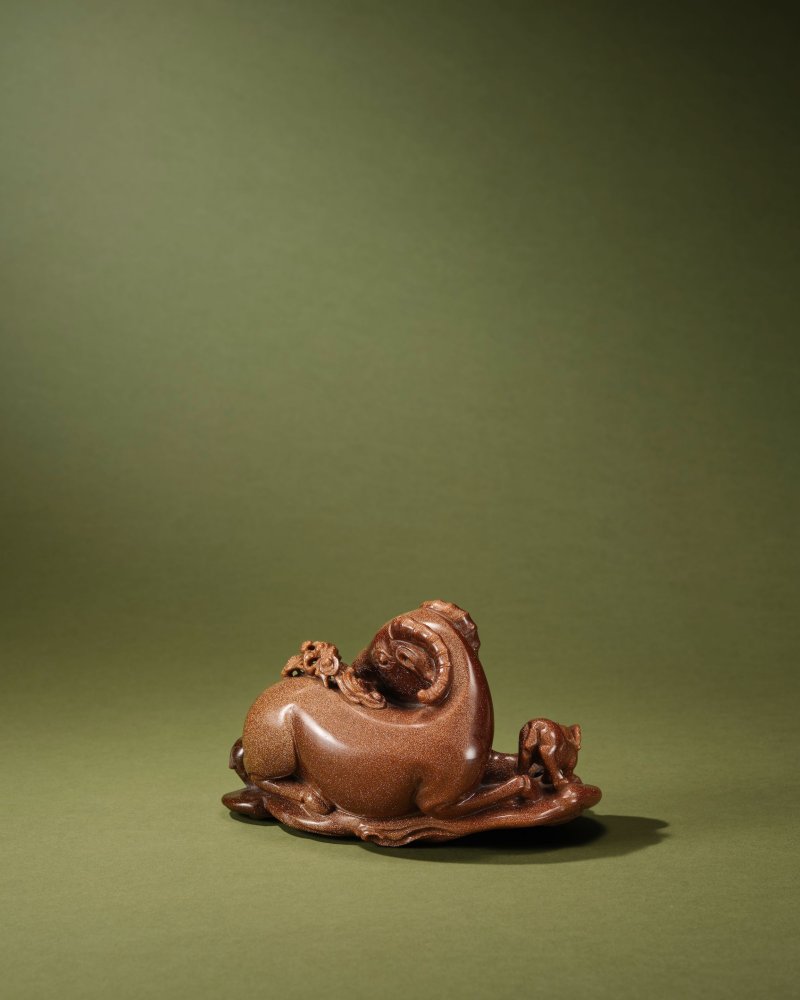
清乾隆 金星玻璃三羊開泰獻芝擺件 | AN IMPERIAL AVENTURINE GLASS 'THREE RAMS AND LINGZHI' GROUP
年代
Qianlong
起拍价
HKD 1,000,000
估值区间
HKD 1000000 - 1500000
尺寸
未知
品相
未知
更多信息
Qianlong
The lustrous glass with tiny gold flecks exquisitely carved as a large reclining ram with curling horns behind its ears, the legs tucked neatly beneath the large body, grasping in its jaws a sprig of auspicious lingzhi fungus, a smaller ram by the larger's tail raises its hoof, a third smaller ram nibbling on more lingzhi, the base formed as two large ruyi heads, box. 11.2cm (4 3/8in) wide. (2).
Footnotes
清乾隆 金星玻璃三羊開泰獻芝擺件
Provenance:
Sotheby's Paris, 9 June 2010, lot 253
來源:
巴黎蘇富比,2010年6月9日,拍品編號253
The present lot is a particularly fine example of a carving in aventurine glass, distinguished by its sophisticated modelling and richly variegated 'golden star' surface, qualities associated with the finest wares produced for the Qing Imperial court. See a related aventurine glass miniature rockery with three rams, Qianlong seal mark and of the period, in the Palace Museum, Beijing, illustrated in , Beijing, 2005, p.261, no.94.
The Imperial Glassworks were established in Beijing in 1696, during the Kangxi reign, under the auspices of the Imperial Household Department, with the assistance of Jesuit missionaries experienced in European glassmaking techniques. The Glassworks subsequently became an important centre for experimentation with new materials and techniques, producing a wide variety of vessels, scholar's objects and small sculptures for the Imperial court. During the Qianlong reign in particular, the workshops achieved a high degree of technical sophistication in the production of rare and luxurious glass materials.
Admired for its glittering copper-crystal inclusions, which appear like suspended gold dust, aventurine glass appealed strongly to Qianlong-period tastes for exotic and technically ingenious substances that combined the lustre of precious minerals with the virtuosity of the Imperial glassworks. As noted by Peter Lam in his study of the Qing Imperial Glassworks, aventurine glass, also known as 'golden star' glass, was employed for a variety of objects, including rosaries, vases, incense boxes, water coupes and snuff bottles; see P.Y.K. Lam, 'Three Studies on the Glasshouse of the Qing Imperial Household Department', in , pp.56-93. It was used relatively sparingly for small sculptures and scholar's objects, where its rarity and jewel-like sparkle could be particularly appreciated. See an aventurine glass water container in the form of a pomegranate and finger citron, Qianlong, in the Qing Court Collection, illustrated in , Shenzhen, 2009, p.210, no.202.
Three rams form a rebus for , literally 'Three Yang ushering in the Renewal', one of the most auspicious motifs in the Chinese visual tradition. Its origins lie in the (Book of Changes), where the character denotes positive, life-giving energy, and the appearance of 'three yang lines' marks the turning from the harshness of winter towards the rebirth of spring. By the Ming and Qing dynasties, this cosmological idea had evolved into a visual pun on the homophone (ram), and groups of three ( in Chinese) rams became an emblem of new beginnings, prosperity and the promise of favourable times ahead. Such imagery was commonly associated with the New Year, when blessings of renewal, harmony and good fortune were most fervently sought. Similar representations were produced in other materials, particularly jade. See also a jade carving of three rams, in the Qing Court Collection, Qing dynasty, illustrated in , p.118, no.86.
In the present lot, the symbolism is further reinforced by the central larger ram clasping a sprig of , the fungus of immortality. Long revered as a token of longevity, spiritual potency and benevolent fortune, the adds an additional layer of auspicious meaning to the composition. Together, the three rams, the magical fungus and the shimmering aventurine material form a richly layered emblem wishing not only the advent of a new and prosperous cycle but also enduring vitality and protection. Such imagery would have been particularly appropriate for an object intended as a refined display piece or auspicious gift, invoking harmony, longevity and an auspicious turning of fate.
本品為金星玻璃雕刻之佳例,造型精巧,金星璀璨,具清宮御製之風格。參考北京故宮博物院藏一件乾隆款金星玻璃三羊小山子,著錄於《光凝秋水:清宮造辦處玻璃器》,北京,2005年,頁261,編號94。
清宮玻璃廠於康熙三十五年(1696年)在北京設立,由內務府主導,並得耶穌會傳教士協助,引入歐洲玻璃製作技術。此後玻璃廠成為新材質與技術之重要研發中心,為宮廷製作各類器皿、文房及小型雕塑。尤以乾隆時期,工藝臻於成熟,所產珍稀華美之玻璃器物,蔚為大觀。
本品選用金星玻璃為材,更顯其尊貴不凡。金星玻璃乃清宮中極受珍視之稀有材質,其內含閃爍銅晶微粒,宛若金塵懸浮,光澤璀璨,深合乾隆朝對新穎材質之興趣,兼具寶石般華彩與宮廷玻璃工藝之精湛。金星玻璃應用於製作各式器物,包括念珠、花瓶、香盒、水丞及鼻煙壺等,詳見林業強,〈Three Studies on the Glasshouse of the Qing Imperial Household Department〉,載於上書,頁56至93。此材多用於小型雕塑及文房雅器,因其珍稀、耀目,故備受青睞。參考清宮舊藏一件乾隆時期金星玻璃石榴佛手水丞,著錄於《故宮博物院藏文物珍品大系:文玩》,深圳,2009年,頁210,編號202。
三羊合為「三陽開泰」,寓意吉祥。其源出《易經》,「陽」象徵生機蓬勃之氣,三陽爻出現,標誌寒冬已盡,春回大地。明清之際,此宇宙觀轉化為諧音之雙關。「羊」諧音「陽」,三羊組合遂成新生、繁榮與盛世來臨之象徵。此組合多與新春相關,寄寓萬象更新、和諧吉祥之願。參考清宮舊藏一件清代玉雕三羊,見上書,頁118,編號86。
本品更以居中之大羊口銜靈芝,來增添吉祥意涵。靈芝自古即被視為長壽、靈力與祥瑞之徵,為構圖增添福壽綿長之吉兆。三羊、靈芝與金星玻璃三者相合,構成一幅層次豐富之祥瑞圖景,寄寓不止一元復始、萬象更新,更兼生生不息、福澤綿長。此類題材器物,在當時被視為迎祥納福之瑞物,宜作饋贈或陳設於雅室,以祈和諧長壽、時運亨通。
The lustrous glass with tiny gold flecks exquisitely carved as a large reclining ram with curling horns behind its ears, the legs tucked neatly beneath the large body, grasping in its jaws a sprig of auspicious lingzhi fungus, a smaller ram by the larger's tail raises its hoof, a third smaller ram nibbling on more lingzhi, the base formed as two large ruyi heads, box. 11.2cm (4 3/8in) wide. (2).
Footnotes
清乾隆 金星玻璃三羊開泰獻芝擺件
Provenance:
Sotheby's Paris, 9 June 2010, lot 253
來源:
巴黎蘇富比,2010年6月9日,拍品編號253
The present lot is a particularly fine example of a carving in aventurine glass, distinguished by its sophisticated modelling and richly variegated 'golden star' surface, qualities associated with the finest wares produced for the Qing Imperial court. See a related aventurine glass miniature rockery with three rams, Qianlong seal mark and of the period, in the Palace Museum, Beijing, illustrated in , Beijing, 2005, p.261, no.94.
The Imperial Glassworks were established in Beijing in 1696, during the Kangxi reign, under the auspices of the Imperial Household Department, with the assistance of Jesuit missionaries experienced in European glassmaking techniques. The Glassworks subsequently became an important centre for experimentation with new materials and techniques, producing a wide variety of vessels, scholar's objects and small sculptures for the Imperial court. During the Qianlong reign in particular, the workshops achieved a high degree of technical sophistication in the production of rare and luxurious glass materials.
Admired for its glittering copper-crystal inclusions, which appear like suspended gold dust, aventurine glass appealed strongly to Qianlong-period tastes for exotic and technically ingenious substances that combined the lustre of precious minerals with the virtuosity of the Imperial glassworks. As noted by Peter Lam in his study of the Qing Imperial Glassworks, aventurine glass, also known as 'golden star' glass, was employed for a variety of objects, including rosaries, vases, incense boxes, water coupes and snuff bottles; see P.Y.K. Lam, 'Three Studies on the Glasshouse of the Qing Imperial Household Department', in , pp.56-93. It was used relatively sparingly for small sculptures and scholar's objects, where its rarity and jewel-like sparkle could be particularly appreciated. See an aventurine glass water container in the form of a pomegranate and finger citron, Qianlong, in the Qing Court Collection, illustrated in , Shenzhen, 2009, p.210, no.202.
Three rams form a rebus for , literally 'Three Yang ushering in the Renewal', one of the most auspicious motifs in the Chinese visual tradition. Its origins lie in the (Book of Changes), where the character denotes positive, life-giving energy, and the appearance of 'three yang lines' marks the turning from the harshness of winter towards the rebirth of spring. By the Ming and Qing dynasties, this cosmological idea had evolved into a visual pun on the homophone (ram), and groups of three ( in Chinese) rams became an emblem of new beginnings, prosperity and the promise of favourable times ahead. Such imagery was commonly associated with the New Year, when blessings of renewal, harmony and good fortune were most fervently sought. Similar representations were produced in other materials, particularly jade. See also a jade carving of three rams, in the Qing Court Collection, Qing dynasty, illustrated in , p.118, no.86.
In the present lot, the symbolism is further reinforced by the central larger ram clasping a sprig of , the fungus of immortality. Long revered as a token of longevity, spiritual potency and benevolent fortune, the adds an additional layer of auspicious meaning to the composition. Together, the three rams, the magical fungus and the shimmering aventurine material form a richly layered emblem wishing not only the advent of a new and prosperous cycle but also enduring vitality and protection. Such imagery would have been particularly appropriate for an object intended as a refined display piece or auspicious gift, invoking harmony, longevity and an auspicious turning of fate.
本品為金星玻璃雕刻之佳例,造型精巧,金星璀璨,具清宮御製之風格。參考北京故宮博物院藏一件乾隆款金星玻璃三羊小山子,著錄於《光凝秋水:清宮造辦處玻璃器》,北京,2005年,頁261,編號94。
清宮玻璃廠於康熙三十五年(1696年)在北京設立,由內務府主導,並得耶穌會傳教士協助,引入歐洲玻璃製作技術。此後玻璃廠成為新材質與技術之重要研發中心,為宮廷製作各類器皿、文房及小型雕塑。尤以乾隆時期,工藝臻於成熟,所產珍稀華美之玻璃器物,蔚為大觀。
本品選用金星玻璃為材,更顯其尊貴不凡。金星玻璃乃清宮中極受珍視之稀有材質,其內含閃爍銅晶微粒,宛若金塵懸浮,光澤璀璨,深合乾隆朝對新穎材質之興趣,兼具寶石般華彩與宮廷玻璃工藝之精湛。金星玻璃應用於製作各式器物,包括念珠、花瓶、香盒、水丞及鼻煙壺等,詳見林業強,〈Three Studies on the Glasshouse of the Qing Imperial Household Department〉,載於上書,頁56至93。此材多用於小型雕塑及文房雅器,因其珍稀、耀目,故備受青睞。參考清宮舊藏一件乾隆時期金星玻璃石榴佛手水丞,著錄於《故宮博物院藏文物珍品大系:文玩》,深圳,2009年,頁210,編號202。
三羊合為「三陽開泰」,寓意吉祥。其源出《易經》,「陽」象徵生機蓬勃之氣,三陽爻出現,標誌寒冬已盡,春回大地。明清之際,此宇宙觀轉化為諧音之雙關。「羊」諧音「陽」,三羊組合遂成新生、繁榮與盛世來臨之象徵。此組合多與新春相關,寄寓萬象更新、和諧吉祥之願。參考清宮舊藏一件清代玉雕三羊,見上書,頁118,編號86。
本品更以居中之大羊口銜靈芝,來增添吉祥意涵。靈芝自古即被視為長壽、靈力與祥瑞之徵,為構圖增添福壽綿長之吉兆。三羊、靈芝與金星玻璃三者相合,構成一幅層次豐富之祥瑞圖景,寄寓不止一元復始、萬象更新,更兼生生不息、福澤綿長。此類題材器物,在當時被視為迎祥納福之瑞物,宜作饋贈或陳設於雅室,以祈和諧長壽、時運亨通。
常见问题
这件清乾隆 金星玻璃三羊開泰獻芝擺件 | AN IMPERIAL AVENTURINE GLASS 'THREE RAMS AND LINGZHI' GROUP的成交价是多少?
落槌价为 预展中。 成交价为 预展中。