
Lot 158 A Chinese blue and white 'Cranes and Flying Horses' dish
落槌价
****
成交价
****
拍品信息
拍品名称
A Chinese blue and white 'Cranes and Flying Horses' dish
年代
Jiajing
起拍价
未知
估值区间
€ 5.000 – € 10.000
尺寸
O: H. 17,5 cm, Diam. 35 cm
品相
未知
更多信息
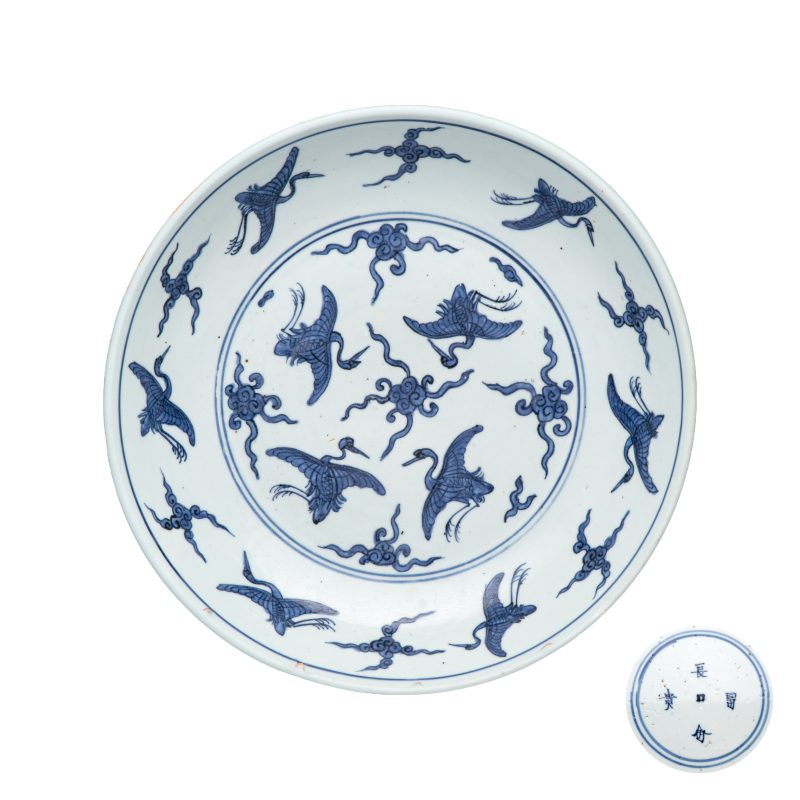
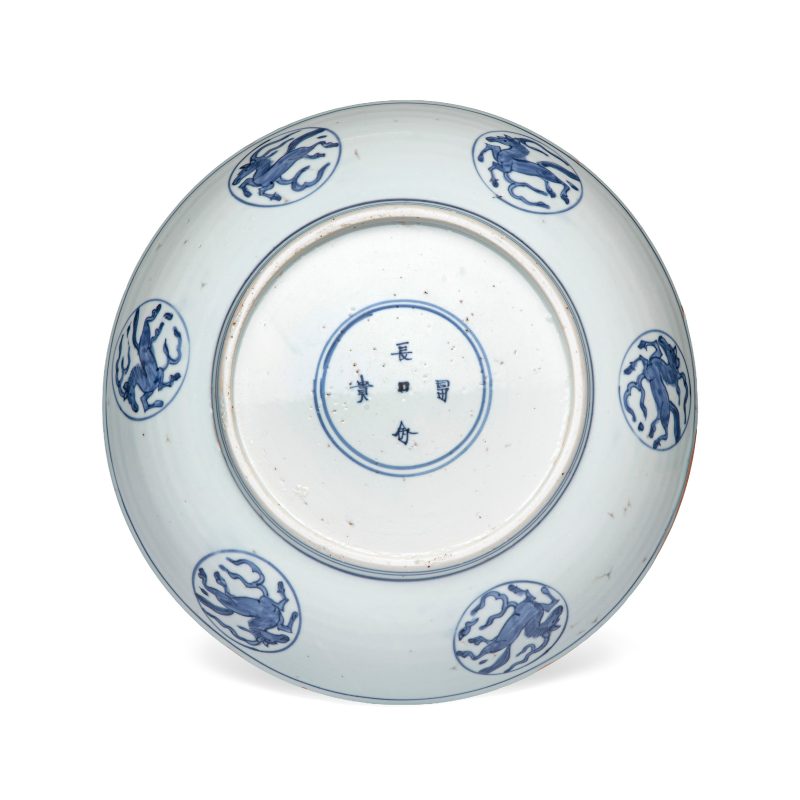
Shaped with shallow, rounded sides rising to an everted rim, the dish is decorated in underglaze cobalt blue with ten cranes in flight amidst stylised ruyi-shaped clouds. The reverse is decorated with six galloping horses, each enclosed within an round medallion among flames. The base bears the four-character auspicious mark Chang Ming Fu Gui (長命富貴, “Long Life and Great Wealth”) arranged within a cash-shaped cartouche.
The crane is one of the most auspicious birds in Chinese art, symbolising longevity, wisdom and immortality through its close association with the Daoist Immortals. The inscription Chang Ming Fu Gui expresses the wish for “Long Life and Great Wealth,” while its arrangement within a cash-shaped cartouche visually reinforces the blessing of prosperity.
The decoration on the reverse is equally symbolic. Horses represent strength, endurance and official success, while the number six (liu) is traditionally regarded as auspicious, suggesting that affairs will proceed smoothly. Together, the ten cranes, six horses and auspicious inscription combine to form a harmonious programme expressing wishes for longevity, wealth and success.
Porcelain bearing auspicious marks rather than imperial reign marks constitutes a recognised group within the production of the Jingdezhen kilns during the Jiajing reign (1522–1566). The present dish is a finely executed example of this tradition.
此盤淺弧腹,口沿外撇,通體以青花繪飾。盤內繪十隻仙鶴翱翔於如意雲紋之間。盤背繪六匹奔馬,各置於火焰環繞的圓形開光內。底部錢形開光內書「長命富貴」四字吉語款。
仙鶴是中國藝術中最具吉祥寓意的禽鳥之一,因常與道教仙人相伴,故象徵長壽、智慧與成仙。「長命富貴」寄託福壽綿長、富足尊榮的願望,款識置於錢形開光內,更增添招財納福之意。
盤背紋飾同樣寓意吉祥。馬象徵力量、堅毅與仕途有成,「六」在傳統文化中亦為吉數,含有諸事順遂之意。十鶴、六馬與吉語款相互配合,共同表達長壽、富貴與功業順遂的美好祝願。
以吉語款取代帝王年款的瓷器,是嘉靖年間(1522—1566)景德鎮窯瓷器中一個較具特色的品類,此盤即為其中製作精良的一例。
Provenance:
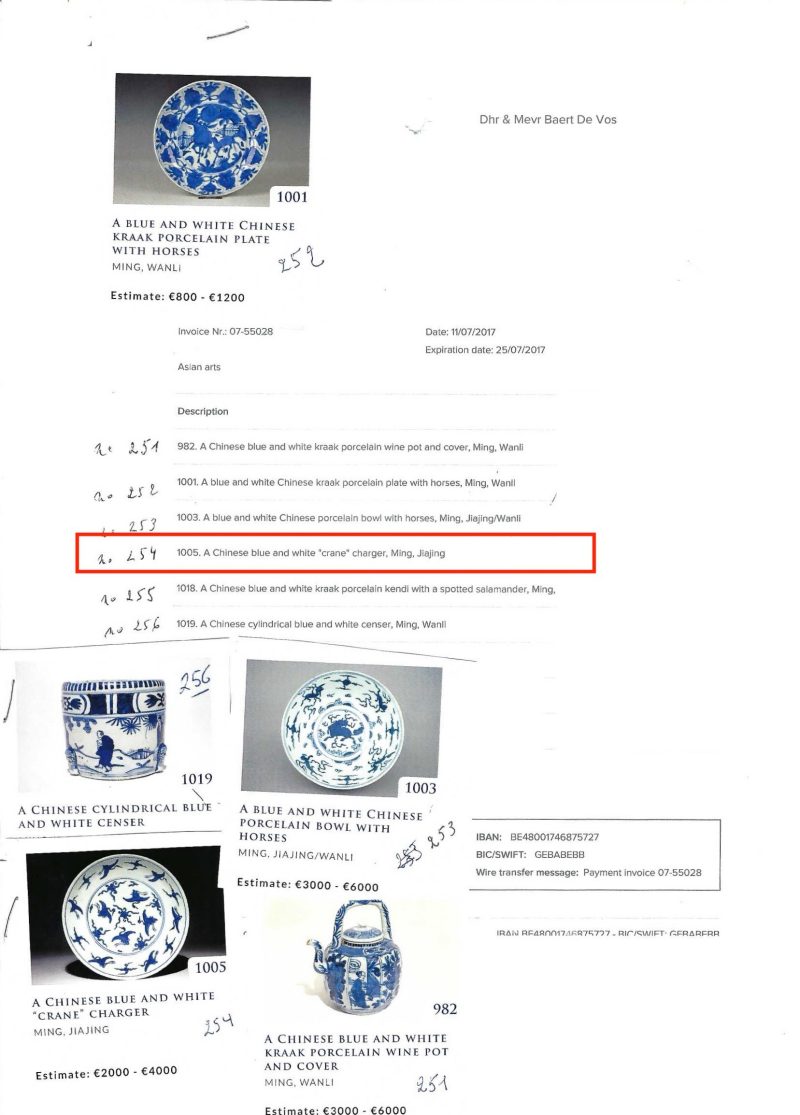
Rob Michiels Auctions, Bruges, 24 June 2017, lot 1005. (sold EUR 9.100,00) (link)
The Mr. and Mrs. Baert-Devos Collection, Belgium. Acquired from the above. (see added scan)
The crane is one of the most auspicious birds in Chinese art, symbolising longevity, wisdom and immortality through its close association with the Daoist Immortals. The inscription Chang Ming Fu Gui expresses the wish for “Long Life and Great Wealth,” while its arrangement within a cash-shaped cartouche visually reinforces the blessing of prosperity.
The decoration on the reverse is equally symbolic. Horses represent strength, endurance and official success, while the number six (liu) is traditionally regarded as auspicious, suggesting that affairs will proceed smoothly. Together, the ten cranes, six horses and auspicious inscription combine to form a harmonious programme expressing wishes for longevity, wealth and success.
Porcelain bearing auspicious marks rather than imperial reign marks constitutes a recognised group within the production of the Jingdezhen kilns during the Jiajing reign (1522–1566). The present dish is a finely executed example of this tradition.
此盤淺弧腹,口沿外撇,通體以青花繪飾。盤內繪十隻仙鶴翱翔於如意雲紋之間。盤背繪六匹奔馬,各置於火焰環繞的圓形開光內。底部錢形開光內書「長命富貴」四字吉語款。
仙鶴是中國藝術中最具吉祥寓意的禽鳥之一,因常與道教仙人相伴,故象徵長壽、智慧與成仙。「長命富貴」寄託福壽綿長、富足尊榮的願望,款識置於錢形開光內,更增添招財納福之意。
盤背紋飾同樣寓意吉祥。馬象徵力量、堅毅與仕途有成,「六」在傳統文化中亦為吉數,含有諸事順遂之意。十鶴、六馬與吉語款相互配合,共同表達長壽、富貴與功業順遂的美好祝願。
以吉語款取代帝王年款的瓷器,是嘉靖年間(1522—1566)景德鎮窯瓷器中一個較具特色的品類,此盤即為其中製作精良的一例。
Provenance:
Rob Michiels Auctions, Bruges, 24 June 2017, lot 1005. (sold EUR 9.100,00) (link)
The Mr. and Mrs. Baert-Devos Collection, Belgium. Acquired from the above. (see added scan)
常见问题
拍品的尺寸是多少?
O: H. 17,5 cm, Diam. 35 cm